
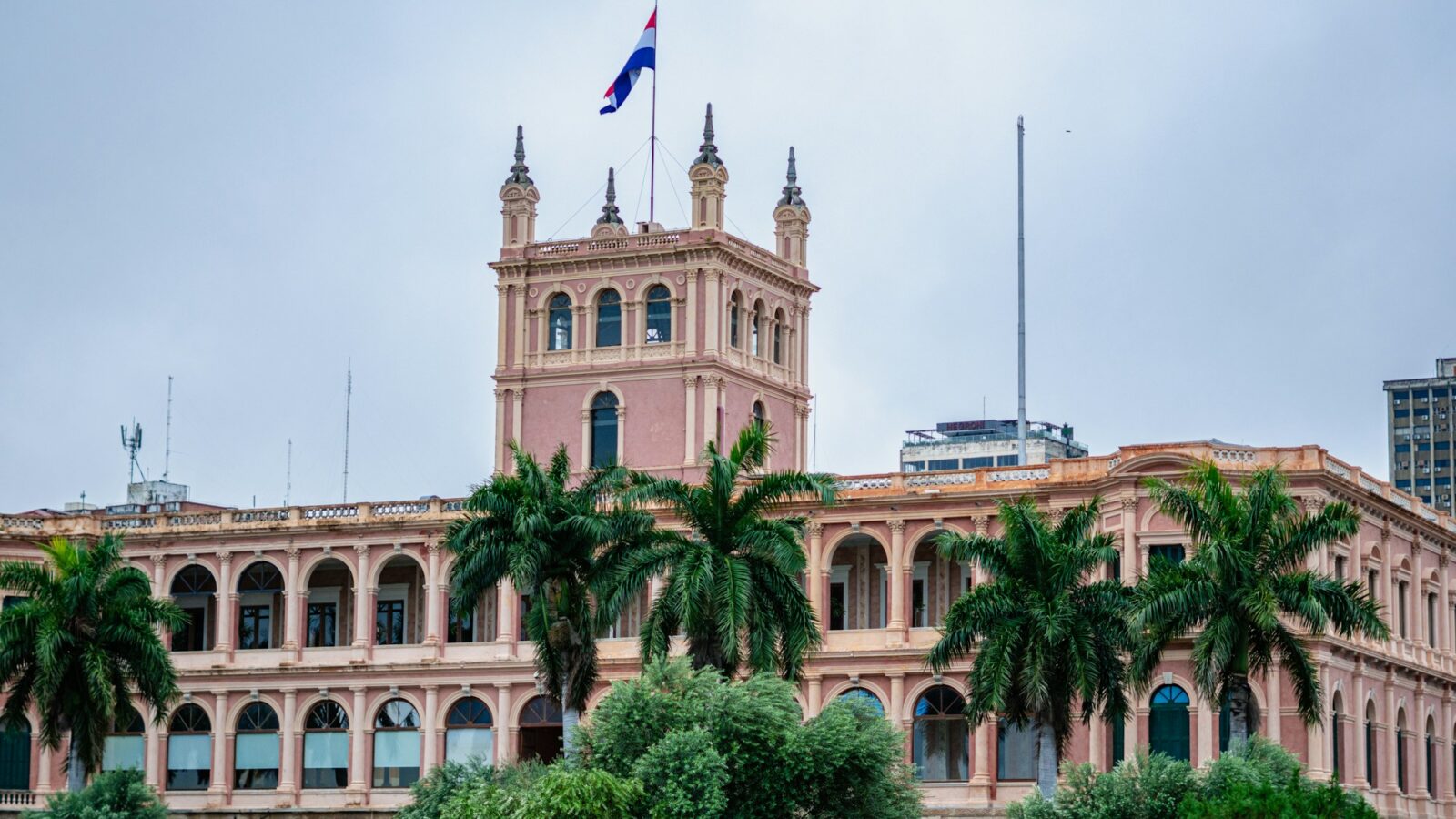
Things to do in Paraguay include walking Asunción’s old centre, standing inside the red stone churches of the Jesuit missions, touring the Itaipu dam and crossing to Iguazu Falls, yet the country still sees very few foreign visitors. This guide covers 16 of the best places to visit in Paraguay, with what each costs, how to get there with or without a tour, and which border areas the UK and US governments warn about.
Some links in this guide are affiliate links: if you book through them we may earn a commission at no extra cost to you. It never changes what we recommend. How we make money.
Every price, entry rule and safety note was checked in November 2026. Prices are in guaraníes (Gs) with rough conversions at the Central Bank of Paraguay reference rate on 26 November 2026: about Gs 8,430 to £1 and Gs 6,435 to $1, so Gs 10,000 is roughly £1.20 or $1.55. Paraguay is one of the cheapest countries in South America, but the guaraní has strengthened a lot against the dollar during 2026, so check the rate again before you go.
Things to do in Paraguay at a glance
| Activity | Area | Time needed | Cost (Nov 2026) |
|---|---|---|---|
| Asunción old centre and riverside | Asunción | 1 to 2 days | Mostly free |
| Museo del Barro | Asunción | 2 to 3 hours | Small fee, check on arrival |
| Mercado 4 and Paraguayan food | Asunción | 2 hours | Chipa under Gs 5,000 (about 60p / 80 cents) |
| San Bernardino and Lake Ypacaraí | Cordillera, about an hour east | A day or a weekend | Free to wander |
| Areguá ceramics and Cerro Kõi | Central, near Asunción | Half a day | Free |
| Itauguá, Caacupé and Yaguarón | Central and Cordillera | A full day | Free |
| Salto Cristal and Cerro Hû | Paraguarí | A full day | Small entry fees |
| Ybycuí National Park | Paraguarí, south of Asunción | A full day | Check with the park |
| Jesuit missions of Trinidad and Jesús | Itapúa, near Encarnación | A full day | Gs 40,000 (about £4.75 / $6.20) for foreigners |
| Encarnación beaches and Costanera | Encarnación | 1 to 2 days | Free to walk |
| Encarnación carnival | Encarnación | One Saturday night | 2025 stand seats from Gs 18,000 for two |
| Itaipu dam | Hernandarias, Alto Paraná | Half a day | Free visits on the Paraguay side |
| Monday Falls and Ñacunday | Alto Paraná | Half a day to a day | Small entry fee at Monday Falls |
| Iguazu Falls from Paraguay | Via Ciudad del Este into Brazil or Argentina | A full day | Park fees in reais or pesos |
| The Chaco and Mennonite colonies | Boquerón, far west | 3 days or more | Long bus or a car |
What our Paraguay video covers
From Asunción's historic centre and the Jesuit Missions of Trinidad and Jesús to the Itaipú Dam, the Gran Chaco and Saltos del Monday, these are 20 of the best things to do in Paraguay.
Jump to a chapter (21)
- 0:00 Welcome to Paraguay
- 1:31 1. Asunción's historic centre
- 2:01 2. Palacio de López
- 2:30 3. Metropolitan Cathedral
- 2:54 4. National Pantheon of the Heroes
- 3:16 5. Asunción's markets
- 3:43 6. Ciudad del Este
- 4:13 7. Jesuit Missions of Trinidad and Jesús
- 4:52 8. Casa de la Independencia
- 5:22 9. Itaipú Dam
- 5:51 10. Ybycuí National Park
- 6:20 11. Lake Ypacaraí
- 6:44 12. The Gran Chaco
- 7:17 13. Saltos del Monday
- 7:45 14. Paraguay River boat trip
- 8:10 15. Birdwatching
- 8:35 16. Horse riding on an estancia
- 9:04 17. Traditional festivals
- 9:31 18. Guaraní culture
- 9:58 19. Paraguayan food
- 10:24 20. Museo del Barro
How to choose what to do in Paraguay
Paraguay is easiest to understand as three zones. The capital, Asunción, and the hills and lakes within two hours of it make a good first base. The south and east, along the Paraná river, hold the big sights: the Jesuit missions near Encarnación, the Itaipu dam and the waterfalls near Ciudad del Este. The Chaco in the west covers most of the map but very few visitors go there.
With one week, base yourself in Asunción for three nights with day trips, then take the bus to Encarnación for the missions and the beach. With two weeks, add Itaipu, Monday Falls and a day at Iguazu Falls, or swap those for a few days in the Chaco. Lonely Planet suggests about a week for a city and a few sites, and two weeks for the main eastern highlights.
Distances are longer than they look. Asunción to Encarnación and Asunción to Ciudad del Este are each about five to six hours by long distance bus, and roads outside the main highways can be slow. Plan one big move a day and avoid driving after dark (see the safety section below).
1. Walk Asunción’s old centre and riverside
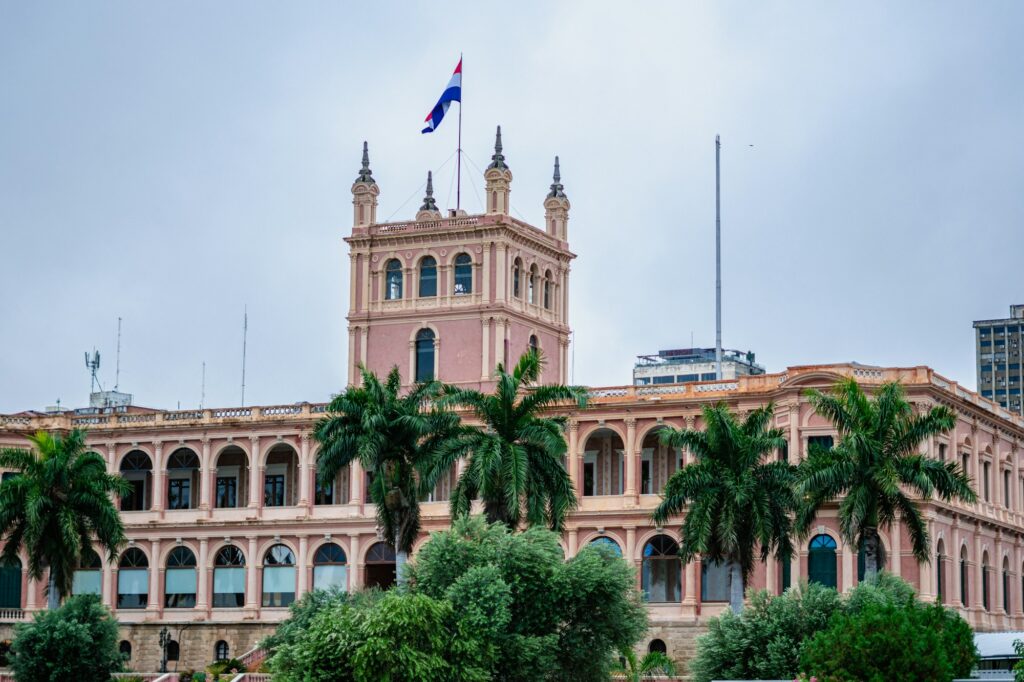
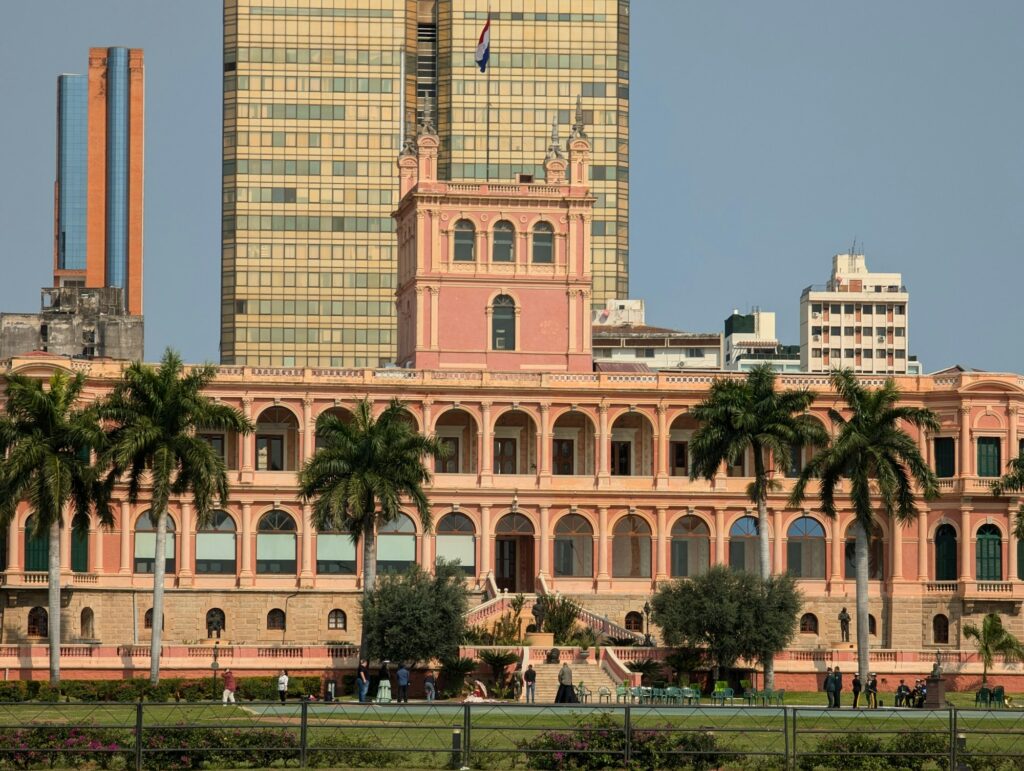
Asunción is one of the oldest cities in South America and the obvious place to start. The compact old centre runs along the bay of the Paraguay river, with the Palacio de López (the presidential palace), the National Pantheon of Heroes, the Metropolitan Cathedral and the Casa de la Independencia museum, where the 1811 independence plot was planned, all within walking distance.
Why go: the Pantheon, modelled on Les Invalides in Paris, holds the remains of national heroes and explains a lot about Paraguay’s two devastating wars, the War of the Triple Alliance (1864 to 1870) and the Chaco War with Bolivia (1932 to 1935). The palace is floodlit at night and is best photographed from the riverside; inside visits are only possible on special open days. Walk the Costanera, the riverside promenade, at sunset, then climb the painted steps of Loma San Jerónimo, a hill neighbourhood with colourful houses, small bars and murals.
How to get there without a tour: from the airport in Luque, use Bolt or Uber (both operate in Asunción) or an official airport taxi; the ride to the centre is usually 30 to 45 minutes. In the centre, walk by day and use a ride app at night. With a tour: city walking tours and half day tours with a guide are a good way to learn the history, as English signs are rare.
Time needed: one full day, or two if you add museums. Costs: most sights are free from the outside; small museums charge modest fees or ask for a donation.
2. See Museo del Barro and Manzana de la Rivera
Museo del Barro, in the Isla de Francia area east of the centre, is the best museum in the country. It combines contemporary Paraguayan art, colonial religious carvings and a superb collection of Indigenous ceramics, featherwork and masks from the Chaco peoples. Lonely Planet’s guide singles it out as its favourite thing in the capital, noting works by Matisse and Monet alongside the local collection.
Back in the centre, the Manzana de la Rivera is a block of restored historic houses opposite the Palacio de López. Casa Viola, the oldest of them, holds the Museo Memoria de la Ciudad, a small museum about the history of Asunción.
How to get there: Museo del Barro is a short Bolt ride from the centre; check opening days before you go, as it usually closes at least one day a week. Time needed: two to three hours for Museo del Barro, an hour for the Manzana. Costs: modest entry fees or donations.
3. Eat your way round Mercado 4 and try tereré
Mercado 4 is Asunción’s huge, chaotic market: stalls selling fruit, herbs for tereré, clothes, electronics and cheap lunches in small canteens called comedores. It is the best place to see everyday Paraguay and to try the national dishes for very little money.
What to eat: chipa (a ring of cheesy cassava and maize bread, sold everywhere for under Gs 5,000), sopa paraguaya (despite the name, a solid cornbread with cheese and onion), chipa guasu (a softer corn and cheese bake), mbejú (a cassava starch pancake), vori vori (a chicken soup with maize dumplings) and asado (grilled meat) on Sundays. Locals drink tereré, cold yerba mate with herbs, from a shared cup through a metal straw; UNESCO added the tereré tradition to its list of intangible heritage in 2020.
Tips: go in the morning, keep your phone and wallet in a front pocket and carry only the cash you need, as the FCDO warns that bag snatching and pickpocketing happen on public transport and in crowds. A simple two course set lunch in a local restaurant costs about Gs 30,000 to 40,000 (about £3.50 to £4.75 / $4.65 to $6.20), according to Lonely Planet.
4. Spend a lake day in San Bernardino
San Bernardino, on the eastern shore of Lake Ypacaraí about an hour from Asunción, was founded by German settlers in the nineteenth century and is now the capital’s summer escape. From December to February the town fills with weekenders, and its hotels, lakeside clubs and bars get busy; the rest of the year it is quiet and leafy.
Why go: the shady streets, old German style houses and lake views make an easy break from the city heat. You can walk the lakeshore, take a short boat ride in season and eat at the lakeside restaurants. Check the latest local advice before swimming, as the FCDO notes for Lake Ypacaraí.
How to get there without a tour: buses run from the Asunción bus terminal to San Bernardino and take around one and a half hours, or a Bolt ride takes about an hour depending on traffic. With a tour: day trips often combine San Bernardino with Areguá and Caacupé. Time needed: a day, or a weekend in summer.
5. Browse the potters of Areguá and climb Cerro Kõi
Areguá, on the western side of the same lake, is a small colonial town known for its pottery workshops, cobbled streets, the hilltop church and, in the winter months, its strawberry stalls. The road into town is lined with ceramic shops selling everything from garden pots to painted figures.
Just outside town, Cerro Kõi and Cerro Chororí have short trails to unusual hexagonal sandstone formations, a rare geological feature. The walks are short but go early, bring water and wear proper shoes.
How to get there: buses from Asunción take about an hour, or combine Areguá with San Bernardino by car or ride app. Time needed: half a day. Costs: free to wander; pay only for what you buy.
6. Drive the central circuit: Itauguá, Caacupé and Yaguarón
East and south of Asunción, a ring of small towns shows the country’s crafts and Catholic traditions in one long day. Itauguá is the home of ñandutí, the fine spider web lace that is Paraguay’s best known handicraft; women sell it at stalls along the main road. Caacupé, further east, has the huge basilica of the Virgin of Caacupé, the most important pilgrimage site in the country.
Yaguarón, to the south, has an eighteenth century Franciscan church with a bright painted wooden interior and a separate bell tower, one of the finest colonial churches in Paraguay.
Timing: on 8 December, the feast of the Virgin of Caacupé, hundreds of thousands of pilgrims walk to the basilica, many through the night from Asunción. It is a moving sight, but roads are closed and transport is packed, so visit a few days before or after if you want a calm look. How to get there: a car, a driver for the day or a tour is easiest, as the towns sit on different roads; buses link each town to Asunción separately.
7. Hike to Salto Cristal and up Cerro Hû in Paraguarí
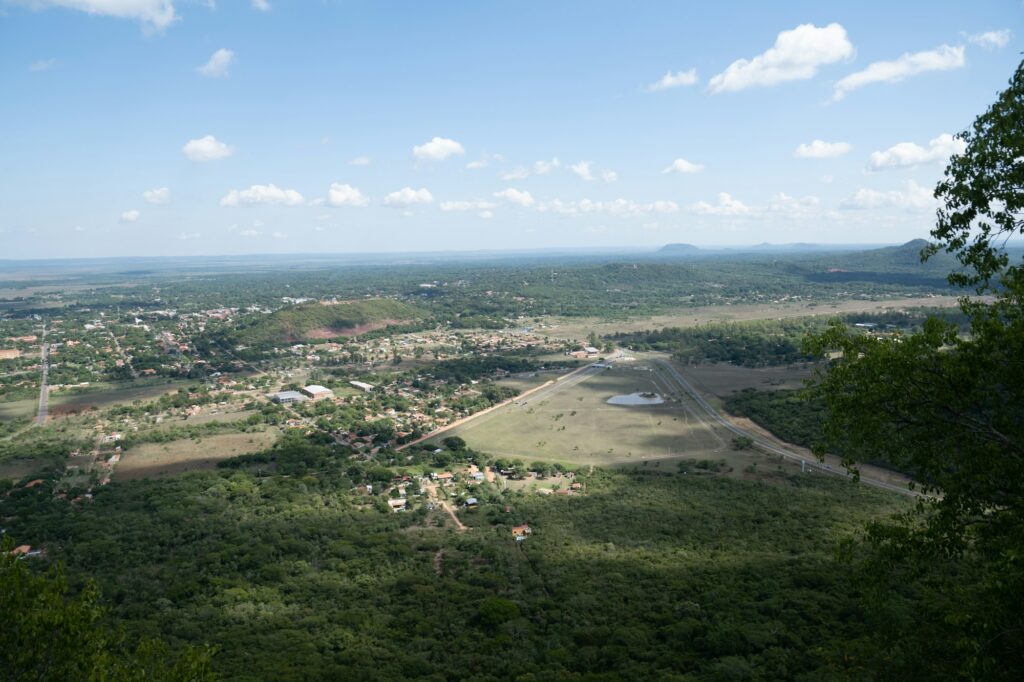
The department of Paraguarí, an hour or two southeast of Asunción, is green hill country with waterfalls and viewpoints. Salto Cristal, near La Colmena, is one of the prettiest waterfalls in the country, a thin cascade dropping into a clear pool in the forest. Cerro Hû, about 63 km from Asunción near the town of Paraguarí, is a hill with wide views over the farmland of the valley below.
Practical tips: the trail down to Salto Cristal is steep, and there are no shops or restaurants at the falls, so bring water and food. Roads to the private land around the falls can be rough after rain. Small entry fees are usually collected on the private land around the falls; carry cash in small notes.
How to get there: by car, or with a small group day tour from Asunción, which several operators run. Public transport does not reach the falls. Time needed: a full day.
8. Explore Ybycuí National Park
Ybycuí National Park, about 150 km south of Asunción, protects a patch of Atlantic forest with marked trails, small waterfalls and natural pools that are popular with Paraguayan families in summer. It also holds the ruins of La Rosada, an iron foundry built in the 1850s to supply the army and destroyed during the War of the Triple Alliance; a small museum explains the story.
Why go: it combines nature and history in one easy day out, and it is far quieter on weekdays. How to get there: by car, or by bus to the town of Ybycuí and then a taxi for the last stretch. Time needed: a full day. Costs: check with the park, as fees and opening hours change; carry cash. Bring insect repellent, as dengue is a risk throughout Paraguay.
9. Visit the Jesuit missions of Trinidad and Jesús
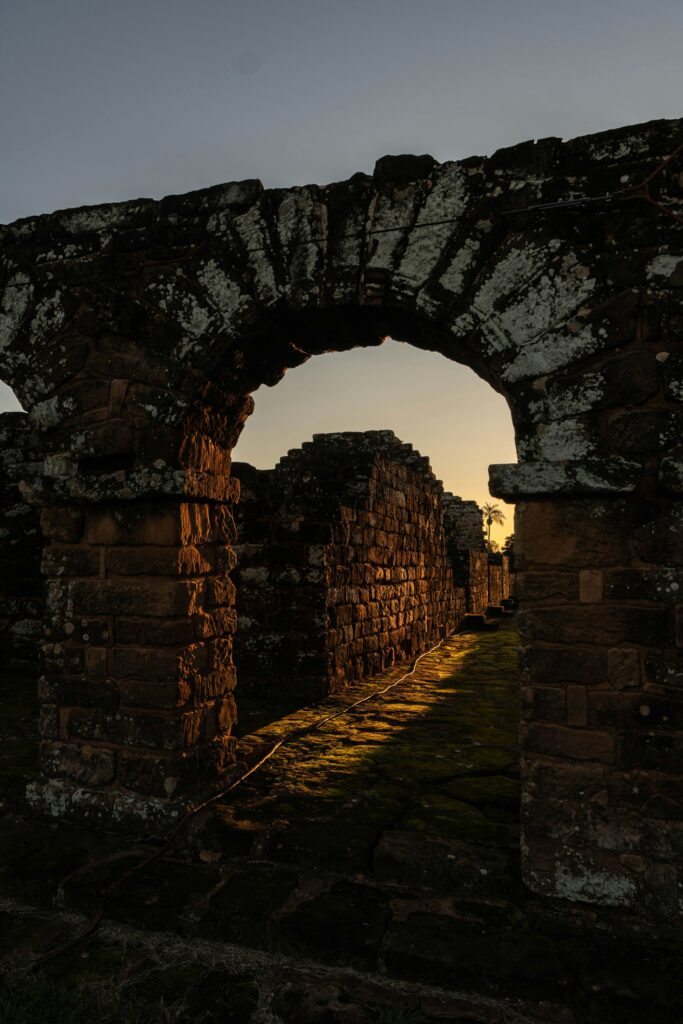
The Jesuit missions of La Santísima Trinidad de Paraná and Jesús de Tavarangüe, near Encarnación, are Paraguay’s only UNESCO World Heritage Site and its most impressive sight. In the seventeenth and eighteenth centuries Jesuit priests and Guaraní communities built a chain of self governing towns here, known as reducciones, until the Jesuits were expelled in 1767.
Why go: Trinidad is the largest and best preserved, with the red sandstone walls of a huge church, carved angels playing instruments, a bell tower and the outline of the houses around the plaza. Jesús, a short drive away, has an unfinished church with grand Moorish style arches on a hill above the countryside. You often have the ruins almost to yourself.
How to get there without a tour: buses towards Ciudad del Este from Encarnación pass the Trinidad turning, about 30 km from the city; Jesús is about 12 km further on a side road, best reached by taxi or a shared ride from Trinidad. With a tour: day and night tours from Encarnación cover both. In April 2026 the Itapúa authorities ran free minivan transfers from the Turista Róga office in Encarnación, with visitors paying only the entry fees.
Costs: in 2026 the entry ticket costs Gs 40,000 (about £4.75 / $6.20) for foreign visitors and Gs 25,000 for Paraguayans, with children up to 12 free, and one ticket is reported to cover Trinidad, Jesús and the third mission at San Cosme y Damián. Time needed: a full day for both, plus the evening show if you can.
Tips: stay for the evening light and sound show at Trinidad, and the 3D projection at Jesús on selected nights. Times change with the season, so ask at the ticket office when you arrive. Bring a hat and sunscreen, as there is little shade.
10. Relax on Encarnación’s river beaches
Encarnación, on the Paraná river opposite Posadas in Argentina, is the most attractive city in Paraguay for a few days’ stay. A long Costanera (riverside promenade) runs past sandy river beaches, the best known being Playa San José, which fill with families, music and food stalls from December to March.
Why go: it is the natural base for the Jesuit missions, the town is easy and relaxed, and the beaches and sunsets over the river are the closest Paraguay gets to a seaside holiday. Lonely Planet’s guide even recommends a Japanese restaurant in Encarnación, Hiroshima, a reminder of the area’s Japanese and other immigrant communities.
How to get there: long distance buses from Asunción take about five to six hours. The San Roque González de Santa Cruz bridge links Encarnación to Posadas, Argentina, so you can arrive overland from northern Argentina. Time needed: one or two days. Costs: free to walk the Costanera and the beaches.
11. Join the Encarnación carnival
Encarnación’s carnival is the biggest in Paraguay, inspired by Brazilian samba parades, with feathered costumes, drum groups and floats on Saturday nights in January and February. In 2025 it ran on four Saturdays, 25 January and 1, 8 and 15 February, at the Betti y Mario Pérez sambadrome.
Costs: in 2025, promotional seats in the stands cost Gs 18,000 for two people (about £2.15 / $2.80 in total) and boxes started at about Gs 78,000. Book a hotel early for carnival weekends, as many visitors cross from Argentina. The 2027 dates and prices were not yet confirmed when we checked in November 2026, so look for them on the city’s official pages from December.
Tips: the parades start late and run into the night, so rest in the afternoon, bring cash, and use a registered taxi or ride app back to your hotel.
12. Tour the Itaipu dam
Itaipu, on the Paraná river between Paraguay and Brazil, is one of the largest hydroelectric dams in the world and supplies most of Paraguay’s electricity. On the Paraguay side, the visitor centre near Hernandarias, about 20 minutes north of Ciudad del Este, runs free guided visits to the dam and power station, plus a museum, a small reserve and a scale model.
Why go: standing on top of the dam wall gives a real sense of its size, and the visits are free on the Paraguay side. If you are lucky, you may see the spillway open; this only happens a few times a year, so timing matters, as Lonely Planet points out. A night light show is held on selected evenings by reservation.
How to book: book ahead through Itaipu’s visitor centre or its Ib tur app, and carry your passport. Visit times vary by day and season, and the complex closes on 24, 25 and 31 December and 1 January. With a tour: day trips from Ciudad del Este, Encarnación or Foz do Iguaçu in Brazil often combine Itaipu with Monday Falls.
Safety: Itaipu and Ciudad del Este are in the department of Alto Paraná, where the US State Department advises increased caution and the FCDO advises particular care because of cross border crime. Go by day, use a tour or a registered taxi, and read the safety section below.
13. See Monday Falls and Ñacunday
Saltos del Monday, in Presidente Franco just south of Ciudad del Este, is a wide, roaring waterfall where the Monday river plunges into a gorge. It is the most visited natural sight in eastern Paraguay and has viewing platforms, walkways and, at times, adventure activities such as abseiling.
Further south, Ñacunday National Park has a 40 metre waterfall reached by a short forest trail, with a basic camping area. It is wilder and has few facilities, so bring water and snacks.
How to get there: Monday Falls is a short taxi ride from central Ciudad del Este, or part of most Itaipu day tours. Ñacunday is easiest by car or with a driver. Time needed: two hours for Monday Falls, a full day for Ñacunday. Costs: Monday Falls charges a small entry fee, so check the current price at the gate and carry cash.
14. Cross to Iguazu Falls from Paraguay
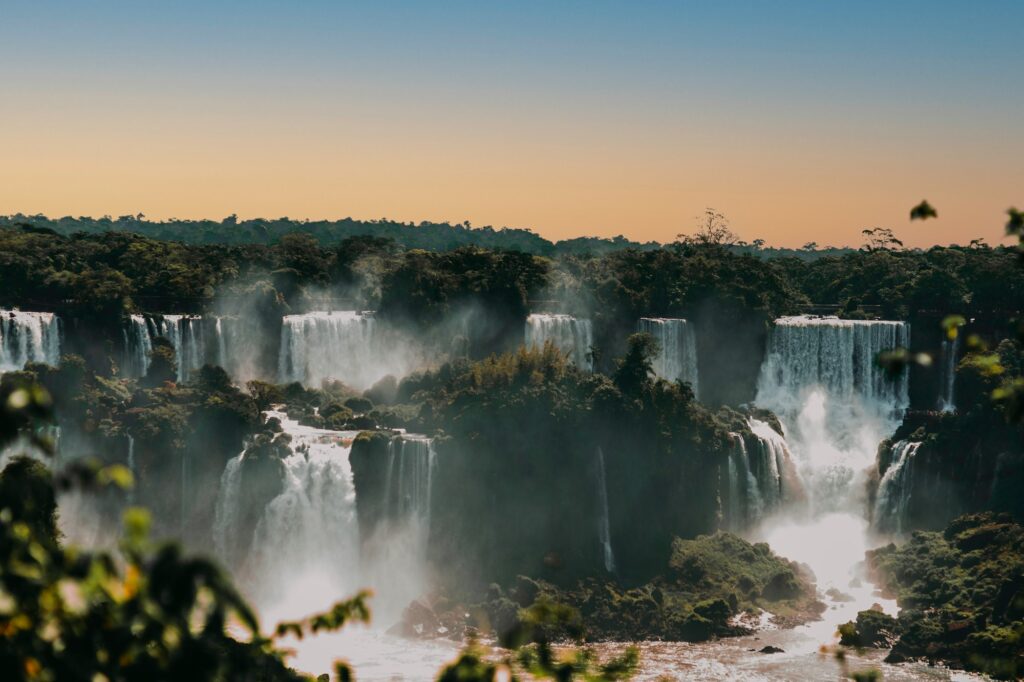
Iguazu Falls are in Brazil and Argentina, not Paraguay, but Ciudad del Este is the Paraguayan gateway. You cross the Friendship Bridge into Foz do Iguaçu in Brazil, then go on to the Brazilian side of the falls, or continue across a second bridge into Puerto Iguazú to see the Argentine side.
Entry rules matter here. British passport holders can enter Brazil and Argentina without a visa. US citizens can enter Argentina without a visa, but since 10 April 2025 they need a Brazilian eVisa, applied for online before travel (the fee was US$80.90 when it was introduced). Check both countries’ official rules again before you go, as Brazil’s Congress has debated removing the requirement.
Always get your passport stamped out of Paraguay and into Brazil or Argentina, and stamped back in on return. The FCDO warns that if you have no Paraguayan entry stamp you will be fined when you leave the country. Yellow fever is another point: Paraguay requires proof of vaccination from travellers aged one and over arriving from Brazil, Bolivia, Peru or Venezuela, according to the UK’s TravelHealthPro, so carry your certificate if you have one.
With a tour: many visitors find a guided day trip from Ciudad del Este or Encarnación the easiest option, as the driver handles the border queues. Without a tour: take a registered taxi across the bridge and local buses from Foz. Time needed: a full day for one side; two days for both.
15. Head into the Chaco and the Mennonite colonies
The Gran Chaco covers about 60 percent of Paraguay’s land but holds only a small share of its people. It is a vast, hot plain of thorny scrub, palm savannah and wetlands, with excellent birdwatching and the chance of seeing wildlife such as giant anteaters and armadillos.
The main base is Filadelfia, centre of the Fernheim Mennonite colony, about 450 km from Asunción along the Ruta Transchaco highway. Mennonite settlers arrived from Canada and Russia from the 1920s, and towns such as Filadelfia, Loma Plata and Neuland still have German speaking communities, dairy cooperatives and small museums. Nearby, Fortín Boquerón is a Chaco War battlefield with a museum and preserved trenches.
How to get there: buses from Asunción to Filadelfia take most of a day; a car or a guided trip gives more freedom, but distances between fuel stops are long. Time needed: three days at least. Tips: carry water, cash and a paper map, and avoid driving at night. The FCDO notes illegal cross border activity along the Bolivian border, so stay on main routes or go with a guide.
16. Watch the sunset on the Paraguay river
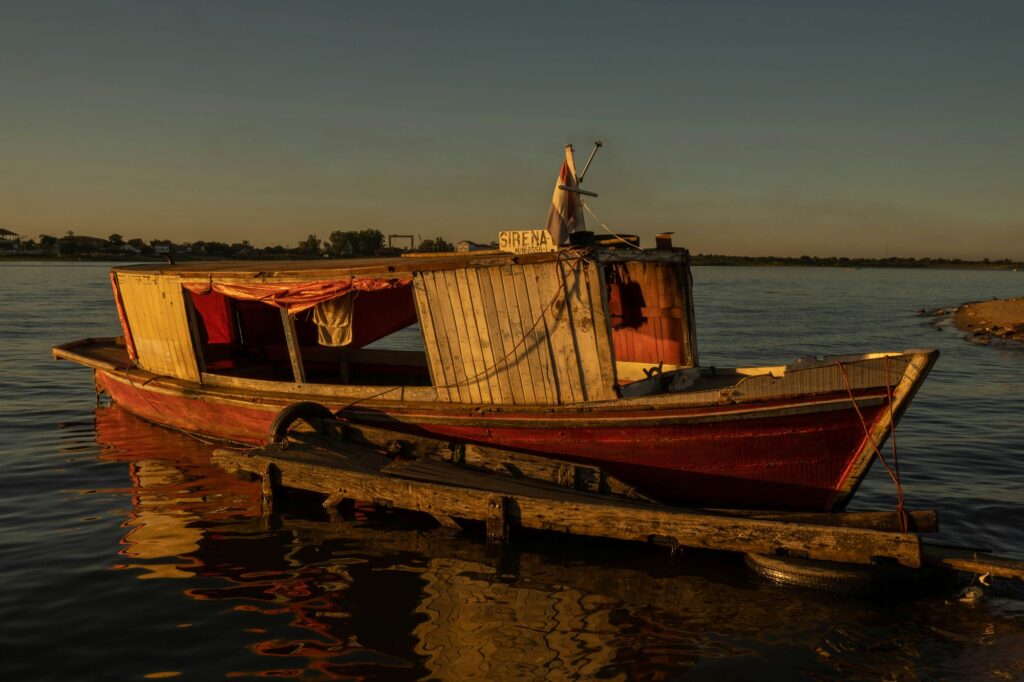
End your trip the way locals do: by the river. In Asunción, the Costanera and the bay fill up in the evening with joggers, families and tereré drinkers, and the sky over the Chaco side of the river turns orange and red. In Encarnación, the same happens on the Paraná.
Why go: it costs nothing, it is one of the most relaxed scenes in the country, and the evening is the coolest part of a hot day. Tips: stay in the busy, well lit stretches and take a ride app back after dark.
Is it safe to visit Paraguay?
Yes, for most visitors who take sensible care, but some border areas carry higher risks. When we checked in November 2026, the UK Foreign, Commonwealth and Development Office (FCDO) did not advise against travel to any part of Paraguay, and the US State Department rated Paraguay Level 1, Exercise Normal Precautions, its lowest level.
| Advisory | Overall level | Areas with extra warnings | Checked |
|---|---|---|---|
| UK FCDO | No advice against travel | Take particular care in departments bordering Brazil: Amambay, Concepción, Alto Paraná, San Pedro and Canindeyú, plus Salto del Guairá | November 2026 (page updated 3 November 2026) |
| US State Department | Level 1, Exercise Normal Precautions | Level 2, Exercise Increased Caution, in Alto Paraná, Amambay, Canindeyú, Concepción and San Pedro | November 2026 (advisory issued 30 April 2025) |
What the warnings say: the FCDO travel advice for Paraguay says criminal groups run drug and arms smuggling along the eastern border, mainly from Pedro Juan Caballero south to Ciudad del Este and the triple frontier, and that violent crime is rising there. It adds that an armed group, the EPP, operates in northern San Pedro and southern Concepción and has carried out kidnappings. The US State Department advisory says criminal groups smuggle weapons, drugs and other goods in the five northeastern departments, that police presence is weak, and that US government staff need special permission to travel there.
What this means for this guide: we do not recommend the northern departments of Concepción, San Pedro, Amambay or Canindeyú, including Pedro Juan Caballero and Cerro Corá National Park, for a first trip. The one warned area we do cover is Alto Paraná, for Itaipu, Monday Falls and the crossing to Iguazu. Go there by day, preferably with a tour or a registered driver, keep to the main sights and do not carry valuables in Ciudad del Este’s crowded shopping streets.
Everywhere else: the FCDO notes that muggers are occasionally violent and can be armed, and that bag snatching is common on public transport. Avoid isolated or poorly lit areas at night, use Bolt, Uber or registered taxis after dark, and keep away from demonstrations, which can happen at short notice in Asunción and Ciudad del Este. Road safety is the biggest everyday risk: the FCDO says driving standards are poor, accidents are common, and the legal alcohol limit is zero.
Health: dengue is a risk throughout Paraguay, so use insect repellent by day. The UK’s TravelHealthPro page for Paraguay recommends yellow fever vaccination for most travellers aged nine months and over, but not usually for trips limited to Asunción; speak to a travel clinic at least a few weeks before you go.
What to skip or leave for another trip
The far north: Pedro Juan Caballero, Cerro Corá and the rivers around Concepción have real appeal, but they sit in the departments the FCDO and State Department warn about, so leave them out unless you travel with an experienced local operator and have checked the latest advice.
Ciudad del Este as a destination: the city is a huge duty free shopping market, crowded and hectic. Use it as a base for Itaipu and the falls if you need to, but many visitors prefer to sleep in Encarnación or in Foz do Iguaçu (if their passport allows easy entry to Brazil) and visit by day.
The Pantanal and the far Chaco: the Paraguayan Pantanal and Defensores del Chaco National Park are remote, with few roads and almost no services. They need an expedition style trip with a specialist, not a quick add on.
How much things cost in Paraguay
Prices were checked in November 2026 and converted at about Gs 8,430 to £1 and Gs 6,435 to $1.
| Item | Guaraníes | Approx GBP | Approx USD |
|---|---|---|---|
| Chipa from a street seller | Under Gs 5,000 | Under 60p | Under 80 cents |
| Comedor (canteen) meal | Gs 20,000 to 30,000 | £2.40 to £3.55 | $3.10 to $4.65 |
| Two course set lunch | Gs 30,000 to 40,000 | £3.55 to £4.75 | $4.65 to $6.20 |
| Jesuit missions ticket (foreigners) | Gs 40,000 | £4.75 | $6.20 |
| Basic private double room | Gs 180,000 to 250,000 | £21 to £30 | $28 to $39 |
| Itaipu visit (Paraguay side) | Free | Free | Free |
| Carnival stand seats (2025, two people) | Gs 18,000 | £2.15 | $2.80 |
Food and room prices are Lonely Planet’s ranges, the comedor and chipa prices are from a recent traveller guide, and ticket prices are from Paraguayan press reports in 2025 and 2026. Carry cash in small notes for buses, markets and rural sites, and change money only at banks or registered exchange offices, as the FCDO advises.
Getting around Paraguay
In Asunción: Bolt and Uber both work and are the easiest option for visitors, especially at night. City buses are cheap but crowded and not always air conditioned, and the FCDO warns of bag snatching on public transport.
Between cities: long distance buses leave from the Asunción bus terminal for Encarnación, Ciudad del Este, San Bernardino, Areguá and the Chaco. Buy tickets at the terminal or from the bus company; comfortable overnight services run on the longer routes. Lonely Planet notes that buses are harder to book without some Spanish.
By car: renting a car gives you the most freedom for the central circuit, Paraguarí and the Chaco. Paraguay drives on the right, like the US; UK drivers need to adjust. Check with your rental company whether it wants an International Driving Permit as well as your licence, and avoid driving at night, when unlit vehicles and animals are on the road.
Practical tips for UK and US visitors
Entry for UK passport holders: no visa is needed, and you will normally get 90 days on arrival, according to the FCDO. Your passport should be valid for the whole stay. Make sure an officer stamps your passport when you arrive, or you will be fined when you leave.
Entry for US passport holders: no visa is needed for tourist stays of up to 90 days, according to the State Department. Paraguay removed its visa requirement for US citizens some years ago and we found no new entry rule for 2025 or 2026 when we checked in November 2026. Note that Brazil, which you may cross for Iguazu, has required a visa from US citizens since April 2025.
Yellow fever: proof of vaccination is only required if you arrive from a country with yellow fever risk (for example Brazil, Bolivia, Peru or Venezuela). Vaccination is recommended for most itineraries outside Asunción; ask a travel clinic.
Flights from the UK: there are no direct flights. The quickest route is usually London to Madrid, then Air Europa’s nonstop Madrid to Asunción flight, which runs daily and takes about 11 hours 45 minutes. Other routes connect through São Paulo, Buenos Aires or Panama City. Expect 16 to 20 hours in total from London or Manchester.
Flights from the US: there are no nonstop flights. Copa Airlines connects Miami, New York and many other US cities to Asunción through Panama City, and other airlines connect through São Paulo, Buenos Aires or Lima. From Miami, one stop journeys usually take around 10 to 14 hours.
Airport: Silvio Pettirossi International Airport (ASU) is in Luque, northeast of central Asunción. An airport departure tax applies; it is usually included in your ticket.
Time difference: Paraguay stays on UTC minus 3 all year. That is 3 hours behind London in the UK winter and 4 hours behind in the UK summer, and 2 hours ahead of New York in the US winter and 1 hour ahead in the US summer.
Plugs and voltage: Paraguay uses Type C plugs (two round pins) at 220 volts. UK and US travellers need an adapter, and US devices must be rated for 220 volts (most phone and laptop chargers are).
Money: the currency is the guaraní (PYG). Cards are accepted in Asunción’s hotels, malls and restaurants, but carry cash elsewhere. Declare cash of US$10,000 or more on arrival.
Tipping: around 10 percent is normal in sit down restaurants if service is not already on the bill. That is similar to UK habits and less than the 18 to 20 percent many Americans are used to. Round up for taxis.
Language: Spanish and Guaraní are both official languages, and English is not widely spoken outside upmarket hotels. A translation app and a few words of Spanish help a lot.
Mobile data: buy a local SIM at the airport or a shop, or set up an eSIM before you fly so ride apps and maps work as soon as you land.
Best time to go: Paraguay is hot and humid for much of the year. December to February is the hottest period, with the beach and carnival season in Encarnación; the cooler months from May to September are more comfortable for touring the missions, hiking and visiting the Chaco.
Our picks
For a first trip: two days in Asunción, a day on the central circuit or at San Bernardino, then three days in Encarnación for the Jesuit missions and the river beaches.
For waterfalls and big sights: Itaipu, Monday Falls and a day at Iguazu Falls, visited by day from Encarnación or with a guided tour.
For something truly off the map: the Chaco, with a few nights in Filadelfia and a visit to Fortín Boquerón.
What our Paraguay video covers
From Asunción and Encarnación to the Itaipú Dam, Saltos del Monday, Laguna Blanca, the Chaco and the Jesuit Missions, these are 40 of the best places to visit in Paraguay.
Jump to a chapter (23)
- 0:00 Welcome to Paraguay
- 1:23 Cities and towns (40-26)
- 5:36 Natural wonders
- 5:57 25. Itaipú Dam
- 6:13 24. Saltos del Monday
- 6:45 22. Defensores del Chaco National Park
- 7:03 21. The Paraguayan Pantanal
- 7:22 20. Basalt columns near Areguá
- 7:34 19. Lake Ypacaraí
- 8:02 17. Ñacunday National Park
- 8:17 16. Laguna Blanca
- 8:33 15. San Rafael National Park
- 8:48 14. Cerro Lambaré
- 9:12 12. Paso Bravo National Park
- 9:29 11. Mbaracayú reserve
- 9:44 10. A historic battlefield park
- 9:55 9-6. Paraguay's great rivers
- 10:59 5. Jesuit Missions of Trinidad
- 11:14 4. Museo del Barro
- 11:33 3. Casa de la Independencia
- 11:49 2. National Pantheon of the Heroes
- 12:04 1. Mercado 4, Asunción
- 12:27 Bonus: museums and historic sites
Frequently asked questions
Is Paraguay good for tourists?
Yes, if you like quiet, authentic travel. Paraguay has few crowds, low prices, friendly people and real highlights such as the Jesuit missions, Itaipu and the Chaco. Tourist infrastructure is basic outside Asunción and Encarnación, English is rarely spoken, and distances are long, so it suits independent travellers more than first time visitors to South America.
What do tourists do in Paraguay?
Most visitors explore Asunción’s old centre and Museo del Barro, take day trips to San Bernardino, Areguá and Caacupé, then head south to the Jesuit missions of Trinidad and Jesús near Encarnación. Many add the Itaipu dam, Monday Falls and a day across the border at Iguazu Falls.
Is it safe to travel to Paraguay right now?
As of November 2026, yes for most areas. The FCDO does not advise against travel anywhere in Paraguay, and the US State Department rates it Level 1, its lowest level. Both warn about crime in the departments bordering Brazil (Alto Paraná, Amambay, Canindeyú, Concepción and San Pedro). Use normal city precautions elsewhere.
What is Paraguay most famous for?
Paraguay is best known for the Itaipu dam, the Jesuit missions of Trinidad and Jesús, tereré (cold yerba mate), ñandutí lace, its Guaraní language and its harp music. Its history is shaped by the War of the Triple Alliance and the Chaco War, and Ciudad del Este is famous as a duty free shopping city.
Is Paraguay a cheap country?
Yes. Paraguay is one of the cheapest countries in South America. A set lunch costs about Gs 30,000 to 40,000 (about £3.55 to £4.75 / $4.65 to $6.20) and a basic double room about Gs 180,000 to 250,000 (about £21 to £30 / $28 to $39). The guaraní strengthened during 2026, so dollar prices have risen slightly.
What food is Paraguay famous for?
Paraguay is famous for chipa (cheesy cassava bread rings), sopa paraguaya (a solid cornbread with cheese and onion), chipa guasu, mbejú, vori vori soup, empanadas and asado (barbecued meat). The national drink is tereré, cold yerba mate with herbs, shared from one cup.
What are 40 interesting facts about Paraguay?
We will not pad a list to 40, but here are verified facts. Paraguay is landlocked. Spanish and Guaraní are both official languages. Its flag has a different emblem on each side. The Chaco covers about 60 percent of the land. The Itaipu dam supplies most of its electricity. The Jesuit missions of Trinidad and Jesús are a UNESCO World Heritage Site, and tereré is on UNESCO’s intangible heritage list.
Is LGBTQ legal in Paraguay?
Same sex relationships are legal in Paraguay, but same sex marriage and civil unions are not recognised, and there is no broad legal protection against discrimination. Attitudes are conservative, especially outside Asunción, so many LGBTQ travellers choose to be discreet in public. Read the FCDO and State Department pages for current advice.
Can US citizens go to Paraguay?
Yes. US citizens do not need a visa for tourist or business stays of up to 90 days, according to the State Department. You need a passport valid on entry with a blank page for the stamp. If you cross into Brazil for Iguazu Falls, you need a Brazilian eVisa, required since April 2025.
Do they speak English in Paraguay?
Not widely. Spanish and Guaraní are the official languages, and many Paraguayans switch between them. You will find some English in upmarket hotels, travel agencies and among younger people in Asunción, but in buses, markets and the countryside you need basic Spanish or a translation app.
Is Paraguay worth traveling to?
Yes, if you want a country with almost no mass tourism. The Jesuit missions are as impressive as any ruins in the region, Itaipu is a genuine engineering wonder, and Iguazu Falls is close. It is worth combining with Argentina or Brazil rather than flying a long way for Paraguay alone.
How many days do you need in Paraguay?
One week is enough for Asunción, a day trip and the Jesuit missions near Encarnación. Allow about two weeks to add Itaipu, Monday Falls and Iguazu Falls, and more if you want to include the Chaco.
Plan the rest of your trip
Paraguay works best as part of a longer South America trip. Buses and flights link Asunción with Buenos Aires, so read our guide to the best things to do in Buenos Aires before you go. If you cross into Brazil at Iguazu, our guide to things to do in Rio de Janeiro covers the next big stop, and it explains Brazil’s entry rules.
Heading further west? See our guides to things to do in Lima and things to do in Cusco, plus our comparison of Machu Picchu tours. For more ideas, browse our Paraguay travel guides.
Whatever you choose from these things to do in Paraguay, check the FCDO and State Department pages again just before you travel, as border rules and safety advice can change quickly.