
!DISCLOSURE
Buenos Aires is often called the Paris of South America, and with its wide boulevards, grand cafés and elegant apartment blocks, it is easy to see why. But the Argentine capital has a character all of its own: tango in the streets of San Telmo, steak and Malbec at the neighbourhood parrilla, dinner that starts at ten at night and a passion for football that has to be seen to be believed.
This guide covers the 25 best things to do in Buenos Aires, grouped by neighbourhood so you can plan your days. For each one we explain what it is, how to get there with or without a tour, how long to allow and what it costs in late 2026. We also answer the questions visitors ask most: how many days you need, the dos and don’ts in Argentina, what to be careful of, whether you can wear shorts and how to handle money.
Things to do in Buenos Aires at a glance
| Attraction | Area | Time needed | Cost from |
|---|---|---|---|
| Recoleta Cemetery | Recoleta | 1 to 2 hours | About 24,000 pesos for foreign visitors |
| Teatro Colón | Centro | 1 hour tour | Guided tour fee |
| Plaza de Mayo and Casa Rosada | Centro | 1 to 2 hours | Free |
| San Telmo Sunday fair | San Telmo | Half a day | Free |
| Caminito | La Boca | 1 to 2 hours | Free |
| El Ateneo Grand Splendid | Recoleta | 30 minutes | Free |
| Palacio Barolo | Centro | 1 hour | Guided tour fee |
| MALBA | Palermo | 2 hours | Entry fee |
| Palermo parks and Rosedal | Palermo | Half a day | Free |
| Tigre delta | 1 hour north | A full day | Train fare and boat trip |
What is popular in Buenos Aires?
The most popular things to do in Buenos Aires are visiting Recoleta Cemetery, touring the Teatro Colón opera house, seeing the colourful houses of Caminito in La Boca, browsing the Sunday fair in San Telmo, watching a tango show and eating steak at a traditional parrilla. Football is huge too, and a match at La Bombonera, the home of Boca Juniors, is on many visitors’ lists.
How many days is enough in Buenos Aires?
Three to four days is enough to see the main sights at a relaxed pace, with time for a tango show, a long steak dinner and a Sunday in San Telmo. With five days or more, add a day trip to the Tigre delta or across the river to Colonia del Sacramento in Uruguay. Buenos Aires is a big city of more than 15 million people in the wider area, so plan each day around one or two neighbourhoods rather than criss crossing the city.
Getting around Buenos Aires
The Subte (underground) is the quickest way to get between the centre, Recoleta, Palermo and San Telmo. You pay with a rechargeable SUBE card, sold at kiosks and stations. In November 2026 a Subte journey costs 1,888 pesos with a registered SUBE card, and more without one, and prices rise most months in line with inflation. City buses (colectivos) go everywhere and also use the SUBE card.
Taxis are black and yellow. The FCDO advises booking taxis in advance where you can and, if you hail one in the street, using only radio taxis with a clearly visible logo on the doors. Ride hailing apps are widely used. The centre is very walkable by day, but take a taxi or app car at night.
Money in Argentina
Argentina has a long history of high inflation and multiple exchange rates. In recent years the gap between the official rate and the informal “blue” rate has narrowed, and paying by Visa or Mastercard now usually gives a fair rate. Bring a card with no foreign transaction fees and some cash in good condition for small purchases, markets and tips. Avoid changing money with people who approach you in the street, especially on Florida Street, as fake notes are common. Prices are often given in pesos with the dollar sign ($), so check which currency you are being quoted.
Recoleta
1. Wander through Recoleta Cemetery
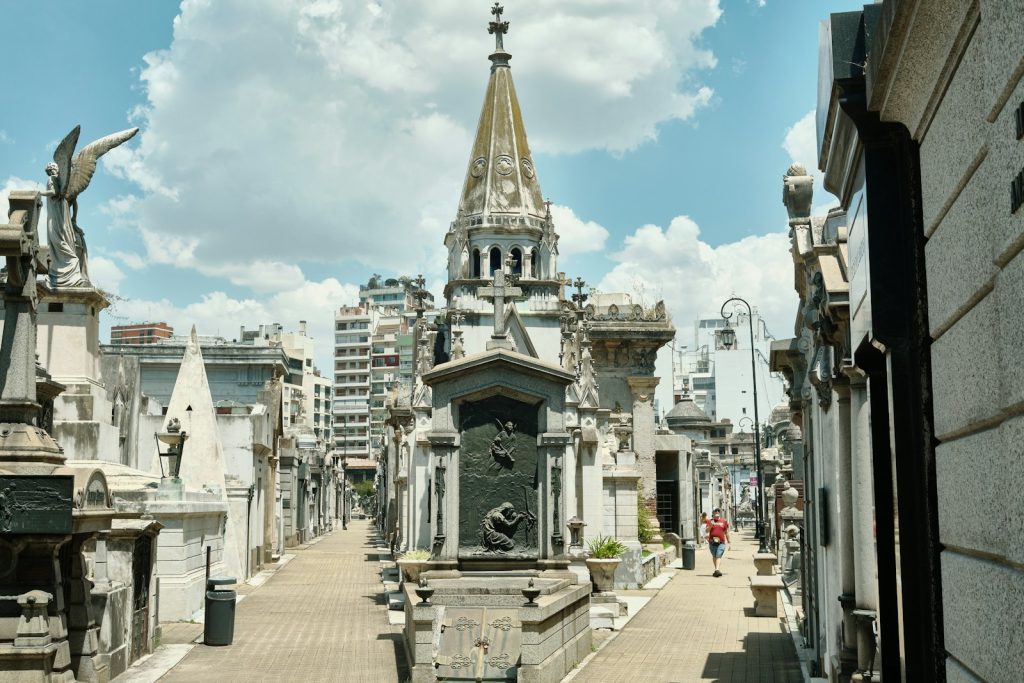
Recoleta Cemetery is one of the most extraordinary cemeteries in the world, a city of more than 4,000 marble mausoleums, chapels and statues laid out in streets and alleys. Many of Argentina’s presidents, generals and wealthiest families are buried here, and most visitors head first for the family tomb of the Duarte family, where Eva Perón (Evita) is buried.
- **Getting there without a tour:** the entrance is on Junín 1790. The nearest Subte station is Las Heras on Line H, a 10 minute walk away, or take a bus or taxi.
- **Getting there with a tour:** guided walks bring the stories behind the tombs to life and save you searching for the famous ones.
- **Cost:** foreign visitors pay around 24,000 pesos (November 2026), card only. Argentines pay much less.
- **Time needed:** 1 to 2 hours.
- **Tip:** pick up the map at the entrance, and go in the morning when it is cooler. Evita’s tomb is marked “Familia Duarte”.
2. See Floralis Genérica
Floralis Genérica is a giant steel and aluminium flower in Plaza de las Naciones Unidas, a short walk from the cemetery. It was designed to open its petals in the morning and close them at night, though the mechanism has not always worked. It is free to visit and especially photogenic at sunset.
3. Browse El Ateneo Grand Splendid
This former theatre on Avenida Santa Fe, opened in 1919, is now one of the most beautiful bookshops in the world. The balconies, painted ceiling and red stage curtains are all still there, and the stage is now a café. It is free to enter.
4. Visit the Museo Nacional de Bellas Artes
The National Museum of Fine Arts has the largest public collection of art in Argentina, with works by Rodin, Goya, Monet and Van Gogh alongside Argentine painters. Entry is free. It sits close to the cemetery and the Floralis flower, so you can combine all three in one morning.
Centro and Microcentro
5. Tour the Teatro Colón
The Teatro Colón, opened in 1908, is one of the great opera houses of the world and is famous for its almost perfect acoustics. Guided tours of about 50 minutes take you through the marble foyer, the golden hall and into a box overlooking the horseshoe shaped auditorium. Better still, book a ticket for an opera, ballet or concert.
- **Getting there:** the tour entrance and box office are on Tucumán 1171. The nearest Subte stations are Tribunales on Line D and Carlos Pellegrini on Line B.
- **Cost:** tour prices are updated regularly, and foreign visitors pay a higher rate than residents. Book on the official website.
- **Time needed:** about 1 hour for the tour.
6. Walk around Plaza de Mayo and the Casa Rosada
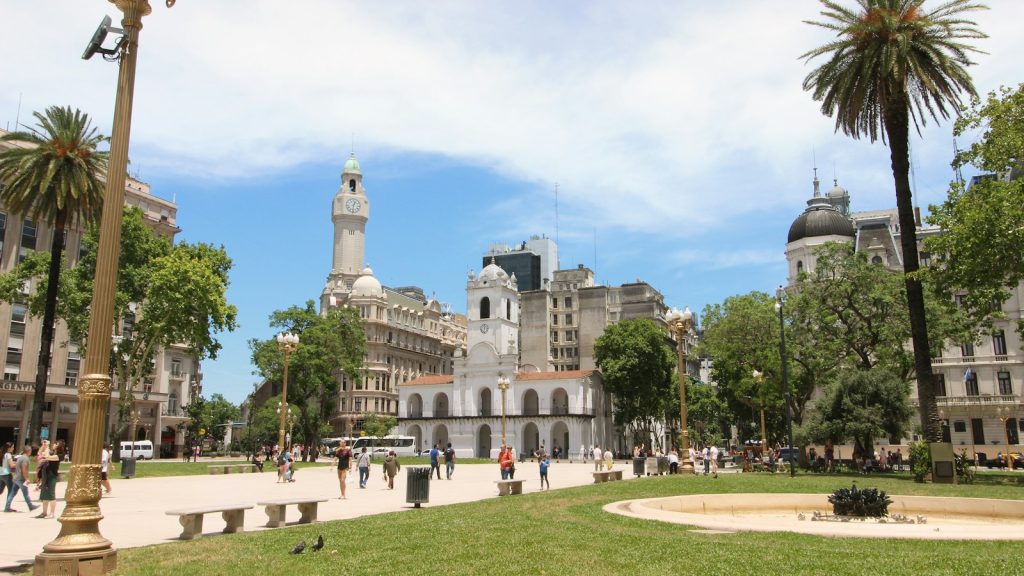
Plaza de Mayo is the political heart of Argentina. On its eastern side stands the pink Casa Rosada, the presidential palace, from whose balcony Evita addressed the crowds. Around the square you will find the Metropolitan Cathedral, where Pope Francis served as archbishop, and the Cabildo, the old colonial town hall. On Thursday afternoons, the Mothers of the Plaza de Mayo still walk around the square in memory of those who disappeared during the military dictatorship.
- **Tip:** the FCDO notes that protests often take place near the Casa Rosada and Congress. Avoid any demonstrations.
7. See the Obelisco and Avenida 9 de Julio
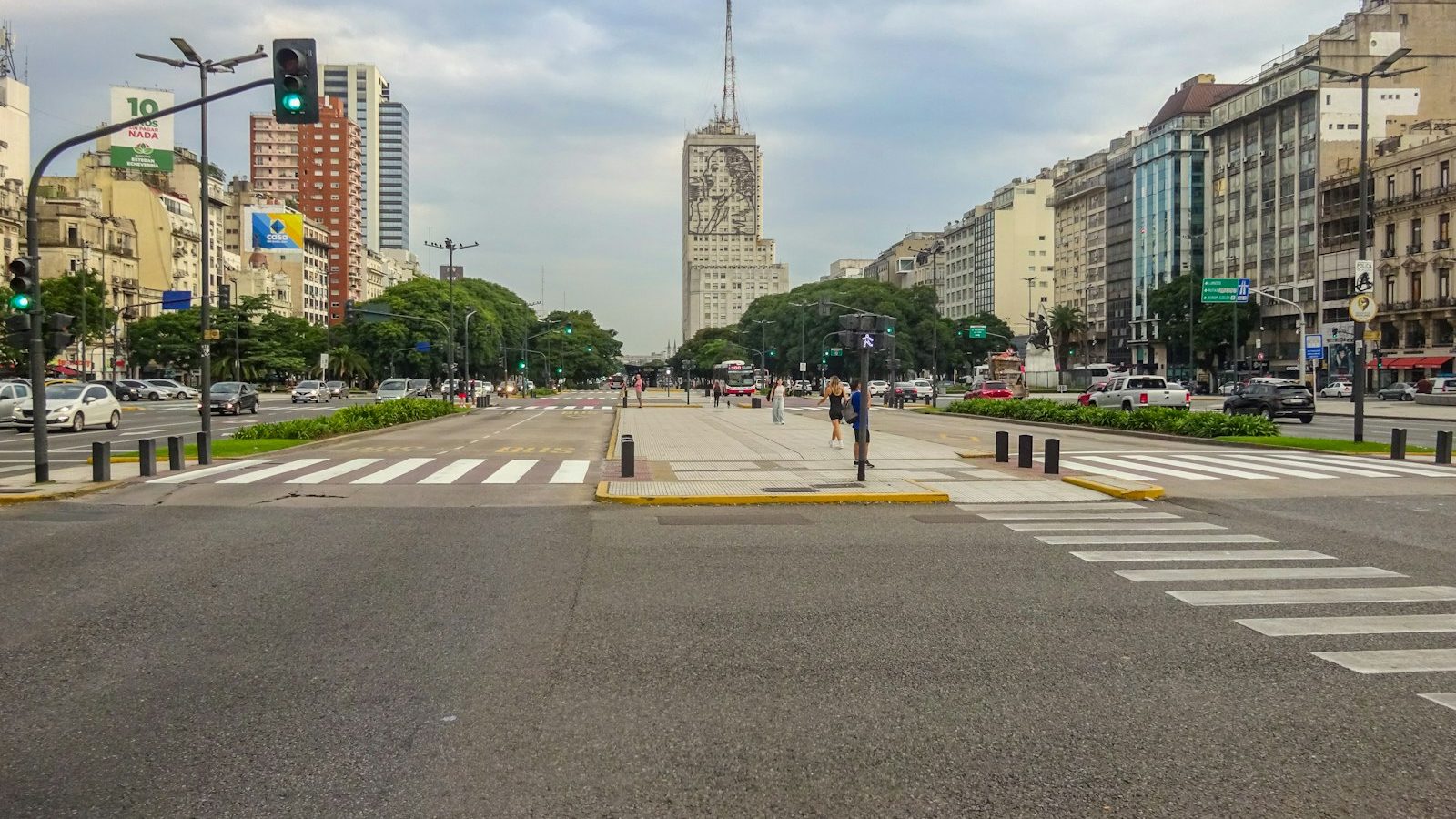
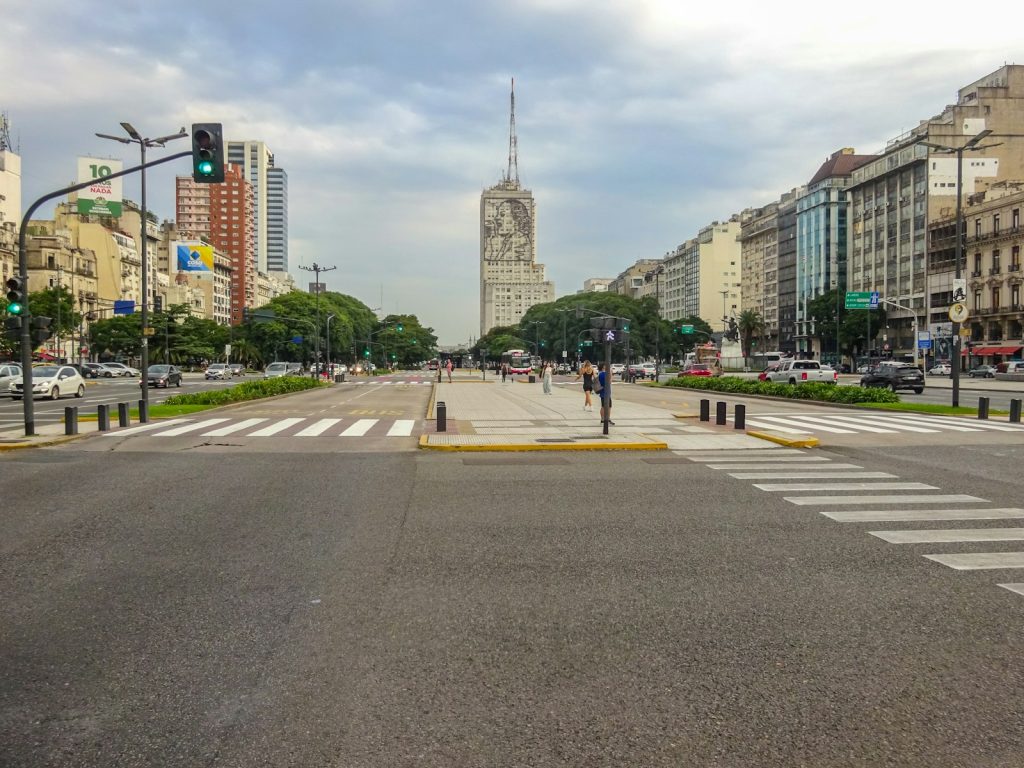
The Obelisco, built in 1936, stands in the middle of Avenida 9 de Julio, one of the widest avenues in the world, with up to seven lanes each way. It is a symbol of the city and the place where fans gather to celebrate football victories. Keep a close eye on your belongings in this area.
8. Take a tour of Palacio Barolo
Palacio Barolo on Avenida de Mayo was the tallest building in South America when it was finished in 1923. Its design is inspired by Dante’s Divine Comedy, rising from hell in the basement through purgatory to heaven at the lighthouse dome. Guided tours, including evening tours, end at the top with views across the city.
9. Have coffee at Café Tortoni
Café Tortoni, opened in 1858, is the oldest café in Buenos Aires and the most famous of its “cafés notables”, historic cafés protected for their cultural value. Order a coffee with medialunas (small sweet croissants) or churros with hot chocolate. Queues can be long, so go early or try other historic cafés such as Las Violetas in Almagro.
10. See the Congress building
At the western end of Avenida de Mayo, the domed Palace of the Argentine National Congress is one of the most impressive buildings in the city. Free guided tours run on some days, with booking ahead.
San Telmo
11. Browse the San Telmo Sunday fair
Every Sunday, the Feria de San Telmo fills Calle Defensa and Plaza Dorrego with stalls selling antiques, crafts, leather goods and vintage soda siphons. Street musicians and tango dancers perform along the way. It runs from late morning until early evening.
- **Tip:** the FCDO names San Telmo, including the market, as an area for extra caution. Carry little and keep your phone out of sight in the crowds.
12. Eat at the Mercado de San Telmo
The covered market, built in 1897, has a beautiful iron and glass roof. As well as fruit stalls and antique dealers, it is now packed with cafés, coffee bars and choripán (sausage sandwich) stands. It is open every day and makes a great lunch stop.
13. Watch a tango show or join a milonga
Buenos Aires is the home of tango, and seeing it danced is a must. There are three main ways to experience it:
- **Tango dinner shows:** polished shows with live music and dinner, in venues such as Café de los Angelitos or El Querandí. Book ahead.
- **Milongas:** local tango dance halls, where people of all ages come to dance. You can watch, or take a beginners’ class first.
- **Street tango:** dancers perform for tips in San Telmo, especially on Sundays, and in Caminito.
La Boca
14. See the colourful houses of Caminito
Caminito is a short, pedestrian street in La Boca lined with brightly painted tin and wooden houses, built by Italian immigrants who used leftover paint from the shipyards. Today it is full of artists, tango dancers and restaurants. It is lively and photogenic by day, but stay within the main tourist area.
- **Getting there:** there is no Subte to La Boca, so take a taxi, an app car or a tour. Several city tours include it.
- **Tip:** the FCDO advises staying within the designated tourist area of La Boca, where police patrols are highly visible, and not wandering beyond it.
15. Visit La Bombonera
La Bombonera is the stadium of Boca Juniors, one of the most famous football clubs in the world and the club where Diego Maradona played. The museum and stadium tour are open on non match days. Getting match tickets is difficult for visitors, so most people go with an organised match day package that includes transport and a guide.
16. See Fundación Proa and Colón Fábrica
Fundación Proa is a contemporary art centre in a restored building near Caminito, with a rooftop café looking over the port. Nearby, Colón Fábrica is the Teatro Colón’s workshop space, where you can see sets and costumes from past productions.
Puerto Madero
17. Walk around Puerto Madero
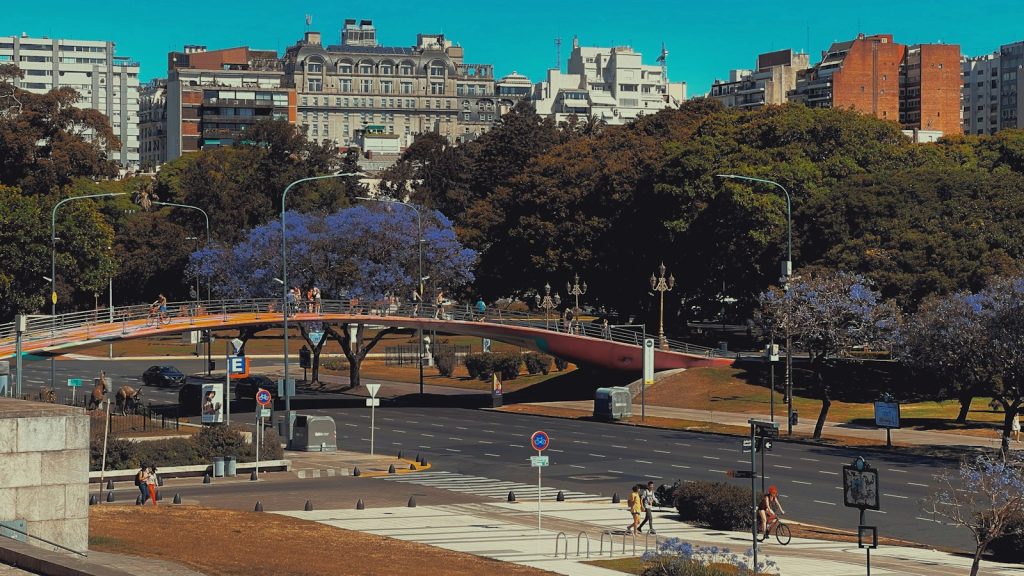
Puerto Madero is the city’s old docks, now redeveloped with brick warehouses turned into restaurants, modern apartment towers and walkways along the water. Look out for the Puente de la Mujer, a white footbridge by Santiago Calatrava designed to suggest a couple dancing the tango, and the museum ship Fragata Sarmiento.
18. Visit the Costanera Sur Ecological Reserve
Behind Puerto Madero, the Reserva Ecológica Costanera Sur is a large area of wetland and grassland on reclaimed land beside the River Plate. It is great for walking, cycling and birdwatching, and entry is free. Go in daylight with a friend, as the FCDO mentions the reserve among areas where crime has been reported.
Palermo
19. Explore Palermo Soho and Palermo Hollywood
Palermo is the city’s largest neighbourhood. Palermo Soho is packed with boutiques, street art, cafés and craft beer bars around Plaza Serrano, while Palermo Hollywood has many of the city’s best restaurants and late night bars.
20. Relax in the Bosques de Palermo and El Rosedal
The Bosques de Palermo (Parque Tres de Febrero) is a huge green space with lakes, paddle boats and running paths. Inside, El Rosedal is a rose garden with thousands of rose bushes, a Greek style bridge and a poets’ garden. The nearby Japanese Garden is one of the largest of its kind outside Japan and charges a small fee.
21. Visit MALBA
The Museo de Arte Latinoamericano de Buenos Aires (MALBA) has one of the best collections of modern and contemporary Latin American art, with works by Frida Kahlo, Diego Rivera and Argentine artists such as Xul Solar and Antonio Berni. Allow two hours. There is an entry fee, with reduced prices on some days.
22. Eat steak at a parrilla
A steak dinner at a parrilla (grill restaurant) is one of the highlights of any trip to Buenos Aires. Order bife de chorizo (sirloin) or ojo de bife (ribeye), with provoleta (grilled cheese), chimichurri and a bottle of Malbec. Famous names include Don Julio in Palermo, which needs booking weeks ahead, but neighbourhood parrillas are often just as good and much cheaper. Also try empanadas, Buenos Aires style pizza and dulce de leche ice cream.
Day trips
23. Take a boat trip in the Tigre delta
Tigre, about an hour north of the city by train from Retiro, sits at the start of the Paraná Delta, a maze of rivers and islands dotted with houses on stilts. Take a boat trip through the channels, visit the Puerto de Frutos market and have lunch by the water. You can also make a day of it on the Tren de la Costa.
24. Cross to Colonia del Sacramento in Uruguay
Fast ferries cross the River Plate to Colonia del Sacramento in Uruguay in just over an hour. Colonia’s old town, a UNESCO World Heritage Site, has cobbled streets, a lighthouse and a relaxed feel that is very different from Buenos Aires. Bring your passport, as you will pass through border controls, and check whether you want to pay in Uruguayan pesos, US dollars or by card.
25. Visit an estancia
An estancia is a traditional ranch on the pampas. Day trips from Buenos Aires, often to the town of San Antonio de Areco, include a big asado (barbecue), horse riding and a display of gaucho skills. It is a great way to see rural Argentina in one day.
What is the prettiest city in Argentina?
Many people would say Buenos Aires itself, for its architecture and boulevards. Others point to Salta, a colonial city in the north west surrounded by red mountains, or to San Carlos de Bariloche in Patagonia, on the shore of a lake below the Andes. Mendoza, the heart of Argentina’s wine country, and Ushuaia, the southernmost city in the world, are also favourites.
Dos and don’ts in Argentina
- **Do:** eat late. Many restaurants open for dinner at 8pm or later and fill up from 10pm.
- **Do:** greet people with a kiss on the right cheek once you know them, and say “buen día” or “buenas tardes” when you enter a shop.
- **Do:** tip about 10 per cent in restaurants, in cash if you can.
- **Do:** try mate, the bitter herbal drink shared from a gourd, if you are offered it.
- **Don’t:** change money with street dealers on Florida Street.
- **Don’t:** bring up the Falklands (Las Malvinas) in conversation. It remains a sensitive subject for many Argentines.
- **Don’t:** call football club Boca and River fans the same thing. Rivalries are fierce, so avoid wearing club shirts on match days.
What to be careful of in Argentina
Buenos Aires is generally safe for visitors who take sensible care, but street crime is common. According to the FCDO, you should watch for:
- **Pickpocketing and bag theft:** especially on public transport, at bus and train stations, in crowds and from thieves on motorbikes.
- **The mustard scam:** someone sprays a substance on you, a “helpful” stranger offers to clean it off, and an accomplice takes your bag. Refuse help firmly and walk away.
- **Areas for extra care:** Palermo, San Telmo, La Boca outside the Caminito area, the Ecological Reserve, Retiro and its bus terminal, Florida Street, 9 de Julio, Avenida de Mayo and the cruise and ferry terminals.
- **Robbery:** if you are robbed, hand over cash and valuables without resistance.
- **Spiking and invitation robberies:** watch your drinks and do not bring people you have just met back to your room.
- **Protests:** avoid all demonstrations, which often take place near Congress and the Casa Rosada.
Is it okay to wear shorts in Buenos Aires?
Yes, especially in summer, from December to March, when temperatures often pass 30°C. However, porteños, as people from Buenos Aires are known, tend to dress quite smartly, and shorts are less common among adults in the city centre than in beach towns. Shorts are fine for sightseeing by day, but for dinner, the theatre or a tango show, long trousers or a dress will help you fit in. Comfortable walking shoes are essential, as the pavements can be uneven.
How much does a trip to Buenos Aires cost?
Prices in pesos change quickly with inflation, so the guide below uses pound equivalents where it is more useful.
| Item | Typical cost (late 2026) |
|---|---|
| Subte journey with SUBE | 1,888 pesos |
| Recoleta Cemetery (foreign visitor) | About 24,000 pesos |
| Coffee and medialunas | £3 to £6 |
| Steak dinner with wine at a parrilla | £25 to £50 per person |
| Tango dinner show | £60 to £120 per person |
| Mid range hotel in Palermo | £70 to £140 a night |
Sample 4 day Buenos Aires itinerary
- **Day 1:** Plaza de Mayo, the Casa Rosada and the Cathedral, coffee at Café Tortoni, Palacio Barolo, then a Teatro Colón tour and dinner in the centre.
- **Day 2:** Recoleta Cemetery, Floralis Genérica and the Museo Nacional de Bellas Artes, El Ateneo Grand Splendid, then a tango dinner show.
- **Day 3:** Palermo parks and El Rosedal, MALBA, an afternoon in Palermo Soho and a steak dinner at a parrilla.
- **Day 4 (Sunday):** San Telmo fair and market, Caminito and La Bombonera by taxi, and a sunset walk in Puerto Madero.
Where to stay in Buenos Aires
- **Palermo:** the most popular area for visitors, with green parks, great restaurants, nightlife and boutique hotels.
- **Recoleta:** elegant and central, with grand hotels and easy access to the cemetery and museums.
- **San Telmo:** historic and atmospheric, with characterful guesthouses, but quieter streets at night need more care.
- **Puerto Madero:** modern, upmarket hotels by the water, but less local life.
Entry requirements for British visitors
British citizens can visit Argentina as tourists without a visa for up to 90 days. Your passport should be valid for the length of your stay. Border officials may ask for proof of onward travel. Always check the latest FCDO entry requirements before you travel, as rules can change.
When is the best time to visit Buenos Aires?
The best times to visit are spring, from September to November, when the jacaranda trees bloom purple across the city, and autumn, from March to May, with warm days and fewer crowds. Summer, from December to February, is hot and humid, and many locals leave the city in January. Winter, from June to August, is cool but rarely cold, and is a good time for theatre and indoor sights.
Our picks
- **Best first stop:** Recoleta Cemetery.
- **Best free thing to do:** the San Telmo Sunday fair.
- **Best for culture:** a performance or tour at the Teatro Colón.
- **Best night out:** a tango show or a milonga.
- **Best day trip:** Colonia del Sacramento in Uruguay.
Frequently asked questions
How many days is enough in Buenos Aires?
Three to four days is enough for the main sights, a tango show and a Sunday at the San Telmo fair. Five days or more lets you add Tigre, Colonia or an estancia.
What is popular in Buenos Aires?
The most popular things to do are Recoleta Cemetery, the Teatro Colón, Caminito in La Boca, the San Telmo fair, tango shows, steak at a parrilla and football at La Bombonera.
What is the prettiest city in Argentina?
Buenos Aires is often named for its architecture, but Salta, Bariloche, Mendoza and Ushuaia are also considered among the most beautiful cities in Argentina.
What are the dos and don’ts in Argentina?
Do eat late, tip about 10 per cent and greet shopkeepers politely. Don’t change money in the street, raise the Falklands in conversation or wear rival football shirts on match days.
What should you be careful of in Argentina?
Watch for pickpockets, bag snatching, phone theft and the mustard scam, especially in crowded areas and around transport hubs. Use radio taxis or apps, avoid protests and hand over valuables if you are robbed.
Is it okay to wear shorts in Buenos Aires?
Yes, shorts are fine for sightseeing in warm weather, but locals dress quite smartly, so wear trousers or a dress for dinner, the theatre and tango shows.
Is Buenos Aires safe for tourists?
Most visits are trouble free, but street crime is common. Keep valuables out of sight, stay in the main tourist area of La Boca, use radio taxis or apps at night and follow FCDO advice.
Do I need a visa for Argentina from the UK?
No. British citizens can visit Argentina as tourists without a visa for up to 90 days.
Plan the rest of your trip
Browse our South America travel guides for more ideas. If you are heading to Peru, see our guide to Machu Picchu tours. If you are combining Argentina with Brazil, read our guide to the best things to do in Rio de Janeiro. Flying via North America? See our guide to the best things to do in Miami. If you spot something out of date, please let us know.