

!DISCLOSURE
Rio de Janeiro is one of the most dramatic cities on earth. Granite peaks rise straight out of the sea, rainforest covers the hills in the middle of the city, and long beaches such as Copacabana and Ipanema are lined with juice bars, volleyball nets and families out for the day. Add samba, football at the Maracanã, colonial streets in Centro and the biggest Carnival in the world, and it is easy to see why so many people put Rio at the top of their list.
This guide covers the 25 best things to do in Rio de Janeiro, grouped by area so you can plan your days. For each one we explain what it is, how to get there with or without a tour, how long to allow and what it costs in late 2026. We also cover Carnival 2027 dates, current FCDO safety advice for British visitors, the dos and don’ts, what to wear, what you cannot bring into Brazil, where to stay and a sample itinerary.
Things to do in Rio de Janeiro at a glance
| Attraction | Area | Time needed | Cost from |
|---|---|---|---|
| Christ the Redeemer | Corcovado | Half a day | About R$87 by official van |
| Sugarloaf Mountain | Urca | 2 to 3 hours | R$205 cable car |
| Copacabana beach | South Zone | Half a day | Free |
| Ipanema and Arpoador | South Zone | Half a day | Free |
| Escadaria Selarón | Lapa | 1 hour | Free |
| Tijuca National Park | West of the centre | Half a day | Free |
| Jardim Botânico | Jardim Botânico | 2 hours | Small entry fee |
| Museu do Amanhã | Centro | 2 hours | Entry fee, free on Tuesdays |
| Maracanã stadium | Maracanã | 2 hours or a match | Tour or match ticket |
| Santa Teresa | Above Lapa | Half a day | Free |
Why do people visit Rio de Janeiro?
People visit Rio for its setting above all. Few cities combine big beaches, rainforest and mountains so closely, and the views from Sugarloaf and Corcovado are among the most famous in the world. Visitors also come for the culture: samba and bossa nova, Carnival, the passion for football, street food and a relaxed, outdoor way of life. For British travellers, Rio is also easy to reach, with direct flights from London and no visa needed for short stays.
How to choose what to do in Rio
If you only have two or three days, focus on the big sights: Christ the Redeemer, Sugarloaf, a beach day at Copacabana or Ipanema, and an afternoon in Centro and Lapa. With five days or more, add a hike in Tijuca National Park, the Botanical Garden, Santa Teresa, a football match and a day trip to Niterói or the islands of Paraty and Ilha Grande.
Plan the two famous viewpoints around the weather. Cloud often covers Corcovado, especially in the afternoon, so check the live webcams or the forecast in the morning and go up on the first clear day. Sugarloaf is best in the late afternoon for sunset.
Getting around Rio de Janeiro
Rio’s Metro is clean, safe and the easiest way to move between the South Zone beaches, Botafogo, Centro and the Maracanã. A single journey costs R$7.90, a fare frozen for 2026. City buses, the BRT rapid bus lines, the VLT light rail in Centro and the ferries all cost R$5, and suburban SuperVia trains cost R$7.60. You can pay with a contactless bank card on the Metro and many other services.
For door to door journeys, use a ride hailing app or an official taxi booked through an app. The FCDO advises against hailing taxis in the street, and warns that fake drivers approach travellers at the airports, so only use the official taxi desks or your app. At night, always take a car rather than walking between neighbourhoods.
Corcovado and the South Zone hills
1. See Christ the Redeemer
Christ the Redeemer (Cristo Redentor) stands 30 metres tall on top of Corcovado mountain, 710 metres above the city. Completed in 1931, it is one of the New Seven Wonders of the World and the symbol of Rio. The view from the platform takes in Sugarloaf, Copacabana, Ipanema, the lagoon and the Maracanã all at once.
- **Getting there without a tour:** every ticket includes transport to the top. You can take the Corcovado rack railway from Cosme Velho, a scenic ride of about 20 minutes through the forest, or the official vans from Paineiras, which cost about R$87 (June 2026) including entry. Children under six go free.
- **Getting there with a tour:** many tours combine Christ the Redeemer with Sugarloaf and the Selarón steps in one day, with hotel pickup.
- **Time needed:** half a day.
- **Tip:** buy your ticket online only from the official train or van sellers, and go early in the morning, before the crowds and the clouds arrive. Discounts for Rio residents are currently suspended, so all visitors pay the same price.
2. Ride the cable car up Sugarloaf Mountain
Sugarloaf Mountain (Pão de Açúcar) is a granite peak 396 metres high at the mouth of Guanabara Bay. Its name comes from its rounded shape, which reminded early Portuguese settlers of the conical blocks in which refined sugar was traded. The cable car, which opened in 1912, was one of the first in the world.
The ride has two stages. The first runs from Praia Vermelha in Urca to Morro da Urca, a lower hill with cafés and viewpoints, and the second continues to the top of Sugarloaf. From the summit you can see Copacabana, the city centre, the Rio Niterói bridge and Christ the Redeemer across the bay.
- **Cost:** R$205 for a full adult ticket, R$102 for children aged 3 to 12 and for people over 60 (October 2026). A cheaper promotional ticket is offered to Brazilian residents.
- **Time needed:** 2 to 3 hours.
- **Tip:** go about an hour before sunset and stay for the lights of the city coming on. If you are fit, you can walk up to Morro da Urca on the free Urca trail and buy the cable car ticket for the top section from there.

3. Walk the Pista Cláudio Coutinho
This flat, paved path at the foot of Sugarloaf runs along the edge of the sea from Praia Vermelha. It is popular with local runners and is one of the best places in Rio to see marmosets in the trees. It is free and takes about an hour there and back.
4. Watch the sunset at Mureta da Urca
The low sea wall in Urca is where local people gather at the end of the day with a cold beer and a snack from the bars across the road. It faces across the bay towards the Christ statue and the city, and is far more relaxed than the beaches.
The beaches
5. Spend a day on Copacabana beach
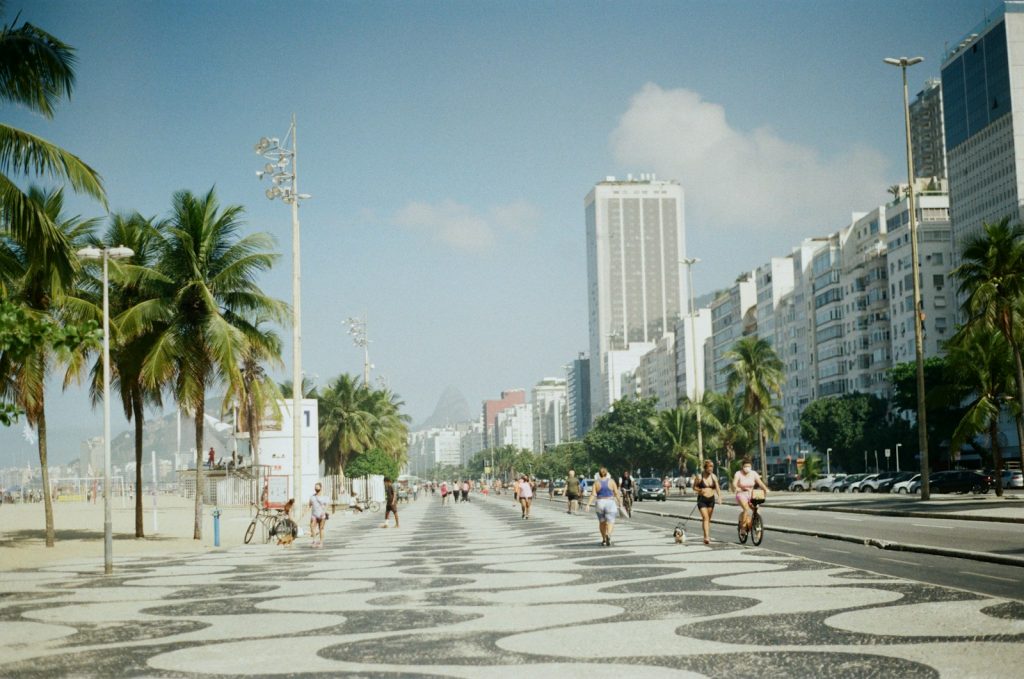
Copacabana is four kilometres of sand curving from Leme to the Copacabana Fort, backed by the famous wave pattern promenade on Avenida Atlântica. It is the busiest and most famous beach in Rio, with football, volleyball, vendors selling everything from grilled cheese to sarongs, and kiosks for coconut water and caipirinhas.
- **Time needed:** half a day.
- **Tip:** rent a chair and parasol from one of the beach tents (barracas), which will also keep an eye on your space. Agree prices before you order anything from vendors, as the FCDO warns about overcharging.

6. Visit the Copacabana Fort
At the southern end of the beach, the Forte de Copacabana is an army fort with a small military museum and lovely views back along the sand. The Confeitaria Colombo café inside is a classic spot for breakfast with a view. There is a small entry fee.
7. Watch the sunset from Arpoador
The rocky point of Arpoador, between Copacabana and Ipanema, is the best sunset spot in Rio. On clear evenings, hundreds of people sit on the rocks to watch the sun go down behind the Dois Irmãos peaks, and often applaud when it disappears.
8. Relax on Ipanema and Leblon beaches
Ipanema is the smarter, more fashionable neighbourhood beach, made famous by the song The Girl from Ipanema. The beach is divided into sections by lifeguard posts (postos), each with its own crowd. Leblon, at the western end, is calmer and popular with families.

Is Copacabana or Ipanema safer?
Both are among the most visited areas in Rio and both have police and lifeguards along the seafront. Ipanema and Leblon are generally considered a little calmer and more upmarket, while Copacabana is busier and has more street crime, especially at night. The FCDO notes that theft is common around Copacabana and Ipanema alike, so take only what you need to the beach and avoid both beaches after dark.
9. Hike the Morro Dois Irmãos
The Dois Irmãos (Two Brothers) peaks rise above Leblon and give one of the best views over Ipanema and the lagoon. The trail starts in the community of Vidigal, so the FCDO advice to avoid favelas applies. If you want to hike it, choose a hike from a reputable operator that follows current safety advice, or enjoy the view from Arpoador instead.
Lagoon and Botanical Garden
10. Walk or cycle around Lagoa Rodrigo de Freitas
The lagoon behind Ipanema and Leblon has a 7.5 kilometre path around it, ideal for walking, running or cycling with views of Corcovado above. There are kiosks serving food and drinks along the shore, and pedal boats to hire. It is free, and the bike share scheme makes it easy to do by bike.
11. Explore the Jardim Botânico
Rio’s Botanical Garden was founded in 1808 and covers more than 50 hectares at the foot of Corcovado. Its avenue of royal palms is famous, and there are orchid and bromeliad houses, lakes with giant water lilies and plenty of birds and monkeys. Allow two hours. There is a small entry fee.
12. Visit Parque Lage
Parque Lage is a former mansion set in lush gardens below Corcovado, now home to an art school and a café in the old courtyard, where you can have breakfast with the Christ statue above you. It is free to enter the park. Do not use the trail from here up to Corcovado.
Centro and Lapa
13. Climb the Escadaria Selarón
The Selarón steps link Lapa and Santa Teresa. The Chilean artist Jorge Selarón covered all 215 steps in more than 2,000 colourful tiles from around the world over two decades, and they are now one of the most photographed places in Rio. Go in the morning, when it is quieter, and keep your phone close.
14. See the Arcos da Lapa and Lapa nightlife
The white arches of the old aqueduct, built in the 18th century, are the landmark of Lapa, the neighbourhood with Rio’s liveliest nightlife. On Friday and Saturday nights, the streets fill with samba bars, music venues and street parties. Go with a group, take a car door to door and keep valuables at home, as the FCDO notes that theft is common in Lapa.
15. Visit the Museu do Amanhã
The Museum of Tomorrow, designed by Santiago Calatrava, stands on the waterfront in the revitalised port area. Its exhibitions explore science, climate and the future of the planet. Entry is free on Tuesdays. Next door, the Museu de Arte do Rio (MAR) has great views from its rooftop terrace.
16. See the Theatro Municipal and Cinelândia
The Theatro Municipal is a grand opera house from 1909, modelled on the Paris Opéra. Guided tours run on most days, and the programme includes opera, ballet and concerts. The square in front, Cinelândia, is surrounded by other fine buildings, including the National Library.
17. Visit the CCBB and Real Gabinete Português de Leitura
The Centro Cultural Banco do Brasil (CCBB) is one of the most visited cultural centres in Brazil, with free or cheap exhibitions in a beautiful former bank. A short walk away, the Real Gabinete Português de Leitura is a stunning reading room with carved wooden shelves, often called one of the most beautiful libraries in the world.
18. Have coffee at Confeitaria Colombo
Opened in 1894, the Confeitaria Colombo in Centro is a Belle Époque café with huge mirrors, stained glass and cakes in glass cases. It is the perfect break between sights in the old centre.
Santa Teresa
19. Ride the Santa Teresa tram and explore the neighbourhood
Santa Teresa is a hilltop neighbourhood of old mansions, cobbled streets, artists’ studios and small bars. The historic yellow tram (bondinho) runs from the station in Centro across the Arcos da Lapa and up into the hills. It is a lovely place for lunch and a slow afternoon.
- **Tip:** stay on the main streets, especially around Largo dos Guimarães, and take a car back down after dark.
20. Visit Parque das Ruínas
The ruins of a former mansion have been turned into a small cultural centre with walkways and a viewing platform. The views over the bay, the centre and Sugarloaf are excellent, and entry is free.
Further out
21. Hike in Tijuca National Park
Tijuca is one of the largest urban forests in the world, replanted in the 19th century after coffee farms had cleared the hills. It has waterfalls, viewpoints such as the Vista Chinesa and trails up to Pico da Tijuca, the highest point in the park. Go with a guide or on a tour, stick to popular trails in daylight and check current safety advice before you set off.
22. Tour the Maracanã or watch a match
The Maracanã is one of the most famous football stadiums in the world and hosted the World Cup finals in 1950 and 2014. Tours take you into the changing rooms and onto the pitch side. Better still, see Flamengo or Fluminense play, as the atmosphere is incredible. Buy tickets from official club sites or a reputable tour that includes transport.
23. Try hang gliding over São Conrado
For a unique view of Rio, tandem hang gliding and paragliding flights take off from Pedra Bonita in Tijuca and land on the beach at São Conrado. Book with a registered operator and check reviews carefully.
24. Visit Pedra do Telégrafo
Pedra do Telégrafo, in the far west of the city near Guaratiba, became famous on social media for photos that look as if you are hanging over a cliff. In reality, the drop is only a couple of metres. It is a long trip from the South Zone, and queues for photos can be long, so it suits visitors with more time.
25. Take the ferry to Niterói
Ferries run across Guanabara Bay from Praça XV in Centro to Niterói for R$5, giving great views of Sugarloaf and the city. In Niterói, visit the flying saucer shaped Museum of Contemporary Art designed by Oscar Niemeyer, and stay for sunset from the Parque da Cidade viewpoint.
Rio Carnival 2027 dates
Carnival is the biggest party on earth, with street parties (blocos) all over the city and the samba school parades at the Sambadrome. In 2027 the parades are:
- **Série Ouro (access group):** 5 and 6 February 2027.
- **Special Group (main parades):** 7, 8 and 9 February 2027.
- **Ash Wednesday:** 10 February 2027.
- **Champions’ Parade:** 13 February 2027.
Free technical rehearsals at the Sambadrome are planned for 23, 24, 30 and 31 January 2027, a good way to see the samba schools without the cost of a ticket. Hotel prices rise sharply during Carnival and minimum stays are common, so book months ahead.
Safety in Rio de Janeiro: current FCDO advice
The FCDO does not advise against travel to any part of Rio, and most visits are trouble free, but crime is a real issue and it pays to know the risks. Its advice, updated in November 2026, includes the following.
- **Favelas:** avoid all favelas, including tours marketed to tourists, and check that GPS routes do not take you through them by mistake.
- **Street theft:** phone theft is most common between 4pm and 9pm. If you are robbed, do not resist.
- **Beaches:** mass robberies on beaches (arrastões) can happen. Do not go to city beaches after dark.
- **Taxis:** do not hail taxis in the street. Use official ranks or apps, and beware of fake drivers at the airports.
- **Drinks and dating apps:** watch your drinks, as spiking happens, and be wary of meeting people from dating apps. Methanol has been found in some spirits, so drink in reputable places.
- **Cards and cash:** card cloning happens, so use cash machines inside banks or shopping centres, and agree prices with beach vendors before paying.
- **Driving:** carjackings have been reported in tunnels and at traffic lights, especially at night.
Dos and don’ts in Brazil
- **Do:** carry a little cash and one card, leave passports in the hotel safe, use apps for taxis, learn a few words of Portuguese and drink plenty of water in the heat.
- **Do:** wear sun cream and a hat, and swim only where lifeguards are on duty, as the currents can be strong.
- **Don’t:** walk around with your phone in your hand, wear jewellery or watches, or carry a big camera on show.
- **Don’t:** visit favelas, walk on empty beaches at night or take quiet trails without a guide.
- **Don’t:** call Brazilians Spanish speakers. Brazil speaks Portuguese, and a simple “obrigado” (or “obrigada” if you are a woman) goes a long way.
How not to dress like a tourist in Brazil
Cariocas, as Rio locals are known, dress casually and light. Men wear shorts, T shirts and flip flops (the Havaianas brand is from Brazil), and women wear summer dresses, shorts and sandals. To blend in, avoid hiking boots in the city, money belts, bum bags worn on the front, football shirts of other countries and lots of branded clothing. Carry a cheap plastic bag or a simple tote rather than a rucksack. On the beach, small swimwear is normal, but do not walk around shops or restaurants in swimwear.
What can I not take to Brazil?
Brazil has strict rules on food and agricultural products. You cannot bring fresh fruit, vegetables, plants, seeds, soil, meat or dairy products without permits, and items will be confiscated at the airport. Drugs carry severe penalties, including long prison sentences. Medicines should be in their original packaging with a copy of your prescription, especially for controlled drugs. If you are carrying more than R$10,000 (or the equivalent in other currencies), you must declare it.
How much does a trip to Rio cost?
| Item | Typical cost (late 2026) |
|---|---|
| Metro single journey | R$7.90 |
| Bus, BRT, VLT or ferry | R$5 |
| Christ the Redeemer by van | About R$87 |
| Sugarloaf cable car | R$205 |
| Coconut water on the beach | R$8 to R$12 |
| Lunch at a por quilo buffet | R$50 to R$90 |
| Dinner at a mid range restaurant | R$120 to R$200 per person |
| Mid range hotel in Copacabana | £80 to £150 a night |
Sample 4 day Rio itinerary
- **Day 1:** Copacabana beach in the morning, the Copacabana Fort, sunset at Arpoador and dinner in Ipanema.
- **Day 2:** Christ the Redeemer first thing, Parque Lage for brunch, the Botanical Garden and an evening walk around the lagoon.
- **Day 3:** Centro, the Museum of Tomorrow, the Theatro Municipal and Confeitaria Colombo, then the Selarón steps, Santa Teresa and a samba night in Lapa by car.
- **Day 4:** a guided hike in Tijuca National Park, then the Sugarloaf cable car for sunset and drinks at Mureta da Urca.
Where to stay in Rio de Janeiro
- **Copacabana:** the widest choice of hotels at all prices, on the beach and close to the Metro. Busy and lively.
- **Ipanema and Leblon:** the most upmarket area, with the best restaurants and a calmer feel. Hotels cost more.
- **Botafogo:** good value, with great bars, the Metro and views of Sugarloaf. A short ride from the beaches.
- **Santa Teresa:** boutique guesthouses with character and views, but quieter at night and less convenient for the beaches.
Entry requirements for British visitors
British citizens can visit Brazil without a visa for up to 90 days in a 12 month period for tourism. Border officers may ask to see a return or onward ticket and proof of where you are staying. Your passport should be valid for the length of your stay, and six months’ validity is recommended. Always check the latest FCDO entry requirements before you travel, as rules can change.
When is the best time to visit Rio?
Rio is warm all year. Summer, from December to March, is hot, humid and busy, with Carnival in February and the big New Year’s Eve party on Copacabana beach. Autumn and spring, from April to June and September to November, bring pleasant temperatures, fewer crowds and lower prices, making them ideal for sightseeing. Winter, from June to August, is mild and drier, with clearer views from Corcovado.
Our picks
- **Best view:** Sugarloaf at sunset.
- **Best free thing to do:** sunset at Arpoador.
- **Best for culture:** the Museum of Tomorrow and the Real Gabinete Português de Leitura.
- **Best for nature:** a guided hike in Tijuca National Park.
- **Best night out:** a samba bar in Lapa, travelling by car.
Frequently asked questions
Why do people visit Rio de Janeiro?
People visit Rio for its spectacular setting of beaches, mountains and rainforest, its famous sights such as Christ the Redeemer and Sugarloaf, and its culture of samba, football, Carnival and outdoor living.
What is sugar loaf in Brazil?
Sugarloaf (Pão de Açúcar) is a 396 metre granite peak at the entrance to Guanabara Bay in Rio. A two stage cable car, first opened in 1912, takes visitors to the top for views over the city.
Is Copacabana or Ipanema safer?
Ipanema and Leblon are generally a little calmer than Copacabana, which is busier and has more street crime at night. The FCDO says theft is common in both, so carry little, keep your phone hidden and avoid both beaches after dark.
What are the dos and don’ts in Brazil?
Do use apps for taxis, carry little cash, wear sun cream and learn a few words of Portuguese. Don’t show your phone or jewellery, visit favelas, walk on beaches at night or resist if you are robbed.
How not to dress like a tourist in Brazil?
Dress light and casual like the locals: shorts, T shirts, summer dresses and flip flops. Avoid hiking boots in the city, money belts, rucksacks, jewellery and lots of branded clothing.
What can I not take to Brazil?
You cannot bring fresh fruit, vegetables, plants, seeds, meat or dairy products without permits. Drugs are strictly illegal, medicines should be in original packaging with a prescription, and you must declare more than R$10,000 in cash.
How many days do you need in Rio de Janeiro?
Four to five days is ideal to see the main sights, enjoy the beaches and fit in a hike or a football match. With a week, you can add day trips to Niterói, Petrópolis, Paraty or Ilha Grande.
Do I need a visa for Brazil from the UK?
No. British citizens can visit Brazil for tourism without a visa for up to 90 days in a 12 month period.
Is Rio de Janeiro safe for tourists?
Most visits are trouble free, but street crime is common. Follow FCDO advice: avoid favelas, keep valuables hidden, use apps for taxis, avoid beaches after dark and do not resist if you are robbed.
Plan the rest of your trip
Browse our South America travel guides for more ideas. Heading south? Our guide to the best things to do in Buenos Aires is a short flight away. If you are planning a longer trip across the Americas, read our guides to the best things to do in New York and the best things to do in Miami, both easy places to connect for flights to Rio. If you spot something out of date, please let us know.