
Things to do in Brussels range from the gilded Grand Place and the Atomium to Magritte’s surreal paintings, comic strip murals, chocolate shops, Trappist beers and some of the best fries in Europe. This guide covers the 20 best, with prices we checked on official websites in November 2026, which tickets to sort out in advance and how to add Bruges, Ghent or Antwerp as a day trip.
Some links in this guide are affiliate links: if you book through them we may earn a commission at no extra cost to you. It never changes what we recommend. How we make money.
Brussels is small, walkable and about two hours from London by train, which makes it one of the easiest European city breaks for UK visitors and a simple add on for Americans touring Paris or Amsterdam. Much of the best of it is free: the Grand Place, the Mont des Arts, the comic murals, the European Parliament’s visitor centre and, from 27 November 2026, the Winter Wonders Christmas market. We also cover the Brussels Card, airport trains, metro fares, EES border checks and everything UK and US visitors need to know.
Things to do in Brussels at a glance
| Sight | Area | Time needed | Adult price (Nov 2026) |
|---|---|---|---|
| Grand Place | Lower Town | 30 minutes to 1 hour | Free |
| Manneken Pis | Lower Town | 10 minutes | Free |
| Royal Galleries of Saint Hubert | Lower Town | 30 minutes | Free |
| Atomium | Heysel, metro line 6 | 1 to 2 hours | €17, includes Design Museum Brussels |
| Mini Europe | Heysel | 1 to 2 hours | From €21.70 online |
| Old Masters Museum | Royal Quarter | 2 hours | €10 |
| Magritte Museum | Royal Quarter | 1 to 2 hours | €10, or €15 with Old Masters |
| Mont des Arts | Royal Quarter | 20 minutes | Free |
| St Michael and St Gudula Cathedral | Near Central Station | 30 minutes | Free nave |
| Comic Art Museum | Near Central Station | 1 to 2 hours | €14 |
| Comic strip route | Lower Town and Marolles | 1 to 2 hours | Free |
| Chocolate shops | Sablon and Galleries | 1 hour | Pay as you taste |
| Beer cafes and Belgian Beer World | Lower Town, Bourse | An evening | From a few euros a glass |
| Sablon | Upper Town | 1 hour | Free |
| Jeu de Balle flea market | Marolles | 1 to 2 hours, mornings | Free |
| Parlamentarium | European Quarter | 1 to 2 hours | Free |
| Parc du Cinquantenaire | European Quarter | 1 hour, more with museums | Free park |
| Art Nouveau houses | Saint Gilles and Ixelles | Half a day | Free to view outside |
| Saint Géry and Sainte Catherine | Lower Town | An evening | Free |
| Winter Wonders | Bourse to Sainte Catherine | An evening | Free entry |
Prices are adult prices on the official sites in November 2026. At about £0.84 and $1.10 to the euro that month, €10 is roughly £8 or $11.
What our Belgium video covers
From the Grand-Place, chocolate and waffles in Brussels to Bruges's canals, the Ghent Altarpiece, the battlefields of Flanders, Antwerp's Rubens House and the Caves of Han, here are 25 of the best experiences in Belgium.
Jump to a chapter (25)
- 0:52 The Grand-Place, Brussels
- 1:17 Belgian chocolate
- 1:39 Belgian waffles
- 1:57 The Atomium
- 2:19 Bruges's canals
- 2:36 The Belfry of Bruges
- 2:59 The Groeninge Museum
- 3:16 The Ghent Altarpiece
- 3:36 Gravensteen Castle
- 3:57 Manneken Pis
- 4:14 The Royal Museums of Fine Arts
- 4:33 The Magritte Museum
- 4:55 Mini-Europe
- 5:13 The battlefields of Flanders
- 5:33 In Flanders Fields Museum
- 5:51 Belgian fries
- 6:11 Belgian beer
- 6:33 A master chocolatier
- 6:50 The Comic Strip Museum
- 7:09 Antwerp's cathedral
- 7:26 Antwerp's Grote Markt
- 7:45 The Rubens House
- 8:03 A day trip with views
- 8:21 The Caves of Han
- 8:38 Festivals
How to choose what to do in Brussels
Our Belgium video runs through 25 of the country’s best experiences, including the Grand Place, Belgian chocolate and waffles, the Atomium, Manneken Pis, the Royal Museums of Fine Arts, the Magritte Museum, Mini Europe and the Comic Strip Museum, plus Bruges, Ghent and Antwerp, if you want to see them before you go.
The city splits neatly into three areas. The Lower Town around the Grand Place holds the medieval core, Manneken Pis, the galleries, the beer cafes and the Christmas market. The Upper Town, a short climb up the Mont des Arts, holds the Royal Quarter, the big art museums and the Sablon chocolate shops. The European Quarter to the east and Heysel to the north (for the Atomium) need a metro ride.
- One day: Grand Place, Manneken Pis, the galleries, the Mont des Arts, the Magritte Museum and an evening of beer and fries.
- Two days: add the Atomium, the Sablon, the comic strip route and the Parlamentarium.
- Three days: add a day trip to Bruges, Ghent or Antwerp by train.
- Families: Mini Europe, the Atomium, the Comic Art Museum, Choco Story and the Natural Sciences museum with its dinosaur gallery.
- Art lovers: Old Masters, Magritte, the Horta Museum and an Art Nouveau walk in Saint Gilles.
1. The Grand Place
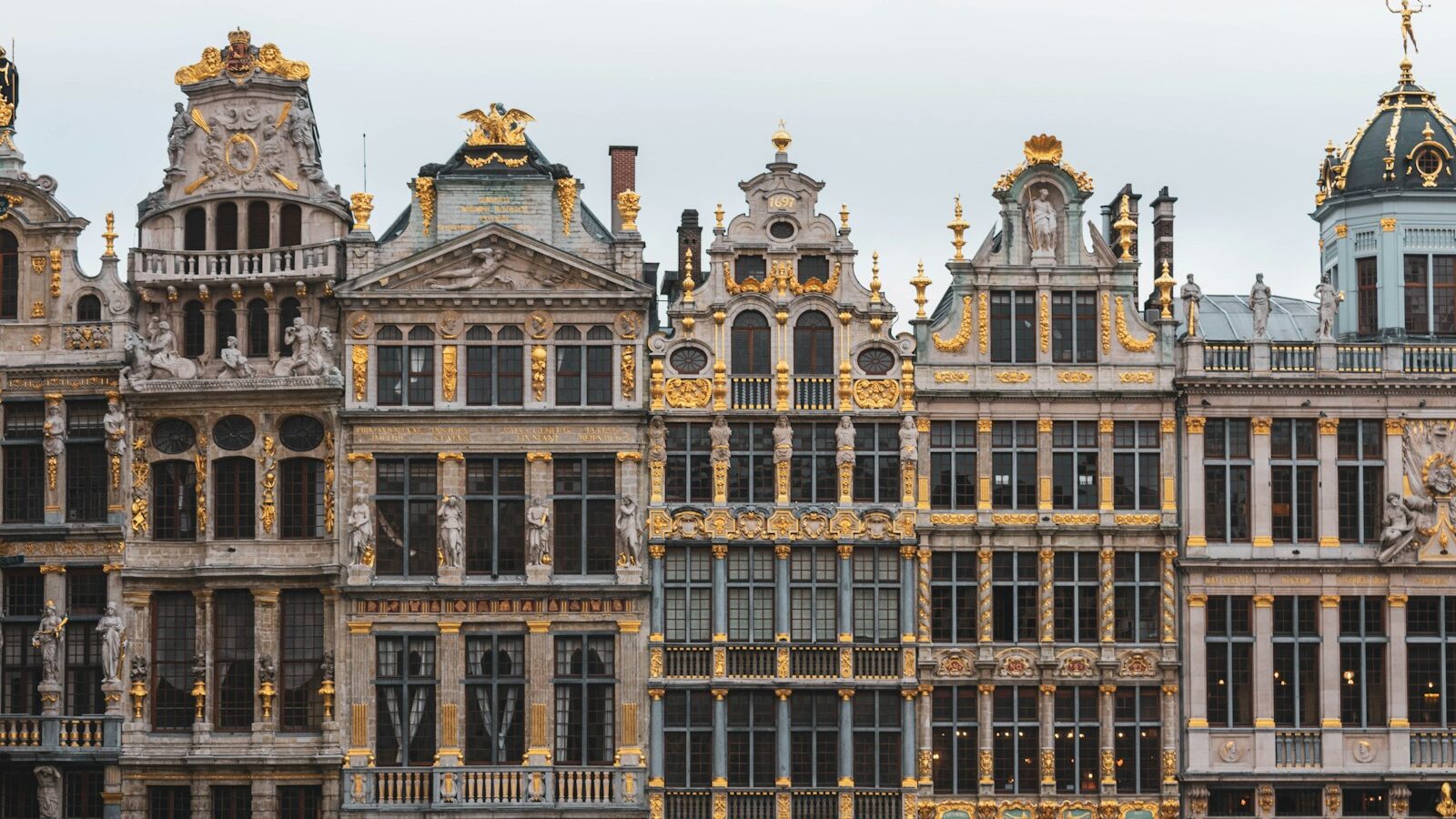
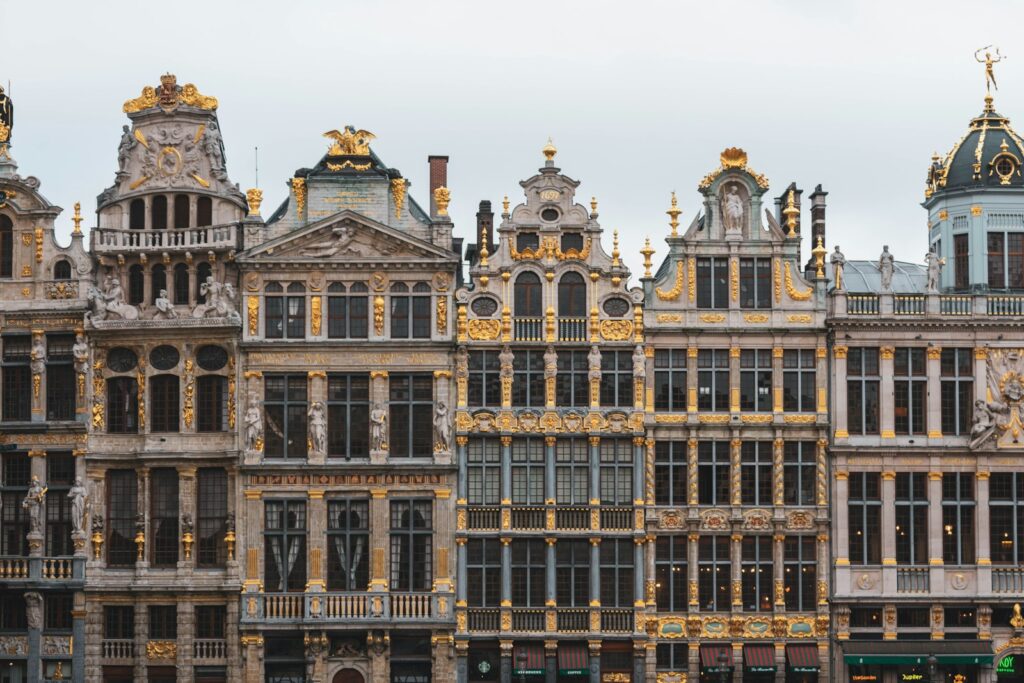
The Grand Place is the main square of Brussels and the place to start. It is lined with gilded guildhalls, the Gothic Town Hall and the Maison du Roi, which houses the City Museum. It is a UNESCO World Heritage Site, free at any hour, and at its most striking after dark when the facades are lit.
Come twice if you can: early in the morning, before tour groups arrive, and again in the evening. In the Christmas season the square hosts a large tree and a light and sound show as part of Winter Wonders, and every other August (in even years) it is covered by the famous Flower Carpet.
- Getting there: a five minute walk from Brussels Central station, or ten minutes from the Bourse metro stop.
- Time needed: 30 minutes to an hour, longer with the City Museum.
- Cost: free.
- Tip: the cafes on the square charge for the view. Walk one street away for the same beer at a lower price.
2. Manneken Pis
Manneken Pis is the small bronze statue of a boy relieving himself on the corner of Rue de l’Étuve and Rue du Chêne, about three minutes from the Grand Place. Most first time visitors are surprised by how small he is, but he is a genuine city symbol with a wardrobe of hundreds of costumes. The GardeRobe MannekenPis museum nearby displays a selection.
Brussels has two jokey companions: Jeanneke Pis, a girl statue down an alley off Rue des Bouchers, and Het Zinneke, a dog at a lamp post near Rue des Chartreux. Hunting for all three is a fun short walk with children.
- Time needed: 10 minutes.
- Cost: free.
- Tip: go early or late. By midday the pavement is packed, and the waffle shops on the corner charge tourist prices.
3. The Royal Galleries of Saint Hubert
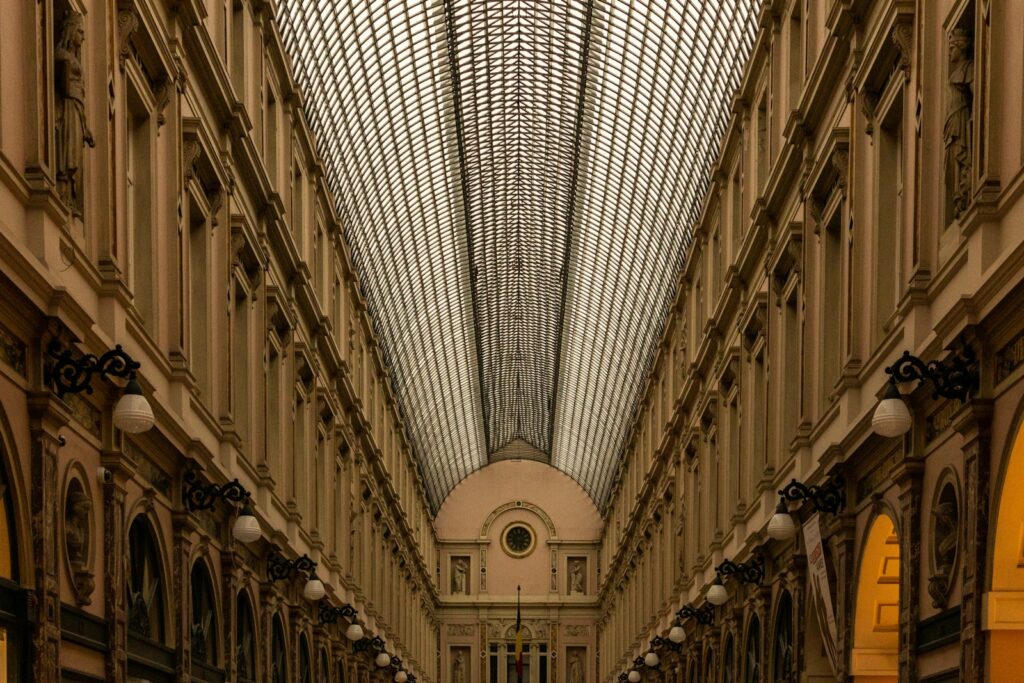
The Royal Galleries of Saint Hubert opened in 1847 and are among the oldest covered shopping arcades in Europe. Under the glass roof you will find chocolate makers, a bookshop, cafes, a cinema and a theatre, all a minute from the Grand Place.
It is the most elegant way to walk from the Grand Place towards the cathedral, and a dry option when it rains. Rue des Bouchers, which crosses the galleries, is lined with restaurants whose staff call out to passers by; you will usually eat better elsewhere.
4. The Atomium
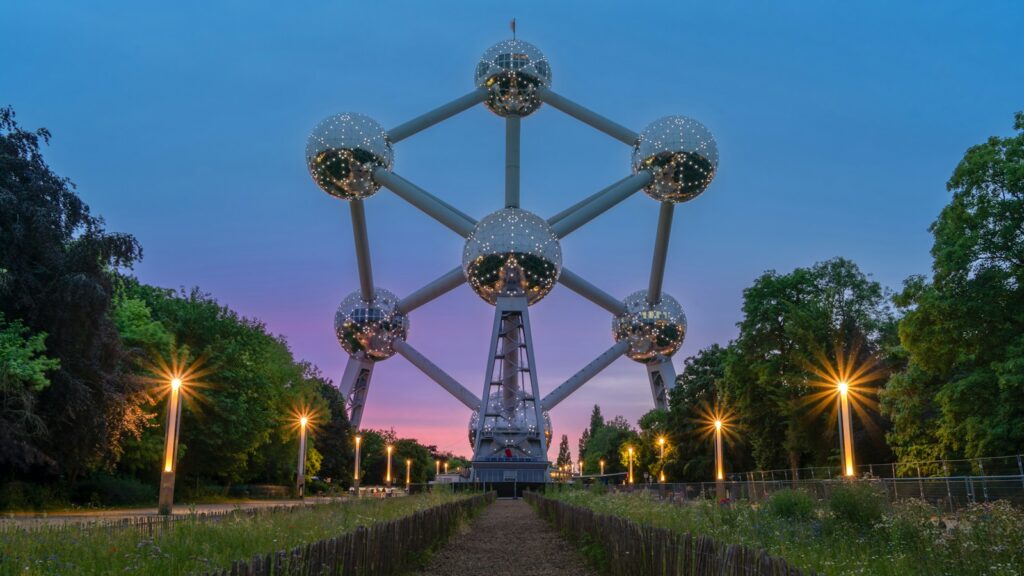
The Atomium is the giant steel model of an iron crystal, magnified 165 billion times, built for the 1958 World Expo. Its spheres hold exhibitions on the building’s history, temporary shows and a restaurant, and the ticket also covers the Design Museum Brussels next door.
In November 2026 an adult ticket costs €17 (about £14 / $19), with children over 115 cm and students at €9 (about £8 / $10) and children up to 115 cm free. Two points matter right now. The official site says tickets are currently sold only at the ticket office, with expected waits of 45 minutes to 2 hours, and the first level of the upper sphere (the Panorama) is temporarily closed, although the restaurant stays open. Tickets are valid between 10:00 and 17:30 on the day.
- Getting there without a tour: metro line 6 to Heysel, then a short walk. Allow about 25 minutes from the centre.
- With a tour: many city tours stop outside for photos, which is enough if you only want the view of the structure.
- Combined tickets: Atomium and Mini Europe €35 (about £29 / $39), or Atomium and Belgian Beer World €37 (about £31 / $41).
- Tip: arrive at opening to keep the queue short, and check the official site for updates on the Panorama before you go.
5. Mini Europe
Mini Europe sits beside the Atomium and shows around 350 models of European landmarks at small scale, from Big Ben to the Leaning Tower of Pisa. It is the easiest family win in Brussels and pairs naturally with the Atomium on the same morning.
From 1 October 2026 to 3 January 2027 it opens daily from 10:00 to 18:00, closing at 17:00 on 24 and 31 December, and it closes for the winter from 4 January to 12 March 2027. Adult tickets cost from €21.70 online (about £18 / $24) or €25 at the gate, and children under 12 pay from €15.30 online. Children under 115 cm go free.
6. The Old Masters Museum
The Royal Museums of Fine Arts of Belgium sit on the edge of the Royal Quarter and hold one of Europe’s great collections of Flemish painting. The Old Masters Museum covers Rogier van der Weyden, Hans Memling, Pieter Bruegel the Elder (including The Fall of the Rebel Angels and the Census at Bethlehem) and Rubens.
An adult ticket costs €10 (about £8 / $11), or €15 (about £13 / $17) combined with the Magritte Museum. Entry is free to all the museums from 13:00 on the first Wednesday of each month (temporary exhibitions excluded), and Brussels Card holders get free access to the permanent collections. Audio guides cost €4.
- Getting there: a short walk from Brussels Central, or metro to Parc or Gare Centrale.
- Time needed: about 2 hours.
7. The Magritte Museum
The Magritte Museum holds the world’s largest collection of work by René Magritte, the Belgian surrealist behind the bowler hats, floating rocks and pipes that are not pipes. It is part of the same Royal Museums complex and is the art stop most visitors remember.
Entry is €10 (about £8 / $11) on its own or €15 with the Old Masters. The free first Wednesday afternoon applies here too, so expect it to be busy then. Combined with the Old Masters, allow half a day.
8. The Mont des Arts and the Royal Quarter
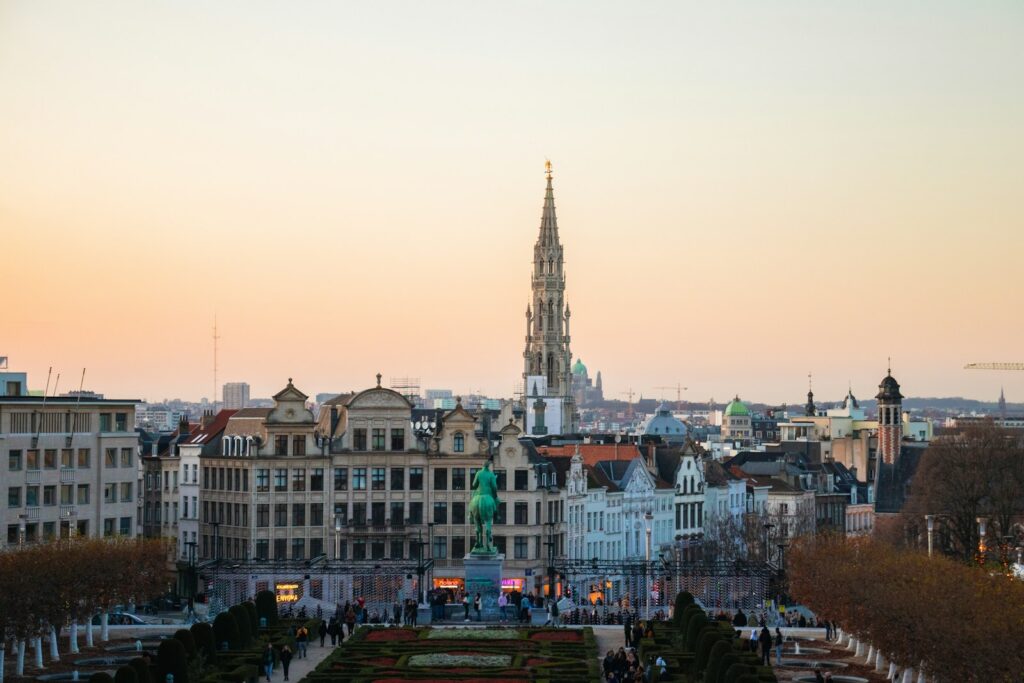
The Mont des Arts is the formal garden and stepped terrace that links the Lower Town and the Upper Town, with one of the best free views over the city spires. From the top, the Royal Quarter opens out: the Place Royale, the Royal Palace, the Brussels Park and the BELvue Museum on Belgian history.
The Royal Palace opens to the public only for a few weeks in summer, but the outside is worth the walk at any time. Under the Place Royale, the Coudenberg archaeological site preserves the remains of the old palace of the Dukes of Brabant.
9. The Cathedral of St Michael and St Gudula
The twin towered Gothic cathedral stands on a hill between the Lower Town and the Upper Town, a few minutes from Brussels Central station. It is where Belgian royal weddings and state funerals take place, and its stained glass windows are among the finest in the country. The nave is free to visit.
It combines easily with the galleries and the Comic Art Museum, which are both within ten minutes’ walk.
10. The Comic Art Museum and the comic strip route
Belgium has a huge comic tradition, and the Comic Art Museum (also called the Belgian Comic Strip Center) tells the story in a beautiful Art Nouveau department store designed by Victor Horta, on Rue des Sables near the cathedral. Exhibits cover the big Belgian series and their artists, with original drawings and themed rooms.
It opens Tuesday to Sunday from 10:00 to 18:00 (last tickets at 17:00), and on Mondays in July and August. It closes on 25 December and 1 January and shuts early on 24 and 31 December. Adult tickets cost €14 (about £12 / $15), visitors aged 12 to 25 and over 65 pay €11 and children aged 6 to 11 pay €6.
Outside, the comic strip route is a free trail of dozens of large murals painted on building walls across the Lower Town and the Marolles. Pick up a route map from the tourist office or the museum and walk a loop of the central murals in about an hour.
11. Belgian chocolate
Brussels is one of the best cities in the world for chocolate, and tasting your way round the shops is one of the most enjoyable things to do in Brussels. The Sablon square has a cluster of famous chocolatiers, including Pierre Marcolini and Wittamer, and the Royal Galleries of Saint Hubert hold several more. Pralines (filled chocolates) were invented in Belgium, so try a few rather than a bar.
For a hands on visit, Choco Story near the Grand Place explains the history of chocolate with a demonstration and tasting, and many tour operators run chocolate workshops where you make your own pralines. Buy a mixed box by weight to take home; it travels well in winter.
12. Belgian beer
Belgium’s beer culture is on UNESCO’s list of intangible heritage, and Brussels is the easiest place to sample it. Order a Trappist beer such as Westmalle or Chimay, a sour lambic or gueuze, or a strong blonde, and expect each to arrive in its own branded glass.
- Delirium Café: in an alley off Rue des Bouchers, known for a very long beer list. Busy and loud at night.
- A la Mort Subite: a traditional cafe near the galleries, with mirrors, wooden benches and its own lambic beers.
- Cantillon: a family brewery in Anderlecht that still makes lambic the traditional way, with visits that end in a tasting.
- Belgian Beer World: a beer experience inside the restored Bourse building in the centre, with a rooftop bar; a combined ticket with the Atomium costs €37.
Belgian beers are often much stronger than UK lagers or American light beers, at 8% or more, and they are served in smaller glasses for a reason.
13. Waffles and fries
Two kinds of waffle are sold in Brussels. The Brussels waffle is rectangular, light and crisp, usually eaten with icing sugar. The Liège waffle is smaller, denser and studded with caramelised sugar, and it is the one you will see sold from street kiosks. Locals eat them plain or with a little sugar; the versions piled with cream and fruit near Manneken Pis are for tourists.
Fries (frites) are a national obsession, twice fried and served in a paper cone with mayonnaise or one of a dozen sauces. Maison Antoine on Place Jourdan in the European Quarter is the best known friterie, and nearby bars traditionally let you eat its fries with a drink. Pair the experience with mussels (moules frites), the classic Belgian restaurant meal.
14. The Sablon
The Sablon is the elegant, slightly upmarket square in the Upper Town between the Royal Quarter and the Marolles. Its centrepiece is the church of Notre Dame du Sablon, a late Gothic church with tall stained glass windows, and across the road the small Petit Sablon garden is ringed with bronze statues of medieval guilds.
At weekends an antiques market fills the square, and the chocolatiers and cafes make it a good place to stop for coffee and cake between museums.
15. The Marolles and the Jeu de Balle flea market
Below the Sablon, the Marolles is the old working class district, now known for its vintage shops, bars and the daily flea market on Place du Jeu de Balle. Stalls sell everything from old records and comics to furniture and silverware, and it is busiest and most fun at weekends. Come in the morning, as traders pack up around lunchtime.
Above the Marolles, the huge Palais de Justice dominates the skyline, and a free glass lift beside it links the Marolles with the Upper Town and a fine view over the city.
16. The European Quarter and the Parlamentarium
Brussels is the home of the European Union, and the Parlamentarium, the European Parliament’s visitor centre, explains how the EU works with interactive exhibits and a 360 degree film. It is free and makes a good rainy day option. It opens on Mondays from 13:00 to 18:00, Tuesday to Friday from 09:00 to 18:00 and weekends from 10:00 to 18:00, and it closes on 1 January, 1 May, 1 November and 24, 25 and 31 December.
Booking a time slot online is recommended; without one you get in only if there is space. The nearby House of European History in Leopold Park covers European history from the 19th century and is also free.
- Getting there: train to Brussels Luxembourg station, which is right outside, or metro to Trône.
- Time needed: 1 to 2 hours.
17. Parc du Cinquantenaire
The Parc du Cinquantenaire was laid out for Belgium’s 50th anniversary in 1880 and is crowned by a triumphal arch. It is a pleasant walk from the European Quarter and holds three large museums: Autoworld (classic cars), the Royal Museum of the Armed Forces and Military History, and the Art and History Museum.
The park is free. Allow an hour for a walk and photos, or half a day if you visit a museum. Metro to Merode or Schuman.
18. Art Nouveau in Saint Gilles and Ixelles
Brussels was a centre of Art Nouveau around 1900, and the districts of Saint Gilles and Ixelles, south of the centre, are full of curving iron balconies, sgraffito facades and stained glass. The Horta Museum, the former house and studio of architect Victor Horta, is part of a UNESCO listing of his town houses and is the best interior to see. Book a time slot in advance, as visitor numbers are limited.
A walk from the Horta Museum along Rue Defacqz and around the Ixelles Ponds shows dozens of fine facades for free. Tram lines 81 and 92 serve the area.
19. Saint Géry and Sainte Catherine
West of the Bourse, the squares of Saint Géry and Sainte Catherine are where many locals go out. The Halles Saint Géry, a restored covered market, has an exhibition space and a bar, and the streets around it are full of cafes. Sainte Catherine, on the site of the old harbour basins, is known for fish and seafood restaurants and, in season, a central part of the Christmas market.
This is the best area for an evening of dinner and drinks in the centre, a short walk from the Grand Place.
20. Winter Wonders, the Brussels Christmas market
Winter Wonders (Plaisirs d’Hiver in French) is the Brussels Christmas market. The 25th edition runs from 27 November 2026 to 3 January 2027 and opens every day from 12:00 to 22:00, closing at 18:00 on 24 December, 31 December and 3 January. Entry to the whole trail is free.
The stalls stretch from the Bourse through Sainte Catherine, with mulled wine, waffles, gifts, an ice rink and a big wheel, and a light and sound show on the Grand Place. It stays open after Christmas, so it suits a New Year trip too. If you are planning a wider winter trip, our guide to Christmas markets in Europe compares Brussels with Bruges, Cologne, Vienna and others.
Free things to do in Brussels
Many of the best things in the city cost nothing, which helps in a capital where museum tickets and beer add up quickly.
- The Grand Place: free at any hour, and best at night.
- Manneken Pis and friends: Manneken Pis, Jeanneke Pis and Het Zinneke make a free statue hunt in the Lower Town.
- The Royal Galleries of Saint Hubert: free to walk through.
- The Mont des Arts: free gardens and city views.
- The cathedral: the nave of St Michael and St Gudula is free.
- The comic strip route: dozens of free murals.
- European Parliament sights: the Parlamentarium and the House of European History are both free.
- Parc du Cinquantenaire and Brussels Park: free green space.
- Markets: the Jeu de Balle flea market and the Sablon antiques market are free to browse.
- Art Nouveau facades: free to admire from the street.
- First Wednesday afternoons: the Royal Museums of Fine Arts are free from 13:00.
- Winter Wonders: free entry in the Christmas season.
Things to do in Brussels in winter
Brussels is a strong winter destination. Daylight is short and the weather is often grey and wet, with December temperatures usually close to freezing at night, but the city is built for indoor time: museums, chocolate shops, galleries and warm beer cafes.
- Winter Wonders: the big draw, from 27 November 2026 to 3 January 2027.
- Museums: the Magritte Museum, Old Masters and Comic Art Museum fill a wet afternoon.
- Chocolate: the Sablon shops and a workshop are ideal for a cold day.
- Beer: a Trappist in A la Mort Subite or Delirium after dark.
- Mini Europe: open until 3 January 2027, then closed until March.
- Bruges at Christmas: the Bruges market runs until 3 January too, about an hour away by train.
Pack waterproof shoes and a warm coat, and plan museum days around the closures on 24, 25 and 31 December and 1 January.
Brussels day trips: Bruges, Ghent and Antwerp
Belgium is small and its trains are frequent, so the classic Brussels day trips need no tour. Trains to all three cities leave from Brussels Midi, Central and Nord. Since October 2025, SNCB caps a standard second class adult single at €20.90 (about £18 / $23) for any domestic journey, adults aged 26 to 64 get 30% off single tickets at weekends, travellers under 26 or over 65 get 40% off, and children under 12 travel free with an adult. Buy in the SNCB app or at the station; fares are fixed, so buying early does not save money.
Bruges
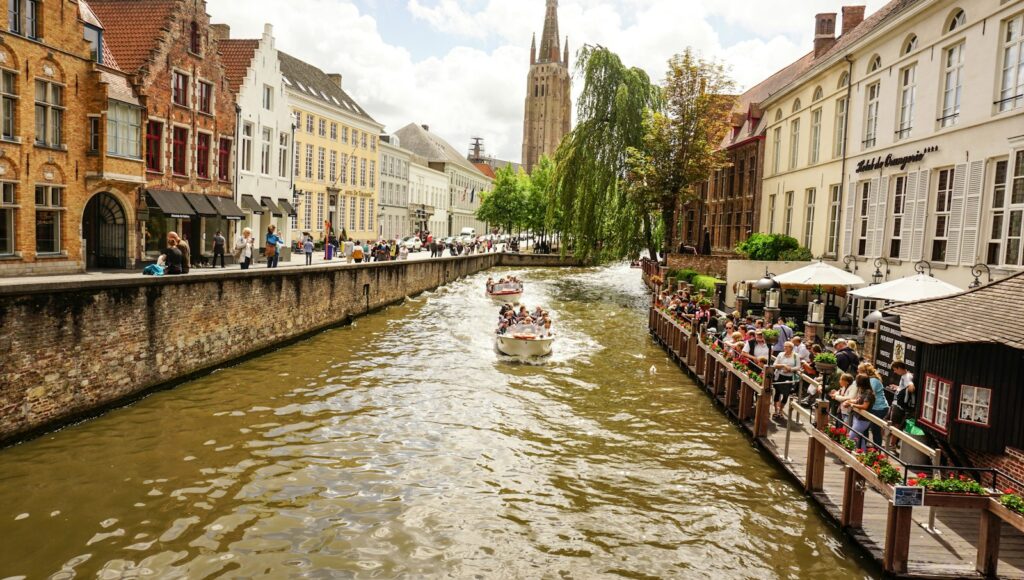
Bruges is the postcard medieval town, with canals, the Belfry, the Markt square and the Groeninge Museum of Flemish art. The fastest direct trains take about 55 minutes, and they run about every half hour in the day. From the station it is a 20 minute walk or a short bus ride to the Markt. It is very busy in summer and at Christmas, so start early.
Ghent
Ghent is a lived in university city with a medieval centre, Gravensteen castle and the Ghent Altarpiece by the van Eyck brothers in St Bavo’s Cathedral. Trains to Gent Sint Pieters take about half an hour, then tram 1 runs to the centre. If you only have time for one trip and dislike crowds, Ghent is the better choice.
Antwerp
Antwerp is the most urban of the three, with a grand railway station, the cathedral with its Rubens altarpieces, the Grote Markt, the Rubens House and a strong fashion and diamond trade. Trains to Antwerpen Centraal take about 45 minutes, and the station itself is worth a look.
What to skip or leave for another trip
- Rue des Bouchers restaurants: the touts and set menus rarely live up to the prices.
- Topped waffles by Manneken Pis: buy a plain Liège waffle instead.
- Cafes on the Grand Place for a long sit: lovely view, high prices.
- Waterloo: the battlefield and memorial are about 20 km south and need half a day; leave it unless you are a history fan.
- Pairi Daiza: a highly rated zoo, but it is about an hour away by car and suits a longer family trip.
- The Ardennes and the Caves of Han: wonderful but too far for a casual day out without a car.
Getting there and getting around
From London by Eurostar
Eurostar runs from London St Pancras International to Brussels Midi, with the fastest trains taking 1 hour 53 minutes and fares from £39 one way (about €46 / $51) in November 2026. Border checks happen in London before you board, so allow extra time at St Pancras, especially on your first trip since EES registration began. Brussels Midi is a short metro or train ride from the Grand Place.
Flights
From the UK, the train is usually easier than flying from London. From Manchester, Ryanair flies to Brussels Charleroi (CRL), which is about 1 hour 25 minutes in the air with about two flights a day; Charleroi is around 50 km south of the city and an airport coach to Brussels Midi takes about an hour.
From the US, United flies nonstop to Brussels Airport (BRU) from Newark, Washington Dulles and Chicago, and Brussels Airlines flies nonstop from New York JFK. Eastbound flights from the East Coast take about 7 to 8 hours and usually land early in the morning. From Los Angeles and the West Coast you will need to connect, often through a US hub, London, Amsterdam or Frankfurt.
From Brussels Airport
Trains from Brussels Airport reach Brussels Central in about 18 minutes and continue to Midi and Nord. A Brussels Airport Supplement (formerly called the Diabolo fee) of €6.70 (about £5.60 / $7.40) per journey is added to the rail fare unless your ticket already includes it, so buy an airport ticket rather than a plain city ticket. Taxis and STIB airport buses are the alternatives.
Metro, trams and buses
STIB runs the metro, trams and buses. Since 1 February 2026 a single journey costs €2.40 (about £2 / $2.65), and you can simply tap a contactless bank card or phone at the gates and on validators, which is the easiest option for visitors. Most central sights are walkable; you will mainly need transport for the Atomium (metro line 6 to Heysel), the European Quarter and the Art Nouveau districts.
Is the Brussels Card worth it?
The Brussels Card gives free entry to 47 museums, plus discounts on tours, shops and restaurants, with optional add ons for public transport, the Hop On Hop Off bus and the Atomium. It is sold for 24, 48 or 72 hours online through the official Brussels Card shop or at participating museums such as the Royal Museums of Fine Arts and the Comic Art Museum.
It pays off if you plan three or more paid museums a day, for example the Old Masters, the Magritte Museum and the Comic Art Museum (€34 at full price, or €29 using the Old Masters and Magritte combined ticket). If your plans are mostly free sights, chocolate and beer, skip it. Check the current price on the official shop before buying, and remember the Atomium needs the specific add on.
How much does Brussels cost?
Brussels is cheaper than Paris or London for food and drink but not a budget city. These are typical prices from official sites in November 2026, with approximate conversions.
| Item | Price | About |
|---|---|---|
| Atomium adult ticket | €17 | £14 / $19 |
| Atomium and Mini Europe combo | €35 | £29 / $39 |
| Mini Europe adult, online | €21.70 | £18 / $24 |
| Old Masters or Magritte Museum | €10 each | £8 / $11 |
| Old Masters and Magritte combo | €15 | £13 / $17 |
| Comic Art Museum adult | €14 | £12 / $15 |
| Parlamentarium | Free | Free |
| Winter Wonders | Free entry | Free |
| STIB single journey | €2.40 | £2 / $2.65 |
| Brussels Airport rail supplement | €6.70 | £5.60 / $7.40 |
| Maximum standard train fare in Belgium | €20.90 | £18 / $23 |
| Eurostar from London, one way | From £39 | €46 / $51 |
A mid range traveller can expect to spend about the same per day as in Amsterdam, with hotels the biggest cost.
Practical tips for UK and US visitors
Entry rules
Belgium is in the Schengen area. UK and US passport holders do not need a visa for tourist stays of up to 90 days in any 180 day period across the Schengen countries. The UK government says your passport must have been issued less than 10 years before the date you arrive and must be valid for at least 3 months after you plan to leave; the same Schengen rules apply to US passports.
The EU Entry/Exit System (EES) is in operation, so on your first entry you register fingerprints and a photo at the border, which is free; for Eurostar this happens at St Pancras. ETIAS, the €20 online travel authorisation, was not in operation in November 2026 and no start date had been announced, so do not pay any website that claims to sell one yet. Our guide to EES and ETIAS explains both systems and how to avoid unofficial sites. Check the latest on the UK government’s Belgium entry requirements page before you travel.
Money, plugs, time and tipping
- Currency: the euro. Cards and contactless payments are accepted almost everywhere, but carry a few coins for public toilets and small friteries.
- Plugs: Type C and E sockets at 230 volts. UK and US travellers need an adapter, and US devices that are not dual voltage need a converter.
- Time: Belgium is 1 hour ahead of London and 6 hours ahead of New York.
- Tipping: service is included in restaurant bills. Rounding up or leaving 5 to 10% for good service is appreciated but not expected, which is far less than the 18 to 20% Americans are used to.
- Driving: Belgium drives on the right. You do not need a car in Brussels, where parking is hard and the centre has a large pedestrian zone. UK licence holders can drive on their licence; US drivers should check the rental company’s licence rules before booking.
- Safety: Brussels is generally safe, but pickpockets work the Grand Place, the metro and Brussels Midi and Nord stations. Keep phones out of back pockets.
A two or three day Brussels itinerary
- Day 1: the Grand Place in the morning, Manneken Pis, the Royal Galleries, the cathedral and the Comic Art Museum. Lunch on fries, then the Mont des Arts and the Magritte Museum. Evening in Saint Géry or the beer cafes.
- Day 2: the Atomium at opening, Mini Europe, then back to the Sablon for chocolate, the Marolles and the Palais de Justice lift at sunset. In season, finish at Winter Wonders.
- Day 3: a day trip to Bruges or Ghent, or the European Quarter, the Parlamentarium, Parc du Cinquantenaire and Maison Antoine fries, with an Art Nouveau walk in Saint Gilles.
Our picks
- Best first hour: the Grand Place before 9am.
- Best museum: the Magritte Museum, with the Old Masters if you have energy for both.
- Best free sight: the Mont des Arts at sunset.
- Best for families: the Atomium and Mini Europe on the same morning.
- Best food experience: a praline tasting in the Sablon and fries at Maison Antoine.
- Best day trip: Bruges for the classic views, Ghent for fewer crowds.
- Best winter reason to go: Winter Wonders, free and open until 3 January 2027.
Frequently asked questions
Is Brussels worth seeing?
Yes. Brussels is worth at least a weekend for the Grand Place, world class Flemish and surrealist art, comics, chocolate and beer, and it is the best base for day trips to Bruges, Ghent and Antwerp. It has a reputation as a grey business city, but the historic centre is compact and full of character.
What language do they speak in Belgium?
Belgium has three official languages: Dutch (in Flanders, the north), French (in Wallonia, the south) and German (in a small eastern area). In Brussels, signs are in French and Dutch, and English is widely spoken in hotels, restaurants and shops.
What language do they speak in Brussels?
Brussels is officially bilingual in French and Dutch, and French is the language you will hear most on the street. Street and station names appear in both languages, which is why the main station is Brussels Midi or Zuid. English is widely spoken, especially in the centre and the European Quarter.
Do and don’ts in Belgium?
Do greet shop and cafe staff with a hello before asking for anything, validate or tap in on public transport, and try local beers slowly because they are strong. Don’t call fries French in front of Belgians, don’t stand in cycle lanes, and don’t assume everyone speaks French, especially in Flanders, where Dutch is the local language.
How many days is enough for Brussels?
Two days is enough for the main sights of Brussels: the Grand Place, the museums, the Atomium and the food. Three days lets you add a day trip to Bruges, Ghent or Antwerp. One day works for a quick stop between Paris and Amsterdam if you stay in the centre.
Are 2 days enough in Brussels?
Yes, 2 days are enough for a first visit. Use the first day for the Grand Place, Manneken Pis, the galleries and the Magritte Museum, and the second for the Atomium, the Sablon, the comic murals and the Marolles. Add a third day if you want to see Bruges or Ghent.
Which is nicer, Bruges or Brussels?
Bruges is prettier and more romantic, with its canals and medieval centre, but it is small and very touristy. Brussels has far more to do, with major museums, nightlife, food and shopping. Most visitors base themselves in Brussels and see Bruges on a day trip, since the train takes about an hour.
What is the best month to visit Brussels?
The best months to visit Brussels are April to June and September, when the weather is mild and the city is lively. December is the best month for the Christmas market, with Winter Wonders running from 27 November 2026 to 3 January 2027. July and August are warm but can be busy, and January and February are cold and quiet.
Are Belgians friendly to Americans?
Generally, yes. Belgians tend to be polite and reserved rather than outgoing, so they may seem formal at first, but American visitors are welcome and English is widely spoken. A greeting in French or Dutch and patience with slower table service go a long way.
How do Belgians say “hi”?
In Brussels and Wallonia people say “bonjour” (hello) or “salut” (hi) among friends; in Flanders it is “hallo” or “goeiedag”. Among friends and family, a single kiss on the cheek is a common greeting, but visitors should simply shake hands or say hello.
Plan the rest of your trip
These are some of our favourite things to do in Brussels, but the city works best as part of a longer trip. Brussels sits between Paris and Amsterdam on the high speed rail line, so many visitors combine all three. See our guides to things to do in Paris and things to do in Amsterdam, and if you are starting from the UK capital, our guide to things to do in London covers a day or two before the Eurostar. For more on the city, browse our Brussels travel guides.
For official information, see the Atomium’s official ticket page, the Winter Wonders practical information and the Belgian railways’ Brussels Airport page. Last checked: November 2026.