
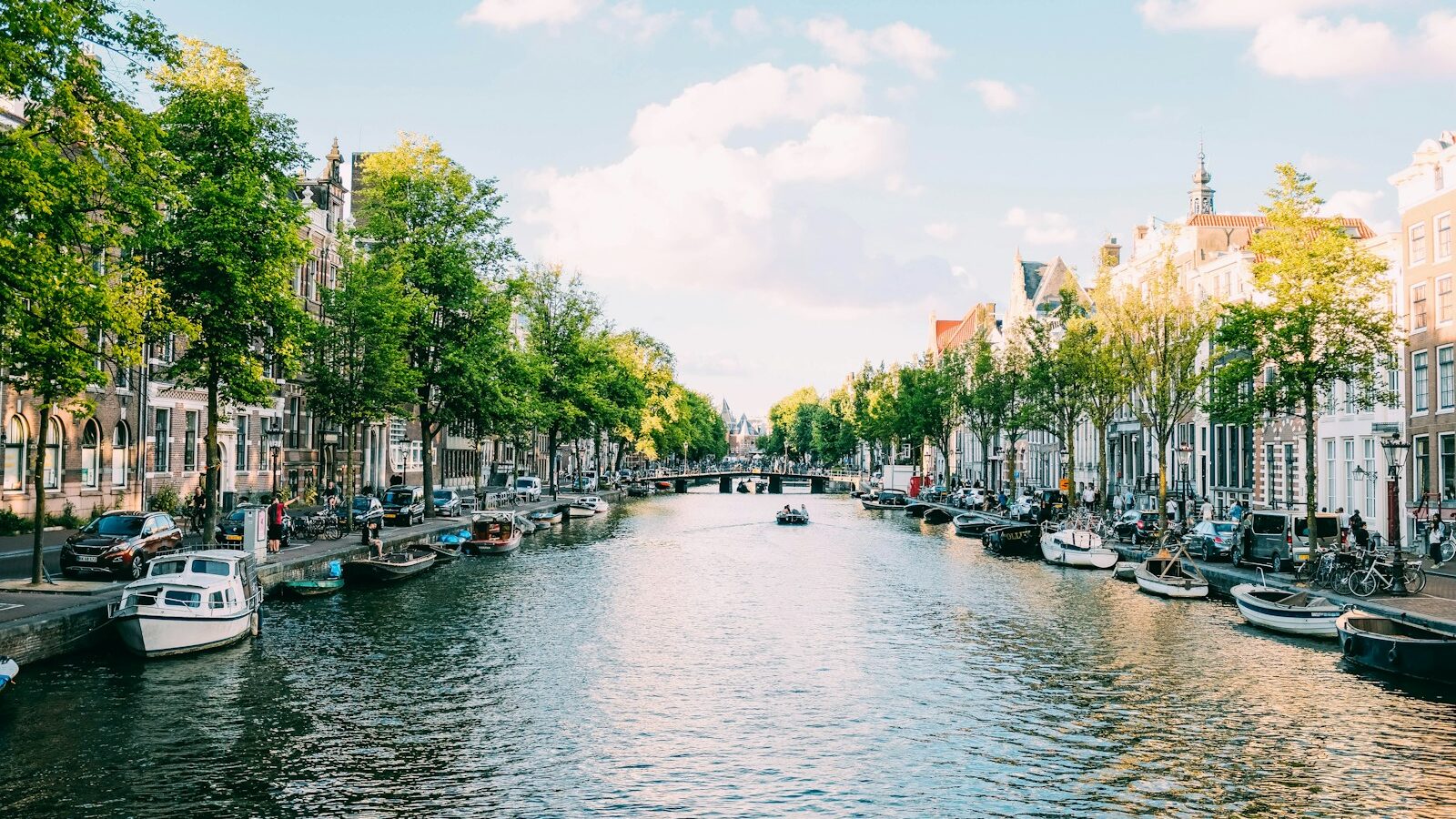
Things to do in Amsterdam start with the canals, the Anne Frank House and two of Europe’s great art museums, but the city is just as good for slow days on a bike, a picnic in Vondelpark or a free ferry ride across the IJ. This guide covers the best picks for a first or return visit, with current prices, booking rules and what changes in winter.
Some links in this guide are affiliate links: if you book through them we may earn a commission at no extra cost to you. It never changes what we recommend. How we make money.
Every price below was checked against official sites and operators in November 2026. Euro amounts come first, with rough pound and dollar figures (at about €1 = £0.87 = $1.16) so UK and US readers can budget quickly.
Things to do in Amsterdam at a glance
| Activity | Area | Time needed | Cost from (Nov 2026) |
|---|---|---|---|
| Anne Frank House | Canal ring (Prinsengracht) | 1 to 1.5 hours | €16.50 adult, €7 ages 10 to 17 |
| Rijksmuseum | Museumplein | 2 to 3 hours | €25 adult, under 18 free |
| Van Gogh Museum | Museumplein | 1.5 to 2 hours | About €25 to €27, under 18 free |
| Canal cruise | Central Station, Damrak, Rijksmuseum | 1 hour | About €15 |
| Canal ring, Jordaan and Nine Streets walk | Centre and west | Half a day | Free |
| Bike ride or bike tour | Citywide | 2 hours to a day | Rental about €10 to €20 a day |
| Vondelpark | Museum Quarter | 1 to 2 hours | Free |
| Begijnhof | Old centre | 20 minutes | Free |
| Royal Palace | Dam Square | 1 hour | €13.50, 17 and under free |
| Free ferry to Noord, Eye and A’DAM Lookout | North bank of the IJ | 2 to 3 hours | Ferry free, Lookout about €17.50 |
| NEMO Science Museum | Eastern docks | 2 to 3 hours | About €21.50 |
| Zaanse Schans windmills | 20 minutes by train | Half a day | Village free to walk (for now) |
| Amsterdam Light Festival | Canal ring | An evening | Walking route free, cruises extra |
In this guide:
- At a glance: the table above, with prices and time needed.
- How to choose: what to book first and how many days you need.
- The best things to do in Amsterdam: 18 picks, each with how to get there, time, cost and tips.
- Free things to do in Amsterdam, plus things to do at night and in winter.
- What to skip, a costs table and getting around.
- UK and US travellers: entry rules, flights, plugs, time difference and tipping.
- Our picks, FAQ and links to plan the rest of your trip.
How to choose what to do in Amsterdam
Most first time visitors need two full days for the headline sights and three days to add a day trip or a slower neighbourhood. Book the Anne Frank House first, then timed slots for the Rijksmuseum and Van Gogh Museum, and leave the canal walk, markets and parks for the gaps between them.
The city centre is compact. The canal ring, the Jordaan, Dam Square and Museumplein are all within about 30 minutes’ walk of each other, so you rarely need transport except to reach Noord, the eastern docks or day trips.
Think about your trip in three layers. First, the timed tickets that sell out: Anne Frank House above all, then the two Museumplein museums. Second, the free outdoor things that fill the rest of the day: canal streets, Vondelpark, the Begijnhof and markets. Third, one evening activity, such as a canal cruise after dark or the Light Festival in winter. If you are pairing Amsterdam with another short city break, our guide to things to do in Dublin is a good place to start.
Best things to do in Amsterdam
These are the best things to do in Amsterdam for a first visit, roughly in order of how quickly they sell out or how much they shape a trip. Each section explains how to go with a tour and without one.
1. Anne Frank House: book six weeks ahead
The Anne Frank House is the hiding place on the Prinsengracht where Anne Frank, her family and four others hid from 1942 until their arrest in 1944. You walk through the original rooms behind the movable bookcase, and the visit ends with her diary. It is a quiet, moving visit and the one ticket to secure before anything else.
How to get there: walk west from Dam Square along the Raadhuisstraat for about 10 minutes, or take tram 13 or 17 to Westermarkt. The Westerkerk next door has the bell tower Anne mentions in her diary.
Anne Frank House tickets: entry is by timed online ticket only, sold through the official Anne Frank House ticket page. In November 2026 prices were €16.50 for adults (about £14 / $19), €7 for ages 10 to 17 and €1 for children under 10, each including a €1 booking fee. Tickets are released every Tuesday at 10:00 for visits six weeks later. There is no door sale, the I amsterdam City Card gives no discount, and Museumkaart holders still pay the €1 booking fee.
Time needed: 1 to 1.5 hours. The house is open daily from 09:00 to 22:00, with shorter hours on 1 January and King’s Day.
With a tour: tours cannot take you inside unless they hold their own allocation, so treat “Anne Frank tours” with care. Many are outdoor walks around the Jewish history of the area, which can work well if you missed out on tickets.
2. Rijksmuseum: Dutch Golden Age masterpieces
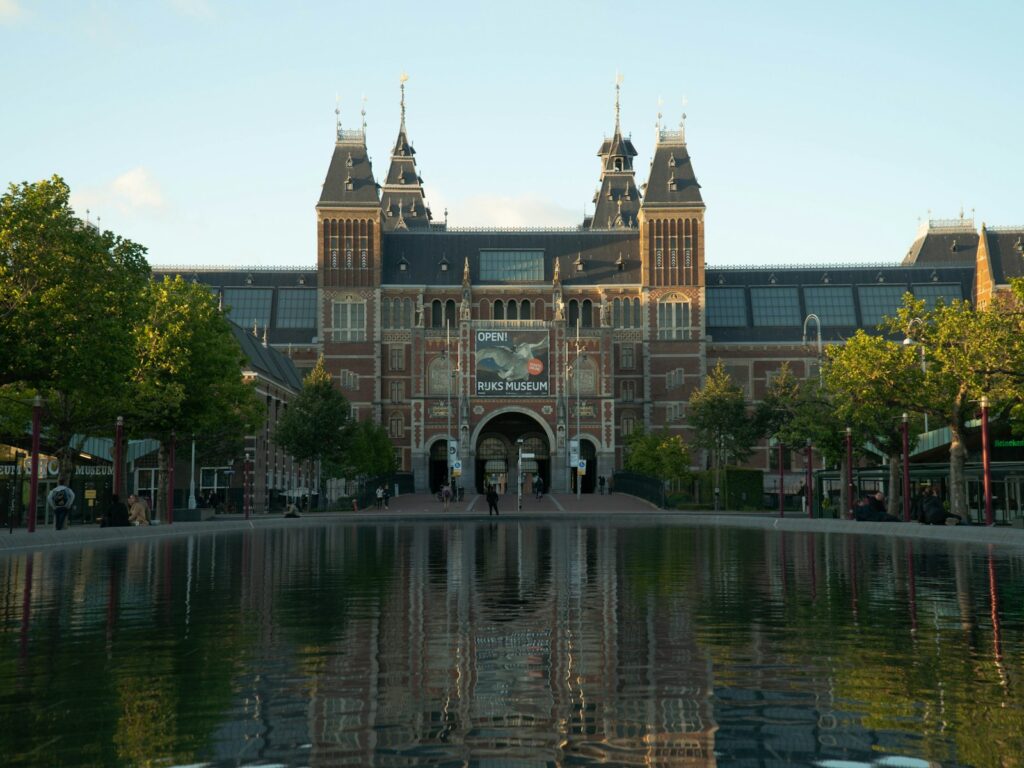
The Rijksmuseum is the national museum of the Netherlands, home to Rembrandt’s The Night Watch, Vermeer’s The Milkmaid, Delft blue pottery, model ships and the grand Gallery of Honour. Even if you are not an art lover, the building and the doll’s houses on the lower floors are worth the ticket.
How to get there: tram 2 or 12 to Rijksmuseum, or a 25 minute walk from Dam Square. The passage under the building is open to cyclists and walkers, and street musicians often play there.
Cost: €25 for adults (about £22 / $29), rising to €26.50 from 2027, and free for under 18s. According to the Rijksmuseum visitor FAQ, everyone needs a timed slot booked online, including Museumkaart and City Card holders, and you cannot leave and return on the same ticket. Open daily from 09:00 to 17:00.
Time needed: allow 2 to 3 hours. Go straight to The Night Watch first, then work outward before tour groups arrive.
3. Van Gogh Museum: the world’s largest Van Gogh collection
The Van Gogh Museum holds the largest collection of Vincent van Gogh’s work anywhere, including Sunflowers, The Bedroom and The Potato Eaters, along with his letters and works by friends who influenced him. The displays follow his life in order, so it is easy to understand even with no art background.
How to get there: it sits on Museumplein, five minutes’ walk from the Rijksmuseum (trams 2 and 12 to Van Baerlestraat).
Cost: adult tickets cost about €25 to €27 depending on whether you book directly or through a reseller (about £22 to £24 / $29 to $31). Under 18s are free but still need a timed ticket, and ID is checked. Tickets are online only and popular slots sell out days ahead. The City Card does not include it.
Opening hours in late 2026 are 09:00 to 17:00, with Fridays open to 21:00 outside the Christmas week; last entry is 30 minutes before closing. Friday evenings tend to be calmer.
4. Amsterdam canal cruise: the best first hour in the city
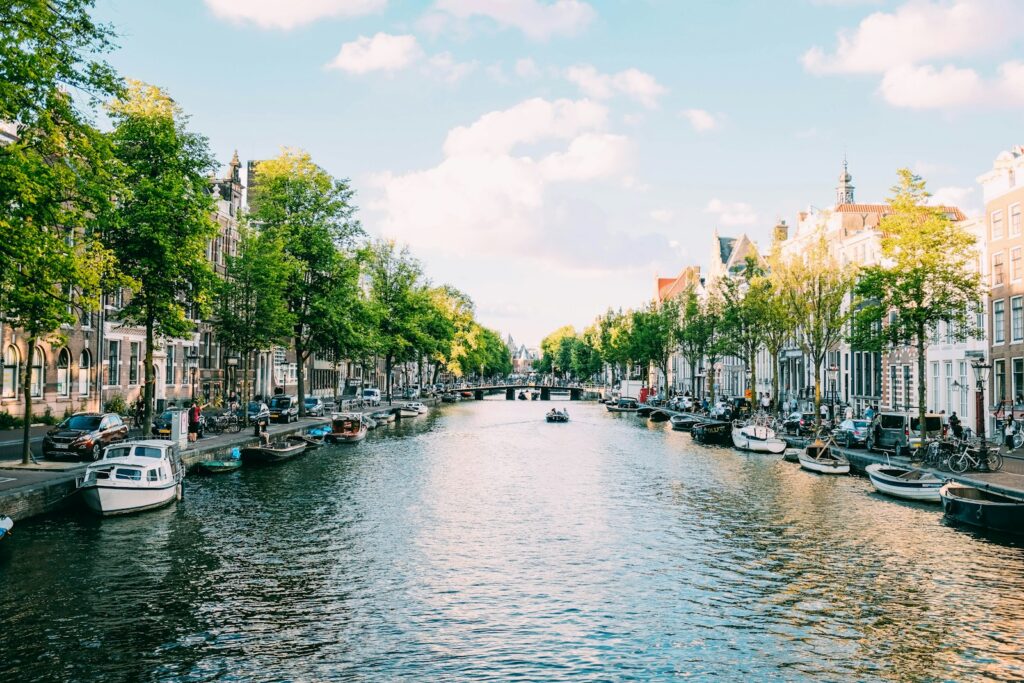
An Amsterdam canal cruise is the easiest way to understand the city. In an hour you pass the 17th century canal ring, which has been a UNESCO World Heritage Site since 2010, see gabled merchants’ houses from water level and glide under the bridges of the Herengracht and Prinsengracht.
Where to board: Lovers boats leave from opposite Central Station, Stromma from the Damrak, and several smaller operators leave near the Rijksmuseum and the Anne Frank House.
Cost: standard one hour cruises on covered boats start at about €13.50 to €15.50 online (about £13 / $17), with counter prices a few euros higher. Evening cruises start at about €17.50. Open boats and small private boats cost more but feel more personal, and some include drinks and cheese.
Time needed: 60 to 75 minutes for most cruises. Covered boats are best in winter; open boats are better in summer.
Tips: if you have an I amsterdam City Card, one canal cruise with a participating operator is included. During the Light Festival, the City Card cruise can only be boarded until 16:30, so it does not cover an evening light cruise.
5. Walk the canal ring, the Jordaan and the Nine Streets
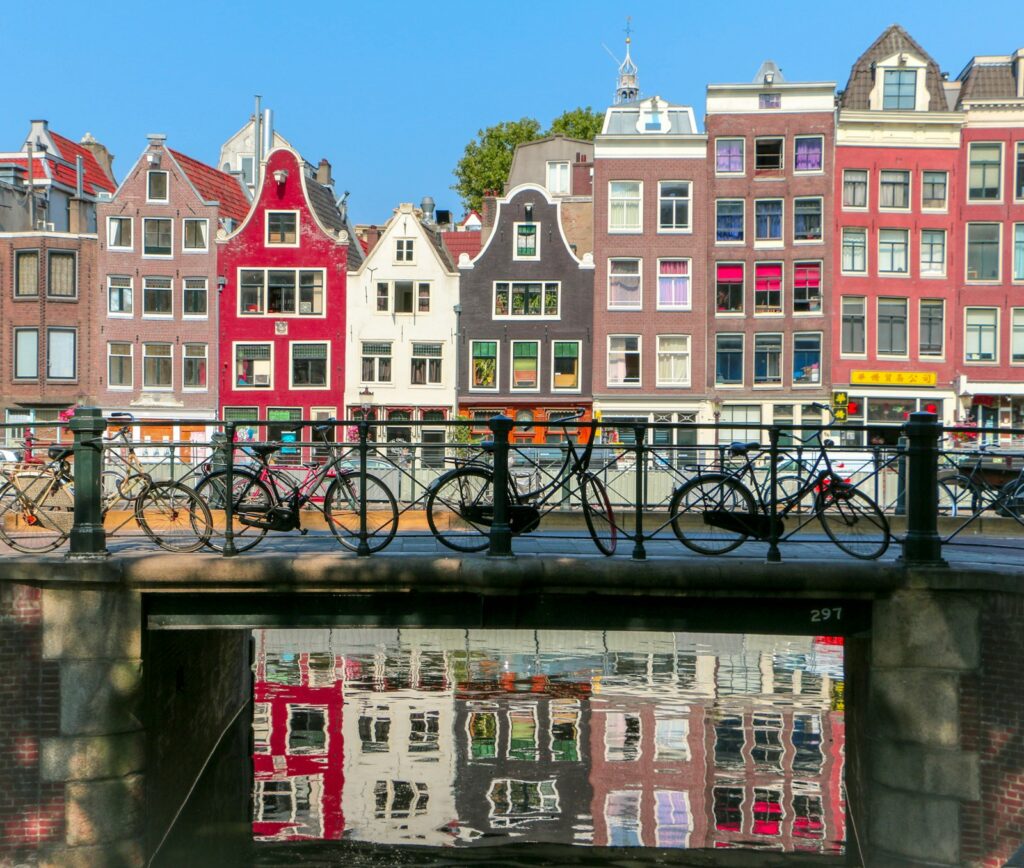
Walking the canals costs nothing and is the activity most visitors remember best. Start at the Westerkerk, wander the Jordaan’s narrow streets and small bridges, then cut south through the Nine Streets (De 9 Straatjes), a grid of small shops and cafés between the main canals.
Route idea: Westerkerk, Bloemgracht, Lindengracht, Brouwersgracht, then back south along the Prinsengracht to the Nine Streets and Leidsegracht. It takes about 2 hours at a relaxed pace.
Markets on the way: the Noordermarkt next to the Noorderkerk holds a farmers’ market on Saturdays, and the Lindengracht has a large general market on Saturdays too.
With a tour: free walking tours run daily from the centre, lasting 2 to 3 hours. They are “pay what you think it was worth”, so budget a tip of around €10 to €15 per person.
6. Cycle like a local, carefully
Amsterdam is built for bikes, with separate red tarmac bike lanes almost everywhere. A short ride along the canals, through Vondelpark or out to the countryside north of the IJ shows a side of the city most tourists miss.
Cost: bike rental costs roughly €10 to €20 a day. Guided city bike tours of about 2.5 to 3 hours are a good idea if you are not used to busy cycle traffic. The I amsterdam City Card includes one day of bike rental.
Rules to know: ride on the right, keep to the bike lanes, use hand signals and lights after dark, lock the bike to something fixed and never stop suddenly in a lane. Trams have priority. If you are nervous, start in Vondelpark or in Noord, where traffic is calmer.
7. Vondelpark: picnics, play areas and people watching
Vondelpark is Amsterdam’s best known park, a long stretch of lawns, ponds and paths just south of the Leidseplein. It is free, open all day and the easiest place to rest between museums.
What to do: bring a picnic, rent a bike and ride the loop, let children loose in the play areas, or stop at a café by the water. In summer there are open air performances.
How to get there: a 5 minute walk from the Van Gogh Museum, or tram 1 to the Overtoom side of the park.
Time needed: 1 to 2 hours, more on a sunny day.
8. Begijnhof: a hidden courtyard in the old centre
The Begijnhof is a quiet courtyard of historic houses around a lawn, entered through an unmarked door off the Spui. It was built for a community of religious women, and it still houses residents today, so keep voices low and do not photograph inside the homes. Look for the wooden house at number 34, one of the oldest houses in the city.
Cost: free. Time needed: about 20 minutes. Combine it with the Spui book market on Fridays and a walk down the Kalverstraat shopping street.
9. Royal Palace and Dam Square
The Royal Palace on Dam Square was built in the 17th century as Amsterdam’s city hall and is still used by the Dutch royal family for state visits. Inside, the marble Citizens’ Hall has maps of the world and sky set into the floor.
Cost: €13.50 for adults (about £12 / $16), including an audio tour, and free for ages 17 and under. Opening days change because of royal events, so check the official calendar before you go. In late 2026 the palace was due to open from 2 December to 3 January.
Time needed: about 1 hour. Across the square, the National Monument remembers the Second World War, and the Nieuwe Kerk hosts exhibitions.
10. Jewish Cultural Quarter and National Holocaust Museum
The Jewish Cultural Quarter brings together the Jewish Museum, the Portuguese Synagogue, the National Holocaust Museum and the Hollandsche Schouwburg memorial, all a short walk apart near Waterlooplein. One ticket covers the sites, and it gives essential context to the Anne Frank House.
Why go: it tells the wider story of the Jewish community in Amsterdam, from the Golden Age to the deportations of the Second World War. The Portuguese Synagogue, from 1675, is lit by candles and is striking.
How to get there: metro to Waterlooplein, or tram 14. Allow half a day if you visit all the sites.
11. Our Lord in the Attic: a secret church
Our Lord in the Attic (Ons’ Lieve Heer op Solder) is a complete 17th century canal house with a hidden Catholic church built into its top floors, from a time when Catholics could not worship openly. It is one of the city’s most surprising museums and rarely feels crowded.
Cost: about €15 to €17 for adults. Time needed: about an hour. It is in the old centre near Central Station; visit in daytime and walk via the Oudezijds Voorburgwal.
12. Markets: Albert Cuyp and the Flower Market
Albert Cuyp Market in De Pijp is Amsterdam’s best known street market, open Monday to Saturday, with food stalls, fabrics and everyday goods. Try fresh stroopwafels (thin caramel waffles), raw herring if you are brave, and Dutch cheese.
The Bloemenmarkt (Flower Market) on the Singel sells bulbs and souvenirs from stalls that sit on the canal. It is pretty but touristy, so check prices and, for bulbs, whether they are certified for export to your country.
Time needed: about an hour each. Both are free to browse.
13. Free ferry to Noord, Eye Film Museum and A’DAM Lookout
Behind Central Station, free GVB ferries cross the IJ river around the clock. A five minute ride takes you to the Eye Film Museum, a striking white building with a film exhibition, cinemas and a waterside terrace, and to A’DAM Lookout, a tower with a viewing deck over the city.
Cost: the ferry is free. A’DAM Lookout costs from about €17.50 online (about £15 / $20) and is included with the I amsterdam City Card. Its swing over the edge of the roof costs extra.
Further out: the F3 ferry runs to NDSM, a former shipyard turned arts area with street art and a large flea market on some weekends.
14. NEMO Science Museum: best for families
NEMO is a hands on science museum in a green building shaped like a ship’s bow on the eastern docks. Children can run experiments, build chain reactions and learn how things work across five floors. The sloping rooftop square has city views.
Cost: about €21.50 per person, and included in the City Card and Museumkaart. NEMO opens Tuesday to Sunday for most of the year and on selected Mondays in school holidays, so check the date before you go.
How to get there: a 15 minute walk east from Central Station.
15. Rembrandt House Museum
Rembrandt lived and worked in this house on the Jodenbreestraat for nearly 20 years. The rooms have been restored to how they looked in his time, there are etching demonstrations, and you can see his studio. It sits next to the Jewish Cultural Quarter, so the two combine well.
Cost: about €20 to €22 for adults. Time needed: about an hour.
16. Hortus Botanicus and the Plantage
The Hortus Botanicus, founded in 1638, is one of the oldest botanical gardens in the world, with palm and butterfly houses that make it a good rainy day choice. Nearby, Artis is the city’s historic zoo with an aquarium, popular with families. The leafy Plantage district around them is one of the calmest parts of the centre.
Cost: the Hortus costs about €12 and is free with the City Card. Time needed: 1 to 2 hours for the Hortus, half a day for Artis.
17. Day trips: Zaanse Schans, Haarlem and Keukenhof
The best day trips from Amsterdam are short. Zaanse Schans and its working windmills are about 20 minutes away by train, Haarlem is about 15 minutes by train, and Keukenhof’s tulip gardens open each spring.
Zaanse Schans: take the train to Zaandijk Zaanse Schans and walk about 15 minutes, or take bus 391 from Central Station (about 40 minutes). The village is still free to walk around, with small fees for individual windmills and museums. A general entry ticket of €17.50 was due in 2026 but has been postponed to April 2027.
Haarlem: a smaller, calmer version of Amsterdam with a huge market square, the Grote Kerk and the Frans Hals Museum. Trains run often from Central Station.
Keukenhof: the flower park near Lisse opens only in spring. In 2026 it ran from 19 March to 10 May; 2027 dates had not been announced when we checked. Combi tickets with bus transfer from Amsterdam or Schiphol sell out on spring weekends.
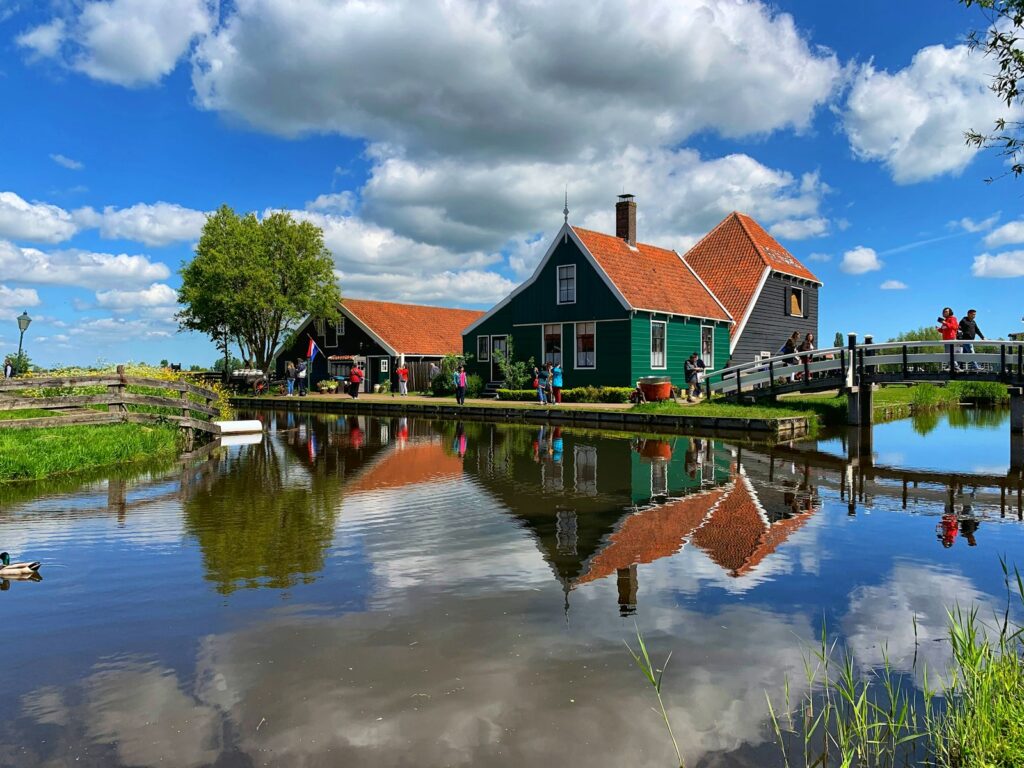
Guided trips to Zaanse Schans, Volendam and Marken save planning but move at the group’s pace. On your own, the train is cheaper and quicker.
18. Things to do in Amsterdam at night
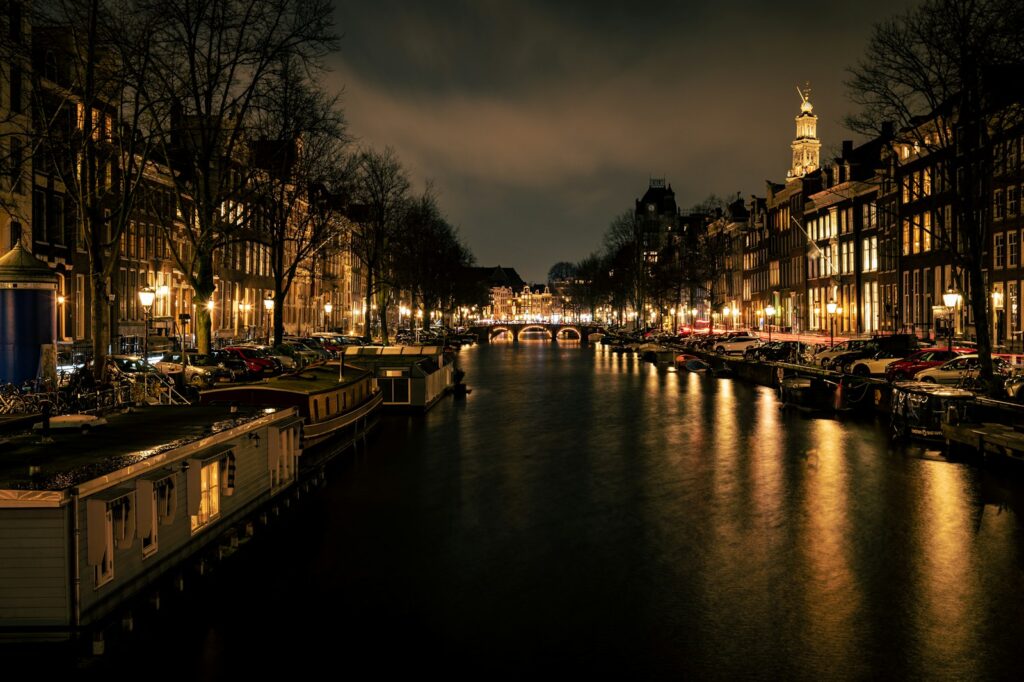
The best things to do in Amsterdam at night are an evening canal cruise, a late visit to the Anne Frank House (open to 22:00), Friday evenings at the Van Gogh Museum, the view from A’DAM Lookout, and a concert at the Concertgebouw. In winter, the Light Festival turns the canals into an open air gallery.
Concerts: the Concertgebouw is one of the world’s best concert halls, with classical concerts most evenings. Check the programme for family concerts.
Dinner: the Foodhallen, an indoor food hall in a former tram depot in Amsterdam West, is a relaxed choice for groups and families who want different dishes. Book ahead for restaurants on Friday and Saturday nights.
Brown cafés: these traditional wood panelled pubs are part of local life. Most serve soft drinks, coffee and snacks as well as beer.
Things to do in Amsterdam in winter
Things to do in Amsterdam in winter centre on the Amsterdam Light Festival, cosy museums, canal cruises on heated boats and Christmas markets. Days are short and often wet, so plan indoor sights for the afternoon and save the lights for after 16:30.
Amsterdam Light Festival: edition 15 runs from Thursday 26 November 2026 to Sunday 17 January 2027, with the artworks lit daily from 16:30 to 23:00 (until 21:00 on 31 December). The walking route is about 4.5 km, and you can follow it in sections with the festival app. Dates and hours are on the official Light Festival page. Festival cruises can sell out over Christmas, so book early.
Winter tips: the Royal Palace opens over Christmas, museums have holiday hours, and ice skating rinks pop up in some years. Pack waterproofs and good shoes rather than an umbrella, because the wind off the canals breaks umbrellas fast.
If you are planning a December trip that takes in more than one city, our guide to the best Christmas markets in Europe covers the big festive cities near the Netherlands.
Free things to do in Amsterdam
Free things to do in Amsterdam include walking the UNESCO canal ring, the Begijnhof, Vondelpark, the free ferries to Noord and the Eye terrace, browsing Albert Cuyp Market and the Bloemenmarkt, and the view from the Central Library. You can fill a whole day without buying a ticket.
- Canal ring walk: the Jordaan, Nine Streets and Brouwersgracht at your own pace.
- Begijnhof: a peaceful hidden courtyard off the Spui.
- Vondelpark: lawns, ponds and play areas.
- Free ferries: cross the IJ to Noord and NDSM.
- Central Library (OBA): the top floor café near Central Station has one of the best free views over the city.
- Rijksmuseum garden and passage: the gardens around the museum are free to visit.
- Markets: Albert Cuyp, Noordermarkt and the Bloemenmarkt.
What to skip or think twice about
Not every popular attraction is worth your limited time. Here is what we would skip or rethink on a short trip.
- Long queues without a ticket: Anne Frank House, the Rijksmuseum and the Van Gogh Museum are online only, so do not join a line hoping to buy at the door.
- Paid wax and selfie museums: fine for a rainy hour, but you are in a city with world class museums.
- Bulbs that cannot travel home: check whether bulbs carry a certificate for your country before buying.
- Driving into the centre: parking is expensive and streets are narrow. Use the train or a park and ride site.
- Unlicensed bike taxis and touts near Central Station: use official taxi ranks or public transport.
Is the I amsterdam City Card worth it?
The I amsterdam City Card is worth it if you plan three or more paid attractions a day plus public transport, such as the Rijksmuseum, a canal cruise and A’DAM Lookout. It is not worth it if your trip centres on the Anne Frank House and Van Gogh Museum, because neither is included.
In November 2026 the card cost €67 for 24 hours (about £58 / $78), €94 for 48 hours (about £82 / $109) and €115 for 72 hours (about £100 / $133). It includes GVB trams, buses, metro and ferries, one canal cruise, a day of bike rental and more than 70 museums and attractions, some of which need a free timeslot. Trains, including from Schiphol, are not included.
How much do things cost in Amsterdam?
| Item (Nov 2026) | Euro | Approx GBP | Approx USD |
|---|---|---|---|
| Anne Frank House, adult | €16.50 | £14 | $19 |
| Rijksmuseum, adult | €25 | £22 | $29 |
| Van Gogh Museum, adult | €25 to €27 | £22 to £24 | $29 to $31 |
| Royal Palace, adult | €13.50 | £12 | $16 |
| One hour canal cruise | From about €15 | £13 | $17 |
| A’DAM Lookout | From about €17.50 | £15 | $20 |
| GVB one hour ticket | €3.40 | £3 | $4 |
| GVB 24 hour ticket | €10 | £9 | $12 |
| GVB 72 hour ticket | €21.50 | £19 | $25 |
| I amsterdam City Card, 48 hours | €94 | £82 | $109 |
| Bike rental, one day | €10 to €20 | £9 to £17 | $12 to $23 |
Tourist tax: Amsterdam charges a tourist tax of 12.5% on the room price, which the city council has voted to raise to 16% in 2027. Check whether a hotel quote includes it.
Getting around Amsterdam
Walking covers most of the centre. For longer trips, GVB trams, buses and metro are frequent and easy to use.
- Tickets: a one hour GVB ticket costs €3.40, and 24, 48 and 72 hour tickets cost €10, €16 and €21.50. You can also tap in and out with a contactless bank card or phone.
- Always tap out: you must check out when leaving a tram or bus, or you may be charged the maximum fare.
- Ferries: the GVB ferries across the IJ are free.
- From Schiphol: trains to Amsterdam Central Station take about 15 minutes and run around the clock.
- Bikes: rent from a shop, not an unofficial street seller, and take out the theft insurance if offered.
Amsterdam for UK and US travellers
Here is the practical information UK and US visitors ask about most, checked in November 2026.
Entry rules for UK and US passports
UK and US passport holders do not need a visa for tourist stays in the Netherlands of up to 90 days in any 180 day period across the Schengen area. Your passport must have been issued within the last 10 years and be valid for at least three months after the day you plan to leave.
The EU Entry/Exit System (EES) has been fully live since 10 April 2026, so on your first entry you give fingerprints and a photo at the border instead of getting a passport stamp. ETIAS, the €20 online travel authorisation, is not yet in operation, and the Dutch government ETIAS page says the start date will be announced several months ahead. Our EES and ETIAS guide explains both in detail.
UK travellers should also carry a valid GHIC card for state healthcare, alongside proper travel insurance.
Flights and trains from the UK and US
- From London: flights to Schiphol take about 1 hour 15 minutes from Heathrow, Gatwick, City, Stansted and Luton.
- From Manchester: about 1 hour 20 minutes, with several daily flights.
- By train from London: direct Eurostar trains from St Pancras to Amsterdam Central take about 4 hours, with fares from about £51 one way.
- From New York: direct flights from JFK and Newark take about 7 hours.
- From Los Angeles: direct flights take about 10 hours 30 minutes.
- Other direct US routes: Atlanta, Boston, Chicago, Detroit, Minneapolis, San Francisco, Seattle and Washington Dulles all have nonstop service to Schiphol on KLM, Delta or United.
If you fly a budget airline, check our easyJet hand luggage guide before you pack.
Plugs, time difference, money and tipping
- Plugs: Type C and F sockets, 230 volts. UK visitors need a UK to EU adapter; US visitors need an adapter and should check that devices accept 230V.
- Time difference: Amsterdam is 1 hour ahead of London and 6 hours ahead of New York (9 hours ahead of Los Angeles).
- Money: the euro. Cards are accepted almost everywhere, and some places are card only.
- Tipping: service is included in bills. Locals round up or leave about 5% to 10% for good table service, which is closer to UK habits than the 18% to 20% Americans are used to.
- Phones: UK and US phone plans may charge roaming. An eSIM is an easy fix for a short trip.
Driving
The Dutch drive on the right. A UK photocard licence is valid, and a US licence is accepted for short visits, although an International Driving Permit is a cheap backup. Driving in central Amsterdam is not recommended: parking is costly, and bikes and trams have priority in many places.
Our picks
If you only do five things, make them these.
- Best overall: the Anne Frank House, booked six weeks ahead.
- Best art: the Rijksmuseum for the Dutch Golden Age, then the Van Gogh Museum on a Friday evening.
- Best first hour: a one hour canal cruise from Central Station.
- Best free day: the canal ring, Jordaan, Begijnhof and Vondelpark on foot.
- Best for families: NEMO Science Museum, then the free ferry to Noord.
Frequently asked questions
What do people do in Amsterdam for fun?
People in Amsterdam cycle, walk the canals, sit on café terraces and spend weekends at markets and parks. For visitors, the most popular fun activities are canal cruises, bike rides, the A’DAM Lookout, food markets and museums such as NEMO. On summer evenings locals take small boats out on the canals.
Is 3 days enough to visit Amsterdam?
Yes, 3 days is enough for most first visits. Use two days for the Anne Frank House, the Rijksmuseum, the Van Gogh Museum, a canal cruise and the Jordaan, and the third for Noord, a market or a day trip to Zaanse Schans or Haarlem.
What do the 3 x’s mean in Amsterdam?
The three x’s are St Andrew’s crosses from Amsterdam’s coat of arms. You see them on flags, buildings and the brown bollards on pavements. A popular story says they stand for flood, fire and plague, the three dangers the city faced, but their exact origin is uncertain.
Why is Amsterdam called the city of sin?
Amsterdam picked up the nickname because of its tolerant laws on soft drugs and licensed sex work, which are stricter in most countries. In reality most visitors come for museums, canals and history, and the city now actively discourages nuisance tourism with fines and campaigns.
What is Amsterdam notorious for?
Amsterdam is famous for its canals, bicycles, Golden Age art and the Anne Frank House. Its reputation for a liberal nightlife is also well known, and in recent years the city has tightened rules and run campaigns aimed at rowdy visitors to protect residents’ quality of life.
Why are the Dutch so wealthy?
The Netherlands grew rich through trade in the 17th century Golden Age and is still a major trading nation today. Rotterdam is Europe’s largest port, Schiphol is a major hub, and the country is one of the world’s biggest agricultural exporters, supported by high productivity and stable institutions.
What does a blue light mean in Amsterdam?
Most people asking mean the coloured lights in the windows of the city’s licensed window district, where red is the familiar colour and blue lights are commonly said to indicate transgender workers. Elsewhere in the city a blue light has no special meaning, and flashing blue lights are emergency vehicles.
Do and don’ts in Amsterdam?
Do book museums ahead, walk on pavements, not in bike lanes, carry a card for payments and keep noise down at night. Don’t stop suddenly in bike lanes, drink alcohol in the street in areas where it is banned, or photograph people in residential courtyards or the window district.
- Do: look both ways for bikes before crossing, check out of trams and use official taxi ranks.
- Don’t: leave rubbish by the canals or ride two abreast in busy bike lanes.
Is it safe for US citizens to travel to the Netherlands right now?
Yes, the Netherlands is generally safe for US citizens. The US State Department rates it Level 2, “Exercise increased caution,” mainly because of the general risk of terrorism, the same level as much of western Europe. Pickpocketing around Central Station and on busy trams is the most common problem.
How far ahead should I book Anne Frank House tickets?
Book on the Tuesday six weeks before your visit, at 10:00 Amsterdam time, when new tickets are released. Popular evening and weekend slots can sell out within hours, especially in summer and around Christmas.
What are the best things to do in Amsterdam with kids?
NEMO Science Museum, Artis zoo, Vondelpark’s play areas, a canal cruise, the free ferry to Noord and a trip to Zaanse Schans are the top family picks. Under 18s get into the Rijksmuseum and Van Gogh Museum free, which makes art days cheaper for families.
Plan the rest of your trip
Amsterdam combines well with other European city breaks. For Renaissance art and Tuscan food, add our guide to things to do in Florence. These guides help you plan the next stop or the paperwork before you go:
- Entry rules: our EES and ETIAS guide covers the new European border checks.
- Another canal city: things to do in Copenhagen for harbour baths, design and Tivoli.
- Central Europe: things to do in Prague for castles, bridges and beer halls.
- Festive trips: the best Christmas markets in Europe for a winter break.
Whatever time of year you visit, the best things to do in Amsterdam reward a little planning: book the timed tickets early, then leave space to wander the canals.