!DISCLOSURE
Europe’s Christmas markets are one of the best reasons to book a winter city break from the UK. For a few weeks each year, old town squares fill with wooden huts, the smell of mulled wine and roasted almonds drifts across cobbles, and cathedrals and town halls are lit up like stage sets. Most of the famous markets are a short flight or a train ride away, and a long weekend is all you need.
The hard part is choosing. There are hundreds of markets, they open on different dates, and some of the best known are far busier than others. This guide picks the 16 best Christmas markets in Europe for 2026, with the confirmed opening dates, what makes each one special, how to get there from the UK, what things cost and how to combine two or three markets in one trip. Dates were checked in November 2026 against official organisers and city tourism sites. Opening hours can change at short notice, so confirm on the official website before you travel.
Christmas markets in Europe 2026 at a glance
| Market | 2026 dates | Best for |
|---|---|---|
| Vienna, Rathausplatz | 13 November to 26 December | Grand setting and the biggest choice |
| Vienna, Schönbrunn Palace | 6 November to 6 January 2027 | The earliest opening and a palace backdrop |
| Budapest, Advent Basilica | 13 November to 1 January 2027 | Light shows and great food |
| Copenhagen, Tivoli | 13 November to 3 January 2027 | Families and fairground rides |
| Cologne, Markt am Dom | 16 November to 23 December | The cathedral backdrop and easy rail access |
| Munich, Marienplatz | from 20 November | Classic Bavarian atmosphere |
| Tallinn, Town Hall Square | 20 November to 6 January 2027 | A fairytale medieval old town |
| Bruges | 20 November to 3 January 2027 | A short trip by Eurostar and train |
| Colmar | 23 November to 29 December | The prettiest small town setting |
| Dresden, Striezelmarkt | from 25 November | History, as it dates from 1434 |
| Basel | 26 November to 23 December | Quality crafts and a calm mood |
| Nuremberg, Christkindlesmarkt | 27 November to 24 December | Tradition and gingerbread |
| Strasbourg | from 27 November | The self styled capital of Christmas |
| Brussels, Winter Wonders | 27 November to 3 January 2027 | Light shows on the Grand Place |
| Krakow, Main Square | 27 November to 6 January 2027 | Value for money |
| Prague, Old Town Square | 28 November to 6 January 2027 | A fairytale square and good value |
| Zagreb, Advent | from 28 November | Underrated, with a friendly local feel |
The first Sunday of Advent in 2026 falls on 29 November, so most of the traditional German and French markets open in the few days before it. If you want the widest choice, any weekend from late November to mid December works. If you want the markets after Christmas, head for Prague, Tallinn, Krakow, Budapest, Copenhagen, Brussels, Bruges or Vienna’s Schönbrunn, which all stay open into the new year.
How to choose the right Christmas market
Every market has the same basics: wooden stalls, hot drinks, sausages and gifts. What changes is the setting, the crowds, the price and how easy the trip is from home. Think about four things before you book.
- **Setting.** Some markets are about one stunning square, such as Prague’s Old Town Square or Vienna’s Rathausplatz. Others, such as Strasbourg and Colmar, spread across a whole old town, so the walk between them is half the fun.
- **Crowds.** Strasbourg, Cologne, Nuremberg and Vienna are very busy at weekends, especially on Saturday evenings. Colmar is small and can feel packed. Basel, Zagreb, Tallinn and Krakow are calmer.
- **Budget.** Prague, Krakow, Budapest and Zagreb are cheaper for food, drink and hotels. Copenhagen, Basel and the big Swiss and Scandinavian markets cost more.
- **Travel time.** Bruges, Brussels and Cologne are easy by Eurostar and train. Almost everywhere else is a flight of around two hours from London.
If it is your first Christmas market trip, Vienna or Prague is a safe bet. If you want the most magical small town feel, go to Colmar. If you want to tick off the most famous German markets, pair Nuremberg with Munich or Cologne with Aachen or Düsseldorf.
1. Vienna, Austria
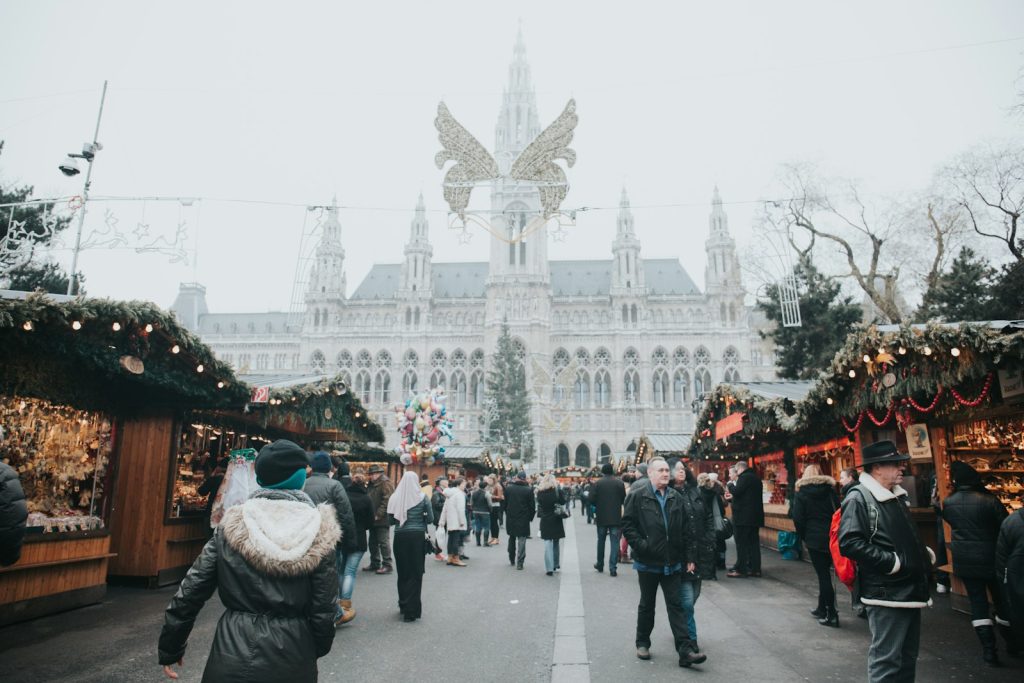
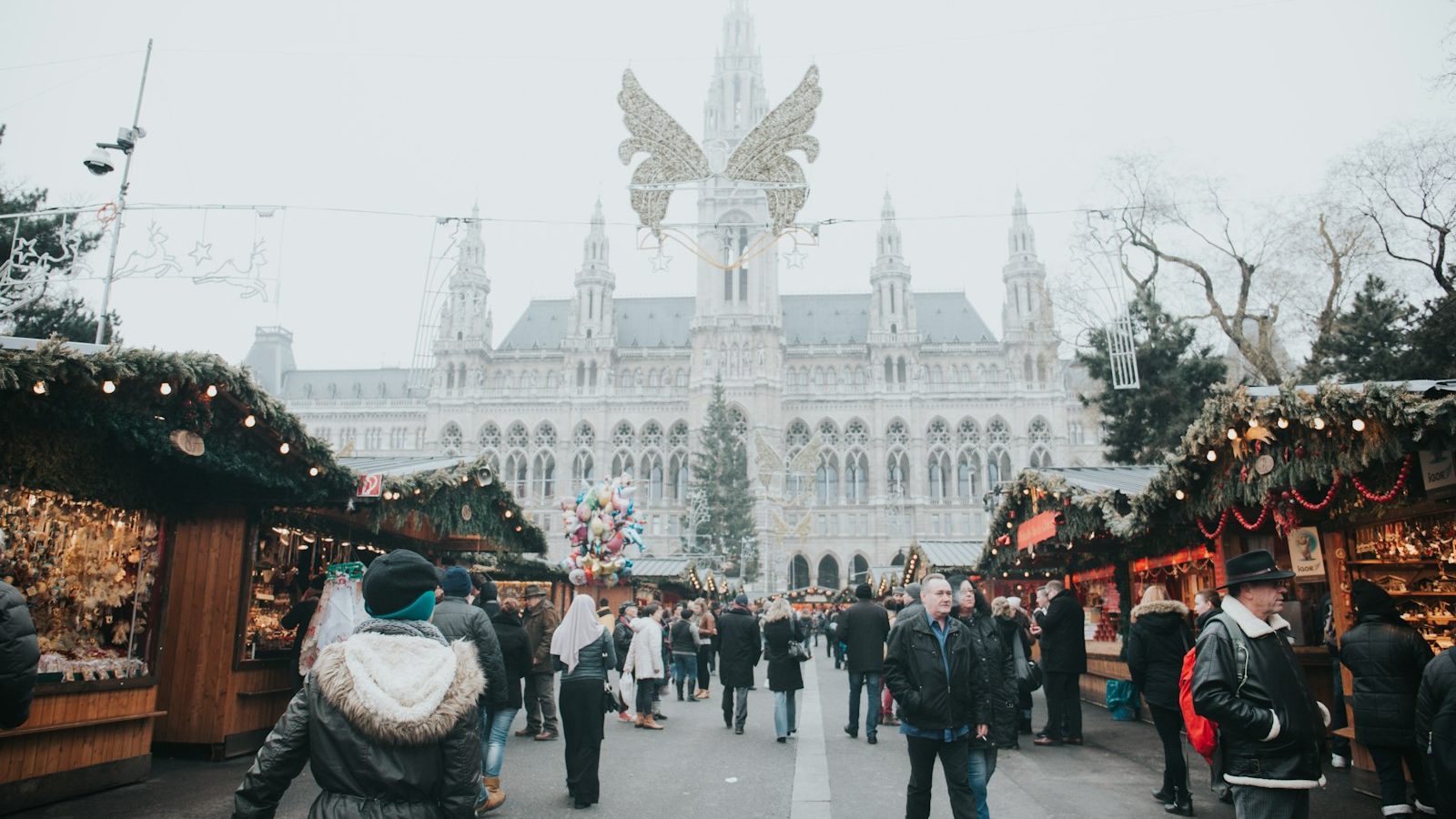
Vienna has more than a dozen Christmas markets, and together they make it one of the best cities in Europe for a festive break. The main event is the Viennese Christmas Market on Rathausplatz, in front of the neo Gothic City Hall, which runs from 13 November to 26 December 2026. The trees in the park are hung with lights, there is a skating trail, and the stalls sell everything from glass baubles to Krapfen doughnuts.
The market at Schönbrunn Palace is the first of the big markets to open in Europe each year. In 2026 it opens on Friday 6 November and stays open until 6 January 2027, so it is a good choice if you want an early trip or a break between Christmas and New Year. Other favourites include the small, crafty market at Spittelberg, the market in front of the Karlskirche, and the romantic stalls at Am Hof and the Belvedere.
- **Getting there from the UK:** direct flights to Vienna take about two hours 15 minutes from London, with British Airways, Austrian Airlines, easyJet and Ryanair, plus regional routes. The City Airport Train reaches the centre in 16 minutes.
- **Time needed:** two or three nights lets you see five or six markets without rushing.
- **Tip:** go to Rathausplatz on a weekday afternoon. On Friday and Saturday evenings the paths between stalls can be very crowded.
2. Prague, Czech Republic
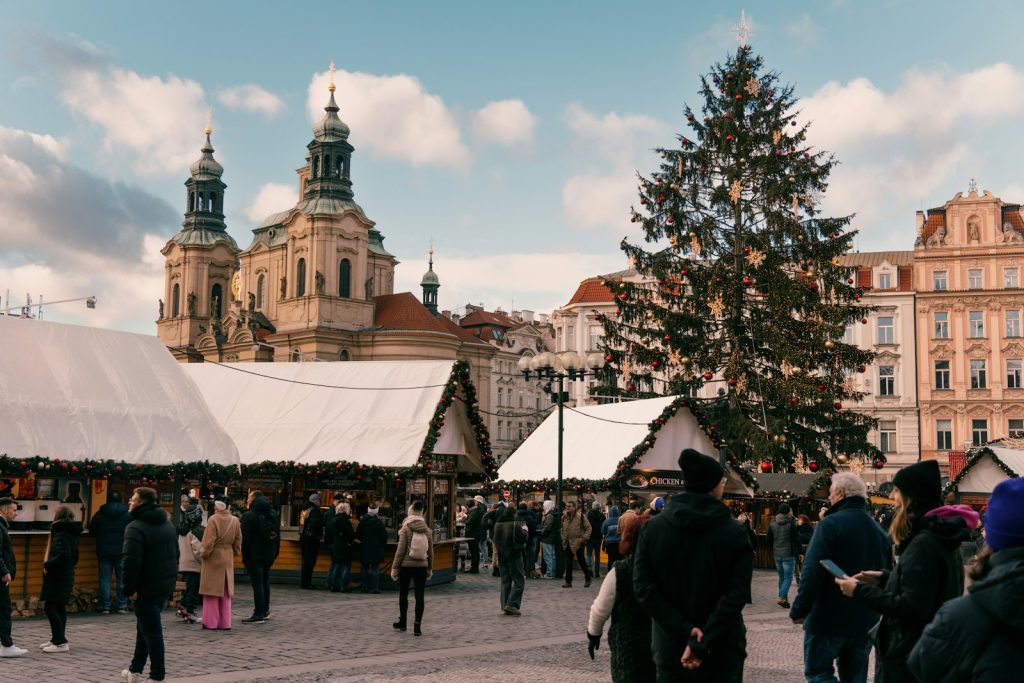
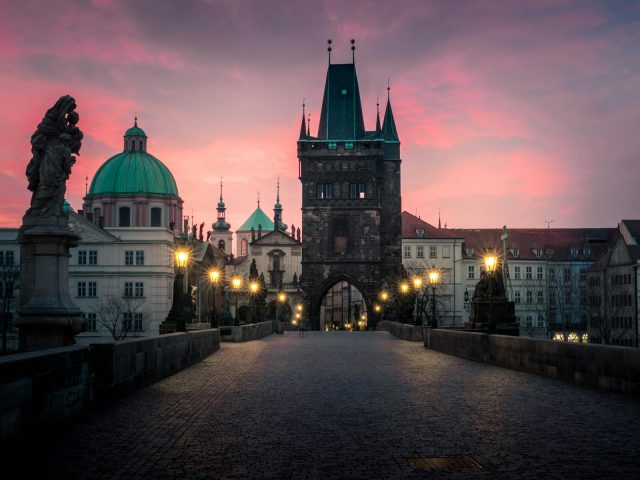
Prague’s Old Town Square market is one of the most photographed Christmas scenes in Europe. A huge tree stands in front of the twin spires of the Týn Church, the Astronomical Clock is a minute’s walk away, and the stalls sell trdelník pastry, grilled ham and hot mead. In 2026 the market runs from 28 November to 6 January 2027, so you can visit well into the new year.
The smaller market on Wenceslas Square is a short walk away, and there are quieter markets at Prague Castle, Náměstí Míru and Kampa. Prices for food and drink are lower than in Germany, Austria or Switzerland, and hotels are good value outside the week between Christmas and New Year. For the rest of your stay, see our guide to the best things to do in Prague.
- **Getting there from the UK:** direct flights take about one hour 50 minutes from London, with many regional routes from Manchester, Birmingham, Bristol, Edinburgh and more. A bus and metro or a taxi gets you to the Old Town in about 30 to 40 minutes.
- **Time needed:** two nights is enough for the markets, three if you want to see the castle and Charles Bridge properly.
- **Tip:** trdelník is sold everywhere, but it is a tourist treat rather than a true Czech tradition. Try the svařák, the local mulled wine, and the grilled sausages instead.
3. Strasbourg, France
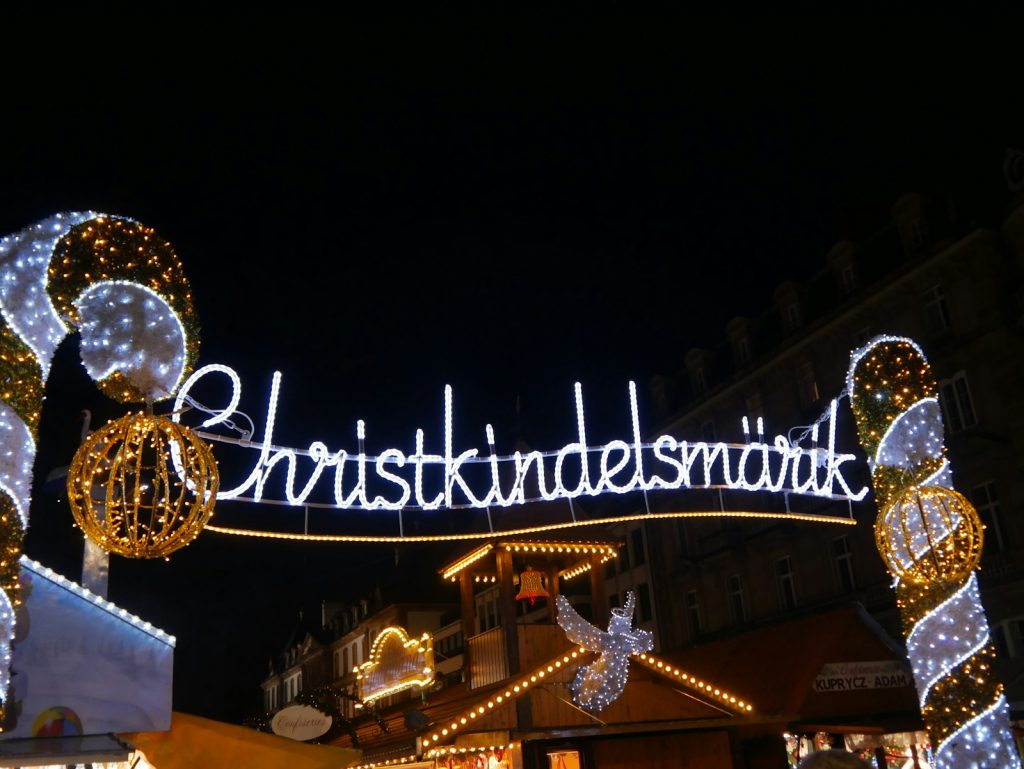
Strasbourg calls itself the capital of Christmas, and it has a strong claim. Its market was first held in 1570, making it one of the oldest in Europe, and today there are around a dozen market squares spread across the Grande Île, the island at the heart of the old town. The highlight is the giant Christmas tree on Place Kléber, with the main market on Place Broglie and stalls around the cathedral.
The 2026 market opens on 27 November. Sources differ on the closing date: the main markets traditionally end on 24 December, while some squares stay open until 27 December, so check the official Strasbourg tourism website before you book a late trip. Expect big crowds at weekends, when the city operates security checks at the bridges into the old town.
- **Getting there from the UK:** there are few direct flights to Strasbourg. Most visitors fly to Basel Mulhouse EuroAirport or Frankfurt and take the train, or take Eurostar to Paris and the TGV, which reaches Strasbourg in about one hour 50 minutes.
- **Time needed:** two nights, or three with a day trip to Colmar.
- **Tip:** stay outside the Grande Île if prices in the centre are too high. The tram network makes it easy to come in for the evening.
4. Colmar, France
Colmar, about 30 minutes south of Strasbourg by train, is often called the prettiest Christmas market town in Europe. Its half timbered houses are painted in bright colours, the canals of Little Venice are lit at night, and the town runs six small markets in its squares and streets. In 2026 they run from 23 November to 29 December.
Because Colmar is small, it fills up quickly, especially on Saturdays when coaches arrive from across France, Germany and Switzerland. Visit on a weekday if you can, or stay overnight so you can enjoy the lights after the day trippers have gone.
- **Getting there from the UK:** fly to Basel Mulhouse EuroAirport, about 50 minutes away by shuttle bus and train, or combine it with Strasbourg.
- **Time needed:** a full day, or one night if you want to see it lit up without the crowds.
- **Tip:** the Alsace wine villages of Riquewihr, Kaysersberg and Eguisheim also have small, very pretty markets and are easy to reach from Colmar by bus or on a tour.
5. Nuremberg, Germany
The Christkindlesmarkt in Nuremberg is one of Germany’s most famous Christmas markets. It dates from at least 1628 and fills the Hauptmarkt with around 180 stalls with red and white striped roofs. The market opens with the Christkind, a young woman chosen to play the Christ Child, reading a prologue from the balcony of the Frauenkirche. In 2026 it runs from 27 November to 24 December.
Nuremberg is the place to try Lebkuchen, the soft gingerbread the city is famous for, and Nürnberger Rostbratwürste, small grilled sausages served three in a bun. Look out for the Zwetschgenmännle, little figures made from dried plums, and the children’s market on Hans Sachs Platz.
- **Getting there from the UK:** there are few direct flights. Most visitors fly to Munich or Frankfurt and take the train, which takes about one hour from Munich and two hours from Frankfurt.
- **Time needed:** one or two nights, easily combined with Munich.
- **Tip:** the Feuerzangenbowle, a rum soaked sugar cone set alight over mulled wine, is a winter favourite in Bavaria and a fun thing to try once.
6. Cologne, Germany
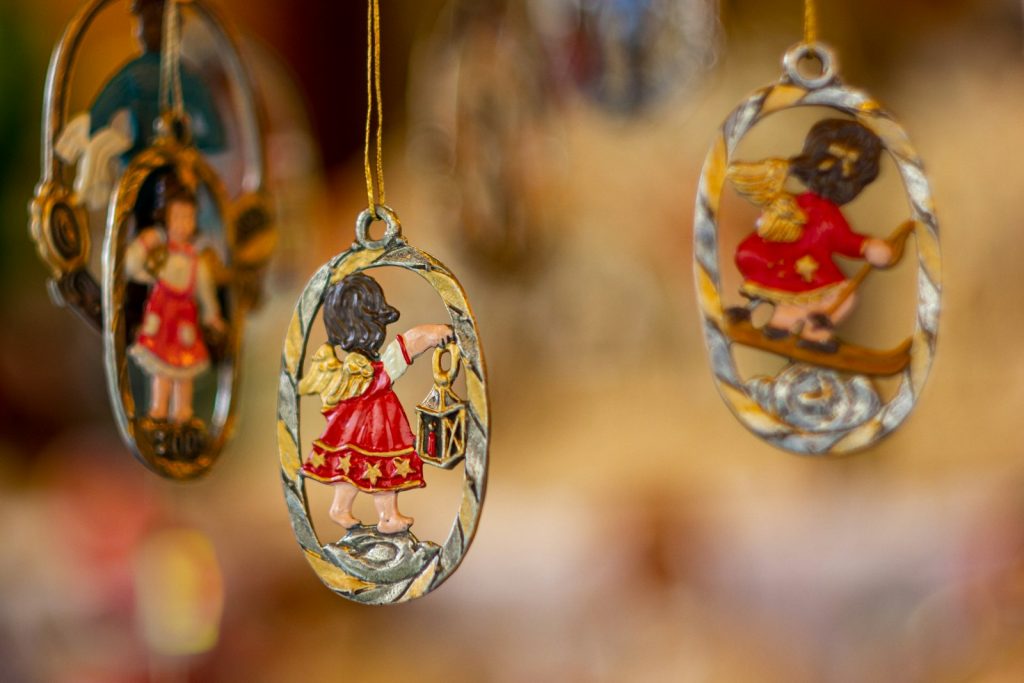
Cologne has several large markets, but the one people come for is the Markt am Dom, in the shadow of the twin spires of Cologne Cathedral. A huge canopy of lights hangs over the stalls, and the cathedral is lit up behind it. In 2026 the Markt am Dom runs from 16 November to 23 December, and it is closed on 22 November for Totensonntag, the German day of remembrance.
The Angels’ Market at Neumarkt, the old town market at Heumarkt with its ice rink, the harbour market by the Chocolate Museum and the gay and lesbian market Heavenue are all within walking distance. That variety makes Cologne one of the best choices for a short break.
- **Getting there from the UK:** Cologne is one of the easiest markets to reach by train. Take Eurostar from London to Brussels, about two hours, then change for a high speed train to Cologne, about one hour 50 minutes. You can also fly direct to Cologne Bonn or Düsseldorf.
- **Time needed:** one or two nights. Aachen and Düsseldorf are easy add ons by train.
- **Tip:** each market has its own design of mug. Keep one as a souvenir or return it to get your deposit back.
7. Munich, Germany
Munich’s main Christmas market fills Marienplatz in front of the Neues Rathaus, the grand neo Gothic town hall, and it opens on 20 November 2026. Traditional Bavarian music is played from the town hall balcony, and the side streets fill with stalls selling wood carvings and nativity figures. There is also a medieval market at Wittelsbacherplatz, a pink themed market in the Glockenbach district and a market at the Chinese Tower in the English Garden.
- **Getting there from the UK:** direct flights take about one hour 50 minutes from London and many regional airports. The S Bahn train takes about 40 minutes into the centre.
- **Time needed:** two nights, or combine with Nuremberg or Salzburg.
- **Tip:** the market at the Residenz courtyard is smaller and calmer than Marienplatz and a good place to escape the crowds.
8. Dresden, Germany
The Striezelmarkt in Dresden is often called the oldest Christmas market in Germany. It was first held in 1434, and it is named after the Striezel, the sweet bread now known as Dresden Stollen. In 2026 it opens on 25 November and usually runs until Christmas Eve. Look out for the giant wooden pyramid, the huge Christmas arch and the Stollen festival in early December, when a giant cake is paraded through the old town.
Dresden also has a medieval market in the courtyard of the Stallhof and a market in front of the Frauenkirche, the church rebuilt after the Second World War.
- **Getting there from the UK:** fly to Berlin or Prague and take the train, which takes about two hours from either city. Dresden pairs well with Prague on one trip.
- **Time needed:** one or two nights.
- **Tip:** buy Stollen from a stall with the official Dresdner Christstollen seal, which marks cake baked by local bakers to the traditional recipe.
9. Budapest, Hungary
Budapest has two big markets, and both are among the most loved in Europe. The Advent Basilica market in front of St Stephen’s Basilica runs from 13 November 2026 to 1 January 2027, with a free light show projected onto the front of the church every evening and a small ice rink around the tree. The market on Vörösmarty Square, close to the Danube, is known for its crafts and food.
Budapest is very good value. Try lángos, fried dough topped with sour cream and cheese, chimney cake, and stuffed cabbage, and warm up afterwards in one of the city’s thermal baths.
- **Getting there from the UK:** direct flights take about two hours 30 minutes from London, with routes from several regional airports. The 100E airport bus runs to the centre in about 40 minutes.
- **Time needed:** two or three nights, so you have time for the baths and the Castle District.
- **Tip:** the Széchenyi baths are a great way to end a cold market evening. Book a ticket online in advance to skip the queue.
10. Copenhagen, Denmark
Christmas in Tivoli turns Copenhagen’s famous old amusement park into a winter wonderland, with thousands of lights, Christmas stalls, rides and a pantomime theatre. In 2026 it runs from 13 November to 3 January 2027. You need a Tivoli entry ticket, and rides cost extra.
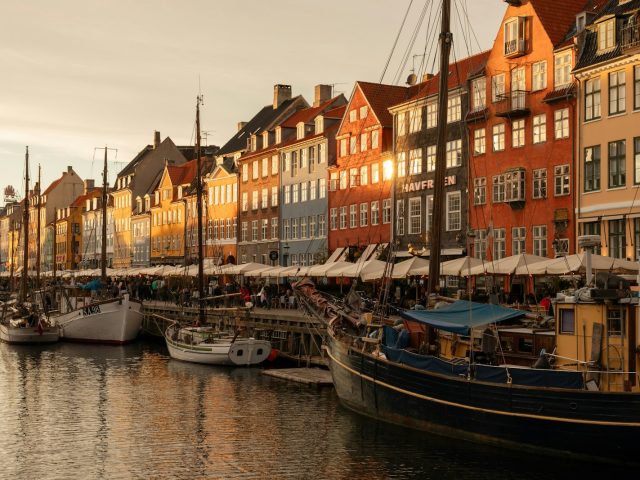
Outside Tivoli, the market at Nyhavn, the colourful old harbour, is the most photogenic, and there are smaller markets at Højbro Plads and Kongens Nytorv. Try gløgg, the Danish mulled wine served with raisins and almonds, and æbleskiver, little round pancakes dusted with sugar.
- **Getting there from the UK:** direct flights take about one hour 50 minutes from London, with routes from Manchester, Edinburgh and other airports. The metro reaches the centre in about 15 minutes.
- **Time needed:** two nights.
- **Tip:** Copenhagen is expensive. Buy a Copenhagen Card if you plan to visit Tivoli and a few museums, as it can save money. See our full guide to the best things to do in Copenhagen.
11. Tallinn, Estonia
Tallinn’s Christmas market fills Town Hall Square, in the middle of one of the best preserved medieval old towns in Europe. In 2026 it runs from 20 November to 6 January 2027. A tall tree stands in front of the Gothic Town Hall, and the stalls sell wool, felt, wood carvings and local food such as black pudding and sauerkraut.
The city claims to have put up one of the first public Christmas trees in Europe, back in the 15th century, and the old town walls, towers and cobbled lanes make it feel like a film set. With a little luck, you might see snow.
- **Getting there from the UK:** direct flights take about two hours 45 minutes from London, with a smaller choice of routes than the big German and Austrian cities.
- **Time needed:** two nights. Helsinki is a two hour ferry ride away if you want to add another city.
- **Tip:** pack properly warm clothes. Tallinn is much colder than western Europe in December.
12. Krakow, Poland
The Christmas market on Krakow’s Main Square, one of the largest medieval squares in Europe, runs from 27 November 2026 to 6 January 2027. The stalls sit beneath the twin towers of St Mary’s Basilica and the arcades of the Cloth Hall, and every day at the top of each hour a trumpeter plays from the tower.
Krakow is one of the best value Christmas market cities in Europe. See our guide to the best things to do in Krakow to plan the rest of your trip. Try oscypek, smoked sheep’s cheese grilled and served with cranberry, pierogi dumplings and grzaniec, the Polish mulled wine. In early December the city holds a competition for the szopka, colourful nativity scenes shaped like Krakow’s churches.
- **Getting there from the UK:** direct flights take about two hours 20 minutes, with Ryanair, easyJet, Jet2 and others flying from many UK airports.
- **Time needed:** two or three nights, especially if you want to visit the Wieliczka salt mine.
- **Tip:** the market is at its best after dark. Spend the day exploring Wawel Castle and Kazimierz and come back to the square in the evening.
13. Brussels and Bruges, Belgium
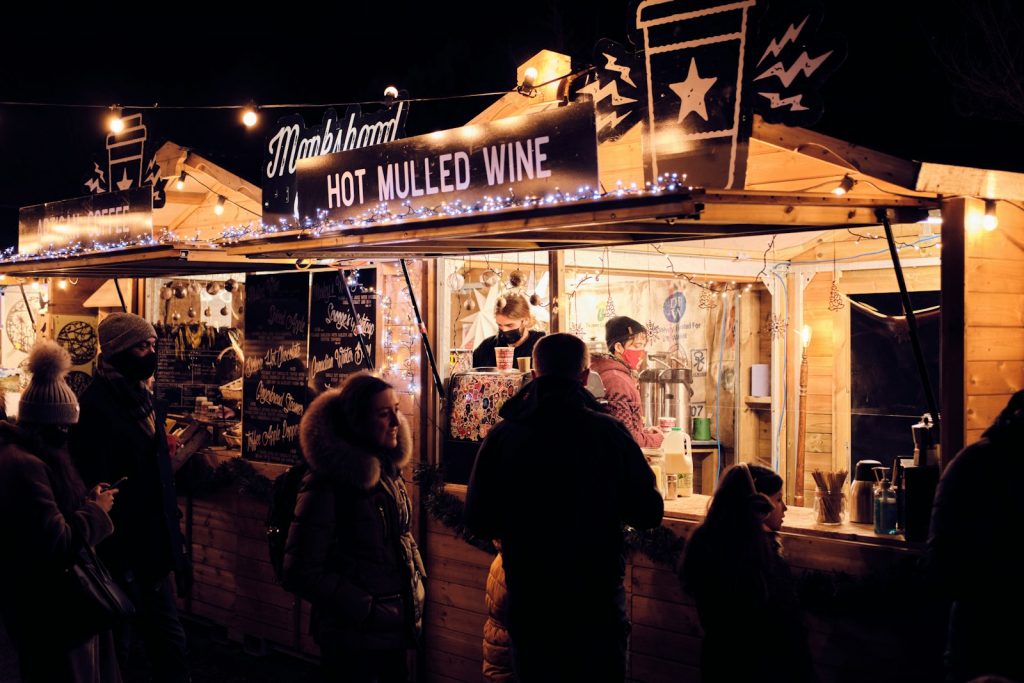
Belgium is the easiest country for a Christmas market trip from London, because you can be in Brussels in about two hours on Eurostar. Winter Wonders in Brussels runs from 27 November 2026 to 3 January 2027, with stalls spread from the Bourse to Place Sainte Catherine, an ice rink, a big wheel and a light and sound show on the Grand Place.
Bruges, about one hour from Brussels by train, has a small market on the Markt and another on Simon Stevinplein, with an ice rink. Its markets are expected to run from 20 November 2026 to 3 January 2027. The canals and medieval lanes make it lovely after dark.
- **Getting there from the UK:** Eurostar from London St Pancras to Brussels takes about two hours. Your Eurostar ticket can include onward travel to any Belgian station, including Bruges.
- **Time needed:** one or two nights for each city.
- **Tip:** do not leave without trying Belgian waffles and hot chocolate, which are both excellent here.
14. Basel, Switzerland
Basel has one of the best Christmas markets in Switzerland, spread across Barfüsserplatz and Münsterplatz, the square by the cathedral. In 2026 it runs from 26 November to 23 December. It feels calmer and more refined than the big German markets, with good quality crafts and a beautiful setting above the Rhine.
Be aware that Zurich’s popular Wienachtsdorf village at Bellevue has ended, so if you are planning a Swiss trip, Basel and Montreux are now the strongest choices.
- **Getting there from the UK:** direct flights to Basel Mulhouse EuroAirport take about one hour 30 minutes from London, with routes from several regional airports. Bus 50 reaches the centre in about 20 minutes.
- **Time needed:** one or two nights. Colmar and Strasbourg are easy day trips.
- **Tip:** Switzerland is expensive. Your hotel in Basel should give you a free transport card for local trams and buses, so check for it at check in.
15. Zagreb, Croatia
Zagreb’s Advent market has won awards as one of the best in Europe, and it is still a good choice for people who want somewhere less crowded. In 2026 it opens on 28 November and runs into the new year. Rather than one big market, the whole city centre joins in, from the main square and the cathedral to the Zrinjevac park with its lit trees and music pavilion.
Prices are lower than in western Europe, and the mood is relaxed and local. Try fritule, small doughnuts, and kuhano vino, the Croatian mulled wine.
- **Getting there from the UK:** direct flights take about two hours 20 minutes from London.
- **Time needed:** one or two nights.
- **Tip:** the Upper Town is the most atmospheric part of the market, with the funicular railway lit up for the season.
The best Christmas market combinations
One of the best ways to see Europe’s Christmas markets is to combine two or three cities in one trip. These routes work well by train.
| Route | Travel time between cities | Best length |
|---|---|---|
| Vienna and Bratislava | about one hour by train | 3 or 4 nights |
| Vienna, Budapest and Bratislava | about 2 hours 40 minutes from Vienna to Budapest | 5 or 6 nights |
| Prague and Dresden | about 2 hours by train | 4 nights |
| Munich and Nuremberg | about 1 hour by train | 3 or 4 nights |
| Strasbourg and Colmar | about 30 minutes by train | 3 nights |
| Basel, Colmar and Strasbourg | about 50 minutes and 30 minutes | 4 nights |
| Cologne and Aachen | about 40 minutes by train | 2 or 3 nights |
| Brussels and Bruges | about 1 hour by train | 3 nights |
You can also join a river cruise on the Rhine or the Danube, which visits several markets on one trip. Cruises are more expensive, but they take the effort out of moving between cities.
What do European Christmas markets sell?
Most markets sell the same three things: food, drink and gifts. The quality of the gifts varies a lot, so look for stalls where you can see the maker at work.
- **Hot drinks.** Mulled wine is called Glühwein in Germany and Austria, vin chaud in France, svařák in the Czech Republic, grzaniec in Poland and gløgg in Denmark. Most markets also sell Punsch, a fruit punch often made with rum, plus hot chocolate and alcohol free versions for children.
- **Food.** Expect sausages, roast chestnuts, sugared almonds, potato pancakes, cheese dishes such as raclette, and local cakes and biscuits such as Lebkuchen, Stollen and trdelník.
- **Gifts.** Glass baubles, wooden toys, candles, nativity scenes, smoking men and nutcrackers from the Ore Mountains, knitwear, honey and local wines are all common.
How much does a Christmas market trip cost?
Prices depend on the country and on when you go. These are typical prices seen in 2026. Check before you travel, as they can change.
| Item | Typical price |
|---|---|
| Mulled wine | about €4 to €6 in Germany and Austria, less in Prague, Krakow and Budapest |
| Mug deposit | about €3 to €5, refunded when you return the mug |
| Sausage in a bun | about €4 to €6 |
| Return flight from the UK | from about £60 to £200, depending on dates and route |
| Central hotel, per night | from about £90 in Krakow or Prague to £200 or more in Vienna, Copenhagen or Basel at weekends |
Overall, Krakow, Budapest, Prague and Zagreb are the cheapest options. Vienna, Munich and the German cities sit in the middle. Copenhagen and Basel are the most expensive.
Practical tips for your trip
- **Go on a weekday.** Weekends, especially Saturdays, are by far the busiest time at every market. Thursday or Sunday to Tuesday trips are quieter and often cheaper.
- **Book early.** Hotels in Strasbourg, Colmar, Vienna and Nuremberg fill up months ahead for December weekends.
- **Carry some cash.** Most stalls now take cards, but small craft stalls and the smaller markets sometimes prefer cash.
- **Dress for the cold.** You will spend hours standing outside in the evening. Wear warm, waterproof shoes, a hat and gloves.
- **Watch your bags.** Busy markets attract pickpockets. Keep valuables in a zipped inside pocket.
- **Check your travel documents.** The EU’s new Entry/Exit System means non EU travellers, including UK passport holders, now register fingerprints and a photo at the border on their first visit. Allow extra time at the airport.
Our picks
- **Best overall:** Vienna, for the number of markets and the grand setting.
- **Most magical:** Colmar, especially if you stay overnight.
- **Best value:** Krakow or Prague.
- **Easiest by train from London:** Brussels, Bruges or Cologne.
- **Most traditional:** Nuremberg or Dresden.
- **Best for families:** Tivoli in Copenhagen.
- **Underrated:** Zagreb, Tallinn and Basel.
- **Best for late visits after Christmas:** Prague, Tallinn, Krakow or Vienna’s Schönbrunn.
Frequently asked questions
What are the top 10 Christmas markets in Europe?
Our top 10 for 2026 are Vienna, Prague, Strasbourg, Colmar, Nuremberg, Cologne, Budapest, Dresden, Tallinn and Krakow. Brussels, Bruges, Copenhagen, Munich, Basel and Zagreb are close behind.
When do the Christmas markets in Europe open in 2026?
The season starts on 6 November at Vienna’s Schönbrunn Palace. Budapest, Vienna’s Rathausplatz and Copenhagen’s Tivoli open on 13 November, Cologne on 16 November, Munich, Tallinn and Bruges on 20 November, and Colmar on 23 November. Most traditional markets open in the days before the first Sunday of Advent on 29 November, including Dresden on 25 November, Basel on 26 November, Nuremberg, Strasbourg, Brussels and Krakow on 27 November, and Prague and Zagreb on 28 November.
Where is the most magical Christmas market?
Colmar in Alsace is often called the most magical, because of its painted houses and lit canals. Prague’s Old Town Square and Tallinn’s medieval Town Hall Square are close rivals, especially if you are lucky enough to see snow.
Which European Christmas markets are the best and most affordable?
Krakow, Prague, Budapest and Zagreb give the best value. Food, drink and hotels cost noticeably less than in Germany, Austria, Switzerland or Scandinavia, and the markets are just as pretty.
Where is the prettiest Christmas market in Europe?
For a town, Colmar. For a city square, Prague’s Old Town Square, Vienna’s Rathausplatz and the Markt am Dom in Cologne, in front of the cathedral, are hard to beat.
What are some underrated Christmas markets in Europe?
Zagreb, Tallinn, Basel, Dresden and the small Alsace villages of Riquewihr and Kaysersberg are all excellent and less crowded than the most famous names.
Which Christmas markets stay open after Christmas?
Prague, Tallinn, Krakow and Vienna’s Schönbrunn stay open until 6 January 2027. Brussels, Bruges and Copenhagen’s Tivoli run until 3 January, and Budapest’s Advent Basilica until 1 January. Most German markets close on 23 or 24 December.
How many days do you need for a Christmas market trip?
Two or three nights is enough for one city. If you want to combine two or three markets, allow four to six nights.
What is the oldest Christmas market in Europe?
Dresden’s Striezelmarkt, first held in 1434, is often called the oldest Christmas market in Germany. Strasbourg’s dates from 1570 and Nuremberg’s from at least 1628. Vienna also has records of a December market going back to the late 13th century.
Plan the rest of your trip
If you would rather swap cold markets for winter sun, read our guide to the best time to visit Marrakech, where December days are usually mild and sunny, and see our best things to do in Marrakech. For more ideas across the continent, browse our Europe travel guides. If you spot something out of date, please let us know.