
!DISCLOSURE
Two new European border systems are changing how UK travellers enter Europe: the Entry/Exit System, known as EES, and the European Travel Information and Authorisation System, known as ETIAS. They are often mentioned together, but they are very different. EES is already running and replaces passport stamps with fingerprints and a face scan at the border. ETIAS is a paid online authorisation that you will need before you travel, but it has not started yet.
This guide explains both systems clearly for UK passport holders in late 2026. We cover what EES and ETIAS are, which countries use them, what happens at the border, how much ETIAS will cost, when it is expected to start, who is exempt and how to avoid the many unofficial websites already selling ETIAS applications. We also answer the questions people ask most, including whether you need ETIAS to travel now and whether you can register for EES before you leave the UK.

EES and ETIAS at a glance
| Question | EES (Entry/Exit System) | ETIAS (travel authorisation) |
|---|---|---|
| What is it? | A digital border record that replaces passport stamps | An online permission to travel, linked to your passport |
| Status in November 2026 | In operation since 12 October 2025, fully live from 10 April 2026 | Not in operation, no applications being accepted |
| Cost | Free | €20 per person once it starts |
| Who pays | Nobody | Travellers aged 18 to 70 |
| What you do | Give fingerprints and a photo at the border | Apply online before you travel |
| How long it lasts | Your record is kept for 3 years | Valid for 3 years or until your passport expires |
| Countries | 29 European countries | 30 European countries |
We checked these details against the EU, the UK government, ABTA and the House of Commons Library in November 2026. Both systems are still being rolled out, so check the official EU travel website on europa.eu and the GOV.UK travel advice for your destination before you go.
Do British citizens need a visa to travel to the EU?
No. UK passport holders can visit the Schengen area without a visa for up to **90 days in any 180 day period**, for holidays, visiting family, business meetings and similar trips. Time spent in any Schengen country counts towards the same 90 days.
What has changed since Brexit is how your visit is recorded and checked. EES now records your entries and exits digitally, and ETIAS will add a short online application before you travel. Neither is a visa.
Your passport must also meet two Schengen rules: it must have been **issued less than 10 years before the day you arrive**, and it must be **valid for at least 3 months after the day you plan to leave**. Check both dates before you book.
What is EES?
The Entry/Exit System is an automated EU border system for travellers from outside the EU, including UK citizens, visiting for a short stay. Instead of stamping your passport, border officers create a digital record the first time you cross an external Schengen border.
Your EES record includes:
- **Your passport details:** Name, nationality, date of birth and passport number.
- **A facial image:** Taken at the border or at a self service kiosk.
- **Fingerprints:** Four fingerprints for travellers aged 12 and over.
- **Dates and places:** Each time you enter and leave the Schengen area.
The system automatically counts how many days you have spent in the Schengen area, so it will flag anyone who overstays the 90 day limit. EES registration is free, and you don’t need to apply for anything in advance.
When did EES start?
EES started on **12 October 2025** and was introduced gradually over six months. It became fully operational on **10 April 2026**, when manual passport stamping was meant to end at participating borders.
In practice, the rollout has been uneven. Some airports had long queues in the first weeks, and the House of Commons Library notes that EES had not been fully implemented at every crossing by the April deadline. Channel crossings from the UK were among the slowest to switch over.
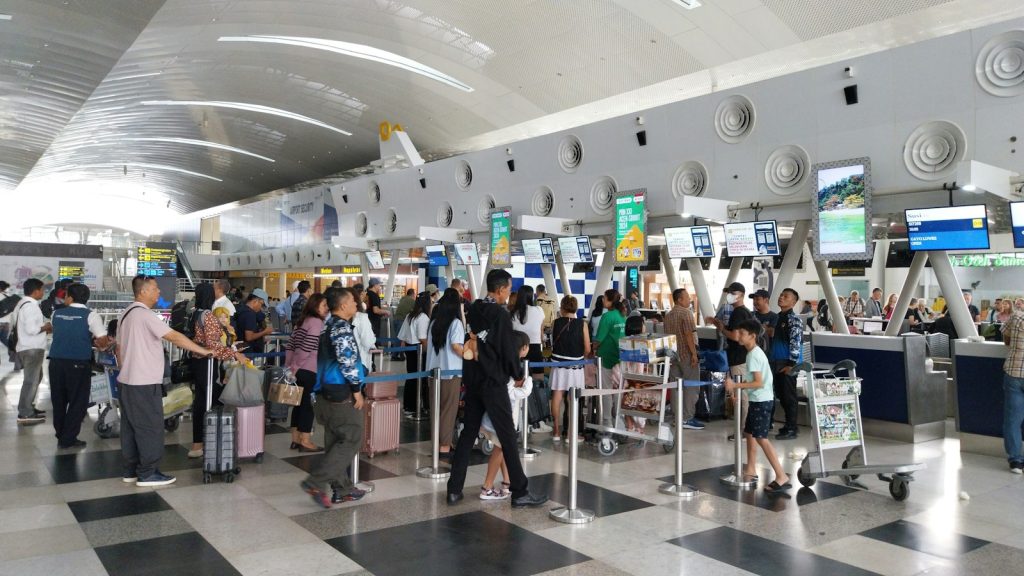
What happens at the border with EES
On your **first trip** after EES starts at your border crossing:
1. **Go to the EES registration area:** Some airports and ports use self service kiosks, others use a staffed desk.
2. **Scan your passport.**
3. **Have your photo taken.**
4. **Give your fingerprints:** Unless you are under 12.
5. **Answer any questions:** Officers may ask about your trip, accommodation and funds.
On **later trips**, the process should be quicker. You will usually just scan your passport and have your face or a fingerprint checked to confirm who you are. You may be asked to give a fingerprint or photo when you leave, too.
The UK government advises allowing extra time, especially at busy times. Children aged 11 and under do not give fingerprints, but may have their photo taken. Refusing to give your biometric details means you will be refused entry.
EES at Dover, Eurostar and Eurotunnel
If you travel to France by ferry from Dover, on Eurostar from St Pancras, or on Le Shuttle from Folkestone, French border checks take place **in the UK, before you leave**. That means your EES registration also happens on the UK side.
These crossings have been among the hardest places to introduce EES, because space is tight and checks are done for whole cars or busy trains. Reports in 2026 described manual stamps continuing at some Channel crossings while the systems were being finished, and long queues at St Pancras at times. Self service kiosks have been installed at St Pancras.
Follow your operator’s advice on arrival times. Eurostar, P&O Ferries, DFDS, Irish Ferries and Eurotunnel all publish up to date guidance on their websites, and you may be told to arrive earlier than usual, particularly in school holidays.

Can you preregister for EES in the UK?
Partly. The EU border agency Frontex has an official free app called **Travel to Europe**, available on iPhone and Android. Where a country supports it, you can use the app in the 72 hours before you arrive to submit your passport details and a facial image. This can speed up your registration at the border.
You still need to give your fingerprints in person, and not every country or border crossing supports the app yet. The self service kiosks at some airports and at St Pancras also help you complete part of the process before you reach the officer.
Be wary of any other website or app that offers EES registration for a fee. EES is free, and the Travel to Europe app is the only official tool.
Which countries use EES?
EES is used in **29 European countries**: the 25 EU countries in the Schengen area plus Iceland, Liechtenstein, Norway and Switzerland.
It is **not** used in Ireland or Cyprus. UK travellers going to Ireland continue to travel under the Common Travel Area arrangements, and Cyprus keeps its own border checks.
What is ETIAS?
ETIAS is an online travel authorisation for visitors who don’t need a visa to visit Europe, including UK citizens. It is similar to the US ESTA or the UK ETA: you apply online before you travel, answer a few questions and pay a fee, and the authorisation is linked electronically to your passport.
Once ETIAS starts, you will need an approved authorisation before you travel to any of the 30 participating countries. Airlines, ferry companies and coach operators will check it before you board.
ETIAS is **not a visa**. It doesn’t change the 90 day limit, and it doesn’t guarantee entry. Border officers still make the final decision when you arrive.
Do I need ETIAS to travel now?
No. ETIAS is **not in operation** in November 2026, and no applications are being accepted. You can travel to Europe as normal with a valid passport.
The EU says it will announce the start date several months in advance. If anyone asks you to pay for an ETIAS now, it is not the official system.
When does ETIAS start?
There is no confirmed start date. ETIAS has been delayed several times. In 2025 the EU said it expected ETIAS to follow EES in the last quarter of 2026, but by mid 2026 the official ETIAS website said only that the system was not yet in operation and that travellers would be told the exact date several months before launch.
Because no date had been announced by November 2026, ETIAS is now very unlikely to start before 2027. When it does start, the EU has said there will be a transition period during which travellers without an ETIAS may still be allowed to travel, before it becomes fully compulsory.
Do British passport holders need an ETIAS?
Yes, once it starts. British citizens are visa exempt visitors to the Schengen area, so they will need an ETIAS for short stays in the 30 participating countries.
You will **not** need one if:
- **You also hold an EU passport:** For example, an Irish, French or Polish passport. Travel on that passport instead.
- **You live in a Schengen country:** And hold a residence permit or long stay visa there.
- **You already have a Schengen visa.**
- **You are only going to Ireland:** Ireland is not part of ETIAS.
How much will ETIAS cost?
The ETIAS fee will be **€20 per person**. It was originally set at €7 but was raised before launch.
Some travellers will apply free of charge, but they must still apply:
- **Under 18s:** No fee.
- **Over 70s:** No fee.
- **Some family members of EU citizens:** No fee, and in some cases no ETIAS needed.
| Travellers | Expected ETIAS cost |
|---|---|
| 1 adult | €20 |
| 2 adults | €40 |
| 2 adults and 2 children under 18 | €40 |
| Couple aged over 70 | Free |
How long will an ETIAS last?
An approved ETIAS will be valid for **3 years**, or until the passport you used to apply expires, whichever comes first. You can use it for as many trips as you like during that time, as long as each stay stays within the 90 in 180 day rule.
If you get a new passport, you will need a new ETIAS.
How will the ETIAS application work?
When ETIAS opens, the process is expected to be:
1. **Apply online or in the app:** On the official EU website or the official ETIAS app.
2. **Enter your passport details:** Plus your address, contact details, job and education.
3. **Answer security questions:** About criminal convictions, previous travel to conflict zones and previous refusals of entry.
4. **Pay the fee:** €20, unless you are exempt.
5. **Wait for a decision:** The EU says most applications should be approved within minutes. Some may take up to four days, or up to 30 days if you are asked for more information or an interview.
You will not need to send any documents in most cases, but your passport must be valid and must meet the Schengen passport rules.
Which countries will need ETIAS?
ETIAS will apply in **30 European countries**:
| Group | Countries |
|---|---|
| EU countries in Schengen | Austria, Belgium, Bulgaria, Croatia, Czech Republic, Denmark, Estonia, Finland, France, Germany, Greece, Hungary, Italy, Latvia, Lithuania, Luxembourg, Malta, Netherlands, Poland, Portugal, Romania, Slovakia, Slovenia, Spain, Sweden |
| Schengen countries outside the EU | Iceland, Liechtenstein, Norway, Switzerland |
| EU country outside Schengen | Cyprus |
Ireland is the only EU country that will not use ETIAS. Microstates such as Monaco, San Marino and Vatican City are reached through Schengen countries, so you will need an ETIAS to get there.
What 5 countries are not in Schengen?
This question is often based on an older list. Until recently, five EU countries were outside the Schengen area: Ireland, Cyprus, Bulgaria, Romania and Croatia. Croatia joined Schengen in 2023, and Bulgaria and Romania became full members in January 2025.
That leaves only **two EU countries outside Schengen: Ireland and Cyprus**. Several European countries outside the EU are also not in Schengen, including the UK, Albania, Bosnia and Herzegovina, Montenegro, North Macedonia, Serbia, Moldova, Ukraine and Turkey. Each has its own entry rules for UK visitors.
How the 90 in 180 day rule works
The 90 day limit is not a calendar year allowance. On any day you are in the Schengen area, border officers look back over the previous 180 days and count every day you spent in any Schengen country. If the total reaches 90, you must leave.
For example, if you spend 30 days in Spain in March, 30 days in France in May and 25 days in Italy in July, you have used 85 days. You could only stay five more days until enough of the March days drop out of the 180 day window. Both the day you arrive and the day you leave count as full days.
Before EES, border officers worked this out by counting stamps, which was slow and often inaccurate. EES now does the sum automatically, so mistakes are far less likely to go unnoticed. The EU has a free short stay calculator on its website that you can use to plan longer trips.
Overstaying can lead to a fine, removal and a ban on returning to the Schengen area. The UK government says a ban can last up to three years.
Second home owners and long trips
The new systems don’t change the rules for UK citizens who own property in Spain, France, Portugal or elsewhere in Europe. Owning a home doesn’t give you extra days. If you want to stay longer than 90 days in 180, you need a national visa or residence permit from the country concerned.
EES makes it much easier for authorities to see how long you have stayed, so second home owners who previously relied on unstamped or forgotten stamps should plan their visits carefully. Some countries, such as Spain and France, offer long stay visas for retired people or those with enough income, which allow longer visits.
What if your EES record is wrong?
Mistakes can happen, especially while the system is new. If you think your EES record shows the wrong dates or wrong details, you have the right to ask for it to be corrected. Contact the border authority of the country where the record was created, or use the contact details on the official EU travel website. Keep your boarding passes, hotel receipts and travel tickets, which help prove when you entered and left.
How EES and ETIAS work together
Think of ETIAS as the check **before** you travel, and EES as the record **at** the border:
- **Before you book:** Check your passport meets the 10 year and 3 month rules.
- **Before you travel, once ETIAS starts:** Apply for an ETIAS and wait for approval.
- **At check in:** Your airline or ferry company checks that you have a valid ETIAS.
- **At the border:** You register with EES or have your existing record checked, and the system logs your entry date.
- **When you leave:** EES logs your exit and updates your 90 day count.
How do I apply for an ESTA visa?
People often search for ESTA alongside ETIAS, but ESTA is the US version and is completely separate. If you are flying to the United States, you apply on the official US government website or the ESTA Mobile app, and it costs $40.62. Read our full ESTA application guide for every step.
Tips for UK travellers to Europe
- **Check your passport dates now:** The 10 year issue rule catches out many people with older passports.
- **Allow extra time at the border:** Especially on your first trip after EES starts at that crossing, and at Channel ports in school holidays.
- **Download the Travel to Europe app:** Use it where it is supported to save time.
- **Keep track of your 90 days:** EES will count them for you, and overstaying can lead to a ban.
- **Ignore ETIAS sellers:** Only use the official EU website on europa.eu when ETIAS opens.
- **Carry a GHIC:** Free healthcare cover in the EU is just as important as your border documents. See our GHIC card guide.
- **Take travel insurance:** EES and ETIAS do nothing to protect you if your trip goes wrong.
Frequently asked questions
Do I need ETIAS to travel now?
No. ETIAS is not yet in operation, and no applications are being accepted. You can travel with a valid passport.
Do British citizens need a visa to travel to the EU?
No. UK passport holders can visit the Schengen area visa free for up to 90 days in any 180 day period.
Do British passport holders need an ETIAS?
Yes, once it starts, for short stays in the 30 participating countries. The fee will be €20, and under 18s and over 70s will apply free.
Can you preregister for EES in the UK?
You can submit your passport details and a photo using the official Travel to Europe app in the 72 hours before arrival, where the country supports it. Fingerprints must still be given in person.
What 5 countries are not in Schengen?
The old list was Ireland, Cyprus, Bulgaria, Romania and Croatia. Today only Ireland and Cyprus are EU countries outside Schengen.
How do I apply for an ESTA visa?
ESTA is for the USA, not Europe. Apply on the official US website or ESTA Mobile app. See our ESTA application guide.
Is EES the same as ETIAS?
No. EES is a free digital border record using fingerprints and a photo, already in use. ETIAS is a paid online travel authorisation that has not started yet.
How long is EES data kept?
Your EES record is generally kept for three years after your last exit, and longer if you overstay.
Plan the rest of your trip
Heading to Europe? Browse our Europe travel guides, including the best things to do in Lisbon, Prague, Krakow and Copenhagen, or our guide to Christmas markets in Europe. Packing for the flight? See our guides to easyJet hand luggage and the Ryanair cabin bag size, or browse all our travel planning guides. Healthcare cover matters too: read our GHIC card guide. Friends visiting you from abroad? See our UK ETA guide. If you spot something out of date, please let us know.