
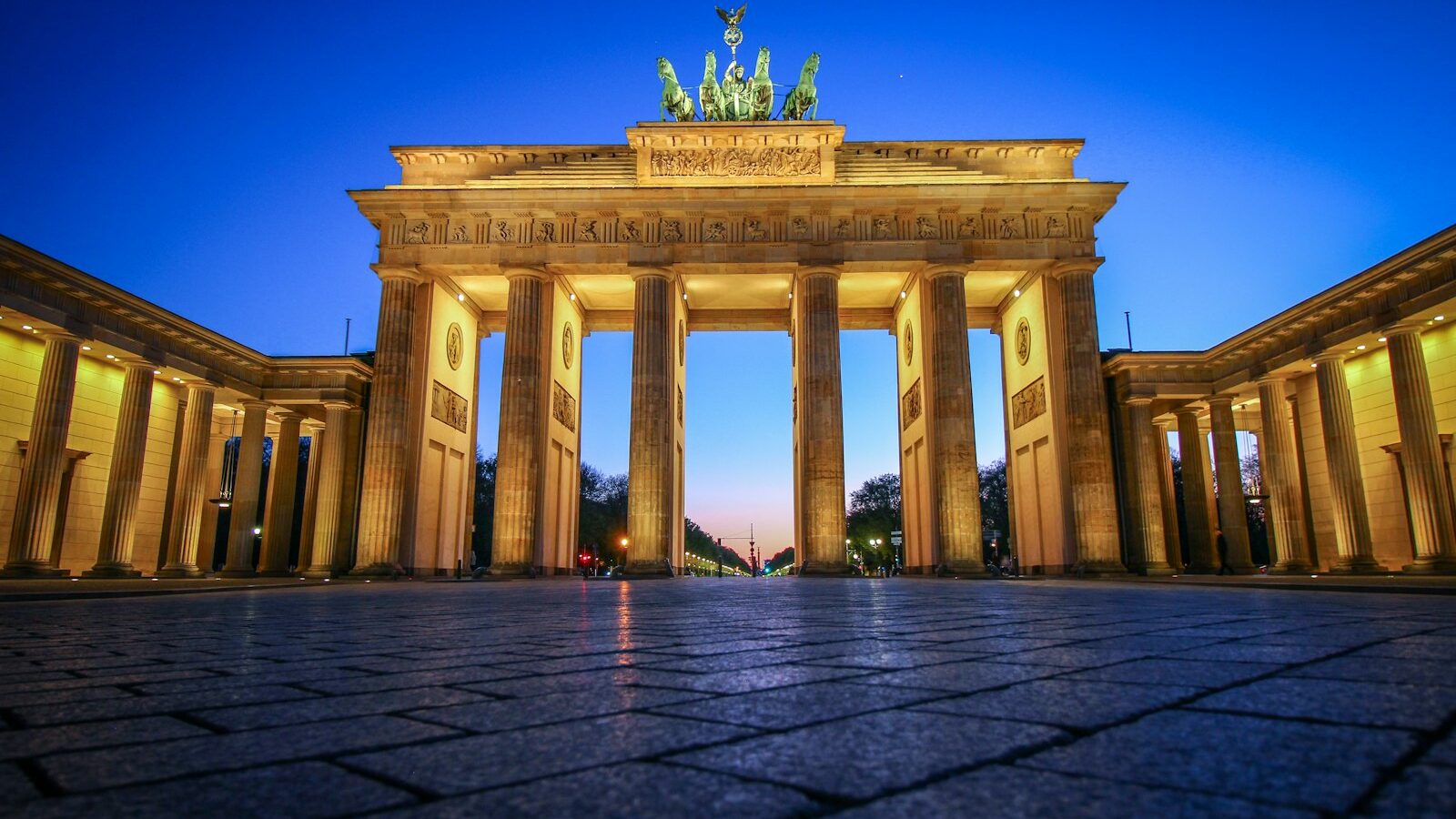
Things to do in Berlin range from free Cold War sites and a glass dome on top of the German parliament to Nefertiti, palaces, techno clubs and some of the best Christmas markets in Europe. This guide covers the 20 best, with prices we checked in November 2026, how to book the sights that need it and how to fit them into two, three or four days.
Some links in this guide are affiliate links: if you book through them we may earn a commission at no extra cost to you. It never changes what we recommend. How we make money.
Berlin is big and spread out, so the trick is to group sights by area and use the excellent public transport. Many of the most moving places, from the Berlin Wall Memorial to the Holocaust Memorial and the Topography of Terror, are free. We also cover what is closed right now (the famous Pergamon Museum), how to get in from BER airport, winter and night ideas, day trips and everything UK and US visitors need to know.
Things to do in Berlin at a glance
| Sight | Area | Time needed | Cost (Nov 2026) |
|---|---|---|---|
| Reichstag dome | Tiergarten, by the Brandenburg Gate | 1 to 1.5 hours | Free, booking required |
| Brandenburg Gate | Mitte | 20 minutes | Free |
| Holocaust Memorial | Mitte | 45 minutes | Free |
| Berlin Wall Memorial | Bernauer Strasse | 1.5 to 2 hours | Free |
| East Side Gallery | Friedrichshain | 1 hour | Free |
| Museum Island | Mitte | Half a day to a full day | €24 day ticket |
| Berlin Cathedral | Museum Island | 1.5 hours | €15 |
| TV Tower | Alexanderplatz | 1 hour | From €20 |
| Topography of Terror | Kreuzberg edge | 1.5 hours | Free |
| Jewish Museum Berlin | Kreuzberg | 2 to 3 hours | Core exhibition free |
| DDR Museum | Mitte, on the Spree | 1 to 1.5 hours | €13.90 |
| Charlottenburg Palace | Charlottenburg | 2 to 3 hours | From €12 |
| Potsdam and Sanssouci | Day trip | A full day | From €14 |
| Sachsenhausen Memorial | Day trip | Half a day | Free |
All prices were checked on official websites in November 2026. We convert at about £0.84 and $1.10 to the euro.
What our Germany video covers
From Berlin's Brandenburg Gate and Neuschwanstein Castle to a Rhine cruise, the Black Forest and the Christmas markets, here are 20 of the best things to do in Germany.
Jump to a chapter (21)
- 1:15 Berlin and the Brandenburg Gate
- 1:36 The Reichstag dome
- 1:49 The Berlin Wall and East Side Gallery
- 2:13 Munich's Marienplatz and Glockenspiel
- 2:44 Neuschwanstein Castle
- 3:09 Rhine River cruise
- 3:41 The Black Forest
- 4:05 Oktoberfest
- 4:31 Cologne Cathedral
- 5:01 Hamburg's Speicherstadt
- 5:30 Hiking the Bavarian Alps
- 5:56 The Romantic Road
- 6:26 German food and beer
- 6:51 Dresden's Zwinger Palace
- 7:15 Berlin's Museum Island
- 7:47 Christmas markets
- 8:19 Heidelberg Castle
- 8:44 The Harz Mountains and Goslar
- 9:10 Miniatur Wunderland, Hamburg
- 9:39 The Palatinate wine region
- 10:04 Remembering Germany's history
How to choose what to do in Berlin
If you only have a weekend, focus on Mitte: the Reichstag, the Brandenburg Gate, the Holocaust Memorial, Museum Island and the TV Tower are all within about 30 minutes’ walk of each other. Add the Berlin Wall Memorial for the best explanation of the divided city.
With three or four days, add the East Side Gallery and Kreuzberg, Charlottenburg Palace and a day trip to Potsdam or Sachsenhausen. History lovers should allow time for the Topography of Terror and the Jewish Museum, which are free but need a few hours each.
Most museums close on Mondays, including the Jewish Museum and the palaces, so plan outdoor sights and memorials for that day. The Reichstag dome, the TV Tower and the DDR Museum stay open late, which makes them good evening options.
1. Reichstag dome
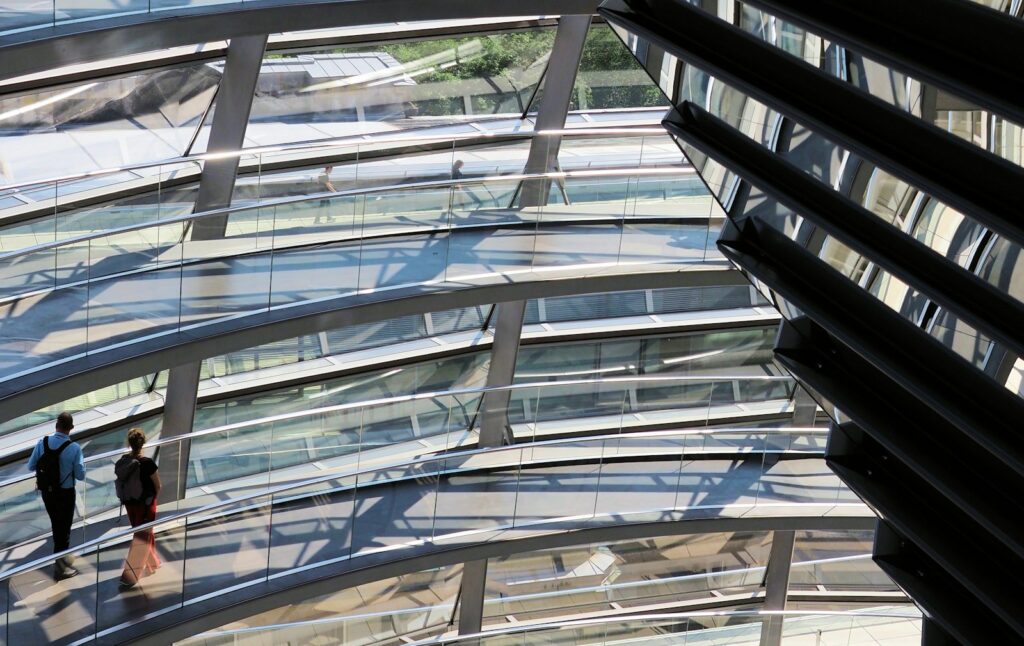
The glass dome on the Reichstag building, home of the German parliament (the Bundestag), gives you free views over the government quarter and the Tiergarten, with an audioguide that explains the building and the city.
Admission is free, but you must register in advance on the Bundestag’s own website with every visitor’s full name and date of birth. If you have not booked, go to the Visitors’ Service centre on Platz der Republik in front of the building: if places remain, you can register on the day for a slot at least two hours later.
- Opening hours: admission every quarter of an hour, with last entry at 21:45.
- ID: everyone aged 16 and over needs an original passport or photo ID card; copies are not accepted.
- Closures: the dome is closed all day on 24 December 2026 and closes from 16:00 on 31 December, with last entry at 14:30.
- Time needed: about an hour, plus time for the security check.
- Getting there: walk from the Brandenburg Gate, or take the U5 underground to Bundestag.
Book through the official Bundestag dome registration page, never through sites that charge for it. The free audioguide is available in twelve languages. Guided tours that include the dome are a good option if registration slots have gone, but check that the dome itself is included.
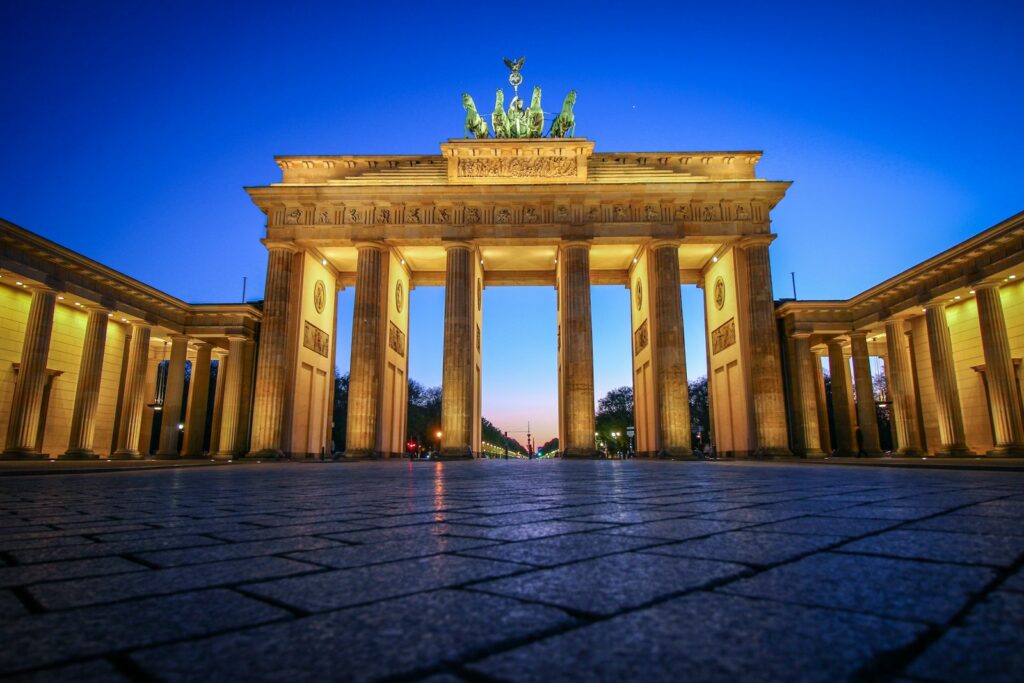
2. Brandenburg Gate and Pariser Platz
The Brandenburg Gate is Berlin’s most famous landmark and stood just inside the Wall in East Berlin during the division of the city. It is free to visit at any time, and it is just as impressive at night when it is lit up.
Come early in the morning for photos without crowds, then walk south along Ebertstrasse to the Holocaust Memorial, or west into the Tiergarten. Pariser Platz, on the east side of the gate, is lined with embassies and the historic Hotel Adlon. The nearest station is Brandenburger Tor, served by the U5 and S Bahn trains.
3. Memorial to the Murdered Jews of Europe
A field of 2,711 concrete slabs of different heights, the Holocaust Memorial is a few minutes south of the Brandenburg Gate. You can walk through the field at any time, and the effect of the narrowing paths and sloping ground is quietly overwhelming.
Do not miss the underground Information Centre, which tells the stories of individual victims and families. It is free and open from Tuesday to Sunday, 10:00 to 18:00. Please be respectful: climbing or jumping on the slabs is not appropriate. Allow 45 minutes, or longer if you visit the Information Centre.
4. Berlin Wall Memorial at Bernauer Strasse
The Berlin Wall Memorial is the best place to understand what the Wall really was. It runs for about 1.4 kilometres along Bernauer Strasse and includes the last stretch of the border strip with its watchtower, the “death strip”, escape tunnels marked in the ground and the Chapel of Reconciliation.
The outdoor exhibition is free and open every day from 08:00 to 22:00. The Visitor Centre and the Documentation Centre, with a viewing tower over the preserved section, are open from Tuesday to Sunday, 10:00 to 18:00, and are also free. Both centres are closed on 24, 25 and 31 December 2026.
To get there, take the S1, S2 or S25 to Nordbahnhof, or the U8 to Bernauer Strasse. Start at Nordbahnhof, look at the photos of the “ghost station” in the hall, then walk east along the memorial. Allow at least 90 minutes. Facts here were checked on the Berlin Wall Foundation visitor page.
5. East Side Gallery
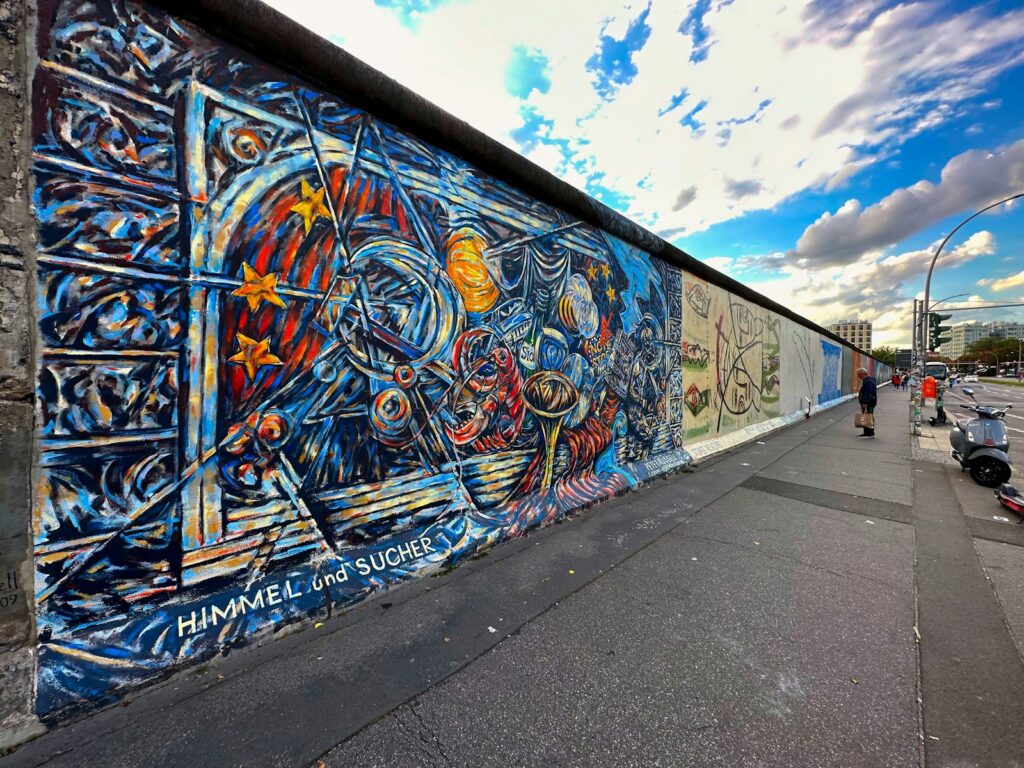
The East Side Gallery in Friedrichshain is the longest surviving section of the Wall, painted in 1990 by artists from around the world after the Wall fell. It is free and outdoors, and you can visit at any time.
Start at Ostbahnhof station and walk towards the Oberbaum Bridge, a red brick bridge that once marked the border between East and West. The walk takes about an hour with stops for photos. Look out for the most famous mural, the “Fraternal Kiss” of Brezhnev and Honecker. From the far end, cross the bridge into Kreuzberg for food and bars.
6. Museum Island
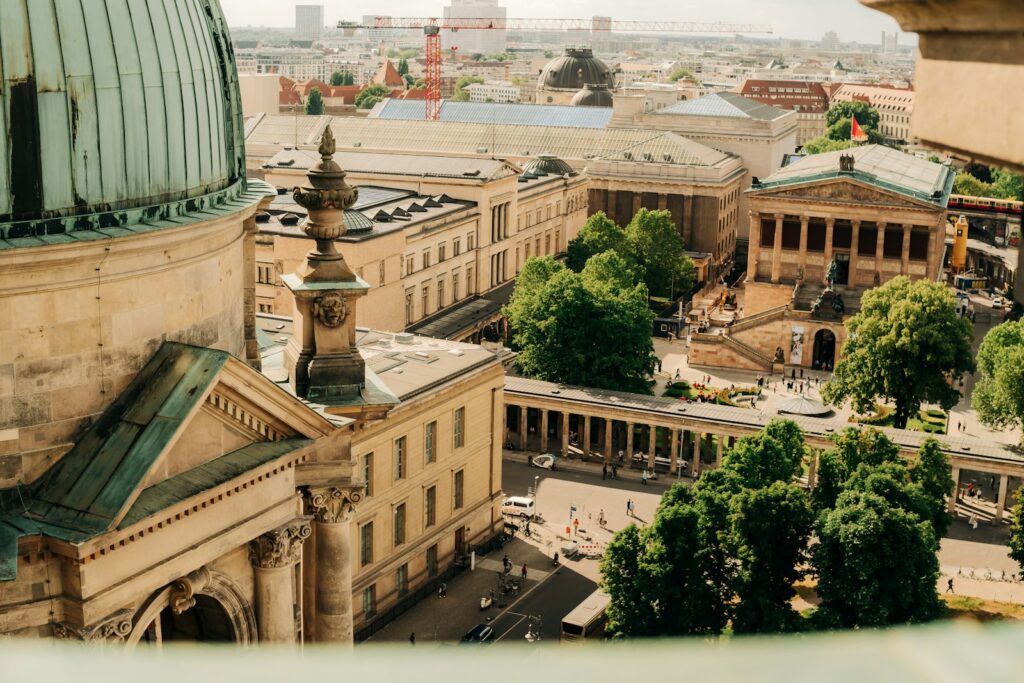
Museum Island, on an island in the river Spree, is a UNESCO World Heritage Site with five world class museums. The star is the bust of Nefertiti in the Neues Museum, but the Alte Nationalgalerie (19th century painting), the Altes Museum (Greek and Roman art) and the Bode Museum (sculpture and coins) are all excellent.
The big change is that the Pergamon Museum is closed for a major refurbishment. The State Museums say the north wing, with the Pergamon Altar, will reopen on 4 June 2027. The south wing, which includes the Ishtar Gate, will stay closed for much longer, with its new display planned from 2037. Until then, a selection of highlights is shown in the separate Pergamonmuseum Panorama building opposite.
- Museum Island ticket: €24 (about £20 / $26) for one day in all the museums on the island, including the Pergamonmuseum Panorama.
- Single museum: the Neues Museum costs €14 (about £11.70 / $15.40), reduced €7.
- Museum Pass Berlin: €32 (about £26.80 / $35.10) for three days in more than 30 museums.
- Under 18s: free, but you need to collect or book a free ticket.
- Opening days: most museums are closed on Mondays and some on Tuesdays, so check the opening hours page before you go.
The free Museum Sunday, when many Berlin museums were free on the first Sunday of the month, has ended, and no new dates are planned. Pick one or two museums rather than trying to see all five in one day. Prices and the Pergamon dates are from the State Museums of Berlin ticket page.
7. Berlin Cathedral
The Berliner Dom, next to the Lustgarten on Museum Island, is the city’s grandest church, with a richly decorated interior, the crypt of the Hohenzollern royal family and a walkway around the dome about 50 metres up.
Tickets cost €15 (about £12.55 / $16.45), €12 reduced, and include an audioguide. It is open from Monday to Saturday, 09:00 to 18:00, and on Sunday from 12:00 to 18:00, with last entry at 17:00. Hours can change for services and concerts, so check the cathedral calendar. Allow about 90 minutes, including the climb to the dome walkway.
8. TV Tower (Fernsehturm)
The TV Tower at Alexanderplatz, built by East Germany in the 1960s, is the tallest structure in Germany and has the highest viewing platform in the city. On a clear day you can see the whole city, from the Tiergarten to Tempelhof.
Standard tickets start at €20 (about £16.75 / $22) online, and the official site says online prices are always the cheapest. The deck and the revolving Sphere restaurant are open until 23:00, and on 24 December from 10:00 to 16:00. Visit at sunset or after dark for the best views. If you want a view for less, the Reichstag dome is free, and the walkway at the cathedral is included in the ticket.
9. Topography of Terror and Checkpoint Charlie
The Topography of Terror stands on the site of the former headquarters of the Gestapo and the SS. Its indoor and outdoor exhibitions explain how the Nazi regime organised terror and persecution, with a surviving stretch of the Wall along the edge of the site.
It is free and open every day from 10:00 to 20:00, but closed on 24 and 31 December and 1 January. The nearest stations are Potsdamer Platz, Kochstrasse and Anhalter Bahnhof. Allow 90 minutes.
Checkpoint Charlie, a few minutes’ walk east, was the best known crossing point between East and West Berlin. Today it is a replica guard hut surrounded by souvenir shops, so see it in passing rather than making a special trip. The outdoor panels nearby are free and worth reading.
10. Jewish Museum Berlin
The Jewish Museum, in a striking zigzag building by Daniel Libeskind, tells the story of Jewish life in Germany from the Middle Ages to today. The architecture itself, with its empty “voids” and the Holocaust Tower, is part of the experience.
Admission to the core exhibition is free for everyone, and temporary exhibitions cost €10 (about £8.40 / $11). The museum is open from Tuesday to Sunday, 10:00 to 18:00, last entry 17:00, and closed on Mondays and on 24 December 2026. Booking a free time slot online is recommended. Take the U1, U3 or U6 to Hallesches Tor. Allow two to three hours.
11. DDR Museum
The DDR Museum, on the Spree opposite the cathedral, is a hands on museum about everyday life in East Germany, from a reconstructed flat to a Trabant car you can sit in. It is good with children and in bad weather.
Tickets cost €13.90 (about £11.65 / $15.25), €8.50 reduced, and children under 6 go free. It is open every day from 09:00 to 21:00, and until 16:00 on 24 and 31 December. It gets crowded in the middle of the day, so come early or in the evening.
12. Charlottenburg Palace
Charlottenburg Palace is the largest palace in Berlin, a baroque summer residence of the Prussian royal family with ornate state rooms and a large formal garden. In winter its forecourt hosts one of the prettiest Christmas markets in the city.
The Old Palace costs €12 (about £10 / $13.15), and the charlottenburg+ ticket, which covers the palace buildings, costs €19 (about £15.90 / $20.85). From November it is open from Tuesday to Sunday, 10:00 to 16:30, closed on Mondays and on 24 and 25 December. The gardens are free. Take the U7 to Richard Wagner Platz or bus 109 or M45.
13. Tiergarten and the Victory Column
The Tiergarten is Berlin’s great central park, stretching west from the Brandenburg Gate. Walk or rent a bike along its paths and lakes, and look up at the golden Victory Column at its centre, which you can climb for a view.
The park is free and a good way to link the Reichstag with Charlottenburg or the zoo. On the south side, the Soviet War Memorial on Strasse des 17. Juni is free to see.
14. Tempelhofer Feld
Tempelhofer Feld is the former Tempelhof Airport, famous for the Berlin Airlift of 1948 and 1949, and now one of the largest open spaces in any European capital. Locals cycle, skate, fly kites and picnic on the old runways.
It is free and open daily from morning until dusk; opening times change with the seasons and are posted at the gates. Enter from the Tempelhof or Paradestrasse stations on the U6, or from the Neukölln side. It is at its best on a sunny weekend afternoon.
15. Mauerpark and Prenzlauer Berg
Mauerpark, on the former border strip, is known for its Sunday flea market and, in the warmer months, open air karaoke in the amphitheatre. Around it, Prenzlauer Berg has cobbled streets, cafés and restored 19th century apartment buildings, and the Kulturbrauerei, a former brewery, is now a cultural centre.
Combine Mauerpark with the Berlin Wall Memorial, which is about 15 minutes’ walk away along Bernauer Strasse. Take the U2 to Eberswalder Strasse.
16. Kreuzberg and Neukölln food and street life
Kreuzberg and Neukölln, south of the centre, are the most multicultural parts of Berlin and the places to eat, drink and people watch. Walk along the Landwehr Canal, browse the Turkish market on the Maybachufer, and try the city’s famous street food: döner kebab and currywurst.
Markthalle Neun, a restored market hall in Kreuzberg, is a good place for local food and street food events. In the evening, the bars around Kottbusser Tor and along Weserstrasse in Neukölln are busy most nights.
17. A boat trip on the Spree
A river cruise is a relaxing way to see the government quarter, Museum Island and the cathedral from the water, especially if your feet need a rest. Many one hour city cruises leave from the landing stages near the Nikolaiviertel, the cathedral and Friedrichstrasse.
Boats run all year, though some operators reduce their timetables in winter. Book ahead in summer and at weekends.
18. Berlin Christmas markets
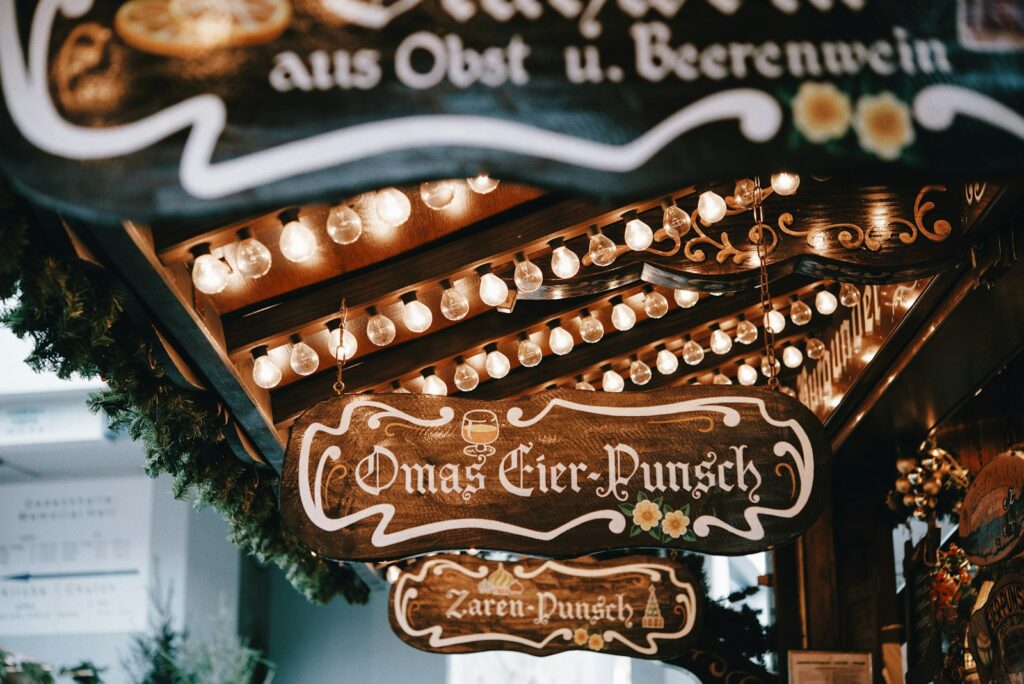
From late November, Berlin has dozens of Christmas markets, from the big squares in Mitte to a medieval market and tiny local fairs. Most of the main markets open on 23 November 2026, the Monday after the German day of remembrance.
| Market | Dates in 2026 | Best for |
|---|---|---|
| Gendarmenmarkt | 23 November to 31 December | The most elegant setting in the city |
| Charlottenburg Palace | 23 November to 27 December | A floodlit palace backdrop |
| Humboldt Forum | 18 November 2026 to 3 January 2027 | Central location by Museum Island |
| Berlin City Hall (Rotes Rathaus) | 23 November 2026 to 3 January 2027 | A central market that runs into the new year |
| Breitscheidplatz | 13 November 2026 to 3 January 2027 | Shopping on the Kurfürstendamm |
| Alexanderplatz | 23 November to 26 December | Easy access by train |
| Potsdamer Platz Winter World | 23 November to 26 December | Winter fun and cafés |
| RAW Compound medieval market | 12 November to 22 December | Something different in Friedrichshain |
| Rixdorf, Neukölln | 4 to 6 December | A tiny, traditional village market |
Dates are from Berlin’s official city website, checked in November 2026. The Winter Dream market at the Hauptbahnhof will not take place in 2026. Gendarmenmarkt has charged a small entry fee in past years; the 2026 fee and opening hours had not been published when we checked. For markets across Germany and beyond, see our guide to the best Christmas markets in Europe.
19. Potsdam and Sanssouci
Potsdam, the capital of the state of Brandenburg, is the most popular day trip from Berlin. It is famous for Sanssouci Palace, the summer palace of Frederick the Great, surrounded by a huge park with more palaces, follies and gardens, as well as a pretty Dutch Quarter.
Regional trains and the S7 reach Potsdam Hauptbahnhof from central Berlin in about 25 to 40 minutes, using an ABC ticket. Sanssouci Palace costs €14 (about £11.70 / $15.40), and the sanssouci+ day ticket for the Potsdam palaces costs €22 (about £18.40 / $24.15) in 2026. Every palace ticket has a fixed entry time, so book ahead online. In November and December the palace is open from Tuesday to Sunday, 10:00 to 16:30, and closed on Mondays and on 24 and 25 December.
20. Sachsenhausen Memorial
Sachsenhausen, in Oranienburg just north of Berlin, was one of the first Nazi concentration camps. The memorial and museum tell the history of the camp and the people imprisoned there, and later its use as a Soviet special camp. It is a sobering but important visit.
Admission is free. The visitor information centre is open daily from 08:30 to 17:00, and the outdoor area from 08:30 to 16:30 in winter (18:00 in summer). Take the S1 or a regional train to Oranienburg, which is in fare zone C, then walk for about 20 minutes or take bus 804 or 821. Guided walking tours from Berlin are a good option if you want context; allow at least half a day.
Free things to do in Berlin
Berlin is one of the best capitals in Europe for free sightseeing. These cost nothing:
- Reichstag dome: free with advance registration.
- Brandenburg Gate and the Holocaust Memorial: free at any time.
- Berlin Wall Memorial: free outdoor exhibition, Visitor Centre and viewing tower.
- East Side Gallery: free and open all hours.
- Topography of Terror: free indoor and outdoor exhibitions.
- Jewish Museum: free core exhibition.
- Tiergarten, Tempelhofer Feld and Mauerpark: free parks with plenty going on.
- Sachsenhausen Memorial: free, though you pay for the train.
- Christmas markets: free to wander, apart from occasional small entry fees.
- Under 18s: free entry to the State Museums, including Museum Island.
A free walking tour of Mitte is also a good first morning; guides work for tips, so give what you think it was worth.
Things to do in Berlin in winter
Things to do in Berlin in winter centre on the Christmas markets, warm museums and cosy cafés. From late November, spend your evenings at the markets with a mug of mulled wine (Glühwein), and your days at Museum Island, the Jewish Museum or the DDR Museum.
Daylight is short in December, with sunset before 16:00, so do outdoor sights such as the Berlin Wall Memorial and the East Side Gallery in the middle of the day. Dress for temperatures around freezing, with waterproof shoes, and remember that many shops and some markets close or shorten their hours on 24, 25 and 26 December.
Things to do in Berlin at night
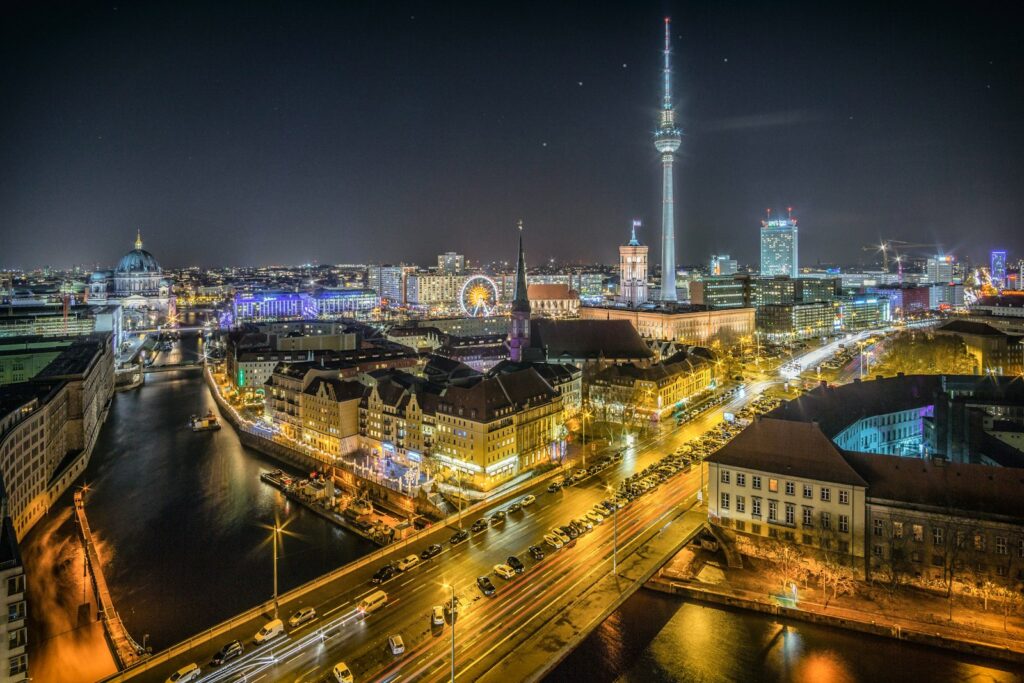
Berlin is famous for its nightlife. Things to do in Berlin at night include the Reichstag dome (last entry 21:45), the TV Tower until 23:00, an evening river cruise and the Christmas markets, which are at their best after dark.
For something classic, book a show at the Friedrichstadt Palast revue theatre, a concert at the Berlin Philharmonic or an opera at the Staatsoper Unter den Linden. For bars, head to Kreuzberg, Neukölln or Friedrichshain. The famous techno clubs open late, often around midnight, and many run through the weekend; door policies are strict, and photos are not allowed inside most clubs.
The underground runs all night on Friday and Saturday nights, and night buses and trams cover the rest of the week, so getting home is easy.
Day trips from Berlin
Beyond Potsdam and Sachsenhausen, these are the best day trips from Berlin:
- Dresden: fast direct trains take about 1 hour 40 minutes. See the rebuilt Frauenkirche, the Zwinger palace and the riverside old town.
- Leipzig: about 1 hour 15 minutes by fast train, with the church where Bach worked and a lively arts scene.
- Spreewald: a forest of canals about an hour south by regional train, where you can take a punt trip from Lübbenau.
- Hamburg: under two hours by fast train for the harbour, the Elbphilharmonie and the warehouse district, though it is a long day.
Book long distance trains early on the Deutsche Bahn website or app for the cheapest fares. Prague is also reachable by direct train in just over four hours, which is better as an onward stop than a day trip; see our guide to the best things to do in Prague.
What to skip
- Checkpoint Charlie as a destination: see it on the way to the Topography of Terror, but do not plan your day around it.
- Trying to do all of Museum Island in one day: museum fatigue sets in fast; choose two.
- Driving in the city: parking is expensive and public transport is quicker.
- Paid “registration” for the Reichstag: the official booking is free.
How much things to do in Berlin cost
| Item | Price (Nov 2026) | GBP | USD |
|---|---|---|---|
| Single ticket, zones AB (2 hours) | €4 | £3.35 | $4.40 |
| Short trip ticket | €2.80 | £2.35 | $3.10 |
| 24 hour ticket, zones AB | €11.20 | £9.40 | $12.30 |
| 24 hour ticket, zones ABC (incl. BER) | €12.90 | £10.80 | $14.15 |
| 24 hour small group ticket (up to 5), AB | €35.30 | £29.50 | $38.70 |
| Museum Island day ticket | €24 | £20 | $26.30 |
| Museum Pass Berlin (3 days) | €32 | £26.80 | $35.10 |
| Berlin WelcomeCard (48 hours, AB) | From €28.50 | £23.85 | $31.25 |
| WelcomeCard Museum Island (72 hours) | From €62 | £51.90 | $68 |
| TV Tower | From €20 | £16.75 | $22 |
| Berlin Cathedral | €15 | £12.55 | $16.45 |
| DDR Museum | €13.90 | £11.65 | $15.25 |
Transport prices are from BVG, the Berlin transport operator. New fares start on 1 January 2027, but the AB single ticket stays at €4.
Is the Berlin WelcomeCard worth it?
The Berlin WelcomeCard combines unlimited public transport with discounts of 25% to 50% at more than 180 partners, including the TV Tower, the DDR Museum and city tours. It starts from €28.50 for 48 hours in zones AB, and the Museum Island version, from €62 for 72 hours, adds one free visit a day to the museums on Museum Island.
It is good value if you will use public transport a lot and visit two or three paid attractions a day. If you mostly walk and visit the free sights, separate tickets are cheaper. Choose the ABC version if you are arriving at BER or going to Potsdam.
Getting around Berlin
The best way to get around Berlin is by public transport. The U Bahn (underground), S Bahn (city trains), trams and buses all use the same tickets. Buy them from machines, the BVG app or ticket offices, and validate paper tickets in the stamping machines before you travel; inspectors check often.
- Fare zones: zones AB cover the whole city. You need ABC for BER airport, Potsdam and Sachsenhausen.
- Single ticket: valid for two hours in one direction, with changes.
- Walking: Mitte is walkable, but the city is large, so use trains between areas.
- Bikes: Berlin is flat with many cycle lanes, and bike sharing is widespread.
- Bus 100: an ordinary city bus between Zoo station and Alexanderplatz that passes many of the main sights, making it a cheap sightseeing tour.
Getting to Berlin from BER airport
Since December 2025, the FEX airport express runs up to four times an hour from BER to Berlin Hauptbahnhof in about 23 minutes, Potsdamer Platz in about 19 minutes and Südkreuz in about 14 minutes. The S9 and new S85 S Bahn lines also serve the airport, and regional trains run to Ostkreuz and Lichtenberg for the east of the city.
You need an ABC ticket, which costs €5 (about £4.20 / $5.50) for a single journey. There is no airport surcharge. Buy it from the machines at the station before you board.
Practical tips for UK and US visitors
- Entry rules for UK passport holders: no visa is needed for stays of up to 90 days in any 180. Your passport must be less than 10 years old on the day you arrive and valid for at least three months after the day you plan to leave.
- Entry rules for US passport holders: no visa is needed for tourism stays of up to 90 days in any 180, and your passport should be valid for at least three months beyond your departure date.
- EES: the EU Entry/Exit System has been fully running since April 2026, so you give fingerprints and a photo at the border on your first trip, which can mean queues.
- ETIAS: not yet in operation. It will cost €20 once it starts, which is now expected in 2027. See our guide to EES and ETIAS for the latest.
- Flights from the UK: direct flights from London, Manchester, Edinburgh and other UK airports to BER take about one hour 45 minutes to two hours.
- Flights from the US: nonstop choices are limited. Delta flew from New York JFK in summer 2026 and United has flown from Newark, so check current schedules; otherwise connect through London, Frankfurt, Munich, Amsterdam or another hub. A nonstop flight from New York takes about eight to nine hours.
- Time difference: Berlin is one hour ahead of London and six hours ahead of New York.
- Plugs and voltage: Germany uses Type C and F plugs at 230 volts. UK visitors need a European adapter; US visitors need an adapter and should check that devices accept 230 volts.
- Money: Germany uses the euro. Cards are widely accepted, but carry some cash for market stalls, small bars and bakeries.
- Tipping: round up or add about 5% to 10% in restaurants, and tell your server the total when you pay rather than leaving cash on the table. This is lower than in the US and similar to the UK.
- Driving: Germany drives on the right. A UK photocard licence is accepted; US visitors should carry an International Driving Permit with their licence. You do not need a car in Berlin.
- City tax: hotels add a city tax of 7.5% of the room price, which applies to business and leisure stays.
- Sundays: most shops are closed on Sundays, though museums, cafés and markets stay open.
- Stay connected: an eSIM is the easiest way to get data for maps and transport apps.
Where to stay in Berlin
For a first visit, stay in Mitte, which puts you within walking distance of Museum Island, the Brandenburg Gate and Alexanderplatz. Prenzlauer Berg is quieter, with cafés and leafy streets. Kreuzberg and Friedrichshain suit people who want nightlife and street food, and Charlottenburg is calmer and more traditional, with the Kurfürstendamm shopping street. Stay near an S Bahn or U Bahn station, wherever you choose.
Our picks: how to spend 2, 3 or 4 days
| Day | Morning | Afternoon | Evening |
|---|---|---|---|
| Day 1 | Brandenburg Gate and Holocaust Memorial | Museum Island and the cathedral | Reichstag dome (booked) |
| Day 2 | Berlin Wall Memorial | East Side Gallery and Kreuzberg | TV Tower and a Christmas market in season |
| Day 3 | Topography of Terror | Jewish Museum | Dinner in Neukölln |
| Day 4 | Potsdam and Sanssouci | Potsdam old town | Charlottenburg in the evening |
Two full days are enough for the highlights in Mitte and the Wall. Three days lets you add the main museums at a relaxed pace, and four gives time for a day trip.
Frequently asked questions
What are some extraordinary things to see and do in Berlin?
Walk the spiral ramp inside the Reichstag dome, stand on the preserved death strip at the Berlin Wall Memorial, see Nefertiti in the Neues Museum, picnic on the runways of Tempelhofer Feld and spend a December evening at the Gendarmenmarkt Christmas market.
Is 2 full days in Berlin enough?
Two full days are enough to see the main sights: the Reichstag, the Brandenburg Gate, the Holocaust Memorial, Museum Island, the Berlin Wall Memorial and the East Side Gallery. You will need three or four days to add more museums, Kreuzberg and a day trip to Potsdam.
Is Berlin cheap or expensive?
Berlin is moderately priced by Western European standards: cheaper than London, Paris or Copenhagen, and more expensive than Prague or Krakow. Many top sights are free, public transport is good value at €4 for a single ticket, and street food is cheap, but hotels cost more during trade fairs and in December.
What are the best day trips from Berlin?
Potsdam and Sanssouci, under an hour away, is the classic choice. Sachsenhausen Memorial is a short train ride north, Dresden and Leipzig are under two hours by fast train, and the Spreewald canals are about an hour south.
What should I not miss in Berlin?
Do not miss the Reichstag dome, the Brandenburg Gate, the Holocaust Memorial, the Berlin Wall Memorial at Bernauer Strasse, the East Side Gallery and Museum Island. In late November and December, add at least one Christmas market.
What city is 2 hours from Berlin?
Dresden (about 1 hour 40 minutes), Leipzig (about 1 hour 15 minutes) and Hamburg (under two hours) are all within two hours of Berlin by fast train. Potsdam is much closer, and Prague is just over four hours away.
What is the best way to get around Berlin?
Use public transport. The U Bahn, S Bahn, trams and buses share one ticket system; a single AB ticket costs €4 for two hours, and a 24 hour AB ticket costs €11.20. The centre is walkable, and Berlin is flat and good for cycling.
What is the prettiest city in Germany?
There is no official answer, but Bamberg, Heidelberg, Rothenburg ob der Tauber and Dresden are often named. From Berlin, Dresden is the easiest of these to visit, with its rebuilt baroque old town on the river Elbe less than two hours away by train.
Plan the rest of your trip
Berlin pairs well with other city breaks in Central Europe. Take the train south to Prague, or compare our guides to the best things to do in Krakow, things to do in Copenhagen and things to do in Amsterdam. For more ideas, browse our Berlin travel guides. Whatever you choose, these things to do in Berlin will give you a trip that mixes history, culture and fun. If you spot something out of date, please let us know.