
!DISCLOSURE
Copenhagen is one of the most enjoyable cities in Europe for a short break. It is under two hours from London by air, small enough to cross by bike in half an hour, and packed with things to do: royal palaces, a 19th century amusement park, colourful harbours, world class design and some of the best food in Scandinavia. It is also expensive, so a little planning goes a long way.
This guide covers the 24 best things to do in Copenhagen, grouped by area, with what each one is, why it is worth your time, how long to allow and what it costs in 2026. You will also find a one day plan and a three day itinerary, the best day trips, money saving tips, advice on getting around and answers to the questions people ask most, including how much a coffee really costs. Prices were checked in November 2026 and can change, so confirm on official websites before you go.
Things to do in Copenhagen at a glance
| Area | Top things to do | Time needed |
|---|---|---|
| City centre | Tivoli Gardens, Strøget, the Round Tower, Christiansborg Palace | A full day |
| Nyhavn and Frederiksstaden | Nyhavn, Amalienborg, Frederik’s Church, the Little Mermaid, Kastellet | Half a day |
| Rosenborg and the parks | Rosenborg Castle, the King’s Garden, Torvehallerne, SMK | Half a day |
| Christianshavn | Church of Our Saviour, Christiania, harbour walks, street food | Half a day |
| Nørrebro and Vesterbro | Cafés, Superkilen, Assistens Cemetery, the Meatpacking District | Half a day |
| Day trips | Louisiana, Kronborg Castle, Malmö, Roskilde | A full day each |
How to plan your time in Copenhagen
Copenhagen’s centre is compact and flat, so you can walk almost everywhere or, better still, rent a bike like the locals. The main sights fall into a few clusters: Tivoli and the centre around the City Hall Square, the royal district around Nyhavn and Amalienborg, Rosenborg Castle and the parks, and Christianshavn across the harbour.
Spend your first day on the centre and Nyhavn, your second on Rosenborg, the museums and Christianshavn, and your third on a day trip or the neighbourhoods of Nørrebro and Vesterbro. If you plan to visit several paid attractions, look at the Copenhagen Card, which includes public transport and entry to many sights, including Tivoli.
The city centre
1. Tivoli Gardens
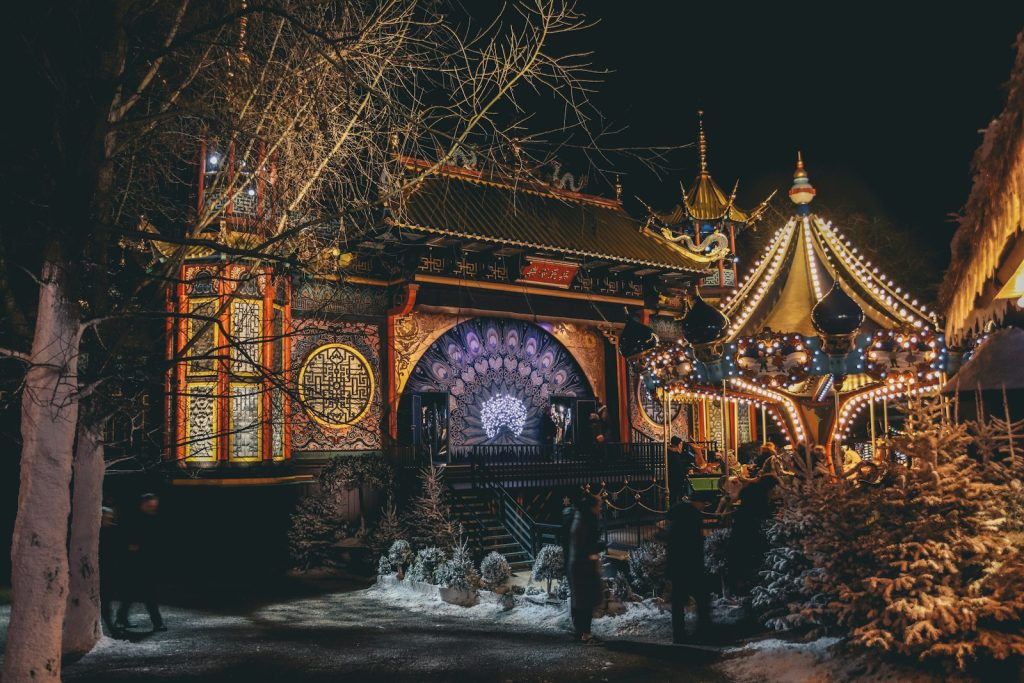
Opened in 1843, Tivoli Gardens is one of the oldest amusement parks in the world and still one of the most charming. It mixes gardens, lakes and pavilions with rollercoasters, a pantomime theatre, concert stages and restaurants. It is at its most magical after dark, when thousands of lights come on.
Tivoli opens for seasons rather than all year: summer, Halloween and Christmas, which runs from 13 November 2026 to 3 January 2027. Adult entry costs roughly 150 to 275 Danish kroner depending on the date, and rides cost extra unless you buy a ride pass. Buy tickets online to save time at the gate.
2. Strøget and the old town
Strøget, one of the longest pedestrian shopping streets in Europe, runs from the City Hall Square to Kongens Nytorv. The main street has big brands, but the side streets and squares, such as Gråbrødretorv and Amagertorv, are more interesting, with old townhouses, cafés and design shops including Illums Bolighus and Royal Copenhagen.
3. The Round Tower
The Round Tower, or Rundetaarn, was built in the 1640s by King Christian IV as an astronomical observatory. Instead of stairs, a wide spiral ramp winds to the top, said to have been built so a horse and carriage could climb it. The viewing platform gives a lovely view over the old town’s rooftops. It is good value and rarely takes more than 45 minutes.
4. Christiansborg Palace
Christiansborg, on the island of Slotsholmen, is home to the Danish Parliament, the Supreme Court and the Prime Minister’s office, and some parts are still used by the royal family. You can visit the Royal Reception Rooms, the ruins of earlier castles beneath the palace, the Royal Stables and the Royal Kitchen.
The palace tower, the tallest in the city, is free to climb and has a viewing platform and a restaurant. There is often a queue, so go early.
5. The National Museum and the Glyptotek
The National Museum of Denmark tells the story of the country from the Stone Age and the Vikings to the present day, and is a good choice on a rainy day. Near Tivoli, the Ny Carlsberg Glyptotek, founded by the Carlsberg brewing family, has a superb collection of ancient sculpture and French Impressionist paintings, arranged around a palm filled winter garden.
Nyhavn and Frederiksstaden
6. Nyhavn
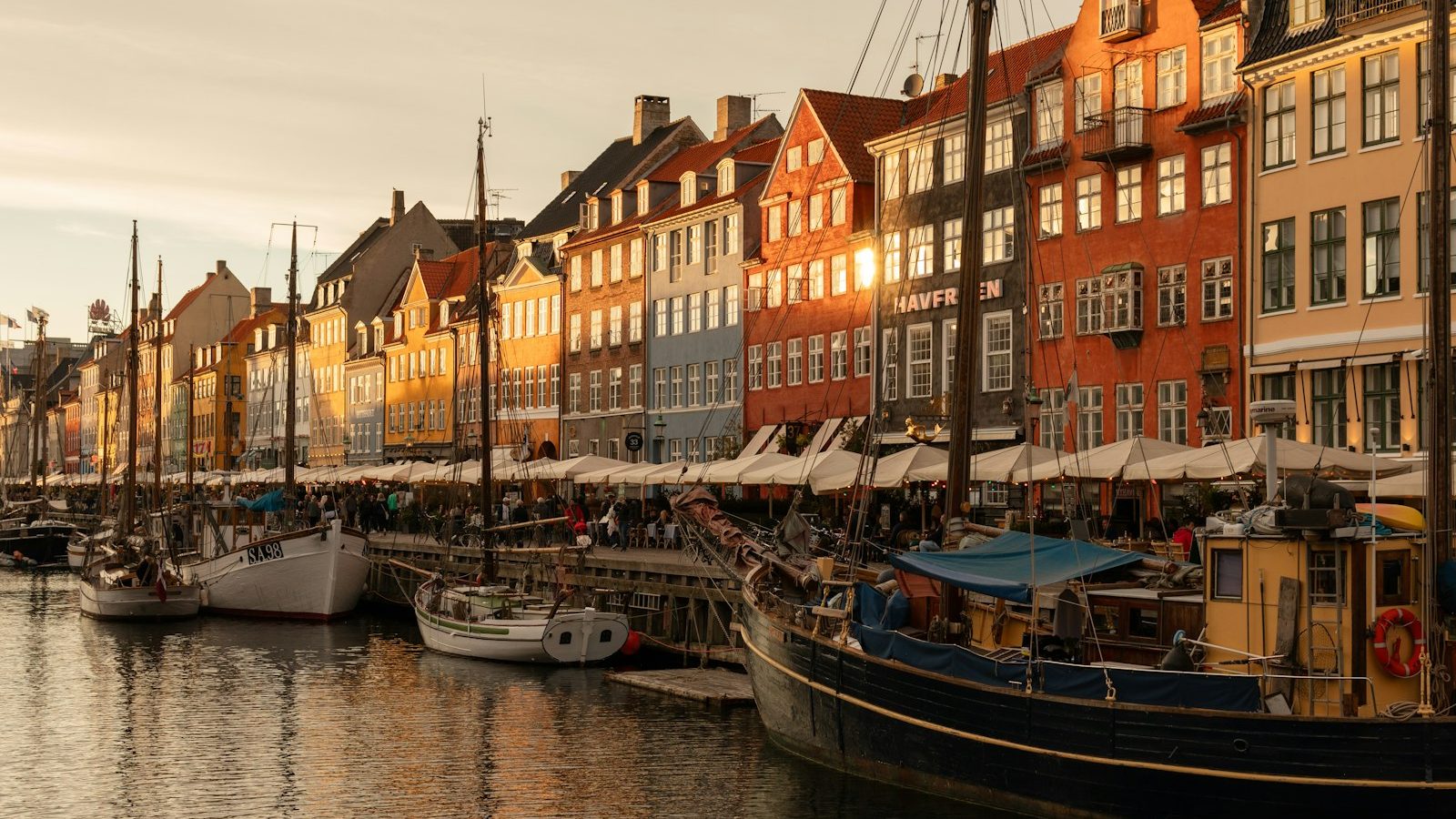
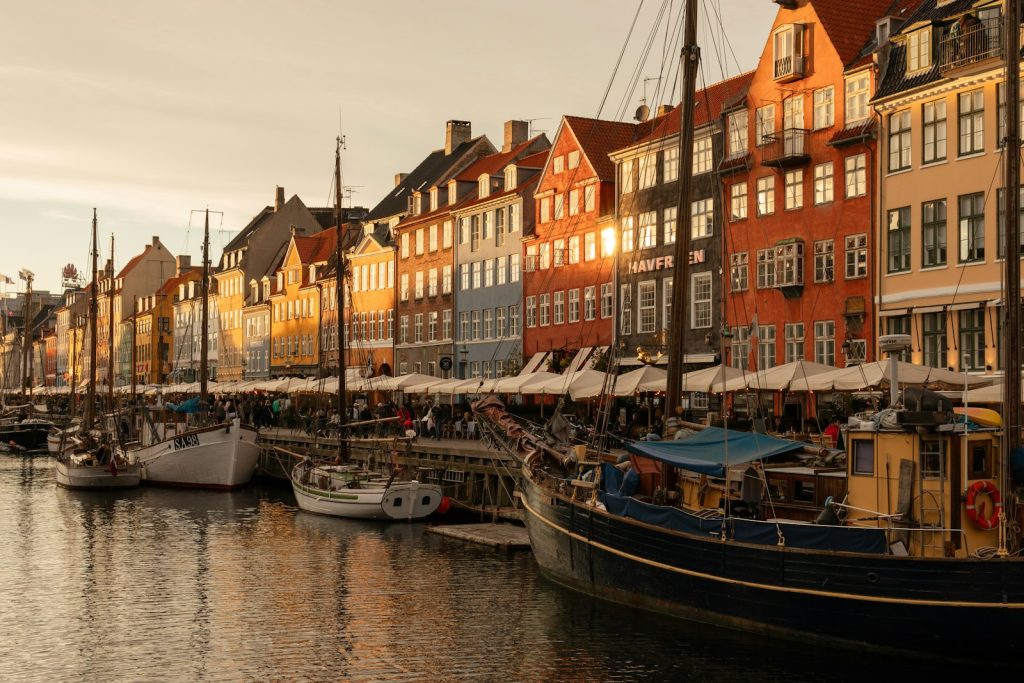
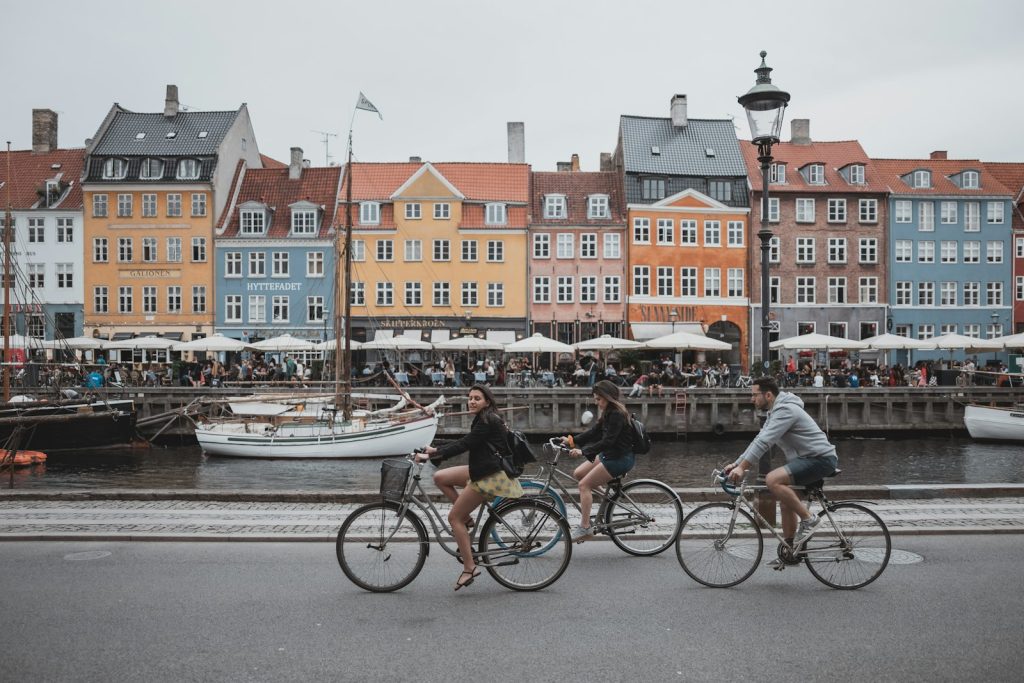
Nyhavn, the 17th century canal lined with brightly painted townhouses and old wooden ships, is the most photographed place in Copenhagen. Hans Christian Andersen lived at three different addresses here. The restaurants along the quay are busy and pricey, so for a cheaper evening, do as the locals do and sit by the water with a drink from a shop.
7. A canal or harbour cruise
A boat trip is one of the best ways to see Copenhagen. Cruises from Nyhavn and Gammel Strand take about an hour and pass the Opera House, the Little Mermaid, Christianshavn and the Black Diamond library. For something different, rent an electric boat or kayak and explore on your own.
8. Amalienborg Palace
Amalienborg is the winter home of the Danish royal family, made up of four identical palaces arranged around an octagonal square. Watch the changing of the guard, which marches from Rosenborg Castle and arrives at Amalienborg around midday. One of the palaces houses a museum about the royal family.
9. Frederik’s Church
Frederik’s Church, also called the Marble Church, stands right behind Amalienborg, and its green copper dome is one of the largest church domes in Scandinavia. The church is free to enter. On some days, you can join a tour to the top of the dome for a view over the palaces and harbour.
10. The Little Mermaid and Kastellet
The bronze statue of the Little Mermaid, unveiled in 1913 and inspired by Hans Christian Andersen’s fairy tale, sits on a rock at Langelinie. It is smaller than many visitors expect, and it is often surrounded by tour groups, but it is a pleasant walk along the water from Nyhavn.
On the way, stop at Kastellet, a star shaped 17th century fortress with grassy ramparts, a windmill and barracks painted red. It is free to explore and one of the most peaceful places in the city.
Rosenborg and the parks
11. Rosenborg Castle
Rosenborg Castle, a Renaissance palace built for Christian IV in the early 1600s, holds the Danish crown jewels and royal regalia in its treasury. The rooms above show how Danish kings lived over three centuries. Book a timed ticket in summer. Allow about 90 minutes.
12. The King’s Garden and the Botanical Garden
The King’s Garden around Rosenborg is Copenhagen’s oldest royal garden and a favourite picnic spot in summer. Across the road, the Botanical Garden has a beautiful 19th century glass Palm House, which is free to visit.
13. Torvehallerne food market
Torvehallerne, two glass market halls near Nørreport station, are packed with stalls selling smørrebrød, the famous Danish open sandwich, fresh fish, pastries, coffee and cheese. It is a great place for lunch and a good way to eat well without the price of a sit down restaurant.
14. SMK, the National Gallery of Denmark
SMK holds Danish and European art from the 14th century to the present day, from the Golden Age painters to Matisse and modern installations. The light filled modern extension overlooks a park, and the museum often has free events.
Christianshavn
15. Church of Our Saviour
The Church of Our Saviour in Christianshavn is famous for its black and gold spire, with an outside staircase that spirals around the very top. The climb is narrow and gets steeper as you go, but the view is spectacular. The tower can close in bad weather and in winter, so check before you go.
16. Christiania
Christiania is a self governing community founded in 1971 on an old military base. Its colourful homemade houses, workshops, cafés, gardens and lakes make it one of the most unusual places in Europe. Follow local signs, respect residents’ privacy and ask before taking photos.
17. Harbour baths and swimming
Copenhagen’s harbour water is clean enough to swim in, and the city has several free harbour baths, such as Islands Brygge, where locals swim in summer. Some places also offer saunas on the water, which are open all year.
18. Street food and harbour life
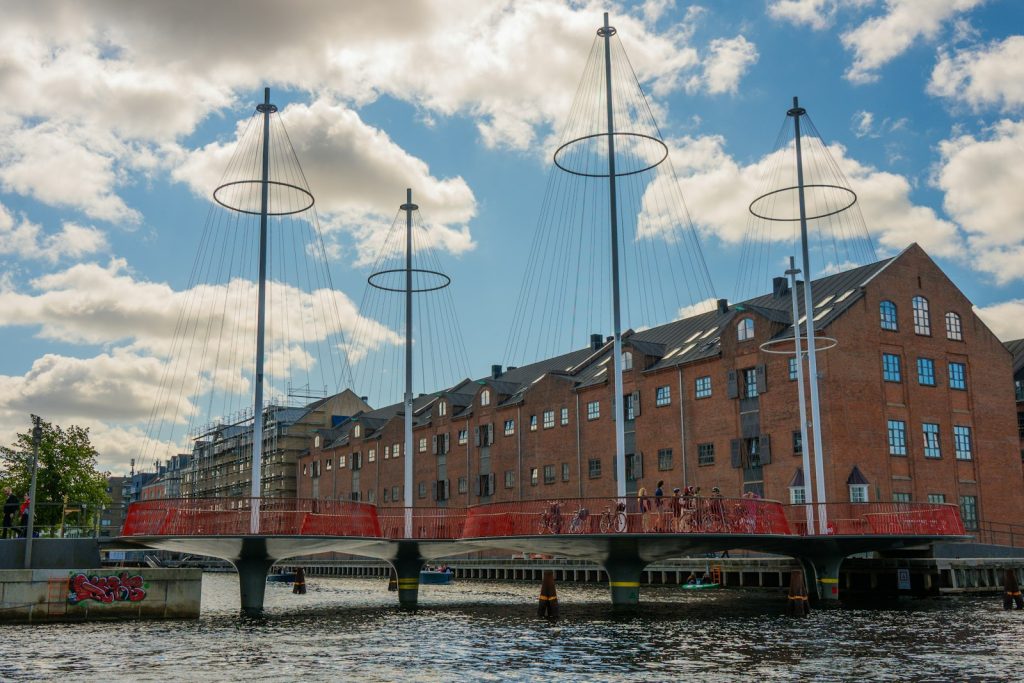
Christianshavn and the harbour areas are full of places to eat outdoors, from food markets in converted warehouses to cafés by the canals. Cross the Cirkelbroen, the Circle Bridge designed by artist Olafur Eliasson, for a lovely walk along the water.
19. CopenHill
CopenHill is one of the world’s most unusual buildings: a waste to energy plant with an artificial ski slope, a hiking trail and a climbing wall on its sloping roof. You can ski, walk up to the rooftop bar or just look at it from the harbour.
Nørrebro and Vesterbro
20. Nørrebro
Nørrebro is Copenhagen’s most diverse and lively neighbourhood, with independent shops, bars and cafés along Jægersborggade and Elmegade. Walk through Superkilen, an urban park designed with objects from more than 50 countries, and visit Assistens Cemetery, a peaceful green space where Hans Christian Andersen and the philosopher Søren Kierkegaard are buried.
21. Vesterbro and the Meatpacking District
Vesterbro, once a working class area, is now one of the trendiest parts of the city. The Meatpacking District, or Kødbyen, is full of restaurants, bars and clubs in former butchers’ halls. It is a great place for an evening out.
22. Ride a bike
Copenhagen is one of the most bicycle friendly cities in the world, with wide cycle lanes everywhere. Rent a bike for a few hours or join a guided bike tour. Follow the rules: stay in the cycle lane, signal before you stop or turn, and keep to the right so faster riders can pass.
Day trips from Copenhagen
23. Louisiana Museum of Modern Art
Louisiana, about 35 minutes north of the city by train, is one of the most beautiful art museums in the world, set in a sculpture garden overlooking the sea. It has works by Picasso, Giacometti, Warhol and Yayoi Kusama and a calendar of major exhibitions. Combine it with a walk along the coast.
24. Kronborg Castle, Malmö and Roskilde
- **Kronborg Castle:** in Helsingør, about 45 minutes by train, the setting for Shakespeare’s Hamlet and a UNESCO World Heritage Site.
- **Malmö:** across the Øresund Bridge in Sweden, about 35 minutes by train. Bring your passport.
- **Roskilde:** about 25 minutes by train, home to the Viking Ship Museum and the royal cathedral where Danish monarchs are buried.
Copenhagen in one day
If you only have a day, start at Nyhavn and take a canal cruise. Walk to Amalienborg for the changing of the guard at midday, then visit Frederik’s Church. Have lunch at Torvehallerne, then visit Rosenborg Castle and the King’s Garden. Climb the Round Tower in the afternoon, walk Strøget to the City Hall Square and end the day at Tivoli Gardens if it is open.
A three day Copenhagen itinerary
| Day | Morning | Afternoon | Evening |
|---|---|---|---|
| Day 1 | Nyhavn and a canal cruise | Amalienborg, Frederik’s Church, Kastellet, Little Mermaid | Tivoli Gardens |
| Day 2 | Rosenborg Castle and the King’s Garden | Torvehallerne, Round Tower, Christiansborg tower | Dinner in Vesterbro |
| Day 3 | Church of Our Saviour and Christiania | Louisiana Museum or Nørrebro | Harbour drinks or the Meatpacking District |
What to eat in Copenhagen
Copenhagen is one of the great food cities of Europe, famous for New Nordic cooking and a long list of acclaimed restaurants. You do not need a huge budget to eat well, though.
- **Smørrebrød:** open sandwiches on dark rye bread, topped with pickled herring, roast beef, egg and prawns or potato. Try them at a traditional lunch restaurant or at Torvehallerne.
- **Pastries:** what the British call a Danish pastry is called wienerbrød here. Look out for the cinnamon swirl called kanelsnegl and the cardamom buns sold in good bakeries.
- **Hot dogs:** the pølsevogn, or hot dog stand, is a Danish institution. Order a ristet hotdog with crispy onions, pickles and remoulade.
- **Seafood:** the harbour restaurants serve excellent fish, from smoked salmon to fresh mussels and fish cakes.
- **Coffee and hygge:** cosy cafés with candles, blankets and good coffee are part of daily life, especially in the dark winter months.
Booking ahead is essential for the most famous restaurants, which can be fully booked weeks or months in advance.
Copenhagen at Christmas
From mid November, Copenhagen becomes one of the most festive cities in Europe. Tivoli’s Christmas season, from 13 November 2026 to 3 January 2027, fills the park with lights, decorated trees, a Christmas market and seasonal food such as æbleskiver, small round pancakes, and gløgg, Danish mulled wine with raisins and almonds. There are also Christmas markets at Nyhavn, Højbro Plads and Kongens Nytorv, and the shops along Strøget are beautifully decorated.
Days are short in December, with the sun setting before 4pm, but the city makes up for it with candles and lights everywhere. Wrap up warmly, as it is often cold, wet and windy by the harbour.
Is the Copenhagen Card worth it?
The Copenhagen Card gives you free entry to dozens of attractions, including Tivoli Gardens, Rosenborg Castle, the National Museum, the Glyptotek and several canal tours, plus unlimited public transport in the capital region, including the airport train and the trains to Louisiana, Kronborg and Roskilde.
It is good value if you plan two or three paid attractions a day and some longer train trips. It is less useful if you mostly want to walk, cycle, eat and explore the free sights. Add up the attractions you really want to see before you buy, and check which version of the card includes the sights on your list.
Getting there and getting around
- **Flights from the UK:** direct flights to Copenhagen Airport take about one hour 50 minutes from London, with routes from Manchester, Edinburgh and other airports.
- **From the airport:** the metro runs to the city centre in about 15 minutes, and trains also run to Copenhagen Central Station.
- **Public transport:** the metro, buses, trains and harbour buses are fast and reliable. Use the DOT Tickets app or a contactless card, or buy a City Pass for unlimited travel.
- **Bikes:** rental bikes and electric bikes are available all over the city.
How much does Copenhagen cost?
Copenhagen is one of the most expensive cities in Europe, and Denmark uses the Danish krone, not the euro. These are typical prices in 2026.
| Item | Typical price |
|---|---|
| Coffee in a café | about 45 to 60 kroner, roughly £5 to £7 |
| Smørrebrød open sandwich | about 80 to 150 kroner |
| Beer in a bar | about 60 to 90 kroner |
| Dinner for two with drinks | about 800 to 1,200 kroner |
| Tivoli entry | about 150 to 275 kroner, depending on the date |
| Central hotel, per night | from about £120 for a simple room to £300 or more for a design hotel |
To save money, eat lunch at food markets, buy picnic food from supermarkets, use the free harbour baths and parks, and consider the Copenhagen Card if you plan to visit several attractions.
Where to stay in Copenhagen
- **Indre By, the centre:** close to Tivoli, Strøget and Nyhavn, best for a first visit.
- **Nyhavn and Frederiksstaden:** beautiful and central, but expensive.
- **Vesterbro:** trendy, with great restaurants and bars, close to the main station.
- **Nørrebro:** lively and creative, with good value places to stay.
- **Christianshavn:** charming, quiet and well connected by metro.
Practical tips for Copenhagen
- **Cards everywhere:** almost everywhere takes cards, and some places no longer take cash at all.
- **Tipping:** service is included in prices, so tipping is not expected, though rounding up for good service is welcome.
- **Watch the cycle lanes:** step carefully when crossing, as bikes move fast and have priority in their lanes.
- **Bring layers:** the weather changes quickly, and it can be windy by the harbour even in summer.
- **Stay connected:** an eSIM is an easy way to get data for maps and transport apps.
Frequently asked questions
What kind of currency do they use in Copenhagen?
Denmark uses the Danish krone, written DKK or kr, not the euro. Cards and mobile payments are accepted almost everywhere, so you rarely need cash.
What can I do in Copenhagen for a day?
See Nyhavn, take a canal cruise, watch the changing of the guard at Amalienborg, visit Rosenborg Castle, climb the Round Tower, walk Strøget and finish at Tivoli Gardens. Our one day plan above puts these in the most efficient order.
Do they speak English in Copenhagen?
Yes. Almost everyone in Copenhagen speaks excellent English, and menus, signs and museum information are usually available in English.
Is Copenhagen cheap or expensive?
Copenhagen is expensive, especially for eating out, drinking and hotels. You can keep costs down by eating at food markets, using public transport or bikes and choosing free sights such as the parks, Kastellet, the Christiansborg tower and the harbour baths.
How much is a cup of coffee in Copenhagen?
A regular coffee in a café typically costs around 45 to 60 Danish kroner, roughly £5 to £7. Bakeries and convenience stores are usually cheaper.
Is 3 days in Copenhagen too much?
No. Three days is ideal. It gives you time to see the main sights at a relaxed pace and add a day trip to the Louisiana Museum, Kronborg Castle or Malmö.
When is the best time to visit Copenhagen?
May to September brings the warmest weather and long days, and is the best time for cycling, swimming and eating outside. Late November and December are magical for Tivoli at Christmas and the city’s Christmas markets, but days are short and cold.
Plan the rest of your trip
Copenhagen’s Christmas season is one of the best in Europe, so see our guide to the best Christmas markets in Europe for 2026 dates. For more city breaks, read our guides to Prague, Krakow and Lisbon, or browse our Europe travel guides. If you spot something out of date, please let us know.