
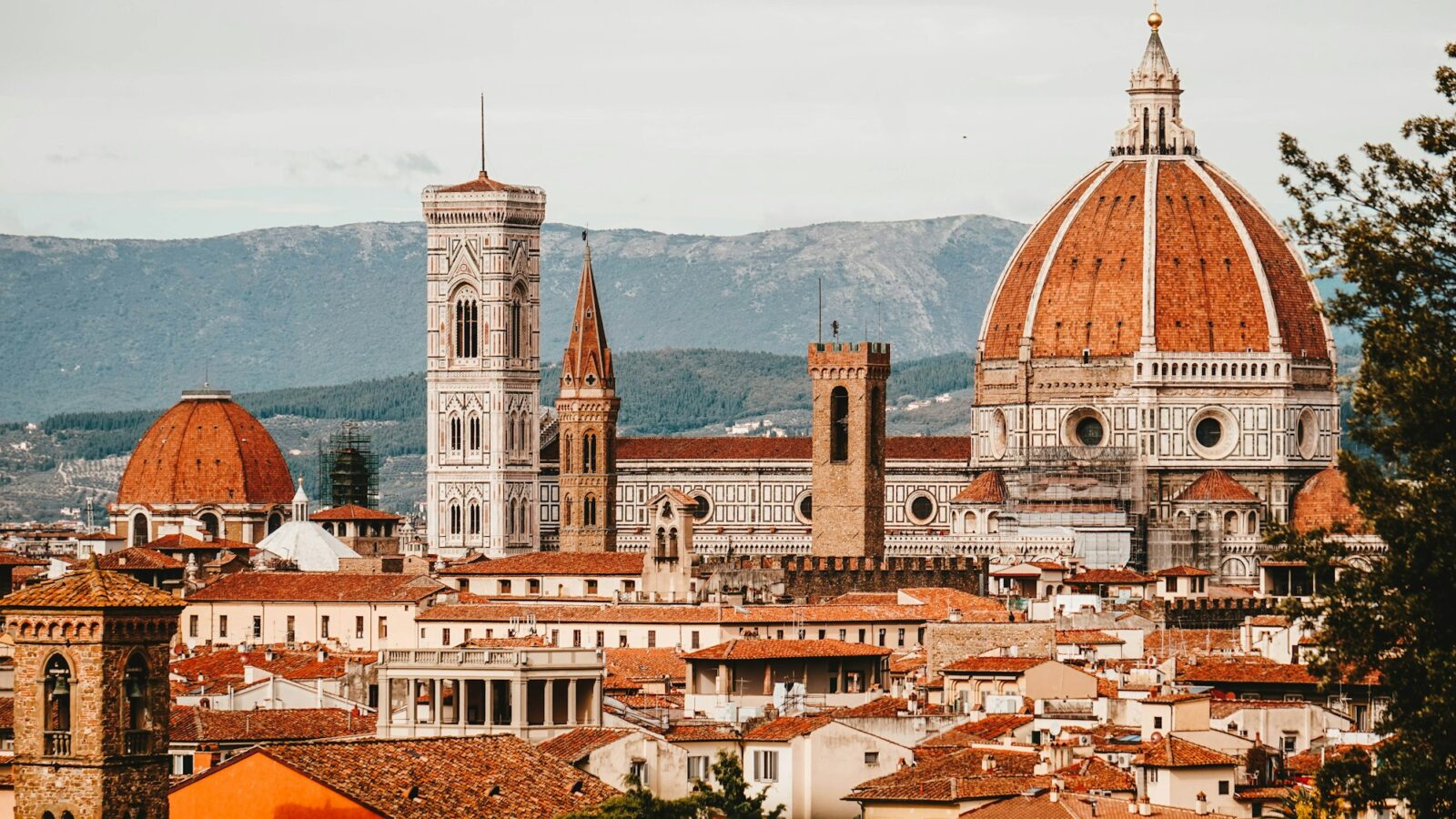
Things to do in Florence start with three world famous sights, Brunelleschi’s dome, the Uffizi Gallery and Michelangelo’s David, but the city rewards you most when you also cross the river, climb to the viewpoints and slow down over a long lunch. This guide covers the 21 best things to do in Florence, with what each costs, how to book and how long to allow.
Some links in this guide are affiliate links: if you book through them we may earn a commission at no extra cost to you. It never changes what we recommend. How we make money.
Every price below was checked against official sites in November 2026. Euro amounts come first, with rough pound and dollar figures (at about €1 = £0.87 = $1.16) so UK and US readers can budget quickly. Booking rules in Florence change often, so we also tell you which tickets sell out and which you can buy on the day.
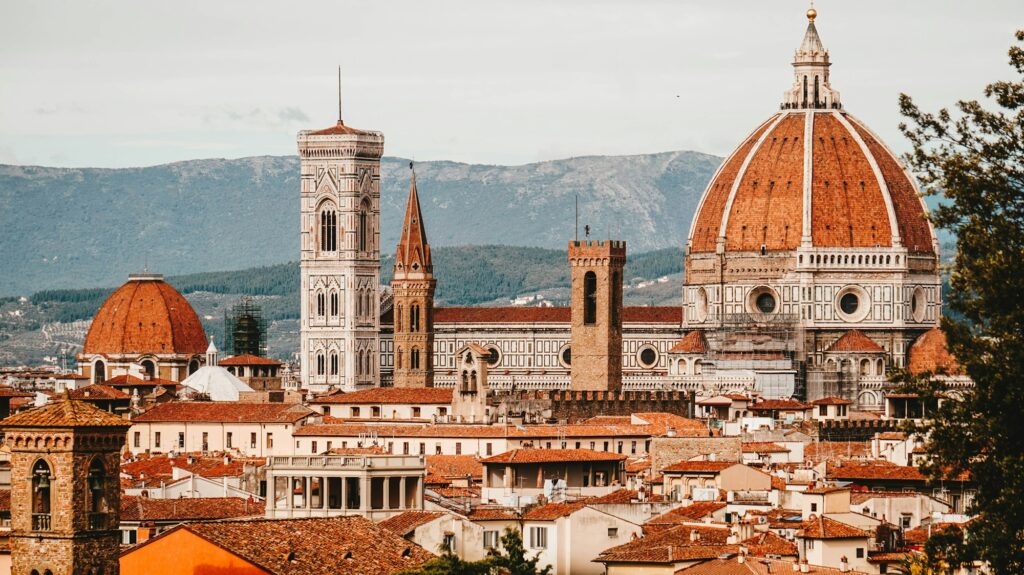
Things to do in Florence at a glance
| Activity | Area | Time needed | Cost from (Nov 2026) |
|---|---|---|---|
| Climb Brunelleschi’s dome | Duomo | 1.5 to 2 hours | €30 Brunelleschi Pass |
| Uffizi Gallery | Piazza della Signoria | 2.5 to 3 hours | €25 on the day, €16 after 4pm |
| Accademia Gallery (David) | San Marco | 1 to 1.5 hours | €20 on site, €24 online |
| Ponte Vecchio | Arno river | 20 minutes | Free |
| Piazzale Michelangelo | Oltrarno hills | 1 hour | Free |
| San Miniato al Monte | Above Piazzale Michelangelo | 45 minutes | Free |
| Palazzo Pitti and Boboli Gardens | Oltrarno | 3 hours | €22 combined |
| Santa Croce | Santa Croce | 1 to 1.5 hours | €10 |
| Bargello | Centre | 1 to 1.5 hours | €12 |
| Mercato Centrale | San Lorenzo | 1 hour | Pay as you eat |
| Fiesole | Hills north of the city | Half a day | Bus fare |
| Pisa, Siena or Chianti | Tuscany | A full day | Train, bus or tour |
How to choose what to do in Florence
If you only have one day, book the Accademia first thing, walk past the Duomo to Piazza della Signoria and the Ponte Vecchio, and finish at Piazzale Michelangelo for sunset. With two days, add the Uffizi and the dome climb. With three or more, cross into the Oltrarno for Palazzo Pitti, Boboli and Santo Spirito, and save a day for Pisa, Siena or the Chianti hills.
Three rules make the biggest difference. First, book the dome, the Uffizi and the Accademia before you travel, especially from April to October. Second, remember that most state museums close on Mondays. Third, the historic centre is small: almost everything in this guide is within a 20 minute walk of the Duomo, so you rarely need public transport.
The best things to do in Florence
Florence’s top sights are the Duomo complex with Brunelleschi’s dome, the Uffizi Gallery, Michelangelo’s David at the Accademia, the Ponte Vecchio, Piazzale Michelangelo, Palazzo Pitti with the Boboli Gardens, Santa Croce and the Bargello. Add the Oltrarno district, the Mercato Centrale and a day trip into Tuscany for a full picture of the city.
1. Climb Brunelleschi’s dome at the Duomo
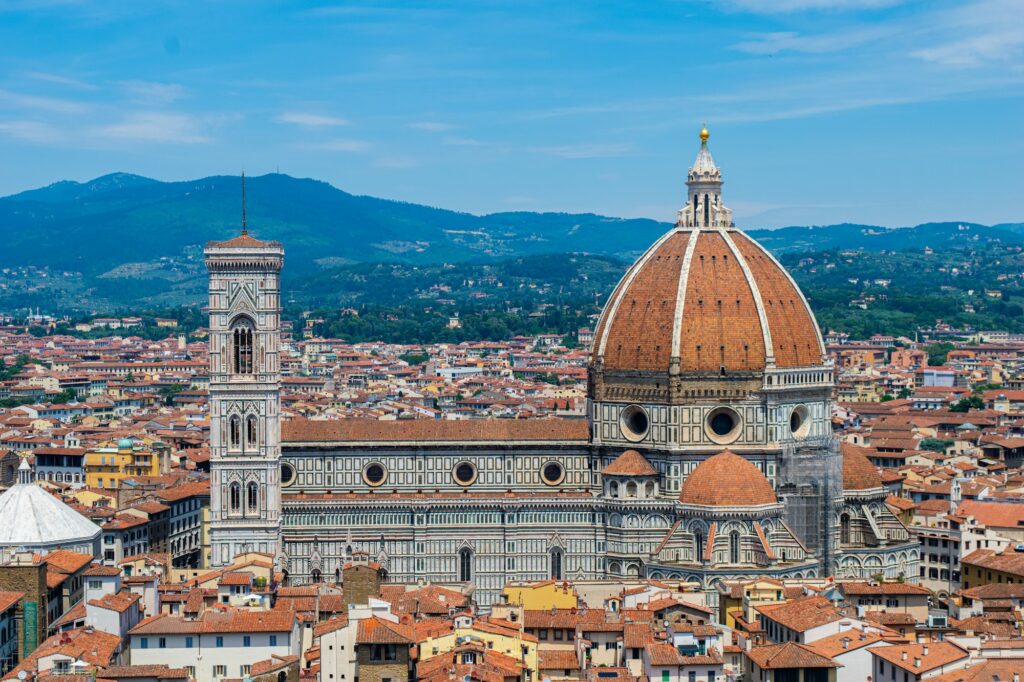
The cathedral of Santa Maria del Fiore, known simply as the Duomo, is the building that defines Florence. Its red brick dome, designed by Filippo Brunelleschi and finished in the 15th century, was the largest of its kind when built, and you can climb between its inner and outer shells to a terrace at the top.
The climb is 463 steps with no lift, through narrow passages that pass close to the frescoes of the Last Judgement inside the dome. It is the single most popular ticket in Florence, and the one most likely to sell out.
Duomo tickets and the Brunelleschi Pass
Entry to the cathedral itself is free. You queue mainly for the security check, and the church is open to visitors roughly 10:15 to 15:45 Monday to Saturday; on Sundays it is open only for services. The monuments around it are sold as three passes on the official Opera di Santa Maria del Fiore website:
- Brunelleschi Pass: €30 (about £26 / $35). The dome, Giotto’s bell tower, the Baptistery, the Opera del Duomo Museum and the Santa Reparata crypt.
- Giotto Pass: €20 (about £17 / $23). The bell tower, Baptistery, museum and crypt, but not the dome.
- Ghiberti Pass: €15 (about £13 / $17). The Baptistery, museum and crypt.
The Brunelleschi Pass is valid for three calendar days, but the dome needs a reserved date and time slot, and that slot must fall on the first day of the pass. The reservation cannot be changed or cancelled once issued, and you must bring a passport or identity document that matches the ticket. Arrive about 15 minutes early: the official rules allow only five minutes of delay.
Time needed: about 45 minutes for the climb, plus time in the queue and the museum. Under 18s must be with an adult, and the climb is not recommended if you have heart problems, vertigo or claustrophobia. Dome slots usually run from 8:15 on weekdays, with shorter hours on Saturdays and afternoon only slots on Sundays.
2. Giotto’s bell tower, the Baptistery and the Duomo Museum
Even without the dome, the rest of the Duomo complex is worth half a day. The Baptistery of San Giovanni has gilded mosaic ceilings and Ghiberti’s bronze doors, the Gates of Paradise; the originals are now inside the Opera del Duomo Museum, alongside Michelangelo’s late Pietà and Donatello’s carved figures.
The museum is open 8:30 to 19:00 daily but closes on the first Tuesday of each month. Shoulders and legs must be covered in the Baptistery, and hats should come off.
3. Uffizi Gallery: tickets, times and what to see
The Uffizi holds the greatest collection of Renaissance painting anywhere, including Botticelli’s Birth of Venus and Primavera, Leonardo’s Annunciation, Michelangelo’s Doni Tondo and works by Raphael, Titian and Caravaggio. It sits in a long U shaped building between Piazza della Signoria and the Arno.
Uffizi tickets in 2026
According to the official Uffizi fares page, a standard ticket costs €25 (about £22 / $29) when bought on the day, or €29 (about £25 / $34) when booked in advance. Since 1 January 2026 there is also an afternoon ticket for entry from 4pm at €16 (about £14 / $19), or €20 if bought before the day.
The Vasari Corridor, the raised passage that runs over the Ponte Vecchio to Palazzo Pitti, reopened in 2024 and needs a separate ticket. Uffizi plus Vasari Corridor costs €43 on the day or €47 in advance. Under 18s enter free, and EU citizens aged 18 to 25 pay a reduced rate.
The Uffizi is closed on Mondays. Allow at least two and a half hours, start on the top floor and take a break at the rooftop café terrace, which looks straight at the Palazzo Vecchio tower.
4. How to see the David at the Accademia
Michelangelo’s David, carved from a single block of marble between 1501 and 1504, stands at the end of a long hall in the Galleria dell’Accademia, flanked by his unfinished Prisoners. It is far larger than most people expect, over five metres tall including the base.
Accademia tickets and the best time to go
Entry costs €20 (about £17 / $23) at the ticket office, or €24 (about £21 / $28) booked online with a €4 presale fee. Opening hours are Tuesday to Sunday, 8:15 to 18:50, and the gallery is closed on Mondays. A combined Accademia and Bargello ticket costs €26 and lasts 48 hours, so you see Michelangelo’s David and Donatello’s bronze David on one ticket.
How to see the David without a long wait:
- Book a timed slot: the simplest option, ideally the first slot of the day or after 4pm.
- Firenzecard: includes the reservation, but you still need to book a time.
- Free first Sunday: entry is free on the first Sunday of each month, with no booking, but queues can be very long.
- Guided tour: a small group tour includes reserved entry and context on the Prisoners and the musical instruments museum.
Most visitors need 45 minutes to an hour and a half. If you cannot get a ticket, a marble copy stands in the David’s original position outside the Palazzo Vecchio, and a bronze copy stands at Piazzale Michelangelo. Both are free to see.
5. Walk across the Ponte Vecchio
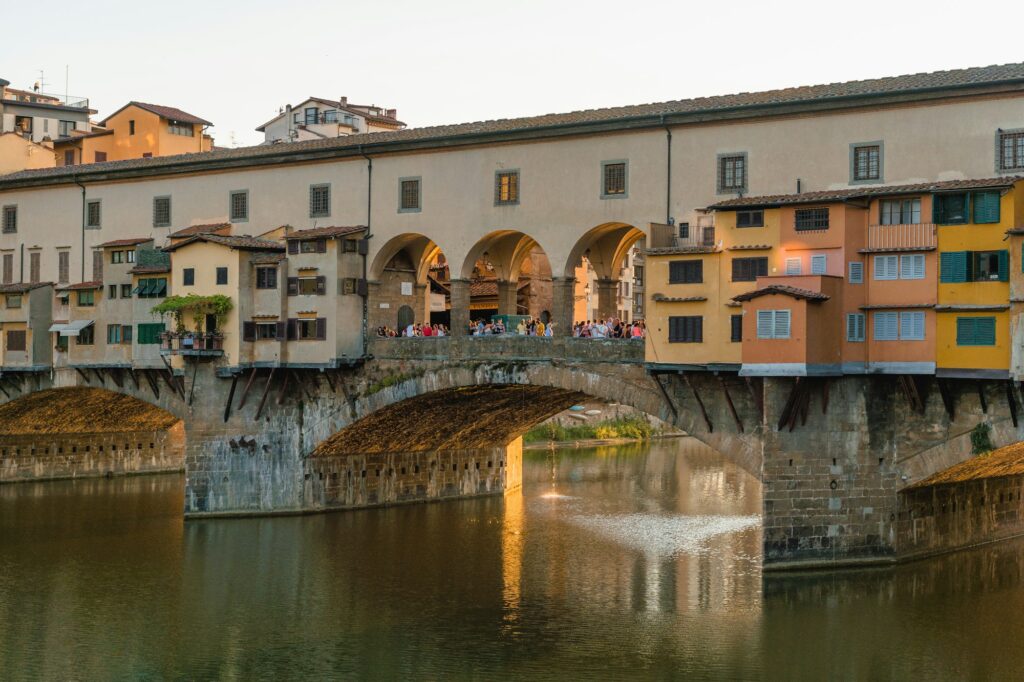
The Ponte Vecchio is the only Florentine bridge that survived the Second World War, and it has carried shops since the Middle Ages. Butchers were replaced by goldsmiths in the late 16th century, and jewellers still line both sides today. Above them runs the Vasari Corridor.
It is free and open at all hours. For the best photo, walk west to the Ponte Santa Trinita and look back upriver, ideally in the early morning or at dusk.
6. Piazza della Signoria and Palazzo Vecchio
Florence’s main square has been the centre of civic life for 700 years. The Palazzo Vecchio, the fortress like town hall, still houses the mayor’s office as well as a museum of grand state rooms, and the open air Loggia dei Lanzi shelters Cellini’s bronze Perseus and Giambologna’s Rape of the Sabine Women.
The square and the loggia are free. The Palazzo Vecchio museum and its Arnolfo tower need a ticket and a reservation, and both are included in the Firenzecard. The view of the Duomo from the tower is one of the best in the city.
7. Watch sunset from Piazzale Michelangelo
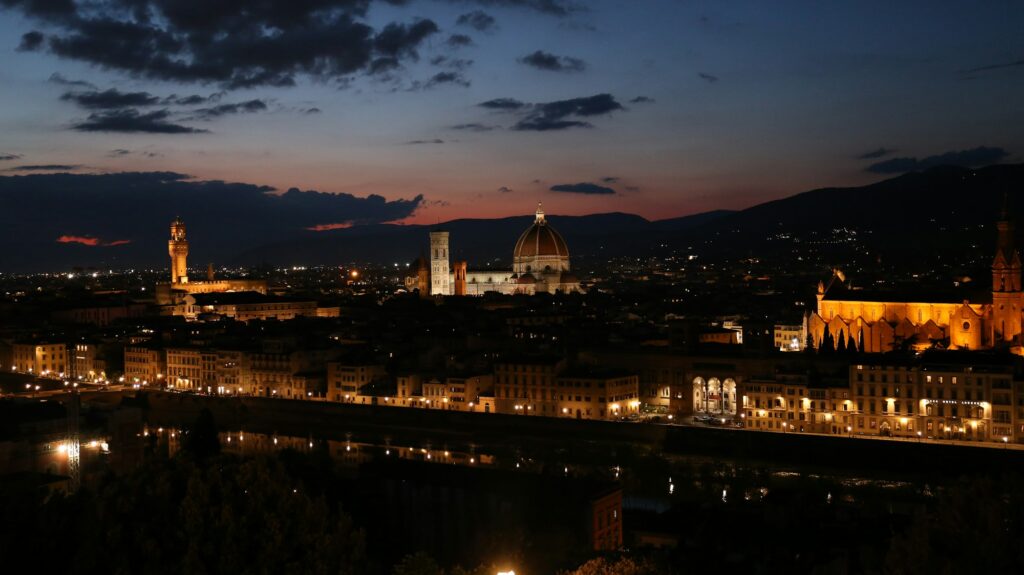
This broad terrace on the south bank was laid out in the 1860s as a viewpoint, and it delivers the classic postcard of Florence: the Ponte Vecchio, the Palazzo Vecchio tower and the Duomo rising above the rooftops, with the hills of Fiesole behind.
It is free and open all the time. Walk up from Porta San Niccolò by the Rampe steps in about 15 minutes, or take bus 12 or 13. Arrive 45 minutes before sunset for a spot on the steps; in summer the square is busy with street musicians and vendors.
8. San Miniato al Monte
A short, steep climb above Piazzale Michelangelo, San Miniato al Monte is one of the finest Romanesque churches in Italy, with a green and white marble front and a raised choir above a crypt. Benedictine monks still live here, and they usually sing Mass in Gregorian chant at about 5:30pm.
Entry is free. The church is generally open from 8am to 1pm and from 3:30pm to dusk, with longer hours in summer. The terrace in front has a view almost as good as Piazzale Michelangelo, with a fraction of the crowds.
9. Palazzo Pitti and the Boboli Gardens
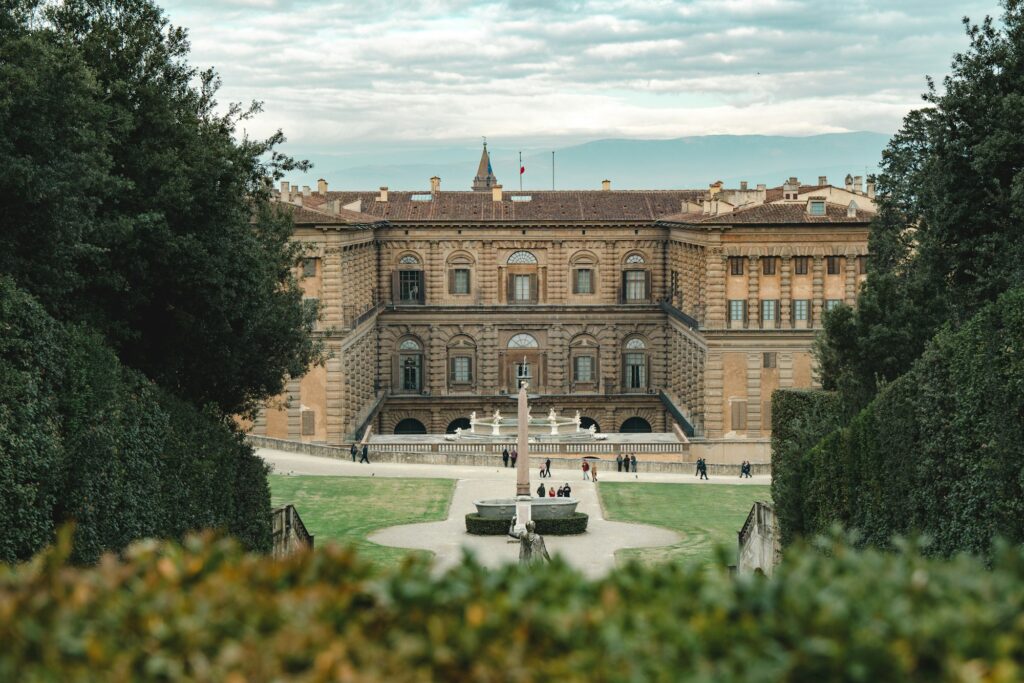
Palazzo Pitti, once home of the Medici grand dukes, now holds several museums, including the Palatine Gallery with paintings by Raphael and Titian, and the royal apartments. Behind it, the Boboli Gardens climb the hill in terraces of statues, fountains and cypress avenues, with views over the city.
Official prices for 2026 are €16 (about £14 / $19) for Palazzo Pitti on the day, €10 (about £9 / $12) for the Boboli Gardens, and €22 (about £19 / $26) for both. Booking in advance adds a few euros. Both are part of the Uffizi Galleries group, closed on Mondays and free on the first Sunday of the month.
10. Explore the Oltrarno and Santo Spirito
The Oltrarno, meaning “beyond the Arno”, is the south bank district between the Ponte Vecchio and Porta Romana. It is where Florence still feels like a working city, with furniture restorers, picture framers and bookbinders in their workshops along Via Maggio and the streets around Piazza Santo Spirito.
Brunelleschi’s Santo Spirito church is free to enter, and the square in front fills with locals for evening drinks. Walking the area is free; allow two hours to wander, and come back after dark for dinner, when it is one of the best things to do in Florence at night.
11. Basilica of Santa Croce
The largest Franciscan church in Italy holds the tombs of Michelangelo, Galileo and Machiavelli, and a memorial to Dante, plus frescoes by Giotto in the chapels beside the altar and the Pazzi Chapel in the cloister.
A ticket costs €10 (about £9 / $12), with a €6 rate for ages 12 to 17 and free entry for under 12s. Hours are 9:30 to 17:30 Monday to Saturday and 14:00 to 17:30 on Sundays, with last entry at 17:00. Behind the church, the leather school in the former dormitory is a good place to see craftspeople at work.
12. The Bargello: Florence’s sculpture museum
Housed in a medieval prison and police headquarters, the Bargello is the best place in Florence to see Renaissance sculpture. Highlights include Donatello’s bronze David, Michelangelo’s early Bacchus and the two bronze panels by Ghiberti and Brunelleschi from the 1401 competition for the Baptistery doors.
A ticket costs €12 (about £10 / $14) since February 2026. It is open Tuesday to Sunday, 8:15 to 18:50, and is usually far quieter than the Uffizi or Accademia. A 72 hour combined ticket at €38 adds the Medici Chapels at San Lorenzo, Orsanmichele and Palazzo Davanzati to the Bargello and Accademia.
13. Eat at the Mercato Centrale
The 19th century iron and glass market hall in San Lorenzo has two personalities. The ground floor is a working food market with butchers, cheese counters and stalls selling lampredotto, the tripe sandwich that is Florence’s favourite street food. Upstairs is a modern food hall with pasta, pizza, wine and gelato counters and long shared tables, open daily until late.
There is no entry fee. Go to the lower floor in the morning, when the stalls are busiest, and upstairs for an easy lunch or a rainy evening. The streets around the market are lined with leather stalls; quality varies, so check stitching and smell before you buy.
14. Medici Chapels and San Lorenzo
Next to the market, the Medici Chapels house the Medici family tombs, including Michelangelo’s New Sacristy with his figures of Night, Day, Dawn and Dusk. The dome of the Chapel of the Princes is lined with inlaid semi precious stone.
The chapels are part of the Bargello museum group and are included in the 72 hour combined ticket. They are a good addition to a morning that starts at the Accademia, about ten minutes’ walk away.
15. Find the wine windows
Look closely at the walls of old palaces and you will spot small arched hatches about the size of a book. These buchette del vino, or wine windows, date from the 1600s, when noble families sold wine from their estates directly to passers by. More than 150 survive in the city, and a few in the Oltrarno and around Santa Croce have reopened to sell wine, coffee or gelato.
Finding them is free and makes a good walk for a second or third day.
16. Take a cooking class or food tour
Tuscan food is simple and ingredient led: ribollita bread soup, pappa al pomodoro, pici pasta and the huge bistecca alla fiorentina, priced by weight and served rare. A cooking class or market tour is one of the most popular things to do in Florence with a group or as a couple, and many include a visit to the Mercato Centrale and lunch with wine.
Classes typically last three to four hours. Book a few days ahead in peak season.
17. Fiesole: Etruscan town in the hills
Fiesole sits on a hilltop about eight kilometres north of Florence and is older than the city below. It has a Roman theatre still used for summer concerts, a small cathedral, and views back over the whole Arno valley from the lane up to the San Francesco convent.
Bus 7 runs from near Piazza San Marco and takes about 25 minutes on a standard city ticket. Allow half a day, and go late in the afternoon for the light.
18. Day trips from Florence: Pisa
Day trips from Florence are easy because Tuscany’s best known towns are within about an hour by train or bus. Pisa is the quickest, Siena the most rewarding in a day, and Chianti the best for wine. Lucca and San Gimignano also work well, and tours combine several in one long day.
Regional trains from Santa Maria Novella reach Pisa Centrale in about an hour, and from there it is a 20 minute walk or short bus ride to the Field of Miracles. Climbing the Leaning Tower costs about €20 (about £17 / $23); slots are timed, children must be at least eight, and tickets can be booked up to 90 days ahead. The cathedral is free with any paid ticket to the square’s monuments.
19. Siena
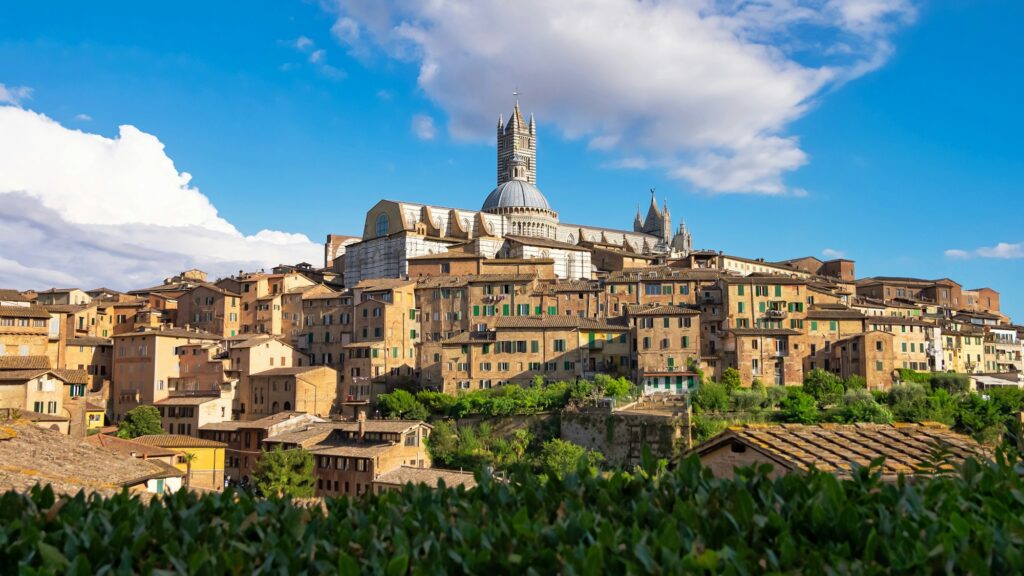
Siena is Florence’s medieval rival, built around the shell shaped Piazza del Campo and a striped marble cathedral with a spectacular inlaid floor. Rapid buses take about 75 minutes and drop you close to the centre, while trains take about 90 minutes to a station at the bottom of the hill.
Allow a full day, and combine it with San Gimignano, the town of medieval towers, on a guided tour if you do not want to juggle bus timetables.
20. Chianti wine country
The Chianti hills between Florence and Siena are covered in vineyards, olive groves and small towns such as Greve in Chianti and Castellina. Tastings at estates usually need booking, and public buses are limited, so most visitors join a tour or hire a driver.
If you rent a car, pick it up outside the historic centre to avoid the ZTL traffic zone (see driving below), and remember that Italy’s drink driving limit is lower than England’s.
21. Shop for leather and Florentine crafts
Florence has been a leather and paper making city for centuries. Beyond the San Lorenzo stalls, look for marbled paper and notebooks, handmade gloves and shoes, and goldsmiths on and around the Ponte Vecchio. The Oltrarno workshops are the best place to watch artisans at work.
Prices vary widely, so compare before you buy, and get a receipt; non EU residents can claim back VAT on larger purchases in shops that offer tax free shopping.
Things to do in Florence at night
The best things to do in Florence at night are watching sunset from Piazzale Michelangelo or San Miniato, an aperitivo in Piazza Santo Spirito, a late walk across the floodlit Ponte Vecchio and Piazza della Signoria, and gelato by the Duomo. In summer, some museums open late on selected evenings.
Florence is a city for strolling after dark. The streets around the Duomo and Piazza della Repubblica stay lively until late, and the riverside paths are lit and calm. Wine bars in the Oltrarno and Sant’Ambrogio are where locals go, and many serve generous snacks with evening drinks.
Free things to do in Florence
Free things to do in Florence include visiting the Duomo cathedral interior, the churches of San Miniato and Santo Spirito, the Ponte Vecchio, Piazzale Michelangelo, the open air statues of the Loggia dei Lanzi and the Mercato Centrale. State museums are also free on the first Sunday of each month.
The first Sunday rule covers the Uffizi, Palazzo Pitti, the Boboli Gardens, the Accademia, the Bargello and the Medici Chapels. You cannot book, so arrive before opening and expect queues, especially at the Accademia. The next free Sundays are 6 December 2026 and 3 January 2027. The Duomo passes are not included, as the cathedral complex is run by a separate body.
Florence in winter
Florence in winter, from November to February, is quieter, cheaper and often clear and crisp, with daytime highs of around 10 to 15°C. Queues at the Uffizi and Accademia shrink, hotel prices fall, and the city fills with Christmas lights from late November.
A German style Christmas market usually fills Piazza Santa Croce from late November into December, and a large tree goes up beside the Duomo; check this year’s dates before you go, and see our Christmas markets in Europe guide for other cities to combine. Days are short, so start early, and pack an umbrella: November is one of the wettest months.
What to skip or think twice about
Skip the long same day queue at the Accademia in summer: book or go on a weekday afternoon instead. Be wary of restaurants with picture menus and staff touting outside around the Duomo and Piazza della Signoria; walk five minutes away for better value.
Leave Cinque Terre and the Val d’Orcia for an overnight trip. Both are possible as long day tours from Florence, but you spend most of the day on a coach.
Is the Firenzecard worth it?
The Firenzecard costs €85 (about £74 / $99) and is valid for 72 hours from the first museum you enter, according to the official Firenzecard FAQ. It includes the Uffizi, Accademia, Palazzo Pitti, Boboli, Bargello, Palazzo Vecchio and dozens of smaller museums, with free reservations, and children under 18 in your family enter free when linked to your card.
It does not include public transport or the Duomo passes, and you still have to book time slots at the Uffizi, Accademia and Palazzo Vecchio. A Firenzecard Restart at €28 adds 48 hours for a five day pass. Adding up single tickets, the Uffizi, Accademia, Pitti with Boboli and the Bargello come to about €79, so the card only pays off if you visit five or more paid museums in three days.
How much do things cost in Florence?
| Item | Price (Nov 2026) | Approx GBP / USD |
|---|---|---|
| Brunelleschi Pass (dome and Duomo complex) | €30 | £26 / $35 |
| Uffizi, same day ticket | €25 | £22 / $29 |
| Accademia, online booking | €24 | £21 / $28 |
| Palazzo Pitti plus Boboli | €22 | £19 / $26 |
| Bargello | €12 | £10 / $14 |
| Santa Croce | €10 | £9 / $12 |
| Firenzecard (72 hours) | €85 | £74 / $99 |
| Bus or tram ticket (90 minutes) | €2 | £1.75 / $2.30 |
| Leaning Tower of Pisa climb | about €20 | £17 / $23 |
| Tourist tax, holiday rentals, per person per night | €6 | £5.20 / $7 |
Florence adds a tourist tax to every stay, charged per person per night for up to seven nights in a row and paid to your hotel or host. Holiday rentals and B&Bs charge €6 per person per night since February 2025; hotel rates depend on the star rating, so ask when you book. Children under 12 are exempt.
Getting to and around Florence
Tram from Florence airport
Florence’s small airport, Amerigo Vespucci (also called Peretola), is linked to the centre by the T2 tram, which runs to Unità stop beside Santa Maria Novella station in about 20 minutes. A 90 minute ticket costs €2 (about £1.75 / $2.30) since August 2026. Buy it from the machine at the stop, or tap a contactless Visa, Mastercard or American Express card on the validator on board. Trams run from about 5am to 00:30, and later on Friday and Saturday nights.
Taxis charge a fixed fare to the centre (€22 at the last official listing), with supplements for luggage, nights and holidays. From Pisa Airport, the PisaMover shuttle links to Pisa Centrale, and trains to Florence take about an hour.
Getting around
Walk. The historic centre is compact and mostly flat, and many streets are pedestrian only. Buses help for Piazzale Michelangelo, San Miniato and Fiesole; tickets work on both buses and trams for 90 minutes.
Florence for UK and US travellers
Entry rules
UK and US passport holders do not need a visa for Italy for tourist stays of up to 90 days in any 180 day period across the whole Schengen area. Days in France, Spain or Greece on the same trip count towards the same total.
The EU Entry/Exit System (EES) has been in operation since 12 October 2025 and fully live since 10 April 2026, so on your first entry you give fingerprints and a facial image at the border instead of getting a passport stamp. ETIAS, the €20 online travel authorisation, was not yet in operation in November 2026, and no start date had been announced. Our EES and ETIAS guide explains both in detail.
UK passports must be less than 10 years old on the day you arrive and valid for at least three months after the day you plan to leave; check the UK government’s Italy entry requirements page before you travel. US passports should also be valid for at least three months beyond your departure date.
Flights from the UK and US
- From London: direct flights to Florence take about 2 hours to 2 hours 15 minutes, with British Airways from London City and Vueling from Gatwick. Pisa has more routes and low cost carriers from several London airports.
- From Manchester: there is no year round direct flight to Florence, so most travellers fly to Pisa, which has direct services mainly in the warmer months, or connect via a European hub.
- From New York: there was no nonstop flight to Florence in 2026. Fly nonstop to Rome Fiumicino in about 8 to 9 hours and take a high speed train to Florence in about 1 hour 30 minutes, or connect through a European hub to Florence or Pisa.
Health cover, money, plugs and time
UK travellers should carry a GHIC for state healthcare in Italy (see our GHIC card guide), plus travel insurance; US visitors need travel insurance with medical cover. Italy uses the euro, and cards and contactless are widely accepted, though small bars and market stalls may prefer cash.
Italy uses Type C, F and L sockets at 230V. UK and US plugs will not fit, so pack a European adapter; most phone and laptop chargers handle the voltage, but check US hair dryers and straighteners. Florence is one hour ahead of London and six hours ahead of New York for most of the year.
Tipping
Tipping is not expected in the way it is in the US. Many restaurants add a cover charge, the coperto, of a few euros per person, and some add a service charge, which will be shown on the bill. Rounding up or leaving a few euros for good service is plenty. Americans used to 20% should not feel obliged to tip on that scale, and UK visitors will find habits similar to home.
Driving and the ZTL zone
Italy drives on the right. UK photocard licence holders can drive with their licence; US licence holders should carry an International Driving Permit alongside their state licence.
Do not drive into the historic centre. It is a ZTL, a limited traffic zone, restricted from 7:30am to 8pm on weekdays and 7:30am to 4pm on Saturdays, with extra night hours on Thursday to Saturday in summer. Cameras record every plate, and fines run from €80 to €335 (about £70 to £291 / $93 to $389) per entry, often arriving months later with an extra admin fee from the rental company. If your hotel is inside the zone, it must register your plate with the police in advance.
Our picks
- Best single experience: the dome climb, booked for an early slot.
- Best museum for art lovers: the Uffizi, with an afternoon ticket in winter.
- Best free view: San Miniato al Monte at sunset, ideally with the monks’ chant.
- Best area to wander: the Oltrarno, from Santo Spirito to Palazzo Pitti.
- Best day trip: Siena, by rapid bus or on a tour combined with San Gimignano.
Frequently asked questions
What to do in Florence, Italy?
See the Duomo and climb Brunelleschi’s dome, visit the Uffizi and Michelangelo’s David at the Accademia, cross the Ponte Vecchio and watch sunset from Piazzale Michelangelo. Then explore the Oltrarno, Palazzo Pitti and the Boboli Gardens, eat at the Mercato Centrale and take a day trip to Pisa, Siena or Chianti.
What to do in Florence on a Sunday?
Most museums open on Sundays and close on Mondays instead, so Sunday is a good museum day; on the first Sunday of the month the state museums are free. The cathedral is open only for services, the dome opens in the afternoon and Santa Croce from 2pm. Piazzale Michelangelo, San Miniato and the Mercato Centrale food hall are good options too.
Is Trattoria Zaza in Florence a tourist trap?
Trattoria ZaZa, on the square beside the Mercato Centrale, is very popular with visitors and always busy, so it is not where locals usually go, but it is a long running trattoria serving standard Tuscan dishes rather than a classic trap. Book ahead and check the bill for the cover charge. For a more local feel, eat in the Oltrarno or around Sant’Ambrogio market.
Are there any parts of Florence to avoid?
Florence is generally safe, and there are no central districts you need to avoid. The main risk is pickpockets in crowds around Santa Maria Novella station, the Duomo, the Ponte Vecchio and on buses. Late at night, the quieter streets around the station and the Cascine park are best avoided on your own.
Is Florence really worth visiting?
Yes. Florence has one of the world’s densest concentrations of Renaissance art and architecture in a small, walkable centre, and Tuscany’s towns and vineyards are an easy day trip. It is busy from spring to autumn, so book the big sights ahead, or visit in winter for shorter queues.
Is Florence very expensive?
Florence is mid priced for a major European city: dearer than most of southern Italy but usually cheaper than Paris, London or Venice for food. The big costs are hotels and museum tickets, with the Uffizi at €25 and the Duomo pass at €30. Free sights, set lunch menus and visiting in winter keep costs down.
Can you wear jeans in Florence, Italy?
Yes. Jeans are perfectly normal in Florence all year, and locals wear them everywhere. The dress rule to remember is for churches: cover your shoulders and knees, and take off your hat, or you may be refused entry to the Duomo, the Baptistery or Santa Croce. Comfortable shoes matter more than anything on the cobbles.
Is $10,000 enough for a trip to Italy?
For most travellers, yes. $10,000 (about €8,600 or £7,500) comfortably covers two people for around two weeks in Italy, including return flights (round trip) from the US, midrange hotels, trains between cities and museum tickets. Peak summer and luxury hotels cost more; travelling in spring, autumn or winter stretches it further.
Plan the rest of your trip
Find more Florence and Italy guides on our Florence travel guides page. If you are combining Florence with other European city breaks, see our guides to things to do in Prague, things to do in Lisbon and things to do in Amsterdam.
With the dome booked, the Uffizi and David timed, and one evening saved for sunset at San Miniato, you will have covered the essential things to do in Florence and still have time to wander. Prices and booking rules in this guide were last checked in November 2026.