
Things to do in Vienna range from Habsburg palaces and Klimt’s The Kiss to standing room at the State Opera for less than a cinema ticket, coffee houses, wine taverns and some of the best Christmas markets in Europe. This guide covers the 20 best, with prices we checked on official websites in November 2026, which tickets to book ahead and how to fit it all into two, three or four days.
Some links in this guide are affiliate links: if you book through them we may earn a commission at no extra cost to you. It never changes what we recommend. How we make money.
Vienna is compact, safe and easy to get around, and many of its best moments are free: the Hofburg courtyards, the Schönbrunn gardens, the markets and the Ringstrasse by tram. We also cover the big transport changes that catch visitors out right now (the airport train is replaced by a bus until late 2027), the new hotel tax, winter and night ideas, day trips to the Wachau valley and Bratislava, and everything UK and US visitors need to know.

Things to do in Vienna at a glance
| Sight | Area | Time needed | Adult price (Nov 2026) |
|---|---|---|---|
| Schönbrunn Palace | Hietzing, U4 | Half a day | €30 to €42, gardens free |
| Hofburg and Sisi Museum | Old town | 2 to 3 hours | €27, or €33 with tour |
| St. Stephen’s Cathedral | Stephansplatz | 1 to 2 hours | Free nave, €29 all inclusive |
| Kunsthistorisches Museum | Maria Theresien Platz | 3 hours | €22 online |
| Upper Belvedere (The Kiss) | Landstrasse | 2 hours | €23 |
| Vienna State Opera | Ring | An evening | Standing from about €13 |
| Spanish Riding School | Hofburg | 1 to 2 hours | From €17 standing |
| Christmas markets | Across the city | An evening | Free entry |
| Naschmarkt | Wieden | 1 to 2 hours | Free |
| Prater and Giant Ferris Wheel | Leopoldstadt | 1 to 2 hours | €14.50 for the wheel |
| Coffee house break | Everywhere | 1 hour | Cake from about €7 |
| Heuriger wine tavern | Grinzing, Nussdorf | An evening | Pay as you drink |
| Wachau valley | Day trip | A full day | Train plus about €16 for Melk Abbey |
| Bratislava | Day trip | A full day | €19 return by train |
All prices were checked on official websites in November 2026. We convert at about £0.84 and $1.10 to the euro, so treat pound and dollar figures as a guide.
What our Austria video covers
From Alpine hikes, Hallstatt and the Krimml Waterfalls to the Grossglockner road, Schönbrunn, Vienna's museums, Salzburg, Melk Abbey, Sachertorte and Christmas markets, here are 25 of the best experiences in Austria.
Jump to a chapter (24)
- 0:32 Hiking in the Alps
- 0:56 Hallstatt
- 1:12 Skiing and snowboarding
- 1:28 The Krimml Waterfalls
- 1:44 Rafting and cycling
- 2:10 The Grossglockner High Alpine Road
- 2:26 Schönbrunn Palace
- 2:51 The Hofburg
- 3:10 Classical music in Vienna
- 3:19 The MuseumsQuartier
- 3:35 Salzburg
- 3:53 Hohensalzburg Fortress
- 4:09 The Spanish Riding School
- 4:23 Melk Abbey
- 4:38 The Belvedere and The Kiss
- 4:53 Sachertorte
- 5:14 Wiener Schnitzel
- 5:28 Austrian wine
- 5:43 A traditional Heuriger
- 6:00 Kaiserschmarrn
- 6:17 A cable car ride
- 6:36 Swarovski Crystal Worlds
- 7:08 Christmas markets
- 7:20 Planning your trip
How to choose what to do in Vienna
If you only have a weekend, stay inside and just around the Ringstrasse, the grand boulevard that circles the old town. St. Stephen’s Cathedral, the Hofburg, the Kunsthistorisches Museum, the Albertina and the State Opera are all within about 15 minutes’ walk of each other. Add Schönbrunn on the morning of day two, because it needs half a day.
With three or four days, add the Belvedere, the Naschmarkt, the Prater and an evening at a Heuriger wine tavern on the edge of the city. With five days or more, take a day trip to the Wachau valley or Bratislava.
Book three things in advance: timed palace tickets for Schönbrunn, the Kunsthistorisches Museum (time slots are now required) and any opera or concert seats. Everything else you can decide on the day. Shops and the Naschmarkt close on Sundays, so keep Sunday for palaces, museums, churches and parks.
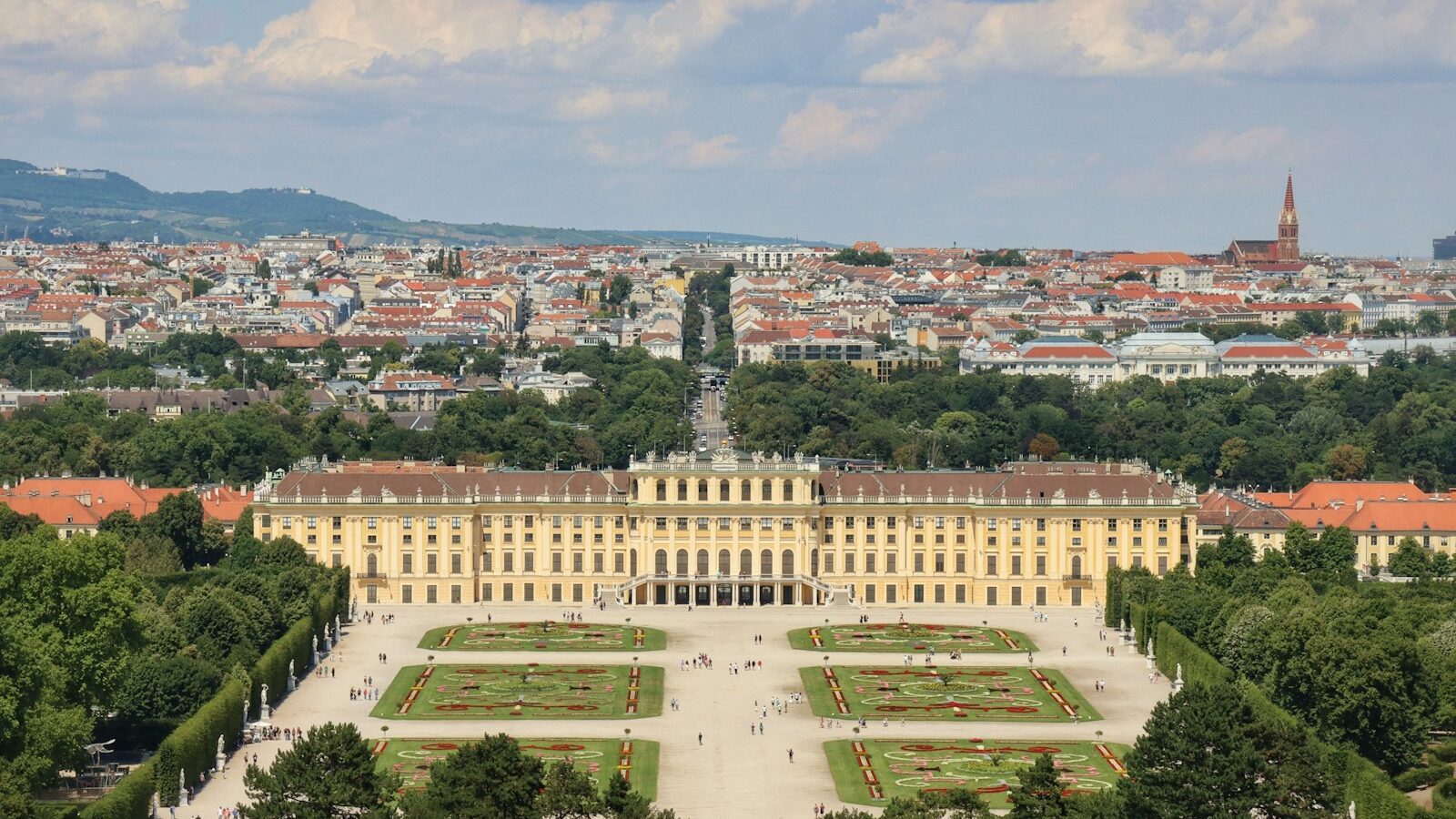
1. Schönbrunn Palace
Schönbrunn was the summer residence of the Habsburgs, the family that ruled Austria for more than six centuries. You walk through the state rooms where Maria Theresa held court and where Emperor Franz Joseph and Empress Elisabeth (Sisi) lived, then out into one of the finest baroque gardens in Europe, with the Gloriette colonnade on the hill behind it.
Schönbrunn Palace tickets
Palace entry uses fixed time slots, so book online through the official ticket shop and arrive on time. Adult prices in November 2026 are:
- Palace Ticket: €42 (about £35 / $46), around 75 minutes with an audio guide through the whole main floor. This is the ticket most visitors want.
- State Apartments: €30 (about £25 / $33), a shorter 40 minute route through the most famous rooms.
- Guided tour Maria Theresa: €44, about 75 minutes with a guide.
- Sisi Pass: €69, which adds the Sisi Museum at the Hofburg and the Furniture Museum, valid for a year.
- Winter Pass: €73, the palace plus the zoo, the Palm House and the Desert Experience House, sold in the winter season only.
The palace opens daily from 8.30am to 5pm and the gardens from 6.30am to 5.30pm. The main park is free to walk around. From 6 November 2026 to 6 January 2027, the Imperial Lights trail turns part of the gardens into a light show each evening from 4.30pm, with tickets from €24 and time slots.
How to get there: take the U4 underground line to Schönbrunn or Hietzing, about 15 minutes from the centre. With a tour: many half day city tours include Schönbrunn with a guide and skip the line entry, which saves planning but costs more than a ticket alone.
2. The Hofburg and the Sisi Museum
The Hofburg was the Habsburgs’ winter palace and is still the seat of the Austrian president. It is a city within the city: courtyards, the Heldenplatz square, the Spanish Riding School, the National Library and the Imperial Treasury are all part of it. Walking through the courtyards and the Heldenplatz is free.
The paid highlight is the Sisi Museum, about the life of Empress Elisabeth, alongside the Imperial Apartments and the Silver Collection. A day ticket costs €27 (about £23 / $30) and the version with a 60 minute guided tour of the Imperial Apartments costs €33; English tours run daily at 2pm. The museum opens daily from 9am to 5.30pm, with last entry at 4.30pm. Genuine tickets are sold online with a time slot.
Time needed: 1.5 to 2 hours for the Sisi Museum, more if you add the Treasury, which holds the imperial crown of the Holy Roman Empire.
3. St. Stephen’s Cathedral
St. Stephen’s, the Stephansdom, is the Gothic heart of Vienna, with a patterned tile roof you can see from all over the old town. You can step into the back of the nave for free. To see more, the All Inclusive ticket costs €29 (about £24 / $32), is valid for a year and covers the interior with an audio guide, the south tower, the north tower with the huge Pummerin bell, a guided tour of the catacombs and the cathedral treasury in the Dom Museum next door.
The south tower is a climb of several hundred steps with a fine view over the rooftops; the north tower has a lift. Single tickets for the towers and catacombs are sold on site only. Time needed: 1 to 2 hours.
4. Kunsthistorisches Museum
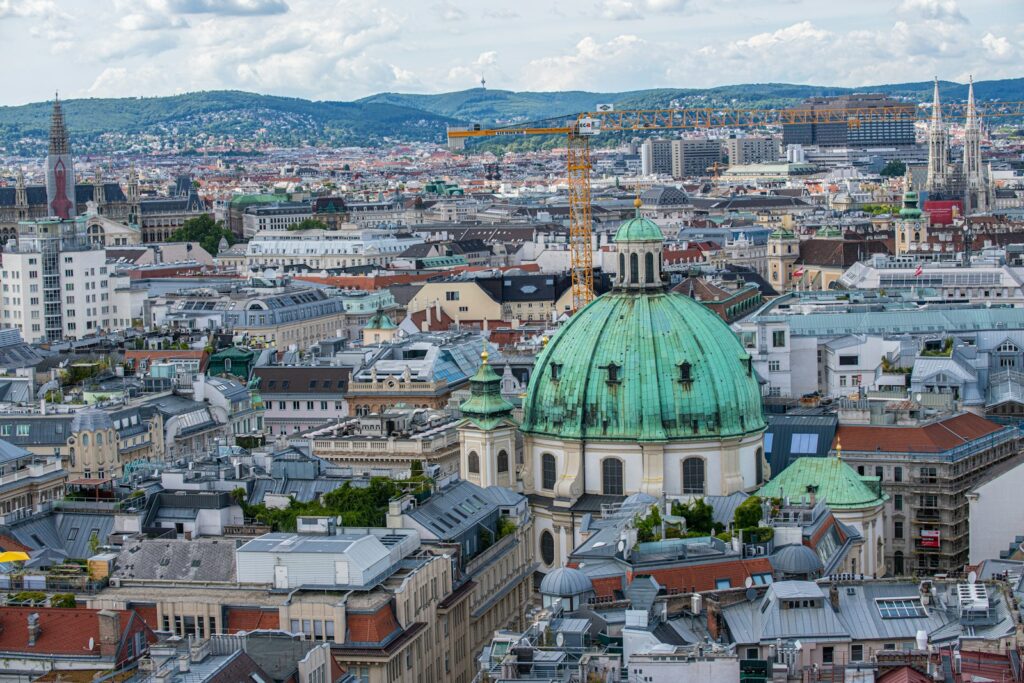
The Kunsthistorisches Museum (Museum of Art History) holds the Habsburg art collection: the largest group of paintings by Pieter Bruegel the Elder in the world, Raphael, Titian, Vermeer and Velázquez, plus the Kunstkammer cabinet of treasures and an Egyptian collection. The building itself, with its café under the dome, is a reason to go.
Tickets cost €22 online or €24 at the door (about £18.50 / $24), and under 19s go free. Since 8 September 2026, entry has been by reserved time slot, so book ahead. It opens daily from 10am to 6pm, until 9pm on Thursdays, which makes Thursday evening a good choice for things to do in Vienna at night. Allow at least three hours.
5. The Belvedere and Klimt’s The Kiss
The Belvedere is a pair of baroque palaces with formal gardens between them, built for Prince Eugene of Savoy. The Upper Belvedere holds the world’s largest collection of paintings by Gustav Klimt, including The Kiss, plus works by Egon Schiele and Oskar Kokoschka.
An adult ticket to the Upper Belvedere costs €23 (about £19 / $25), and it opens daily from 9am to 6pm. If you plan to see all three Belvedere sites, the Belvedere Gold Pass at €49 gives unlimited entry without time slots. Take tram D from the Ring to Schloss Belvedere. From 20 November to 31 December 2026, a Christmas market stands in front of the Upper Belvedere.
6. An evening at the Vienna State Opera
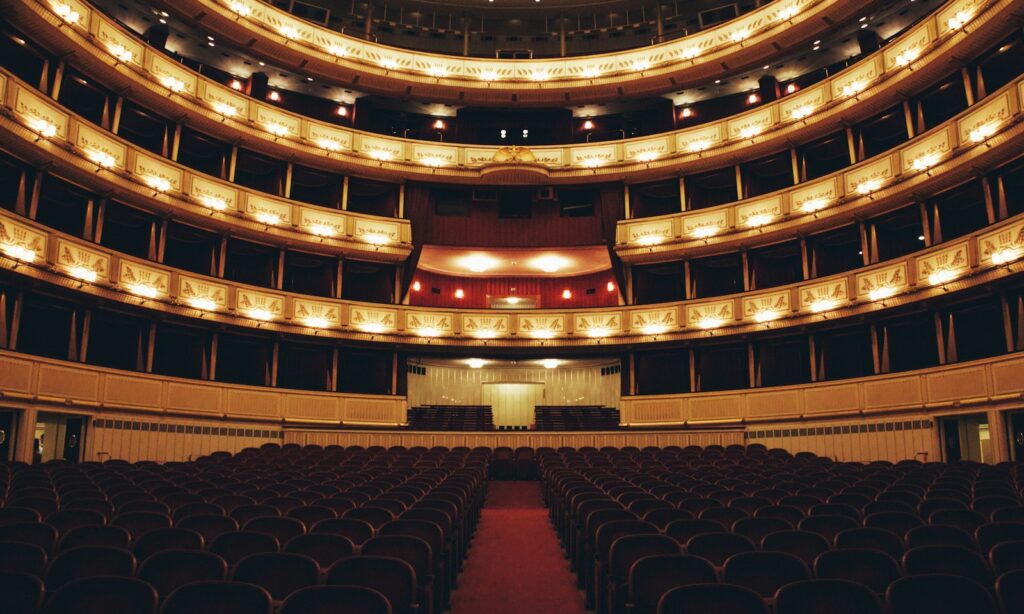
The State Opera (Wiener Staatsoper) stages a different opera or ballet on most nights of its season, which runs from September to June. Seats for big names can cost a lot, but Vienna’s great tradition is standing room.
Vienna State Opera standing tickets
About 435 standing places are sold for each performance. They go on sale online at 10am on the day of the performance, with a maximum of two per account, and you need to register first. Prices reported for the current season are about €13 to €18 (about £11 to £15 / $14 to $20), depending on whether you stand in the parterre at the back of the stalls or up in the gallery. The parterre gives the best view. Any remaining standing tickets are sold at the separate standing room box office on the Operngasse side of the building, which opens 80 minutes before an evening performance.
Standing tickets now carry a numbered position, so you do not have to queue early to claim a good spot. There is no strict dress code for standing room, but smart casual is the norm. If you cannot get a ticket, daytime guided tours of the building run on most days. Only buy from the opera’s own website or box offices; the people in period costume outside selling “Mozart concerts” are not selling opera tickets.
7. The Spanish Riding School
The Spanish Riding School has trained Lipizzaner horses in the Hofburg for centuries, and the winter riding hall is a baroque ballroom for horses. You can see the horses in three ways:
- Morning exercise with music: seats €28 in November and €29 in December, standing €17 or €18. This is the best value and needs the least planning.
- Performances: from €50 to €245 for gala performances, with standing places from €26.
- Guided tours: €24, a look behind the scenes at the stables and the hall.
Dates vary through the year, so check the official calendar before you plan around it. Allow an hour for the morning exercise.
8. The Albertina
The Albertina is a Habsburg palace with a world class collection of prints and drawings and a permanent collection that runs from Monet and Picasso to modern art. Its terrace, next to the State Opera, is a classic photo stop. It opens daily from 10am to 6pm, and until 9pm on Wednesdays and Fridays. Check the official site for current exhibition prices.
9. The Ringstrasse by tram
The Ringstrasse replaced the old city walls in the 19th century and is lined with the Parliament, the City Hall, the Burgtheater, the University, the State Opera and the museums. You do not need a special tour: trams 1 and 2 between them cover most of the Ring on a normal public transport ticket. Ride a full loop, then get off and walk back through the Volksgarten rose garden and the Burggarten.
10. Coffee houses
The Viennese coffee house is listed by UNESCO as intangible cultural heritage, and an hour in one is among the essential things to do in Vienna. Order a melange (similar to a cappuccino), a slice of Sachertorte or apple strudel, and take your time; nobody will rush you.
Café Central is the most famous, but it has been closed for a long renovation in 2026, so check it has reopened before you plan around it. Café Landtmann by the Burgtheater, Café Sperl near the Naschmarkt and Café Hawelka in the old town are classic alternatives. Demel, the old court confectioner, is the place for Kaiserschmarrn, a chopped, caramelised pancake.
11. The Naschmarkt
The Naschmarkt is Vienna’s best known market, a long strip of stalls and small restaurants between the Karlsplatz and Kettenbrückengasse stations on the U4. Come hungry for falafel, cheese, olives and Austrian wine, and on Saturday mornings browse the flea market at the far end. The market is closed on Sundays.
12. The Prater and the Giant Ferris Wheel
The Prater is a huge public park in Leopoldstadt, with the Wurstelprater funfair at one end and long tree lined avenues for walking and cycling. Entry to the park is free and each ride is paid separately.
The Giant Ferris Wheel (Riesenrad), 64.75 metres high and famous from the film The Third Man, opens daily from 9am to 11.45pm. A standard ticket costs €14.50 (about £12 / $16). Go at dusk for the city lights. Take the U1 or U2 to Praterstern.
13. Hundertwasser House and Kunst Haus Wien
Hundertwasser House is a colourful public housing block with uneven floors, trees growing from the balconies and no straight lines. People live there, so you can only see it from the street, which is free. A few minutes’ walk away, the Kunst Haus Wien museum shows the work of the artist Friedensreich Hundertwasser inside a building he designed.
14. MuseumsQuartier
The MuseumsQuartier is a large cultural complex in the former imperial stables, next to the Kunsthistorisches Museum. It includes the Leopold Museum, with the world’s biggest Egon Schiele collection, and mumok for modern art. The courtyards are free to enter and are a lively meeting place, with bars in summer and a winter village with mulled wine in the colder months.
15. The State Hall of the National Library
The State Hall (Prunksaal) of the Austrian National Library is one of the most beautiful libraries in the world: a baroque hall of painted ceilings, marble statues and leather bound books inside the Hofburg. Entry has been about €11, and it is usually closed on Mondays, so check before you go. Allow 30 to 45 minutes.
16. A Heuriger wine tavern
Vienna is one of the few capital cities with vineyards inside its boundaries, and a Heuriger is a wine tavern where winemakers serve their own new wine with a cold buffet. Look for a bunch of pine branches hung over the door, which means it is open. Grinzing (tram 38) is the best known area; Nussdorf (tram D) and Neustift am Walde are a little quieter. Order a glass of Grüner Veltliner or a Gemischter Satz, the local field blend. Opening days vary, especially in winter, so check before you travel out.
17. The Central Cemetery
The Zentralfriedhof is one of the largest cemeteries in Europe and an unexpectedly peaceful half day. Beethoven, Schubert, Brahms and Johann Strauss are buried in the musicians’ section, near the main gate. Entry is free. Take tram 71 or tram 11 from the city.
Vienna Christmas markets
From mid November to Christmas, Vienna is at its most festive, and the markets are free to enter. Mulled wine and punch come in a mug with a deposit of a few euros, which you get back when you return it. These are the main 2026 dates:
| Market | 2026 dates | Best for |
|---|---|---|
| Rathausplatz, City Hall | 13 November to 26 December | The biggest, with ice trails and a lit park |
| Schönbrunn Palace | 6 November to 6 January 2027 | A palace backdrop and the longest season |
| Belvedere | 20 November to 31 December | Klimt fans and a quieter feel |
| Spittelberg | From 13 November | Crafts in narrow cobbled lanes |
| Karlsplatz Art Advent | From 13 November | Handmade crafts and organic food |
| Am Hof | From 13 November | Antiques and a central location |
| Freyung | From 14 November | A traditional old Viennese market |
| Maria Theresien Platz | 20 November to 26 December | Between the two great museums |
| Stephansplatz | 6 November to 26 December | Right by the cathedral |
The Rathausplatz market opens from 10am to 10pm, Schönbrunn from 10am to 9pm, and most others until about 9pm. Opening hours are shorter on 24 December. Dates come from the city and market organisers and can change, so check before you go. For the wider picture, see our guide to the best Christmas markets in Europe.

Free things to do in Vienna
Vienna is better value than its grand reputation suggests. These free things to do in Vienna fill a whole day:
- Hofburg and Heldenplatz: walk through the palace courtyards and gardens.
- Schönbrunn gardens: the main park is free, though the maze and the Gloriette terrace are paid in season.
- St. Stephen’s Cathedral: the back of the nave is free to enter.
- Wien Museum: the city museum on Karlsplatz has free entry to its permanent exhibition on the history of Vienna.
- The markets: the Naschmarkt and, in season, every Christmas market.
- Hundertwasser House: free to see from the street.
- The Prater park: free to walk, with the funfair rides paid separately.
- The Central Cemetery: the graves of Beethoven and Schubert.
- The Danube Island: a long strip of riverside paths and beaches for walking or cycling.
- Summer film festival: in July and August, free open air screenings of concerts and opera take place on the Rathausplatz.
Things to do in Vienna in winter
Winter is a fine time to visit if you dress warmly. Days are short and temperatures often hover around freezing, but the city is built for it: heated coffee houses, superb museums and a busy music calendar.
- Christmas markets: from mid November to Christmas, with Schönbrunn open until 6 January.
- Imperial Lights at Schönbrunn: an evening light trail in the palace gardens until 6 January 2027.
- Ball season: from January to Carnival, Vienna hosts hundreds of balls, the most famous being the Opera Ball.
- Ice skating: the Rathausplatz usually turns into a large ice rink after the Christmas market closes.
- Museums with late openings: the Kunsthistorisches Museum on Thursdays and the Albertina on Wednesdays and Fridays.
- Coffee and cake: a long, warm afternoon in a coffee house is the local cure for the cold.
Things to do in Vienna at night
Vienna is safe after dark and has plenty to fill an evening:
- Opera and concerts: the State Opera, the Musikverein (home of the New Year’s Concert) and the Konzerthaus.
- The Giant Ferris Wheel: open until 11.45pm.
- A Heuriger: wine taverns on the edge of the city, from late afternoon.
- Late museums: the Kunsthistorisches Museum until 9pm on Thursdays.
- Bars: the streets around Schwedenplatz, the Gürtel arches and the MuseumsQuartier courtyards are the liveliest areas.
- Christmas markets: most stay open until 9pm or 10pm in season.
Day trips from Vienna
The Wachau valley and Melk Abbey
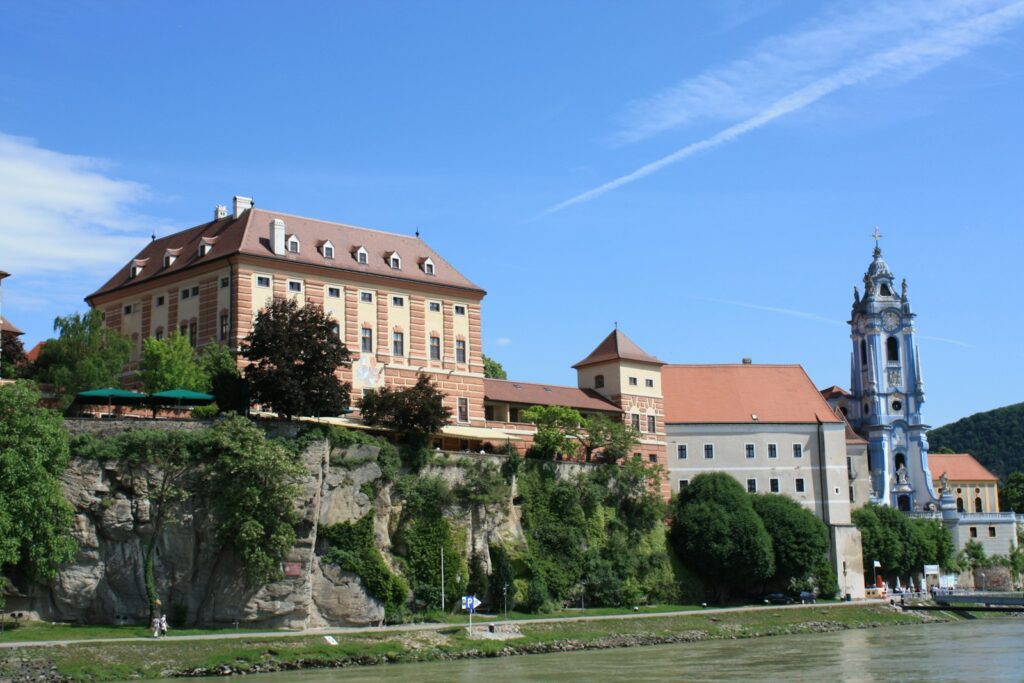
The Wachau is a UNESCO listed stretch of the Danube between Melk and Krems, with vineyards, apricot orchards, the village of Dürnstein and its castle ruin, and the huge baroque Melk Abbey above the river.
Without a tour: direct trains reach Melk in a little over an hour from Vienna, and Krems is served from Franz Josefs Bahnhof. In the main season, from about April or May to late October, boats link Melk, Spitz, Dürnstein and Krems, so you can take the train out, cruise down the river and take the train back. There is no boat service in winter. Melk Abbey costs about €16 for adults, with a few euros more for a guided tour. From early November to early March, visits are by guided tour on weekdays only (at 11am, 1.30pm and 3pm in the last published winter programme), so check before a winter trip.
With a tour: a guided day trip from Vienna is the easiest way to see Melk, Dürnstein and a wine tasting in one day, especially outside boat season.
Bratislava
Slovakia’s capital is just 66 kilometres away and makes an easy day trip. The REX8 train from Wien Hauptbahnhof reaches Bratislava hlavná stanica in about 56 minutes, hourly through the day. A single costs €12.70, while the Bratislava Ticket return costs €19 (about £16 / $21) and includes the city’s buses and trams on your first day. No reservation is needed. Slovakia uses the euro and is in the Schengen area, so there is no passport control.
You can also go by boat. The Twin City Liner runs fast catamarans along the Danube in about 75 minutes, with Advent trips on Fridays, Saturdays and Sundays from 27 November to 20 December 2026 and a fuller timetable from spring.
Further afield
Salzburg is about two and a half hours by fast train and works as a long day trip. Hallstatt, the lakeside village in so many photos, is about four hours each way by train and ferry, which is too far for a comfortable day; stay a night or go on a long organised tour instead. Prague is about four hours by train, so read our guide to things to do in Prague if you are combining the two cities.
What to skip or leave for another trip
- The Danube Canal boat tours in winter: the views are limited; the Wachau is the place for a river trip.
- Costumed ticket sellers: the people in Mozart costumes around St. Stephen’s and the Opera sell tourist concerts at high prices. Buy concerts from the venue instead.
- Hallstatt as a day trip: four hours each way leaves very little time in the village.
- Taxis from the airport if you are travelling light: the train is cheaper and almost as quick.
Getting there and getting around
From the airport
Vienna Airport is about 20 kilometres east of the city. There are three main options, and two of them have changed for 2026 and 2027:
- City Airport Train (CAT): until about the end of October 2027 the CAT is a nonstop bus between the airport and Wien Mitte, taking about 21 minutes, every 12 minutes for most of the day. A single costs €14.90 (about £12.50 / $16.40) and a return €24.90.
- S7 local train: until the end of October 2027 the S7 only runs as far as St. Marx, so you need to change to a tram, bus or underground train for the centre. It costs €5.50 (about £4.60 / $6) including the Vienna zone.
- REX7 and Railjet trains: these go to Wien Hauptbahnhof, the main station, in about 20 minutes, for the same €5.50 fare.
If you have a Vienna City Card or a public transport pass, you only need an extra €2.30 ticket for the airport zone.
Public transport
Wiener Linien runs the underground, trams and buses on one network. Fares rose on 1 January 2026, and the 48 hour and 72 hour tickets were scrapped:
| Ticket | Paper or machine price | Digital price |
|---|---|---|
| Single trip | €3.20 (about £2.70 / $3.50) | €3.00 |
| 24 hours | €10.20 (about £8.60 / $11.20) | €9.70 |
| 7 days | €28.90 (about £24 / $32) | €25.20 |
There are no ticket barriers, but inspectors check often and fines are high, so always have a valid ticket. The WienMobil app sells the cheaper digital tickets. Wiener Linien says fares will be revised every year from 1 January 2027, so expect small changes after that date. See the official fare page on the Wiener Linien website.
Is the Vienna City Card worth it?
The Vienna City Card combines unlimited public transport with discounts at more than 200 museums, tours and restaurants. Prices are €19 for 24 hours, €31 for 48 hours, €37 for 72 hours (which includes a 7 day transport ticket) and €39 for 7 days. An airport transfer can be added for €22.
Now that the 48 hour and 72 hour transport tickets are gone, the 72 hour card at €37 is good value for a three or four day stay even before the discounts, since a 7 day transport ticket alone costs €28.90. The discounts are mostly 10 to 20 per cent, so it is not a free entry pass.
How much does Vienna cost?
| Item | Typical price (Nov 2026) |
|---|---|
| Single public transport ticket | €3.20 |
| Slice of cake at a famous coffee house | about €7 to €9 |
| Kunsthistorisches Museum | €22 online |
| Glass of mulled wine at a market | about €4 to €6, plus mug deposit |
| Schönbrunn Palace Ticket | €42 |
| Opera standing ticket | about €13 to €18 |
| Central hotel on a December weekend | often £200 or more a night |
Vienna’s hotel tax (Ortstaxe) rose from 3.2 to 5 per cent of the room price on 1 July 2026 and is due to rise to 8 per cent from 1 July 2027, according to the City of Vienna. It is usually added to your hotel bill, so check whether a quoted price includes it.
Where to stay in Vienna
- Innere Stadt (1st district): inside the Ring, close to everything, and the most expensive.
- Neubau and Mariahilf (6th and 7th): near the MuseumsQuartier and the Naschmarkt, with good cafés, shops and better value.
- Wieden (4th): calm, central and walkable to the Belvedere and Karlsplatz.
- Leopoldstadt (2nd): across the Danube Canal, near the Prater, with fair prices and good transport.
- Near the Hauptbahnhof (10th): handy for the airport trains and day trips, but less charming.
Practical tips for UK and US visitors
Entry rules
UK and US passport holders do not need a visa for Austria for stays of up to 90 days in any 180 day period across the Schengen area. Your passport must have been issued less than 10 years before you arrive and be valid for at least three months after you plan to leave.
Austria uses the EU Entry/Exit System (EES), which records your fingerprints and a photo the first time you enter the Schengen area instead of stamping your passport. ETIAS, the €20 online travel authorisation, has not started yet and no start date had been set in November 2026. Read our guide to EES and ETIAS for the latest, and ignore websites already selling ETIAS applications.
UK travellers should carry a GHIC for state healthcare in Austria (see our GHIC card guide), plus travel insurance. US travellers should make sure their insurance covers medical care abroad.
Flights
- From the UK: direct flights to Vienna take about two hours 15 minutes from London, with British Airways, Austrian Airlines, easyJet and Ryanair, and there are direct routes from Manchester and other regional airports.
- From the US: Austrian Airlines flies nonstop from New York, Washington Dulles and Chicago, taking about eight to nine hours eastbound. From the West Coast, connect in a European hub.
Money, plugs, time and tipping
- Currency: the euro. Cards are accepted almost everywhere, but carry a little cash for market stalls, some coffee houses and Heurigen.
- Plugs: Austria uses the two pin Type C and F plugs at 230 volts. UK and US visitors need an adapter, and US travellers should check that devices accept 230 volts.
- Time: Vienna is one hour ahead of London and six hours ahead of New York.
- Tipping: round up or add about 5 to 10 per cent in restaurants and cafés. Tell your server the total you want to pay when they bring the card machine, rather than leaving coins on the table. This is less than the usual US tip and similar to UK habits.
- Driving: Austria drives on the right. You do not need a car in Vienna. If you rent one for the countryside, UK licences are accepted, US drivers should carry an International Driving Permit with their licence, and you need a motorway vignette (toll sticker or digital vignette).
- Sundays: most shops and supermarkets close, though shops at the main stations stay open.
- Phone and data: UK networks may charge for roaming in the EU, and US plans vary, so check or buy an eSIM.
A three day Vienna itinerary
- Day 1: St. Stephen’s Cathedral and the south tower in the morning, the Hofburg and the Sisi Museum after lunch, coffee at Demel, then standing room at the State Opera.
- Day 2: Schönbrunn Palace at opening time, the gardens and the Gloriette, then the Naschmarkt for a late lunch and the Kunsthistorisches Museum (Thursday is best, when it is open late).
- Day 3: the Belvedere for Klimt, Hundertwasser House, the Prater and the Giant Ferris Wheel at dusk, then dinner at a Heuriger in Grinzing.
In December, swap one evening for a tour of the Christmas markets: start at Spittelberg, walk to Maria Theresien Platz and finish at the Rathausplatz.
Our picks
- Best overall: Schönbrunn Palace, booked for the first time slot.
- Best value: standing room at the State Opera.
- Best art: Klimt’s The Kiss at the Upper Belvedere.
- Best free experience: a walk through the Hofburg courtyards and the Volksgarten.
- Best in winter: the Christmas markets, especially Spittelberg and Schönbrunn.
- Best day trip: the Wachau valley in the boat season, Bratislava in winter.
Frequently asked questions
What cannot you miss in Vienna?
Do not miss Schönbrunn Palace, the Hofburg, St. Stephen’s Cathedral, Klimt’s The Kiss at the Belvedere, an evening at the State Opera (standing room is fine) and an afternoon in a traditional coffee house. In late November and December, add the Christmas markets.
Is 3 days enough for Vienna?
Yes. Three days is enough for the main sights: the old town and Hofburg on day one, Schönbrunn and a museum on day two, and the Belvedere, the Prater and a wine tavern on day three. Add a fourth or fifth day for a trip to the Wachau valley or Bratislava.
Can I wear jeans in Austria?
Yes. Jeans are normal everyday wear across Austria, including in restaurants, museums and churches. Some smarter restaurants and evening events expect a neat look, so pair jeans with a smart top or shoes rather than sportswear.
Can I wear jeans in Vienna?
Yes, jeans are fine almost everywhere in Vienna. At the State Opera and classical concerts there is no strict dress code, and plenty of people in standing room wear jeans, though most of the audience dresses smart casual. Formal dress is only expected at balls and gala evenings.
What is a must buy from Austria?
Popular things to bring home include Mozartkugeln chocolates, Manner wafers, a boxed Sachertorte, apricot jam or brandy from the Wachau, pumpkin seed oil, Austrian wine such as Grüner Veltliner, and porcelain from the Augarten manufactory. Christmas markets are good for glass decorations and handmade crafts.
What to beware of in Vienna?
Watch out for costumed sellers of overpriced concert tickets around St. Stephen’s and the Opera, pickpockets in busy squares and on crowded trams and trains, and travelling without a valid ticket, as inspectors fine on the spot. Also note that most shops and the Naschmarkt close on Sundays, and cyclists have priority on marked bike lanes.
What candy is Austria known for?
Austria is best known for Mozartkugeln, balls of pistachio marzipan and nougat coated in chocolate, first made in Salzburg. Manner wafers, sold in pink packs, are a Viennese classic, and PEZ sweets were invented in Austria. Look out too for Schwedenbomben, chocolate coated marshmallow treats.
What are some fun things to do in Vienna this weekend?
In late November and December, the most fun things to do in Vienna at the weekend are the Christmas markets, the Imperial Lights trail at Schönbrunn, standing room at the State Opera and a dusk ride on the Giant Ferris Wheel. Book palace slots and any concerts in advance, as weekends are busy.
Is it worth going to Vienna for 2 days?
Yes. Two days is enough to see the old town, the Hofburg, St. Stephen’s, Schönbrunn and one museum, and to fit in an evening at the opera or a Christmas market. Stay inside or near the Ring to save travel time, and book Schönbrunn for the morning of the second day.
Is Vienna expensive or cheap?
Vienna is mid priced for Western Europe: cheaper than London or Paris for transport and eating out, but more expensive than Prague, Budapest or Krakow. Palace tickets are pricey, from €30 to €42, but standing opera tickets, free sights and good value lunch menus keep costs down.
What to see in Vienna in three days?
In three days, see St. Stephen’s Cathedral, the Hofburg and the Sisi Museum, the State Opera, Schönbrunn Palace, the Kunsthistorisches Museum, the Belvedere, the Naschmarkt and the Prater, and end with an evening at a Heuriger wine tavern. Our three day itinerary above puts them in a sensible order.
What is the best month to visit Vienna?
May, June and September are the best months for mild weather, outdoor cafés and the full opera season. December is the best month for Christmas markets, though it is cold and busy at weekends. July and August are hot and some concert halls take a summer break.
Plan the rest of your trip
Vienna fits neatly into a central Europe rail trip. Combine it with our guides to things to do in Prague and things to do in Krakow, or compare festive cities in our Christmas markets in Europe guide. If you are heading north, see our things to do in Copenhagen guide, and browse all our Austria travel guides.
The best things to do in Vienna reward a slow pace: book Schönbrunn and the opera, then leave time for coffee, cake and the city’s music. For official event listings, see the Vienna Tourist Board. Prices and dates in this guide were last checked in November 2026.