
!DISCLOSURE
Lisbon is one of the best city breaks in Europe from the UK. It is less than three hours away by plane, it gets more sunshine than almost any other European capital, and it packs castles, monasteries, viewpoints, beaches and some of the best food and wine in the world into a city small enough to see in a long weekend. It is also hilly, busy in summer and easy to get wrong if you try to see everything in the wrong order.
This guide covers the 25 best things to do in Lisbon, grouped by area so you can plan your days without crossing the city twice. For each one you will find what it is, why it is worth your time, how long to allow, what it costs in 2026 and how to get there. You will also find a sample three day itinerary, the best day trips, tips on transport and the Lisboa Card, where to stay and answers to the questions people ask most. Prices were checked in November 2026. They change often, so confirm on official websites before you go.
Things to do in Lisbon at a glance
| Area | Top things to do | Time needed |
|---|---|---|
| Baixa and Chiado | Praça do Comércio, Rua Augusta Arch, Santa Justa Lift, Carmo Convent | Half a day |
| Alfama and Castelo | São Jorge Castle, the cathedral, viewpoints, fado, flea market | A full day |
| Belém | Jerónimos Monastery, Belém Tower, pastéis de nata, MAAT | A full day |
| Bairro Alto and Príncipe Real | Viewpoints, bars, gardens, shops | An evening and a morning |
| Parque das Nações | Oceanário, cable car, river walk | Half a day |
| Alcântara and the river | LX Factory, Pillar 7 bridge experience, ferry to Cacilhas | Half a day |
| Day trips | Sintra, Cascais, Arrábida | A full day each |
How to plan your time in Lisbon
Lisbon is built on seven hills, and the best way to see it is one area at a time. Spend one day on the old town of Alfama and the castle, one day in Belém on the river to the west, and use the third day for a trip to Sintra. If you have a fourth day, add Cascais or the modern side of the city at Parque das Nações.
Most of the centre is walkable, but the hills are steep and the pavements are made of polished limestone that can be slippery in the rain. Wear shoes with good grip and use the trams, funiculars and lifts to do the climbing, then walk downhill.
Baixa and Chiado
1. Praça do Comércio and the Rua Augusta Arch
Praça do Comércio is Lisbon’s grand front door on the river. The huge square, lined with yellow arcades, was rebuilt after the earthquake of 1755, when much of the city was destroyed. Today it is the place to start your first walk, with cafés under the arches and the Tagus opening out in front of you.
On the north side, the Rua Augusta Arch leads into the grid of streets of the Baixa. You can climb to the top for a small fee for one of the best views of the square, the river and the castle above. Allow 30 minutes for the arch, and longer if you stop for coffee.
2. The Santa Justa Lift
This iron lift, opened in 1902, links the low streets of the Baixa with the Largo do Carmo above. It is beautiful, but the queue can take an hour in summer. A return ride costs €6.20 if you pay on board, but it is included with a 24 hour public transport ticket and the Lisboa Card.
The best trick is to skip the queue altogether. Walk up to the Carmo area through the streets of Chiado and reach the viewing platform at the top of the lift from the back, which costs less than the ride.
3. Carmo Convent ruins
The Carmo Convent was badly damaged in the 1755 earthquake, and its roofless Gothic arches have been left open to the sky ever since. Inside is a small archaeology museum. It is one of the most atmospheric places in the city, especially in the late afternoon. Allow 45 minutes.
4. Chiado’s cafés and shops
Chiado is Lisbon’s elegant shopping district, with old cafés such as A Brasileira, where the poet Fernando Pessoa used to drink, bookshops including Bertrand, which claims to be the oldest working bookshop in the world, and plenty of places to try Portuguese wine. It is a good place for a slow morning or early evening wander.
Alfama and the castle
5. São Jorge Castle
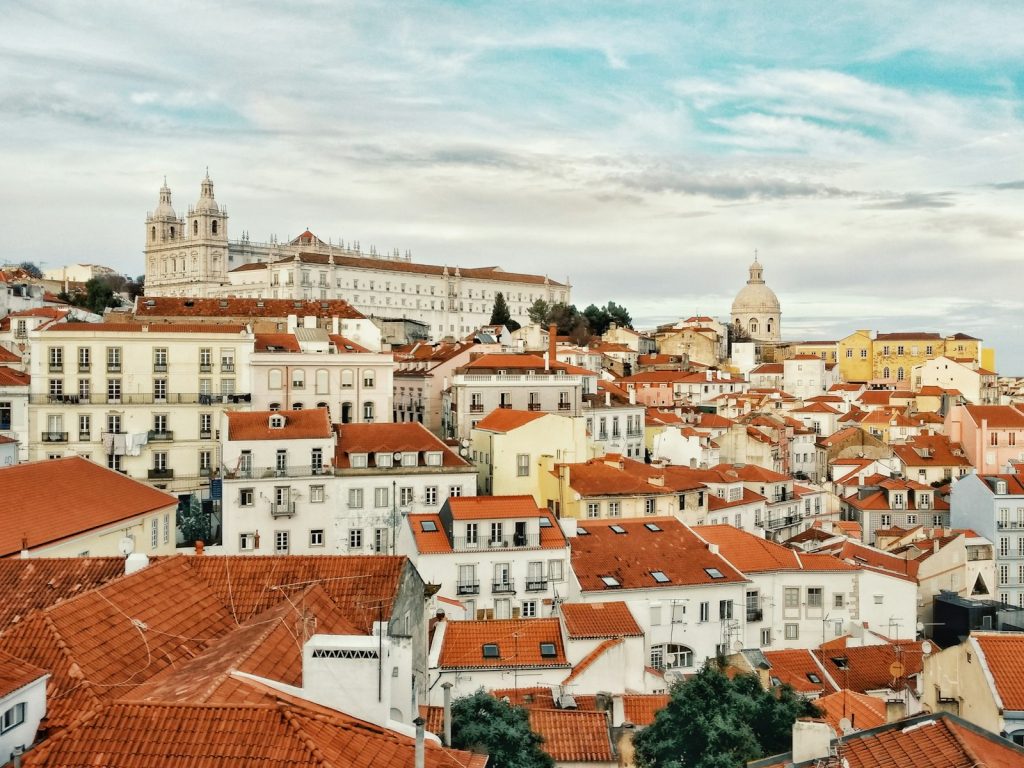
São Jorge Castle sits on the highest hill in the old city, and its walls and towers give a sweeping view over the red roofs, the river and the bridges. The site has been fortified since at least the Moorish period. Tickets are around €17 for adults and include the gardens, the walls and a small museum. Go early in the morning or late in the afternoon to avoid the tour groups. Allow two hours.
To get there without the climb, take tram 12 or 28 to the Largo das Portas do Sol or the small bus 737 from Praça da Figueira.
6. Lisbon Cathedral
The Sé, Lisbon’s cathedral, is the oldest church in the city, a fortress like Romanesque building begun in the 12th century. Entry to the main church is cheap, with an extra charge for the cloister and the treasury. Tram 28 rattles past the front, which makes for a classic photo.
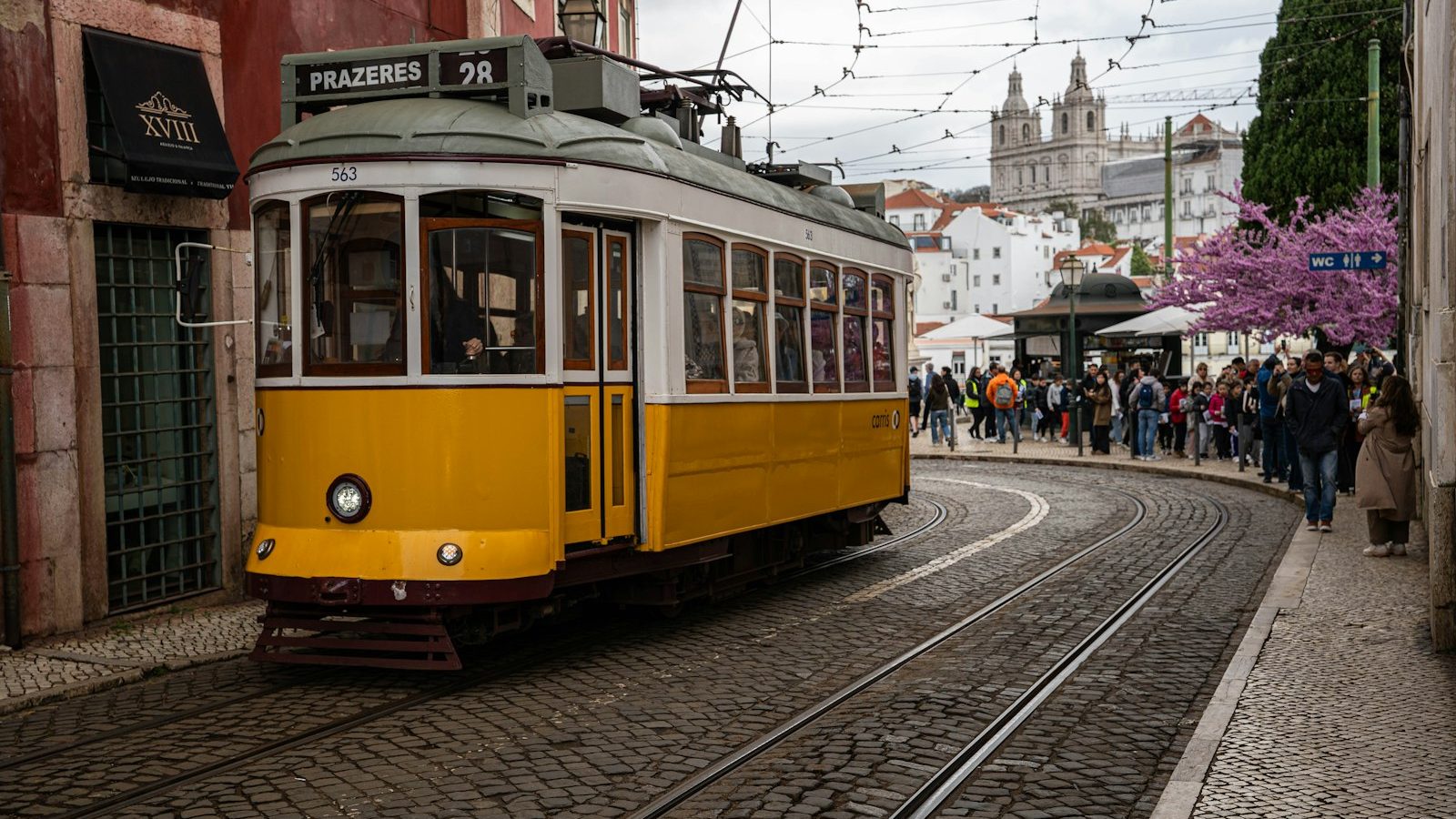
7. Ride tram 28
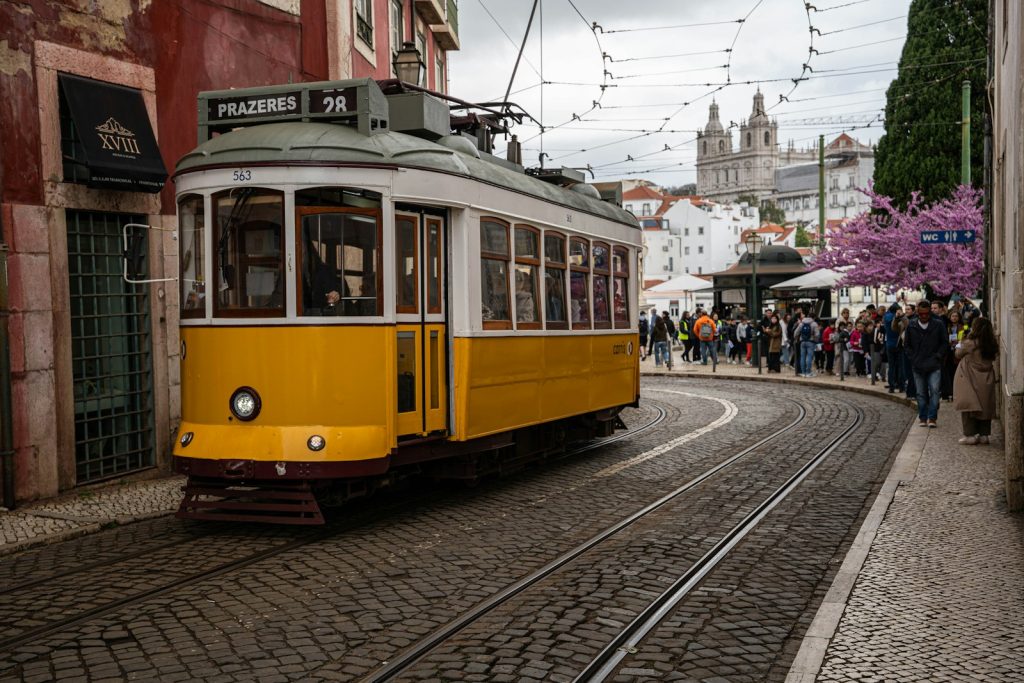
Tram 28 is Lisbon’s most famous ride. The little yellow cars, many dating from the 1930s, climb through Graça, Alfama, Baixa, Chiado and Estrela on a route of about 7 km. A ticket bought on board costs €3.30, while the same ride costs under €2 with a rechargeable Navegante card, and it is free with a 24 hour pass or the Lisboa Card.
The problem is the queue at Martim Moniz, which can be very long from mid morning onwards. Board at a stop along the route instead, ride early in the morning, or take tram 12, which covers part of the same streets with fewer people. Watch your bags, as the crowded cars are a favourite with pickpockets.
8. The viewpoints
Lisbon’s miradouros, its free public viewpoints, are some of the best things to do in the city. The most famous are:
- **Miradouro de Santa Luzia** with its tiled walls and bougainvillea, looking over Alfama.
- **Miradouro das Portas do Sol** next door, with a wide terrace and a café.
- **Miradouro da Graça** under the pine trees by the church, with a kiosk bar.
- **Miradouro da Senhora do Monte**, the highest of all and the best place for sunset.
- **Miradouro de São Pedro de Alcântara** in Bairro Alto, facing the castle across the valley.
9. Hear fado in Alfama
Fado, the soulful music of Lisbon, is on UNESCO’s list of the world’s intangible cultural heritage. The best way to hear it is in a small restaurant in Alfama or Mouraria, where the singer stands among the tables. Most fado houses ask you to have dinner or pay a minimum charge, and you should stay quiet during the songs. Book ahead on Friday and Saturday nights. The Fado Museum near the river explains the history if you want to learn more first.
10. Feira da Ladra flea market
Every Tuesday and Saturday morning, the square around the Campo de Santa Clara fills with stalls selling everything from old tiles and vinyl records to clothes and antiques. The name means the Thieves’ Market. Go early for the best finds, then visit the National Pantheon, whose white dome rises next to the market.
Belém
11. Jerónimos Monastery
The Jerónimos Monastery is the masterpiece of the Manueline style, the extravagant Portuguese architecture of the early 16th century, decorated with ropes, shells and sea creatures in stone. It was paid for by the profits of the spice trade, and Vasco da Gama is buried in the church. Entry to the church is free, while the cloister costs €18 for adults in 2026, with reduced prices for young people and seniors. The monastery is closed on Mondays.
Book a timed ticket online in advance. The queues are long from late morning onwards, and Lisboa Card holders now also need to reserve a free time slot.
12. Belém Tower
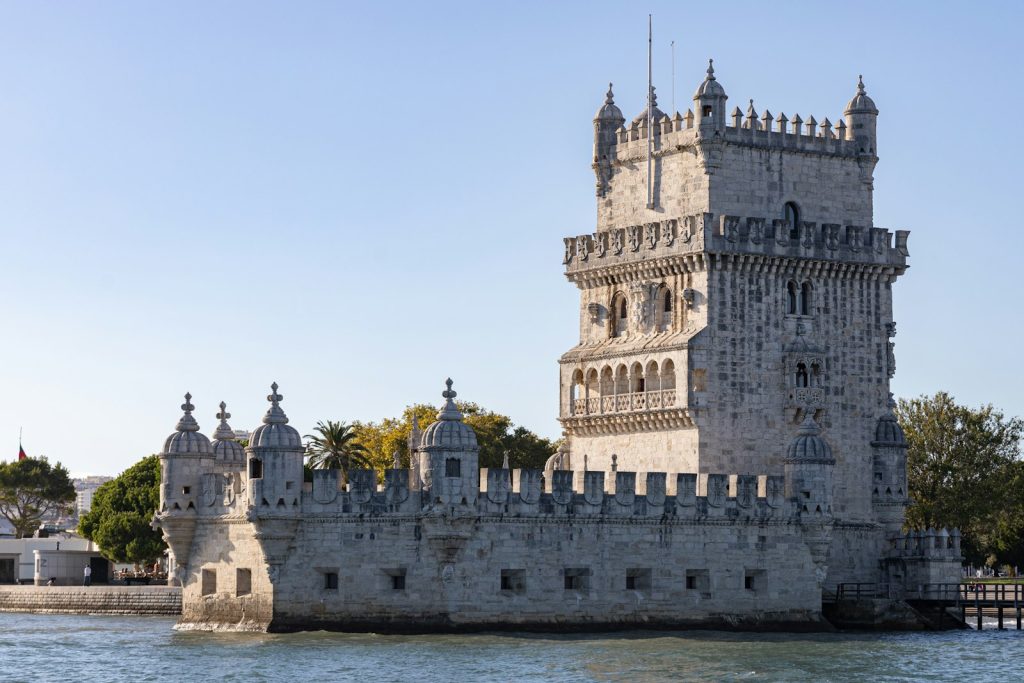
The Belém Tower, built in the early 1500s to guard the mouth of the Tagus, is one of the symbols of Portugal. It reopened on 27 May 2026 after a year of restoration, with timed entry and a daily limit on visitors. Adult tickets are €15 on the official site. Book a slot ahead and pair it with the monastery, a ten minute walk along the river. The stairs inside are narrow and steep, and there is no lift.
13. Eat pastéis de nata at Pastéis de Belém

The custard tart, or pastel de nata, is Portugal’s most famous sweet, and Pastéis de Belém has been baking them to a secret recipe since 1837. The takeaway queue moves quickly. If it is long, go inside, where the large dining rooms usually have tables free. Eat them warm, dusted with cinnamon and icing sugar.
14. The Monument to the Discoveries and MAAT
The Padrão dos Descobrimentos, a huge stone monument shaped like the prow of a ship, celebrates the Portuguese explorers of the 15th and 16th centuries. Check whether it is open before you go, as it has been closed for maintenance. A short walk away, MAAT, the Museum of Art, Architecture and Technology, has a wave shaped roof you can walk over for free, with views of the 25 de Abril Bridge.
Bairro Alto, Príncipe Real and the west
15. Bairro Alto at night
By day, Bairro Alto is a quiet grid of narrow streets. At night, thousands of people fill the lanes outside tiny bars, drinking cheap beer and caipirinhas in the street. It is lively and fun, but it is loud until late, so do not book a hotel here if you want to sleep. Pink Street in Cais do Sodré is the other big night out.
16. Príncipe Real
Just beyond Bairro Alto, Príncipe Real is one of Lisbon’s most stylish neighbourhoods, with concept stores, independent shops, a garden with a giant cedar tree and one of the best botanical gardens in Europe. On Saturdays there is often a small organic market.
17. Time Out Market
The Time Out Market in the old Mercado da Ribeira at Cais do Sodré brings together stalls from some of the city’s best known chefs and restaurants under one roof. It is busy and not cheap, but it is a good way to try a lot of Portuguese food in one place, from octopus and bifana pork sandwiches to custard tarts.
18. LX Factory
Under the 25 de Abril Bridge in Alcântara, LX Factory is an old industrial complex turned into a creative hub of restaurants, bars, design shops and street art. Do not miss the Ler Devagar bookshop, set in a former printing hall. It is busiest on Sunday when there is a market.
19. Calouste Gulbenkian Museum
The Gulbenkian, in a modern building surrounded by peaceful gardens, holds one of the finest private art collections in Europe, from Egyptian and Islamic art to Rembrandt, Monet and Lalique jewellery. It is a good choice on a rainy day and rarely feels crowded.
20. National Tile Museum
The azulejo, the painted glazed tile, is everywhere in Lisbon, and the National Tile Museum in a former convent tells its story over five centuries. The highlight is a huge tiled panorama of Lisbon before the 1755 earthquake. It is a short bus or taxi ride east of Alfama.
Parque das Nações and the river
21. Oceanário de Lisboa
The Oceanário is one of the largest aquariums in Europe, built around a huge central tank with sharks, rays and shoals of fish, plus sea otters, penguins and smaller habitats around it. Adult tickets cost €25 in 2026, with lower prices for children and seniors. Allow one and a half to two hours. Take the red metro line to Oriente and walk five minutes.
22. Cable car and river walk
Next to the Oceanário, a cable car runs along the river through Parque das Nações, the site of Expo 98. Below it, a long flat waterfront path is perfect for walking or cycling, with views of the Vasco da Gama Bridge, one of the longest in Europe.
23. Ferry to Cacilhas and Cristo Rei
For a cheap river cruise, take the commuter ferry from Cais do Sodré to Cacilhas, a ride of about ten minutes that costs a couple of euros. Walk along the waterfront to the seafood restaurants at Ponto Final, or take a bus up to the Cristo Rei statue for a huge view back over Lisbon and the bridge.
Day trips from Lisbon
24. Sintra
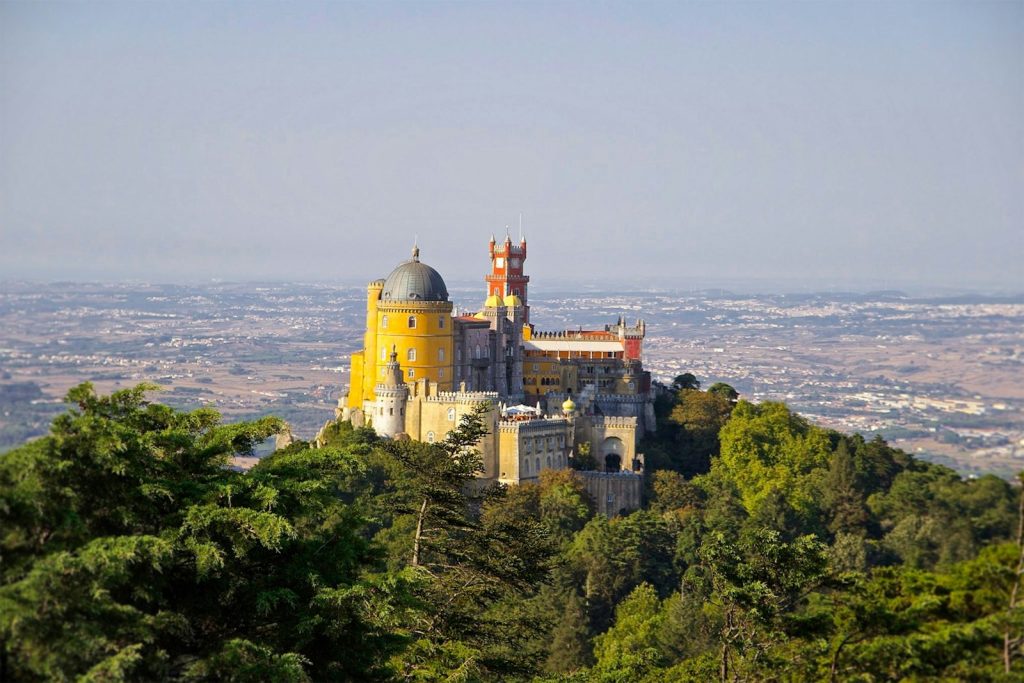
Sintra, in the wooded hills about 40 minutes from Rossio station by train, is the most popular day trip from Lisbon and a UNESCO World Heritage Site. The colourful Pena Palace, the Moorish Castle, the mysterious Quinta da Regaleira with its spiral initiation well, and the Sintra National Palace in the town centre are all within a short distance of one another.
Book timed tickets for Pena Palace in advance, start early, and use the local buses or a tuk tuk between the sights, as the roads are steep and narrow. Two sites in one day is comfortable. Three is possible if you start early.
25. Cascais and the coast
The train from Cais do Sodré runs along the coast to Cascais in about 40 minutes, passing beaches at Carcavelos and Estoril. Cascais is a pretty old fishing town with sandy coves, a marina and a good choice of seafood restaurants. In summer, it is the easiest way to combine a city break with a beach day. Cyclists can follow the coastal path to the wild beach at Guincho.
A three day Lisbon itinerary
| Day | Morning | Afternoon | Evening |
|---|---|---|---|
| Day 1 | Praça do Comércio, Baixa, Chiado | Carmo Convent, Santa Justa viewpoint, Time Out Market | Bairro Alto bars |
| Day 2 | São Jorge Castle and Alfama viewpoints | Tram 28, cathedral, Feira da Ladra if it is Tuesday or Saturday | Fado dinner in Alfama |
| Day 3 | Jerónimos Monastery and Belém Tower | Pastéis de Belém, MAAT, LX Factory | Sunset at Senhora do Monte |
With a fourth day, add Sintra. With five, add Cascais or the Oceanário and Parque das Nações.
Getting around Lisbon
- **From the airport:** the red metro line runs from the airport to the city centre in about 20 to 30 minutes, with one change. A taxi or ride hailing car takes about 20 minutes outside rush hour.
- **Metro:** fast, clean and cheap for longer trips, though it does not reach Alfama or Belém.
- **Trams:** tram 15 runs to Belém, and trams 12 and 28 serve the old town.
- **Funiculars:** the Glória, Bica and Lavra funiculars climb three of the steepest hills.
- **24 hour pass:** €7.25 for unlimited travel on the metro, buses, trams, funiculars and the Santa Justa Lift, plus €0.50 for the card.
Is the Lisboa Card worth it?
The Lisboa Card costs €31 for 24 hours, €51 for 48 hours and €62 for 72 hours for adults in 2026. It includes unlimited public transport, including the trains to Sintra and Cascais, free entry to Jerónimos Monastery, Belém Tower and dozens of other museums, and discounts elsewhere.
It is good value if you plan a busy Belém day plus lots of travel. It is less useful if you mostly want to wander, eat and sit at viewpoints, which are free anyway. Remember that cardholders must reserve a free time slot for Jerónimos and Belém Tower, and those slots can run out.
How much does a trip to Lisbon cost?
| Item | Typical price in 2026 |
|---|---|
| Return flight from the UK | from about £60 to £250, depending on dates and airport |
| Central hotel, per night | from about £90 for a simple room to £250 or more for a boutique hotel |
| Pastel de nata | about €1.50 |
| Coffee | about €1 to €2 |
| Lunch dish of the day | about €12 to €18 |
| Dinner with wine | about €25 to €45 a person |
| 24 hour transport pass | €7.25 |
Lisbon is cheaper than London, Paris or Amsterdam, but prices have risen in recent years, especially for hotels in summer.
Where to stay in Lisbon
- **Baixa and Chiado:** the most central choice, flat for the Baixa, with easy access to everything. Best for a first visit.
- **Alfama:** charming and full of character, but steep and some streets cannot be reached by car.
- **Príncipe Real:** stylish and quiet, close to Bairro Alto but away from the noise.
- **Avenida da Liberdade:** grand hotels on the main boulevard, with good metro links.
- **Cais do Sodré:** handy for the trains to Cascais and for nightlife, but noisy at weekends.
Practical tips for Lisbon
- **Best time to visit:** April to June and September to October bring warm weather without the July and August heat and crowds. Winter is mild, but expect some rain.
- **Flights from the UK:** direct flights take about two hours 40 minutes from London, with routes from most large UK airports.
- **Money:** Portugal uses the euro. Cards are widely accepted, but carry a little cash for trams and small cafés.
- **Tipping:** not expected, but rounding up or leaving around 5 to 10 percent for good service is appreciated.
- **Couvert:** bread, olives and cheese brought to your table at a restaurant are not free. If you do not want them, send them back.
- **Phone data:** an eSIM is an easy way to stay online if your UK mobile plan charges for roaming in the EU.
Frequently asked questions
How do you have fun in Lisbon?
Ride the vintage trams, watch the sunset from a miradouro, hear fado over dinner in Alfama, join the street party in Bairro Alto, eat custard tarts in Belém and take the train to the beach at Cascais. Lisbon is a city to enjoy slowly, with long lunches and evenings outside.
Is 3 days in Lisbon too much?
No. Three days is the ideal minimum. It gives you one day for Alfama and the castle, one for Belém and one for Baixa, Chiado and Bairro Alto. Four or five days lets you add Sintra and Cascais.
What is nicer, Porto or Lisbon?
They are different. Lisbon is bigger, sunnier and has more to see, plus beaches and Sintra nearby. Porto is smaller, more compact and famous for port wine and the Douro Valley. For a first trip to Portugal, Lisbon has more variety. If you have a week, the train between them takes about three hours, so you can see both.
Are there any areas to avoid in Lisbon?
Lisbon is a safe city. The main problem is pickpocketing on tram 28, at the Santa Justa Lift and in crowded viewpoints. Late at night, parts of Martim Moniz, Intendente and the streets around Cais do Sodré can feel rough, and you may be offered fake drugs in the Baixa. Simply say no and keep walking.
What are the do’s and don’ts in Lisbon?
Do wear comfortable shoes, book Belém and Sintra tickets ahead, try the food in local tascas and use the public transport. Don’t queue for an hour for tram 28 or the Santa Justa Lift when there are easier ways, don’t eat the couvert unless you want to pay for it, and don’t buy anything from street sellers in the Baixa.
Is it safe to walk in Lisbon at night?
Generally, yes. The central areas of Baixa, Chiado, Bairro Alto and Alfama are busy until late and feel safe. Take the usual care with your belongings, stick to lit streets and use a taxi or ride hailing car if you are going a long way late at night.
What is Lisbon famous for?
Lisbon is famous for its yellow trams, hilltop viewpoints, tiled buildings, fado music, custard tarts, the Belém monuments that celebrate the Age of Discovery and the great earthquake of 1755, after which much of the city was rebuilt.
Plan the rest of your trip
Lisbon makes a great winter break too. If you are travelling later in the year, see our guide to the best Christmas markets in Europe, or compare it with a sunny long weekend in Marrakech using our best things to do in Marrakech guide. For more city breaks, browse our Europe travel guides, or plan an island escape with our guide to the best things to do in Madeira. If you spot something out of date, please let us know.