!DISCLOSURE
The best time to visit Marrakech is spring, from March to May, and autumn, from late September to November. Days are warm and sunny without the extreme summer heat, nights are comfortable, and it is the ideal weather for walking the medina, day trips to the Atlas Mountains and a night in the Sahara. But every month has something going for it, and the right time for you depends on what you want: the lowest prices, the fewest crowds, guaranteed sunshine for the pool, or snow on the mountains.
This guide takes you through Marrakech month by month, with average temperatures and rainfall, what each month is like on the ground, how busy and expensive it gets with UK school holidays, and the festivals and religious holidays that change how the city works. Climate figures are long term averages, and prices and dates were checked in November 2026.
Marrakech weather by month at a glance
| Month | Average high | Average low | Rain | Crowds and prices | Verdict |
|---|---|---|---|---|---|
| January | about 19°C | about 6°C | about 30 mm | Quiet, low prices | Good for sightseeing, cold nights |
| February | about 21°C | about 8°C | about 35 mm | Busy at half term | Good, check Ramadan dates |
| March | about 23°C | about 10°C | about 35 mm | Getting busier | Very good |
| April | about 25°C | about 12°C | about 30 mm | Busy, Easter peak | Excellent |
| May | about 28°C | about 15°C | about 12 mm | Busy | Excellent |
| June | about 33°C | about 18°C | about 4 mm | Moderate | Hot, good for pool holidays |
| July | about 37°C | about 21°C | about 2 mm | Busy, school holidays | Very hot |
| August | about 37°C | about 21°C | about 2 mm | Busy, high prices | Very hot |
| September | about 32°C | about 19°C | about 6 mm | Moderate | Good from mid month |
| October | about 28°C | about 15°C | about 22 mm | Busy, half term peak | Excellent |
| November | about 22°C | about 10°C | about 38 mm | Quiet, good value | Very good |
| December | about 19°C | about 7°C | about 35 mm | Quiet, then Christmas peak | Good, cold nights |
Rain in Marrakech usually comes in short showers on a handful of days a month, and even in the wettest months most days are dry and sunny. The bigger factor for visitors is temperature: comfortable from October to May, and very hot from June to September.
Spring: March, April and May
Marrakech in March
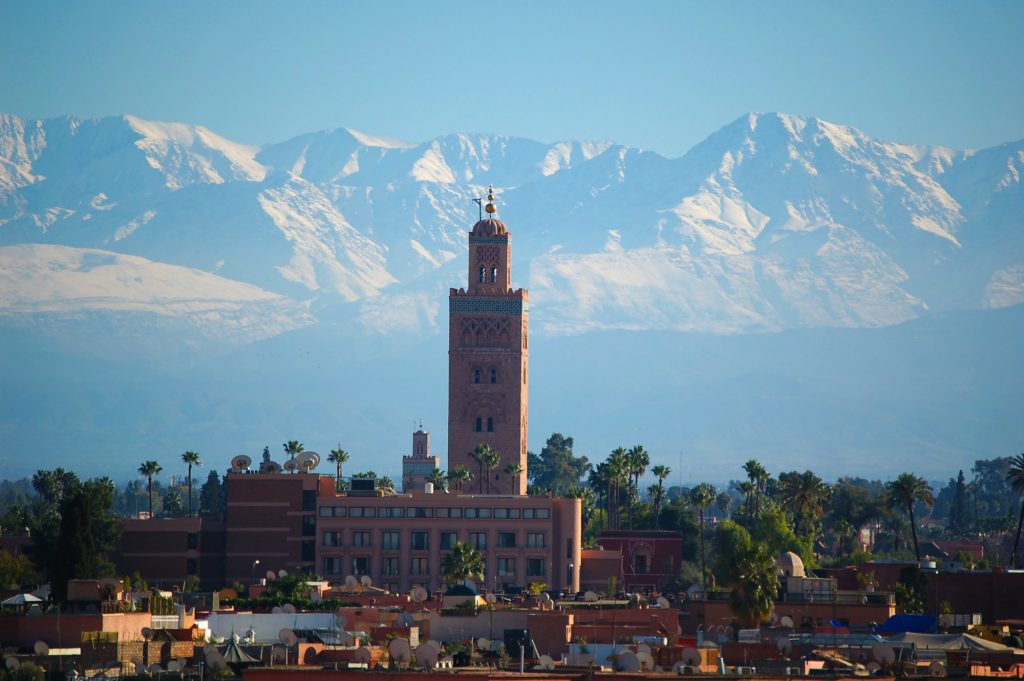
March is when Marrakech wakes up. Days are warm, around 23°C, the gardens are at their best, and the snow is often still visible on the High Atlas behind the city. Evenings are cool enough for a jacket. It is a great month for walking the medina and for day trips to the mountains, where the valleys are green and the rivers full. A few rainy days are possible, especially early in the month.
Marrakech in April
April is one of the best months of the year. Temperatures sit around 25°C, the sky is usually clear and the Sahara is warm in the day and pleasant at night. The catch is demand: the Easter holidays bring UK families and prices for flights and riads jump, so book early or travel just before or after the school break.
Marrakech in May
May is warm and dry, with highs close to 28°C and very little rain. It is perfect for rooftop dinners, pool afternoons and the desert, though the middle of the day starts to feel hot by late May. The May half term is busy, but the rest of the month is often good value compared with Easter. Out in the Dades Valley, the annual rose festival at Kelaat M’Gouna is usually held in May.
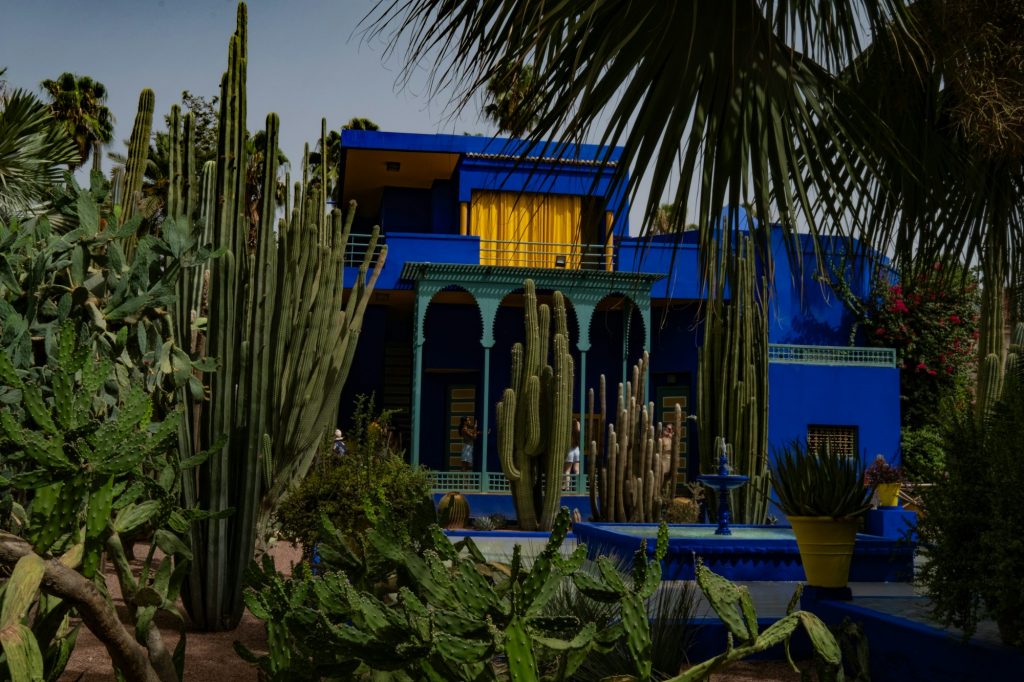
Summer: June, July and August
Marrakech in June
June is hot, with highs around 33°C, but it is still manageable if you sightsee early and late and rest in the afternoon. It is a good month for a riad or hotel with a pool, and prices are often lower than in July and August before the school holidays start.
Marrakech in July
July is one of the two hottest months, with average highs around 37°C and days that can pass 40°C. The city slows down in the afternoon, many locals head for the coast and the souks are at their liveliest in the evening. Plan everything for the early morning and after 5pm, choose accommodation with a pool and air conditioning, and consider Essaouira or the mountains for a cooler day out. The national festival of popular arts, a celebration of Moroccan music and dance, has traditionally been held in Marrakech in the summer.
Marrakech in August
August is very similar to July: dry, very hot and busy with European holidaymakers, with high prices for flights during the UK school holidays. If you go, a pool is essential. The Sahara is too hot for comfort, though some tours still run, and the Atlas villages around Imlil and Ouirgane are noticeably cooler.
Autumn: September, October and November
Marrakech in September
Early September is still hot, around 32°C on average, but the heat eases through the month and the crowds thin out after the school holidays. By the last week, the weather is close to ideal, and prices are lower than in October half term. It is a good time to book a desert trip before the autumn rush.
Marrakech in October
October is the other peak month for good reason. Days are warm and sunny, around 28°C, evenings are mild and the light is golden. It is perfect for everything from the medina to the Sahara. The October half term is the busiest and most expensive week, so travel at the start of the month if you can. The first autumn rains can arrive late in the month.
Marrakech in November
November is one of our favourite months. Highs of around 22°C make walking a pleasure, the summer crowds have gone, and flights and riads are often good value outside the last week. November is also the wettest month on average, but that usually means a few showers rather than days of rain. The Marrakech International Film Festival takes place in late November, with screenings around the city.
Winter: December, January and February
Marrakech in December
December days are sunny and pleasant, around 19°C, but the temperature drops fast after sunset, often to 7°C or lower, and many riads are not built to keep the cold out, so check that yours has heating. The first half of the month is quiet and cheap; Christmas and New Year are a peak, with high prices and full riads. Snow often covers the High Atlas, which makes a beautiful backdrop.
Marrakech in January
January is the coolest month, with highs around 19°C and chilly nights, but it is usually bright and sunny. It is one of the cheapest and quietest times to visit, ideal for sightseeing without the heat or the queues. The Sahara is very cold at night in January, close to freezing, so bring warm layers or choose a heated luxury camp. The Marrakech marathon is usually held in late January.
Marrakech in February
February is similar to January but a little warmer, and the almond blossom appears in the valleys outside the city. The February half term is busy with UK families. In 2027, the holy month of Ramadan is expected to begin around 8 February and end around 9 March, so check the dates before you book; see the section on Ramadan below.
Weather outside the city: the Atlas, the desert and the coast
Marrakech’s weather does not tell the whole story if you plan to leave the city, and many visitors do.
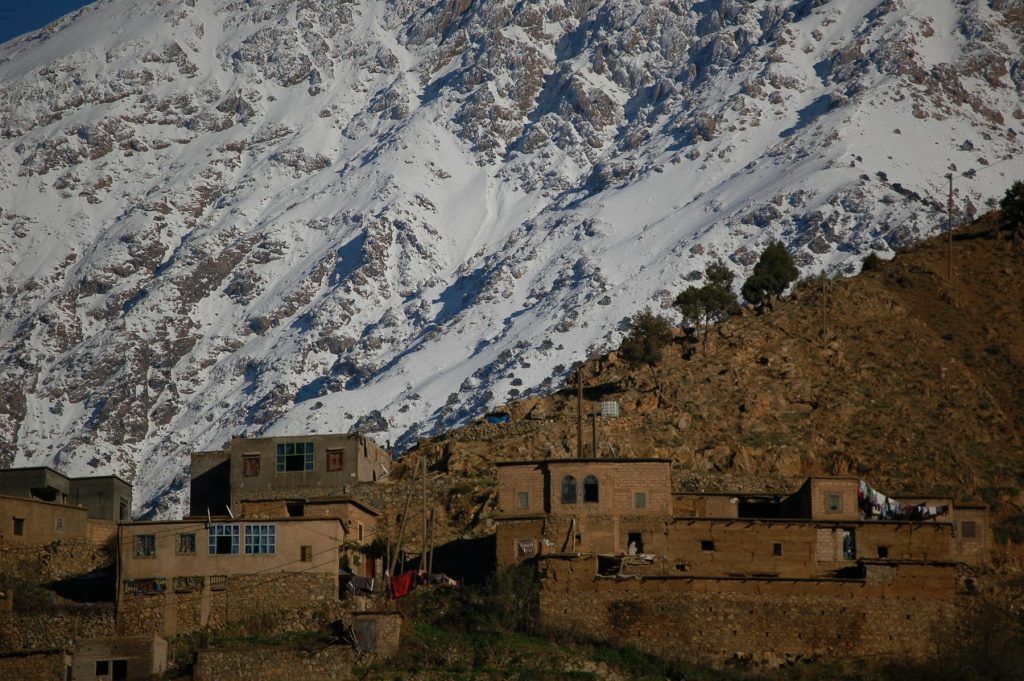
- The High Atlas is much cooler than Marrakech. Imlil, at about 1,740 metres, is often 8 to 10°C cooler than the city, with snow from about December to March on the high peaks and sometimes in the villages. In summer it is the best escape from the heat.
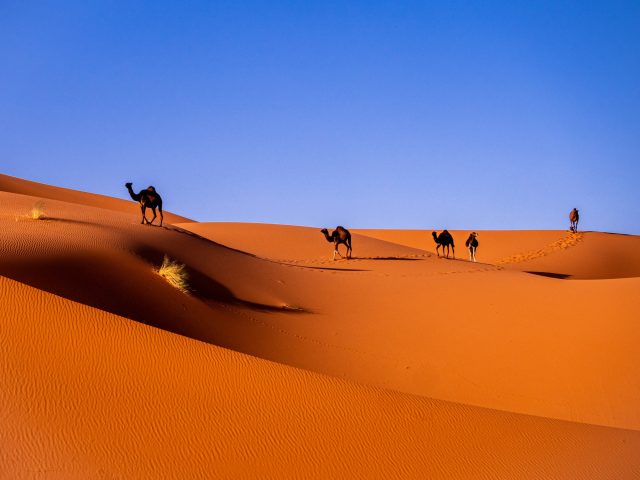
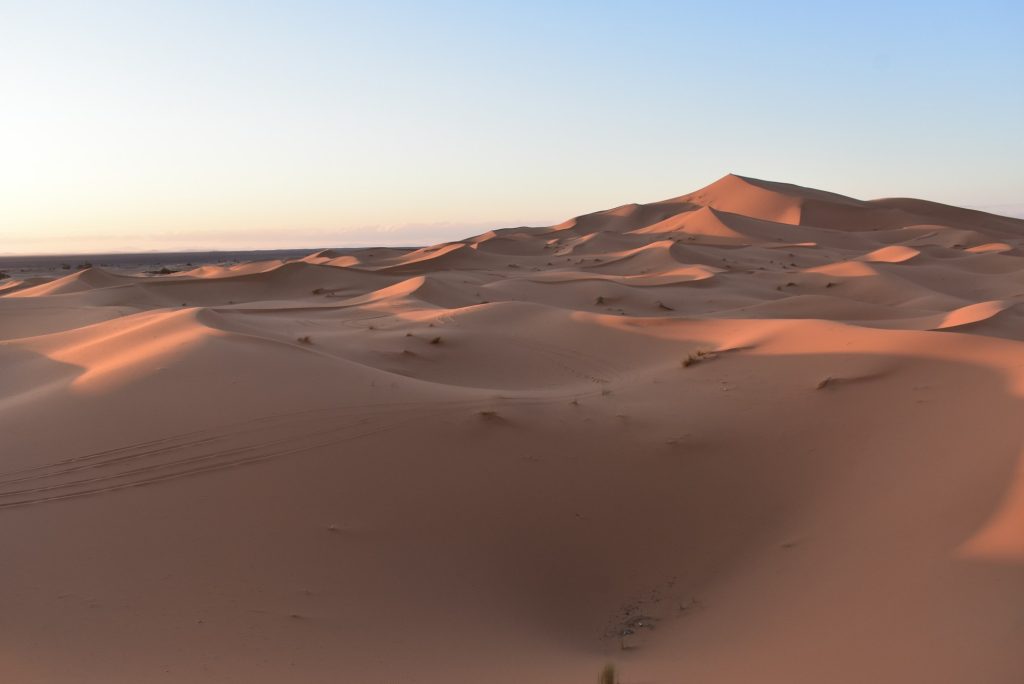
- The Sahara has extreme swings. In winter, days can be pleasant but nights at Merzouga drop close to freezing. In summer, daytime temperatures pass 40°C. Spring and autumn are by far the best seasons for the desert.
- The Atlantic coast at Essaouira is mild all year, rarely above about 27°C even in August, thanks to the trade winds. It is cooler and windier than Marrakech, which makes it a great summer day trip but a chilly one in winter.
- The Tizi n’Tichka pass, on the road to Ait Benhaddou and the desert, can close for a few hours after heavy snow in winter, so build some flexibility into winter desert trips.
Events and festivals through the year
| When | Event | What to know |
|---|---|---|
| Late January | Marrakech marathon | Roads around the city close on race morning |
| February or March | Ramadan (2027: about 8 February to 9 March) | Daytime closures, lively evenings |
| March | Eid al Fitr (2027: about 9 or 10 March) | One or two days of family celebrations and closures |
| May | Rose festival, Kelaat M’Gouna | In the Dades Valley, on the desert route |
| May | Eid al Adha (2027: expected mid May) | Busy roads and some closures for a few days |
| Summer | National festival of popular arts | Music and dance, dates vary by year |
| Late November | Marrakech International Film Festival | Red carpet events and public screenings |
| Late December | Christmas and New Year | Peak prices and full riads |
Dates for religious holidays depend on the sighting of the moon and are only confirmed shortly before, so check them nearer the time. Event dates change from year to year, so confirm on the official websites before you plan around them.
Is Marrakech warm enough in winter?
Marrakech is a popular winter sun destination from the UK because days are often bright and sunny, with highs of around 18 to 21°C from December to February. That is warm enough for sightseeing in a light jumper and for lunch on a roof terrace, but not usually warm enough for sunbathing, and the pool in most riads will be cold. Evenings are chilly. If your main goal is sunbathing in winter, the Canary Islands or Agadir on the Moroccan coast are warmer; if you want sunshine for exploring, Marrakech is ideal.
Ramadan and religious holidays
During Ramadan, Muslims fast from dawn to sunset. Visitors are not expected to fast, and Marrakech remains open for tourism, but daily life changes. Many local cafés and restaurants close during the day, though those in hotels and tourist areas usually stay open. Monuments and shops often open later and close earlier, alcohol sales are more restricted, and the pace slows in the afternoon. After sunset, everything comes alive: families break their fast together, the souks are busy late into the night and the atmosphere is special.
Ramadan moves about 11 days earlier every year. In 2027 it is expected to run from about 8 February to 9 March, ending with the Eid al Fitr holiday, when many businesses close for a day or two. The other major holiday, Eid al Adha, is expected in mid May 2027. During both Eids, Moroccans travel to see family, so transport is busy and some shops and restaurants close.
The best time to visit for…
- Sightseeing in comfort: March to May, or late September to November.
- The Sahara: March to May and October to November, when days are warm and nights are cool rather than freezing.
- Hiking in the Atlas: April to June and September to October. In winter the high trails can be snowy.
- Pool holidays and guaranteed sun: May to September.
- The lowest prices: November, early December, January and early February, outside the school holidays.
- Snow on the mountains: December to March, with ski days at Oukaimeden possible in a good year.
- Avoiding crowds: January, early December and the second half of November.
For planning desert trips, see our guide to Sahara desert tours from Marrakech, and for mountain and valley trips, the best day trips from Marrakech.
When to visit from the UK: school holidays and prices
For UK travellers, school holidays have more effect on price than the weather. Flights and riads are most expensive at Easter, in July and August, during the October half term and over Christmas and New Year. The February and May half terms are busy too. The best value is usually in November, early December, January, the weeks between Easter and the May half term, and the second half of September.
Book early for school holidays, ideally four to six months ahead. Outside them, you can often book a few weeks ahead and still find good fares. Our guide to flights to Marrakech from the UK lists every direct route and the cheapest months to fly.
Our month by month verdict in one line each
- January: quiet, sunny and cheap, but pack for cold nights.
- February: pleasant and cheap outside half term; check Ramadan dates.
- March: warm days, green valleys and snowy peaks.
- April: near perfect weather, but book early for Easter.
- May: warm, dry and lively; great for the desert.
- June: hot, good value and best with a pool.
- July and August: very hot; plan around the heat or choose the coast.
- September: improving fast after the first fortnight.
- October: excellent all round; avoid half term for value.
- November: comfortable, uncrowded and good value.
- December: sunny days, cold nights, busy at Christmas.
What to pack for each season
- Spring and autumn: light layers, a jumper or light jacket for the evenings, comfortable walking shoes, sunglasses and sun cream.
- Summer: loose, light clothes that cover shoulders and knees, a hat, refillable water bottle and high factor sun cream.
- Winter: a warm jacket, jumpers and warm sleepwear for chilly riads, plus a hat and gloves if you are going to the desert or the mountains.
- All year: a scarf, which is useful for sun, dust and covering up in more conservative places, and a power bank.
What should women wear in Marrakech?
There is no legal dress code for visitors, and you can wear what you like in your hotel or riad and around the pool. In the medina and outside the tourist areas, most women find it more comfortable to cover their shoulders and knees, with loose trousers, midi or maxi skirts and dresses, and tops with sleeves. Shorts are fine in Gueliz, at the pool and in resorts, but they attract stares and comments in the medina. Dressing modestly is also cooler in the sun.
Frequently asked questions
What month is best for Marrakech?
April, May and October are the best months for most people, with warm, sunny days and comfortable nights. March and November are close behind, with fewer crowds and lower prices.
What is the worst time to visit Marrakech?
July and August are the most difficult months because of the heat, which often passes 40°C, and high summer prices. That said, if you want a pool holiday and plan your sightseeing for early morning and evening, summer can still work.
Is October a good time to visit Marrakech?
Yes, October is one of the best months, with highs around 28°C, very little rain and ideal conditions for the desert and the mountains. Avoid the October half term if you want lower prices.
Is December a good time to visit Marrakech?
Yes, if you do not mind cold nights. Days are often sunny and around 19°C, it is quiet and cheap in early December, and the snowy Atlas looks spectacular. Make sure your riad has heating.
When is it too hot to visit Marrakech?
From late June to early September, daytime temperatures are often between 35°C and 40°C or more. Sightseeing in the middle of the day is uncomfortable, so plan around the heat or choose another season.
Can women wear shorts in Marrakech?
Women can wear shorts in their hotel, at the pool and in more international areas such as Gueliz. In the medina, loose trousers, skirts or dresses below the knee are more comfortable and attract less attention.
Is 7 days too much in Marrakech?
Seven days in the city alone is more than most people need, but it is a great length if you add day trips or an overnight in Essaouira or the Sahara. See our guide to how many days in Marrakech for itineraries.
Does it rain a lot in Marrakech?
No. Marrakech is dry for most of the year, with only around 250 mm of rain annually. Most of it falls between November and April, usually as short showers, and there is almost no rain from June to August. Even in the wettest months, most days are sunny.
Is Marrakech busy at Easter?
Yes. The Easter holidays are one of the busiest and most expensive times to visit from the UK, because the weather is excellent and families travel. Book flights and riads well ahead, or visit in the weeks just before or after the school break for similar weather at lower prices.
Is Marrakech good for a winter break?
Yes, for sightseeing. From December to February, days are usually bright and around 18 to 21°C, crowds are small and prices are low. Nights are cold, so pack warm layers and choose a riad with heating.
How far is Marrakech from the UK by plane?
A direct flight from the UK to Marrakech takes about 3 hours 20 minutes to just over 4 hours, depending on the airport. Morocco is usually one hour ahead of the UK in winter and on the same time in summer.
Plan the rest of your trip
Once you have picked your month, plan your days with the 22 best things to do in Marrakech, decide how many days to spend in Marrakech, and book your flights from the UK. If you spot something out of date, please let us know.