!DISCLOSURE
Marrakech rewards people who plan a little. The famous sights are packed into a small walled medina, most of them a short walk from Jemaa el Fna, but the lanes are a maze, opening hours vary and a few ticket rules catch visitors out every day. Get those right and you can see the palaces in the quiet first hour, eat well for very little and still have time for a hammam, a rooftop sunset and a day in the mountains.
This guide covers the 22 best things to do in Marrakech, from the big monuments to the experiences most visitors skip. For each one we give the real 2026 entry price, how long to allow, how to get there on foot or by taxi, and whether it is worth booking ahead. Prices were checked in November 2026 and are for foreign adults.
Things to do in Marrakech at a glance
Use this table to plan your days. Times are realistic visit lengths, not including getting there.
| Sight or activity | Area | Time needed | Cost (foreign adult) | Book ahead? |
|---|---|---|---|---|
| Jemaa el Fna square | Medina | 1 to 2 hours, evening | Free | No |
| The souks | Medina | 2 to 3 hours | Free to wander | No; guide optional |
| Ben Youssef Madrasa | Medina, north | 45 minutes | about 50 dirhams | No |
| Bahia Palace | Medina, south | 1 hour | about 100 dirhams | Only in peak season |
| Saadian Tombs | Kasbah | 30 to 45 minutes | about 100 dirhams | No; go early |
| El Badi Palace | Kasbah | 1 hour | about 100 dirhams | No |
| Jardin Majorelle | Gueliz | 1 hour | about 170 dirhams (garden) | Yes, online only |
| Yves Saint Laurent Museum | Gueliz | 1 hour | about 140 dirhams | Yes, with the garden |
| Le Jardin Secret | Medina | 1 hour | about 100 dirhams | No |
| Koutoubia Mosque | Medina edge | 20 minutes outside | Free | No |
| Hammam | Anywhere | 1 to 2 hours | 30 to 800 dirhams | Spas, yes |
| Cooking class | Medina | Half a day | about 500 to 800 dirhams | Yes |
How to plan your sightseeing
Medina or new town
Marrakech has two very different halves. The medina is the old walled city: souks, palaces, riads and Jemaa el Fna, mostly reached on foot because cars cannot get into most lanes. Gueliz and Hivernage are the French built new town to the west, with wide avenues, cafés, galleries and Jardin Majorelle. Almost everything on this list is in the medina, so it makes sense to stay inside the walls or close to them.
Getting around
Inside the medina you walk. Distances are short, about 15 minutes from Jemaa el Fna to the Bahia Palace and about 15 to 20 minutes to Ben Youssef, but the lanes twist and phone maps can lose signal, so allow extra time. Download an offline map before you go. Between the medina and Gueliz, take one of the small beige petit taxis. Ask the driver to use the meter, or agree the fare before you get in; a daytime ride between the two usually costs around 20 to 30 dirhams.
Opening hours and the best order
Most monuments open at 9am and close around 5pm, with shorter hours during Ramadan. Tour groups arrive from about 10am, so start with the busiest sight and work outwards. A good pattern is the Bahia Palace or the Saadian Tombs at 9am, the souks late morning, a long lunch, Ben Youssef in the last hour before closing, and Jemaa el Fna at sunset.
1. Jemaa el Fna
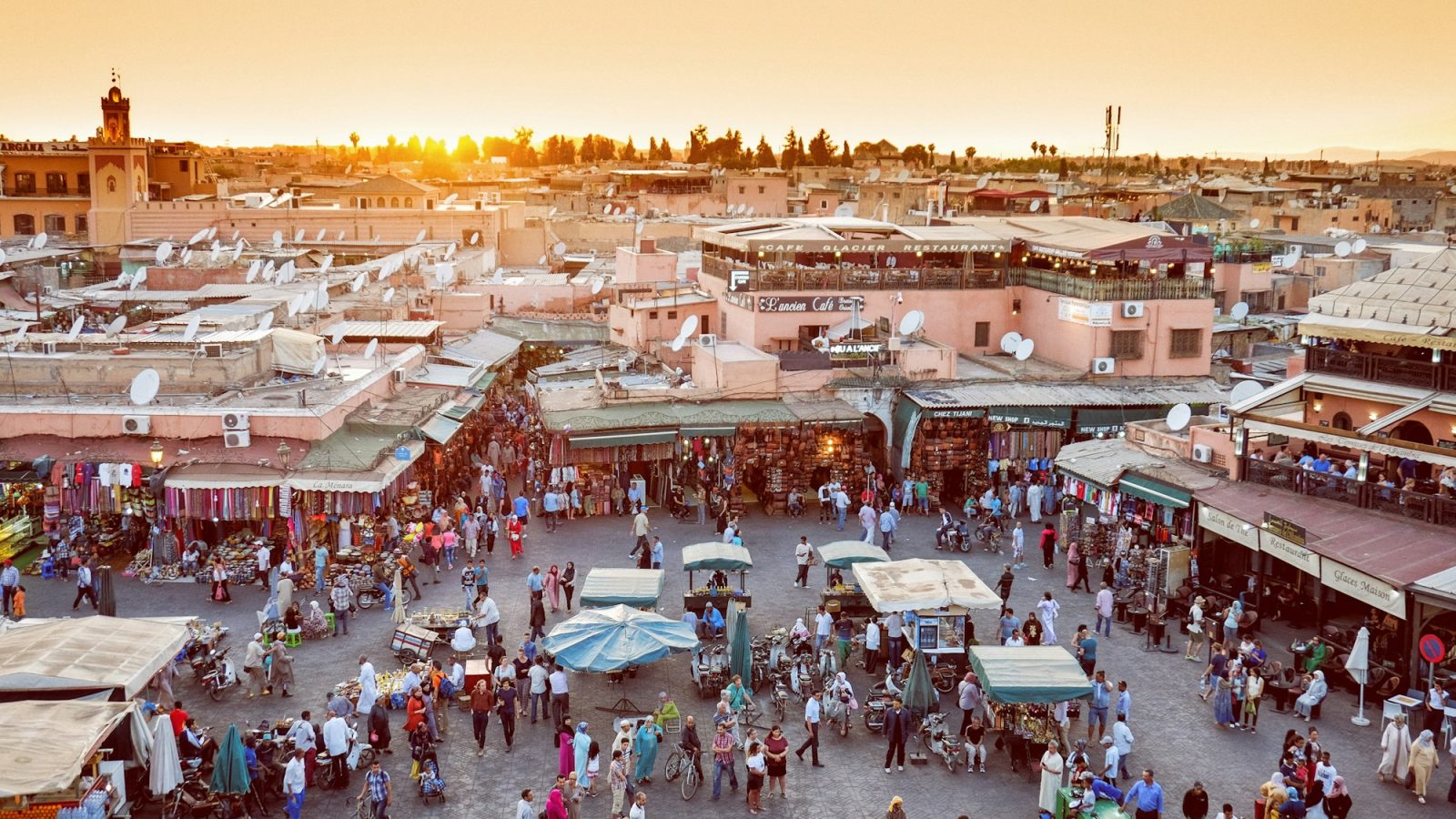
Jemaa el Fna is the heart of Marrakech and the one place every visitor should see twice: once in the day and once at night. During the day it is a wide open square of orange juice stalls, henna artists, snake charmers and monkey handlers. From late afternoon the food stalls set up in long rows, smoke rises from the grills, and storytellers, musicians and acrobats draw circles of locals around them. It is loud, crowded and unlike anywhere else, and it is listed by UNESCO as part of the world’s intangible cultural heritage.
For the best view, take a table on one of the café terraces on the edge of the square around sunset and watch it fill. If you eat at the stalls, choose ones that are busy with Moroccan families, check prices before you sit down, and only pay for what you ordered; bread and olives may be added to the bill.
- Cost: free; a meal at the stalls is about 50 to 100 dirhams
- Time: 1 to 2 hours in the evening
- Tips: if you photograph performers or animals you will be asked for money, so agree a small amount first or keep the camera down. We suggest avoiding the chained monkeys and snake shows altogether.
2. Get lost in the souks
North of Jemaa el Fna, the souks are a warren of covered lanes where each street once belonged to a single trade. Souk Semmarine is the main artery, lined with leather slippers, lanterns and textiles, and it leads into smaller souks for spices, metalwork, wood, carpets and dyed wool. Rahba Kedima, the old spice square, is a good landmark and has a couple of rooftop cafés.
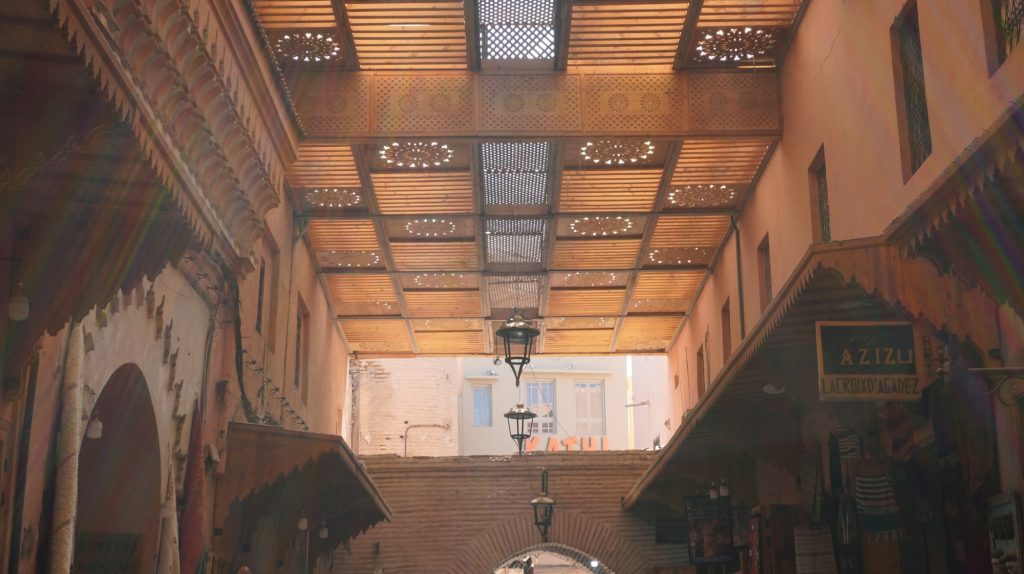
Getting lost is part of the fun, but it helps to know a few rules. Prices are not fixed, so start well below the first price and walk away politely if you are not happy. Touching or asking about an item signals interest. If you want fixed prices to compare against, visit the Ensemble Artisanal, a government craft centre near the Koutoubia, before you start bargaining.
- Cost: free to wander
- Time: 2 to 3 hours
- Tips: go in the morning, when it is cooler and the shopkeepers are more relaxed. A half day with a licensed guide is worth it on your first visit if the crowds feel like too much.
3. Ben Youssef Madrasa
For many visitors this is the most beautiful building in Marrakech. Ben Youssef was an Islamic college, rebuilt in the 16th century under the Saadian dynasty, and it once housed around 900 students. The central courtyard, with its long marble pool, is covered from floor to ceiling in zellige tiles, carved stucco and cedar wood. Upstairs you can look into the tiny student rooms that surround it.
The madrasa sits in the north of the medina, a walk of about 15 to 20 minutes from Jemaa el Fna through the souks. Entry is about 50 dirhams. Online sales have sometimes been paused, so expect to buy your ticket at the door.
- Time: 45 minutes
- Tips: come in the last hour before closing, when tour groups have gone and the light is softer. Combine it with the Musée de Marrakech and the Almoravid Koubba next door.
4. Bahia Palace
The Bahia Palace was built in the late 19th century by the grand viziers of the sultan and was meant to be the finest palace of its age. It is a series of courtyards, gardens and reception rooms decorated with painted cedar ceilings, carved plaster and tiled floors. The large marble courtyard and the council room are the highlights.
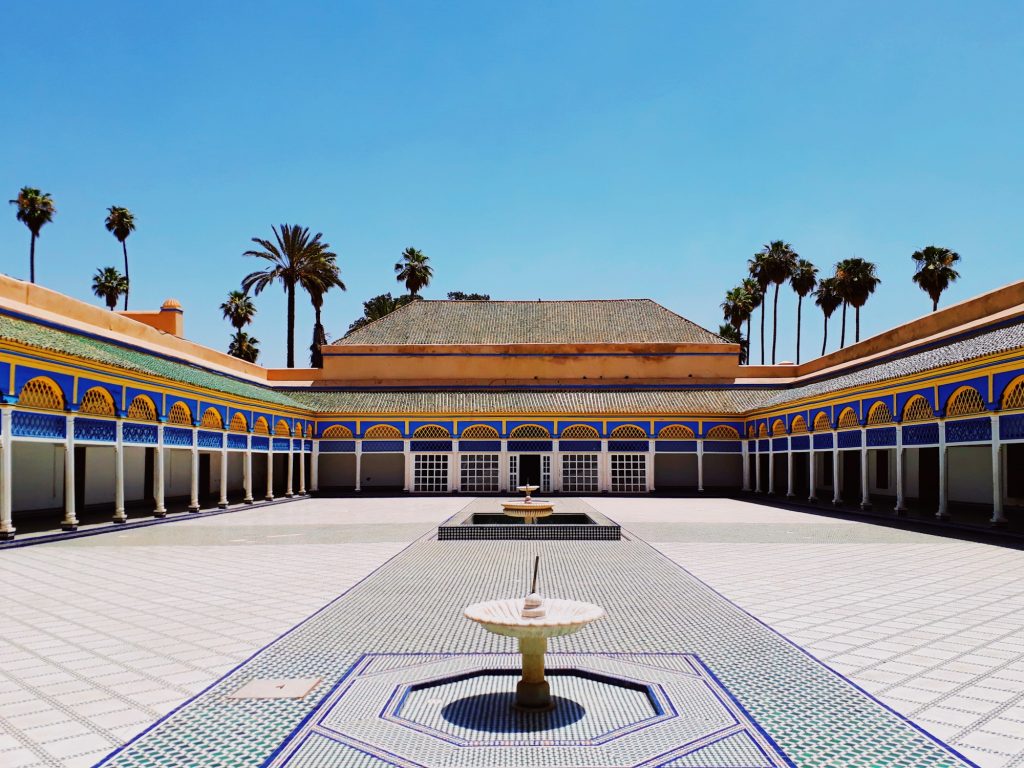
The palace is in the south of the medina on Rue Riad Zitoun el Jedid, about 15 minutes on foot from Jemaa el Fna. Entry is about 100 dirhams for foreign adults and 50 dirhams for children aged 7 to 13; younger children are free. It opens daily from 9am to 5pm. Some rooms have been under repair since the 2023 earthquake, so a few areas may be closed or covered in scaffolding.
- Time: about 1 hour
- Tips: arrive at 9am. By 10.30am the courtyards are full of groups and queues can build at the gate.
5. Saadian Tombs
Hidden for centuries behind a wall and only rediscovered in 1917, the Saadian Tombs hold members of the Saadian dynasty, who ruled Morocco in the 16th century. The Chamber of the Twelve Columns, with its carved cedar dome and Italian marble, is one of the finest rooms in the country.
The tombs are in the Kasbah district next to the Kasbah Mosque, about 15 minutes south of Jemaa el Fna. Entry is about 100 dirhams. The site is small and the main chamber is viewed from a doorway, so queues form quickly.
- Time: 30 to 45 minutes
- Tips: go at opening time, and read a little about the dynasty beforehand, because there is little information on site.
6. El Badi Palace
El Badi was once one of the most lavish palaces in the Islamic world, built by the Saadian sultan Ahmad al Mansur in the late 1500s. A century later the next dynasty stripped it of its marble and gold, so what you see today is a vast ruin: high earth walls, sunken gardens with orange trees and a huge central pool. Storks nest on top of the walls.
The palace is a few minutes’ walk from the Saadian Tombs, so visit them together. Entry is about 100 dirhams. Climb the walls on the terrace for one of the best views over the medina rooftops to the Atlas Mountains.
- Time: about 1 hour
- Tips: there is little shade, so avoid the middle of the day in summer.
7. Jardin Majorelle
Jardin Majorelle is the most visited sight in Marrakech. The painter Jacques Majorelle created the garden from the 1920s, and Yves Saint Laurent and Pierre Bergé bought and restored it in 1980. Paths wind through bamboo, cacti and palms to the famous villa painted in Majorelle blue, which now houses the Pierre Bergé Museum of Berber Arts.
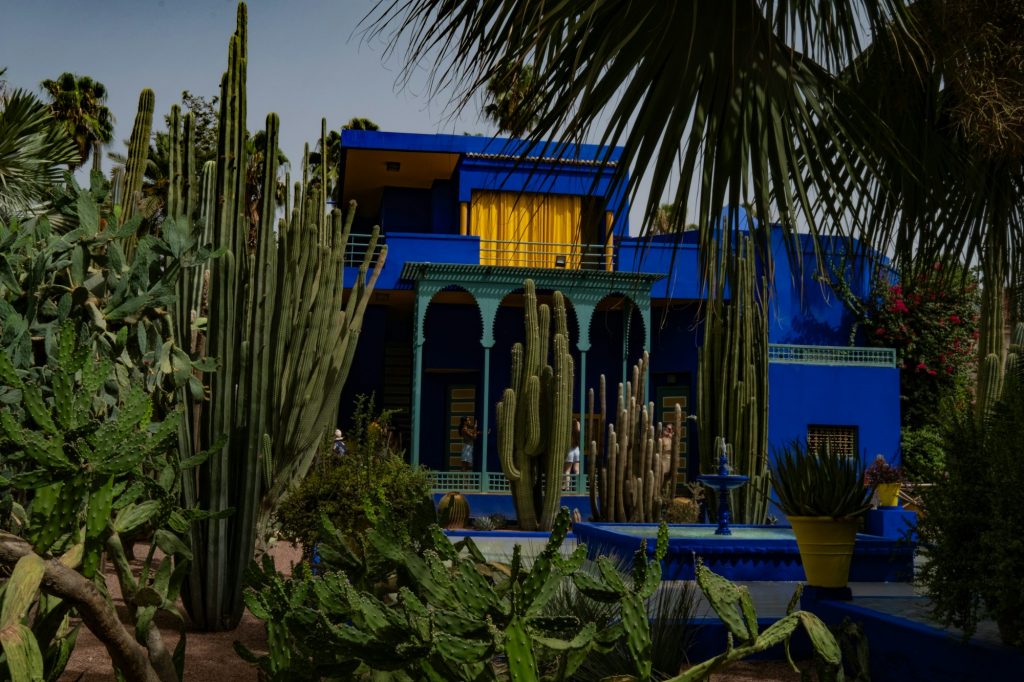
The garden is in Gueliz, about 2 km from the medina, so take a petit taxi or walk about 30 minutes from Bab Doukkala. Tickets are sold online only through the official site, with timed entry. Expect about 170 dirhams for the garden alone and more for a combined ticket with the Berber museum and the YSL museum. It usually opens from 8am or 8.30am to 5pm or 6pm depending on the season.
- Time: about 1 hour
- Tips: book the first slot of the day. By late morning the paths are crowded and it is hard to get a photo of the villa without people in it. Only buy from the official website or a trusted platform; fake tickets are sold outside.
8. Yves Saint Laurent Museum
Next door to the garden, the Musée Yves Saint Laurent opened in 2017 in a striking terracotta building. It shows a rotating selection of the designer’s clothes, sketches and photographs, and explains how Marrakech shaped his work. There is also a space for temporary exhibitions, a bookshop and a café.
Entry is about 140 dirhams on its own, or buy a combined ticket with the garden. Allow about an hour. Fashion fans will love it; if you are not interested in design, the garden alone is enough.
9. Le Jardin Secret
If Majorelle is too busy, Le Jardin Secret is the calm alternative inside the medina. It is a restored 19th century palace complex in the Mouassine quarter, with two gardens: an Islamic garden laid out in four parts around a central fountain, and an exotic garden with plants from around the world. Displays explain the old underground water channels that fed the city.
Entry is about 100 dirhams, with an extra fee of about 40 dirhams to climb the tower for views over the rooftops. Opening hours change with the season, usually from 9.30am to between 5.30pm and 7.30pm.
- Time: 1 hour, or longer with a drink in the café
- Tips: it is a 10 minute walk from Jemaa el Fna, so it is a good break in the middle of a souk morning.
10. Koutoubia Mosque
The 77 metre minaret of the Koutoubia is the landmark you will use to find your way back to Jemaa el Fna. It was completed in the 12th century under the Almohads and was the model for the Giralda in Seville and the Hassan Tower in Rabat. By local custom, no building in the medina is taller.
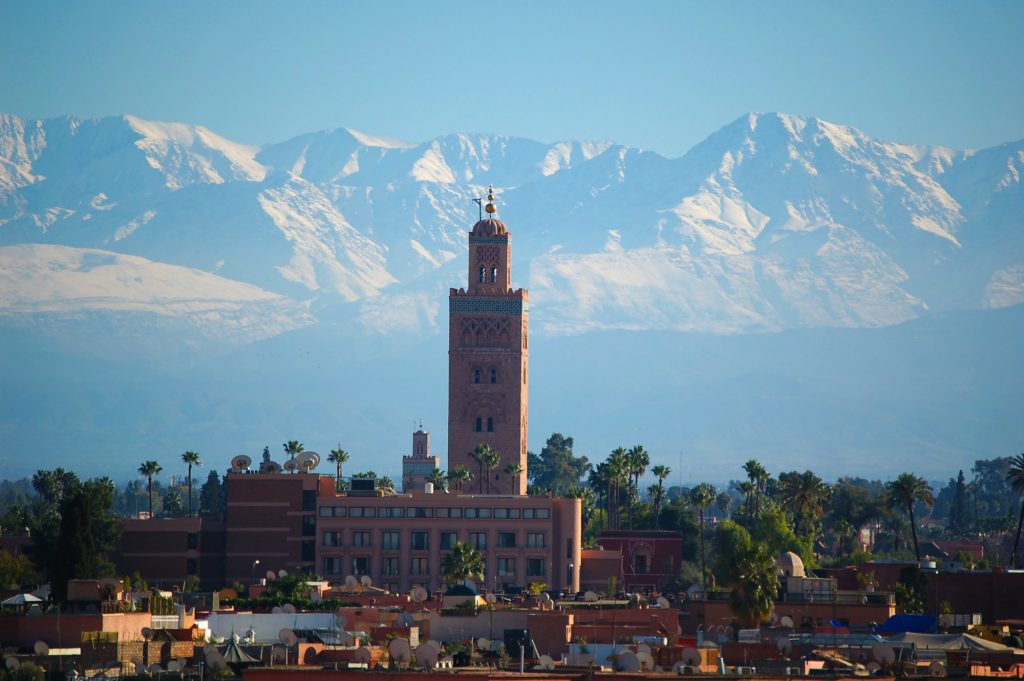
Non Muslims cannot go inside the mosque, but you can walk around the outside and through the Koutoubia gardens behind it, which are free and lovely in the early evening. You will hear the call to prayer from the minaret five times a day.
11. Dar El Bacha and Musée des Confluences
Dar El Bacha was the home of Thami El Glaoui, the powerful pasha of Marrakech in the early 20th century, who hosted guests such as Winston Churchill. Today it holds the Musée des Confluences, with changing exhibitions on the cultures that shaped Morocco, set around a superb tiled courtyard. Entry is about 60 dirhams.
Inside, Bacha Coffee serves coffee in a grand old salon. It is popular, so expect to queue, and it is pricier than a typical café.
12. Maison de la Photographie
This small museum near Ben Youssef holds a collection of photographs of Morocco from the 1870s to the 1950s: Berber villages, desert caravans, portraits and old views of Marrakech. It is a quick, fascinating visit, and the rooftop café has one of the best views across the medina to the mountains. Entry is under 100 dirhams.
13. Have a hammam
A hammam, or steam bath, is part of everyday life in Morocco and one of the best things to do in Marrakech. You sit in a hot steam room, then an attendant scrubs you down with black soap and a rough glove called a kessa. You will leave with skin you did not know you had.
There are two ways to do it. A local public hammam costs 10 to 30 dirhams for entry, plus a small fee for a scrub, and is the authentic experience, with separate times or rooms for men and women. Spa hammams in riads and hotels cost from about 200 to 800 dirhams and add massages, private rooms and English speaking staff. If it is your first time, a spa is easier.
- Time: 1 to 2 hours
- Tips: book spa hammams a day or two ahead, and bring a change of underwear for the public ones.
14. Take a cooking class
Moroccan food is one of the joys of a trip here, and a cooking class is the best way to understand it. Most classes start with a walk to a local market to buy spices and vegetables, then you cook a tagine, salads and bread, and eat what you made for lunch. La Maison Arabe and Souk Cuisine are two of the best known options.
Expect to pay about 500 to 800 dirhams per person for a half day class, including lunch. Book ahead, because the small groups fill up.
15. Eat your way through a food tour
If you want to try street food but are not sure where to start, a guided food tour is worth it. In the evening, guides take small groups through the medina to try snail soup, msemen pancakes, slow cooked lamb tangia, grilled meats and pastries, with stories about where each dish comes from. It is also the safest way to eat at the Jemaa el Fna stalls.
16. Watch the sunset from a rooftop
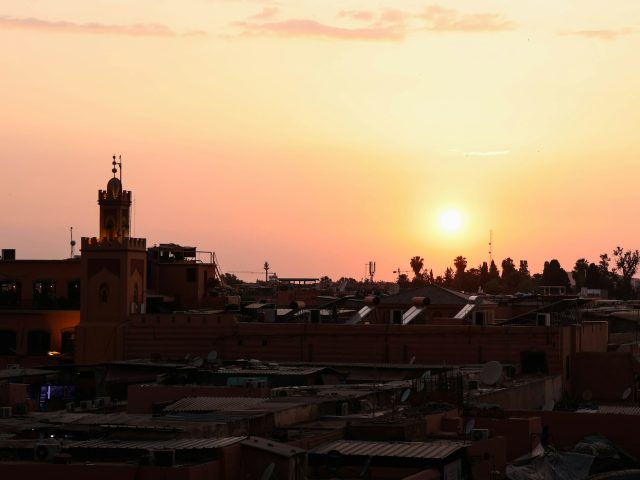
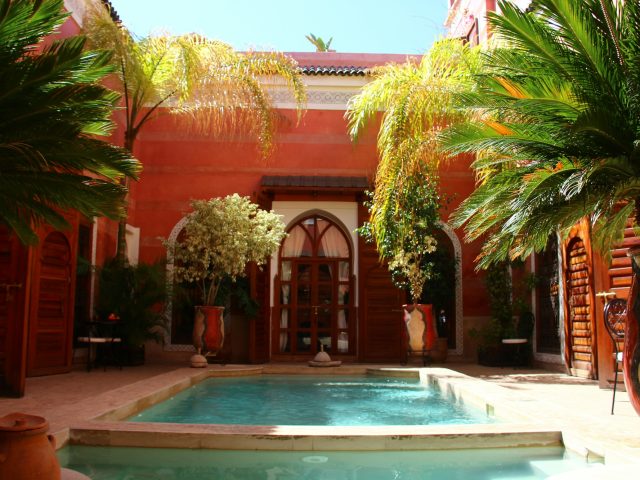
Marrakech is a city of roof terraces. At sunset the medina turns pink and gold, the call to prayer echoes between the minarets and, on a clear day, the Atlas glows on the horizon. Café terraces on the edge of Jemaa el Fna give you the square; rooftop restaurants and bars in the medina give you the skyline. Many riads also have their own roof terraces, which are often the quietest spot of all.
Remember that alcohol is only served in licensed places, mostly hotels, larger restaurants and bars, so many café terraces serve mint tea and juice only.
17. Wander the Mellah
The Mellah, next to the Bahia Palace, was the Jewish quarter of Marrakech from the 16th century. It feels very different from the rest of the medina, with taller houses, balconies over the street and a busy spice market. You can visit the restored Lazama Synagogue and the large Miaara Jewish cemetery for a small fee. Go with a guide if you want to understand the history, because there is little signage.
18. Hot air balloon flight at sunrise
For a once in a lifetime view, book a hot air balloon flight over the plains and villages outside the city. Pickups are very early, usually around 5am, and you take off at sunrise with the Atlas Mountains in front of you. Flights last about an hour and most packages include a Berber breakfast. Expect to pay from about £100 to £200 per person depending on the group size.
19. Ride a camel in the Palmeraie
The Palmeraie is a vast palm grove on the northern edge of the city, about 20 minutes by car from the medina. It is home to luxury hotels and villas, and it is the easiest place to take a short camel ride or quad bike tour without leaving Marrakech. Rides usually last one to two hours and often include mint tea in a Berber house. It is not the desert, so if you want dunes, read our guide to Sahara desert tours from Marrakech.
20. Menara Gardens and Cyber Park
The Menara Gardens are a large olive grove around a 12th century pool with a pavilion, and on a clear day they make a classic photo with the Atlas behind. Entry to the gardens is free. Cyber Park, between the medina and Gueliz, is a pleasant, shady park with free wifi points, useful for a break on the way to Majorelle.
21. Gueliz galleries and Sidi Ghanem
For a different side of Marrakech, spend an afternoon in Gueliz browsing contemporary art galleries and concept stores, then have dinner in one of the new town’s restaurants. Design lovers should take a taxi to Sidi Ghanem, an industrial area about 5 km out where many designers and makers have showrooms selling ceramics, textiles and furniture at fixed prices.
22. Take a day trip out of the city
After a few days in the medina, most people want a change of scene. The Atlas Mountains, the Ourika Valley, the Agafay Desert and the coast at Essaouira are all within a day. We cover the nine best options, with drive times, costs and how to go without a tour, in our guide to the best day trips from Marrakech.
What to skip or do differently
- Snake charmers and chained monkeys: the animals are kept in poor conditions and the photos come with a bill.
- Unofficial guides at the tanneries: the “free” tour ends with a request for money and a leather shop. If you want to see the tanneries, go with a licensed guide.
- Majorelle at midday: it is crowded and hot. Book the first slot instead.
- Buying in the first shop: compare prices in a few shops, or check the fixed prices at the Ensemble Artisanal first.
What things cost in Marrakech
Prices below are typical for foreign adults in November 2026. Entry fees change from time to time, so treat them as a guide.
| Item | Typical cost |
|---|---|
| Bahia Palace, Saadian Tombs or El Badi Palace | about 100 dirhams each |
| Ben Youssef Madrasa | about 50 dirhams |
| Jardin Majorelle (garden only) | about 170 dirhams |
| Yves Saint Laurent Museum | about 140 dirhams |
| Le Jardin Secret | about 100 dirhams, plus about 40 dirhams for the tower |
| Dar El Bacha | about 60 dirhams |
| Petit taxi, medina to Gueliz | about 20 to 30 dirhams by day |
| Mint tea in a café | about 15 to 30 dirhams |
| Meal at the Jemaa el Fna stalls | about 50 to 100 dirhams |
| Public hammam with scrub | about 50 to 100 dirhams in total |
| Cooking class | about 500 to 800 dirhams |
Visiting the Bahia Palace, the Saadian Tombs and El Badi in one day costs about 300 dirhams for a foreign adult, as there is no combined ticket. Carry cash in dirhams for entry fees, taxis and souks, because many places do not take cards.
Practical tips for Marrakech
- Dress modestly, with shoulders and knees covered, especially in the medina. It is not a legal requirement for visitors, but you will get less attention and it is respectful.
- Friday lunchtime is the main prayer time, and some shops in the souks close for a few hours.
- Learn a few words: salam alaikum (hello), shukran (thank you) and la shukran (no thank you) go a long way.
- Tipping is normal: round up in cafés, leave around 10 percent in restaurants and give guides and drivers 50 to 100 dirhams for a good day.
- Drink bottled or filtered water, and be careful with salads and peeled fruit from street stalls if you have a sensitive stomach.
- Book your flights early for school holidays; our guide to flights to Marrakech from the UK lists every direct route. Get mobile data before you arrive. Maps help a lot in the medina, and you will often need to message your riad or driver.
Our picks if you only have a short time
- One day: the Bahia Palace at 9am, the souks, Le Jardin Secret, Ben Youssef before closing and Jemaa el Fna at sunset.
- Two days: add the Saadian Tombs, El Badi Palace and a hammam on day one, and Jardin Majorelle, the YSL Museum and a food tour on day two.
- Three days or more: add a cooking class, a rooftop sunset and a day trip to the Atlas Mountains or the Agafay Desert.
- Travelling with children: Jemaa el Fna in the early evening, Le Jardin Secret, a camel ride in the Palmeraie and, in summer, the Oasiria water park.
Frequently asked questions
Is it worth visiting Marrakech?
Yes. Few cities pack so much into such a small area: palaces and gardens, the souks, the food and the energy of Jemaa el Fna, with mountains and desert within an hour or two. It can be intense, especially on the first day, but with a bit of planning most people love it and want to come back.
Why is Marrakech called the Red City?
Because of the colour of its buildings. The old city walls and many houses are built from rammed earth and clay that glow red and pink in the sun, and buildings in the city are still painted in the same warm ochre tones, so the whole city looks red, especially at sunset.
What is there to visit around Marrakech?
The most popular trips are the Atlas Mountains and Imlil, the Ourika Valley, the Agafay Desert, the Ouzoud Waterfalls, the kasbah of Ait Benhaddou and the coastal town of Essaouira. See our full guide to the best day trips from Marrakech for times and costs.
Can couples hold hands in Marrakech?
Yes, holding hands is generally fine and you will see it in Gueliz and in tourist areas. Morocco is a conservative Muslim country, though, so keep public affection low key, especially in the medina and near mosques.
Can you kiss in public in Morocco?
A quick kiss on the cheek is unlikely to cause problems, but kissing on the lips and other displays of affection in public are frowned upon and can attract unwanted attention. Save them for your hotel or riad.
What is article 490 in Morocco?
Article 490 of the Moroccan penal code makes sexual relations between unmarried people a criminal offence. In practice it is mostly applied to Moroccan citizens, and hotels and riads may ask Moroccan couples for proof of marriage. Unmarried foreign couples are very rarely asked, but it is one reason to keep public affection discreet.
How many days do you need in Marrakech?
Three or four full days is ideal for a first visit: two days for the medina, palaces and gardens, and one or two for a hammam, a cooking class and a day trip. With only a weekend you can see the main sights if you start early. See our 1 to 5 day Marrakech itineraries for a plan.
Is Marrakech safe for tourists?
Marrakech is generally safe, and violent crime against visitors is rare. The main problems are pickpocketing in crowds, persistent touts and small scams in the medina. Keep valuables out of sight, use licensed guides, agree taxi fares and follow your government’s current travel advice for Morocco.
Plan the rest of your trip
Heading out of the city? Read our guide to the best day trips from Marrakech, or browse all our Marrakech travel guides. Choosing when to go? Read our month by month guide to Marrakech, our itineraries and our guide to flights from the UK. We update this guide when prices or opening hours change; if you spot something out of date, please let us know.