
!DISCLOSURE
New York City is one of the most exciting cities on earth, and no matter how many films you have seen, nothing quite prepares you for your first walk down Fifth Avenue, your first view of the skyline from the Brooklyn Bridge or your first slice of pizza eaten standing on a street corner. It is a city of world class museums, Broadway shows, green parks, distinctive neighbourhoods and food from every corner of the globe, and it is surprisingly walkable once you get the hang of the grid.
This guide lists the 25 best things to do in New York, grouped by area so you can plan your days without crossing the city back and forth. For each one you will find how to get there, how long to allow, what it costs in late 2026 and tips for beating the queues. We also cover the best free things to do, Christmas in New York for 2026, which observation deck to choose, a three day itinerary, what a trip costs and the entry rules British visitors need to know, including the ESTA.
Things to do in New York at a glance
| Attraction | Area | Time needed | Cost from |
|---|---|---|---|
| Central Park | Midtown to Harlem | 2 to 3 hours | Free |
| Statue of Liberty and Ellis Island | Lower Manhattan | Half a day | About $25 ferry ticket |
| Brooklyn Bridge | Lower Manhattan and Dumbo | 1 hour | Free |
| 9/11 Memorial and Museum | Lower Manhattan | 2 to 3 hours | Memorial free, museum ticketed |
| Empire State Building | Midtown | 1.5 hours | From $44 |
| Summit One Vanderbilt | Midtown | 1.5 hours | From $44 |
| Top of the Rock | Midtown | 1 hour | About $40 |
| The Metropolitan Museum of Art | Upper East Side | 3 hours | About $30 |
| The High Line | Chelsea | 1 hour | Free |
| Times Square and Broadway | Midtown | An evening | Free, shows extra |
| Staten Island Ferry | Lower Manhattan | 1 hour | Free |
How to get around New York
New York’s subway runs 24 hours a day and is the fastest way to travel longer distances. Since January 2026, a single ride costs $3, and you simply tap a contactless bank card or phone at the OMNY readers. Tapping with the same card means you never pay for more than 12 rides in any seven days, which caps your weekly spending at $35. Manhattan is easy to walk, especially in Midtown and Downtown, and yellow cabs, Uber and Lyft are everywhere, though traffic can be slow.
Avenues run north to south and streets run east to west, with street numbers rising as you head north. It is worth remembering that Uptown means north and Downtown means south, as subway entrances are often labelled that way.
Lower Manhattan
1. Visit the Statue of Liberty and Ellis Island
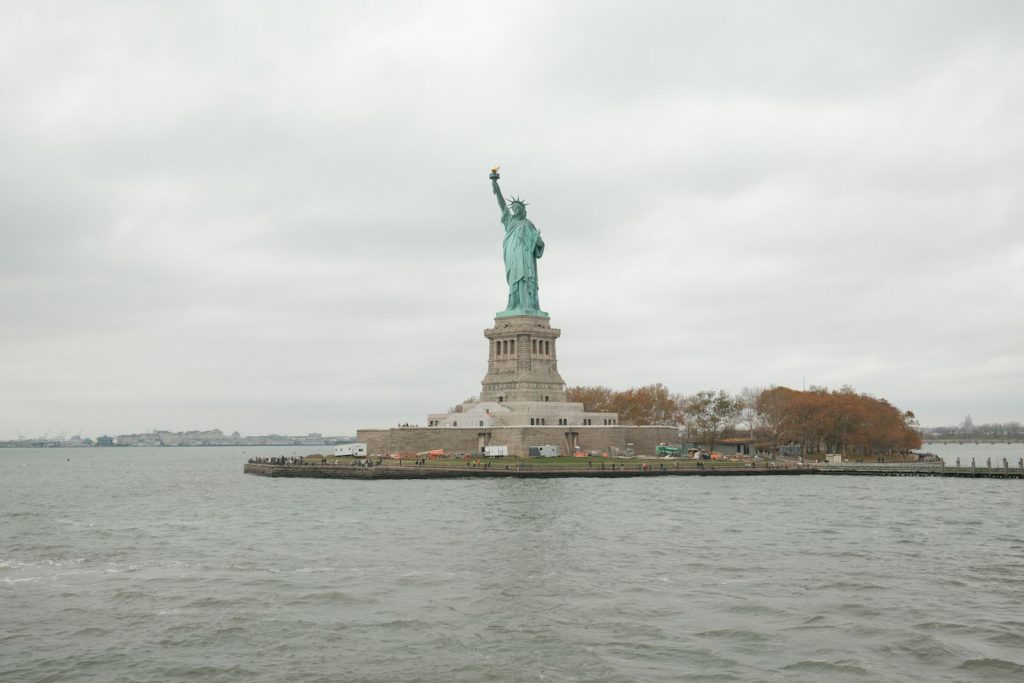
The Statue of Liberty is the symbol of New York and of the United States, and a trip to Liberty Island is one of the classic New York experiences. The official ferry, run by Statue City Cruises, leaves from Battery Park and also stops at Ellis Island, where the National Museum of Immigration tells the stories of the 12 million people who passed through between 1892 and 1954.
- **Getting there:** take the subway to South Ferry, Bowling Green or Whitehall Street, then walk to Battery Park.
- **Time needed:** around half a day for both islands.
- **Cost:** a standard ferry ticket including both islands costs around $25 for adults. Pedestal and crown access cost a little more and must be booked in advance, with crown tickets often selling out months ahead.
- **Tip:** buy only from the official Statue City Cruises website or ticket office, as touts near Battery Park sell harbour cruises that do not land on the island. Take the first ferry of the day to avoid long security queues.
2. Ride the free Staten Island Ferry
If you only want to see the Statue of Liberty from the water, take the free Staten Island Ferry. The 25 minute crossing from Whitehall Terminal passes close to the statue and offers superb views of the Lower Manhattan skyline. Stand on the right side of the boat on the way out for the best view of the statue.
3. Pay your respects at the 9/11 Memorial and Museum
The 9/11 Memorial, on the site of the World Trade Center, has two vast reflecting pools set in the footprints of the twin towers, with the names of nearly 3,000 victims inscribed around the edges. The memorial is free and open to everyone. The 9/11 Memorial Museum beneath it is a moving and powerful exhibition that tells the story of the attacks and their aftermath. Allow at least two hours for the museum, and book a timed ticket online.
4. See the city from One World Observatory
One World Trade Center is the tallest building in the western hemisphere, and its observatory on floors 100 to 102 offers sweeping views over Lower Manhattan, the harbour and the Statue of Liberty. The lift ride, which shows the growth of the city over 500 years in under a minute, is part of the experience. It is easy to combine with the 9/11 Memorial.
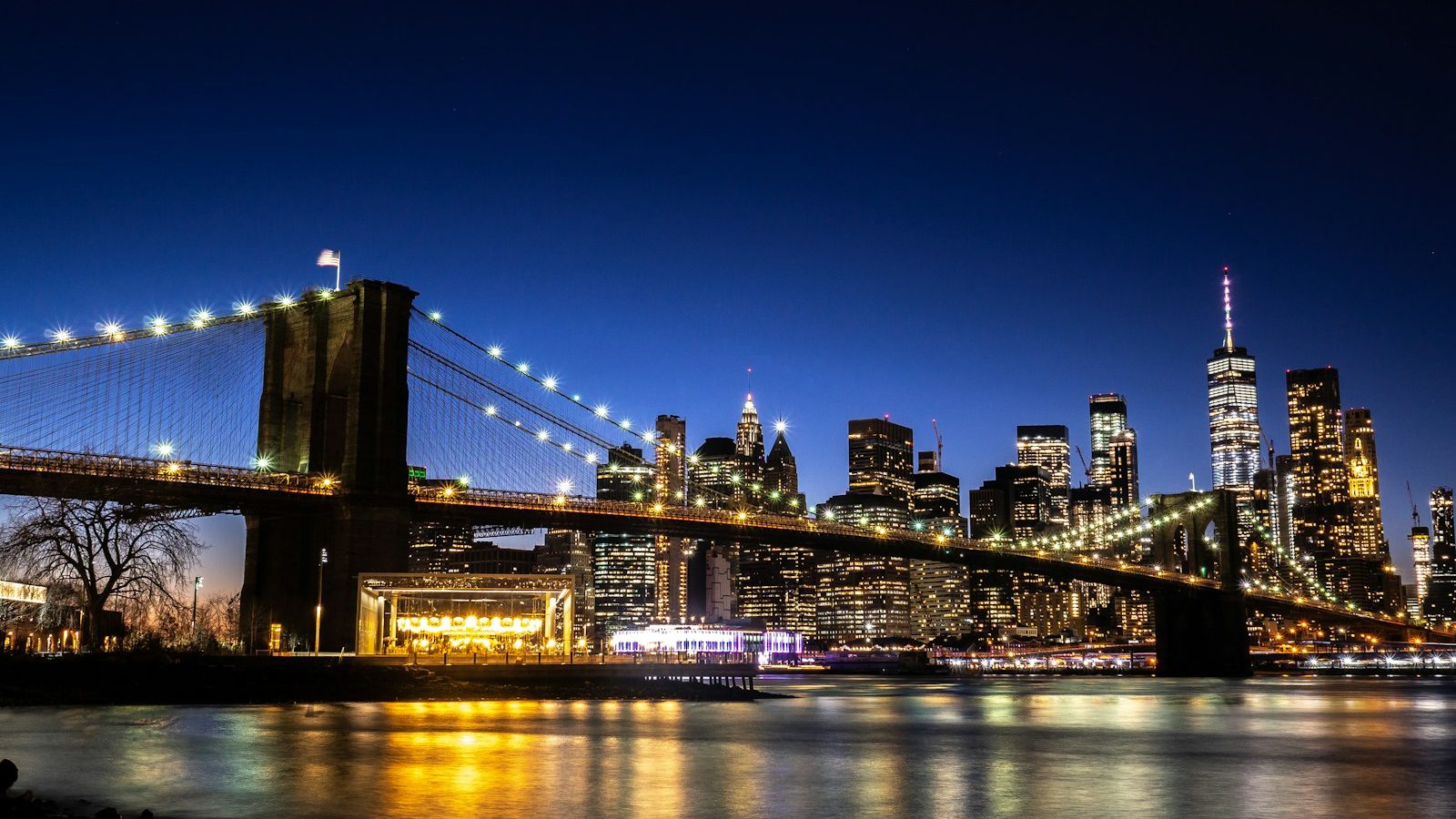
5. Walk across the Brooklyn Bridge
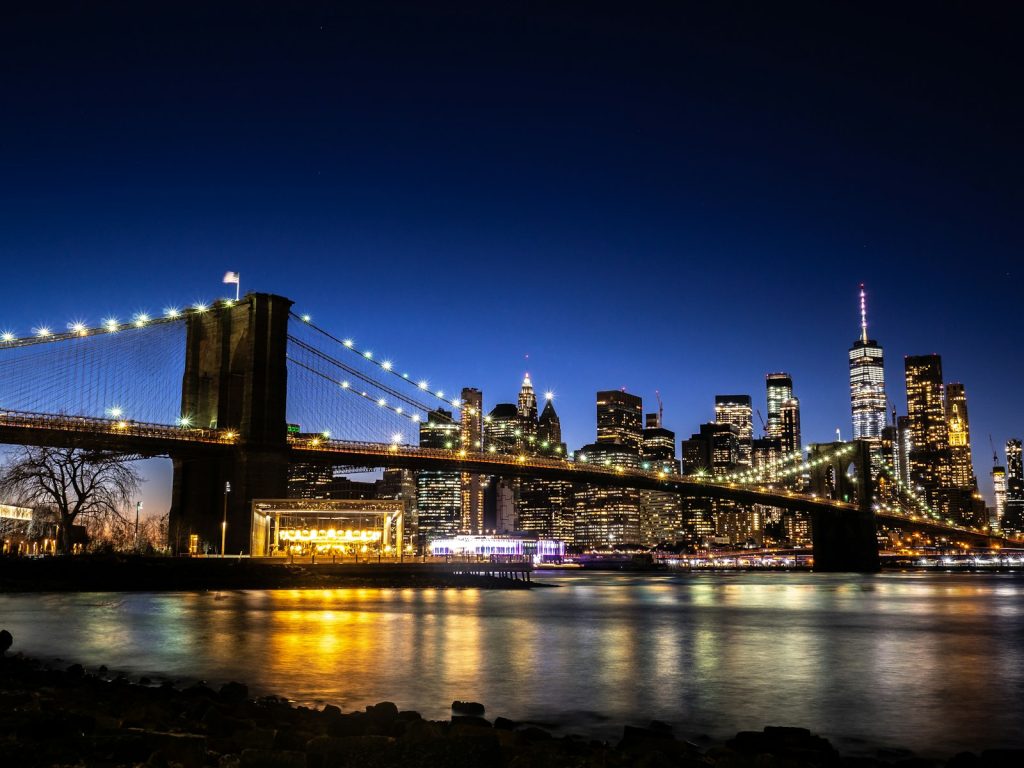
Walking across the Brooklyn Bridge is one of the best free things to do in New York. The 1883 bridge has a raised pedestrian walkway with views of the skyline, the East River and the Statue of Liberty. For the best views, take the subway to High Street or York Street in Brooklyn and walk back towards Manhattan. The walk takes around 30 to 40 minutes. Go early in the morning or at sunset to avoid the busiest times.
6. Explore Wall Street and the Financial District
The Financial District is home to Wall Street, the New York Stock Exchange, Federal Hall, where George Washington was inaugurated, and the Charging Bull statue. Visit Trinity Church and its historic graveyard, then walk to the Oculus, the striking white transport hub and shopping centre designed by Santiago Calatrava.
Brooklyn
7. Explore Dumbo and Brooklyn Bridge Park
Dumbo, short for Down Under the Manhattan Bridge Overpass, is one of the most photogenic neighbourhoods in New York. Take the famous photo of the Manhattan Bridge framed between the buildings on Washington Street, then walk down to Brooklyn Bridge Park for views of the skyline, Jane’s Carousel and the pebble beach. Time Out Market and the shops and cafes of the old warehouses make it a great place for lunch.
8. Spend an afternoon in Williamsburg
Williamsburg is Brooklyn’s creative heart, with independent shops, vintage stores, street art, craft breweries and rooftop bars with views of Manhattan. On weekends from spring to autumn, Smorgasburg, the huge open air food market, is a highlight. You can reach Williamsburg in minutes on the L train from Manhattan or by NYC Ferry along the East River.
Midtown Manhattan
9. Choose your observation deck
New York has five major observation decks, and each offers something different.
- **Empire State Building:** the classic, with an open air deck on the 86th floor and an indoor deck on the 102nd. Tickets start at around $44 for the 86th floor.
- **Summit One Vanderbilt:** the most immersive experience, with mirrored rooms, glass ledges and a glass lift outside the building. Tickets start at around $44 plus a booking fee.
- **Top of the Rock:** on top of Rockefeller Center, with the best view of the Empire State Building and Central Park. Tickets start at around $40.
- **Edge:** at Hudson Yards, with a glass floor and the highest outdoor sky deck in the western hemisphere.
- **One World Observatory:** the highest, with views over Downtown and the harbour.
If you only choose one, Top of the Rock is the best for classic skyline photos, as you can see the Empire State Building, while Summit One Vanderbilt is the most memorable experience.
10. Walk around Times Square
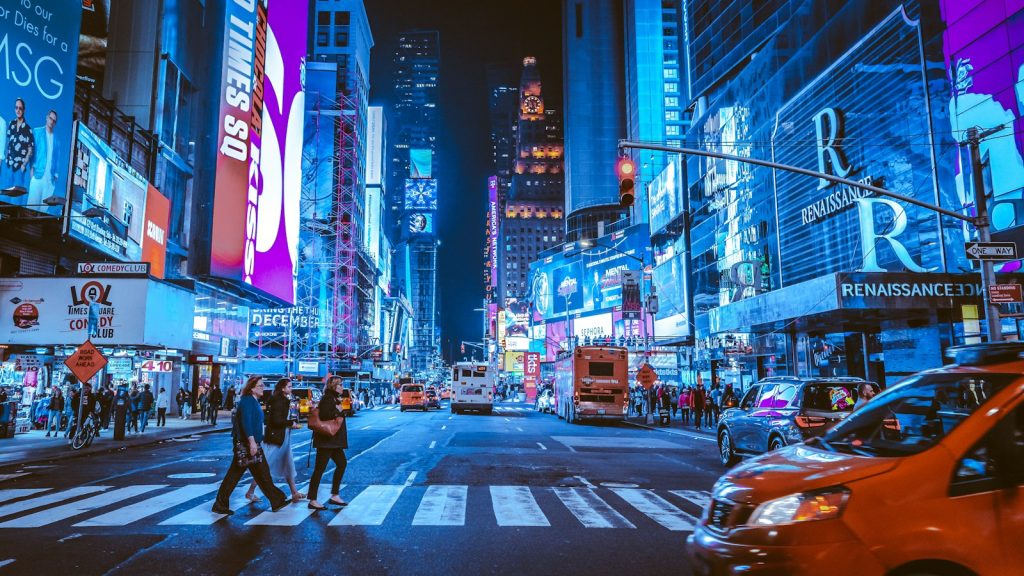
Times Square is loud, crowded and full of neon, and you have to see it at least once, ideally after dark when the giant screens light up the night. Climb the red steps above the TKTS booth for the best view. Times Square is at the heart of the Theater District, so it is easy to combine with a Broadway show.
11. See a Broadway show
Seeing a Broadway show is one of the highlights of any trip to New York. Long running hits sit alongside new musicals and plays each season. Buy tickets in advance for the most popular shows, or try the TKTS booth in Times Square for same day discounts, digital lotteries through the show’s official app and rush tickets at the box office for cheaper seats.
12. Visit Rockefeller Center and St Patrick’s Cathedral
Rockefeller Center is a complex of art deco buildings, shops and restaurants, famous for its ice rink and the giant Christmas tree in winter. Across Fifth Avenue, St Patrick’s Cathedral is a magnificent neo Gothic church that is free to enter. Fifth Avenue itself is lined with flagship stores and landmarks such as Saks Fifth Avenue and the New York Public Library.
13. Visit Grand Central Terminal and the New York Public Library
Grand Central Terminal is one of the most beautiful railway stations in the world, with a vast main concourse, a celestial ceiling and a famous four faced clock. Try the whispering gallery outside the Oyster Bar. A short walk away, the New York Public Library’s Stephen A. Schwarzman Building has the grand Rose Main Reading Room. Both are free, and Bryant Park behind the library is a lovely place to rest.
14. Visit the Museum of Modern Art
MoMA is one of the world’s great modern art museums, with masterpieces such as Van Gogh’s The Starry Night, Monet’s Water Lilies and works by Picasso, Warhol and Frida Kahlo. Allow two to three hours. Tickets cost around $30 for adults and are timed, so book ahead.
Chelsea, Greenwich Village and SoHo
15. Walk the High Line
The High Line is a public park built on a disused elevated railway on the west side of Manhattan. The 2.3 kilometre walkway runs from the Meatpacking District to Hudson Yards, with gardens, art installations and views over the city. It is free, and the walk takes about an hour. Start at the southern end at Gansevoort Street and finish at Hudson Yards and the Vessel.
16. Eat at Chelsea Market
Chelsea Market, in a former biscuit factory where the Oreo was invented, is one of the best food halls in New York, with tacos, lobster rolls, ramen, doughnuts and much more. It is right next to the High Line, so it is perfect for lunch.
17. Explore Greenwich Village and SoHo
Greenwich Village is one of Manhattan’s most charming areas, with leafy streets, brownstones, jazz clubs and Washington Square Park and its famous arch. Nearby SoHo is known for its cast iron buildings and upmarket shopping, while Nolita, Little Italy and Chinatown are a short walk away. It is a great area for wandering, people watching and eating.
Central Park and Uptown
18. Explore Central Park
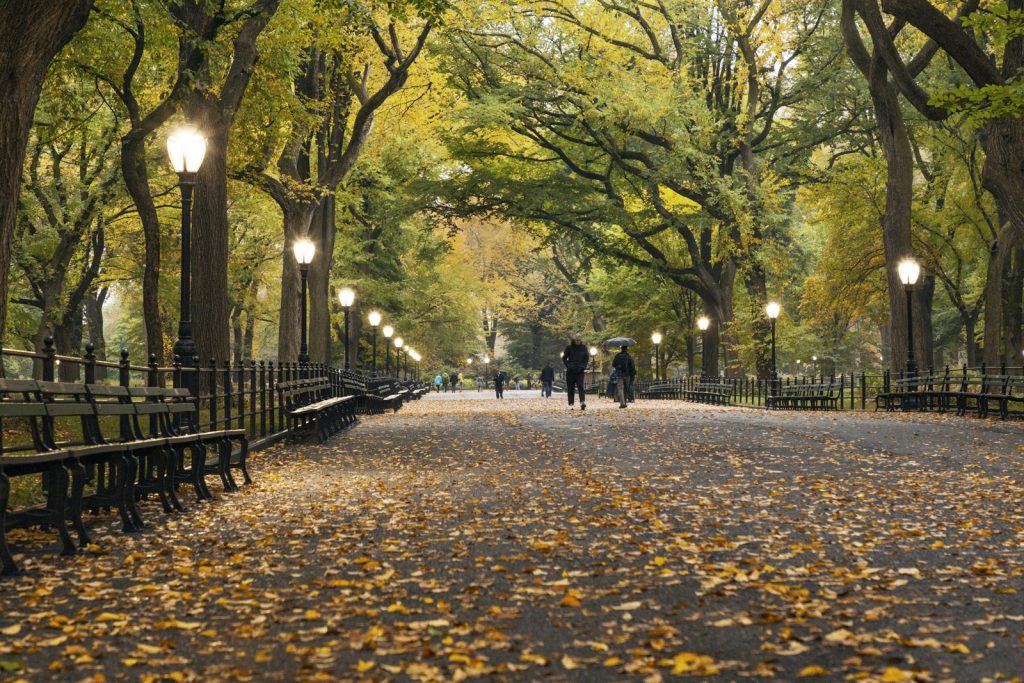
Central Park is one of the most famous city parks in the world, stretching for 51 blocks through the middle of Manhattan. Highlights include Bethesda Terrace and Fountain, Bow Bridge, Strawberry Fields and the John Lennon memorial, the Mall and Literary Walk, Belvedere Castle and the Jacqueline Kennedy Onassis Reservoir. You can walk, hire a bike or take a rowing boat on the lake from spring to autumn. Allow at least two to three hours.
19. Visit the Metropolitan Museum of Art
The Met is one of the largest and finest art museums in the world, with collections spanning 5,000 years, from Egyptian temples and Greek sculpture to European masters, American art and fashion. Visitors from outside New York pay around $30 for adults, and the ticket is valid for three consecutive days. You could spend days here, so pick a few galleries in advance. The rooftop garden, open from spring to autumn, has great views over Central Park.
20. Visit the American Museum of Natural History
The American Museum of Natural History, on the west side of Central Park, is famous for its dinosaur halls, the giant blue whale and the Rose Center for Earth and Space. It is a brilliant choice for families and for a rainy day. Allow at least three hours.
21. Walk along Museum Mile
Fifth Avenue alongside Central Park is known as Museum Mile, with the Met, the Guggenheim in its famous spiral building by Frank Lloyd Wright, the Neue Galerie and the Cooper Hewitt design museum. Even if you do not go inside, the architecture is worth seeing.
22. Experience Harlem
Harlem has a rich history as a centre of African American culture, music and literature. Visit the Apollo Theater, listen to gospel at a Sunday church service, eat soul food at a classic restaurant and enjoy live jazz in the evening.
More great things to do
23. Watch a sports game
Watching a game is a great way to experience New York. Choose basketball with the Knicks at Madison Square Garden, ice hockey with the Rangers, baseball with the Yankees or the Mets in spring and summer, or American football with the Giants or the Jets in autumn and winter.
24. Eat your way around the city
New York’s food scene is legendary. Try a classic slice of pizza, a bagel with cream cheese and lox, a pastrami sandwich at a Jewish deli, a hot dog from a street cart, dim sum in Chinatown and a slice of New York cheesecake. Food halls and markets such as Chelsea Market, Essex Market and Time Out Market make it easy to try lots of things in one place.
25. Take a day trip
If you have more time, take the train up the Hudson Valley, visit the beaches of Long Island, explore Princeton or Philadelphia, or travel to Washington DC for the day on a fast train.
Christmas in New York 2026
New York is magical in December. The Rockefeller Center Christmas tree arrived on 7 November 2026 and will be lit on Wednesday 2 December 2026, then stays on display until mid January 2027. Other highlights include the Macy’s Thanksgiving Day Parade on Thursday 26 November 2026, the window displays on Fifth Avenue, the holiday market and ice rink at Bryant Park Winter Village, the Christmas lights of Dyker Heights in Brooklyn and the Rockettes’ Christmas Spectacular at Radio City Music Hall. Book hotels early, as December is one of the busiest and most expensive months to visit.
Best time to visit New York
The best times to visit New York are April to June and September to early November, when the weather is mild and the parks are at their best. Summer is hot and humid but full of free outdoor events, while winter is cold, with the possibility of snow, but the city is festive in December. January to early March is the cheapest time to visit, with the lowest hotel prices of the year.
How much does a trip to New York cost?
New York is expensive, especially for hotels. These are rough costs per person per day, excluding flights, for two people sharing a room.
| Cost | Budget | Mid range | Luxury |
|---|---|---|---|
| Hotel per night, per person | £70 to £110 | £120 to £220 | £350 or more |
| Food and drink | £35 to £50 | £60 to £100 | £150 or more |
| Transport | £5 to £10 | £10 to £20 | £40 or more |
| Attractions | £10 to £30 | £40 to £80 | £120 or more |
| Daily total | £120 to £200 | £230 to £420 | £660 or more |
Return flights from London to New York take around seven to eight hours outbound and usually cost around £400 to £700 in economy. Remember that prices in shops and restaurants usually exclude sales tax of 8.875%, and hotels add taxes and fees on top of the room rate. Tipping is expected: around 18% to 20% in restaurants and bars, and a dollar or two per drink.
Money saving tips
- **Buy a sightseeing pass:** passes such as Go City, CityPASS and The Sightseeing Pass can save money if you plan to visit several paid attractions.
- **Use the subway:** tap the same card for every journey to benefit from the weekly fare cap.
- **Look for free museum times:** some museums offer free or pay what you wish entry at certain times.
- **Eat at food halls and delis:** cheaper than sit down restaurants and great for trying lots of food.
- **Stay outside Midtown:** hotels in Brooklyn, Long Island City or Jersey City can be cheaper and are a short train ride away.
A three day itinerary
- **Day 1, Downtown and Brooklyn:** the Statue of Liberty and Ellis Island in the morning, the 9/11 Memorial and Museum, Wall Street, then walk across the Brooklyn Bridge to Dumbo for sunset and dinner.
- **Day 2, Midtown:** Grand Central Terminal and the New York Public Library, Fifth Avenue, Rockefeller Center and St Patrick’s Cathedral, MoMA in the afternoon, Top of the Rock at sunset, then Times Square and a Broadway show.
- **Day 3, the West Side and Central Park:** the High Line and Chelsea Market in the morning, Greenwich Village for lunch, then Central Park and the Met or the American Museum of Natural History in the afternoon.
Where to stay in New York
- **Midtown:** best for first timers, close to Times Square, Broadway and the main sights.
- **Lower Manhattan:** quieter in the evenings, close to the Statue of Liberty ferry and the 9/11 Memorial.
- **Chelsea and the Meatpacking District:** trendy, near the High Line and great restaurants.
- **Upper West Side:** calmer and residential, close to Central Park and the museums.
- **Brooklyn and Long Island City:** often better value, with great views of Manhattan.
Entry rules for British visitors
British citizens visiting the United States for up to 90 days for tourism need an approved ESTA before travelling. Apply only on the official ESTA website, where the fee has been $40.62 per person since 16 October 2026, and allow at least 72 hours, although most applications are approved more quickly. The ESTA application now asks for more personal information, and the US authorities have proposed asking applicants for details of their social media accounts, so answer every question accurately. Check the latest advice on GOV.UK before you travel.
Frequently asked questions
What should I see and do in 3 days in New York City?
In three days, spend one day Downtown with the Statue of Liberty, the 9/11 Memorial and the Brooklyn Bridge, one day in Midtown with Grand Central, Fifth Avenue, Rockefeller Center, an observation deck, Times Square and a Broadway show, and one day on the High Line, in Greenwich Village and in Central Park with a museum. Our itinerary above has the details.
What to explore in New York?
Beyond the famous sights, explore neighbourhoods such as Greenwich Village, SoHo, Chinatown, Harlem, Williamsburg and Dumbo, where you will find independent shops, great food and local life. The High Line, Central Park and the waterfront parks of Brooklyn are also wonderful places to explore on foot.
Is it safe to go into New York City right now?
Yes. New York is generally safe for visitors, and the main tourist areas are busy and well policed. Take normal city precautions: keep an eye on your belongings in crowds and on the subway, avoid empty subway carriages late at night and stay aware of your surroundings. Check the latest FCDO travel advice for the United States before you go.
What is the weather like in New York City right now?
In late November, New York is usually cool and crisp, with daytime highs of around 8°C to 12°C and colder nights, and the first frosts are common. Check a forecast a few days before you travel and pack warm layers, a coat, gloves and comfortable shoes for walking.
Can I live in NYC on $3,000 a month?
It is very difficult to live in New York on $3,000 a month, as the average rent for a one bedroom flat in Manhattan is well above that. It may be possible with roommates in the outer boroughs, such as Queens, the Bronx or parts of Brooklyn, and a very careful budget.
Is $70,000 enough to live in NYC?
$70,000 a year is enough to live in New York, but it is tight in Manhattan. After tax, most people on this salary share a flat or live in the outer boroughs to keep housing costs under around a third of their income.
How many days do you need in New York?
Four to five days is ideal for a first visit to New York, giving time for the main sights, a Broadway show, a few museums and some neighbourhoods. With three days you can see the highlights at a fast pace.
What is the best observation deck in New York?
Top of the Rock is the best choice for classic photos of the skyline, as it includes the Empire State Building. Summit One Vanderbilt is the most immersive and memorable experience, while the Empire State Building has the most history.
Plan the rest of your trip
Browse our North America travel guides for more ideas. If Florida appeals, read our guide to the best things to do in Miami. For beaches and samba further south, see our guide to the best things to do in Rio de Janeiro. Heading north? Our guide to the best things to do in Toronto is just a short flight away. If you are planning a trip further afield, our guides to the best things to do in Tokyo and the best things to do in Lisbon are a good place to start. If you spot something out of date, please let us know.