
!DISCLOSURE
Toronto is Canada’s biggest city and one of the most diverse places on earth, with around half of its residents born outside the country. That mix shows up everywhere: in the food stalls of Kensington Market, the dim sum halls of Chinatown, the Greek tavernas of the Danforth and the Portuguese bakeries of Little Portugal. Add a lakefront with its own car free islands, a landmark tower with a glass floor, excellent museums and Niagara Falls less than two hours away, and you have a city that rewards a long weekend or a full week.
This guide lists the 25 best things to do in Toronto, grouped by area so you can plan your days without criss crossing the city. For each one you will find how to get there, how long to allow, what it costs in late 2026 and how to avoid the queues. We also cover a Niagara Falls day trip, Toronto in winter, a three day itinerary, the best areas to stay and which to avoid, what a trip costs and the entry rules British visitors need, including the Canadian eTA.
Things to do in Toronto at a glance
| Attraction | Area | Time needed | Cost from |
|---|---|---|---|
| CN Tower | Harbourfront | 1.5 hours | CAD 47 |
| Toronto Islands | Lake Ontario | Half a day | About CAD 9.57 ferry |
| Ripley’s Aquarium of Canada | Harbourfront | 2 hours | About CAD 46 |
| St Lawrence Market | Old Town | 1 to 2 hours | Free entry |
| Distillery District | Old Town | 2 hours | Free entry |
| Kensington Market | Downtown west | 2 hours | Free |
| Royal Ontario Museum | Bloor and Yorkville | 3 hours | About CAD 26 |
| Art Gallery of Ontario | Grange Park | 2 to 3 hours | CAD 30 |
| Casa Loma | Midtown | 2 hours | About CAD 40 |
| High Park | West end | 2 hours | Free |
| Niagara Falls | Day trip | A full day | Free to view |
How to get around Toronto
Downtown Toronto is compact and easy to walk, and the TTC runs the subway, streetcars and buses across the rest of the city. A single adult fare is CAD 3.30 when you tap a contactless bank card, phone or PRESTO card at the reader, and that fare includes free transfers for two hours in any direction. Paying cash costs CAD 3.35 and does not include the two hour transfer. Children aged 12 and under ride free. Since September 2026 the TTC has capped fares, so after 47 paid trips in a calendar month the rest are free, though few visitors will ride enough to benefit.
From Pearson Airport, the UP Express train reaches Union Station in about 25 minutes. An adult single costs CAD 12.35, or CAD 9.25 if you tap a PRESTO card, and trains run every 15 minutes from early morning until about 1am. Union Station is the hub for the subway, GO trains and the UP Express, and from there most of the attractions in this guide are within a short walk or one subway ride.
Toronto also has PATH, an underground network of shops and walkways that links office towers, hotels and stations across the Financial District for more than 30 kilometres. It is a lifesaver in winter, when you can walk from Union Station to the Eaton Centre without stepping outside.
Harbourfront and the Entertainment District
1. Go up the CN Tower
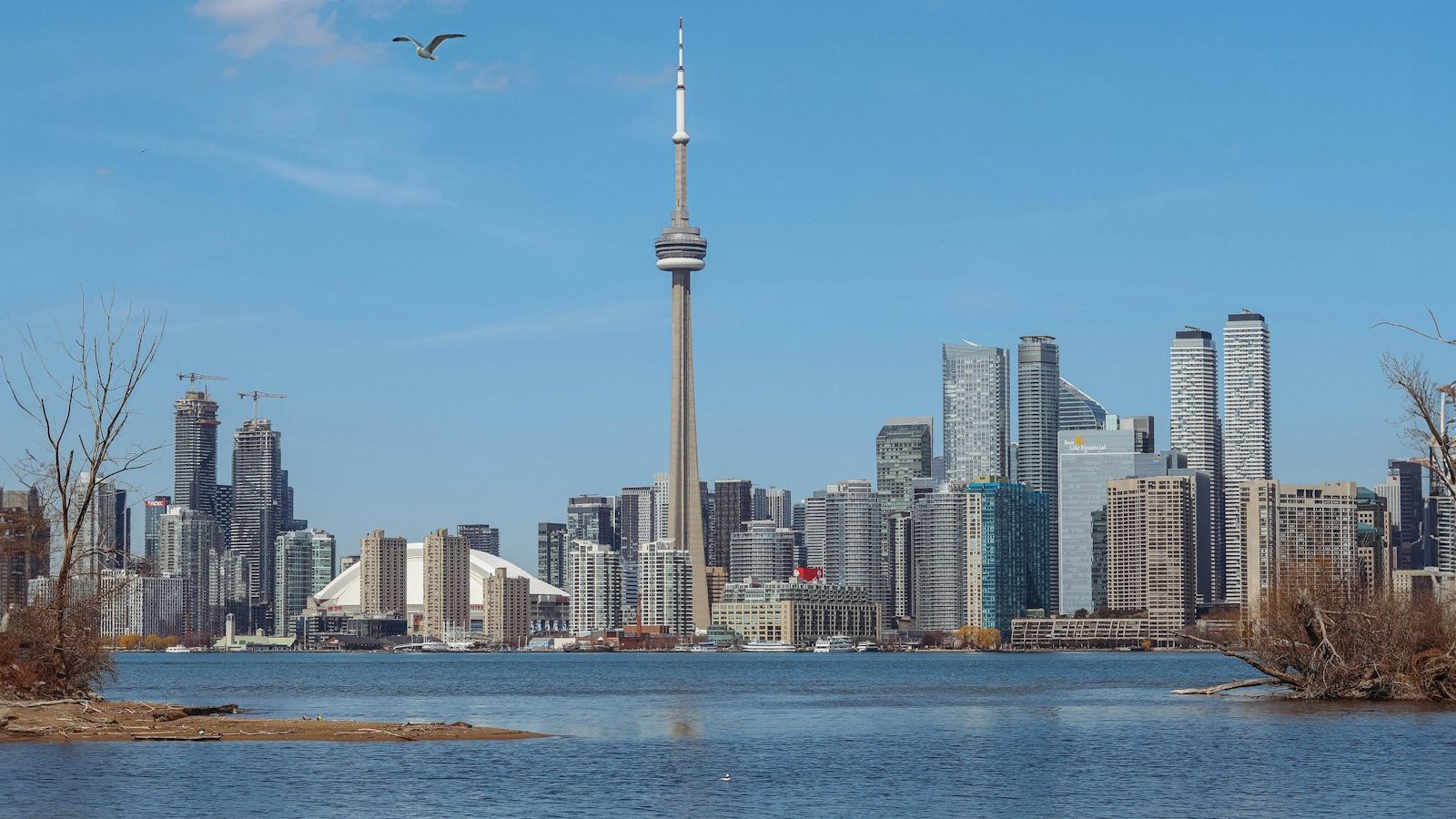
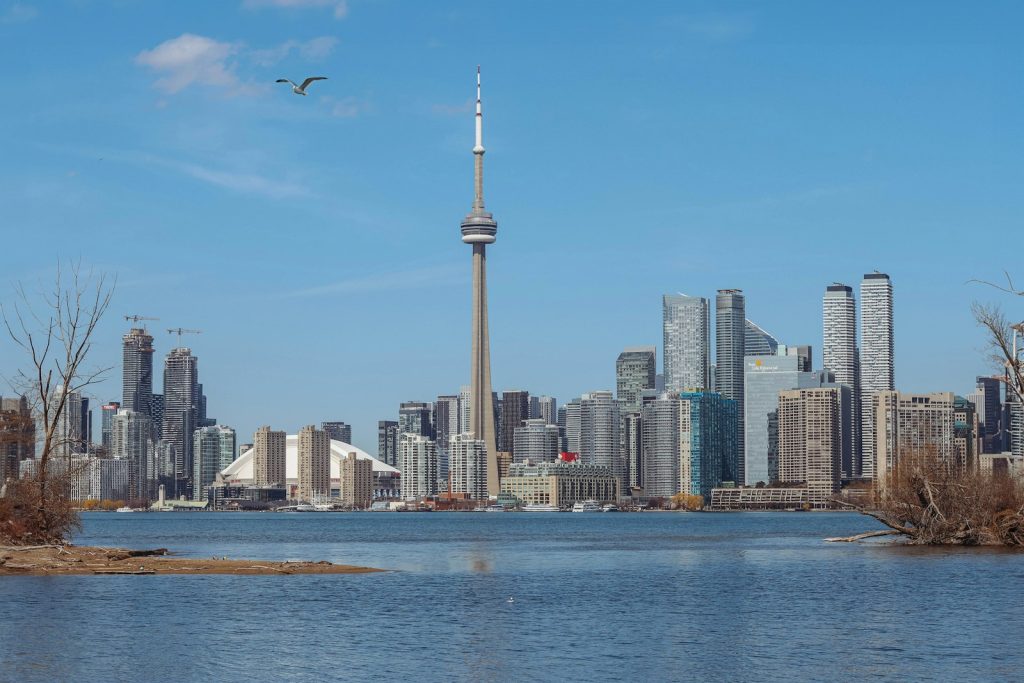
The CN Tower dominates the skyline at 553 metres and was the tallest freestanding structure in the world for more than 30 years. Lifts with glass panels shoot you up to the LookOut level in under a minute, where you can walk out onto the glass floor and look straight down at the street far below. On a clear day you can see across Lake Ontario towards Niagara.
- **Getting there:** walk ten minutes from Union Station along the SkyWalk.
- **Time needed:** around 90 minutes including security.
- **Cost:** timed general admission costs CAD 47 for adults, CAD 34 for seniors and youths, and CAD 18 for children. A ticket that adds the higher SkyPod level costs from CAD 59.
- **Tip:** book a timed slot online and aim for an hour before sunset, so you see the city in daylight and then lit up at night. For a serious thrill, EdgeWalk lets you walk around the outside of the tower roof on a harness, from around CAD 199, between spring and autumn.
2. Eat at 360 The Restaurant
If you would rather sit down than queue, 360 The Restaurant at the top of the CN Tower turns a full circle about every 72 minutes. A meal includes your entry to the LookOut and glass floor, so it is not as poor value as it first seems if you were going up anyway. Book well ahead for a window table at sunset.
3. Visit Ripley’s Aquarium of Canada
Right at the foot of the CN Tower, Ripley’s Aquarium has one of the longest underwater viewing tunnels in North America, where sharks, sawfish and sea turtles glide over your head on a moving walkway. The jellyfish gallery and the touch pool with stingrays are favourites with children.
- **Time needed:** around two hours.
- **Cost:** about CAD 46 for an adult on the day, with around CAD 5 off if you enter after 5pm.
- **Tip:** weekday mornings and evenings are much quieter. On the second Friday of each month the aquarium hosts a jazz night for adults.
4. Walk the Harbourfront
The waterfront between Spadina Avenue and Yonge Street is lined with a boardwalk, marinas and public art. Harbourfront Centre runs free concerts, markets and festivals through the summer and a skating rink in winter. Since June 2026 it has also been home to the interim Ontario Science Centre, after the original site in Don Mills closed in 2024. The permanent new science centre is planned for Ontario Place, which is expected around 2029.
5. Catch a game
Toronto is a passionate sports city. The Maple Leafs (ice hockey) and the Raptors (basketball) play at Scotiabank Arena next to Union Station between October and April, and the Blue Jays play baseball at Rogers Centre, beside the CN Tower, from April to September. Hockey tickets are expensive and sell fast, so book ahead or try for a Toronto Marlies game, the Leafs’ farm team, for a cheaper and livelier night out.
6. Visit the Hockey Hall of Fame
Even if you know nothing about ice hockey, the Hockey Hall of Fame inside Brookfield Place is great fun. You can see the original Stanley Cup in a beautiful old bank vault, try shooting against a virtual goalie and learn why the sport matters so much to Canadians. Allow about 90 minutes.
Old Town and the Distillery District
7. Eat your way around St Lawrence Market
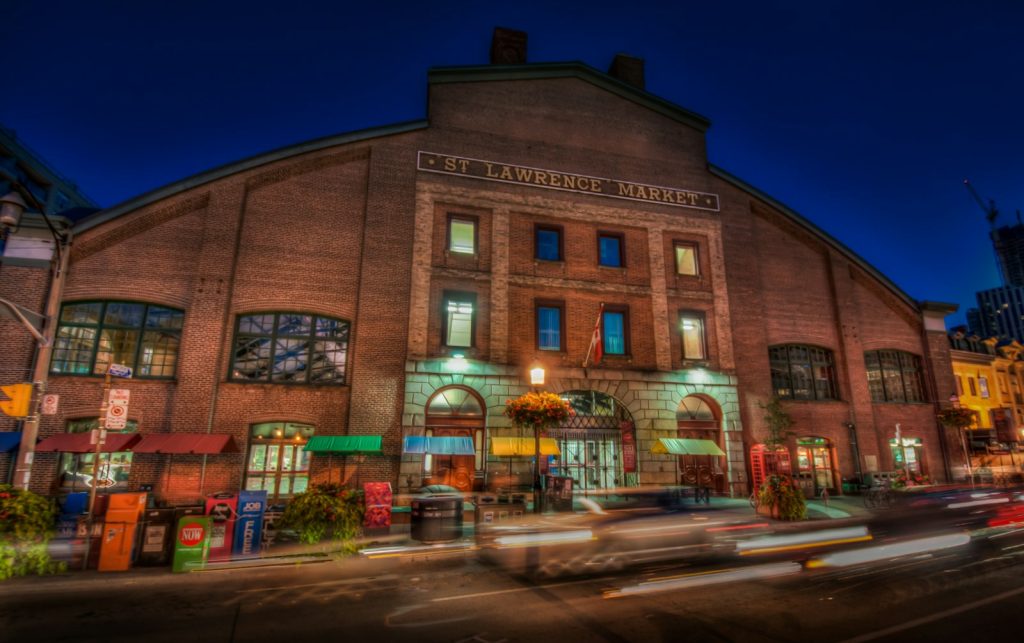
St Lawrence Market has been feeding Toronto since 1803 and is one of the best food markets in North America. The South Market is packed with butchers, cheesemongers, bakers and food stalls. Do not leave without a peameal bacon sandwich, a Toronto classic of cured pork loin rolled in cornmeal, from Carousel Bakery. On Saturdays local farmers sell their produce at the North Market.
- **Getting there:** walk ten minutes east from Union Station or take the 504 King streetcar.
- **Time needed:** one to two hours.
- **Cost:** free to enter.
- **Tip:** the South Market is closed on Sundays and Mondays, so plan accordingly. Saturday morning is the busiest and most atmospheric time to go.
8. Wander the Distillery District
The Distillery District is a pedestrian area of cobbled lanes and Victorian industrial buildings that once made up the largest whisky distillery in the world. Today the red brick warehouses house galleries, independent shops, cafes, chocolate makers and breweries. It is especially pretty in the evening, when the lights strung between the buildings come on.
From mid November to the end of December, the Distillery Winter Village fills the lanes with festive stalls, a huge Christmas tree and mulled drinks. Check the official dates before you go, as entry on some busy evenings is by timed ticket.
9. Walk through the Financial District and Union Station
Union Station’s Great Hall, with its stone columns and huge arched windows, is one of the finest railway halls in Canada. Nearby, the Allen Lambert Galleria in Brookfield Place has a soaring white arched roof that is a favourite with photographers, and it costs nothing to walk through.
Downtown West
10. Explore Kensington Market
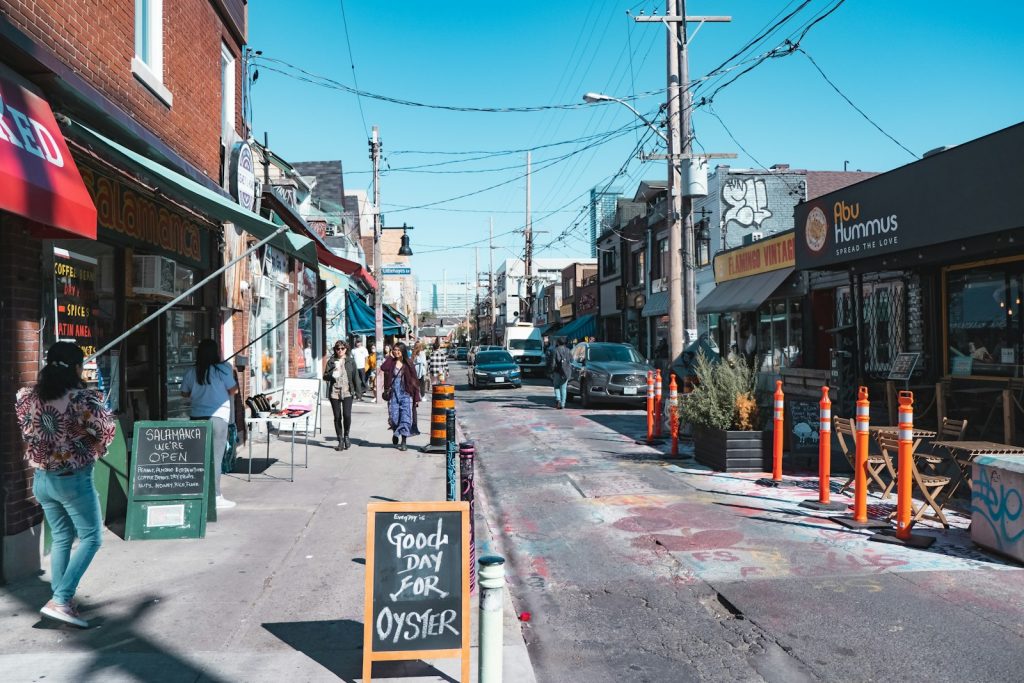
Kensington Market is Toronto’s most bohemian neighbourhood: a tangle of narrow streets with vintage clothes shops, record stores, cheap eats, coffee shops and colourful Victorian houses. It was once the heart of the city’s Jewish community and later welcomed Portuguese, Caribbean and Latin American families, and you can taste every wave of immigration in the food. On the last Sunday of each month between May and October, Pedestrian Sundays close the streets to traffic for music and street performers.
- **Getting there:** take the 510 Spadina streetcar to Nassau Street or Baldwin Street.
- **Time needed:** around two hours, longer if you are eating.
- **Cost:** free to wander.
11. Eat in Chinatown
Right next to Kensington, Chinatown runs along Spadina Avenue and Dundas Street West. It is one of the largest Chinatowns in North America and a great place for cheap dim sum, Vietnamese pho and late night dumplings.
12. Visit the Art Gallery of Ontario
The Art Gallery of Ontario is one of the largest art museums in North America, with more than 95,000 works. Its Frank Gehry designed building has a sweeping wooden spiral staircase and a long glass gallery overlooking Dundas Street. Highlights include the Group of Seven landscapes, a large collection of Henry Moore sculpture and Indigenous Canadian art.
- **Cost:** CAD 30 for adults. An annual pass costs CAD 40, which pays for itself on a second visit. Visitors under 25 who live in Ontario visit free.
- **Tip:** entry is free on the first Wednesday of each month from 6pm to 9pm, but you need to book the free ticket in advance online.
13. Walk Queen Street West and Graffiti Alley
Queen Street West is Toronto’s creative strip, with independent fashion boutiques, bars and galleries. Just south of Queen, between Spadina and Portland, Graffiti Alley (officially Rush Lane) runs for about a kilometre and is covered in murals and street art. Further west, West Queen West around Trinity Bellwoods Park is where many locals go for brunch, cocktails and live music.
14. Stroll through Sankofa Square and the Eaton Centre
Toronto’s answer to Times Square, at the corner of Yonge and Dundas, was renamed Sankofa Square in 2025. It is surrounded by giant screens and hosts free events, and it sits next to the CF Toronto Eaton Centre, the city’s biggest shopping centre. A short walk west, Nathan Phillips Square, in front of City Hall, is home to the famous Toronto sign and an outdoor ice rink in winter.
Bloor, Yorkville and Midtown
15. Visit the Royal Ontario Museum
The Royal Ontario Museum, known simply as the ROM, is Canada’s largest museum, covering natural history, world cultures and art. Its striking crystal shaped entrance juts out over Bloor Street. Inside, the dinosaur galleries, the bat cave, the Egyptian mummies and the First Peoples gallery are all excellent.
- **Getting there:** take Line 1 to Museum station, which is decorated with columns inspired by the collection.
- **Time needed:** at least three hours.
- **Cost:** the ROM uses plan ahead pricing, so adult tickets start at around CAD 26 and cost more on busy days and on the day itself. Book online in advance for the best price.
16. Explore Casa Loma
Casa Loma is a real castle in the middle of the city, built between 1911 and 1914 by financier Sir Henry Pellatt, who lost his fortune and had to leave just a few years later. You can explore the grand rooms, climb the towers, walk through an 800 foot underground tunnel to the stables and wander the gardens, which are open from May to September.
- **Getting there:** take Line 1 to Dupont station and walk up the Baldwin Steps, about ten minutes.
- **Cost:** adult general admission costs around CAD 40, plus booking fees online. Entry is by timed ticket.
- **Tip:** the castle hosts popular seasonal events, including a festive light show in winter, which are ticketed separately.
17. Shop and people watch in Yorkville
Yorkville was the centre of Toronto’s hippie scene in the 1960s and is now the city’s most upmarket shopping area, with designer boutiques, galleries and smart restaurants along Bloor Street West and the leafy lanes behind it. It is also where many stars stay during the Toronto International Film Festival each September.
18. Visit the Bata Shoe Museum
This quirky museum next to the University of Toronto holds more than 14,000 shoes and related items, from ancient Egyptian sandals to shoes worn by Queen Victoria and Elton John. It sounds niche, but it is a genuinely fascinating look at history and culture through what people wear on their feet.
Parks, islands and nature
19. Spend a day on the Toronto Islands
The Toronto Islands are a chain of small, mostly car free islands just off downtown, and the ferry ride across gives the best view of the skyline. There are beaches, picnic spots, bike and kayak hire, a historic lighthouse and, at Centre Island, the Centreville amusement park for children, which opens in summer. Hanlan’s Point at the western end has one of Canada’s few clothing optional beaches, so be aware if you walk along it.
- **Getting there:** ferries leave from the Jack Layton Ferry Terminal at the foot of Bay Street to Centre Island, Ward’s Island and Hanlan’s Point. Water taxis also run in the warmer months for a little more.
- **Cost:** a return ferry ticket costs CAD 9.57 for adults, CAD 6.15 for seniors and youths, and about CAD 4.51 for children. Tickets bought online are valid until the end of the year, while tickets bought in person are only valid on the day.
- **Tip:** buy your ticket online to skip the ticket queue, which can be very long on summer weekends. Ward’s Island is the quietest and has a lovely beach.
20. Visit High Park
High Park is Toronto’s largest park, with walking trails, a small zoo with bison and capybaras, a lake and a dog park. In late April and early May its Japanese cherry trees burst into blossom and draw huge crowds. Take Line 2 to High Park station.
21. See the Scarborough Bluffs
The Scarborough Bluffs are white cliffs rising up to 90 metres above Lake Ontario on the eastern edge of the city. Bluffer’s Park at the base has a beach and walking paths, and the views from the clifftop parks above are among the most beautiful in Toronto. You need a bus or taxi from the nearest subway stations, so allow half a day.
22. Visit Evergreen Brick Works
This former brickworks in the Don Valley has been turned into an environmental centre with walking trails, wetlands and a popular Saturday farmers market. In winter there is an outdoor skating trail. A free shuttle bus runs from Broadview station on Line 2.
More great things to do
23. Eat your way along the Danforth and Little Italy
Toronto’s food scene is its greatest strength. Head to the Danforth, Toronto’s Greektown, for souvlaki and Greek pastries, or to College Street in Little Italy for pizza and gelato. Look out for Toronto specialities too: peameal bacon, butter tarts, Jamaican beef patties and poutine, which is chips topped with cheese curds and gravy.
24. Ride a roller coaster at Canada’s Wonderland
Canada’s Wonderland, about 40 minutes north of downtown, is the country’s largest theme park, with more than 200 attractions and a water park. It opens from May to October, with Halloween and winter events. It is worth it for families or thrill seekers, but skip it on a short trip.
25. Take a day trip to Niagara Falls
Niagara Falls is the most popular day trip from Toronto, and for good reason. The Canadian side has the best views, especially of the giant Horseshoe Falls, where water plunges more than 50 metres. We cover how to get there and what to do in the next section.
Niagara Falls day trip from Toronto
Niagara Falls is about 130 kilometres from Toronto, which is roughly 90 minutes by car without traffic. GO Transit runs trains and buses from Union Station to Niagara Falls, with the journey taking around two hours. Direct trains run more often at weekends and in summer, so check the timetable before you go. A guided coach tour is the easiest option if you want to fit in Niagara on the Lake, the pretty wine town nearby, on the same day.
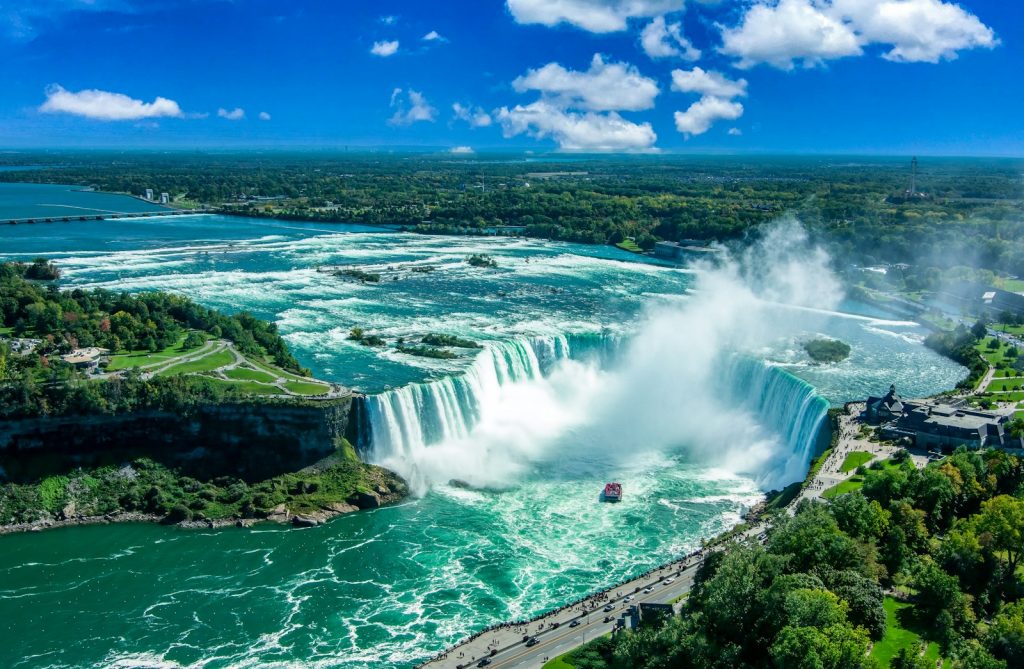
Once there, the boat ride is the highlight. Niagara City Cruises takes you right into the spray at the base of the Horseshoe Falls between spring and autumn, and you will be given a poncho. Other good options include Journey Behind the Falls, where tunnels lead to viewing platforms behind the curtain of water, and the free walk along the Niagara Parkway. In winter, the boats stop but the falls are lit up every night and partly freeze, which is a magical sight.
Avoid Clifton Hill if you are short on time: it is a strip of arcades, wax museums and fast food that many visitors find tacky. British passport holders can cross the Rainbow Bridge to the American side, but you need an ESTA or a visa waiver approval for the United States first, so most day trippers stay in Canada.
Toronto in winter and at Christmas
Toronto winters are cold, with daytime highs often below freezing from December to February and regular snow. But the city has plenty of indoor attractions and makes the most of the season. Skate at Nathan Phillips Square, the Natrel Rink at Harbourfront Centre or the Bentway under the Gardiner Expressway. Visit the Distillery Winter Village, and look out for the Cavalcade of Lights at Nathan Phillips Square in late November, when the city’s official Christmas tree is lit. Pack proper winter boots, a warm coat, a hat and gloves.
Best time to visit Toronto
The best time to visit Toronto is from late May to September, when the weather is warm, the islands and patios are in full swing and the city hosts big festivals such as Pride in June, the Caribbean Carnival in late July and early August, and the Toronto International Film Festival in September. Late September and October bring autumn colours and fewer crowds. Winter is cheapest for hotels, but expect freezing temperatures.
How much does a trip to Toronto cost?
Toronto prices are similar to other big North American cities. Remember that prices on menus and in shops usually exclude the 13% Ontario sales tax (HST), and in restaurants and bars a tip of 15% to 20% is expected.
| Item | Typical cost |
|---|---|
| TTC single fare | CAD 3.30 |
| UP Express from the airport | CAD 12.35 |
| Toronto Island ferry return | CAD 9.57 |
| CN Tower general admission | CAD 47 |
| Coffee | CAD 4 to 6 |
| Lunch at a market or food court | CAD 15 to 25 |
| Dinner for two with drinks | CAD 100 to 160 |
| Pint of beer | CAD 9 to 12 |
| Mid range hotel per night | CAD 250 to 400 |
A sensible budget for a mid range trip is around CAD 300 to 450 per person per day, including your hotel, food, transport and an attraction or two. Budget travellers staying in hostels and eating at markets can manage on much less.
Money saving tips
- **Toronto CityPASS:** the CityPASS costs CAD 134.96 plus tax for adults and covers the CN Tower and Ripley’s Aquarium, plus three more from the ROM, Casa Loma, the Toronto Zoo, the Art Gallery of Ontario and, from April to October, a City Cruises harbour tour. It is valid for nine days and is good value if you plan to visit at least four of them.
- **Book online:** the CN Tower, ROM and Casa Loma all use timed tickets, and booking ahead is usually cheaper and saves time.
- **Use free days:** the AGO is free on the first Wednesday evening of each month.
- **Eat at markets:** St Lawrence Market, Kensington Market and the food courts in the PATH are much cheaper than sit down restaurants.
- **Tap to ride:** use a contactless card for the TTC to get the two hour free transfer.
A three day itinerary
**Day one:** start at St Lawrence Market for breakfast, then walk through Old Town to the Distillery District. In the afternoon, head to the Harbourfront and take the ferry to Ward’s Island or Centre Island for the skyline view. Finish with a sunset trip up the CN Tower and dinner in the Entertainment District.
**Day two:** spend the morning at the Royal Ontario Museum, then walk around Yorkville. Take the subway to Dupont for Casa Loma in the afternoon. In the evening, head to Kensington Market and Chinatown for dinner, then for drinks along Queen Street West.
**Day three:** take a day trip to Niagara Falls, or stay in the city for the Art Gallery of Ontario, Graffiti Alley, High Park and an ice hockey or baseball game in the evening.
With a fourth day, add the Scarborough Bluffs, Evergreen Brick Works or a food tour of the Danforth.
Where to stay in Toronto
- **Entertainment District and Harbourfront:** best for first time visitors, close to the CN Tower, theatres, restaurants and Union Station.
- **Financial District:** good business hotels linked to the PATH, ideal in winter, though quiet at weekends.
- **Old Town and St Lawrence:** characterful, close to the market and the Distillery District.
- **Yorkville:** upmarket and leafy, with luxury hotels and great shopping, and right by the ROM.
- **Queen West:** trendy boutique hotels, close to the best bars, galleries and brunch spots.
Areas to avoid staying
Toronto is generally safe, but some downtown areas have visible homelessness and drug use, especially around Moss Park and the corner of Dundas Street East and Sherbourne Street. These are fine to pass through by day, but you may not want to walk there late at night. Hotels near the airport look cheap but leave you a long way from the sights, so they are only worth it for an early flight.
Entry rules for British visitors
British citizens do not need a visa for tourist visits to Canada of up to six months, but you do need an Electronic Travel Authorisation (eTA) if you are flying in. It costs CAD 7, is linked to your passport and is valid for up to five years or until your passport expires. Apply only on the official Government of Canada website, as unofficial sites charge far more. Most applications are approved within minutes, but some take several days, so apply as soon as you book. Check the latest FCDO travel advice for Canada before you go.
Flights from London Heathrow to Toronto Pearson take around eight hours, and Toronto is five hours behind the UK. Canada uses the Canadian dollar, and contactless cards are accepted almost everywhere.
Frequently asked questions
What else to do in Toronto?
Beyond the CN Tower and the islands, Toronto has plenty to keep you busy. Explore Kensington Market and the Distillery District, eat at St Lawrence Market, visit the ROM and the Art Gallery of Ontario, tour Casa Loma, watch a hockey or baseball game, see the Scarborough Bluffs and take a day trip to Niagara Falls.
How many days is enough in Toronto?
Three to four days is enough to see Toronto’s main sights at a comfortable pace, with one more day if you want to visit Niagara Falls. With two days you can cover the highlights around downtown and the waterfront.
Is Toronto walkable?
Yes. Downtown Toronto is very walkable, and most of the main sights between the waterfront and Bloor Street are within about 45 minutes on foot of each other. The underground PATH network lets you walk across the Financial District in winter, and the subway and streetcars cover longer distances.
What is the hippest area of Toronto?
West Queen West and the streets around Trinity Bellwoods Park are generally seen as the hippest area of Toronto, with independent shops, galleries, cocktail bars and brunch spots. Kensington Market, Ossington Avenue and Leslieville in the east are also popular with creative locals.
Where to avoid staying in Toronto?
Avoid staying right around Moss Park and the corner of Dundas Street East and Sherbourne Street, where homelessness and drug use are more visible, particularly at night. Airport hotels are also best avoided for a city break, as they are a long way from the sights.
What is the most beautiful part of Toronto?
The Toronto Islands are often called the most beautiful part of the city, thanks to their beaches and the view of the skyline across the water. The Scarborough Bluffs, High Park during cherry blossom season and the Distillery District at night are also lovely.
Is the CN Tower worth it?
Yes, especially on a clear day or at sunset. The views over the city and Lake Ontario are superb, and the glass floor is a memorable experience. If you are on a budget, the free ferry view from the islands gives you a great look at the tower and skyline instead.
Do I need an eTA to visit Toronto from the UK?
Yes, if you are flying to Canada. British passport holders need an eTA, which costs CAD 7 on the official Government of Canada website and is usually approved within minutes.
Plan the rest of your trip
Browse our North America travel guides for more ideas. If you are combining Canada with the United States, read our guide to the best things to do in New York, which is around 90 minutes away by plane. For some winter sun, read our guide to the best things to do in Miami. Heading further afield? Our guide to the best things to do in Tokyo is a good place to start. If you spot something out of date, please let us know.