
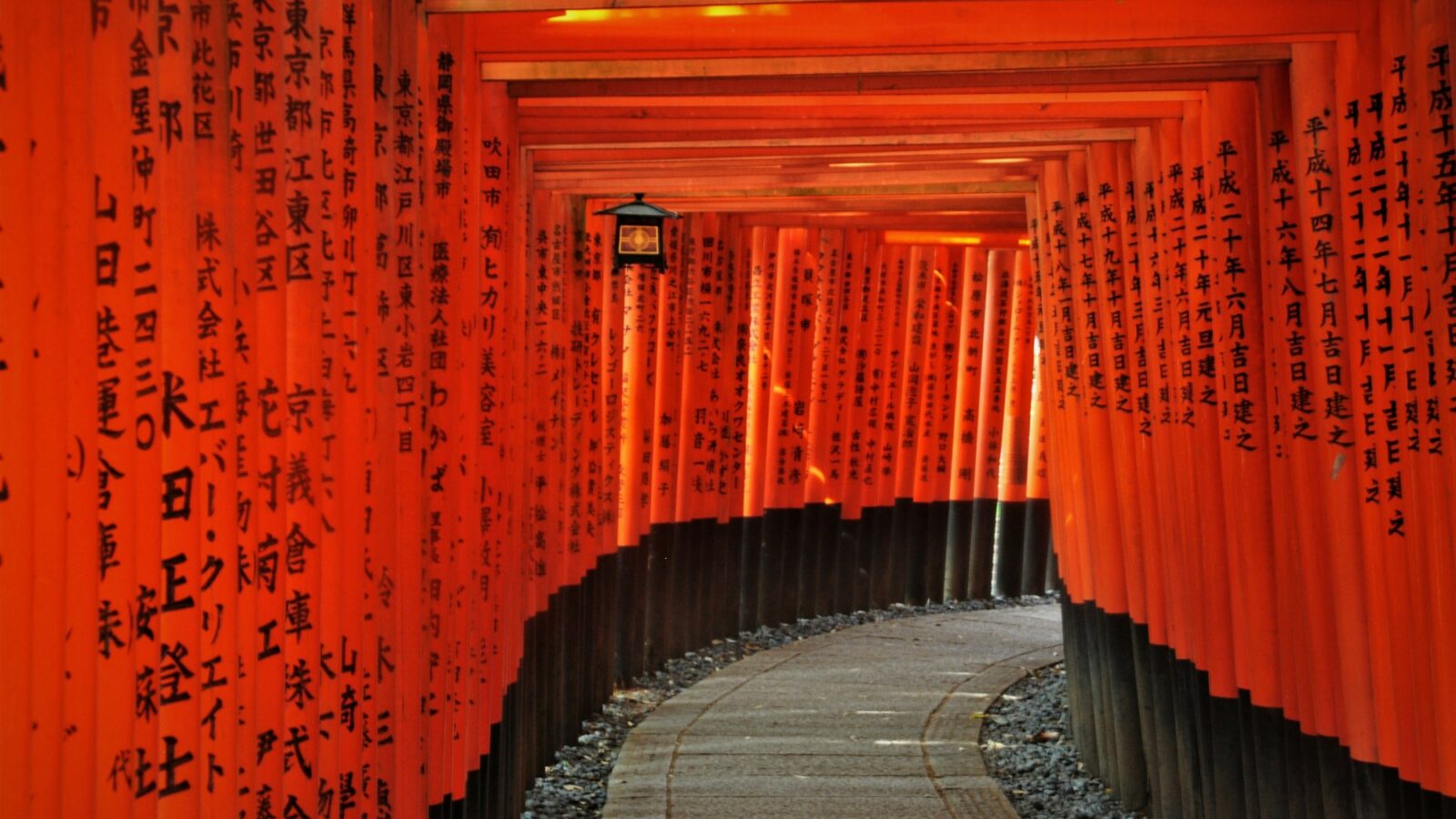
Things to do in Kyoto begin with a mountain of vermilion torii gates, a wooden temple stage above the city, a golden pavilion and a bamboo grove, and the best of them are reachable by train or bus from Kyoto Station in under 45 minutes. This guide covers the best things to do in Kyoto for a first or return visit, with November 2026 prices, opening times, the new 2026 rules and what to book ahead.
Some links in this guide are affiliate links: if you book through them we may earn a commission at no extra cost to you. It never changes what we recommend. How we make money.
Prices are in Japanese yen with approximate pounds and US dollars at about ¥210 to £1 and ¥156 to $1. Last checked November 2026 against official temple, city transport and government sites; temple fees can change, so confirm on the day for anything critical.
Things to do in Kyoto at a glance
| Attraction | Area | Time needed | Adult price (Nov 2026) |
|---|---|---|---|
| Fushimi Inari Taisha | South Kyoto | 1 to 3 hours | Free, open 24 hours |
| Kiyomizudera | Higashiyama | 1 hour plus lanes | ¥500 (£2.40 / $3.20) |
| Gion and Hanamikoji | Central east | 1 to 2 hours, best at dusk | Free to walk |
| Arashiyama bamboo grove | West Kyoto | Half a day with Tenryuji | Grove free; Tenryuji garden ¥500 |
| Kinkakuji (Golden Pavilion) | North Kyoto | 45 minutes | ¥500 (£2.40 / $3.20) |
| Philosopher’s Path and Ginkakuji | North east | 2 to 3 hours | Path free; Ginkakuji ¥500 |
| Nijo Castle | Central | 1.5 hours | ¥1,300 with palace (£6.20 / $8.30) |
| Nishiki Market | Downtown | 1 hour | Free entry; snacks vary |
| Gion Corner cultural show | Gion | 1 hour | ¥5,500 (£26 / $35) |
| Day trip to Nara | 35 to 50 minutes away | A full day | Train fare plus Todaiji |
In this guide
- What’s new: the 2026 hotel tax rise, Gion alley rules, buses and coming price changes.
- Top sights: Fushimi Inari, Kiyomizudera, Gion, Arashiyama, Kinkakuji, the Philosopher’s Path and Nijo Castle.
- Food and culture: Nishiki Market, tea ceremony and things to do in Kyoto at night.
- Quieter Kyoto: attractions that still feel calm, plus day trips from Tokyo and Osaka.
- Practical: costs table, getting around, entry rules for UK and US passports, flights, plugs and tipping.
- FAQ: direct answers to the questions travellers search most.
What’s new in Kyoto for 2026
Kyoto is acting on overtourism, and several changes affect visitors this year. None of them should put you off, but they change what a stay costs and where you can walk.
- Accommodation tax: from 1 March 2026 every overnight guest pays a city tax per person per night, set by the room rate. It is ¥200 under ¥6,000, ¥400 from ¥6,000 to ¥19,999, ¥1,000 from ¥20,000 to ¥49,999, ¥4,000 from ¥50,000 to ¥99,999 and ¥10,000 at ¥100,000 or more. Many hotels collect it at check in rather than in the booking price.
- Gion private alleys: private lanes off Hanamikoji are closed to tourists and guided groups, signs warn of a fine of up to ¥10,000 (about £48 / $64), and photography on those private roads has been banned since 2019.
- Buses: city buses are a flat ¥230, and weekend express buses EX100 and EX101 run from Kyoto Station to Kiyomizudera for ¥500. The city plans higher bus fares of ¥350 to ¥400 for visitors from outside Kyoto from April 2027 at the earliest.
- Nijo Castle: the city has proposed raising the castle and palace ticket to ¥2,000 for visitors from outside the city in fiscal 2027. Today it is ¥1,300.
- Leaving Japan: the departure tax rose from ¥1,000 to ¥3,000 on 1 July 2026. It is built into your air fare.
- Shopping: since 1 November 2026, tax free shopping works as a refund. You pay the full price in store and claim the tax back at the airport when you leave, on purchases of ¥5,000 or more per store per day.
You can read the tax bands on the city tourism board’s official Kyoto accommodation tax notice. Looking further ahead, Japan plans an online travel authorisation called JESTA for visa free visitors, targeted for fiscal 2028; it is not needed in 2026 or 2027.
How do you choose what to do in Kyoto?
Group sights by area. Spend one day in the east (Fushimi Inari early, then Kiyomizudera, the Higashiyama lanes and Gion at dusk), one in the west (Arashiyama at sunrise, then Kinkakuji and Ryoanji), and a third on the Philosopher’s Path, Nijo Castle and Nishiki Market. Start every day early.
Kyoto’s big sights are spread out, and crossing the city by bus can take 40 minutes or more, so clustering saves hours. The headline places are calm before 8am and packed from about 10am to 4pm, especially in cherry blossom season (late March to early April) and the autumn leaves (mid to late November). Our guide to the best time to visit Japan compares the seasons, festivals and crowd levels month by month.
If you only have one day, do Fushimi Inari at 7am, Kiyomizudera and the Higashiyama lanes by late morning, an afternoon in Arashiyama and an evening in Gion and Pontocho. It is a long day, but it covers the five things most people come for.
Fushimi Inari Taisha
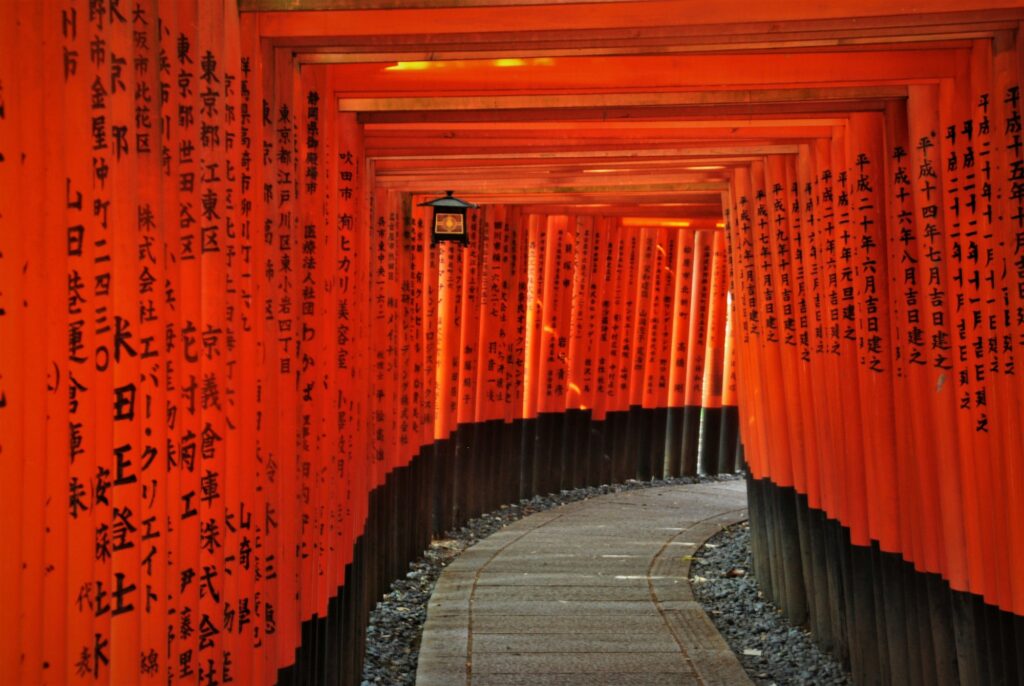
Fushimi Inari Taisha is the head shrine of Inari, the Shinto god of rice and business, and its paths of thousands of donated torii gates climb the 233 metre Mount Inari. It is free, never closes and sits five minutes from Kyoto Station by train, which makes it the easiest headline sight to do at dawn.
Take the JR Nara Line two stops to Inari station (about 5 minutes, ¥150), or the Keihan Line to Fushimi Inari station. The main gate is directly opposite JR Inari. Each torii carries the name of the business or person who donated it and the date on the back.
The full loop to the summit and back takes 2 to 3 hours. Most visitors turn round at Yotsutsuji, a crossroads with a view over the city about 30 to 45 minutes up, where the gates thin out. You lose most of the crowd within 15 minutes of the main shrine, so keep climbing if the first tunnel is busy.
Without a tour, just turn up; signs are in English. With a tour, early morning guided walks add the history and the side trails. Wear shoes with grip, as stone steps get slippery after rain, and bring water in summer. Small teahouses on the trail sell kitsune udon and inari sushi, both named after the fox messengers you will see carved everywhere.
Kiyomizudera and the Higashiyama lanes
Kiyomizudera is a UNESCO listed temple famous for its wooden stage, built out over a wooded slope with views across Kyoto. Combine it with the stepped lanes of Sannenzaka and Ninenzaka, Yasaka Pagoda and the walk down to Gion: together they are the most photographed part of old Kyoto.
The temple opens at 6am and usually closes at 6pm (6:30pm in July and August). Admission is ¥500 (£2.40 / $3.20). From Kyoto Station take city bus 206 or 100 to Gojozaka (about 15 minutes, ¥230), then walk uphill for 10 minutes. On weekends and holidays the EX100 and EX101 express buses run straight there for ¥500 and are less crowded than the regular routes.
At the Otowa waterfall below the main hall, visitors drink from one of three streams. Arrive by 7am to see the stage without a crowd, then walk down Sannenzaka and Ninenzaka before most shops open. Autumn evening illuminations run from 21 to 30 November 2026, when the temple stays open until 9:30pm.
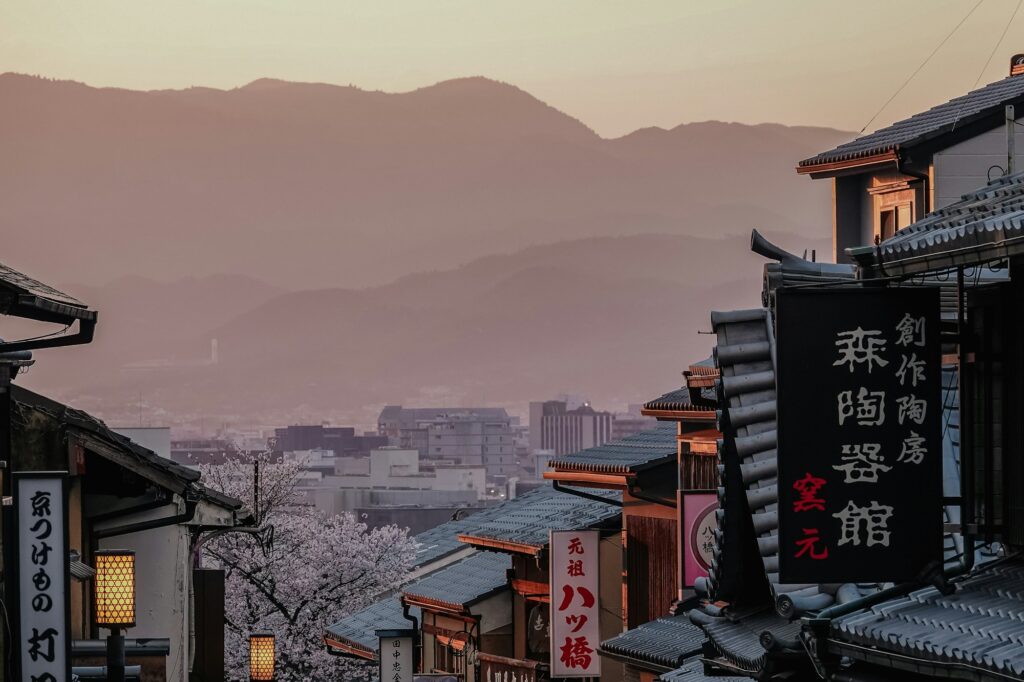
From Ninenzaka it is a 15 minute stroll past Yasaka Pagoda and Kodaiji to Maruyama Park and Yasaka Shrine, the gateway to Gion. This walk is one of the best free things to do in Kyoto, and it is just as good in the rain.
Gion and geisha district etiquette
Gion is Kyoto’s best known geisha district, where geiko (Kyoto’s word for geisha) and maiko (apprentices) work in teahouses along Hanamikoji and the Shirakawa canal. You can walk the public streets freely, but private alleys are closed to tourists, and stopping or photographing geiko and maiko is treated as harassment.
Hanamikoji runs south from Shijo Street to Kenninji, Kyoto’s oldest Zen temple, past wooden teahouses and expensive restaurants. Shirakawa, with its willows and stone paved lane beside the canal, is quieter and prettier at night. The best time to walk is from late afternoon into the evening, when lanterns come on.
Gion etiquette in 2026 comes down to a few rules:
- Private lanes: obey the no entry signs. Several side alleys off Hanamikoji are private roads where entry by tourists and tours can bring a fine of up to ¥10,000.
- Photographs: never block, follow or touch a geiko or maiko, and do not photograph them at close range. They are working, usually on the way to an appointment.
- Groups: keep to the side of narrow lanes so taxis and residents can pass.
- Restaurants: book dinner ahead; many small places turn away walk ins.
To see maiko dance without chasing anyone, book a show. Gion Corner stages an hour of tea ceremony, flower arrangement, music and a maiko dance at 6pm and 7pm for ¥5,500 (£26 / $35), with closures on some days in winter. In spring and autumn, the geisha districts also hold public dance seasons. A private ozashiki dinner with geiko is possible through a hotel concierge or a reputable agency and costs far more.
Miyagawacho, a smaller geisha district south of Gion across the Kamo River, is a calmer place to walk in the early evening, with the same rules on respect.
Arashiyama bamboo grove, Tenryuji and the monkey park
The Arashiyama bamboo grove is a short path through towering green stalks on Kyoto’s western edge, free and open at all hours. Pair it with Tenryuji’s garden, Okochi Sanso villa and the monkey park above the Katsura River for a half day; go at sunrise, as the grove is shoulder to shoulder by mid morning.
From Kyoto Station take the JR Sagano Line to Saga Arashiyama station (about 15 minutes, ¥240), then walk 5 to 10 minutes. The Randen tram from Shijo Omiya and the Hankyu line to Arashiyama station are alternatives if you are staying downtown.
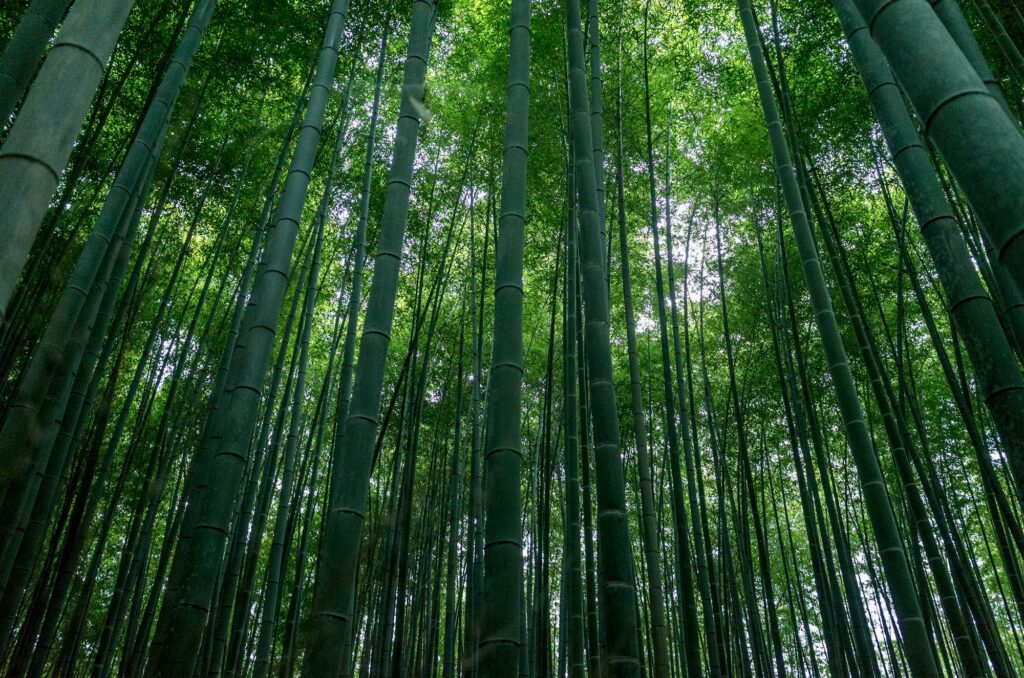
- Tenryuji: a UNESCO listed Zen temple with a pond garden framed by the Arashiyama hills. Open 8:30am to 5pm; garden ¥500, halls ¥300 extra. Its north gate opens straight onto the bamboo grove.
- Okochi Sanso: the former villa and garden of a film actor, at the top of the grove. Open 9am to 5pm; ¥1,000 (£4.75 / $6.40) includes matcha and a sweet. It is the quiet reward most visitors miss.
- Monkey Park Iwatayama: wild Japanese macaques on a hilltop above the river, with a view over the city. Open 9am to 4:30pm, closed in heavy rain or snow; ¥800 (£3.80 / $5.10). The climb is steep, and you feed the monkeys only from inside the hut.
- Togetsukyo Bridge: the classic view of the river and hills, best in autumn.
With a tour, Arashiyama is often combined with the Hozugawa river boat (from Kameoka down through the gorge) or the scenic Sagano train. Without one, it is easy to do alone. Rent a bike near the station if you want to reach Gioji, Adashino Nenbutsuji and the old Saga Toriimoto street to the north, where crowds drop sharply.
Kinkakuji, the Golden Pavilion, and Ryoanji
Kinkakuji is a Zen temple whose top two floors are covered in gold leaf, reflected in a pond surrounded by pines. The visit is a one way loop of about 45 minutes. Pair it with Ryoanji’s famous rock garden, about 20 minutes’ walk west, for the best half day in north Kyoto.
Kinkakuji opens 9am to 5pm daily and costs ¥500 (£2.40 / $3.20). From Kyoto Station, bus 205 takes about 40 minutes (¥230). It is quicker to take the Karasuma subway to Kitaoji (15 minutes, ¥260) and then bus 204 or 205 or a taxi for the last 10 minutes. The pavilion faces south across the pond, so it is best lit in the morning.
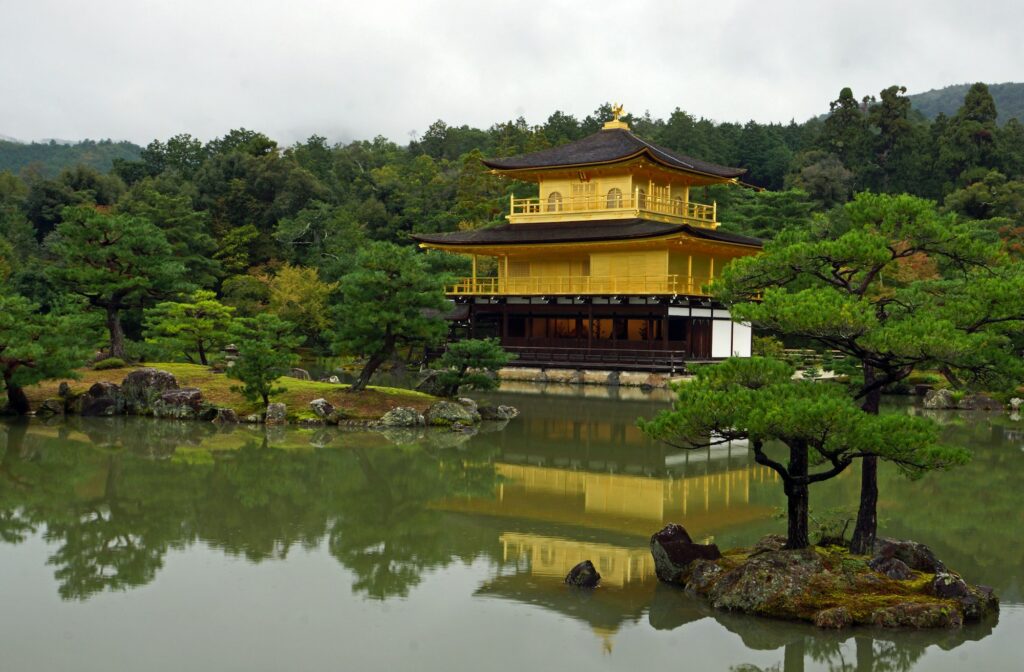
The present pavilion was rebuilt in 1955 after a fire, but it follows the original design. You cannot go inside. Ryoanji’s garden of 15 stones on raked gravel (admission ¥600) is calm in the first hour after opening; Ninnaji, a short walk on, has a five storey pagoda and late blooming cherry trees.
Philosopher’s Path, Ginkakuji and Nanzenji
The Philosopher’s Path is a canal side walk of about 2 kilometres in north east Kyoto, lined with cherry trees, linking Ginkakuji (the Silver Pavilion) with Nanzenji. Walking it north to south, gently downhill, takes 30 to 40 minutes, or 3 hours with stops at the temples.
Start at Ginkakuji (¥500), whose raked sand cone and moss garden are the highlight; the pavilion itself was never covered in silver. Then follow the path south past small shrines, cafés and the cat population that lives along the canal. Detour to Honen in, a thatched gate temple usually free to enter, for a quiet moss garden.
Nanzenji at the southern end has a huge wooden gate, a brick aqueduct from the Meiji era that people love to photograph, and grounds that are free to walk. The path is busiest in cherry blossom week and the second half of November. Bus 5, 17 or 100 reaches Ginkakuji from central Kyoto, and the Tozai subway at Keage is a short walk from Nanzenji.
Nijo Castle
Nijo Castle was the Kyoto residence of the Tokugawa shoguns, built from 1603. Its Ninomaru Palace has painted screens and nightingale floors that squeak to warn of intruders, and the grounds are beautiful in cherry blossom season. Allow 90 minutes. It is two minutes from Nijojo mae station on the Tozai subway.
Admission with the palace is ¥1,300 (£6.20 / $8.30); see the Nijo Castle admission fees page for the current ticket options and closing days. Shoes come off inside the palace and photography is not allowed in the rooms. The audio guide is worth it, as the rooms have few English captions. If the proposed visitor price comes in during fiscal 2027, expect to pay ¥2,000.
Nishiki Market and food to try
Nishiki Market is a covered street five blocks long in downtown Kyoto with more than 100 stalls selling pickles, tofu skin (yuba), grilled skewers, sweets and knives. It sits one block north of Shijo Street. Go between 10am and 11am on a weekday, bring cash, and eat at the stall rather than walking.
Many shops display signs asking visitors not to eat while walking, and some have small standing areas. Several stalls close on Wednesdays or Sundays, so arrive midweek for the full choice. The covered Teramachi and Shinkyogoku arcades cross the eastern end and are useful on a wet day.
Kyoto food worth trying beyond the market includes kaiseki (a seasonal multi course meal, best at lunch for lower prices), yudofu (simmered tofu, a Nanzenji speciality), matcha sweets, obanzai home cooking and Kyoto style ramen. Book kaiseki and small counter restaurants several days ahead. A guided food walk helps if you want to understand what you are tasting.
Tea ceremony, kimono and cultural classes
A tea ceremony is one of the best things to do in Kyoto on a wet day: a host prepares matcha in a set ritual while explaining each step, usually in about an hour. Book a small group session online, wear clean socks as shoes come off on tatami mats, and arrive 10 minutes early.
Other classes worth booking include wagashi (sweet making), calligraphy, Japanese cooking and indigo or yuzen dyeing. Kimono rental shops cluster around Kiyomizudera and Gion; book a slot ahead, and choose a shop that dresses you properly rather than renting a costume. Indoors, teamLab Biovortex, a digital art museum south of Kyoto Station that opened in October 2025, is a fair rainy day option for families.
Things to do in Kyoto at night
Kyoto at night is quieter than Tokyo or Osaka, which is its charm. Walk Gion and Shirakawa as the lanterns come on, eat on Pontocho, sit by the Kamo River, climb Fushimi Inari after dark (it never closes) and catch a temple illumination in spring or autumn.
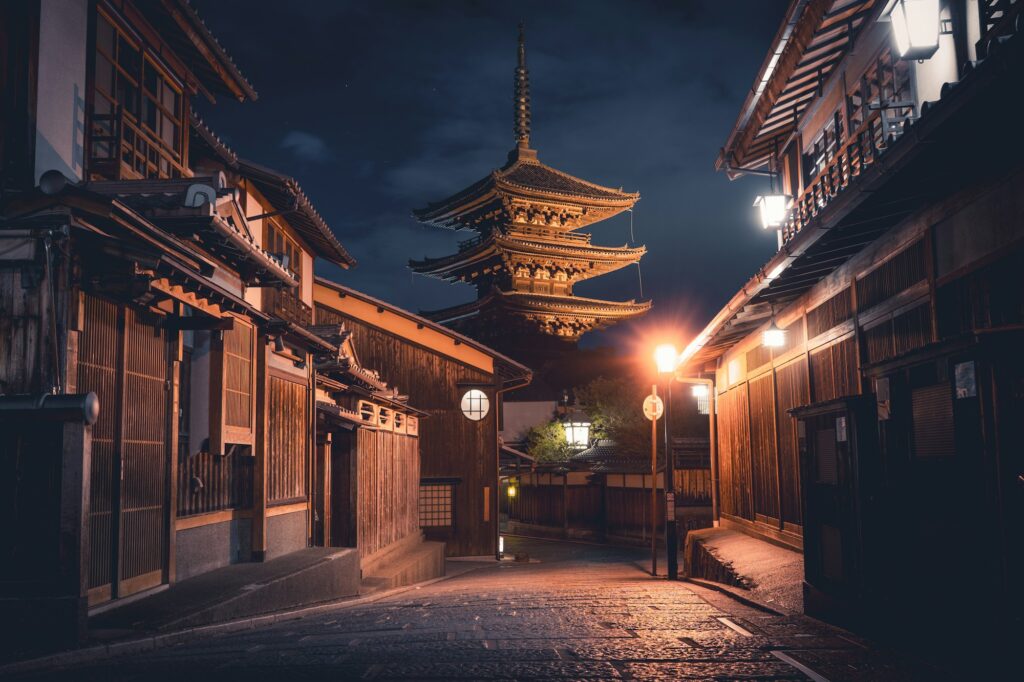
- Pontocho: a narrow alley of restaurants beside the river. Many open from about 5pm; from May to September, some build summer terraces called noryo yuka over the water.
- Kamo River banks: free, safe and lively on warm evenings, between Sanjo and Shijo bridges.
- Yasaka Shrine: lit by hundreds of lanterns after dark and open in the evening.
- Fushimi Inari: the gate tunnels are lit at night and nearly empty; take a torch for the upper trails.
- Illuminations: Kiyomizudera opens until 9:30pm from 21 to 30 November 2026, and many temples hold spring and autumn light ups.
- Theatre: Minamiza, by Shijo bridge, stages kabuki on selected dates; English earphone guides are available for many shows.
Kyoto is one of the safer cities you can walk after dark, but most restaurants take last orders by 9pm or 10pm, so plan dinner early.
Quieter Kyoto attractions away from the crowds
The quietest Kyoto attractions are just beyond the famous ones: the upper trails of Fushimi Inari, Tofukuji outside November, Daitokuji’s sub temples, Otagi Nenbutsuji in Arashiyama, the Kurama to Kibune mountain walk and the temples of Ohara. Most are within an hour of the centre and well signposted in English.
- Tofukuji: a large Zen temple near Fushimi Inari with a wooden bridge over a maple valley. Calm for most of the year, very busy in mid to late November.
- Daitokuji: a walled complex of Zen sub temples in north Kyoto, several with fine dry gardens.
- Otagi Nenbutsuji: about 1,200 small carved stone figures, each with a different face, at the far end of Arashiyama.
- Kurama to Kibune: a forest hike of about 3 kilometres between two mountain villages, with Kuramadera temple on the way. Take the Eizan railway from Demachiyanagi.
- Ohara: a valley about 40 minutes north by bus, with Sanzenin’s moss garden and Hosenin’s teahouse.
- Kyoto Imperial Palace: free to visit, with open gardens in the centre of the city.
- Toji: a five storey pagoda near Kyoto Station, with a large flea market on the 21st of each month.
Kyoto day trip from Tokyo or Osaka
Kyoto works as a day trip from Osaka (about 30 minutes by train) but is a stretch from Tokyo (about 2 hours 15 minutes each way by Nozomi bullet train). From Tokyo, stay at least one night. From Osaka, a day covers Fushimi Inari, Kiyomizudera and Gion comfortably.
From Tokyo, the Nozomi takes about 2 hours 15 minutes and costs about ¥14,000 (£67 / $90) one way with a reserved seat. The 7 day Japan Rail Pass (¥50,000) covers Hikari trains on this route, and Nozomi with a ¥4,960 supplement. Fares on the line are due to rise in July 2027. If you are basing yourself in the capital, our guide to things to do in Tokyo covers the other half of the classic first trip.
From Osaka, the JR Special Rapid from Osaka Station reaches Kyoto Station in about 30 minutes (¥580). The Hankyu line from Osaka Umeda to Kyoto Kawaramachi takes about 40 minutes (¥410) and drops you near Gion, and the Keihan line runs to Gion Shijo in about 50 minutes (¥430). Osaka hotels are often cheaper, and the new Kyoto tax gives one more reason to compare.
The best day trips from Kyoto are Nara (deer park and Todaiji’s giant Buddha, 35 to 50 minutes by Kintetsu or JR), Uji (matcha shops and Byodoin’s Phoenix Hall, about 20 to 30 minutes by JR) and Osaka for street food in Dotonbori. Himeji Castle is about 30 to 45 minutes beyond Shin Osaka by bullet train.
What to skip or leave for another trip
Skip the main bamboo path at midday; if that is your only slot, go to Okochi Sanso or the Adashino bamboo path instead. Skip trying to see Kinkakuji, Arashiyama and Fushimi Inari in one morning, as the buses alone take most of it. And do not try to “find” geisha in Gion’s back lanes: book a show instead.
Kokedera, the moss temple, needs an online reservation well ahead and costs much more than a normal temple, so leave it for a return trip unless gardens are your main interest. Amanohashidate and Kinosaki Onsen are lovely but two hours or more away; they suit an overnight stay rather than a day out from the city.
How much do Kyoto attractions cost?
Most temples charge ¥400 to ¥600 (about £2 to £3 / $2.50 to $4), many shrines are free, and a full sightseeing day with transport costs roughly ¥2,500 to ¥4,000 per person before food. These are the main prices for November 2026.
| Item | Yen | Approx GBP / USD |
|---|---|---|
| Fushimi Inari Taisha | Free | Free |
| Kiyomizudera, Kinkakuji or Ginkakuji | ¥500 each | £2.40 / $3.20 |
| Ryoanji rock garden | ¥600 | £2.85 / $3.85 |
| Tenryuji garden (halls extra) | ¥500 (+¥300) | £2.40 / $3.20 |
| Okochi Sanso with tea | ¥1,000 | £4.75 / $6.40 |
| Monkey Park Iwatayama | ¥800 | £3.80 / $5.10 |
| Nijo Castle with palace | ¥1,300 | £6.20 / $8.30 |
| Gion Corner show | ¥5,500 | £26 / $35 |
| City bus, any distance | ¥230 | £1.10 / $1.50 |
| Subway and Bus 1 Day Pass | ¥1,100 | £5.25 / $7 |
| Express bus EX100 or EX101 | ¥500 | £2.40 / $3.20 |
| Nozomi from Tokyo, reserved | About ¥14,000 | £67 / $90 |
| Accommodation tax per person per night | ¥200 to ¥10,000 | £0.95 to £48 / $1.30 to $64 |
Getting around Kyoto
Use the subway and trains for long hops and the bus for the last stretch. Kyoto has two subway lines (Karasuma north to south, Tozai east to west), JR lines to Fushimi Inari and Arashiyama, and private Keihan and Hankyu lines; buses fill the gaps but get stuck in traffic.
The Subway and Bus 1 Day Pass costs ¥1,100 and covers all subway lines and city buses for the calendar day you first use it; details are on the Kyoto City transport one day pass page. It pays off once you make five or more bus or subway trips in a day. Otherwise, tap an IC card such as ICOCA or Suica.
City buses can be packed near Kiyomizudera and Gion, and large suitcases are hard to manage on them. Send luggage between hotels with a delivery service (ask at reception) and walk between neighbouring sights. Taxis are plentiful, metered and clean; a 10 minute ride costs roughly ¥1,500.
Stay near Kyoto Station for easy trains and airport links, downtown around Shijo and Karasuma for food and transport, or Gion and Higashiyama for evening walks. Ryokan (traditional inns with tatami rooms and often dinner included) are a memorable splurge for one night.
Practical tips for UK and US travellers
Japan is visa free for UK and US tourists for up to 90 days, uses Type A plugs at 100 volts, runs 9 hours ahead of London in winter and 14 ahead of New York, and has no tipping culture. Kyoto has no airport of its own: fly into Osaka Kansai or Tokyo.
Entry rules for UK and US passports
- UK passport holders: no visa needed for tourist stays of up to 90 days. Your passport should be valid for your whole stay. Check the latest on the UK government Japan travel advice.
- US passport holders: no visa needed for tourist stays of up to 90 days, with a passport valid for your stay and an onward or return ticket.
- Arrival: fill in Visit Japan Web before you fly to get QR codes for immigration and customs.
- Coming later: JESTA, an online pre travel authorisation, is planned for fiscal 2028. It is not required yet.
Flights from the UK and US
From London Heathrow, British Airways, Japan Airlines and ANA fly nonstop to Tokyo Haneda in about 14 hours, then it is 2 hours 15 minutes to Kyoto by bullet train. Osaka Kansai is closer to Kyoto but usually needs one stop from London, via hubs such as Helsinki, Dubai or Singapore. From Manchester there are no nonstop flights to Japan, so connect in Europe, the Middle East or Asia. If you route through Asia, a stopover with our guide to things to do in Singapore breaks up the journey.
From the US, nonstop flights link New York to Tokyo in about 14 hours and Los Angeles to Tokyo in about 12. Japan Airlines also flies nonstop from Los Angeles to Osaka Kansai in about 12 hours 40 minutes. From Kansai airport, the Haruka express reaches Kyoto Station in about 75 minutes.
Money, plugs, time and tipping
- Money: cards work in hotels, chains and most restaurants, but small temples, market stalls and some buses still prefer cash. Convenience store ATMs generally accept foreign cards.
- Plugs and voltage: Type A sockets (two flat pins) at 100 volts. US plugs with two pins fit; UK visitors need an adapter. Most phone and laptop chargers handle 100 volts, but check hair tools.
- Time difference: Japan does not change its clocks. It is 9 hours ahead of London in winter and 8 in British Summer Time, and 14 hours ahead of New York in winter and 13 in US summer time.
- Tipping: not expected anywhere, unlike the US and unlike UK restaurants. Staff may chase you to return money left on the table. Good service is simply part of the price.
- Driving: Japan drives on the left, like the UK. UK and US drivers need a 1949 Convention International Driving Permit (in the US, from AAA) as well as their licence, but a car is a burden in Kyoto itself.
- Tax free shopping: from 1 November 2026, you pay full price and claim the refund at departure on purchases of ¥5,000 or more per store per day.
Our picks
- Best first morning: Fushimi Inari at 7am, then Tofukuji next door.
- Best free experience: the walk from Kiyomizudera through Ninenzaka to Gion at dusk.
- Best quiet garden: Okochi Sanso in Arashiyama, with tea included.
- Best rainy day: Nishiki Market, the covered arcades and a tea ceremony.
- Best evening: dinner on Pontocho, then a walk along Shirakawa.
- Best day trip: Nara for the deer park and Todaiji.
Kyoto FAQ
What to see in Kyoto not touristy?
Try Tofukuji outside November, Daitokuji’s sub temples, Otagi Nenbutsuji, the Kurama to Kibune hike and Ohara. The upper trails of Fushimi Inari above Yotsutsuji are also quiet. Visiting famous places before 8am or after 5pm makes even the busiest feel calm.
Why can’t you take pictures of geisha in Kyoto?
Geiko and maiko are private individuals at work, and years of crowds blocking and chasing them led Gion to act. Photography on its private roads has been banned since 2019, and since 2024 tourists cannot enter certain private alleys, with signs warning of fines of up to ¥10,000.
Is 2 days enough for Kyoto?
Two days covers the highlights. Do Fushimi Inari, Kiyomizudera, the Higashiyama lanes and Gion on day one, then Arashiyama, Kinkakuji and Ryoanji on day two. You will need early starts and you will miss the Philosopher’s Path and Nijo Castle.
What is Kyoto, Japan best known for?
Kyoto was Japan’s imperial capital for more than a thousand years, from 794 until the 1860s. It is known for temples and shrines (17 sites in and around the city share one UNESCO World Heritage listing), the geiko and maiko of Gion, Zen gardens, kaiseki cooking and matcha from nearby Uji.
What should I not miss in Kyoto?
Do not miss Fushimi Inari’s torii gates, the stage at Kiyomizudera, Gion at dusk, the Arashiyama bamboo grove at sunrise and Kinkakuji. If you have a third day, add the Philosopher’s Path and Nijo Castle.
What is frowned upon in Japanese culture?
Talking on the phone on trains, eating while walking in busy shopping streets, leaving tips, wearing shoes indoors, sticking chopsticks upright in rice and dropping litter are all frowned upon. In Kyoto, blocking or photographing geiko and maiko and entering private alleys cause the most complaints.
Is Kyoto worth 3 days?
Yes. Three days lets you see the big five sights at a calmer pace, add the Philosopher’s Path, Nijo Castle and Nishiki Market, and still fit an evening in Pontocho. With a fourth day, take a trip to Nara or Uji.
What is nicer, Osaka or Kyoto?
They suit different moods. Kyoto is for temples, gardens and traditional streets; Osaka is for street food, nightlife and shopping, and its hotels are often cheaper. They are 30 minutes apart by train, so most travellers stay in one and visit the other.
Is $10,000 enough for a trip to Japan?
For one traveller, $10,000 (about £7,450) is a generous budget for two weeks, including return flights from the US or UK, mid range hotels, a rail pass and sightseeing. For a couple it is comfortable if you book flights and hotels early and mix in some cheaper days.
Plan the rest of your trip
Kyoto pairs best with Tokyo, and the season you choose shapes everything from crowds to hotel prices. These guides help you plan the rest:
- Tokyo: our guide to the best things to do in Tokyo, for the other half of a first trip.
- Seasons: when to go for blossom, autumn leaves or fewer crowds in our best time to visit Japan guide.
- Stopover: break the long flight with our guide to things to do in Singapore.
- More Japan: browse every Japan travel guide on Lifestyle Metro.
The best things to do in Kyoto reward early starts and a little planning: book the few timed tickets, travel by area, respect Gion’s rules, and leave room for the quiet temples between the famous ones.