
Attraction
Fushimi Inari Taisha
The head shrine of the Inari deity, founded in 711, famous for the thousands of vermilion torii gates that climb the wooded slopes of Mount Inari.
The things to do in Kyoto range from vermilion shrine gates and Zen rock gardens to tea ceremonies, kaiseki dinners and evening walks through the old lanes of Gion. Japan's imperial capital for more than a thousand years, the city keeps an extraordinary concentration of temples, shrines and gardens, seventeen of which make up the Historic Monuments of Ancient Kyoto World Heritage Site. The main areas for visitors are Higashiyama and Gion on the eastern side of the Kamo River, the downtown grid around Shijo, Kawaramachi and Karasuma, Arashiyama in the west and the north-western temples around Kinkaku-ji.
Food is a major reason to visit. Kyoto is known for refined kaiseki cooking, tofu and yuba, delicate noodle broths, pickles and matcha sweets, and its markets, old coffee houses and ramen counters cover every budget. Three days is enough to see the essential sights at a steady pace, while four or five days allow time for quieter temples, a cultural experience and a day trip to Nara or Uji.
Attraction
The head shrine of the Inari deity, founded in 711, famous for the thousands of vermilion torii gates that climb the wooded slopes of Mount Inari.
Attraction
A hillside temple on Mount Otowa with a wooden stage jutting out over the trees, dedicated to an eleven-faced Kannon and part of Kyoto's UNESCO World…
Attraction
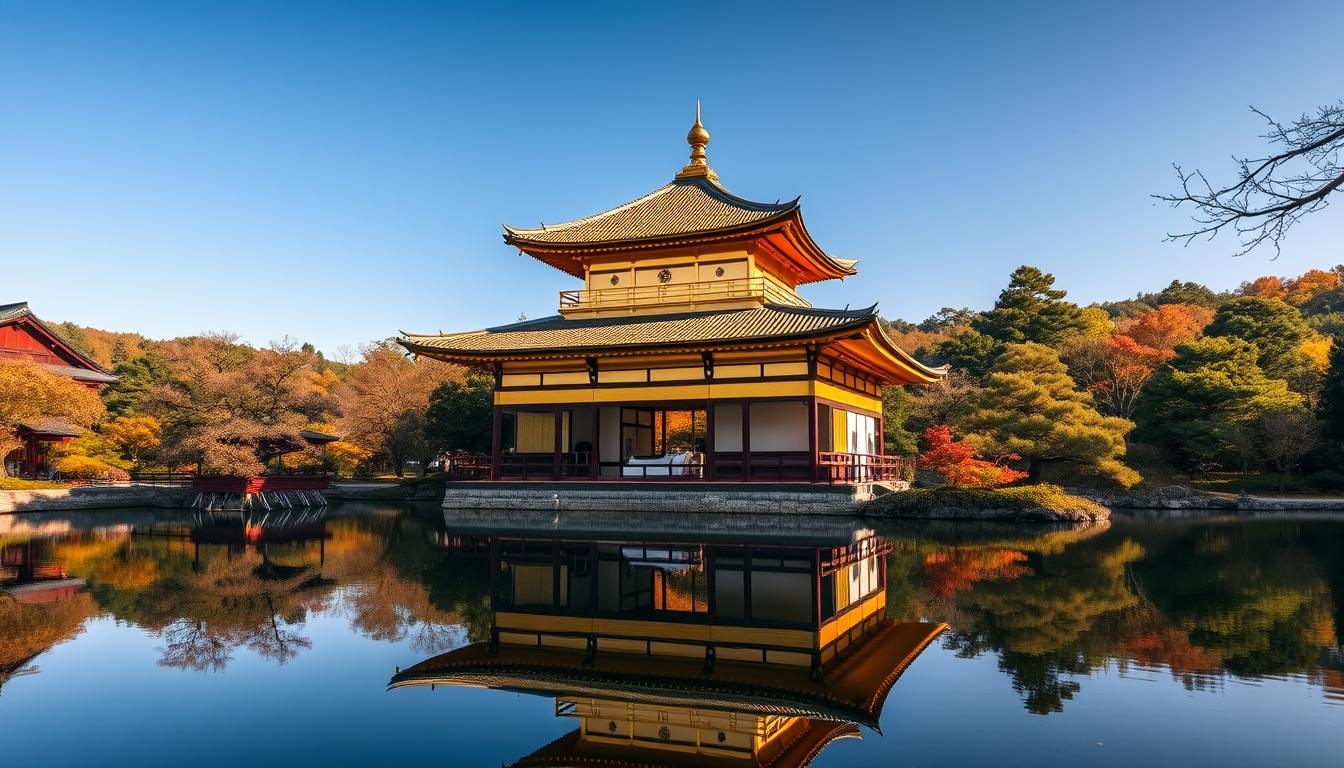
Officially Rokuon-ji, this Zen temple is known for its gold-leaf pavilion reflected in the Mirror Pond, a faithful 1955 reconstruction of the shogun Yoshimitsu's retreat.
Attraction
Shogun Ashikaga Yoshimasa's fifteenth-century retreat in the eastern hills, with a restrained two-storey Kannon hall, sculpted sand gardens and a moss-covered hillside walk.
Attraction
Built for the Tokugawa shoguns in the early 1600s, this moated castle holds the Ninomaru Palace with its painted screens and chirping nightingale floors.
Attraction
The residence of Japan's emperors until 1869, set inside the wide lawns and woods of Kyoto Gyoen and open to the public free of charge.
Café
The flagship of a Kyoto coffee house founded in 1940, serving nel-drip coffee and breakfast from 7:00 in a townhouse-style building with more than 200 seats.
Café
A salon-style coffee house opened in 1934 beside the Takase River, the first café in Japan to be registered as a Tangible Cultural Property.
Café
The original tea salon of Gion Tsujiri, a Uji tea merchant founded in 1860, serving matcha desserts above its Shijo-dori tea shop since 1978.
Café
A café run by the family behind Kaikado's handmade tea caddies, serving its own roasted coffee, Japanese tea and artisan sweets near Shichijo.
Café
The Higashiyama flagship of % Arabica, a coffee brand whose founder chose Kyoto for its first shop in Japan, on the lane leading to Yasaka Pagoda.
Café
A family-run kissaten on Kawaramachi-dori near Sanjo with a ground-floor café and a basement counter, both serving coffee from beans roasted by the family.
Hotel
A luxury hotel in southern Higashiyama built around Shakusui-en, a pond garden of about 800 years old, with a spa, pool and several restaurants.
Hotel
A low-rise luxury hotel of 70 rooms and nine suites on the slopes of Higashiyama beside Ninenzaka, with the long-established Kyoyamato kaiseki restaurant in its grounds.
Hotel
A 160-room luxury hotel beside Nijo Castle on the site of the Mitsui family's Kyoto residence, with a hot spring spa fed from its own source.
Hotel
A celebrated ryokan founded in 1818 in central Kyoto, offering sukiya-style tatami rooms, kyo-kaiseki dinners and a traditional Kyoto breakfast.
Hotel
A large hotel inside the Kyoto Station building, directly connected to the JR station, with a pool and fitness area and around ten restaurants and bars.
Hotel
A design hotel partly housed in the former Kyoto Central Telephone Office, connected to Karasuma Oike Station, with a rooftop Italian restaurant and Japan's first Stumptown…
Bar
A modern cocktail and whisky bar at Kiyamachi Nijo with a collection of around 1,200 bottles, including some 600 single malts, and views towards the river.
Bar
A hotel bar and rooftop terrace in a former school building in Higashiyama, serving cocktails, rare whiskies and wine with views over the historic rooftops.
Bar
A live music venue at Kiyamachi-Sanjo that has hosted jazz, fusion, Brazilian, blues and other bands since 1981.
Bar
A third-floor rooftop cocktail bar and Italian-American restaurant at Ace Hotel Kyoto, with a menu by chef Marc Vetri and views over the Shinpukan courtyard.
Bar
An independent events venue and bar on Kiyamachi near Sanjo, hosting live music, parties and performances, with its own dinner plates and takeaway menu.
Bar
A rooftop bar and barbecue terrace on the tenth floor of the Kyoto Tower Building opposite Kyoto Station, with barbecue sets and free-flow drinks plans.
Restaurant
A family-run kaiseki ryotei founded in 1912 in the Higashiyama hills, led by chef Yoshihiro Murata and holding three Michelin stars.
Restaurant
A kaiseki restaurant with more than 400 years of history beside Nanzen-ji, famous for its soft-boiled Hyotei egg and its morning porridge.
Restaurant
A tofu restaurant in garden grounds near Nanzen-ji, specialising in yudofu, the simmered tofu dish closely linked with the temple district.
Restaurant
A tempura restaurant in a former Gion teahouse, founded in 1885, where chefs fry seasonal seafood and vegetables to order at the counter.
Restaurant
A family business founded as a confectioner in 1465 that has served soba since the early eighteenth century, in a wooden townhouse south of the Imperial…
Restaurant
The original branch of Omen, a Kyoto udon restaurant near Ginkaku-ji known for thick noodles dipped in a rich broth with seasonal vegetables and sesame.
Thing to do
A narrow covered market street of around 130 food shops between Teramachi and Takakura, known for centuries as Kyoto's kitchen.
Thing to do
A walking path through tall groves of moso bamboo between Tenryu-ji and Okochi Sanso villa, one of the most photographed places in Kyoto.
Thing to do
A stone footpath beside a cherry-lined canal at the foot of the eastern hills, linking Ginkaku-ji in the north with the Nanzen-ji area to the south.
Thing to do
A nightly hour-long show in Gion presenting seven traditional arts, from tea ceremony and koto to kyogen comedy and dance by maiko.
Thing to do
A 131-metre tower opposite Kyoto Station, opened in 1964, whose observation deck 100 metres up gives a full view across the city and its ring of…
Tour operator
A Kyoto cycling company running since 2001, offering guided cycling and walking tours, around 400 rental bikes and terminals near Kyoto Station and across the city.
Tour operator
A tea ceremony company founded in 2014 by Atsuko Mori, hosting shared and private ceremonies in a Ninenzaka machiya and a garden teahouse near Ryoan-ji.
Tour operator
A sightseeing train running about 25 minutes from Saga through the Hozu River gorge to Kameoka, with an open-air car called The Rich.
Tour operator
A Kyoto cultural experience company in Nakagyo offering kimono, tea ceremony, calligraphy, home visits, cooking and craft sessions for visitors.
Tour operator
A home cooking class run since 2010 by Taro Saeki north-east of the Imperial Palace, teaching Japanese home dishes in small groups of up to eight.
Three days covers the main sights in Higashiyama, Arashiyama and the north-west, and four or five days allow time for quieter temples, cultural experiences and a day trip to Nara.
Downtown around Kawaramachi and Karasuma is the most convenient for transport and restaurants, Higashiyama and Gion suit those who want old-town atmosphere, and the Kyoto Station area is best for day trips.
From Kansai International Airport, the JR Haruka limited express runs to Kyoto Station, and airport buses run from both Kansai and Itami airports to the station.
Prices are moderate by the standards of major Japanese cities, with plenty of affordable noodle shops, cafés and transport, but hotel prices rise sharply in the cherry blossom and autumn leaf seasons.
Kyoto is very safe, with low crime. The main issues are crowds at popular sights, so keep an eye on belongings and follow local etiquette, such as not photographing geiko and maiko without permission.