
!DISCLOSURE
Singapore is one of the easiest and most rewarding cities in Asia to explore. In a few days you can walk among the giant Supertrees at Gardens by the Bay, eat a Michelin recognised meal at a hawker stall for a few pounds, wander temples and shophouses in Chinatown, Little India and Kampong Glam, spot orangutans at the zoo and spend an afternoon on the beaches of Sentosa. It is clean, safe and compact, the public transport is excellent and almost everyone speaks English.
This guide lists the 25 best things to do in Singapore, grouped by area so you can plan your days easily. For each one you will find how to get there, how long to allow, what it costs in late 2026 and tips for avoiding crowds and saving money. We also cover the new attractions that opened in 2026, the best free things to do, what to eat, a three day itinerary, how much a trip costs and the entry rules for British travellers.
Things to do in Singapore at a glance
| Attraction | Area | Time needed | Cost from |
|---|---|---|---|
| Gardens by the Bay outdoor gardens and Supertrees | Marina Bay | 2 hours | Free |
| Flower Dome and Cloud Forest | Marina Bay | 2 to 3 hours | SGD 46 |
| Garden Rhapsody and Spectra light shows | Marina Bay | 15 minutes each | Free |
| Marina Bay Sands SkyPark Observation Deck | Marina Bay | 1 hour | About SGD 32 |
| Chinatown and Buddha Tooth Relic Temple | Chinatown | Half a day | Free |
| Hawker centres | Across the city | 1 hour | SGD 4 to 8 a dish |
| Singapore Botanic Gardens | Tanglin | 2 to 3 hours | Free |
| Singapore Zoo and Night Safari | Mandai | Half a day each | Varies by park |
| Universal Studios Singapore | Sentosa | Full day | About SGD 83 |
| Singapore Oceanarium | Sentosa | 2 to 3 hours | About SGD 50 |
| Jewel Changi Rain Vortex | Changi Airport | 1 hour | Free |
How to plan your time in Singapore
Singapore is a small island, and the MRT metro reaches almost every sight, so you can see a lot in a short time. You can tap in and out with a contactless Visa or Mastercard bank card or your phone, so there is no need to buy a travel card. Journeys usually cost around SGD 1 to SGD 2.50. Taxis and Grab are reasonably priced too.
The city is hot and humid all year, with daytime temperatures of around 31°C and frequent afternoon showers, especially from November to January. Plan outdoor sightseeing for the early morning and evening, and save museums, malls and indoor attractions for the middle of the day.
Marina Bay
1. Explore Gardens by the Bay and the Supertree Grove
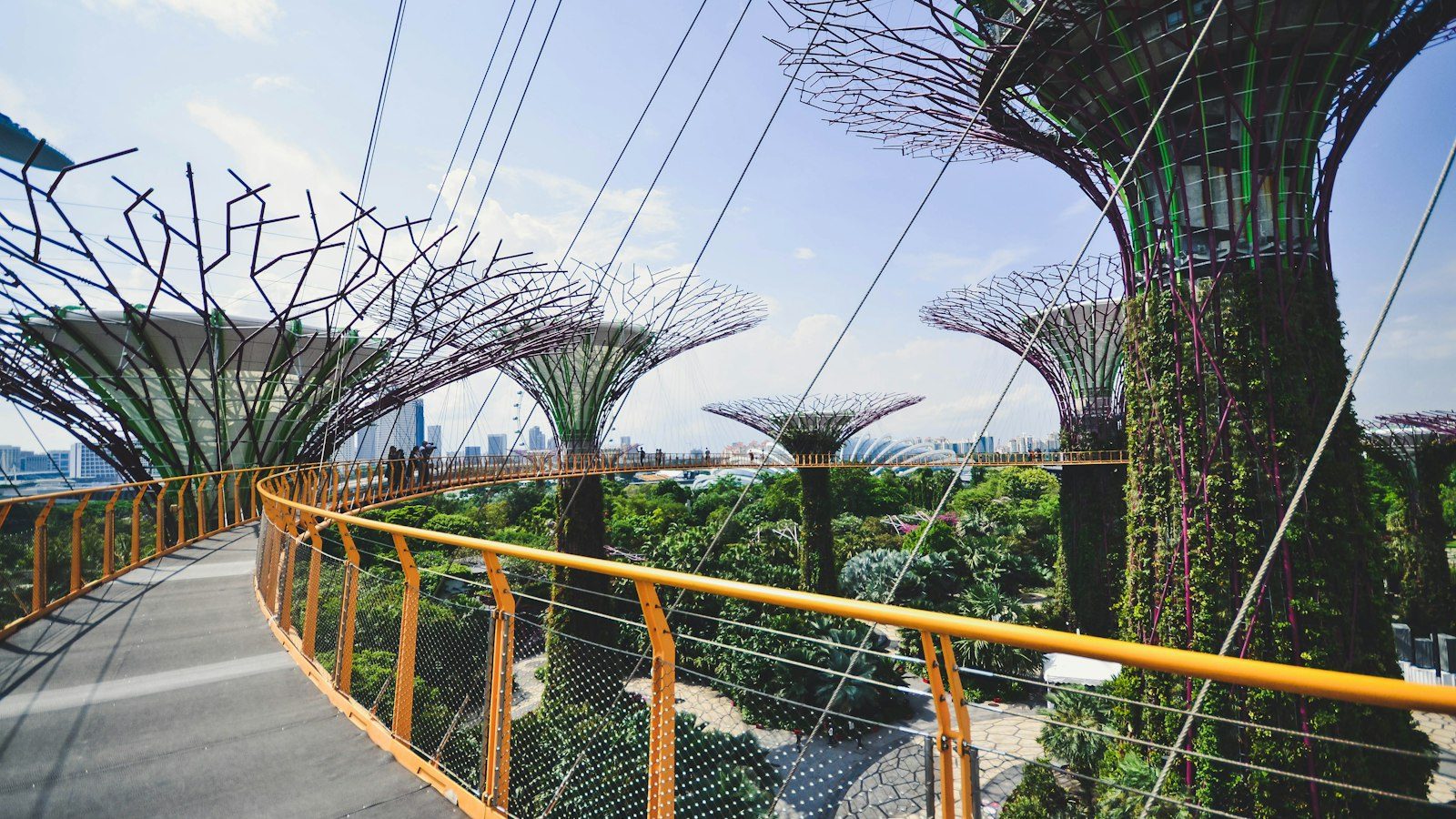
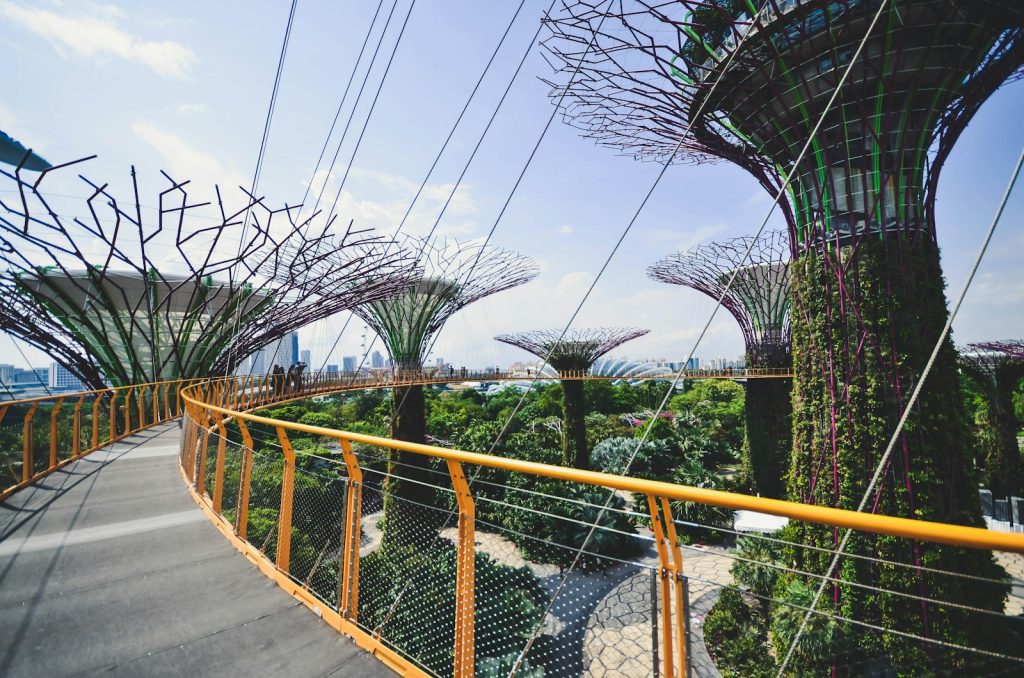
Gardens by the Bay is Singapore’s most famous attraction, a futuristic park of giant tree like structures, lakes, sculptures and gardens on reclaimed land next to Marina Bay. The outdoor gardens, including the Supertree Grove, are free to explore, and you can easily spend two hours wandering the themed gardens and lakes.
- **Getting there:** take the MRT to Bayfront station and follow the signs through the underpass, or walk across from Marina Bay Sands.
- **Time needed:** about two hours for the outdoor gardens, more if you visit the conservatories.
- **Cost:** the outdoor gardens are free. The OCBC Skyway, a walkway 22 metres up between the Supertrees, costs SGD 14 for adults.
- **Tip:** arrive in the late afternoon, walk the gardens as it cools down and stay for the free light show.
2. Visit the Flower Dome and Cloud Forest
The two giant glass conservatories at Gardens by the Bay are among the best attractions in the city. The Flower Dome is the largest glass greenhouse in the world, filled with plants from Mediterranean and semi arid regions and changing floral displays, including a Christmas train show from November 2026 to January 2027. The Cloud Forest has a 35 metre high indoor mountain covered in orchids and ferns, with a misty waterfall and walkways that take you to the top. A combined ticket for non residents costs SGD 46 for adults and SGD 32 for children aged 3 to 12. Go early in the morning or on a weekday to avoid queues.
3. Watch the Garden Rhapsody and Spectra light shows
Every evening, the Supertrees light up for Garden Rhapsody, a free light and music show at 7.45pm and 8.45pm. Lie down on the ground under the trees for the best view. Across the bay, Spectra is a free light and water show at the Event Plaza in front of Marina Bay Sands, with lasers, fountains and projections. Shows usually start at 8pm and 9pm, with an extra show on Friday and Saturday nights. You can catch both on the same evening.
4. See the city from Marina Bay Sands SkyPark
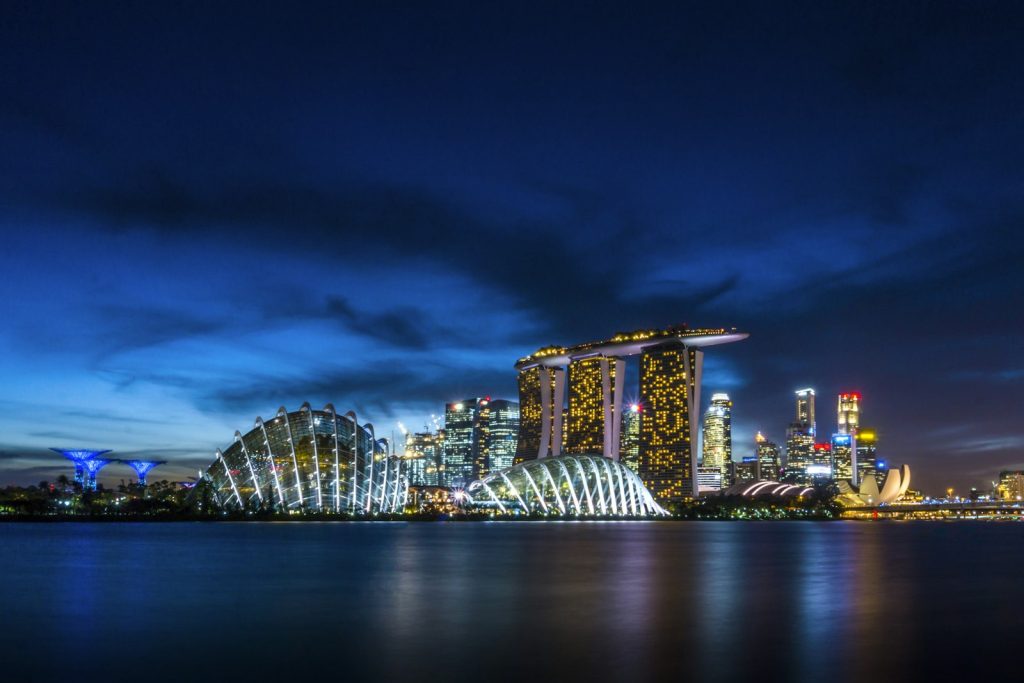
Marina Bay Sands, with its three towers topped by a giant ship shaped deck, is the symbol of modern Singapore. The famous infinity pool is only open to hotel guests, but anyone can buy a ticket to the SkyPark Observation Deck on the 56th floor for views across Marina Bay, the Gardens and the city skyline. Tickets cost around SGD 32 to SGD 36. Go just before sunset to see the city in daylight and at night.
5. Visit the Merlion and walk around Marina Bay
The Merlion, a statue with the head of a lion and the body of a fish, is Singapore’s national symbol. Merlion Park, at the mouth of the Singapore River, is free and has one of the best views of Marina Bay Sands. From there, walk the waterfront promenade around the bay, past the Esplanade theatres, the Helix Bridge and the ArtScience Museum. The walk takes about an hour and is especially lovely at night.
6. Explore the ArtScience Museum
The lotus shaped ArtScience Museum, next to Marina Bay Sands, hosts major touring exhibitions and the permanent Future World digital art installation by teamLab. It is a good choice for a hot or rainy afternoon. Allow about two hours.
Civic District and the river
7. Visit the National Gallery Singapore
Housed in the former City Hall and Supreme Court buildings, the National Gallery holds the world’s largest public collection of modern art from Southeast Asia. Do not miss the rooftop for views over the Padang and Marina Bay. Admission is free for some areas, with tickets needed for the main galleries and special exhibitions.
8. Take a Singapore River cruise
A bumboat cruise along the Singapore River is a relaxing way to see the old godowns of Clarke Quay and Boat Quay, the colonial buildings of the Civic District and the skyline of Marina Bay. Cruises last around 40 minutes and leave from several jetties along the river. Evening cruises are the most atmospheric.
9. Spend an evening at Clarke Quay and Boat Quay
Clarke Quay and Boat Quay are lively riverside areas full of bars, restaurants and nightlife. Drinks are expensive in Singapore, but a riverside evening here is part of the experience. Look out for happy hour deals in the early evening.
10. Drink a Singapore Sling at Raffles Hotel
Raffles, the grand colonial hotel opened in 1887, is a Singapore landmark. The Singapore Sling cocktail was created here, and you can still order one at the Long Bar, where it is a tradition to throw peanut shells on the floor. It is expensive, but a memorable treat. The hotel arcade and courtyards are open to visitors.
11. Climb Fort Canning Park
Fort Canning Park, a green hill in the city centre, was once the seat of Malay kings and later a British military base. Today it has gardens, historic sites and the famous tree tunnel staircase, one of the most photographed spots in the city. It is free and makes a peaceful break from the heat of the streets.
Chinatown, Little India and Kampong Glam
12. Explore Chinatown
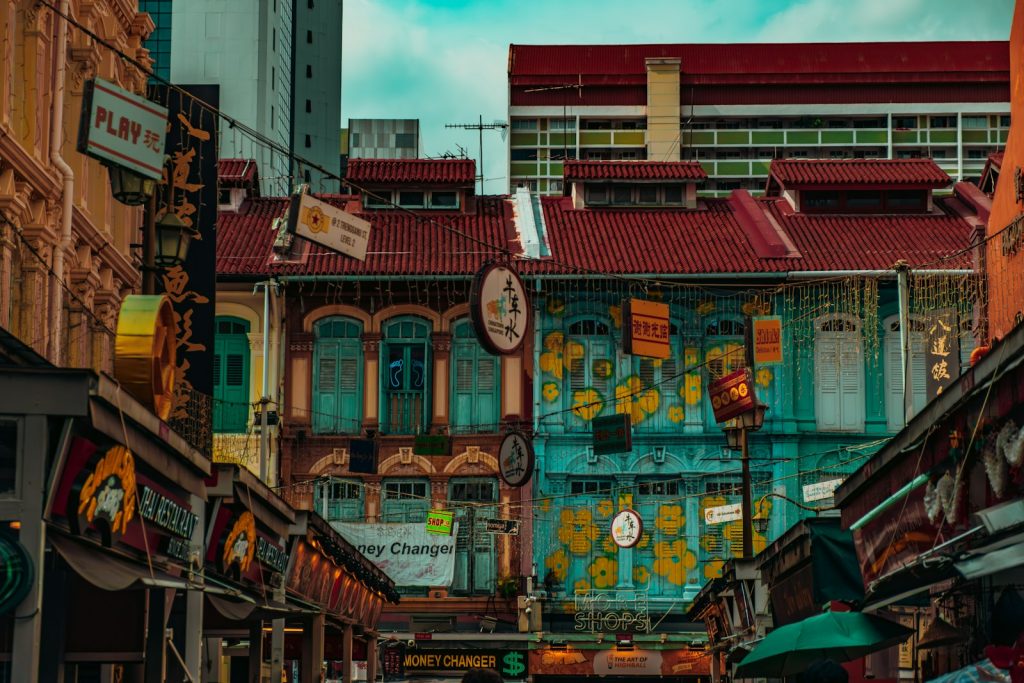
Chinatown is one of the most colourful areas of Singapore, full of restored shophouses, lanterns, markets and temples. Visit the Buddha Tooth Relic Temple, a striking five storey temple with a rooftop garden, and the Sri Mariamman Temple, the oldest Hindu temple in Singapore. Both are free, but dress modestly and cover your shoulders and knees. The Chinatown Heritage Centre tells the story of the early immigrants who lived here.
13. Eat at a hawker centre
Hawker centres are open air food courts with dozens of stalls selling local dishes, and they are the heart of Singapore’s food culture, now recognised by UNESCO. A plate of food usually costs around SGD 4 to SGD 8. The most famous include:
- **Maxwell Food Centre:** known for Hainanese chicken rice.
- **Chinatown Complex Food Centre:** the largest hawker centre in Singapore, with more than 200 stalls.
- **Lau Pa Sat:** a Victorian market building in the financial district, with satay street opening in the evenings.
- **Newton Food Centre:** popular for seafood and chilli crab.
- **Tekka Centre:** in Little India, great for biryani and Indian dishes.
Tables are often reserved with a packet of tissues, so look for a free seat before you order. Most stalls accept cash, and many now take contactless payments.
14. Wander Little India
Little India is a lively area of spice shops, flower garland stalls, gold jewellers and Indian restaurants. Visit the colourful Sri Veeramakaliamman Temple, eat at Tekka Centre and explore the Mustafa Centre, a huge 24 hour department store. The area is especially vibrant during Deepavali, usually in October or November.
15. Visit Kampong Glam and Haji Lane
Kampong Glam is Singapore’s historic Malay and Arab quarter, centred on the golden domed Sultan Mosque. Nearby, Haji Lane and Arab Street are lined with independent shops, murals, cafes and bars. It is a great area for an evening stroll and a Middle Eastern or Malay dinner.
16. Discover Peranakan culture in Joo Chiat and Katong
The neighbourhoods of Joo Chiat and Katong, in the east of the island, are known for their pastel coloured Peranakan shophouses and food. Try laksa and kueh, traditional Peranakan cakes, and visit the shops selling beaded slippers and ceramics.
Gardens, nature and wildlife
17. Visit the Singapore Botanic Gardens
The Singapore Botanic Gardens, a UNESCO World Heritage Site, is one of the most beautiful green spaces in Asia. Entry to the main gardens is free, and you can explore lakes, rainforest, the Ginger Garden and the Evolution Garden. The National Orchid Garden, inside the Botanic Gardens, has more than 1,000 species of orchid and charges a small entry fee. Go early in the morning when it is cooler.
18. Visit the Singapore Zoo, Night Safari and Mandai parks
The Mandai Wildlife Reserve in the north of the island is home to five wildlife parks: the Singapore Zoo, known for its open enclosures and orangutans; the Night Safari, the world’s first nocturnal zoo; River Wonders, with giant pandas and manatees; Bird Paradise; and Rainforest Wild, an adventure park with treetop trails and the new East section that opened in May 2026. Mandai also opened Exploria, a large indoor nature experience, in March 2026. Combination tickets save money if you visit more than one park.
19. Walk the MacRitchie Treetop Walk or the Southern Ridges
For a taste of Singapore’s rainforest, follow the trails around MacRitchie Reservoir to the Treetop Walk, a suspension bridge high in the forest canopy. Go early and take plenty of water, as the loop is around 11 kilometres. The Southern Ridges is a shorter walk linking parks in the south of the island via the wave shaped Henderson Waves bridge.
20. Take a bumboat to Pulau Ubin
Pulau Ubin is a small island off the north east coast that feels like Singapore decades ago, with wooden houses, mangroves and quiet roads. Take a bumboat from Changi Point Ferry Terminal, hire a bike and cycle to Chek Jawa Wetlands. It makes a great half day trip.
Sentosa
21. Spend a day at Universal Studios Singapore
Universal Studios Singapore, on Sentosa island, has rides and shows based on films, from Transformers and Jurassic Park to Shrek. Minion Land opened in 2025. One day tickets start at around SGD 83 and are cheaper when bought online. Arrive early and head to the most popular rides first.
22. See the Singapore Oceanarium
The Singapore Oceanarium, which opened in July 2025 at Resorts World Sentosa, replaced the old S.E.A. Aquarium. It is one of the largest aquariums in the world, with huge tanks of sharks, rays and coral reef fish. Tickets cost around SGD 50 for tourists.
23. Relax on Sentosa’s beaches
Sentosa has three main beaches: Siloso, the liveliest, with beach clubs and activities; Palawan, popular with families; and Tanjong, the quietest. You can reach Sentosa on the Sentosa Express monorail from VivoCity, the cable car from Mount Faber or by walking the Sentosa Boardwalk. Skypark Sentosa reopened in June 2026 with new Skyslides, a pair of giant slides, alongside its bungee jump and giant swing.
More things to do
24. See the Rain Vortex at Jewel Changi Airport
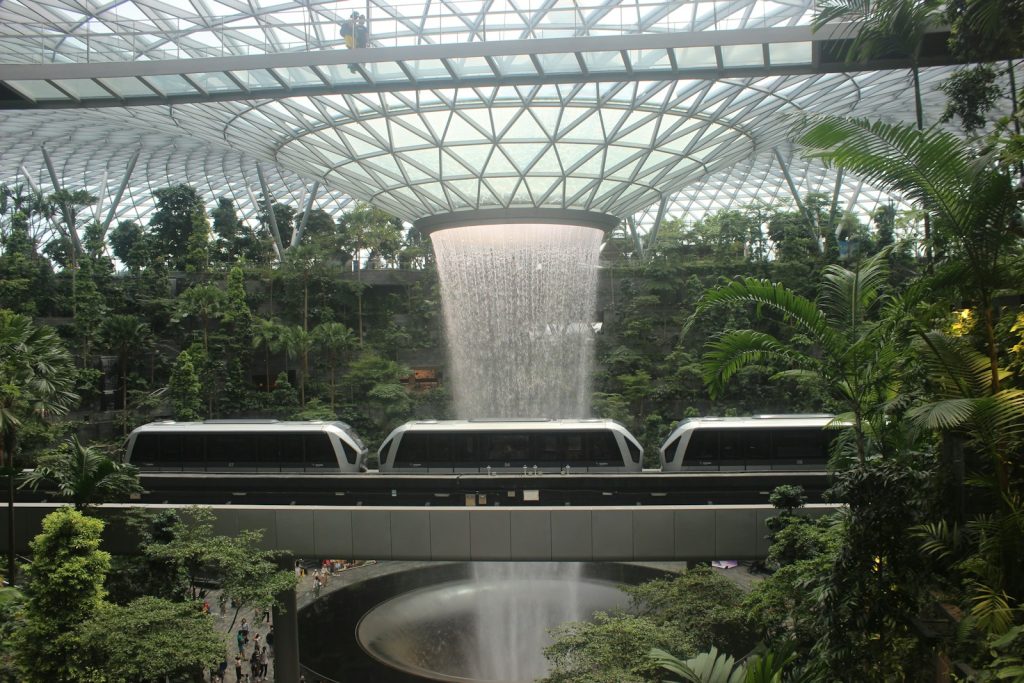
Jewel Changi, connected to Terminal 1 of Changi Airport, is a glass domed complex built around the Rain Vortex, the tallest indoor waterfall in the world at 40 metres high. It is free to see, and there is a light and sound show on the waterfall every evening. The Canopy Park on the top level, with nets, mazes and gardens, is ticketed. If you are on a long layover, it is well worth leaving the airport transit area to visit.
25. Visit Haw Par Villa
Haw Par Villa is one of the strangest attractions in Singapore, a free park of more than 1,000 statues and dioramas depicting scenes from Chinese folklore, legends and religion. The Ten Courts of Hell exhibit, which shows the punishments of the afterlife, is famous but not suitable for young children.
New attractions in Singapore for 2026
- **Exploria at Mandai Wildlife Reserve:** a 10,000 square metre indoor nature experience, opened March 2026.
- **Rainforest Wild Adventure East:** the second phase of Mandai’s adventure park, opened in May 2026.
- **Skyslides at Skypark Sentosa:** new giant slides, open since June 2026.
- **Singapore Oceanarium:** the new aquarium at Resorts World Sentosa, opened in July 2025.
- **Disney cruises from Singapore:** the Disney Adventure ship now sails short family cruises from Marina Bay Cruise Centre.
What to eat in Singapore
Food is one of the main reasons to visit Singapore. The dishes to try include:
- **Hainanese chicken rice:** poached chicken with fragrant rice and chilli sauce, often called the national dish.
- **Chilli crab:** crab in a sweet, spicy tomato and chilli sauce, eaten with fried buns called mantou.
- **Laksa:** a rich, spicy coconut noodle soup.
- **Char kway teow:** stir fried flat noodles with prawns, egg and Chinese sausage.
- **Satay:** grilled skewers of chicken, beef or mutton with peanut sauce.
- **Roti prata:** crispy flatbread served with curry.
- **Kaya toast:** toast with coconut jam and butter, served with soft boiled eggs and strong coffee for breakfast.
Best time to visit Singapore
Singapore is warm and humid all year, so there is no bad time to visit. February to April is usually the driest and sunniest period. November to January is the wettest, with heavy showers that tend to pass quickly. Popular events include Chinese New Year in January or February, the Formula 1 Singapore Grand Prix night race in September or October, and the Christmas lights on Orchard Road from November to early January.
How much does a trip to Singapore cost?
Singapore is one of the more expensive cities in Asia, mainly because of hotels and alcohol, but food and transport are good value. These are rough costs per person per day, excluding flights, for two people sharing a room.
| Cost | Budget | Mid range | Luxury |
|---|---|---|---|
| Hotel per night, per person | £35 to £60 | £80 to £150 | £250 or more |
| Food and drink | £15 to £25 | £40 to £70 | £100 or more |
| Transport | £5 to £8 | £10 to £20 | £30 or more |
| Attractions | £10 to £30 | £40 to £80 | £100 or more |
| Daily total | £65 to £125 | £170 to £320 | £480 or more |
Return flights from London to Singapore take around 13 hours direct and usually cost around £600 to £1,000 in economy. Alcohol is heavily taxed, so a beer in a bar can cost SGD 15 or more, while a hawker centre meal costs SGD 4 to SGD 8.
A three day itinerary
- **Day 1, Marina Bay:** morning at the Flower Dome and Cloud Forest, lunch at Lau Pa Sat, an afternoon at the ArtScience Museum or National Gallery, then the bay walk, the SkyPark at sunset and the Garden Rhapsody and Spectra shows.
- **Day 2, culture and food:** breakfast of kaya toast, Chinatown and its temples, lunch at Maxwell Food Centre, then Little India and Kampong Glam, with dinner at Haji Lane or a river cruise and drinks at Clarke Quay.
- **Day 3, nature or Sentosa:** the Botanic Gardens early, then either an afternoon on Sentosa or the zoo followed by the Night Safari. If you fly out in the evening, leave time for the Rain Vortex at Jewel.
Where to stay in Singapore
- **Marina Bay:** best for views and luxury, close to the main sights.
- **Civic District and Clarke Quay:** central, with good transport and nightlife.
- **Chinatown:** great for food, character and mid range boutique hotels.
- **Little India and Bugis:** good value hotels and easy MRT links.
- **Orchard Road:** best for shopping.
- **Sentosa:** best for a family resort holiday.
Practical tips and rules
- **Entry:** British citizens can visit without a visa, and immigration officers normally grant a stay of 30 to 90 days. Complete the free SG Arrival Card online within three days before you arrive. Your passport must be valid for at least six months.
- **Rules:** Singapore has strict laws. Littering, jaywalking, smoking in non smoking areas and eating or drinking on the MRT can lead to fines. You cannot bring chewing gum into the country for sale, and drug offences carry very severe penalties, including the death penalty.
- **Tipping:** not expected. Most restaurants add a 10% service charge plus GST to the bill.
- **Weather:** carry a small umbrella and wear light, breathable clothes. Malls and the MRT are strongly air conditioned, so a light layer helps.
- **Getting from the airport:** the MRT runs from Changi to the city in about 30 to 45 minutes, and taxis are metered.
Frequently asked questions
Is 3 days in Singapore enough?
Yes. Three days is enough to see the highlights of Singapore, including Gardens by the Bay, Marina Bay, Chinatown, Little India, a hawker centre and either Sentosa or the zoo. With four or five days you can add Universal Studios, the Night Safari, Pulau Ubin and a slower pace. Singapore also works well as a one or two night stopover.
What is Singapore’s most famous dish?
Hainanese chicken rice is usually called Singapore’s national dish, and chilli crab is its most famous seafood dish. Laksa, satay, char kway teow and kaya toast are also iconic and easy to find at hawker centres.
Is Singapore cheap for tourists?
Singapore is not cheap compared with most of Southeast Asia, mainly because of hotel prices and alcohol. However, it can be good value if you eat at hawker centres, use the MRT and enjoy the many free attractions. A mid range trip typically costs around £170 to £320 per person per day, excluding flights.
How much money will I need for 4 days in Singapore?
For four days, budget around £260 to £500 per person on a budget, £680 to £1,280 mid range and £1,900 or more for a luxury trip, excluding flights. The biggest costs are accommodation and paid attractions such as Universal Studios or the zoo.
What are some fun and exciting adventure activities in Singapore?
For adventure, try the bungee jump, giant swing and new Skyslides at Skypark Sentosa, the rides at Universal Studios, the treetop trails and climbing at Rainforest Wild at Mandai, the MacRitchie Treetop Walk, cycling on Pulau Ubin, indoor skydiving at iFly Singapore on Sentosa or wakeboarding at the cable ski park in the east of the island.
What is the 60-90 rule in Singapore?
There is no official 60-90 rule for tourists in Singapore. The phrase sometimes appears online in discussions about how long visitors can stay. For British citizens, the immigration officer decides the length of stay on arrival, and it is normally between 30 and 90 days. Always check the date stamped or shown on your entry record and leave before it expires, as overstaying is a serious offence.
Is Singapore safe for tourists?
Yes. Singapore is one of the safest cities in the world, with very low crime. Take normal care with belongings in crowded places, and respect the strict local laws.
What is the best area to stay in Singapore for first timers?
Marina Bay, the Civic District and Clarke Quay are the most convenient areas for first timers, close to the main sights and MRT stations. Chinatown is a great value alternative with excellent food.
Plan the rest of your trip
Singapore is the perfect starting point for a wider trip in Asia. Browse our Asia travel guides, or read our guides to the best time to visit Bali and the best time to visit Thailand, both short flights away, or our guide to the best things to do in Tokyo. Flying on to Australia? Read our guide to the best things to do in Sydney. If you spot something out of date, please let us know.