

The best time to visit Vietnam for a classic north to south trip is late February to April, when Hanoi has warmed up, the central coast around Hoi An is dry and the south is still in its dry season. If you are only visiting one region, the answer changes: October to April suits the north, February to August suits the central coast and December to April suits the south.
Some links in this guide are affiliate links: if you book through them we may earn a commission at no extra cost to you. It never changes what we recommend. How we make money.
Vietnam is around 1,650 kilometres from top to bottom, so it never has one season everywhere. While Ho Chi Minh City bakes in dry heat in March, Sapa can be cold and foggy; while Da Nang has its sunniest months in summer, Hanoi has its wettest. This guide breaks the country into its three weather zones, gives month by month climate averages from Vietnamese weather records, flags typhoon and flood risk, and lists the 2027 festival dates, including Tet. Last checked November 2026.

Best time to visit Vietnam at a glance
| Goal | Best months | Why |
|---|---|---|
| One trip covering north, centre and south | Late February to April | Dry or mostly dry in all three regions |
| Hanoi and Ha Long Bay | October to April (best March, April, October, November) | Cooler, drier air and calmer seas |
| Sapa and the northern mountains | March to May, September to November | Clear trekking weather; terraces green then gold |
| Hoi An, Da Nang and Hue | February to August | Central coast dry season, warm sea |
| Ho Chi Minh City and the Mekong Delta | December to April | Southern dry season |
| Phu Quoc beaches | November to April | Calm west coast seas and little rain |
| Cheapest prices | May to September (avoid Tet) | Low season in the north and south |
| Tet festivities | 6 February 2027 | Lunar New Year; book transport weeks ahead |
In this guide:
- When is the best time to visit Vietnam?
- Vietnam weather by month (climate table)
- Best time to visit north Vietnam, including Ha Long Bay and Sapa
- Best time to visit central Vietnam
- Best time to visit south Vietnam
- Vietnam rainy season and typhoon season
- Best month to visit Vietnam by traveller type
- Cheapest time to visit Vietnam
- Vietnam events calendar 2027, including Tet
- UK and US travel essentials
- FAQs
When is the best time to visit Vietnam?
March and April are the best months to visit Vietnam for a trip covering the whole country. The north is warm but not yet sticky, the central coast is in its dry season and the south has had months of sunshine. October and November come next, if you skip or accept rain on the central coast.
The reason there is no single answer is geography. The north has a subtropical climate with a real winter: Hanoi averages a high of about 20°C in January and 35°C in June. The centre is shielded by the Truong Son mountains and gets most of its rain from September to December. The south is tropical, hot all year, with a simple split between a dry season and a wet season.
So plan around your route. If your trip is Hanoi, Ha Long Bay and Sapa, autumn is superb. If it is Hoi An and the beaches, come in spring or summer. If it is Saigon, the Mekong Delta and Phu Quoc, winter is ideal.
Vietnam weather by month
The table below shows average daily highs and lows with average monthly rainfall for four places that represent Vietnam’s main zones. Figures are long term averages from the Vietnam Institute for Building Science and Technology and the World Meteorological Organization (Hanoi uses 1991 to 2020 normals). Rainfall above about 150 mm means frequent heavy showers.
| Month | Hanoi (north) | Sa Pa (mountains) | Da Nang (centre) | Ho Chi Minh City (south) |
|---|---|---|---|---|
| January | 20°C / 14°C, 20 mm | 12°C / 6°C, 70 mm | 25°C / 19°C, 82 mm | 32°C / 23°C, 12 mm |
| February | 22°C / 16°C, 20 mm | 14°C / 8°C, 74 mm | 26°C / 20°C, 24 mm | 33°C / 23°C, 8 mm |
| March | 26°C / 21°C, 36 mm | 18°C / 11°C, 105 mm | 28°C / 22°C, 25 mm | 34°C / 25°C, 18 mm |
| April | 29°C / 22°C, 104 mm | 21°C / 14°C, 213 mm | 31°C / 24°C, 35 mm | 35°C / 26°C, 57 mm |
| May | 33°C / 25°C, 165 mm | 22°C / 16°C, 341 mm | 33°C / 25°C, 81 mm | 35°C / 26°C, 202 mm |
| June | 35°C / 27°C, 264 mm | 23°C / 18°C, 381 mm | 35°C / 26°C, 83 mm | 34°C / 26°C, 224 mm |
| July | 34°C / 27°C, 254 mm | 23°C / 18°C, 461 mm | 34°C / 26°C, 93 mm | 33°C / 25°C, 231 mm |
| August | 33°C / 26°C, 274 mm | 23°C / 17°C, 452 mm | 34°C / 26°C, 141 mm | 33°C / 25°C, 219 mm |
| September | 32°C / 25°C, 228 mm | 22°C / 16°C, 303 mm | 32°C / 25°C, 351 mm | 33°C / 25°C, 490 mm |
| October | 30°C / 23°C, 155 mm | 19°C / 14°C, 201 mm | 30°C / 24°C, 628 mm | 32°C / 25°C, 340 mm |
| November | 27°C / 20°C, 61 mm | 16°C / 10°C, 106 mm | 27°C / 22°C, 448 mm | 32°C / 25°C, 128 mm |
| December | 21°C / 14°C, 20 mm | 13°C / 7°C, 66 mm | 25°C / 20°C, 218 mm | 32°C / 24°C, 41 mm |
Read across a row and the pattern is clear. In October, Hanoi is drying out while Da Nang gets more than 600 mm of rain. In July, Da Nang is dry and hot while Hanoi and Ho Chi Minh City both see more than 200 mm.
Month by month summary
| Month | North | Centre | South | Crowds and prices |
|---|---|---|---|---|
| January | Cool, grey, dry; cold in Sapa | Showers easing | Dry, sunny | Busy; prices rise before Tet |
| February | Mild, drizzly; Tet | Dry season starts | Dry, sunny | Tet week very busy and pricey |
| March | Warm, mostly dry | Dry, warm sea | Dry, hot | High season |
| April | Warm, showers increasing | Dry, hot | Hottest month, dry | High season; holidays 30 April and 1 May |
| May | Hot, rain building | Hot, dry, great beaches | Wet season starts | Shoulder; good deals |
| June | Very hot, wet | Hot, dry | Wet, afternoon storms | Domestic summer holidays on the coast |
| July | Hot, wet, storm risk | Hot, dry | Wet | Low season north and south |
| August | Hot, wettest in Hanoi | Dry, rain starts late | Wet | Low season north and south |
| September | Still wet; rice harvest in the hills | Rain and typhoon risk rising | Wettest month | Quiet; National Day 2 September is busy |
| October | Clear, warm, ideal | Wettest month, flood risk | Rain easing | Shoulder in north |
| November | Cool, dry, ideal | Heavy rain, flood risk | Showers easing; dry season begins | Busy in north |
| December | Cool to cold, dry | Still rainy, easing late in the month | Dry, sunny | Busy over Christmas and New Year |
Best time to visit north Vietnam
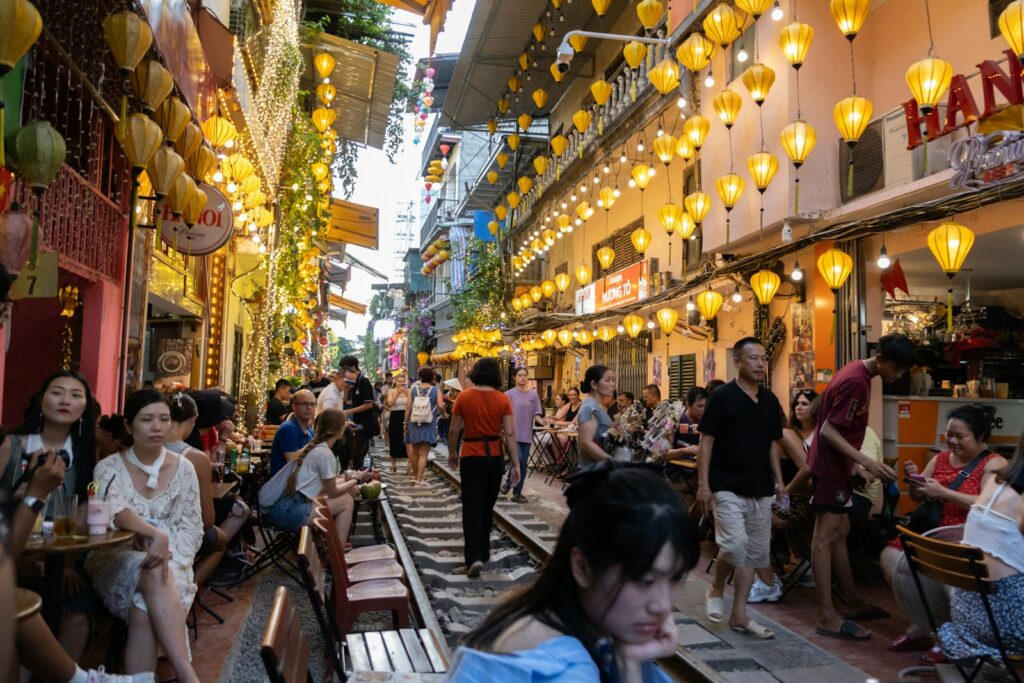
The best time to visit north Vietnam is October to April, with March, April, October and November the sweet spots. These months bring dry, clear weather in Hanoi and Ha Long Bay with highs of roughly 26°C to 30°C. December to February is dry but cool and often grey, and May to September is hot, humid and wet.
North Vietnam covers Hanoi, Ha Long Bay and Lan Ha Bay, Ninh Binh, Sapa, Ha Giang and Mai Chau. It is the only part of Vietnam with four distinct seasons. Winter (December to February) can feel cold indoors because many homes and cheaper hotels have no heating, so pack a warm layer. Summer (May to September) brings most of the year’s rain, usually as heavy afternoon or evening downpours rather than all day rain.
Best time to visit Ha Long Bay
The best time to visit Ha Long Bay is March to May and late September to November. Seas are usually calm, skies are clearer and the air is warm enough to kayak or swim from the boat. Winter cruises still run but views can be hazy and the air chilly; summer brings heat, haze and the risk of storms.
Storms matter here. GOV.UK notes that the tropical cyclone season normally runs from May to November, and when a storm is forecast the local authorities can order cruise boats to stay in port. Typhoon Yagi, which hit Quang Ninh province in September 2024, is a recent reminder. If you book a summer or autumn cruise, read the cancellation terms and keep a spare day in your plans.
Most overnight cruises include the bay sightseeing fee in the price. If you book a basic day boat yourself, the official fee schedule from the Ha Long Bay management board lists VND 200,000 to 250,000 (about £6 to £7.50 / $8 to $10) per person for daytime routes, depending on the route.
Best time to visit Sapa
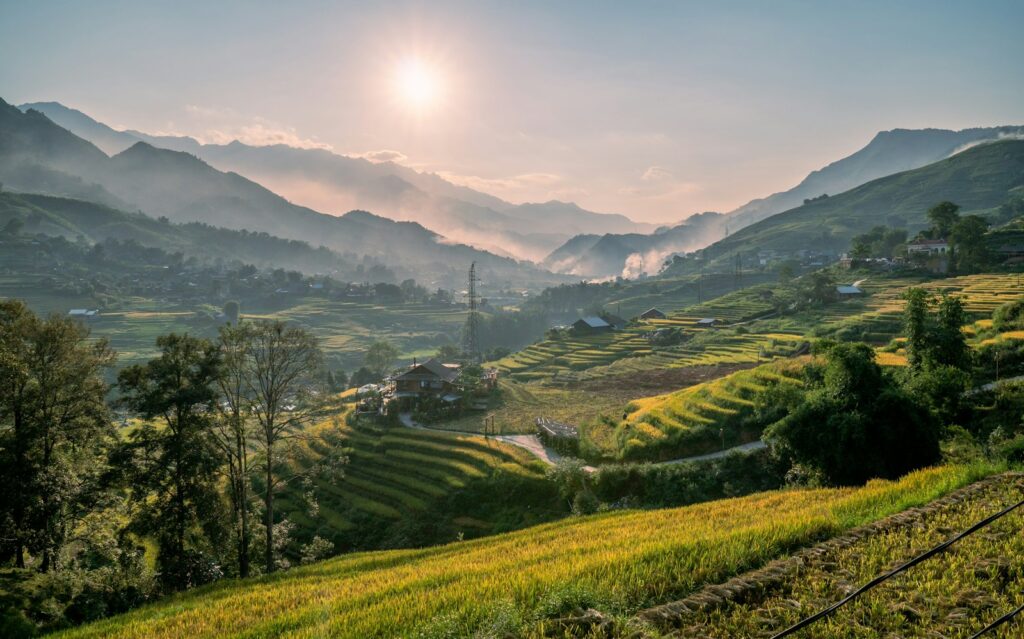
The best time to visit Sapa is March to May and September to November. These months give the clearest trekking days, with daytime highs of about 16°C to 22°C. Mid September to early October is when the rice terraces turn gold before harvest, while May and June bring flooded and then bright green terraces.
Sapa sits at around 1,570 metres, so it is far cooler than Hanoi. Average January highs are only about 12°C with lows around 6°C, and snow has been recorded in the town several times since 1971. July and August are the wettest months, with more than 450 mm of rain on average, which makes trails muddy and views cloudy. Ha Giang, further north east, follows a similar pattern; October and November are the favourite months for its mountain loop.
Best time to visit central Vietnam
The best time to visit central Vietnam is February to August. This is the dry season along the coast from Hue to Hoi An and Da Nang, with highs climbing from about 26°C in February to 34°C in July. February to May is the most comfortable; June to August is best for beach days. Avoid October and November.
Central Vietnam gets most of its rain at the opposite time of year to the north and south. Da Nang averages more than 600 mm of rain in October and about 450 mm in November, and the GOV.UK travel advice warns of seasonal flooding in central Vietnam in October and November. Hoi An’s old town floods in some years, and in late October 2025 heavy rain caused serious flooding in Hue and Hoi An. Trips at this time are possible, but you need a flexible plan.
Further south on the central coast, Nha Trang and Quy Nhon have a longer dry spell and their heaviest rain from October to December. Inland, the highland town of Da Lat is cool all year and driest from December to April.
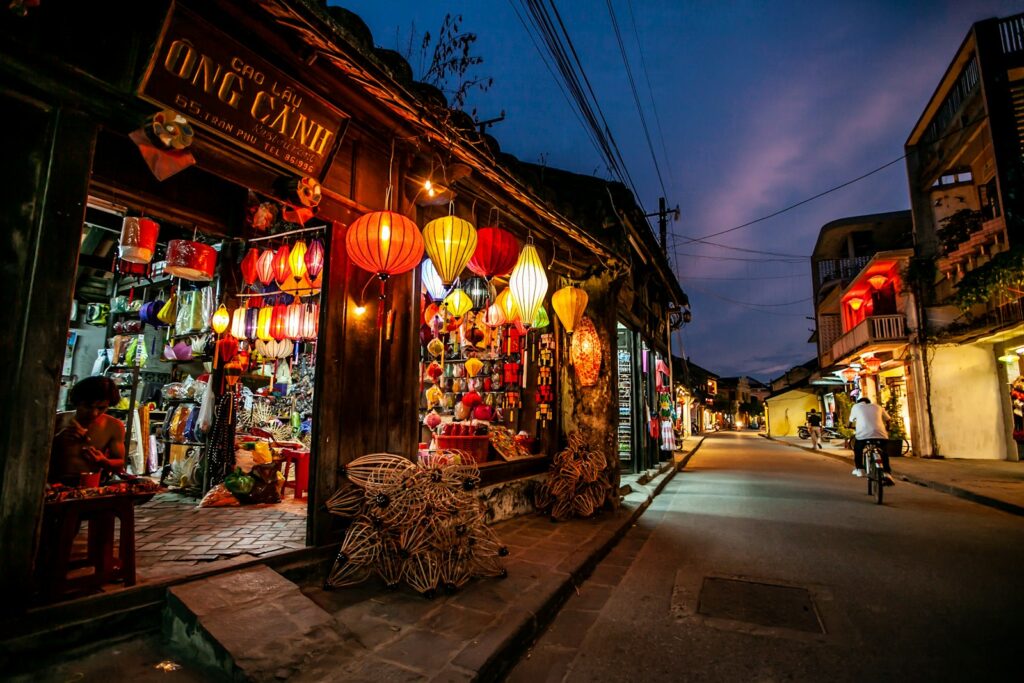
Hoi An is the most popular base on this coast. In June, July and August it is hot, often above 33°C, so plan sightseeing for early morning and evening and spend the middle of the day on An Bang or My Khe beach. Vietnamese families also holiday here in summer, so Da Nang beachfront hotels can be busy at weekends.
Best time to visit south Vietnam
The best time to visit south Vietnam is December to April, the dry season in Ho Chi Minh City, the Mekong Delta and Phu Quoc. Ho Chi Minh City averages under 60 mm of rain a month in this period. It is hot all year, with highs of 31°C to 35°C, peaking in April and May.
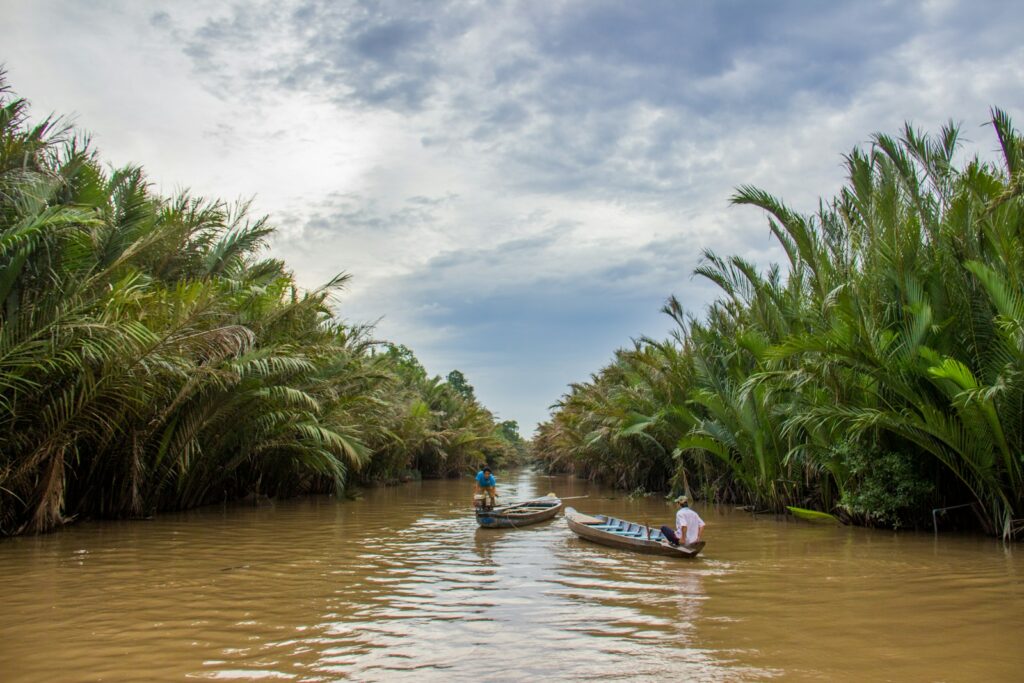
The wet season runs from May to November. It rarely ruins a trip: rain tends to fall as a heavy storm for an hour or two in the afternoon, then clears. September is the wettest month in Ho Chi Minh City, with close to 500 mm of rain on average. In the Mekong Delta, the high water season of September to November floods fields and makes the waterways lush, which some travellers enjoy.
Phu Quoc, off the west coast, is best from November to April when the sea is calm and clear. From May to October the island has more rain and rougher water on the west coast beaches.
Vietnam rainy season and typhoon season
Vietnam’s rainy season depends on the region. GOV.UK puts it at June to September in the north and south, and October to December in central Vietnam. Typhoon season normally runs from May to November, with storms most likely to reach the north in summer and the central coast from September to November.
Here is how to handle it:
- Check the forecast: follow the national weather service and your hotel or tour operator in the week before travel, and look at the GOV.UK or US State Department advice for storm warnings.
- Build in slack: keep one spare day around a Ha Long Bay cruise or a flight between regions so a cancellation does not break your trip.
- Pick the dry region: in October and November, swap Hoi An for the north; in July and August, swap Hanoi for the central coast.
- Insure properly: buy travel insurance before you book and check that it covers cancellation and delay from named storms.
Best month to visit Vietnam by traveller type
| Traveller | Best months | Where to go |
|---|---|---|
| First time, full country | March, April | Hanoi, Ha Long Bay, Hoi An, Ho Chi Minh City |
| Beach lovers | June to August (centre); December to April (south) | Da Nang, Hoi An, Nha Trang; Phu Quoc |
| Trekkers and hikers | March to May, September to November | Sapa, Ha Giang, Pu Luong |
| Photographers | Mid September to early October; May to June | Golden or flooded terraces in Mu Cang Chai and Sapa |
| Families | Late March to early April; July to August on the central coast | School holidays that match the dry regions |
| Budget travellers | May to September | North and south in low season |
| Culture and festivals | February (Tet); September (Mid Autumn) | Hanoi, Hoi An, Hue |
| Food lovers | October to April | Street food in Hanoi is best in cooler weather |
If you can travel in a UK half term or US spring break, late March and early April fit Vietnam well. Summer school holidays are harder: the central coast is perfect, but the north and south are wet.
Cheapest time to visit Vietnam
The cheapest time to visit Vietnam is May to September, outside the Tet holiday and the main Christmas peak. Hotels in Hanoi, Ha Long Bay and Ho Chi Minh City are in low season, and cruise operators often discount. The exception is the central coast, where summer is high season for Vietnamese families.
Flight prices from the UK and US follow your own school holiday calendars as much as Vietnam’s seasons, so avoid Christmas, Easter and the summer holidays at home if you can. The most expensive weeks inside Vietnam are the days either side of Tet, when trains, buses and domestic flights sell out and many family run businesses close. Booking rooms that offer free cancellation lets you lock in a low rate early and switch if prices fall.
Vietnam events calendar 2027
Vietnam’s biggest festivals follow the lunar calendar, so their dates move each year. The dates below are for 2027 and come from the Vietnamese government’s published holiday schedule where available.
| Date (2027) | Event | What to expect |
|---|---|---|
| 1 January | New Year’s Day | Public holiday; city countdown events |
| 6 February | Tet (Lunar New Year), Year of the Goat | Biggest holiday of the year; public sector break 4 to 10 February |
| February to spring | Perfume Pagoda festival | Pilgrims travel to the pagoda near Hanoi for weeks after Tet |
| 16 April | Hung Kings Commemoration Day | Public holiday; temple ceremonies in Phu Tho |
| 30 April and 1 May | Reunification Day and Labour Day | Long weekend; beaches and trains very busy |
| 2 and 3 September | National Day | Flags, parades and busy domestic travel |
| 15 September | Mid Autumn Festival (Tet Trung Thu) | Lanterns, mooncakes and children’s parades |
| 24 November | Vietnamese Culture Day | New annual public holiday |
| Monthly, 14th lunar day | Hoi An full moon night | Lanterns in the old town |
Tet 2027: what travellers need to know
Tet 2027 falls on Saturday 6 February, marking the start of the Year of the Goat. The government has set a seven day break for public sector workers from Thursday 4 to Wednesday 10 February 2027, and many private firms close for a similar spell.
Travelling at Tet is memorable: streets fill with peach blossom in the north, kumquat trees and flower markets, and families visit temples on the first days of the year. The trade off is practical. Many restaurants, shops and some museums close for several days, transport is packed in the week before as people head home, and hotel prices rise. If you go, book trains and flights well ahead, stay in a hotel with its own restaurant, and plan sightseeing for the days after the holiday ends.
UK and US travel essentials for Vietnam
- Entry for UK passport holders: British citizens can visit Vietnam without a visa for up to 45 days for tourism or business, according to the GOV.UK travel advice. Your passport needs at least six months’ validity from your arrival date and two blank pages. For longer trips, apply for the electronic visa (up to 90 days, multiple entry allowed).
- Entry for US passport holders: US citizens need a visa. Most travellers apply online for the electronic visa, valid for up to 90 days, costing US$25 (about £19) for single entry or US$50 (about £38) for multiple entry. Your passport must be valid for six months beyond your stay with one blank visa page.
- Official sources: check the GOV.UK Vietnam entry requirements, the US State Department Vietnam country page and apply only through the official Vietnam electronic visa portal, not lookalike agency sites that add fees. Rules last checked November 2026.
- Flights from the UK: Vietnam Airlines flies nonstop from London Heathrow to Hanoi (about 11 hours 45 minutes) and Ho Chi Minh City (about 12 hours 50 minutes). From Manchester and other UK airports you connect, usually via a Middle East, European or Asian hub.
- Flights from the US: the only nonstop route is Vietnam Airlines from San Francisco to Ho Chi Minh City, about 15 hours, four times a week. From New York and Los Angeles you connect, typically in Seoul, Tokyo, Taipei, Hong Kong or a Middle East hub; the airline puts most one stop journeys at about 19 to 22 hours.
- Money: the currency is the Vietnamese dong (VND). In November 2026, £1 was worth about VND 33,700 and $1 about VND 25,800. Cards work in hotels and larger restaurants; carry cash for street food, markets and taxis in smaller towns.
- Plugs and voltage: Vietnam runs on 220V. Sockets usually take two pin plugs (types A, C and F). UK visitors need an adapter. US visitors need an adapter for round pin sockets and should check that devices accept 220V; most phone and laptop chargers do.
- Time difference: Vietnam is on UTC+7 all year with no daylight saving. That is 7 hours ahead of London in winter and 6 hours ahead during British Summer Time, and 12 hours ahead of New York in winter and 11 hours ahead in summer.
- Tipping: tipping is not traditional but is welcome, and less expected than in the US. Some upmarket hotels and restaurants add a service charge to the bill (the check). Tour guides and drivers on private tours usually appreciate a tip at the end of the day.
- Driving: traffic drives on the right. GOV.UK says UK visitors need the 1968 International Driving Permit plus their UK licence. US visitors can only get the 1949 permit, which does not meet Vietnam’s rules, so hire a car with a driver instead. Do not ride a motorbike without a licence and experience; insurance usually will not pay out.
Planning a wider trip in the region? Our guide to the best time to visit Thailand shows how its seasons line up with Vietnam’s, which helps if you are combining both countries.
FAQs
What are the best and worst months to visit Vietnam?
The best months for most trips are March and April, when every region is dry or close to it. The worst depends on where you go: October and November for the central coast because of heavy rain and floods, and July and August for Hanoi, Ha Long Bay and Sapa because of heat, rain and storms.
What is the average temperature in Vietnam?
It varies by region and month. Hanoi averages daily highs of about 20°C in January and 35°C in June. Ho Chi Minh City stays between about 31°C and 35°C by day all year. Sa Pa in the mountains averages highs of only 12°C to 23°C, with winter nights near 6°C.
Is $1000 enough for 2 weeks in Vietnam?
For a budget or simple midrange trip, usually yes, if the $1000 (about £765) does not include international flights. It works out at about $70 a day, which covers guesthouses, street food, local transport and a few tours. An overnight Ha Long Bay cruise, domestic flights or upmarket hotels will push you over.
Do Indians need a visa for Vietnam?
Yes. Indian passport holders are not on Vietnam’s visa exemption list, so they need a visa. Most apply online through the official electronic visa portal, which is open to all nationalities and gives stays of up to 90 days. Check the latest rules with the Vietnamese embassy before booking.
Is Vietnam in the tropics?
Yes. All of Vietnam lies between the Equator and the Tropic of Cancer, so it is technically tropical. However, the far north sits just south of the Tropic, and Hanoi and the mountains have a subtropical climate with a cool winter, which is why packing for Hanoi in January is very different from packing for Saigon.
What is one of the biggest mistakes you can make in Vietnam?
Treating Vietnam as one climate is one of the most common planning mistakes. Booking a Hoi An beach week in November, or a Sapa trek in July, can mean days of rain. Other frequent mistakes are using unofficial visa websites, underestimating Tet closures and crossing busy roads hesitantly instead of at a steady, predictable pace.
Can I wear red in Vietnam?
Yes. Red is a lucky colour in Vietnam and is worn widely, especially at Tet and weddings, so it is a perfectly good choice. The usual etiquette is about modesty rather than colour: cover shoulders and knees when you visit temples, pagodas and the Ho Chi Minh Mausoleum.
Can ladies wear shorts in Vietnam?
Yes. Shorts are common in cities and normal at the beach, and they suit the heat. Bring a light scarf or long skirt or trousers for temples, pagodas and official sites, where shoulders and knees should be covered. The Ho Chi Minh Mausoleum in Hanoi enforces its dress code at the entrance.
What is special in Vietnam to buy?
Vietnamese coffee and a small metal phin filter, made to measure clothes from Hoi An’s tailors, silk, lacquerware, embroidery from the northern hill towns and the classic conical hat (non la) are popular buys. Prices are better at local markets than in hotel shops, and haggling politely is normal in markets.
Our verdict
For most UK and US travellers, the best time to visit Vietnam is March or April: you can fly into Hanoi, cruise Ha Long Bay, relax in Hoi An and finish in Ho Chi Minh City with a good chance of sunshine throughout. October and November are best for a northern trip, December to April for the south and Phu Quoc, and June to August for central beaches. Whatever month you choose, plan your route around the region, not the calendar alone.
Plan the rest of your trip
- Thailand: our guide to the best time to visit Thailand covers its own north and south split.
- Bali: compare seasons with the best time to visit Bali if you are adding Indonesia.
- Japan: going on to East Asia? Read the best time to visit Japan.
- Singapore: many connections to Vietnam route through Changi, so see our pick of things to do in Singapore for a stopover.
- More Asia guides: browse all our Asia travel guides.