
!DISCLOSURE
The best time to visit Bali is during the dry season, from April to October, and the sweet spot for most people is May, June and September. These months bring sunny days, lower humidity, calm seas for boat trips and diving, and far fewer crowds than the July and August peak. The wet season, from November to March, is hotter and more humid with heavy tropical downpours, but it is also cheaper, greener and quieter, and many days still have plenty of sunshine.
This guide explains Bali’s two seasons, then goes month by month so you can match your dates to your plans. You will find advice by area, from Seminyak and Uluwatu to Ubud, the highlands and Nusa Penida, the best months for surfing, diving and climbing Mount Batur, the festival dates to plan around, including Nyepi, the island’s Day of Silence, and the cheapest months to fly from the UK. We also cover the entry rules for British travellers, a realistic one week budget and the answers to the questions people ask most.
The best time to visit Bali at a glance
| What you want | Best months | Why |
|---|---|---|
| Best weather with fewer crowds | May, June, September | Dry, sunny and quieter than the summer peak |
| Guaranteed sunshine | July and August | Driest months, but busiest and most expensive |
| Lowest prices | January to March, November | Wet season deals on villas and flights |
| Surfing the west coast | April to October | Offshore winds at Uluwatu, Canggu and Kuta |
| Surfing the east coast | November to March | Best waves at Keramas and Sanur in the wet season |
| Diving and snorkelling | April to November | Calm seas and the clearest water |
| Climbing Mount Batur for sunrise | April to October | Clear mornings and dry trails |
| Balinese culture | Galungan, Kuningan and Nyepi | Temple ceremonies and the Day of Silence |
Bali’s two seasons explained
Bali sits just south of the equator, so it is warm all year, with daytime highs of around 30°C to 33°C on the coast and sea temperatures of around 27°C to 29°C. Instead of four seasons, it has two: a dry season and a wet season. Temperatures barely change between them. What changes is rain, humidity, sea conditions and the number of visitors.
- **Dry season, April to October:** sunny days, lower humidity and only occasional showers. July and August are the driest months. The southeast trade winds make the west coast surf excellent and the seas calm on the east and north coasts. This is also high season, especially from July to August, at Easter and during Australian school holidays.
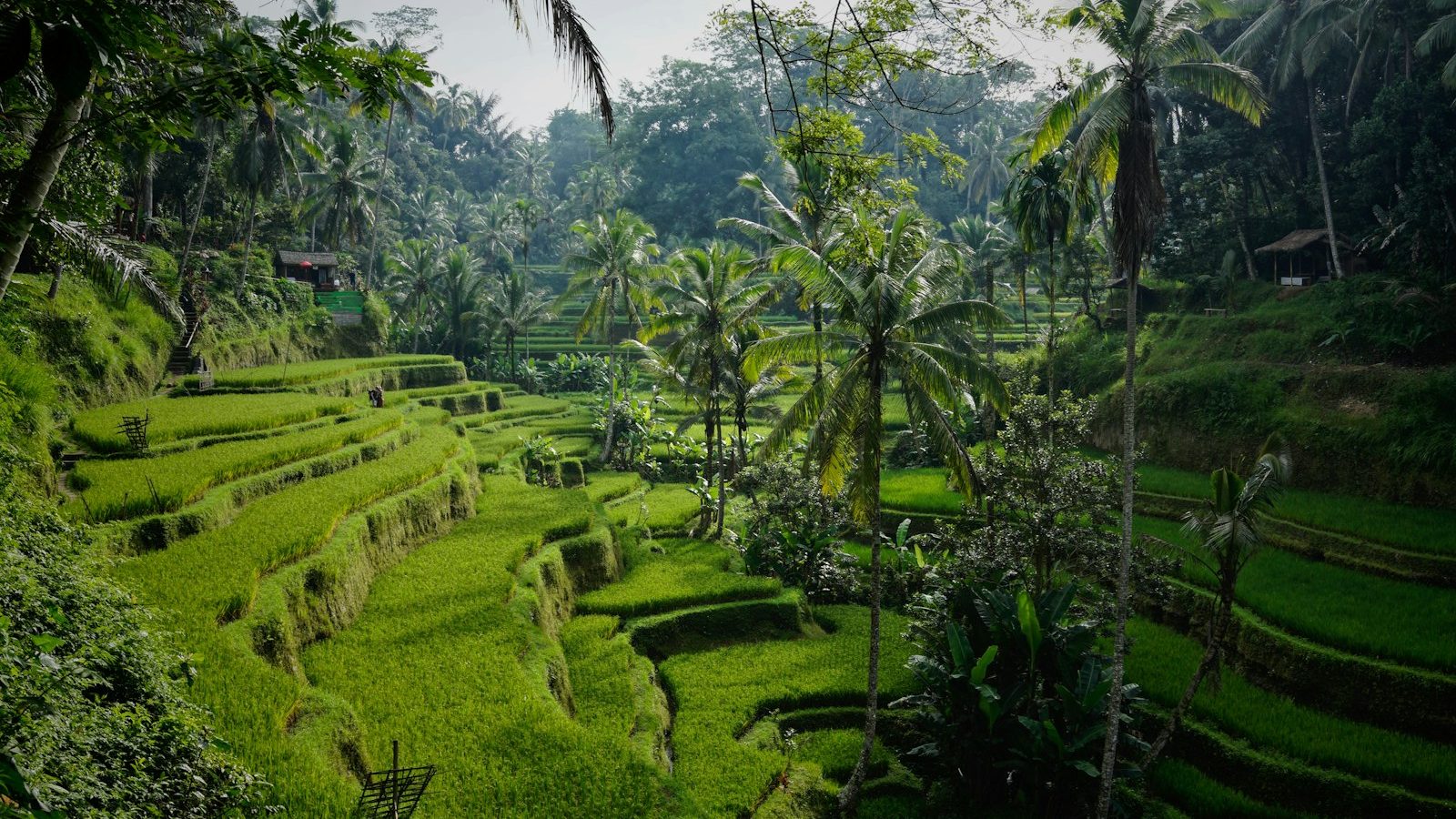
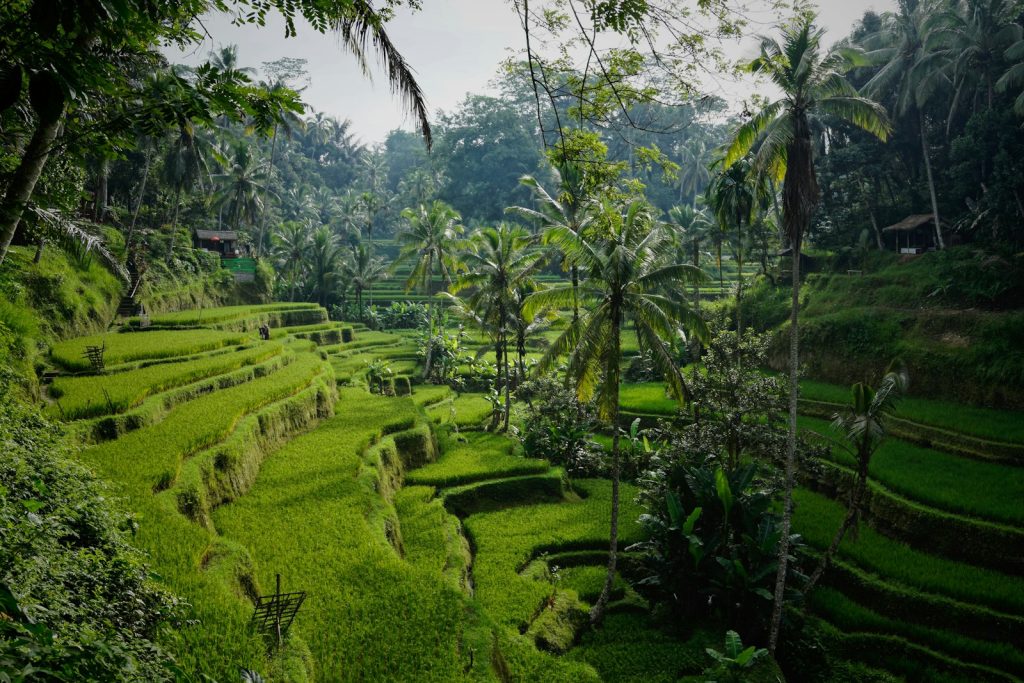
- **Wet season, November to March:** hotter and much more humid, with dramatic downpours that usually arrive in the afternoon or overnight and pass within a couple of hours. January and February are the wettest months. The rice terraces are at their greenest, prices drop and the island feels calmer, except over Christmas and New Year.
Rain also varies across the island. Ubud and the central highlands get more rain than the coast, and it is cooler there, especially in the evenings. The north and east of Bali, around Lovina, Amed and Tulamben, are drier than the south for much of the year.
Bali month by month
January
January is the wettest month in Bali, with heavy downpours on most days and high humidity. It is also one of the quietest months once the New Year crowds leave in the first week, so villa and hotel prices fall sharply. Rain usually comes in bursts rather than all day, and mornings are often bright. It is a good month for spa days, yoga retreats in Ubud, cooking classes and exploring the green rice terraces. Sea conditions can be rough, so boat trips to Nusa Penida may be cancelled at short notice. Galungan falls on 13 January 2027, and Kuningan follows ten days later.
February
February is still very wet, but it is often the cheapest month of the year to stay in Bali. Look out for low season deals on private pool villas in Seminyak, Canggu and Ubud. Surfers head to the east coast, where the wet season winds create good waves at Keramas and Sanur. Lunar New Year brings some visitors from elsewhere in Asia, but crowds are generally low.
March
March marks the end of the wet season, with rain becoming less frequent towards the end of the month. The big event is Nyepi, the Balinese New Year, expected on 9 March 2027, though some calendars list 8 March, so check the official date before you book. The evening before brings the Ogoh Ogoh parades, when huge papier mache monsters are carried through the streets. On Nyepi itself the whole island shuts down for 24 hours, including the airport. In 2027, the end of Ramadan also falls around the same time, which brings domestic travellers from elsewhere in Indonesia.
April
April is the start of the dry season and one of the best value months to visit. The landscape is still lush after the rains, showers become rare and the crowds have not yet arrived. Easter brings a short spike in visitors and prices, so book early if you are travelling over the school holidays. Seas start to calm down, making it a good month to begin diving and snorkelling trips.
May
May is one of the best months of the year in Bali. It is dry, sunny and less humid, the sea is calm and clear, and prices are still lower than in the summer peak. It is ideal for beach days in Uluwatu and Nusa Dua, sunrise treks on Mount Batur and day trips to Nusa Penida.
June
June is another excellent month, with dry, sunny weather and comfortable evenings. Crowds start to build towards the end of the month as European and Australian school holidays approach. The Bali Arts Festival usually begins in mid June in Denpasar and runs for about a month, with traditional dance, music and parades.
July
July is peak season. The weather is at its driest and sunniest, and evenings can feel pleasantly cool, especially in Ubud and the highlands. It is also the busiest month, with families from Europe and Australia, so expect heavy traffic, crowded beach clubs and the highest prices. Kite season fills the skies over Sanur and Denpasar with giant traditional kites during July and August.
August
August is just as dry and sunny as July, and just as busy. Book flights, hotels and popular tours well in advance. Galungan falls on 11 August 2027, with Kuningan on 21 August, so you will see bamboo penjor poles lining the roads. Indonesian Independence Day on 17 August brings flag ceremonies and village games. From July to October, divers have a chance of seeing the huge mola mola, or ocean sunfish, around Nusa Penida.
September
September is many people’s favourite month in Bali. The weather is still dry and sunny, the sea is warm and clear, and the summer crowds have gone home after the first week. Prices start to fall. Australian school holidays at the end of the month and the start of October bring another short busy period.
October
October is the end of the dry season and a great month for value. Days are hot and mostly dry, with the first showers appearing towards the end of the month. The Ubud Writers and Readers Festival usually takes place in October, drawing authors and readers from around the world.
November
November is the start of the wet season. Rain becomes more frequent, humidity rises and some days are grey, but there are still many sunny spells, and prices are low. It is one of the cheapest times to stay in a luxury villa or resort. Surfers start to move to the east coast as the winds change.
December
December is wet and humid, but the island fills up for Christmas and New Year, which is the second peak season after the summer. Prices for villas and flights rise sharply from around 20 December to the first days of January, and popular restaurants and beach clubs need booking. Early December is quieter and much cheaper.
When is the dry season in Bali?
The dry season in Bali usually runs from April to October, with the driest months from June to September. Rainfall in the south of the island drops from more than 300mm in January to well under 50mm in August, according to long term averages. Showers can still happen in the dry season, especially in Ubud and the highlands, but they are short and rarely spoil a day.
| Month | Average high in the south | Rain | Crowds |
|---|---|---|---|
| January | 31°C | Very wet | Low after New Year |
| February | 31°C | Very wet | Low |
| March | 31°C | Wet | Low to medium |
| April | 32°C | Drying out | Medium, busy at Easter |
| May | 31°C | Dry | Medium |
| June | 30°C | Dry | Medium to high |
| July | 30°C | Driest | Very high |
| August | 30°C | Driest | Very high |
| September | 31°C | Dry | Medium |
| October | 32°C | Mostly dry | Medium |
| November | 32°C | Wet | Low to medium |
| December | 31°C | Wet | High over Christmas |
Best time to visit by area
Seminyak, Canggu and Kuta
The busy southwest coast is at its best from April to October, when the sunsets are clear, the surf is good and the beach clubs are in full swing. In the wet season, Kuta and Legian beaches can collect rubbish washed in by the monsoon currents, especially from December to March, so this is the time to spend more time by the pool. Canggu traffic is heaviest in July and August.
Uluwatu and the Bukit Peninsula
The clifftop beaches and surf breaks of Uluwatu, Bingin, Padang Padang and Balangan are best in the dry season, when offshore winds create world class waves. The Uluwatu Temple Kecak fire dance at sunset is at its most dramatic on clear evenings from May to October. The peninsula is drier than the rest of Bali, so it is also a good choice in shoulder months such as April and November.
Ubud and the central highlands
Ubud is cooler and wetter than the coast. The dry season brings the best walking weather for the Campuhan Ridge Walk and the rice terraces at Tegallalang and Jatiluwih, while the wet season makes everything vividly green. If you visit from December to February, plan indoor activities for the afternoons. The highlands around Bedugul and Munduk, home to the Ulun Danu Bratan temple and several waterfalls, are much cooler, so bring a light jacket for the evenings.
Nusa Penida, Nusa Lembongan and Nusa Ceningan
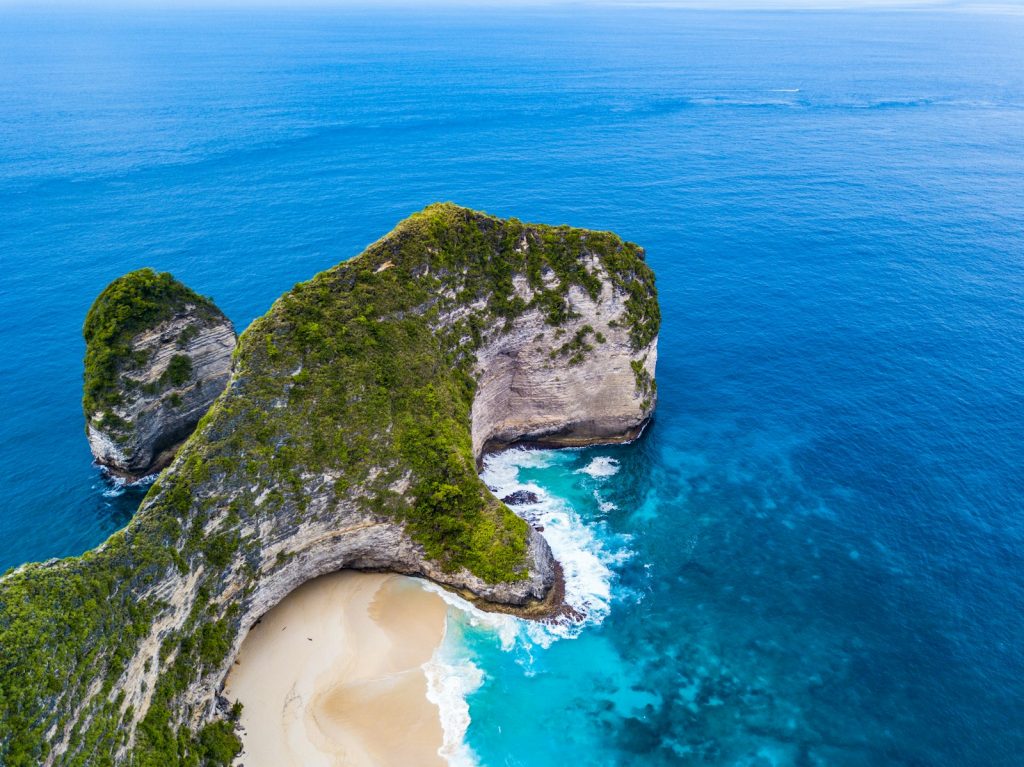
The Nusa islands are best from April to October, when the boat crossing from Sanur is calmer and the water around Manta Point and Crystal Bay is clear. In the wet season, rough seas can cancel boats. Manta rays can be seen all year, while mola mola usually appear from July to October.
Amed, Tulamben and Lovina
The north and east coasts are drier than the south and work well almost all year. Tulamben’s famous USAT Liberty shipwreck dive is possible in every month, and Amed’s calm bays are good for snorkelling outside the windiest months. Lovina is known for early morning dolphin trips, best in the dry season.

Best time for activities
Surfing
Bali has surf all year, but where you go depends on the season. From April to October, the southeast trade winds blow offshore on the west coast and the Bukit Peninsula, so Uluwatu, Padang Padang, Bingin, Canggu and Kuta are at their best. From November to March, the winds swing round and the east coast takes over, with good waves at Keramas, Sanur and Nusa Dua. Beginners can learn at Kuta and Batu Bolong in Canggu in most months.
Diving and snorkelling
The best time to dive and snorkel in Bali is from April to November, when seas are calm and visibility is often 20 to 30 metres. The mola mola season around Nusa Penida runs roughly from July to October, though sightings are never guaranteed. Tulamben and Amed offer good diving all year.
Climbing Mount Batur
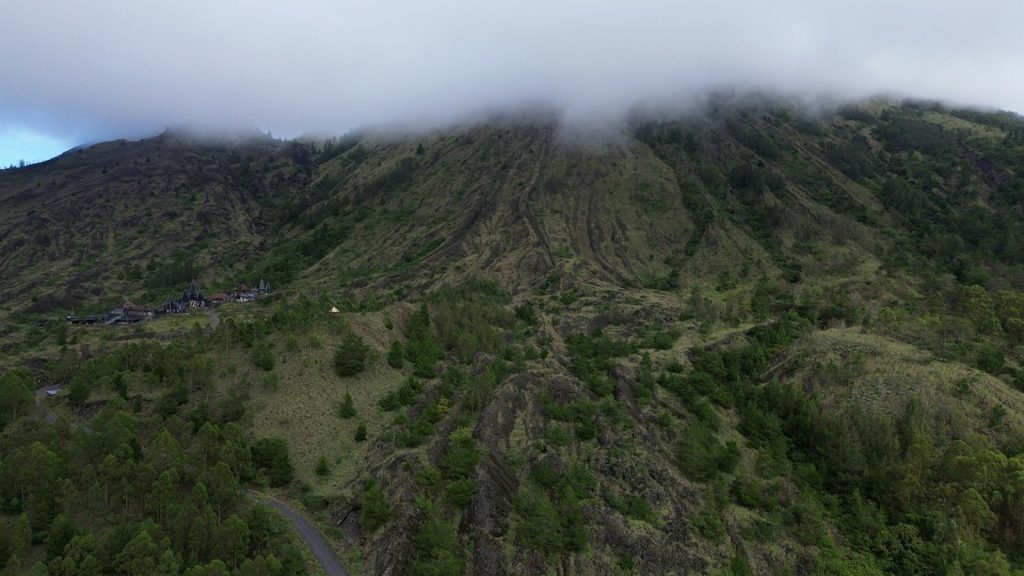
The sunrise trek up Mount Batur, an active volcano in the northeast, is best from April to October, when clear skies give the best chance of a view over Lake Batur and across to Mount Agung and Mount Rinjani on Lombok. Treks usually start at around 4am, and you must go with a local guide. In the wet season, the trail can be slippery and the summit is often in cloud.
Waterfalls and rice terraces
The waterfalls are at their most powerful in the wet season and just after it, from February to April, but some paths can be muddy or closed after heavy rain. The rice terraces are greenest from February to April, though planting and harvest times vary from field to field.
Festivals and holidays to plan around
Bali’s Hindu calendar is full of ceremonies, and you will see offerings and processions almost every day. These are the main dates to know for 2027.
- **Galungan, 13 January and 11 August 2027:** the celebration of good over evil, when tall bamboo penjor poles decorate every village. Galungan comes round every 210 days.
- **Kuningan, 23 January and 21 August 2027:** the end of the Galungan period, with temple ceremonies and family gatherings.
- **Nyepi, expected 9 March 2027:** the Day of Silence. From 6am until 6am the next day, no one may leave their hotel, lights are kept low, there is no traffic and the airport closes. Hotels look after their guests, and many people find it a fascinating experience. The Ogoh Ogoh parades take place the evening before.
- **Bali Arts Festival, mid June to mid July:** a month of music, dance and parades in Denpasar.
- **Kite season, July and August:** huge traditional kites over the beaches of Sanur and the fields around Denpasar.
- **Indonesian Independence Day, 17 August:** flag raising ceremonies and village celebrations.
- **Ubud Writers and Readers Festival, usually October:** talks, workshops and events across Ubud.
The cheapest time to visit Bali
The cheapest time to visit Bali is during the wet season, especially from mid January to March and in November. Villa and hotel prices can drop by a third or more, and flights from the UK are often cheaper outside school holidays. April, May, early June, September and October are the best value months for dry weather.
The most expensive times are July and August, Easter, the end of September and start of October, when Australian school holidays bring many families, and Christmas and New Year.
To keep costs down:
- Fly midweek and compare routes through Singapore, Doha, Dubai, Abu Dhabi and Kuala Lumpur.
- Stay in a guesthouse or homestay in Ubud or Sanur rather than a Seminyak villa.
- Eat at local warungs, where a plate of nasi campur or mie goreng costs a fraction of beach club prices.
- Hire a private driver for the day for longer trips, which is often cheaper than several taxis.
- Pay the tourist levy and complete your arrival card online before you travel to save time.
How much does a week in Bali cost?
Bali can suit almost any budget. The figures below are a rough guide per person for seven days, excluding flights, and assume two people sharing a room.
| Cost | Budget | Mid range | Comfort |
|---|---|---|---|
| Accommodation, 7 nights | £100 to £200 | £250 to £500 | £700 or more |
| Food and drink | £70 to £120 | £150 to £250 | £350 or more |
| Transport and drivers | £30 to £60 | £70 to £130 | £150 or more |
| Tours and activities | £40 to £80 | £100 to £200 | £250 or more |
| Visa and tourist levy | About £30 | About £30 | About £30 |
| Total, excluding flights | £270 to £490 | £600 to £1,110 | £1,480 or more |
Return flights from the UK to Bali usually cost around £600 to £1,000 in economy, rising in July, August and over Christmas. A private driver for a full day of sightseeing usually costs a set daily rate agreed in advance, and a meal in a local warung is often just a few pounds.
Entry rules for British travellers
Before you go, check the latest advice on GOV.UK, as rules can change. At the time of writing, these are the main things British travellers need.
- **Visa on Arrival:** British passport holders can get a Visa on Arrival for 500,000 rupiah, which allows a stay of up to 30 days and can be extended once for another 30 days. You can apply online before you travel for an electronic Visa on Arrival, which speeds up your arrival, or pay at the airport.
- **Bali tourist levy:** all foreign visitors must pay a levy of 150,000 rupiah per person, including children, once per trip. You can pay online through the official Love Bali website or app before you travel, or at the airport on arrival. It is separate from the visa.
- **All Indonesia arrival card:** since September 2025, every international traveller must complete the free All Indonesia digital arrival card, which covers immigration, customs and health, within 72 hours before arrival.
- **Passport validity:** your passport should be valid for at least six months from the date you arrive.
When to avoid Bali
There is no truly bad time to visit Bali, but some periods may not suit you.
- **January and February, if you want guaranteed beach weather:** these are the wettest months, and boat trips and diving can be disrupted.
- **July and August, if you dislike crowds:** traffic jams, busy beaches and peak prices.
- **Christmas and New Year, on a tight budget:** prices often double for villas and flights.
- **Nyepi, if you have a short trip:** you will lose a full day, and travel is impossible.
What to pack for Bali
- **All year:** light, breathable clothes, swimwear, a hat, reef safe sun cream and insect repellent.
- **Temples:** a sarong and sash, and clothes that cover your shoulders and knees. Many temples lend or rent sarongs at the entrance.
- **Wet season:** a compact umbrella, a light rain jacket and quick drying clothes and sandals.
- **Ubud, the highlands and Mount Batur:** a warm layer for the evenings and the early morning trek.
- **Getting around:** a small dry bag for boat trips to the Nusa islands.
Our picks: the best month for every type of trip
- **First trip with good weather and fewer crowds:** May, June or September.
- **Guaranteed sunshine for a family holiday:** July or August, booked early.
- **Best value:** late January to March, or November.
- **Honeymoon:** May, June or September for dry weather and quieter villas.
- **Surfing:** June to September on the west coast, December to February on the east coast.
- **Diving with mola mola:** August to October around Nusa Penida.
- **Balinese culture:** Galungan in January or August, or Nyepi in March.
Frequently asked questions
What month is best to go to Bali?
May, June and September are the best months to go to Bali for most people. They offer dry, sunny weather, calm seas and lower humidity, with smaller crowds and lower prices than July and August. July and August are the driest months, but they are also the busiest and most expensive.
When is the worst time to go to Bali?
January and February are the worst months for weather, as they are the wettest of the year, with high humidity and rough seas that can cancel boat trips. If you want to avoid crowds and high prices rather than rain, avoid July, August and Christmas to New Year.
What is the hottest month in Bali?
Bali is hot all year, but the hottest and most humid months are usually from October to March, when daytime highs on the coast reach around 31°C to 33°C and the air feels very sticky. July and August are slightly cooler, with lower humidity and cooler evenings, especially in Ubud and the highlands.
How long is the flight from the UK to Bali?
There are no direct flights from the UK to Bali. With one stop, the total journey to Denpasar usually takes around 16 to 20 hours, depending on your connection. Popular routes go through Singapore, Doha, Dubai, Abu Dhabi and Kuala Lumpur. Bali is seven or eight hours ahead of the UK, depending on the time of year.
Is $1,000 enough for one week in Bali?
Yes, for most travellers. $1,000, or around £750, is enough for a comfortable week in Bali excluding flights, covering a mid range hotel or guesthouse, meals, a private driver for a couple of days and a few tours. Budget travellers can spend far less. Luxury villas, beach clubs and spa days will push costs higher.
What does boom boom mean in Bali?
Boom boom is a slang term that some street touts in nightlife areas, especially around Kuta, use when offering sex to tourists. It is best to say no politely and keep walking. Prostitution is illegal in Indonesia, and Indonesian laws on relationships and behaviour are much stricter than in the UK.
Is it worth going to Bali in the rainy season?
Yes, if you are flexible. The rainy season brings lower prices, quieter beaches and very green landscapes, and showers often pass within a few hours. It is a good time for a villa holiday, spa days and yoga in Ubud. Avoid it if you plan lots of boat trips or diving.
How many days do you need in Bali?
Ten to fourteen days is ideal for a first visit, giving time for a few nights each in the south, Ubud and the Nusa islands. With a week, choose two bases, such as Uluwatu or Seminyak and Ubud.
Is September a good time to visit Bali?
Yes. September is one of the best months to visit Bali, with dry, sunny weather, warm and clear sea and fewer crowds once the summer holidays end. Prices start to fall too.
Is December a good time to visit Bali?
December is the wet season, with frequent showers and high humidity, but it is popular for Christmas and New Year, so prices rise in the second half of the month. Early December is quieter and good value.
Plan the rest of your trip
Thinking about more of Asia? Browse our Asia travel guides, read our guide to the best time to visit Thailand or plan a longer trip with our best time to visit Japan guide. If you spot something out of date, please let us know.