!DISCLOSURE
A night in the Sahara is the trip most people dream about when they book Morocco: a camel ride over orange dunes at sunset, dinner by a fire, a sky full of stars and sunrise from the top of a dune. From Marrakech it is very doable, but it is not a day trip. The big dunes are on the far side of the Atlas Mountains, and the choice you make about route, length and tour type decides whether the trip feels magical or like three days in a minibus.
This guide explains your real options for a Sahara desert tour from Marrakech: the three desert areas, how many days each needs, what a typical itinerary looks like day by day, what tours cost in 2026 and what is and is not included. We also cover how to get there without a tour, when to go, what to pack and how to spot a good operator. Prices were checked in November 2026.
Sahara tours from Marrakech at a glance
| Desert | Distance from Marrakech | Drive each way | Minimum trip | Dunes | Best for |
|---|---|---|---|---|---|
| Merzouga (Erg Chebbi) | about 560 km | 9 to 10 hours | 3 days | Tall orange dunes, up to about 150 m | The classic Sahara, first timers |
| Zagora | about 360 km | about 7 hours | 2 days | Small dunes, rocky desert | Short on time, lower budget |
| Erg Chigaga (via M’Hamid) | about 450 km | 9 to 10 hours, last part by 4×4 | 3 to 4 days | Big, remote dunes | Fewer people, adventure |
| Agafay | about 40 km | 45 minutes | One evening | No sand dunes, stony desert | A taste of the desert only |
Which desert should you choose?
Merzouga and Erg Chebbi: the Sahara most people imagine
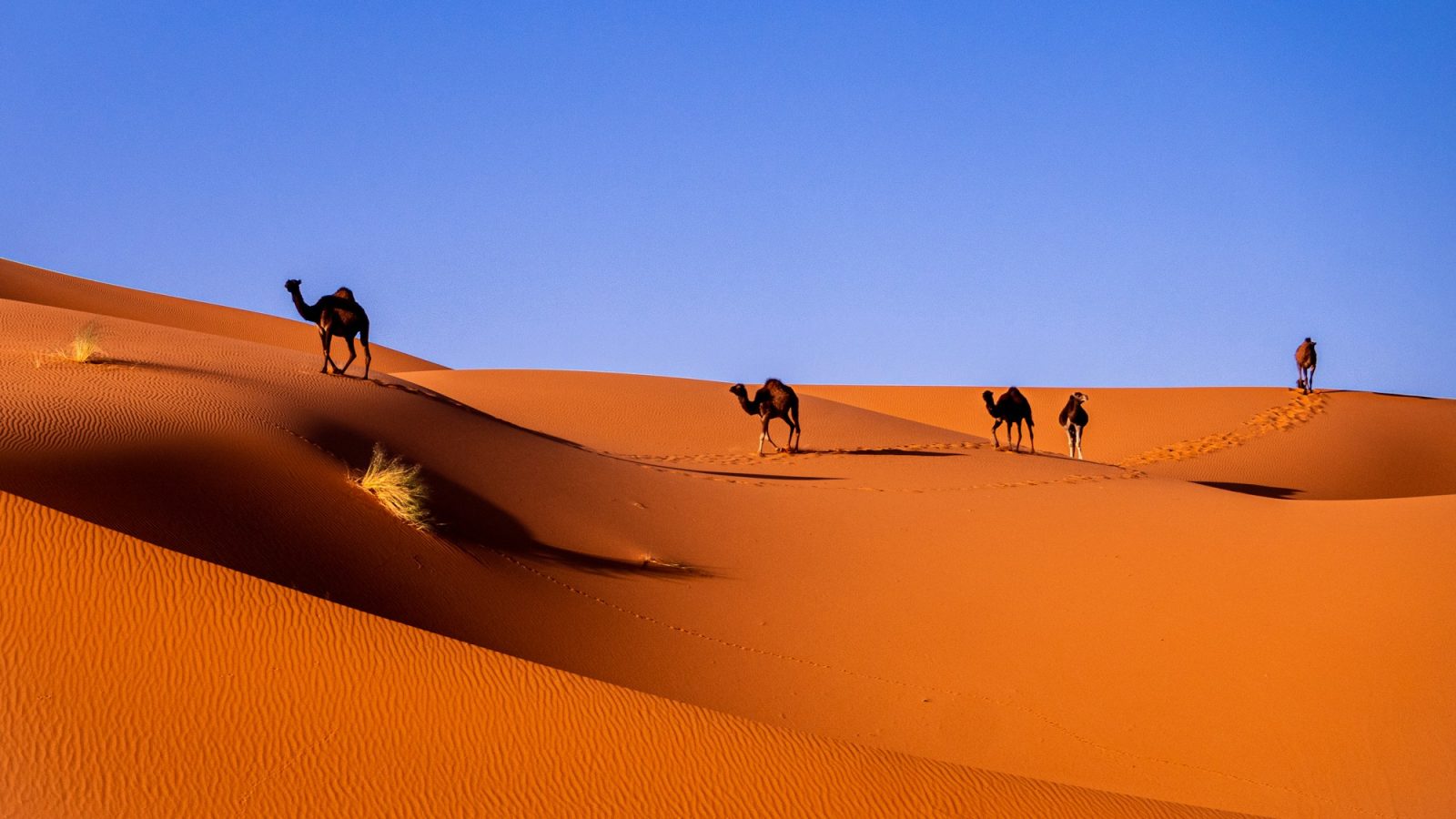
If you have three days or more, go to Merzouga. The Erg Chebbi dune field rises out of a flat stony plain just beyond the village, a sea of orange sand more than 20 km long, with dunes that reach around 150 metres. This is where the classic photos are taken, and it is the destination of the great majority of desert tours from Marrakech.
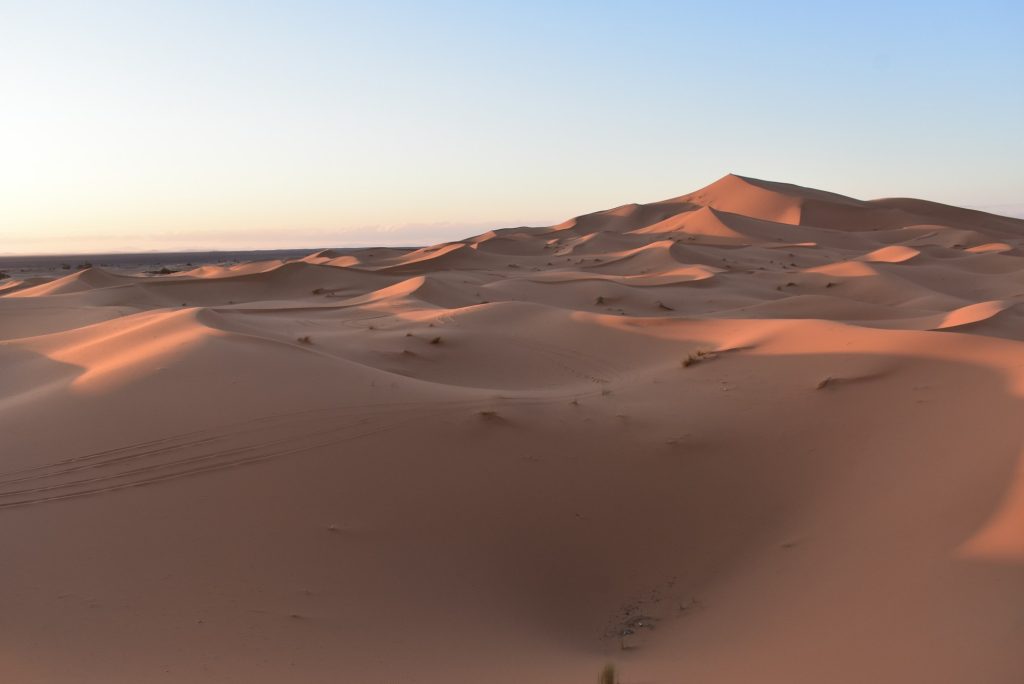
The catch is the distance. Merzouga is about 560 km from Marrakech, a drive of 9 to 10 hours without stops, so tours split the journey with a night in the Dades Valley or near the Todra Gorge on the way out and do the whole return in one long day. Expect long hours on the road, but spectacular scenery: the Atlas, kasbahs, gorges and palm oases.
Zagora: the two day option
Zagora sits at the end of the Draa Valley, about 7 hours from Marrakech, and it is the only place you can reach on a two day trip. The drive through the palm groves of the Draa Valley is beautiful, but the dunes near Zagora are small and the desert is mostly rocky. If seeing big sand dunes is the point of the trip, you may feel disappointed. If you just want a night in a desert camp and a camel ride and only have two days, it works.
Erg Chigaga: wilder and quieter
Erg Chigaga is Morocco’s second large dune field, about 60 km beyond the road’s end at M’Hamid. The last stretch is a bumpy two hour drive across the open desert by 4×4, so there are no coaches and far fewer visitors. The dunes are as big as Erg Chebbi’s and the camps are more remote. Trips usually take three or four days and cost more, because they need 4×4 vehicles.
Agafay: not the Sahara
Many tours sell the Agafay Desert, 45 minutes from Marrakech, as a “desert experience”. It is a lovely place for a sunset camel ride and dinner at a camp, but it is a stony desert of rolling hills with no sand dunes. Book it if you only have an evening, and see our guide to the best day trips from Marrakech for details. Do not book it expecting the Sahara.
What a typical 3 day Merzouga tour looks like
Most shared and private tours follow a very similar route. Here is what to expect.
Day 1: Marrakech to the Dades Valley
Pickup is usually between 7am and 8am from your riad or a meeting point near Jemaa el Fna. The road climbs into the High Atlas and over the Tizi n’Tichka pass at about 2,260 metres, with photo stops at viewpoints and Berber villages. Around midday you reach Ait Benhaddou, the fortified village used in many films, where most tours include a guided walk and lunch.
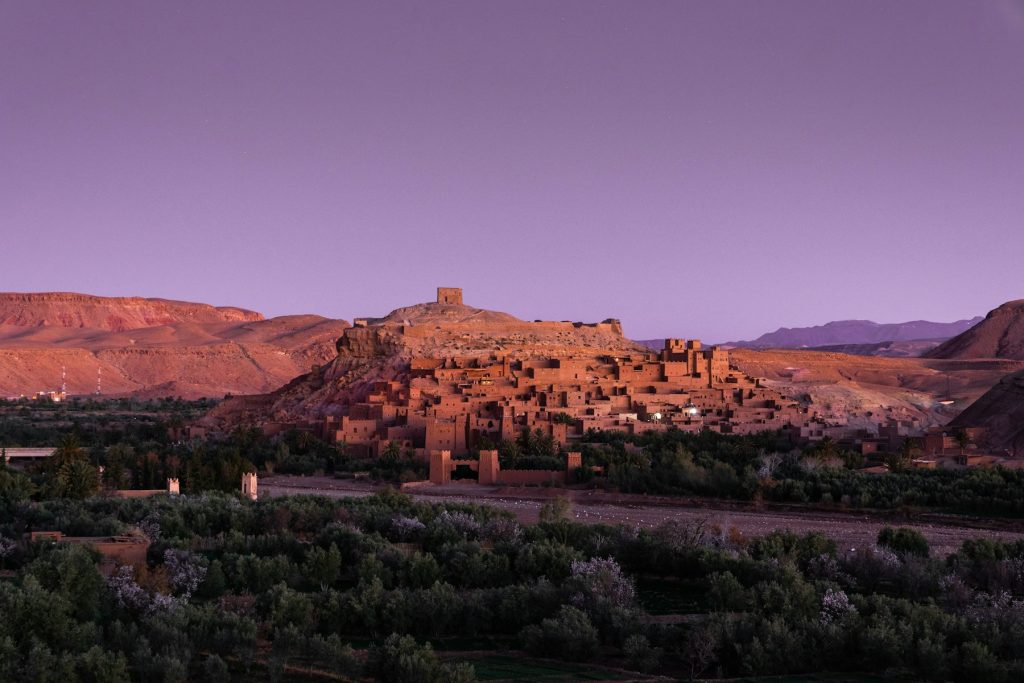
In the afternoon you continue past Ouarzazate and through the Skoura palm grove and the Valley of Roses, arriving at a hotel or guesthouse in the Dades Valley in the early evening for dinner and the night.
Day 2: Dades and Todra Gorges to Merzouga
After breakfast you drive through the Dades Gorge, then on to the Todra Gorge near Tinghir, where the canyon walls rise hundreds of metres on either side of a narrow path. Lunch is usually in Tinghir or nearby. In the afternoon you cross the plains past Erfoud, a town known for its fossils, and arrive at Merzouga in the late afternoon.
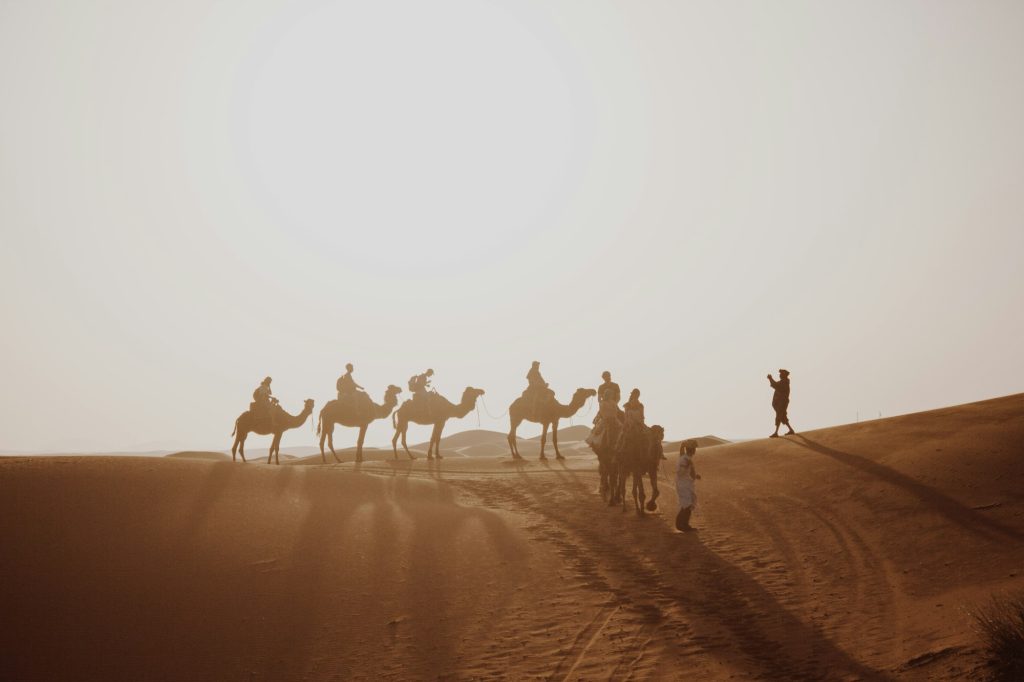
Here you leave the vehicle and meet your camels. The ride into the dunes usually takes one to one and a half hours, timed so you watch the sunset from the sand. You spend the night at a desert camp: dinner, mint tea, Berber drumming around a fire, and some of the clearest night skies you will ever see.
Day 3: Sunrise and the long road back
Wake early and climb a dune for sunrise, then ride the camels back to the village for breakfast and a shower. The return to Marrakech takes most of the day, often 10 hours or more with stops, and you usually arrive between 7pm and 9pm.
Other itineraries: Zagora and Erg Chigaga
2 day Zagora tour
Day one follows the same road as the Merzouga trips over the Tizi n’Tichka pass to Ait Benhaddou and Ouarzazate, then turns south over the Tizi n’Tinififft pass into the Draa Valley, a ribbon of palm groves and earth villages that runs for around 100 km. You reach the desert near Zagora in the late afternoon, ride camels to a camp for sunset and spend the night there. On day two you watch the sunrise, drive back up the valley and arrive in Marrakech in the evening. It is a long two days, but you do see a lot.
3 or 4 day Erg Chigaga tour
Erg Chigaga trips also go through the Draa Valley, usually with a night in Zagora or a kasbah on the way. From the village of M’Hamid, at the end of the paved road, a 4×4 takes you across a dry lake and open desert to the dunes, which takes about two hours. Camps here are scattered and quiet, and many trips include a longer camel trek or a second night in the dunes. On the way back, some itineraries stop at the oasis of Foum Zguid or the old kasbahs of Tamegroute, known for its green pottery.
Things to do in Merzouga beyond the camel ride
If you stay an extra night in Merzouga, there is plenty to fill a day.
- Sandboarding: most camps lend boards for free or for a small fee, and the big dunes are ideal.
- Quad biking and 4×4 trips: hire by the hour to ride around the edge of the dunes. Keep to the areas the operator shows you.
- Khamlia: a village south of Merzouga known for Gnawa music, the spiritual music brought by people from West Africa. Many tours stop for a performance and tea.
- Dayet Srji: a seasonal lake west of the dunes that attracts flamingos and other birds after wet winters.
- Rissani: a market town north of Merzouga with a busy traditional souk, best on market days.
- Stargazing: with almost no light pollution, the night sky is extraordinary, especially around the new moon.
What to expect at a desert camp
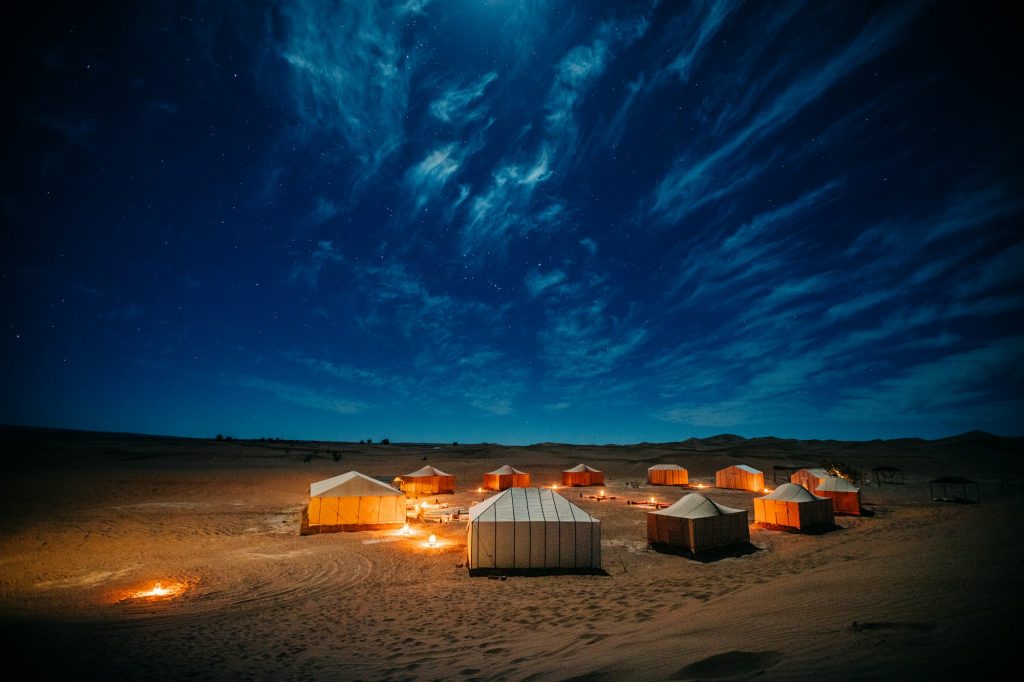
Standard camps have tents set around a central courtyard of rugs, with simple beds or mattresses, blankets and shared toilets and showers in a separate block. Electricity may only run for a few hours, and there is often no wifi or phone signal. Luxury camps have private bathrooms, proper beds, heating or air conditioning, and better food.
Dinner is usually soup, a tagine and fruit, served in a large dining tent, followed by music around the fire. Alcohol is not normally sold at standard camps, though some luxury camps offer it, so ask before you go if it matters to you. Vegetarian meals are easy to arrange if you say so when you book.
Shared, private or luxury: what tours cost in 2026
There are three main ways to do a desert tour, and the price difference is large.
Shared group tours
Shared tours travel in minibuses of up to about 17 people and are by far the cheapest option. A shared 3 day trip to Merzouga typically costs from about £85 to £120 per person, and a 2 day trip to Zagora from about £50. Prices usually include transport, the driver, one night in a hotel or guesthouse, one night in a standard desert camp, dinners and breakfasts, and the camel ride. Lunches, drinks, entry fees and local guides at places such as Ait Benhaddou are usually extra.
The trade off is a fixed schedule, larger groups, short stops and standard camps with shared toilets. For a lot of travellers that is fine and good value.
Private tours
A private tour gives you your own driver and 4×4 or minivan. You choose the start time, the stops and how long you spend in each place, and you can change the route, end in Fes or add an extra night. For two people, expect from about £250 to £500 per person for three days depending on the vehicle and accommodation. With four people sharing a vehicle, the price per person drops a lot.
Luxury camps
Most tours let you upgrade the night in the desert to a luxury camp. These have large tents with proper beds, private bathrooms with hot showers and better food. On a shared tour the upgrade usually adds roughly £70 to £150 per person; a fully private tour with a luxury camp can easily cost £600 or more per person. If you do not like the idea of shared toilets in the dunes, the upgrade is worth it.
Desert tour costs at a glance
| Tour type | Typical price per person | What you get |
|---|---|---|
| Agafay evening, shared | from about £15 to £35 | Transport, short camel ride, dinner at a camp |
| 2 day Zagora, shared | from about £50 | Transport, one night in a camp, dinner and breakfast, camel ride |
| 3 day Merzouga, shared | from about £85 to £120 | Transport, one hotel night, one camp night, two dinners and breakfasts, camel ride |
| Luxury camp upgrade | about £70 to £150 extra | Private tent with bathroom and better food |
| 3 day Merzouga, private for two | from about £250 to £500 | Own driver and vehicle, flexible stops and timings |
| 3 or 4 day Erg Chigaga, private | from about £350 | 4×4 transport, remote camp, longer camel trek |
On top of the tour, budget about 80 to 150 dirhams a day for lunches, plus drinks, entry fees for any kasbahs or museums, and tips for your driver and camel guide. A tip of 50 to 100 dirhams a day for a driver who has looked after you well is normal.
Travelling with children
Desert tours work well for children who are happy in a car, and most love the camel ride and the dunes. The long drives are the hardest part, so a four day trip or a private tour with more stops is a better choice than a rushed three days. Ask the operator about child seats in advance, as they are not always provided, and bring snacks, games and plenty of water.
How to get to the Sahara without a tour
It is possible to reach Merzouga independently and then book a camel trek and camp locally. Supratours runs a daily bus from Marrakech to Merzouga that takes around 12 hours and costs roughly 300 to 450 dirhams one way, usually leaving in the morning and arriving in the evening. Camps and guesthouses in Merzouga then sell overnight camel treks directly, often for less than a full tour.
This makes sense if you have plenty of time or want to stay in Merzouga for several days. For most visitors on a short trip, a tour is easier, because the bus takes a whole day each way and you miss the stops at Ait Benhaddou and the gorges. Hiring a car is another option: the roads are paved all the way to Merzouga, though the drive is long and tiring.
When is the best time to go?
Spring, from March to May, and autumn, from September to November, are the best seasons, with warm days and cool nights. Winter, from December to February, brings clear, sunny days but very cold nights in the desert, often close to freezing, and snow can occasionally close the Tizi n’Tichka pass for a few hours. Summer, from June to August, is extremely hot in the Sahara, with daytime temperatures well over 40°C, so tours start early and the middle of the day is spent in the shade.
Sandstorms can happen at any time but are most common in spring. For more on the seasons, see the best time to visit Marrakech. They rarely last long, but they can hide the sunset.
How to choose a good operator
- Check recent reviews on the booking platform and look for comments about the vehicle, the driver and the camp.
- Confirm the exact itinerary, including which gorges you visit and how long the camel ride is.
- Ask what kind of camp is included and whether toilets and showers are shared.
- Check what is not included: lunches, drinks, entry fees and local guides add up.
- Make sure pickup is from your riad or a clear meeting point, and agree the return time.
- Be wary of very cheap tours sold on the street in Marrakech, which often mean packed vehicles and long shopping stops.
What to pack for a desert tour
- Warm layers for the evening, even in spring and autumn; a fleece or down jacket in winter.
- A scarf or buff to protect your face from sun and sand on the camel ride.
- Sunglasses, sun cream and a hat.
- A small overnight bag. Most tours ask you to leave big luggage in the vehicle when you ride to the camp.
- A head torch, wet wipes and toilet paper if you are staying in a standard camp.
- Cash in dirhams for lunches, drinks, tips and small purchases.
- A power bank, because charging is limited at many camps.
Our picks
- Classic first trip: a 3 day shared tour to Merzouga, upgraded to a luxury camp if your budget allows.
- Best overall: a 4 day private tour to Merzouga with a second night in the dunes or the gorges.
- Only two days: Zagora, but expect smaller dunes.
- Want to avoid the crowds: Erg Chigaga by 4×4 over three or four days.
- Travelling on to Fes: a one way tour from Marrakech to Fes through Merzouga.
- Only one evening: the Agafay Desert, knowing it is not the Sahara.
Frequently asked questions
How close is the Sahara to Marrakech?
The nearest big sand dunes, at Merzouga’s Erg Chebbi, are about 560 km away, a drive of 9 to 10 hours. Zagora’s smaller dunes are about 7 hours away. The Agafay Desert is only 45 minutes from the city but has no sand dunes.
What are the best desert tours from Marrakech?
For most people, a 3 or 4 day tour to Merzouga is the best choice, because it reaches the biggest and most impressive dunes and stops at Ait Benhaddou and the Dades and Todra gorges on the way. Erg Chigaga is the best option for a quieter, more remote experience. Zagora is the only choice if you have just two days.
How much does it cost to go to the Sahara Desert?
A shared 3 day tour to Merzouga costs from about £85 to £120 per person, and a 2 day Zagora trip from about £50. Private 3 day tours cost from about £250 to £500 per person for two people, and luxury camps add more. Budget extra for lunches, drinks, entry fees and tips.
Is the Sahara Desert worth visiting?
Yes, for most people it is one of the highlights of Morocco. Sunset and sunrise over the dunes and a night under the stars are unforgettable. The main downside is the long drive, so if you hate time on the road, choose a four day trip or a one way tour ending in Fes.
Is it safe to go to the Sahara Desert?
Organised desert tours in Morocco are generally safe and very popular. The main risks are long drives on mountain roads, heat and cold, so travel with an established operator, drink plenty of water and bring warm layers. Check your government’s current travel advice for Morocco before you go.
Is there a 2 day Sahara tour from Marrakech?
Yes. Two day tours go to Zagora, with a camel ride and a night in a desert camp. They are a good option if you are short on time, but the dunes are much smaller than at Merzouga. Two day tours advertised to Merzouga mean around 18 hours of driving in 48 hours and are not worth it.
Can you do a Sahara day trip from Marrakech?
Not realistically. Even Zagora is about 14 hours of driving there and back. If you only have one day, go to the Agafay Desert for an evening or choose another day trip from our guide to the best day trips from Marrakech.
Plan the rest of your trip
Deciding how long to stay? See how many days in Marrakech, with day by day itineraries. Planning your days in the city? Read our guide to the 22 best things to do in Marrakech and our best day trips from Marrakech, or browse all our Marrakech travel guides. If you spot something out of date, please let us know.