!DISCLOSURE
How many days do you need in Marrakech? For most first visits the answer is three or four full days. That is enough to see the palaces, souks and gardens without rushing, have a hammam and a long lunch or two, and still take one trip out to the mountains or the desert. Two days works for a city break if you plan well, and five days or more lets you add a longer trip such as an overnight in Essaouira or the Sahara.
This guide helps you decide, then gives you a ready made day by day itinerary for one, two, three, four and five days. Each plan follows the opening hours and crowd patterns of the city, keeps walking distances sensible and tells you what to book ahead. You will also find where to stay, a daily budget, how to get in from the airport and the mistakes that waste time. Prices and opening hours were checked in November 2026.
How many days in Marrakech: the short answer
| Time you have | What it gets you | Who it suits |
|---|---|---|
| 1 day | The main medina sights in a long, busy day | A stopover or a day from a cruise or another city |
| 2 days | The medina highlights plus Jardin Majorelle, at a quick pace | A weekend city break |
| 3 days | All the main sights at a relaxed pace, plus a hammam or cooking class | Most first time visitors |
| 4 days | Three days in the city and one day trip to the Atlas or Agafay | The best balance for a first visit |
| 5 days or more | The city, one or two day trips, or an overnight in Essaouira or the Sahara | Slower travellers and second visits |
Is 2 days enough in Marrakech?
Two days is enough to see the highlights: Jemaa el Fna, the souks, the Bahia Palace, Ben Youssef and Jardin Majorelle. You will be busy, though, and there is no time for a day trip. If you arrive early on the first day and leave late on the second, two days makes a very good weekend.
Is 3 days enough in Marrakech?
Yes. Three full days lets you see everything on most people’s list at a comfortable pace, with time for a hammam, a cooking class or simply sitting on a roof terrace. It is the length we recommend if you do not want a day trip.
Is 4 days too long in Marrakech?
No. Four days is the sweet spot for most first visits, because the city is intense and it helps to break it up with a day in the mountains or the desert. If you find the medina tiring, four days with one day out of town feels much easier than four days in the souks.
Before you plan: how the city works
Marrakech has two halves. The medina, the old walled city, holds almost every sight worth seeing: the souks, palaces, madrasas and Jemaa el Fna. It is best explored on foot, because cars cannot enter most lanes. Gueliz and Hivernage, the new town to the west, have modern cafés, galleries, malls and Jardin Majorelle, about 2 km from the medina walls.
Most monuments open around 9am and close around 5pm, with shorter hours during Ramadan. Tour groups arrive from about 10am, so the first hour of the day is precious. The souks are at their liveliest from late morning, and Jemaa el Fna comes alive from late afternoon. The middle of the day, especially in summer, is the time for lunch and a rest in your riad.
1 day in Marrakech
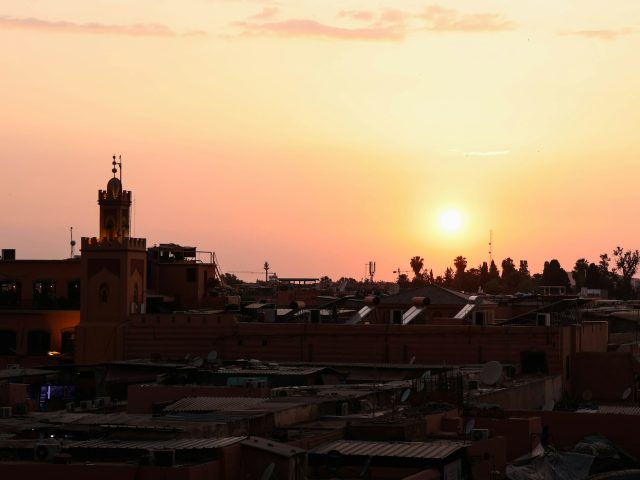
If you only have one day, focus entirely on the medina and keep the evening for Jemaa el Fna.
- 9am: Bahia Palace, before the groups arrive (about 100 dirhams).
- 10.30am: walk through the Mellah, the old Jewish quarter, and its spice market.
- 11.30am: the Saadian Tombs and El Badi Palace in the Kasbah district (about 100 dirhams each).
- 1pm: lunch on a roof terrace near the Kasbah or Jemaa el Fna.
- 2.30pm: wander the souks north of the square: Souk Semmarine, the spice square at Rahba Kedima and the lantern sellers.
- 4.30pm: Ben Youssef Madrasa in its quieter last hour (about 50 dirhams).
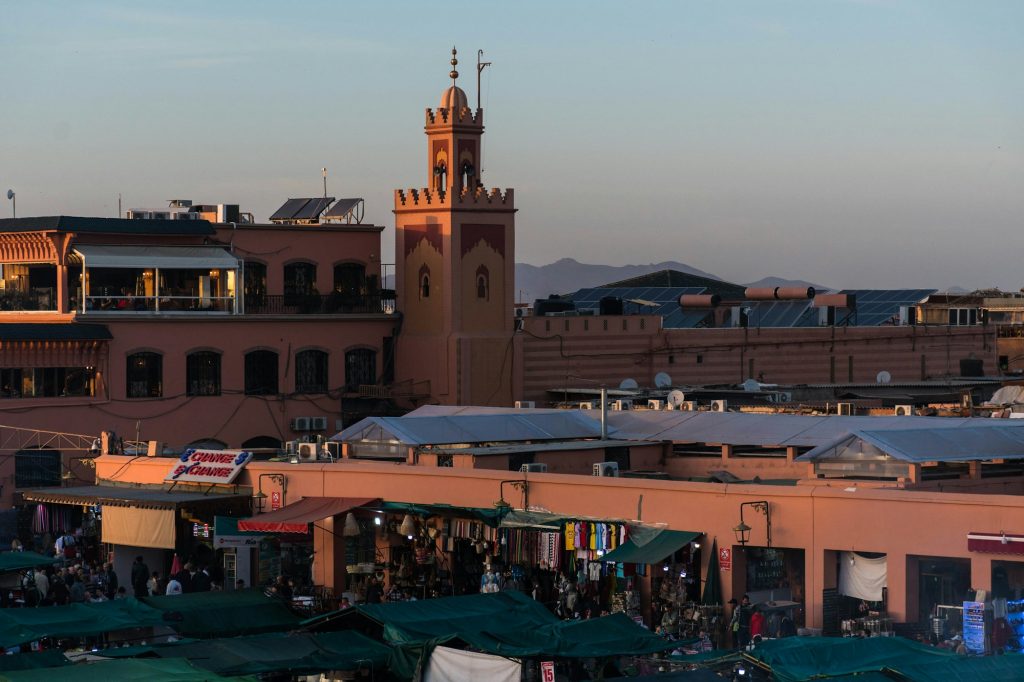
- 6pm: sunset from a café terrace above Jemaa el Fna, then dinner at the food stalls or a restaurant nearby.
2 days in Marrakech
Day 1: the southern medina and the square
Start with the Bahia Palace at 9am, then the Mellah, the Saadian Tombs and El Badi Palace. After lunch, head back towards Jemaa el Fna and walk around the Koutoubia gardens. Spend the late afternoon relaxing in your riad, then go to the square at sunset and stay for dinner.
Day 2: gardens, souks and Ben Youssef
Book the first slot at Jardin Majorelle, take a petit taxi there and add the Yves Saint Laurent Museum next door if you are interested in fashion. Return to the medina for lunch, then spend the afternoon in the souks, stopping at Le Jardin Secret for a quiet break. Finish at Ben Youssef Madrasa before it closes, and have a farewell dinner on a roof terrace.
3 days in Marrakech
Three days gives you the two day plan at a slower pace, plus time for experiences.
Day 1: the southern medina
Bahia Palace at opening, the Mellah, the Saadian Tombs and El Badi Palace, with lunch in the Kasbah area. In the late afternoon, have a hammam to recover from the walking, then spend the evening at Jemaa el Fna.
Day 2: souks and the northern medina
Start late and wander the souks while they open up, then visit Le Jardin Secret, the Maison de la Photographie and Ben Youssef Madrasa. Take an evening street food tour, which is the best way to eat at the stalls with confidence.
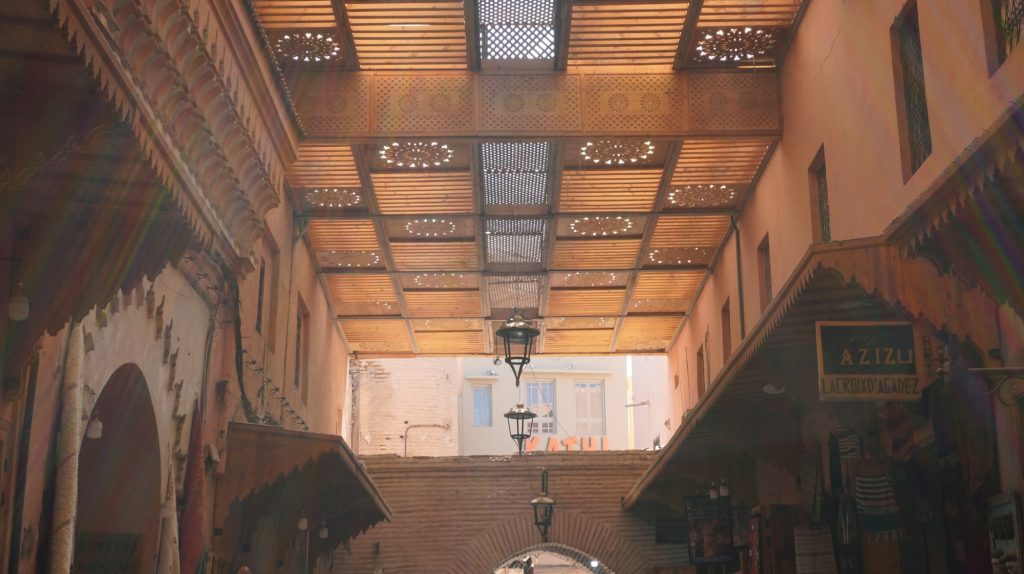
Day 3: the new town and a cooking class
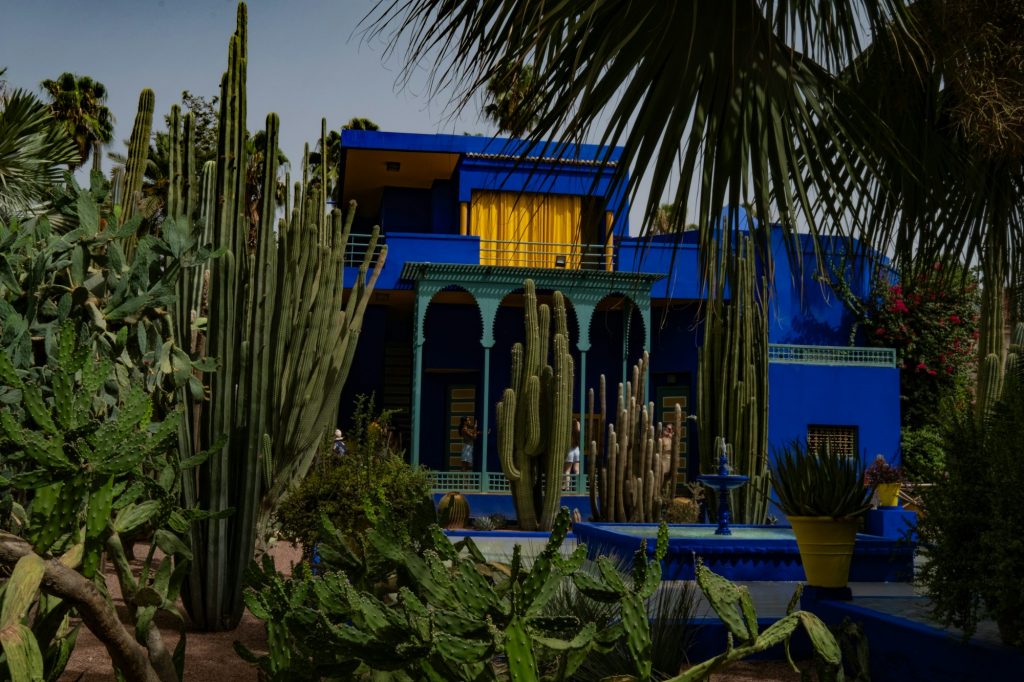
Spend the morning at a cooking class, which usually starts with a market visit and ends with lunch. In the afternoon, take a taxi to Jardin Majorelle and the YSL Museum, then browse the galleries and boutiques of Gueliz. Have dinner in the new town or back on a medina roof terrace.
4 days in Marrakech
Follow the three day plan and add a day out of the city. Put it on day three, so you have a break from the medina in the middle of your trip.
The best options for a single day are the Atlas Mountains and the village of Imlil, about 1.5 to 2 hours away, the Ourika Valley and its waterfalls, the Agafay Desert for a sunset camel ride and dinner, or a long day to Ait Benhaddou. We compare all nine options, with costs and how to go without a tour, in our guide to the best day trips from Marrakech.
5 days or more
With five days, you have three good choices:
- Two day trips: for example the Atlas Mountains on one day and the Agafay Desert or Essaouira on another.
- An overnight in Essaouira: take the bus to the coast, stay one or two nights in the relaxed seaside medina and come back refreshed.
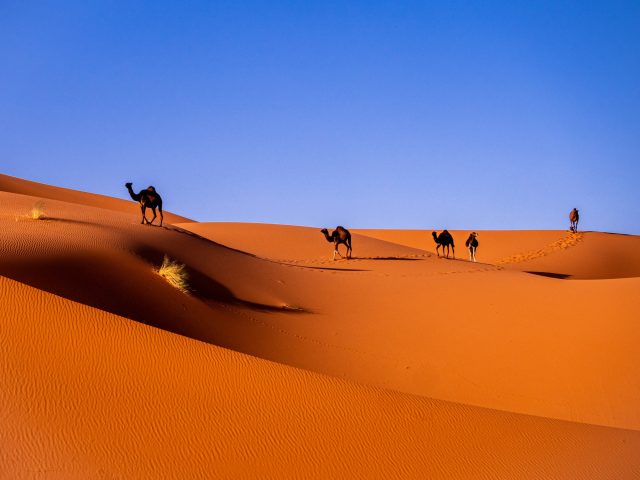
- The Sahara: a three day tour to the dunes at Merzouga, leaving two days for the city. See our guide to Sahara desert tours from Marrakech for routes and prices.
With a week, you can combine Marrakech with the desert and end in Fes, or add the coast. Many travellers spend three nights in Marrakech, three in the desert on a one way tour, and finish in Fes.
A 7 day route: Marrakech, the Sahara and Fes
If you have a week and want to see more of Morocco, this is one of the most popular routes, and it avoids doubling back.
- Days 1 to 3: Marrakech. Follow the three day plan above.
- Day 4: leave early on a one way desert tour over the Atlas, stopping at Ait Benhaddou, and spend the night in the Dades Valley.
- Day 5: drive through the Todra Gorge to Merzouga, ride camels into the dunes for sunset and sleep in a desert camp.
- Day 6: sunrise over the dunes, then the long drive north through the Middle Atlas to Fes.
- Day 7: a guided walk through the Fes medina, one of the largest car free urban areas in the world, before flying home from Fes or taking the train to Casablanca.
An alternative week for a slower pace is four nights in Marrakech with one day trip, then three nights in Essaouira on the coast, about 2.5 to 3 hours away by bus.
Marrakech with children: a 3 day family plan
Marrakech is busy but fun for children, especially if you mix sightseeing with open space and a pool.
- Day 1: Le Jardin Secret in the morning, lunch, a rest at your riad, then Jemaa el Fna in the early evening when the stalls are setting up.
- Day 2: Jardin Majorelle at opening, lunch in Gueliz, and an afternoon at a hotel day pass or, from late March to November, the Oasiria water park on the edge of the city.
- Day 3: a camel ride in the Palmeraie or a sunset trip to the Agafay Desert, which children usually love.
Keep the souks for the morning, when they are calmer, and hold small children’s hands in the busy lanes where motorbikes pass.
Coming back for a second visit?
If you have already seen the big sights, use your days differently. Explore quieter quarters such as Mouassine, the Kasbah and the area around Bab Doukkala, visit the smaller museums such as Dar El Bacha, the Musée de Mouassine and the Maison de la Photographie, take a cooking class or a crafts workshop, and spend more time out of the city: the Ourika Valley, Imlil, Ouirgane or a night or two in the Atlas.
Adjusting your plan for Ramadan, heat or rain
During Ramadan, monuments open later and close earlier, many cafés and restaurants close during daylight, and the city comes alive after sunset, so move your sightseeing to the morning and enjoy the evenings. In summer heat, do the palaces at 9am, rest through the afternoon and head out again after 5pm. On the rare rainy days, spend more time in covered places: the souks, the Yves Saint Laurent Museum, Dar El Bacha, a hammam or a cooking class.
What to book before you go
- Your riad or hotel, especially for spring, autumn and school holidays.
- An airport transfer if you arrive late or are staying deep in the medina.
- Jardin Majorelle tickets, which are sold online with timed entry.
- Cooking classes, food tours and spa hammams, which have small groups and fill up.
- Day trips and desert tours in peak season.
- An eSIM or data plan, so maps work in the medina from the moment you land.
Everything else, including the palaces, the madrasa and most restaurants, can be done on the day.
Where to stay in Marrakech
Where you stay shapes your trip as much as how long you stay.
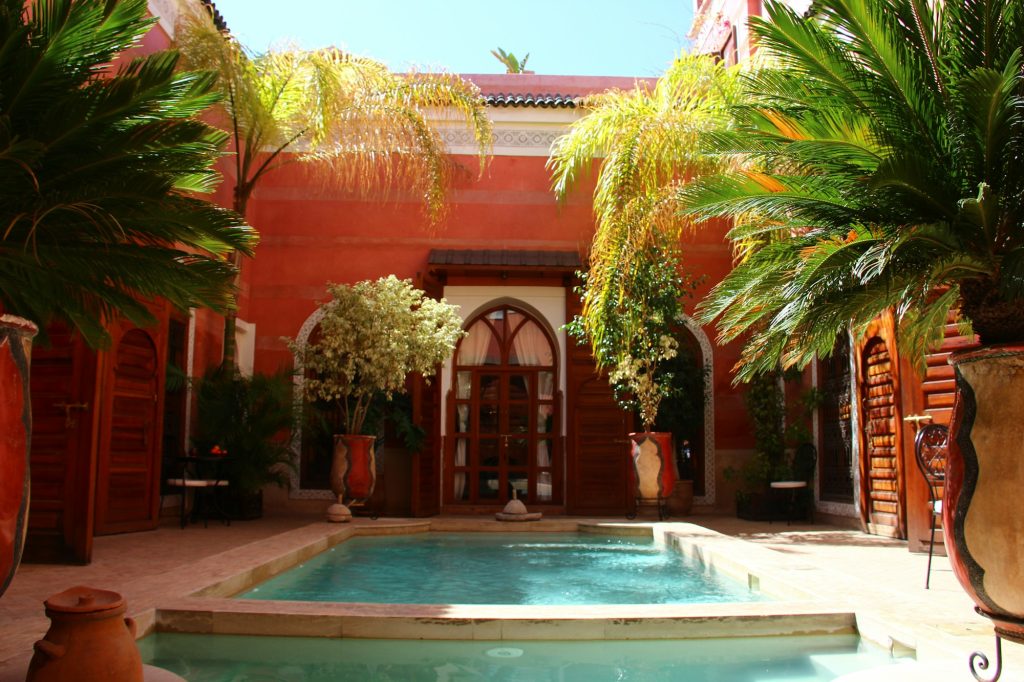
- Medina, near Jemaa el Fna: the most convenient base for sightseeing, with lots of riads at every price. It can be noisy and busy, and taxis cannot reach most doors.
- Mouassine and the northern medina: quieter lanes close to the souks, Le Jardin Secret and Ben Youssef. A great choice for a first visit.
- Kasbah: a calmer, more residential part of the medina near the Saadian Tombs and El Badi, with easy taxi access.
- Gueliz and Hivernage: modern hotels, wide streets, restaurants and bars. Good if you prefer international comforts, but you will take a taxi to the medina each day.
- Palmeraie: luxury resorts with big pools about 20 minutes from the centre. Best for a relaxing holiday rather than sightseeing.
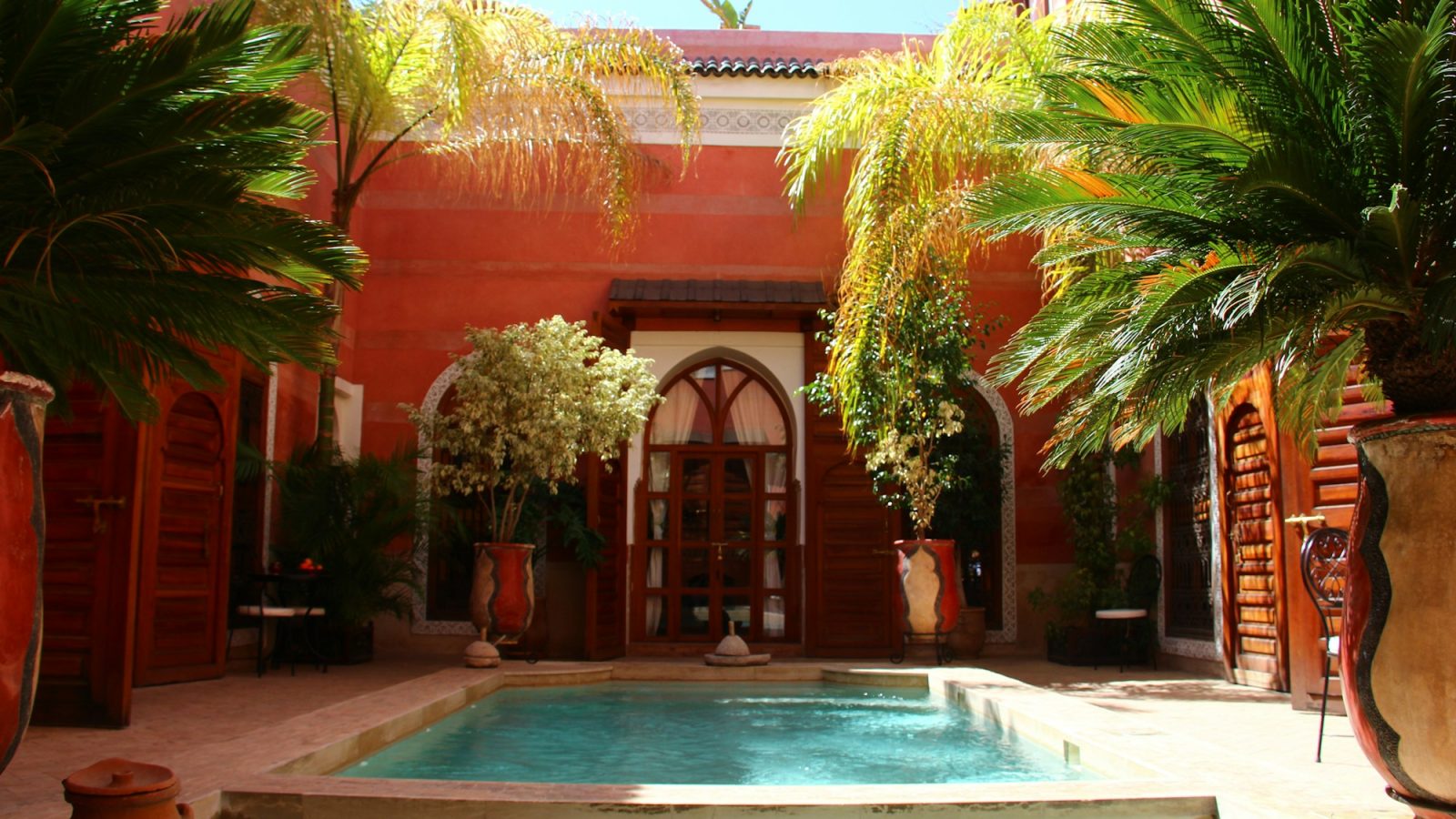
A riad, a traditional house built around a courtyard, is the classic place to stay. Most have only a handful of rooms, a roof terrace and staff who will help with guides, taxis and dinner reservations.
A daily budget for Marrakech
Prices below are per person per day in November 2026, not including accommodation.
| Style | Daily spend | What it covers |
|---|---|---|
| Budget | about 300 to 500 dirhams | Street food and simple cafés, one or two paid sights, walking and the odd taxi |
| Mid range | about 600 to 1,200 dirhams | Restaurant meals, two or three sights, a hammam or guided walk, taxis |
| Comfortable | 1,500 dirhams and up | Smart restaurants, spa hammams, private guides and day trips |
Typical costs: entry to the Bahia Palace, Saadian Tombs or El Badi is about 100 dirhams each, Ben Youssef about 50, Jardin Majorelle about 170, a petit taxi ride in town 20 to 30 dirhams, mint tea 15 to 30 dirhams and a meal at the Jemaa el Fna stalls 50 to 100 dirhams. For more prices and opening hours, see our guide to the 22 best things to do in Marrakech.
Getting from the airport
Marrakech Menara Airport is only about 6 km from the medina (see our guide to flights to Marrakech from the UK for airlines and fares). The airport bus, line 19, runs to Jemaa el Fna and Gueliz for about 30 dirhams one way, or 50 dirhams return, and takes 30 to 45 minutes. Taxis wait outside arrivals and the fare to the medina is usually around 100 to 150 dirhams, more at night, so agree it before you get in. Because cars cannot reach most riads, the simplest option on a first visit is to book a transfer through your riad or a pickup service, so someone meets you and walks you to the door.
Is Marrakech a walkable city?
The medina is very walkable and best seen on foot: most sights are 10 to 20 minutes from Jemaa el Fna. The lanes are narrow and busy, though, with motorbikes, donkey carts and handcarts, so walk on the right and keep to the side when you hear a horn. Comfortable shoes are essential. Between the medina and Gueliz or Jardin Majorelle, a petit taxi is quicker and costs only a few pounds.
What to avoid in Marrakech
- Fake guides and “the road is closed” lines: people will offer to show you the way and then ask for money or lead you to a shop. Say no thank you and keep walking.
- Unofficial tannery tours: these end with a request for payment and a leather shop.
- Animal photos: snake charmers and monkey handlers expect payment, and the animals are kept in poor conditions.
- Unpriced food: at the stalls and in some cafés, check prices before you order.
- Midday sightseeing in summer: from June to September, temperatures can pass 40°C, so plan sights for the morning and late afternoon.
- Trying to do too much: the medina is tiring. Build in time to rest.
Dos and don’ts in Marrakech
- Do dress modestly, covering shoulders and knees in the medina.
- Do carry cash in dirhams, because many places do not take cards.
- Do bargain in the souks, politely and with a smile.
- Do ask before you photograph people.
- Don’t show strong public affection.
- Don’t enter working mosques, which are closed to non Muslims. Historic religious buildings such as Ben Youssef Madrasa are open to everyone.
- Don’t drink alcohol in the street; it is only served in licensed hotels, restaurants and bars.
- Don’t feel rude saying no. A firm, friendly “la, shukran” (no, thank you) is normal.
The best time to visit
Spring, from March to May, and autumn, from September to November, have warm, sunny days that are ideal for walking. See our month by month guide to the best time to visit Marrakech. Winter is cooler and quieter, with sunny days around 18 to 20°C but cold nights. Summer is very hot, often over 40°C in July and August, so the pace has to slow down. During Ramadan, which moves each year, some restaurants close during the day and opening hours are shorter, but the evenings are lively.
Frequently asked questions
How many days do you need in Marrakech?
Three to four full days is ideal for a first visit: enough to see the main sights without rushing and to take one day trip. Two days works for a quick city break, and five or more days lets you add Essaouira or the Sahara.
Is 3 days in Marrakech enough?
Yes. Three days covers the palaces, madrasas, souks, gardens and Jemaa el Fna at a comfortable pace, with time for a hammam or a cooking class.
Is 4 days too long in Marrakech?
No. Four days lets you add a day trip to the Atlas Mountains, the Ourika Valley or the Agafay Desert, which most visitors enjoy as a break from the busy medina.
Is 2 days enough in Marrakech?
Two days is enough for the highlights if you start early and plan your route, but there is no time for a day trip. It makes an excellent weekend.
What should you avoid in Marrakech?
Avoid unofficial guides, tannery touts, animal photo shows, eating without checking prices and sightseeing in the midday heat in summer. Also avoid overplanning; the medina is tiring and rest days help.
What are the dos and don’ts in Marrakech?
Dress modestly, carry cash, bargain politely, ask before taking photos and keep public affection discreet. Do not enter working mosques, drink in the street or feel obliged to accept help you did not ask for.
Is Marrakech a walkable city?
The medina is very walkable, and most sights are within 20 minutes of Jemaa el Fna. Use a petit taxi to reach Gueliz, Jardin Majorelle and the Palmeraie.
Plan the rest of your trip
Now you know how long to stay, plan what to see with our guide to the 22 best things to do in Marrakech, choose a trip out of town from the best day trips from Marrakech, or read about Sahara desert tours from Marrakech. If you spot something out of date, please let us know.