
!DISCLOSURE
Cartagena de Indias, on Colombia’s Caribbean coast, is one of the most beautiful colonial cities in the Americas. Inside its 16th and 17th century stone walls, pastel coloured houses with flower covered balconies line narrow streets, horse drawn carriages clatter past baroque churches and every square seems to have a café or a band. Beyond the walls are the colourful streets of Getsemaní, the great fortress of San Felipe, city beaches and boat trips to the turquoise waters of the Rosario Islands.
This guide covers the 25 best things to do in Cartagena, Colombia, with how to get there, how long to allow and what each costs in late 2026. We also answer how many days you need, how far the old city is from the cruise port, what to eat, what Colombia’s top attractions are, current FCDO safety advice and the entry rules for British visitors. If you are looking for Cartagena in Spain, there is a short section on that too.
Things to do in Cartagena at a glance
| Attraction | Area | Time needed | Cost from |
|---|---|---|---|
| Walled City and Clock Tower | Old town | Half a day | Free |
| City walls at sunset | Old town | 1 to 2 hours | Free |
| Castillo de San Felipe de Barajas | Just outside the walls | 2 hours | Entry fee |
| Getsemaní | Next to the old town | Half a day | Free |
| Palace of the Inquisition | Old town | 1 hour | Entry fee |
| La Popa Convent | Hill above the city | 1 to 2 hours | Entry fee and taxi |
| Rosario Islands | 1 hour by boat | A full day | Boat trip price |
| Playa Blanca on Barú | 1 hour by road or boat | A full day | Trip price |
| Totumo mud volcano | 1 hour north | Half a day | Small fee |
| San Basilio de Palenque | 1.5 hours south | Half a day | Tour price |
How many days are enough to visit Cartagena?
Three to four days is ideal. Spend one day exploring the Walled City, one in Getsemaní and at the San Felipe fortress, and one on a boat trip to the Rosario Islands or Playa Blanca. With a fourth day, add the mud volcano, Palenque or simply a slow day by the pool, which is very welcome in the heat. If you only have two days, focus on the old town, the walls at sunset, Getsemaní and San Felipe.
How far is the old city of Cartagena from the cruise port?
The cruise terminal is on Manga Island, about 3 kilometres from the Walled City. A taxi takes around 10 to 15 minutes, depending on traffic. Taxis in Cartagena do not use meters, so agree the fare before you get in, or book a shore excursion. Most cruise visitors spend their day in the Walled City, at San Felipe and in Getsemaní. Allow plenty of time to get back to the ship.
Getting around Cartagena
The Walled City and Getsemaní are compact and best explored on foot, ideally in the early morning or late afternoon, when it is cooler. For longer journeys, to San Felipe, La Popa, Bocagrande or the airport, take a taxi or a ride hailing app. The FCDO advises using licensed taxis booked by phone, through an app or through your hotel or restaurant, and not hailing them in the street. Agree the fare in advance, as taxis do not use meters.
The Walled City
1. Walk through the Clock Tower
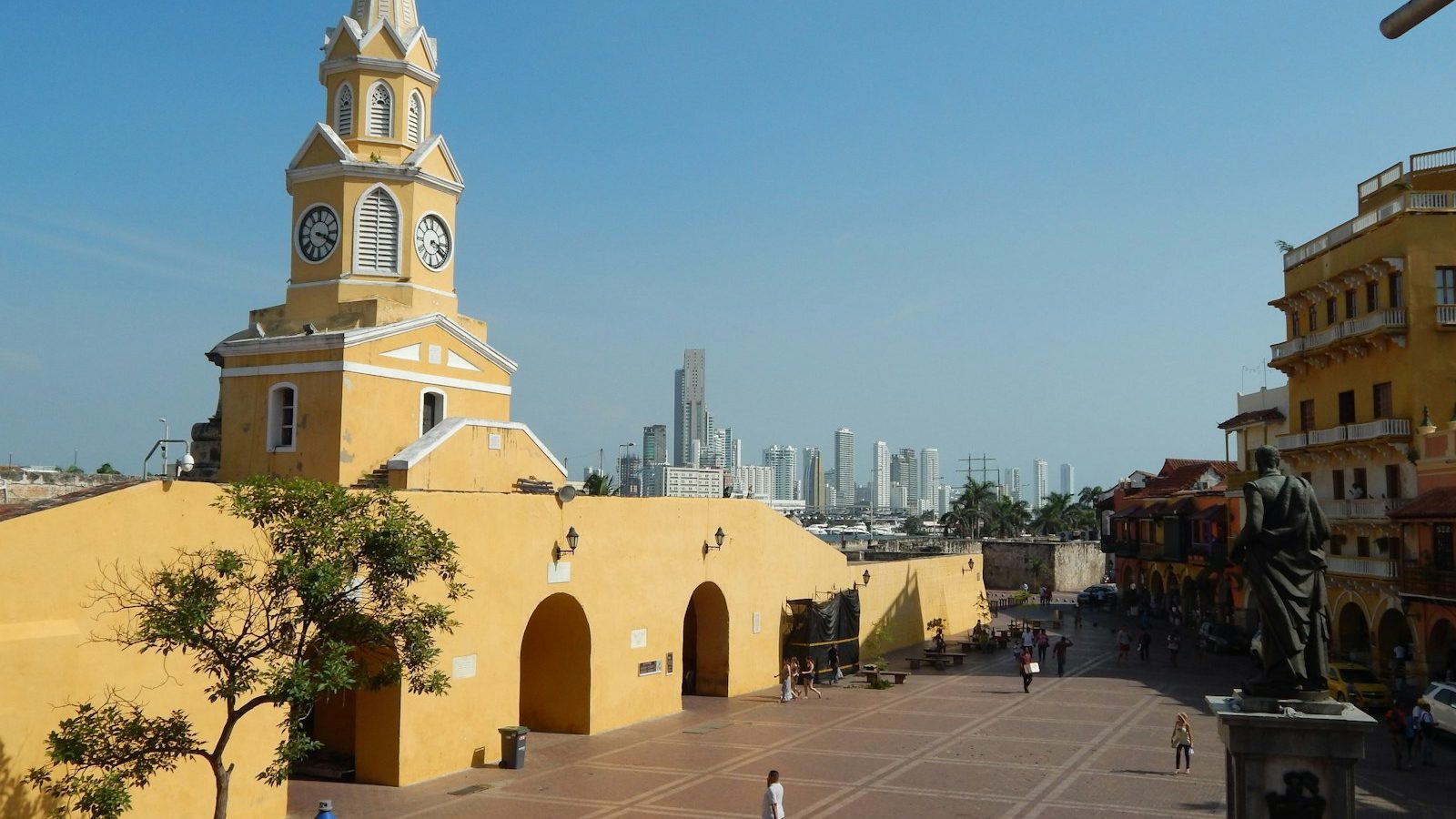
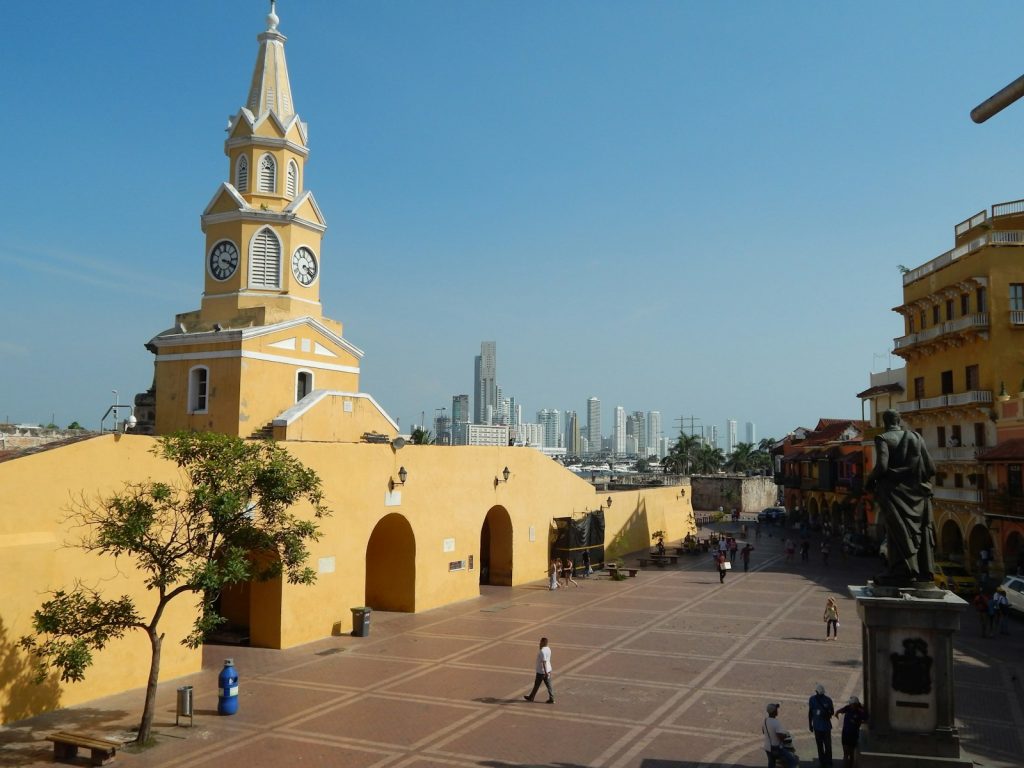
The Torre del Reloj (Clock Tower) is the main gateway into the Walled City and the symbol of Cartagena. Its clock was added in the 19th century to the old city gate. Walk through it into the Plaza de los Coches, once the site of the slave market and now lined with arcades selling sweets (dulces) and leading into the old town.
- **Cost:** free.
- **Tip:** the Walled City, together with the port and fortresses, has been a UNESCO World Heritage Site since 1984.
2. Get lost in the old town streets
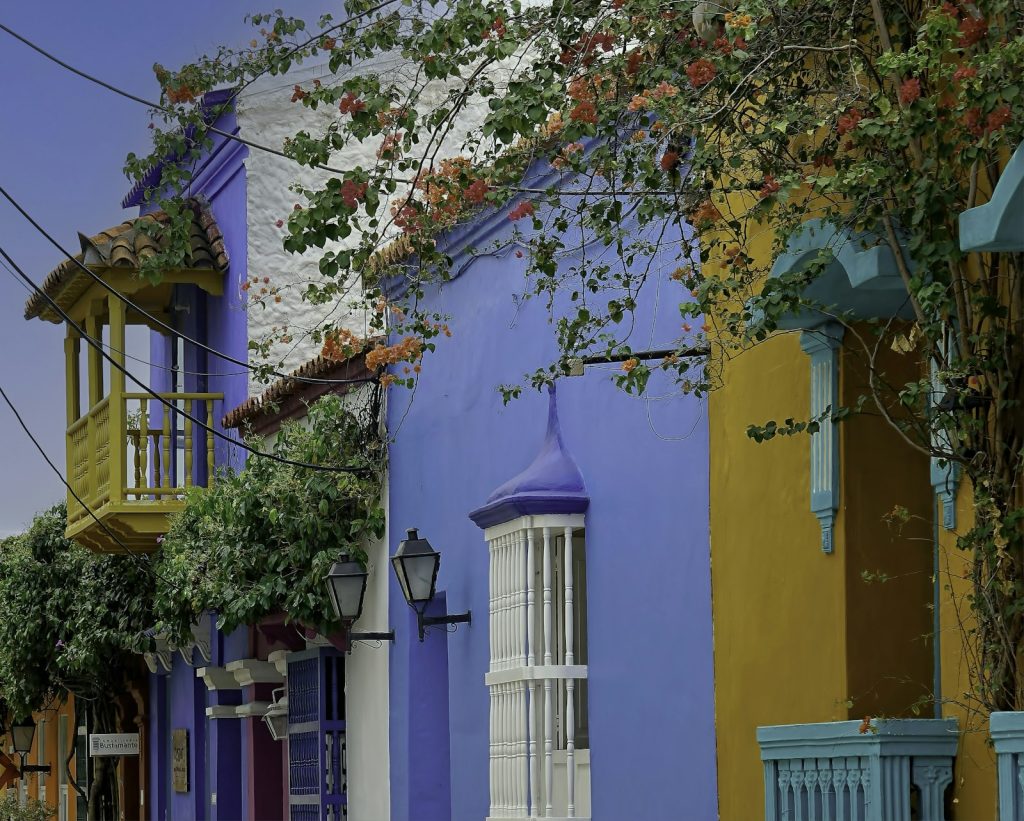
The best way to see Cartagena is simply to wander. Streets such as Calle del Santísimo, Calle de la Factoría and the streets of the San Diego neighbourhood are lined with colonial mansions painted yellow, blue, pink and orange, with wooden balconies covered in bougainvillaea and heavy doors decorated with knockers shaped like lizards, lions and mermaids. Go early in the morning for empty streets and soft light.
3. Watch the sunset from the city walls
About 11 kilometres of walls once surrounded Cartagena, built between the late 16th and 18th centuries to protect the city from pirates. Much of the wall around the old town still stands, and walking along the top is free. At sunset, the walls on the western side, near the Baluarte de Santo Domingo, are the perfect spot to watch the sun go down over the Caribbean. Several bars on top of the walls serve drinks with a view.
4. Visit Plaza Santo Domingo and Plaza San Pedro Claver
Plaza Santo Domingo is one of the liveliest squares in the old town, with restaurant tables spilling onto the cobbles and the reclining bronze sculpture Gertrudis by Fernando Botero. Nearby, the Church of San Pedro Claver honours the Spanish Jesuit priest who ministered to enslaved Africans arriving in Cartagena in the 17th century. You can visit the church, cloister and small museum.
5. Visit the Palace of the Inquisition
On Plaza de Bolívar, the Palacio de la Inquisición is a fine baroque building that housed the Inquisition tribunal from 1610. Today it is a museum about the history of the city, with a section on the Inquisition. Opposite, Plaza de Bolívar is a shady square where locals gather in the afternoons.
6. See the Gold Museum
The Museo del Oro Zenú, also on Plaza de Bolívar, has a small but beautiful collection of gold and pottery made by the Zenú people who lived in the region before the Spanish arrived. Entry is free, and the air conditioning is a welcome break from the heat.
7. Shop at Las Bóvedas
Las Bóvedas are 23 arched vaults built into the city walls at the end of the 18th century, used as storerooms and later as prison cells. Today they hold craft and souvenir shops selling hammocks, mochila bags, hats and emeralds. Compare prices before you buy.
8. Take a horse and carriage ride at night
In the evening, horse drawn carriages take visitors around the lit up streets of the old town. It is a classic Cartagena experience, especially for couples. Agree the price and length of the ride before you set off. Some visitors prefer a walking or cycling tour, given concerns about the welfare of the horses in the heat.
Getsemaní
9. Explore Getsemaní’s street art
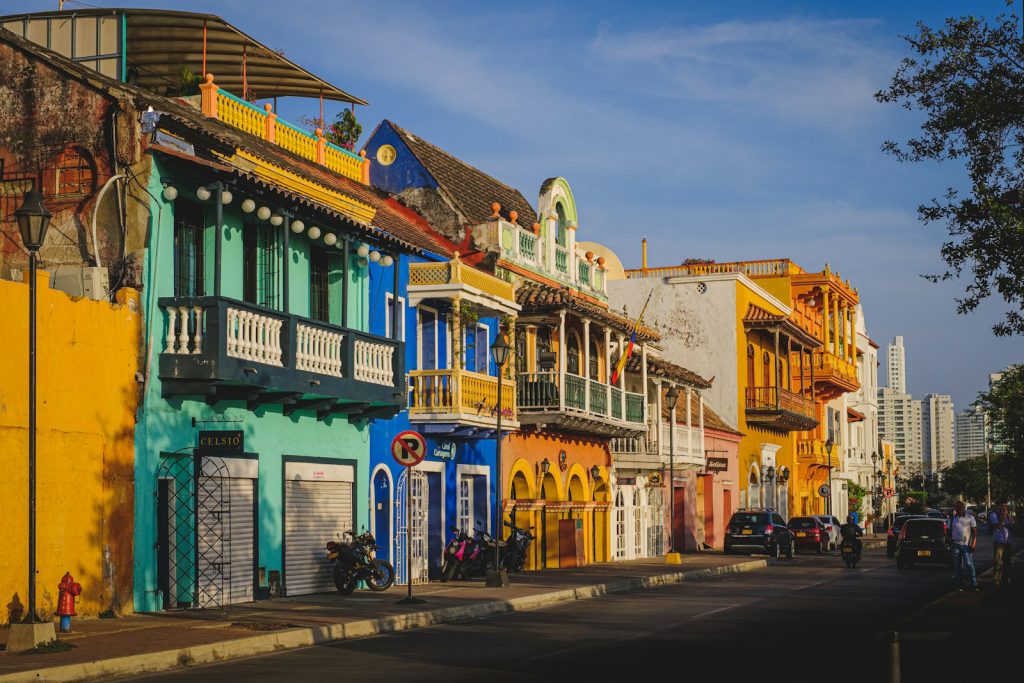
Just outside the walls, Getsemaní was once a working class neighbourhood and is now the most colourful part of Cartagena. Its streets are covered in murals, umbrellas and flags hang over Calle de la Sombrilla, and old houses have become cafés, hostels and boutique hotels. A street art tour helps you understand the stories behind the murals.
10. Spend an evening in Plaza de la Trinidad
At night, the small square in front of the Church of the Holy Trinity fills with local families, street food sellers and performers. Grab an arepa or a skewer from a street stall and soak up the atmosphere.
11. Dance salsa at Café Havana
Café Havana, on the edge of Getsemaní, is the most famous salsa bar in Cartagena, with live Cuban bands most nights. It gets crowded and hot, but the music is superb. Go late, as the band usually starts after 10pm.
Beyond the walls
12. Explore Castillo de San Felipe de Barajas
The Castillo de San Felipe de Barajas is the largest fortress built by the Spanish in the Americas. It sits on San Lázaro hill just outside the old town and was expanded over the 17th and 18th centuries. Walk its ramparts for views over the city, and explore the dark tunnels designed to carry sound, so defenders could hear an approaching enemy. The fortress famously resisted a huge British attack led by Admiral Edward Vernon in 1741, when the Spanish commander Blas de Lezo held the city.
- **Cost:** there is an entry fee, higher for foreign visitors. An audio guide or a guided tour is worth adding.
- **Time needed:** about 2 hours.
- **Tip:** go at opening time or late in the afternoon, as there is little shade.
13. Climb to La Popa Convent
The Convento de la Popa sits on the highest hill in Cartagena, about 150 metres above the city, with panoramic views over the old town, the bay and Bocagrande. The 17th century convent has a pretty cloister full of flowers. Go by taxi or with a tour, and do not walk up, as the road passes through areas where robberies have been reported.
14. See the Naval Museum
The Museo Naval del Caribe, in the old town, tells the story of Cartagena’s naval history, its battles with pirates and the great sieges, with ship models and maps. It is a good stop on a rainy or very hot afternoon.
15. Visit Bocagrande
Bocagrande is the modern side of Cartagena, a peninsula of high rise hotels and apartments with a long city beach. The sea is not as clear as on the islands, but it is convenient for a swim and a sunset drink. Vendors are persistent, so agree prices before accepting food, drinks or massages.
16. Join a market and food tour
Bazurto Market is a huge, chaotic local market selling fish, fruit, vegetables and everything else. It is fascinating but busy and best visited with a guide on a food tour. Most tours also include street food in the old town and Getsemaní.
Islands and beaches
17. Take a boat trip to the Rosario Islands
The Islas del Rosario are a group of small coral islands about an hour by speedboat from Cartagena, inside the Corales del Rosario and San Bernardo National Park. The water is clear and turquoise, and there are snorkelling spots, beach clubs and an aquarium. Boats leave from the Muelle de la Bodeguita near the Clock Tower in the morning.
- **Cost:** day trips vary widely, from basic group boats to private beach clubs. A port tax and national park fee are usually charged on top.
- **Tip:** book with a reputable operator and check that the boat has life jackets for everyone. The sea can be rough on the way back in the afternoon.
18. Relax at Playa Blanca on Barú
Playa Blanca, on the Barú peninsula, has white sand and clear water and can be reached by road or by boat. It gets very busy at weekends and in peak season, and vendors can be insistent. For a quieter visit, go on a weekday or stay overnight in one of the simple cabañas when the day trippers leave.
19. See the bioluminescent plankton
On some evening tours from Barú, you can swim among bioluminescent plankton that glow in the dark water. It works best on nights with little moonlight.
20. Take a sunset sail
Sunset cruises sail around the Bay of Cartagena, with views of the old town and Bocagrande’s skyline as the sun goes down. Many include drinks and music.
Day trips from Cartagena
21. Bathe in the Totumo mud volcano
El Totumo, about an hour north of Cartagena, is a small mud volcano where you climb a wooden staircase and float in a crater filled with warm, thick mud. Afterwards, local women wash you off in the nearby lagoon for a tip. It is messy, silly and great fun. Check that it is open before you go, as access has been interrupted at times.
22. Visit San Basilio de Palenque
San Basilio de Palenque, about an hour and a half from Cartagena, was founded by people who escaped from slavery in the 17th century and is considered one of the first free African towns in the Americas. Its language, music and traditions are recognised by UNESCO as part of the intangible cultural heritage of humanity. Visit with a local guide from the community.
23. See the Aviario Nacional
The National Aviary on the Barú peninsula is home to hundreds of tropical birds from across Colombia, including macaws, toucans and flamingos, in large walk through enclosures. It is a good stop on the way to Playa Blanca.
24. Take a cooking class
A Colombian cooking class teaches you how to make dishes such as arepas, ceviche, fried fish with coconut rice and patacones (fried plantain), often starting with a visit to a market.
25. Try the street food
Cartagena’s street food is one of its great pleasures. Look for arepa de huevo (a fried corn cake with an egg inside), carimañolas (stuffed cassava fritters), fresh fruit cups, cocadas (coconut sweets) and limonada de coco, a creamy coconut lemonade that is perfect in the heat.
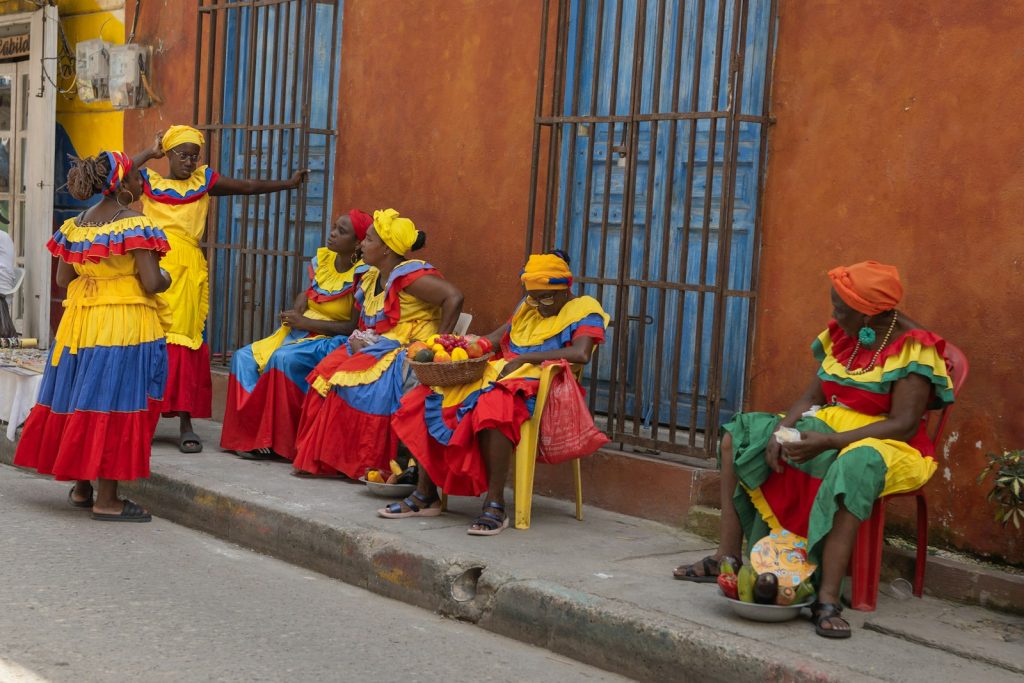
What food is Cartagena known for?
In Cartagena, Colombia, the food is classic Caribbean Colombian. Fried whole fish served with coconut rice, patacones and salad is the signature meal. Other favourites include ceviche, seafood soup, posta cartagenera (beef slow cooked in a dark, sweet sauce), arepa de huevo and the sweets sold in the Portal de los Dulces.
What food is Cartagena, Spain known for?
If you are visiting Cartagena in the Murcia region of Spain instead, look for caldero, a rice dish cooked in a rich fish stock, michirones (spicy broad beans), marineras (Russian salad on a breadstick topped with an anchovy) and café asiático, a layered coffee with condensed milk, brandy and liqueur. Cartagena in Spain is also known for its Roman theatre and naval history, and is a popular cruise stop in its own right.
What is the number one tourist attraction in Colombia?
Cartagena’s Walled City is often described as Colombia’s top tourist attraction, thanks to its beautiful colonial streets and Caribbean location. Other contenders include the Coffee Triangle around Salento and the Cocora Valley with its giant wax palms, Tayrona National Park, the Lost City (Ciudad Perdida) trek in the Sierra Nevada de Santa Marta, and the vibrant city of Medellín.
What are 10 must do things in Colombia?
- **Explore Cartagena’s Walled City** and watch the sunset from the walls.
- **Visit the Coffee Triangle** and walk among the wax palms of the Cocora Valley.
- **Hike to the Lost City**, a four to six day trek to an ancient city in the jungle.
- **Relax in Tayrona National Park**, where the jungle meets the Caribbean.
- **Discover Medellín**, including its cable cars and Comuna 13 street art, ideally with a guide.
- **Explore Bogotá’s Gold Museum** and the historic La Candelaria district.
- **Visit the Salt Cathedral of Zipaquirá**, built inside a salt mine.
- **Take a boat to the Rosario Islands** from Cartagena.
- **Climb El Peñol** for views over the lakes of Guatapé.
- **Dance salsa in Cali**, the salsa capital of the world.
What is the number one cause of death in Colombia?
As in the UK, the leading cause of death in Colombia is heart disease, followed by other long term illnesses such as stroke and cancer, according to World Health Organization data. For visitors, the main risks are different: road traffic accidents, crime, strong sea currents and heat. Take care when crossing roads, follow the safety advice below, only swim where it is safe and drink plenty of water.
Safety in Cartagena
Most visits to Cartagena are trouble free, but the FCDO notes that pickpocketing, mugging and armed robbery are a problem in major cities, including on the Caribbean coast. It advises the following:
- **Scopolamine:** criminals use this drug, which can be given in food, drinks, cigarettes or on paper, to rob or assault victims. Never leave food or drinks unattended, and don’t accept anything from strangers.
- **Dating apps:** criminals use dating apps to target foreigners travelling alone. Don’t invite strangers to your accommodation or accept invitations to theirs.
- **Taxis:** use licensed taxis booked by phone, app, your hotel or a restaurant, and don’t hail them in the street.
- **Fake police:** if someone claiming to be a police officer asks to inspect your money, ask to be taken to the nearest CAI police station.
- **Cash machines:** use them inside banks or shopping centres in daylight, as express kidnappings target people around ATMs, often at night.
- **Child protection:** laws against child sexual abuse are strictly enforced, especially when tourists are involved.
The FCDO advises against all but essential travel to some parts of Colombia, so check its regional risks page before you travel further afield.
How much does a trip to Cartagena cost?
| Item | Typical cost (late 2026) |
|---|---|
| Taxi within the city | £3 to £8 |
| Street food snack | £1 to £3 |
| Lunch menu (menú del día) | £5 to £10 |
| Dinner at a good restaurant | £25 to £50 per person |
| Rosario Islands day trip | £40 to £120 |
| Mid range hotel in the Walled City | £100 to £200 a night |
| Hostel or guesthouse in Getsemaní | £20 to £60 a night |
Sample 4 day Cartagena itinerary
- **Day 1:** walking tour of the Walled City, the Clock Tower, Plaza Santo Domingo and the Palace of the Inquisition, then sunset on the walls.
- **Day 2:** San Felipe fortress first thing, La Popa by taxi, then an afternoon and evening in Getsemaní, with salsa at Café Havana.
- **Day 3:** boat trip to the Rosario Islands, with snorkelling and lunch on the beach.
- **Day 4:** Totumo mud volcano or Palenque in the morning, then a sunset sail around the bay.
Where to stay in Cartagena
- **Walled City:** the most beautiful and atmospheric place to stay, with boutique hotels in colonial mansions, many with rooftop pools.
- **Getsemaní:** lively and colourful, with cheaper guesthouses, hostels and boutique hotels.
- **Bocagrande:** modern hotels on the beach, good for families, but less character.
- **Barú or the Rosario Islands:** quiet island hotels and eco lodges for a few days of rest.
Entry requirements for British visitors
British citizens can visit Colombia for up to 90 days without a visa for tourism, at the discretion of the immigration officer. You must have an onward or return ticket within that period. Your passport must be valid on entry, and six months’ validity is recommended. Completing the online Check MIG form between 72 hours and one hour before travel is optional, but it can speed up your arrival. Always check the latest FCDO entry requirements before you travel.
When is the best time to visit Cartagena?
Cartagena is hot all year, with daytime temperatures around 30°C. The driest months are December to April, which is also peak season, especially around Christmas, New Year and Easter. May to November is wetter, with short tropical downpours, and October and November are usually the rainiest months. Hurricanes rarely affect Cartagena, but storms are possible in the Caribbean in the autumn.
Our picks
- **Best free thing to do:** sunset on the city walls.
- **Best sight:** Castillo de San Felipe de Barajas.
- **Best neighbourhood:** Getsemaní.
- **Best day trip:** a boat trip to the Rosario Islands.
- **Best night out:** salsa at Café Havana.
Frequently asked questions
How many days are enough to visit Cartagena?
Three to four days is ideal for the Walled City, Getsemaní, San Felipe and a boat trip to the islands. Two days is enough for the main sights.
What food is Cartagena known for?
Cartagena in Colombia is known for fried fish with coconut rice and patacones, arepa de huevo, ceviche and coconut lemonade. Cartagena in Spain is known for caldero rice and café asiático.
How far is the old city of Cartagena from the cruise port?
About 3 kilometres, or 10 to 15 minutes by taxi. Agree the fare before you get in, as taxis do not use meters.
What is the number one tourist attraction in Colombia?
Cartagena’s Walled City is often named Colombia’s top attraction, followed by the Coffee Triangle, Tayrona National Park, the Lost City and Medellín.
What are 10 must do things in Colombia?
Explore Cartagena, visit the Coffee Triangle and Cocora Valley, trek to the Lost City, relax in Tayrona, explore Medellín and Bogotá, visit the Salt Cathedral, sail to the Rosario Islands, climb El Peñol and dance salsa in Cali.
What is the number one cause of death in Colombia?
Heart disease is the leading cause of death in Colombia, as in the UK. For visitors, the main risks are road accidents, crime, sea currents and heat.
Is Cartagena safe for tourists?
Most visits are trouble free. Keep valuables out of sight, use licensed or app taxis, never leave drinks unattended and follow FCDO advice on scopolamine and dating apps.
Do I need a visa for Colombia from the UK?
No. British citizens can visit Colombia for up to 90 days without a visa for tourism, with an onward or return ticket.
Plan the rest of your trip
Browse our South America travel guides for more ideas. If you are travelling around the continent, read our guides to the best things to do in Lima, Machu Picchu tours and the best things to do in Rio de Janeiro. Combining the Caribbean with Mexico? See our guide to the best things to do in Cancun. If you spot something out of date, please let us know.