
These are the best things to do in Barcelona for 2026 and 2027, from Gaudí’s basilica and Park Güell to free walks through the Gothic Quarter, evening shows at the Magic Fountain and day trips to Montserrat. Barcelona packs world class architecture, a city beach, great food and easy public transport into one compact city, and it works for a long weekend or a full week.
Some links in this guide are affiliate links: if you book through them we may earn a commission at no extra cost to you. It never changes what we recommend. How we make money.
This guide picks 20 things to do, with what each one is, why it is worth your time, how to get there with or without a tour, how long to allow and what it costs. Prices were checked on the official websites in November 2026 and are shown in euros with approximate pounds and dollars at EUR 1 = £0.84 / $1.09. You will also find the new 2026 tourist tax, metro fares, pickpocket advice, entry rules for UK and US travellers and answers to the questions people ask most.
Things to do in Barcelona at a glance
| Pick | Best for | Time needed | Adult price (Nov 2026) |
|---|---|---|---|
| Sagrada Familia | Architecture, first visit | 1.5 to 2 hours | EUR 26 (towers EUR 36) |
| Park Güell | Gaudí, views | 1.5 hours | EUR 18 |
| Casa Batlló | Gaudí interiors | 1 to 1.25 hours | From EUR 29 |
| La Pedrera (Casa Milà) | Rooftop chimneys | 1.5 hours | EUR 29 |
| Gothic Quarter and Cathedral | Free walking | Half a day | Streets free |
| El Born and Picasso Museum | Art, bars | Half a day | EUR 14 (free Thursday from 4pm) |
| Palau de la Música Catalana | Modernist interiors | 50 minutes | EUR 24 |
| La Rambla and La Boqueria | Market food | 1 to 2 hours | Free to enter |
| Montjuïc and MNAC | Views, art, gardens | Half a day | MNAC EUR 12 |
| Magic Fountain | Evening show | 1 hour | Free |
| Barceloneta and the seafront | Beach, seafood | Half a day | Free |
| Bunkers del Carmel | Sunset view | 1.5 hours | Free |
| Spotify Camp Nou | Football fans | 2 hours | From EUR 69 |
| Day trip to Montserrat | Mountains, monastery | Full day | From EUR 50 combined ticket |
How to choose what to do in Barcelona
Barcelona’s big sights are spread across a few clear areas. The old town (Ciutat Vella) holds the Gothic Quarter, El Born, El Raval and La Rambla. The grid of Eixample above it holds most of the Gaudí and Modernist buildings. Montjuïc is the green hill to the south west, the beaches run north east from Barceloneta, and Park Güell, Gràcia and the Bunkers sit on the slopes to the north.
On a first visit with three days, spend one day on Gaudí (Sagrada Familia in the morning, Casa Batlló or La Pedrera in the afternoon), one day in the old town and on the seafront, and one day split between Park Güell and Montjuïc. With four or five days, add Montserrat, Sitges or Girona.
The single most important tip is to book the timed sights before you fly. The Sagrada Familia, Park Güell and the Gaudí houses sell out days ahead in busy periods, and official online tickets are usually the cheapest.
1. Sagrada Familia
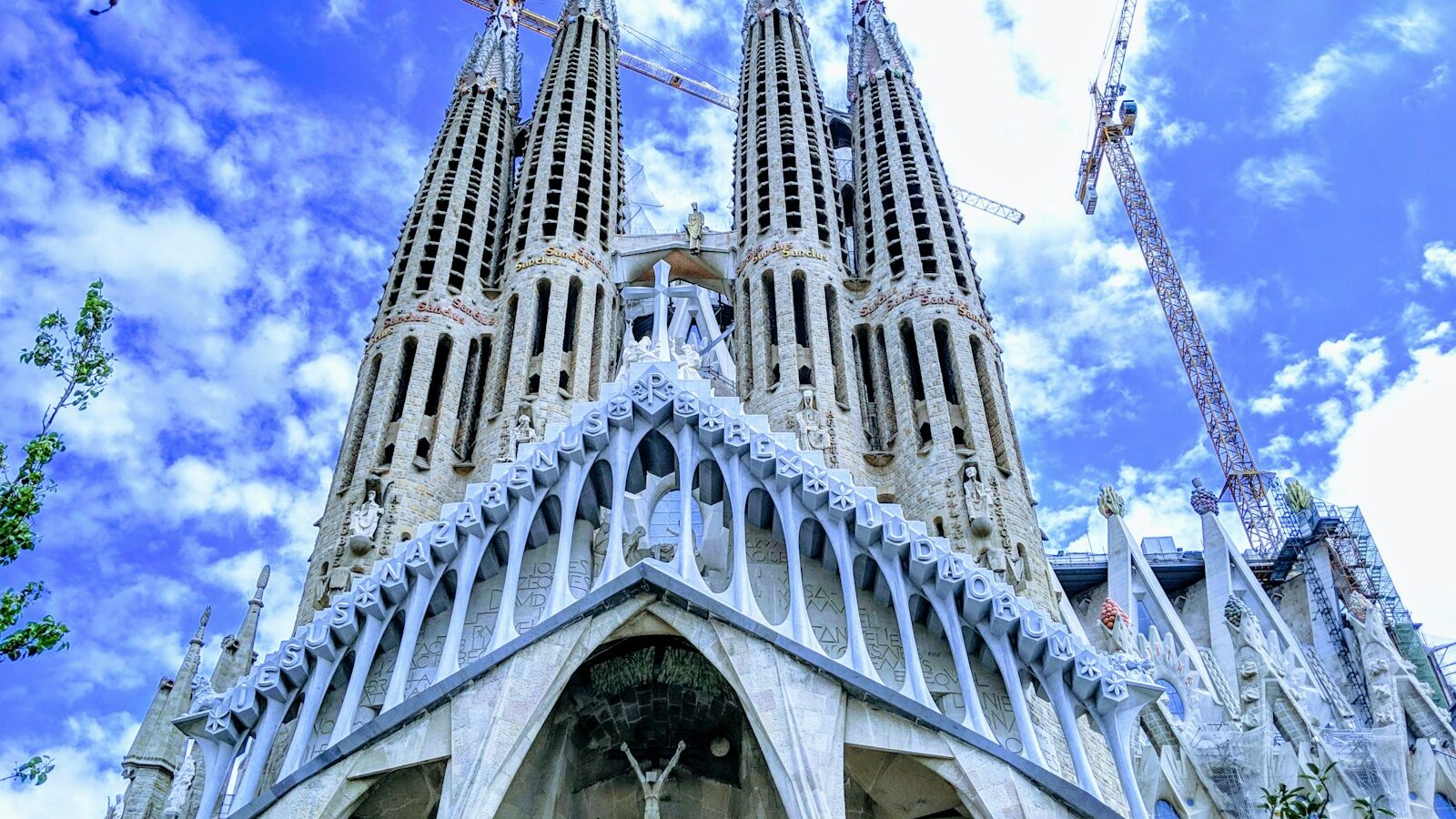
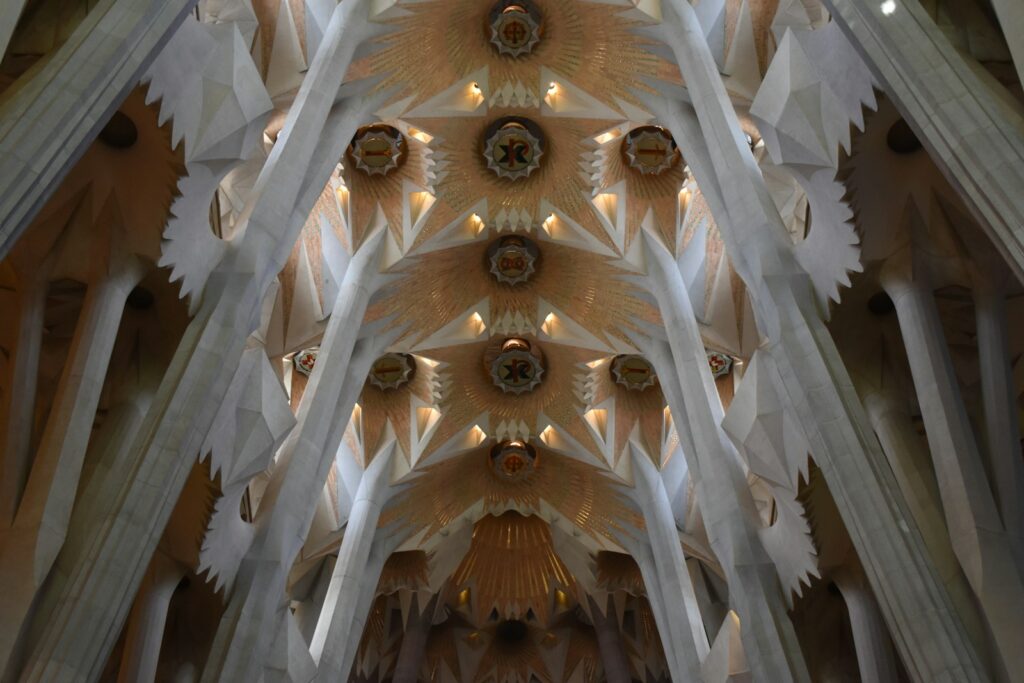
Antoni Gaudí’s basilica is the most visited monument in Spain and the one sight nearly every visitor puts first. Work began in 1882, Gaudí devoted the last decades of his life to it, and it is still being finished today. Inside, branching stone columns rise like a forest and the stained glass throws blue and green light on one side and red and orange on the other.
What is new in 2026
2026 has been the basilica’s biggest year in a generation. The final piece of the cross on the tower of Jesus Christ, the tallest of its 18 towers, was put in place on 20 February 2026, which makes the Sagrada Familia the tallest church in the world at 172.5 metres. On 10 June 2026, the centenary of Gaudí’s death, Pope Leo XIV blessed the completed tower during a visit to Barcelona.
The outside now looks finished from most angles, but work continues inside the tower of Jesus Christ, where a lift is being installed, and the main Glory façade is still years away. When we checked in November 2026, the official site did not sell visits to the tower of Jesus Christ itself. A towers ticket takes you up one of the other towers.
Sagrada Familia tickets and prices
Official prices in November 2026 were EUR 26 (about £22 / $28) for the basilica with the audio guide app, EUR 30 with a guided tour, EUR 36 (about £30 / $39) with a tower and EUR 40 for a guided tour plus tower. Under 30s and students pay EUR 24, seniors EUR 21, and under 11s go free. Barcelona residents get 50% off during 2026, but that offer is not for visitors.
Every ticket has a time slot, and slots sell out several days ahead from spring to autumn and over Christmas. Buy on the official Sagrada Familia website, sagradafamilia.org, where prices are lowest. Resale sites charge more for the same entry.
- Getting there without a tour: Metro L2 or L5 to Sagrada Família station, which comes out beside the basilica.
- With a tour: A guided visit explains the symbolism you would otherwise miss, and many operators include a tower.
- Time needed: Allow 1.5 hours, or 2 hours with a tower.
- Tip: Morning light is best on the Nativity façade, and late afternoon sun sets the western windows glowing. The towers are not suitable for young children or people with heart or breathing problems, and the way down is a long spiral staircase.
2. Park Güell
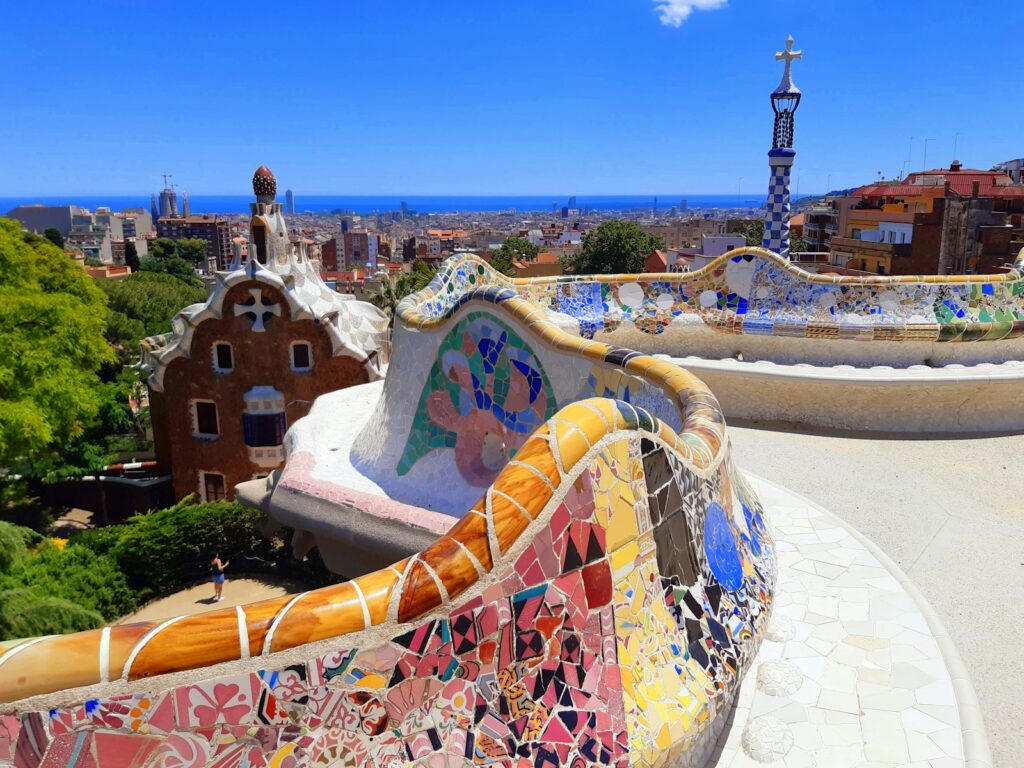
Park Güell was planned as a garden city for wealthy families and became one of Gaudí’s most playful works, with gingerbread style gatehouses, a mosaic lizard on the main steps and a long serpentine bench on the terrace looking out to the sea.
Park Güell tickets
The Monumental Zone, which holds all the famous parts, needs a timed ticket. In November 2026 the official price was EUR 18 (about £15 / $20) for adults and EUR 13.50 for children aged 7 to 12 and over 65s. Children under 7 go free but still need a ticket. Visitor slots run from 9.30am to 5.30pm, and you can enter up to 30 minutes after your slot time. Early mornings and evenings are kept for residents, so plan around the visitor window.
Buy on the official Park Güell website, parkguell.barcelona. Late morning slots sell out first. The large wooded area around the Monumental Zone is free and has views almost as good.
- Getting there: Metro L3 to Lesseps or Vallcarca, then a steep 15 to 20 minute walk uphill (escalators help from Vallcarca). Bus 24 drops you near the upper entrance with less climbing.
- Time needed: About 1.5 hours.
- Tip: Combine it with lunch in Gràcia, a short walk downhill.
3. Casa Batlló
Casa Batlló on Passeig de Gràcia is the Gaudí house that looks most like a dream: a rippling façade of coloured glass and tiles, balconies shaped like masks and a roof often said to look like a dragon’s back. Inside, there are almost no straight lines.
Visits use an audio guide with augmented reality effects. In November 2026 the general visit started from EUR 29 (about £24 / $32) online, with higher ticket levels adding the rooftop, private rooms and flexible changes. Children aged 0 to 12 go free on the general visit, and online prices are lower than at the door. The general visit runs from 9am to 7.15pm.
- Getting there: Metro L2, L3 or L4 to Passeig de Gràcia.
- Night visits: The winter evening experience, A Winter Night, started from EUR 39 with a drink and live music on the roof terrace.
- Time needed: About 1 to 1.25 hours.
4. La Pedrera (Casa Milà)
A few blocks up the same avenue, La Pedrera was Gaudí’s last private house. Its stone façade waves like the sea and its rooftop is a sculpture garden of warrior shaped chimneys. The attic, with its brick arches, holds a clear exhibition on how Gaudí worked.
The La Pedrera Essential ticket cost EUR 29 (about £24 / $32) online in November 2026, with EUR 14.50 for ages 12 to 17, EUR 22 for over 65s and students, and free entry for under 12s. It includes a video guide and the courtyards, an apartment, the attic and the rooftop.
Winter hours from 2 November 2026 to 25 February 2027 are 9am to 6.30pm daily, with night visits from 7pm to 11pm. It closes on 25 December and from 11 to 17 January 2027.
- Casa Batlló or La Pedrera: If you only do one, choose Casa Batlló for the interiors and La Pedrera for the rooftop.
- Time needed: About 1.5 hours.
5. The Gothic Quarter and Barcelona Cathedral
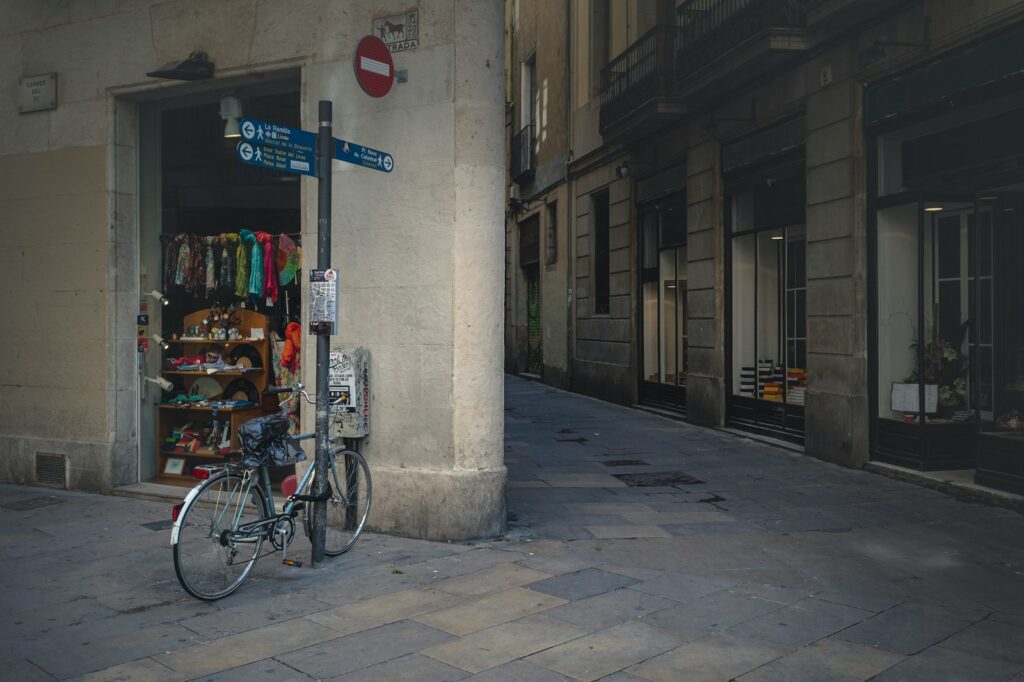
The Barri Gòtic is the oldest part of the city, a maze of narrow lanes built over the Roman town of Barcino. Walking it is one of the best free things to do in Barcelona. Look for Plaça Sant Felip Neri, Plaça del Rei, the neo Gothic bridge on Carrer del Bisbe and the remains of Roman columns from the Temple of Augustus, hidden in a courtyard on Carrer del Paradís.
Barcelona Cathedral sits at the top of the quarter. Its cloister keeps 13 white geese, a long tradition. The cathedral charges an entry fee for visitors at most times, so check the cathedral’s own site for current hours.
- Getting there: Metro L4 to Jaume I or L3 to Liceu, then walk.
- With a tour: A walking tour is the easiest way to find the Roman remains and hear the stories behind the squares.
- Time needed: Half a day at a slow pace.
6. El Born, Santa Maria del Mar and the Picasso Museum
East of Via Laietana, El Born mixes medieval streets with small bars, design shops and some of the best tapas in the city. Santa Maria del Mar, a 14th century Catalan Gothic church with soaring slender columns, is the heart of the area.
The Picasso Museum fills five medieval palaces on Carrer de Montcada and focuses on Picasso’s early years, including his years in Barcelona and his famous series on Velázquez’s Las Meninas. In November 2026 general entry was EUR 14 (about £12 / $15) online or EUR 15 at the ticket office. Entry is free on Thursdays from 4pm to 7pm and on the first Sunday of each month, but you must book a free slot, and those open four days ahead at 10am. The museum closes on Mondays.
- Getting there: Metro L4 to Jaume I.
- Time needed: 1.5 hours for the museum, longer if you stay for tapas.
7. Palau de la Música Catalana
This concert hall, finished in 1908, is the most dazzling Modernist interior in Barcelona and a UNESCO World Heritage Site. The inverted dome of stained glass in the ceiling, the sculpted horses bursting from the stage and the mosaic muses are unforgettable.
Guided tours last about 50 minutes and run between 9am and 3.30pm. In November 2026 they cost EUR 24 (about £20 / $26), or EUR 20 for under 35s and over 65s, with children under 10 free. Online tickets avoid the queue, and box office tickets cost EUR 1 more. A better option, if your dates allow, is to book a concert, which lets you see the hall lit up at night.
- Getting there: Metro L1 or L4 to Urquinaona.
8. La Rambla and La Boqueria market
La Rambla is the famous tree lined avenue from Plaça de Catalunya down to the port. It is worth one walk to see the Liceu opera house, the Miró mosaic in the pavement and the cast iron arches of La Boqueria market. It is also the busiest pickpocket zone in the city, and many of the cafés along it are overpriced.
La Boqueria is best early in the morning, before the tour groups. Skip the fruit cups by the entrance and head to the counter bars inside for fried fish, tortilla or grilled seafood at breakfast time. Avoid weekends at midday if you dislike crowds.
- Tip: For a more local market, try Santa Caterina in El Born, with its wave shaped mosaic roof, or Mercat de Sant Antoni.
9. Montjuïc: castle, cable car and the MNAC
Montjuïc is the green hill overlooking the port, home to the 1992 Olympic venues, gardens and some of the city’s best museums.
The Museu Nacional d’Art de Catalunya (MNAC) sits in the grand palace at the top of the steps from Plaça d’Espanya. Its Romanesque church murals, rescued from Pyrenean churches, are unique in the world. Tickets cost EUR 12 (about £10 / $13) and are valid for two days within a month. Entry is free on Saturdays from 3pm and on the first Sunday of each month. It closes on Mondays.
Further up, the Fundació Joan Miró holds the largest collection of Miró’s work, and Montjuïc Castle gives wide views over the port. The Montjuïc cable car links the upper station of the funicular with the castle. Online tickets bought through the transport company’s site are 10% cheaper than at the ticket office.
- Getting there: Metro L1 or L3 to Espanya and walk up the steps and escalators, or take the funicular from Paral·lel (L2 and L3), which is included in a normal metro ticket.
- Time needed: Half a day, or a full day if you add the Miró.
10. The Magic Fountain of Montjuïc
Below the MNAC, the Magic Fountain puts on free shows of water, light and music. From 1 November to 31 March the usual schedule is Thursday, Friday and Saturday from 8pm to 9pm, with shows starting at 8pm and 8.30pm. Times can change and the fountain sometimes stops for maintenance or water restrictions, so check the city council’s schedule on the day.
Arrive 15 minutes early for a spot on the steps, and watch your bag in the crowd.
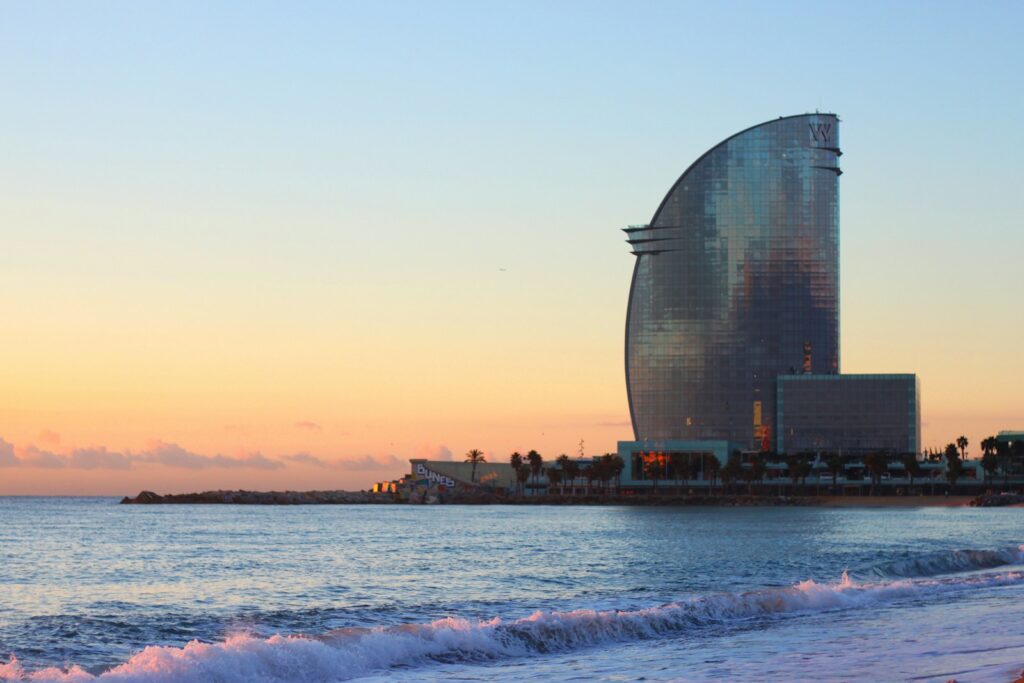
11. Barceloneta and the seafront
Barcelona is one of the few big European cities with a long sandy beach in the centre. Barceloneta is the closest and busiest, and the beaches get calmer as you walk north east towards Bogatell and Mar Bella. The promenade is lovely for a walk or bike ride in any season.
The old fishermen’s district of Barceloneta, behind the beach, is the place for seafood rice and paella. Many locals eat paella at lunch, not dinner.
- Getting there: Metro L4 to Barceloneta, then a 10 minute walk.
- Tip: Never leave bags unattended on the sand, and be wary of people selling drinks on the beach, which is not allowed.
12. Bunkers del Carmel
The anti aircraft battery on Turó de la Rovira, known as the Bunkers del Carmel, gives a 360 degree view over the whole city, from the Sagrada Familia to the sea. It is free and especially popular at sunset. A small museum point explains its role in the Spanish Civil War.
The neighbourhood has complained about crowds and noise, and in May 2026 the city council approved a plan to regulate tourist access. Check for any new rules before you go, keep your voice down and take your rubbish away.
- Getting there: Take a city bus to the Carmel area, then climb the last stretch on foot. You can also walk there from Park Güell, but it is steep.
13. Tibidabo
Tibidabo is the highest hill in the Collserola range behind the city, topped by the Temple of the Sacred Heart and an old fashioned amusement park dating from 1901. The view from the top is the widest in Barcelona.
The amusement park opens on limited days outside summer, mostly weekends, so check its calendar before you go. The church and viewpoints can be visited on other days.
- Getting there: FGC train to Avinguda Tibidabo, then a bus and the Tibidabo funicular.
14. Spotify Camp Nou and the Barça museum
FC Barcelona’s home stadium reopened in November 2025 after major rebuilding, and tours returned in January 2026. The Spotify Camp Nou Experience includes a panoramic view of the stadium, a guided tour and the museum, from EUR 69 (about £58 / $75) on the club’s site. On match days, a separate Match Day Tour includes the pitch side, the press room and the presidential box.
If you want to watch a game, buy from the official club website only, as resale scams are common.
- Getting there: Metro L3 to Les Corts or Palau Reial, or L5 to Collblanc.
15. Ciutadella Park and the Arc de Triomf
Parc de la Ciutadella is the city’s central park, with a boating lake, palm trees and a grand fountain that Gaudí worked on as a student. Walk to it along the wide promenade from the red brick Arc de Triomf, built for the 1888 Universal Exhibition. It is a good picnic stop between El Born and the beach.
- Getting there: Metro L1 to Arc de Triomf.
16. Sant Pau Recinte Modernista
Few first time visitors know about this former hospital by Lluís Domènech i Montaner, the architect of the Palau de la Música. Its pavilions are covered in tiles, domes and mosaics and linked by underground tunnels. It is a 15 minute walk up Avinguda de Gaudí from the Sagrada Familia, and it is much calmer. Check opening hours and prices on its official site.
17. Gràcia and the Eixample food scene
Gràcia was a separate town until 1897 and still feels like a village, with small squares such as Plaça del Sol and Plaça de la Virreina, independent shops and plenty of bars. It is a good place for an evening vermouth, the drink many locals have before lunch on weekends.
In the Eixample, the streets around Carrer d’Enric Granados and Sant Antoni are full of modern tapas bars. Look for patatas bravas, bombas (meat and potato croquettes), pan con tomate (bread rubbed with tomato, called pa amb tomàquet in Catalan), grilled padrón peppers and Catalan crema catalana for dessert.
18. A flamenco show
Flamenco comes from Andalusia, not Catalonia, but Barcelona has several good venues with nightly shows. Tablao Cordobés on La Rambla and the shows at the Palau Dalmases in El Born are among the best known. Shows usually last around an hour, and many offer a drink or dinner option. It is one of the easiest things to do in Barcelona at night, especially in winter.
19. Christmas in Barcelona: Fira de Santa Llúcia
If you visit in December, the Fira de Santa Llúcia fills the square in front of the cathedral with stalls selling nativity figures, moss, mistletoe and Christmas trees. It has been held since 1786. The 2025 edition ran from 28 November to 23 December, from 10am to 9pm daily, and the 2026 dates are expected to be similar, so check the city council’s Christmas pages.
Look for the caganer, the little squatting figure hidden in Catalan nativity scenes, and the Tió de Nadal, a smiling log that children feed and then hit with sticks on Christmas Eve to make it give presents. For bigger markets, see our guide to the best Christmas markets in Europe.
20. Day trips from Barcelona
Barcelona is a good base for day trips by train. These are the best three.
Montserrat
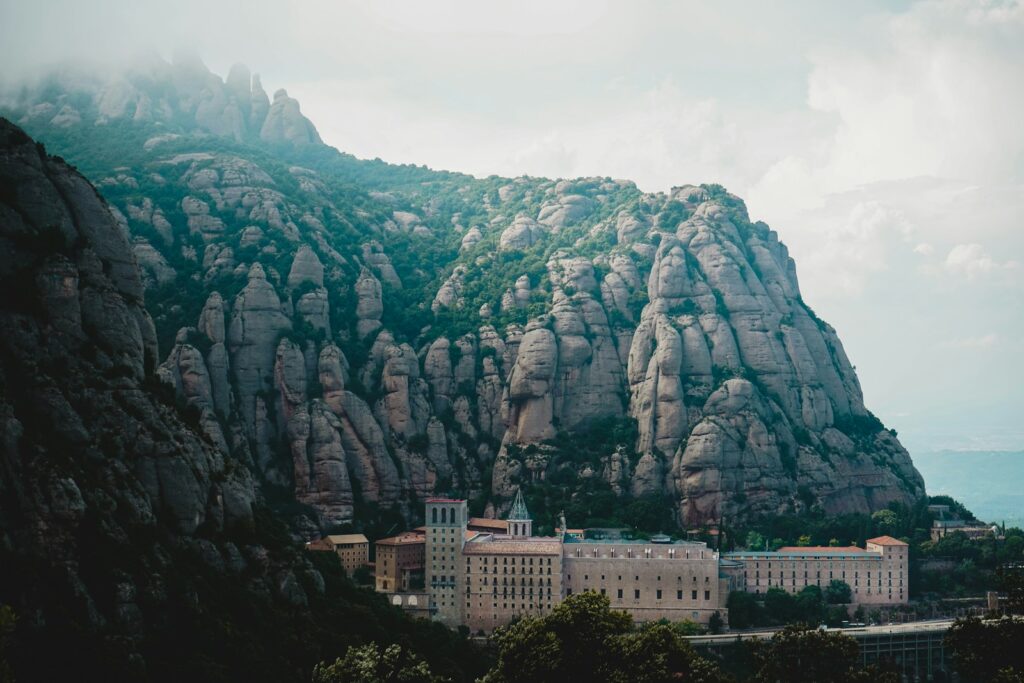
Montserrat is a Benedictine monastery set into a ridge of strange, rounded rock peaks about an hour north west of the city. Visitors come to see the Black Madonna, hear the boys’ choir (on set days) and walk the mountain trails.
The Trans Montserrat combined ticket, sold at the FGC station at Plaça d’Espanya and online, started from EUR 50 (about £42 / $55) in November 2026. It includes the metro, the return FGC train, the rack railway, the Sant Joan funicular and an audiovisual exhibition. The journey takes about 90 minutes, including around 60 minutes on the train and 20 minutes on the rack railway and transfer, with trains every hour.
- With a tour: Half day and full day tours by coach often add a wine tasting.
Sitges
Sitges is a whitewashed seaside town with good beaches, a lively nightlife scene and a famous carnival. Rodalies trains on line R2 Sud from Passeig de Gràcia or Barcelona Sants take around 40 minutes.
Girona
Girona has a beautifully preserved medieval old town, a Jewish quarter, a walk along the city walls and colourful houses hanging over the river Onyar. High speed trains from Barcelona Sants take around 40 minutes.
Free things to do in Barcelona
Many of the best things in Barcelona cost nothing.
- Walk the Gothic Quarter and El Born: The lanes, squares and Roman remains are free.
- See Gaudí from outside: The façades of the Sagrada Familia, Casa Batlló and La Pedrera are free to admire, and so are the lamp posts Gaudí designed for Plaça Reial.
- Park Güell outer areas: The woods around the paid Monumental Zone are free.
- The Magic Fountain: Free shows Thursday to Saturday evenings in winter.
- Bunkers del Carmel: Free views at sunset.
- Beaches and the seafront promenade: Free all year.
- Free museum times: The Picasso Museum on Thursday afternoons and first Sundays, and the MNAC on Saturday afternoons and first Sundays (book where required).
- Markets: Wander La Boqueria, Santa Caterina and Sant Antoni.
Things to do in Barcelona at night
Barcelona eats late. Restaurants fill from about 9pm, and bars stay busy well after midnight. Good evening ideas include:
- A night visit to Casa Batlló or La Pedrera, with music and a drink on the roof.
- A concert at the Palau de la Música Catalana.
- The Magic Fountain show (Thursday to Saturday in winter).
- A flamenco show.
- Tapas in El Born or Gràcia, or cocktails on a hotel rooftop.
- A sunset at the Bunkers del Carmel.
Things to do in Barcelona in winter
Barcelona is mild in winter, with plenty of sunny days. It is a good season for museums, the Gaudí houses (with shorter queues outside Christmas week) and long lunches. Highlights include the Fira de Santa Llúcia and the Christmas lights in December, the Three Kings parade on the evening of 5 January, and the calçotada season from around January, when Catalans grill long spring onions called calçots and dip them in romesco sauce.
Bear in mind shorter opening hours in winter: Park Güell visitor slots end at 5.30pm, La Pedrera closes at 6.30pm, and many sights close on 25 December and 1 January.
What to skip or treat with care
- Eating on La Rambla: Overpriced and aimed at tourists. Walk two streets in any direction.
- Unofficial ticket sites: Many sites look official but charge more. Use the addresses in this guide.
- Beach sellers and street games: Cups and ball games on La Rambla are scams.
- Too many Gaudí houses in one day: Pick two plus the Sagrada Familia, or they start to blur.
Barcelona costs in 2026
Prices below were checked in November 2026 on official sites. Pounds and dollars are approximate at EUR 1 = £0.84 / $1.09.
| Item | Euros | Approx GBP | Approx USD |
|---|---|---|---|
| Sagrada Familia (basilica) | EUR 26 | £22 | $28 |
| Sagrada Familia with tower | EUR 36 | £30 | $39 |
| Park Güell | EUR 18 | £15 | $20 |
| Casa Batlló (from) | EUR 29 | £24 | $32 |
| La Pedrera Essential | EUR 29 | £24 | $32 |
| Picasso Museum (online) | EUR 14 | £12 | $15 |
| Palau de la Música tour | EUR 24 | £20 | $26 |
| MNAC | EUR 12 | £10 | $13 |
| Spotify Camp Nou Experience (from) | EUR 69 | £58 | $75 |
| Trans Montserrat (from) | EUR 50 | £42 | $55 |
| Metro single ticket | EUR 2.90 | £2.45 | $3.15 |
| T casual, 10 journeys | EUR 13 | £11 | $14 |
| Airport metro ticket | EUR 5.90 | £5 | $6.45 |
| Tourist tax, 4 star hotel, per night | EUR 8.40 | £7 | $9.15 |
Barcelona tourist tax 2026
Barcelona raised its tourist tax sharply on 1 April 2026, when the Catalan regional rate doubled. The charge is paid per person, per night, at your accommodation, and combines the Catalan regional tax with a city surcharge. The rates from April 2026 are:
- 5 star hotels: EUR 12 (about £10 / $13) per night.
- 4 star hotels: EUR 8.40 (about £7 / $9.15).
- Tourist flats: EUR 9.50 (about £8 / $10.35).
- Other establishments: EUR 7 (about £5.90 / $7.65).
- Hostels: EUR 6.
- Cruise passengers: EUR 11 for stops under 12 hours, EUR 9 for longer stops.
Children aged 16 and under are exempt from the regional tax. The city council plans to raise its part of the charge by EUR 1 a year until 2029, so expect another rise in 2027. For a couple spending four nights in a 4 star hotel, the tax adds about EUR 67 (about £56 / $73).
Getting around Barcelona: metro fares and the T casual
Barcelona’s metro, buses and trams are run mainly by TMB and share one fare system. In November 2026, a single ticket cost EUR 2.90 (about £2.45 / $3.15), while the T casual, a card valid for 10 journeys in zone 1, cost EUR 13 (about £11 / $14), which brings each trip down to EUR 1.30. The T casual is for one person and lets you change between metro, bus and tram within 75 minutes on one journey.
The airport has its own metro fare: line L9 Sud to Aeroport T1 and T2 needs the EUR 5.90 airport ticket, and a normal single or T casual will not work there. The Aerobús to Plaça de Catalunya cost EUR 7.45 one way and EUR 12.85 return when we checked, and it runs every few minutes. The Hola Barcelona travel card gives unlimited travel for 2 to 5 days, including the airport metro, and suits people who will ride a lot. Check current fares on the TMB website, tmb.cat.
Barcelona is very walkable, so many visitors only need a T casual for longer hops to Park Güell, Montjuïc, the beach or Camp Nou.
Pickpockets in Barcelona: how to stay safe
Barcelona is generally a safe city for visitors, but it has a well deserved reputation for pickpockets and bag snatchers. They work in teams and target busy places: La Rambla, the metro (especially lines L1 and L3 and the airport line), Plaça de Catalunya, the Sagrada Familia, La Boqueria and the beach.
- Keep phones off tables: Café terraces are a favourite spot for phone theft.
- Wear bags across your front: Use a zipped bag and keep it in front on the metro and in crowds.
- Watch for distractions: Someone pointing out a stain on your clothes, asking you to sign a petition or bumping into you may be working with a partner.
- Split your cards and cash: Leave your passport in the hotel safe and carry a photocopy or photo, unless you need it for ID that day.
- Report theft: You need a police report for insurance claims. The Mossos d’Esquadra, the Catalan police, take reports at their stations, and the city has offices aimed at tourists.
Practical tips for UK and US visitors
Entry rules for UK and US passport holders
UK and US citizens do not need a visa for tourist trips to Spain of up to 90 days in any 180 day period. The 90 days are shared across the whole Schengen area. Your passport must have been issued within the last 10 years on the day you arrive and be valid for at least three months after the day you plan to leave.
The EU’s Entry/Exit System (EES) has been fully running since 10 April 2026. On your first trip after that date, border officers scan your passport and take your fingerprints and a photo instead of stamping your passport. Allow extra time at Barcelona airport, especially at busy times.
ETIAS, the online travel authorisation for visa free visitors, is not running yet. When we checked in November 2026 no start date had been announced, it is expected in 2027, and the EU says it will give several months’ notice. The fee will be EUR 20. Ignore any website asking you to pay for ETIAS now. Our guide to EES and ETIAS explains both systems in detail, and the official EU travel website on europa.eu has the latest dates.
Flights from the UK and US
From the UK, Barcelona El Prat (BCN) has direct flights from London Heathrow, Gatwick, Stansted, Luton and Southend, plus Manchester, Birmingham, Bristol, Edinburgh, Glasgow, Newcastle, Liverpool and other regional airports. Most flights take around 2 hours from London and 2 hours 15 minutes from Manchester. Low cost carriers have strict bag rules, so check our guides to Ryanair cabin bag size and easyJet hand luggage before you pack.
From the US, there are nonstop flights to Barcelona from New York (JFK and Newark), Atlanta, Chicago, Dallas Fort Worth, Miami, Philadelphia and Washington Dulles, plus seasonal routes from Boston, Charlotte, San Francisco and Seattle. Flying time from the East Coast is around 8 hours. From Los Angeles there was no nonstop service when we checked, so plan on one stop in the US or Europe and around 14 to 16 hours in total.
Money, plugs, time and tipping
- Currency: The euro. Cards and phone payments are accepted almost everywhere, including on the metro ticket machines.
- Plugs: Spain uses Type C and F plugs at 230V. UK and US travellers need an adapter, and US visitors should check that devices accept 230V (most phone and laptop chargers do).
- Time difference: Barcelona is 1 hour ahead of London and 6 hours ahead of New York (9 hours ahead of Los Angeles) for most of the year.
- Tipping: Not expected in the way it is in the US. Locals round up or leave a few coins in bars and around 5 to 10% in restaurants for good service. Service is rarely added to the bill (the check).
- Language: Catalan and Spanish are both official. Hola works everywhere, and bon dia (good morning) in Catalan is appreciated.
Driving
You do not need a car in Barcelona, and parking is expensive. If you hire one for day trips, Spain drives on the right. UK photocard licences are accepted for visits. US visitors should carry an International Driving Permit alongside their US licence, as Spanish rules expect one.
Phone data
UK networks may charge for roaming in the EU, and US plans vary. A travel eSIM is a simple way to get data for maps and tickets.
Where to stay in Barcelona
For a first visit, the Eixample (around Passeig de Gràcia) is the most convenient base, central, well connected and close to the Gaudí houses. The Gothic Quarter and El Born put you in the old town but can be noisy at night. Gràcia suits people who want a local feel, and Poblenou is quieter and close to the beaches. Remember to add the tourist tax to your budget.
Our picks: the best things to do in Barcelona
If you only have time for five, choose the Sagrada Familia, Park Güell, a walk through the Gothic Quarter and El Born, one Gaudí house (Casa Batlló for interiors, La Pedrera for the rooftop) and a sunset at the Bunkers or an evening at the Magic Fountain. With a free day, go to Montserrat. Whatever you choose, book the timed sights before you travel and keep your phone and wallet close.
Barcelona FAQ
What is the best time to visit Barcelona?
May, June, September and early October are the best months for most people, with warm weather, swimmable seas from June and fewer crowds than in July and August. Winter is mild and cheaper for hotels outside Christmas, and it is a good time for museums and the Gaudí houses.
How do you say “hi” in Barcelona?
Hola works in both Spanish and Catalan. In Catalan you can also say bon dia (good morning), bona tarda (good afternoon) and adéu (goodbye). Thank you is gràcies in Catalan and gracias in Spanish.
What fun things can you do in Barcelona?
Climb a tower of the Sagrada Familia, watch the Magic Fountain show, catch sunset at the Bunkers del Carmel, see a flamenco show, take a tapas tour in El Born, ride the cable car on Montjuïc, tour Spotify Camp Nou and spend an afternoon on the beach at Barceloneta.
Is Barcelona a walkable city?
Yes. The old town and the Eixample are flat and easy to explore on foot, and you can walk from the Gothic Quarter to the Sagrada Familia in about 40 minutes. Park Güell, the Bunkers, Tibidabo and Montjuïc are on hills, so use the metro, bus or funicular for those.
What are the dos and don’ts in Barcelona?
Do book the main sights ahead, eat late like locals, greet people with hola or bon dia and keep your bag in front of you. Don’t walk around away from the beach in swimwear, leave your phone on café tables, buy from street sellers or eat on La Rambla. Respect quiet hours in residential areas.
Where to avoid in Barcelona at night?
Barcelona is not dangerous at night for most visitors, but take extra care in the dark side streets of El Raval, the lower end of La Rambla, Plaça Reial late at night and on the beaches after dark, where theft is common. Stick to busy, well lit streets and use taxis late at night.
What are some fun things to do in Barcelona on a Sunday?
Many shops close on Sundays, but most sights stay open. Visit the Picasso Museum or MNAC for free on the first Sunday of the month (book ahead), walk the seafront, have a vermouth in Gràcia before a long lunch, or visit the Sagrada Familia, which opens a little later on Sundays.
Is 3 days in Barcelona enough?
Three days is enough to see the highlights: the Sagrada Familia, Park Güell, a Gaudí house, the Gothic Quarter, El Born, Montjuïc and the beach. Add a fourth or fifth day for Montserrat, Girona or Sitges, or simply to slow down.
What are some of the best foods to eat in Barcelona?
Try pan con tomate, patatas bravas, bombas, Catalan sausage with white beans, seafood paella or black rice in Barceloneta, fideuà (paella made with short noodles), calçots with romesco sauce in winter and crema catalana for dessert. Vermouth before lunch is a local tradition.
What is a typical breakfast in Barcelona?
Breakfast is light: a café con leche (milky coffee) or a tallat (a small coffee with a dash of milk) with a croissant, or toasted bread with tomato and olive oil, sometimes with ham. Many workers stop mid morning for a small sandwich called an entrepà.
What food is a must try in Spain?
Paella (originally from Valencia), jamón ibérico, tortilla de patatas (Spanish omelette), patatas bravas, gazpacho in summer, croquetas and churros with chocolate. In Barcelona, add Catalan favourites such as pan con tomate, fideuà and crema catalana.
Do I need to book Sagrada Familia tickets in advance?
Yes. Entry is by timed slot, and tickets often sell out days ahead, especially for towers and in high season. Book on the official website for the lowest price.
Can you go up the new tower of Jesus Christ?
Not yet. The tower was completed in February 2026 and blessed in June 2026, but when we checked in November 2026 the official site did not sell visits to it. Tower tickets currently take you up one of the other towers.
Plan the rest of your trip
Planning a bigger trip in Iberia or a city break elsewhere? Our guide to the best things to do in Lisbon pairs well with Barcelona, and our guide to the new EES border checks explains what to expect at the airport. For more ideas in this city, browse all our Barcelona travel guides.
Prices, opening hours and rules in this guide were checked on official websites including the official Sagrada Familia prices page, Park Güell prices and times, La Pedrera visitor information and TMB fares in November 2026. Last checked: November 2026. Things to do in Barcelona change often, so confirm times and prices before you go.