
Attraction
Osaka Castle
Osaka's rebuilt castle keep, first raised by Toyotomi Hideyoshi in the 1580s, now a history museum with an eighth-floor lookout over a large moated park.
The things to do in Osaka start with food: this is the city of takoyaki, okonomiyaki and kushikatsu, where eating your way along a canal or a covered market is a sightseeing activity in itself. Japan's third-largest city also has a rebuilt castle in a huge moated park, Shitennoji, founded in 593, the ancient Sumiyoshi Taisha shrine, modern observation decks and Universal Studios Japan. Most visitors divide their time between Kita, the business and shopping district around Osaka and Umeda stations, and Minami, the neon-lit south around Namba, Dotonbori and Shinsaibashi, with Tennoji and Shinsekai a short ride further south.
The food scene runs from street stalls and century-old curry houses to three-Michelin-star dining, and the nightlife is lively, from basement cocktail bars to craft beer and live music. Three days covers the main sights at a comfortable pace, and a fourth or fifth day leaves time for Universal Studios Japan or easy day trips to Kyoto, Nara and Kobe, all well under an hour away by train.
Attraction
Osaka's rebuilt castle keep, first raised by Toyotomi Hideyoshi in the 1580s, now a history museum with an eighth-floor lookout over a large moated park.
Attraction
Universal's theme park on Osaka Bay, opened in 2001 and home to Super Nintendo World, the Wizarding World of Harry Potter and Minion Park.
Attraction
A large aquarium at Tempozan, opened in 1990, built around a deep Pacific Ocean tank with whale sharks and a route that descends from the eighth…
Attraction
Twin 40-storey towers joined at the top by the Kuchu Teien Observatory, with a 360-degree open-air rooftop deck open until late evening.
Attraction
Founded by Prince Shotoku in 593 and regarded as Japan's first official Buddhist temple, with a five-storey pagoda, treasure museum and garden.
Attraction
The head shrine of Japan's Sumiyoshi shrines, with four National Treasure sanctuaries and the steeply arched Sorihashi bridge over its pond.
Café
Osaka's classic coffee house, founded in 1934, serving extra-rich drip coffee and copper-plate pancakes in a tiled, antique-furnished shop in Sennichimae.
Café
A British-style tea room and cake shop in a small 1912 brokerage building in Kitahama, serving afternoon tea and around 40 teas beside Nakanoshima.
Café
A vast wine and specialty coffee store in Edobori that roasts its own beans, including Cup of Excellence lots, and won the 2018 Japan AeroPress Championship.
Café
A Shinsaibashi specialty coffee bar opened in 2014, known for playful service, tasting cards with every cup and a rotating range of beans and blends.
Café
A tiny Shinmachi roastery and coffee stand, open since 2016, roasting small batches in-house for excellent hand-drip coffee and cappuccinos to take away.
Café
A popular cheesecake bakery on Ebisubashi-suji in Namba, baking raisin-lined cheesecakes on site all day, with a tea room upstairs.
Hotel
Japan's first Ritz-Carlton, in Umeda, with rooms on the 24th to 37th floors, classic English-style interiors, an indoor pool and spa and a Michelin-starred French restaurant.
Hotel
A 160-room luxury hotel rising 27 storeys above Midosuji avenue in Honmachi, with round-the-clock butler service, a spa and five places to eat and drink.
Hotel
A 164-room luxury hotel on the top floors of the Nakanoshima Festival Tower West, with restaurants and a sky bar on the 40th floor and an…
Hotel
A stylish mid-range hotel a minute from Dotonbori and the Glico sign, with design-led rooms, a terrace restaurant and a 24-hour gym.
Hotel
A large full-service hotel above Shinsaibashi Station on Midosuji, with rooms on the 10th to 30th floors and eight places to eat, including teppanyaki and sushi.
Hotel
A JR West hotel built into Osaka Station, ideal for rail travellers, with its front desk on the 19th floor and nine restaurants, bars and lounges.
Bar
A six-seat basement cocktail bar near Osaka Station, opened in 2020 by bartender Ryu Fujii and ranked on the Asia's 50 Best Bars extended list.
Bar
A basement speakeasy in Shinsaibashi, sister to Portland's Bible Club, recreating a 19th-century American saloon with inventive cocktails and a deep whisky list.
Bar
An intimate live music club and restaurant under Herbis Plaza Ent in Umeda, hosting Japanese and international artists with dinner and drinks.
Bar
A dimly lit fifth-floor bar in America-mura with no menu, where bartenders build bespoke cocktails from house-made infusions, bitters and liqueurs.
Bar
The flagship brewpub of Osaka's Craft Beer Base, with an on-site brewhouse, restaurant and a bottle shop of around 500 beers, near Umeda.
Bar
A tiny standing-only bar off Shinsaibashi's main street devoted to Japanese craft beer, with up to nine beers including house brews.
Restaurant
A Dotonbori okonomiyaki restaurant founded in 1945 and known for yamaimo-yaki, a savoury pancake made with mountain yam instead of flour.
Restaurant
The original branch of the Daruma kushikatsu chain, frying breaded skewers in Shinsekai since 1929 under its famous no-double-dipping rule.
Restaurant
Chef Hajime Yoneda's three-Michelin-star restaurant, serving nature-inspired innovative tasting menus under the theme of a dialogue with the Earth.
Restaurant
Osaka's first Western-style restaurant, opened in 1910, famous for its pre-mixed curry rice topped with a raw egg, a favourite of writer Sakunosuke Oda.
Restaurant
The 1922 restaurant that claims to have invented omurice, serving rice omelettes with homemade tomato sauce in a 1950 sukiya-style house.
Restaurant
A popular Sennichimae takoyaki shop whose octopus balls are crisp outside and soft inside, served with its special sauce or kettle-cooked salt.
Thing to do
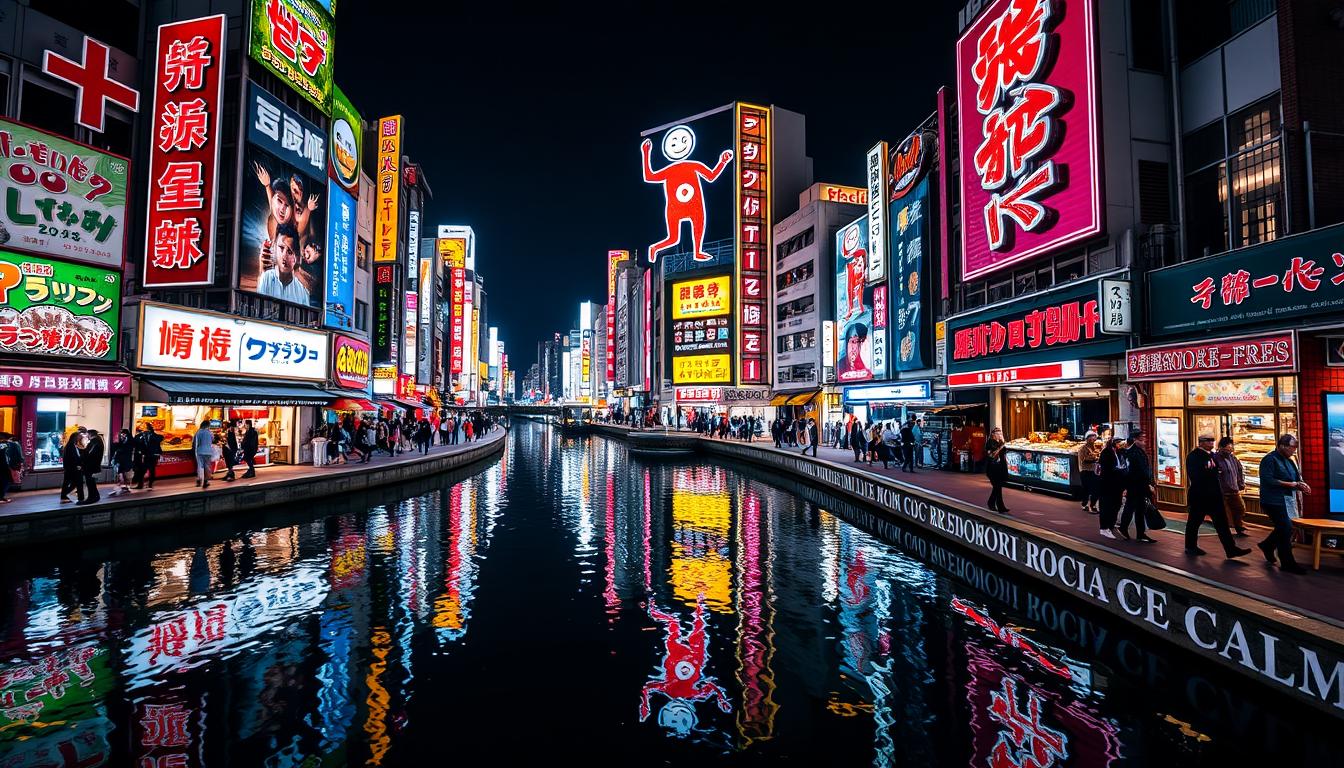
Osaka's canal-side entertainment strip, lined with giant 3D shop signs, theatres and restaurants, and the classic place to eat your way through the city at night.
Thing to do
A covered food market of about 150 shops stretching 580 metres in Nipponbashi, known for seafood, fruit and food to eat as you stroll.
Thing to do
A retro entertainment district built after the 1903 exposition, centred on Tsutenkaku Tower and known for kushikatsu restaurants and old-style shopping streets.
Thing to do
Japan's longest shopping street, a covered arcade of around 800 shops running about 2.6 kilometres north from the gates of Osaka Tenmangu shrine.
Thing to do
The national home of bunraku, Osaka's classical puppet theatre, with a 753-seat main auditorium a minute from Nipponbashi Station.
Tour operator
A 20-minute guided boat ride along the Dotonbori canal, leaving every half hour from Tazaemonbashi Pier beneath the neon signs of Minami.
Tour operator
A sightseeing boat loop on Osaka's rivers, linking Osaka Castle, Yodoyabashi and Hachikenyahama piers with views of the castle and Nakanoshima.
Tour operator
Guided food walks through Dotonbori and its back alleys, with four tasting stops, a drink and dessert, run by a registered travel agency.
Tour operator
A non-profit group of volunteer guides offering English-language tours of Osaka Castle Park and other districts, booked in advance.
Tour operator
Hour-long guided sightseeing loops on an open-top double-decker bus, departing from Osaka Station's JR Highway Bus Terminal on Umeda and Namba routes.
Three days is enough for Osaka Castle, the Minami and Kita districts, Shinsekai and the main food experiences, and four or five days allow time for Universal Studios Japan or day trips to Kyoto, Nara and Kobe.
Namba and Shinsaibashi in Minami are best for food and nightlife, Umeda in Kita is the most convenient for train connections and day trips, and Honmachi and Nakanoshima suit travellers who want a quieter base between the two.
From Kansai International Airport, the Nankai line runs to Namba and JR trains run to Tennoji and Osaka Station, while airport limousine buses serve major stations and hotels; from Itami Airport, buses run to Umeda and Namba.
Osaka is generally good value by the standards of major Japanese cities, with inexpensive street food, casual restaurants and efficient public transport, although hotel prices rise at weekends and in the cherry blossom season.
Osaka is very safe, with low crime. Take normal care with belongings in crowded areas such as Dotonbori and busy stations, and follow local etiquette on trains and in restaurants.