
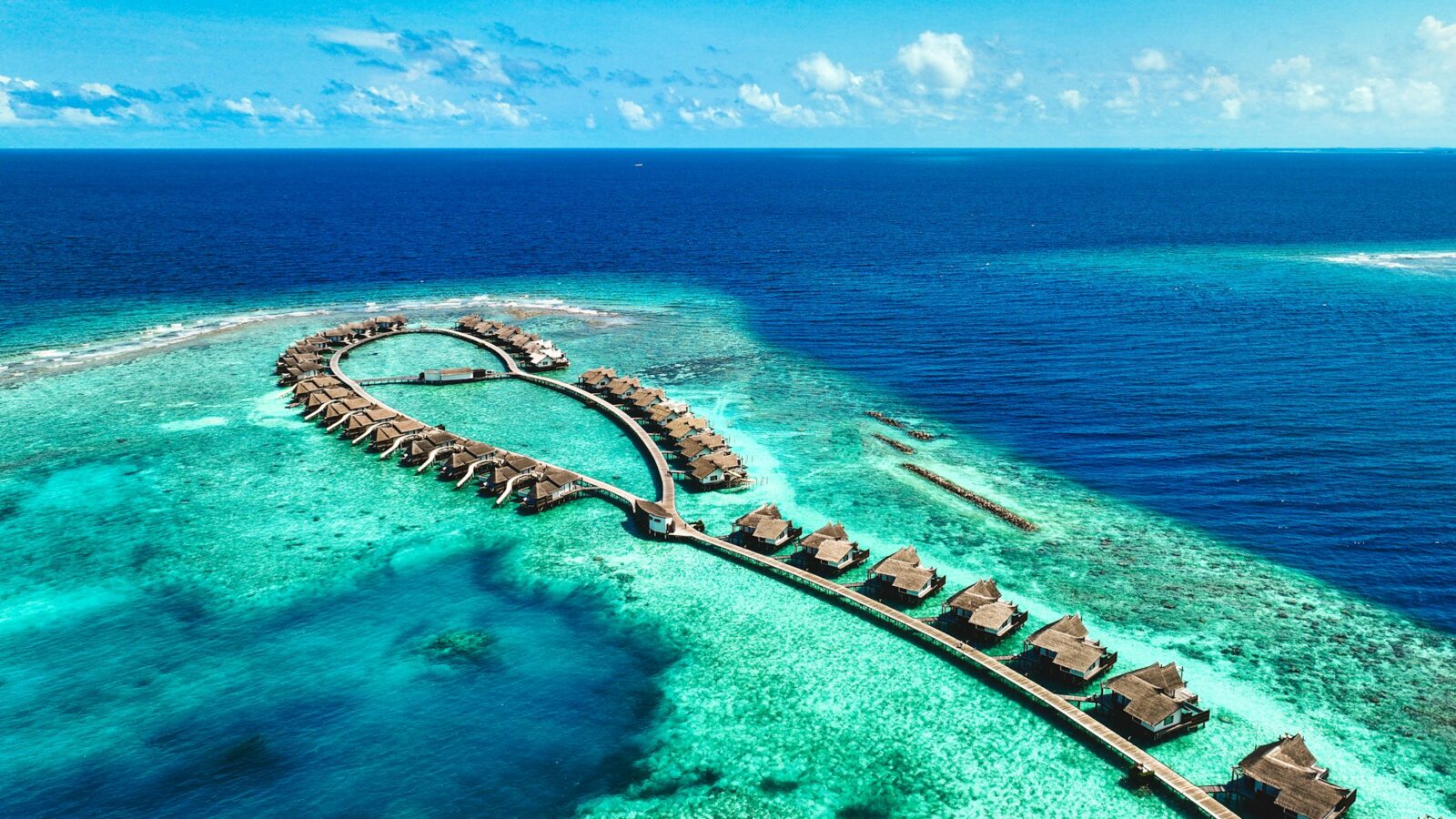
The best time to visit Maldives resorts for sunshine and calm seas is January to April, the dry northeast monsoon, with February and March the most reliable months. For lower prices, the wetter southwest monsoon from May to November brings rain in short bursts, warm seas and the biggest gatherings of manta rays and whale sharks.
Some links in this guide are affiliate links: if you book through them we may earn a commission at no extra cost to you. It never changes what we recommend. How we make money.
There is a detail most guides leave out: the Maldives stretches more than 800 kilometres from north to south, and the atolls do not share one calendar. The northern atolls have a sharp dry season, while the southern atolls near the equator have rain spread across the year but feel the southwest monsoon less. So the right month depends on where you stay as much as when you go.
This guide gives you a Maldives weather by month table with rain, sea conditions, crowds, prices and marine life, explains the two monsoons, compares the north and south atolls, picks the best month for honeymooners, divers, families and budget travellers, and lists the 2027 events that change prices, including the expected Ramadan dates. Prices and entry rules were last checked in November 2026.
In this guide:
- Quick answer: the best time to visit the Maldives at a glance
- Maldives weather by month (table)
- Northeast vs southwest monsoon explained
- North vs south atolls: which part when
- Best month to visit the Maldives by traveller type
- Manta ray season and whale shark season
- Events and holidays in 2027, including Ramadan
- Cheapest time to visit the Maldives
- UK and US travel essentials
- FAQ
Best time to visit the Maldives at a glance
| If you want | Go in | Why |
|---|---|---|
| The most reliable sunshine | February and March | Driest months, lowest humidity, calmest seas |
| The best value with decent weather | April and early November | Shoulder months between the two monsoons |
| The lowest resort rates | May, June, September and October | Low season, with rain in short heavy bursts |
| Manta rays in their hundreds | June to November (Hanifaru Bay, Baa Atoll) | Plankton gathers in the bay in the southwest monsoon |
| Whale sharks | All year in South Ari; peak August to November | Resident sharks, highest numbers late in the year |
| Clear water for snorkelling and diving | January to April | Calm seas and the best visibility |
| A honeymoon with dry weather and no peak prices | Late January, February or April | After the New Year rush; avoid Easter week |
| Surfing | March to October, biggest swells in June and July | Southwest swells reach the central and northern atolls |
Maldives weather by month
The Maldives sits just north of the equator, so the temperature barely changes. Average highs in Malé stay between about 30°C and 32°C (86°F to 90°F) all year, nights rarely drop below 26°C (79°F), and the sea stays between about 28°C and 30°C (82°F to 86°F). What changes is rain, wind and the state of the sea.
The table uses long term averages for Malé from the 1991 to 2020 climate record, plus the seasonal patterns described by the Maldives tourism board and marine researchers. Treat it as a typical year rather than a forecast. For a second opinion on rainfall, the Met Office Maldives holiday weather page shows the same pattern: the least rain and the longest sunny spells from January to April.
| Month | Weather (Malé high / low) | Average rain in Malé | Sea conditions | Crowds and prices | Marine life |
|---|---|---|---|---|---|
| January | 30.6°C / 26.1°C, dry and breezy | 115 mm | Calm, good visibility | Very high to mid month, then high | Mantas on the west side of atolls |
| February | 31°C / 26.4°C, driest month | 40 mm | Calmest, clearest water | High; Chinese New Year and half term peaks | Best visibility of the year |
| March | 31.6°C / 26.9°C, sunny and hot | 75 mm | Calm, very clear | High, rising for Easter | Reef fish and turtles at their easiest to see |
| April | 32°C / 27.3°C, hottest month | 125 mm | Warmest sea (about 30°C), mostly calm | High until Easter, then falls | Last month of the dry season dive window |
| May | 31.5°C / 26.5°C, monsoon arrives | 220 mm | Choppy, stormy spells | Low | Mantas move to the east side of atolls |
| June | 31.2°C / 26.7°C, showers and wind | 165 mm | Rough on exposed sides; surf season | Low | Hanifaru Bay manta season begins |
| July | 30.9°C / 26.3°C, mixed sun and squalls | 150 mm | Choppy, plankton reduces visibility | Medium, UK and US school holidays | Mantas feeding; Independence Day 26 July |
| August | 30.8°C / 26.2°C, showers | 175 mm | Choppy, plankton rich | Medium | Whale shark numbers start to peak in South Ari |
| September | 30.5°C / 26.1°C, wetter | 200 mm | Choppy, plankton rich | Low | Peak manta and whale shark months |
| October | 30.5°C / 25.8°C, wet and humid | 195 mm | Choppy, easing late in month | Low | Mantas and whale sharks still strong |
| November | 30.4°C / 25.8°C, transition month | 230 mm | Seas settle late in month | Low to medium | Last of the Hanifaru season |
| December | 30.4°C / 25.8°C, drier later in month | 215 mm | Calming as the dry season starts | Medium early, then peak from Christmas | Mantas shift back to the west side |
Northeast vs southwest monsoon explained
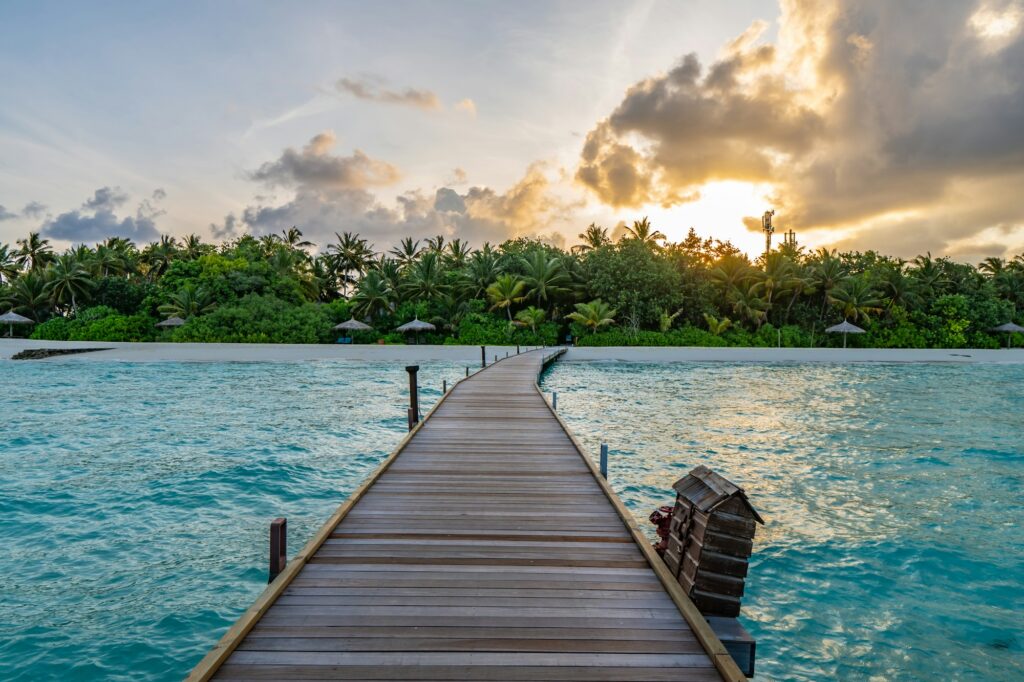
The Maldives has two monsoon seasons rather than four seasons. Maldivians call the dry northeast monsoon iruvai and the wet southwest monsoon hulhangu. April and November are the transition months, and the exact switch can shift by a few weeks from year to year.
Northeast monsoon: the dry season (December to April)
The northeast monsoon brings dry air from the Indian subcontinent. Skies are clearer, humidity drops a little, the sea is calm and underwater visibility is at its best. February is usually the driest month, and April is the hottest, with highs around 32°C and the sea near 30°C.
This is the high season. Christmas and New Year are the most expensive weeks of the year, and February half term, Chinese New Year and Easter bring further peaks. December is a mixed month: the first half often still feels like the wet season, and the weather becomes more settled as the month goes on.
Southwest monsoon: the Maldives rainy season (May to November)
The Maldives monsoon from the southwest brings moist ocean air, stronger winds and more frequent showers. May is often the stormiest month as the season breaks, and the central atolls see their highest rainfall totals in May and again from September to December. Sunshine still returns between showers on most days.
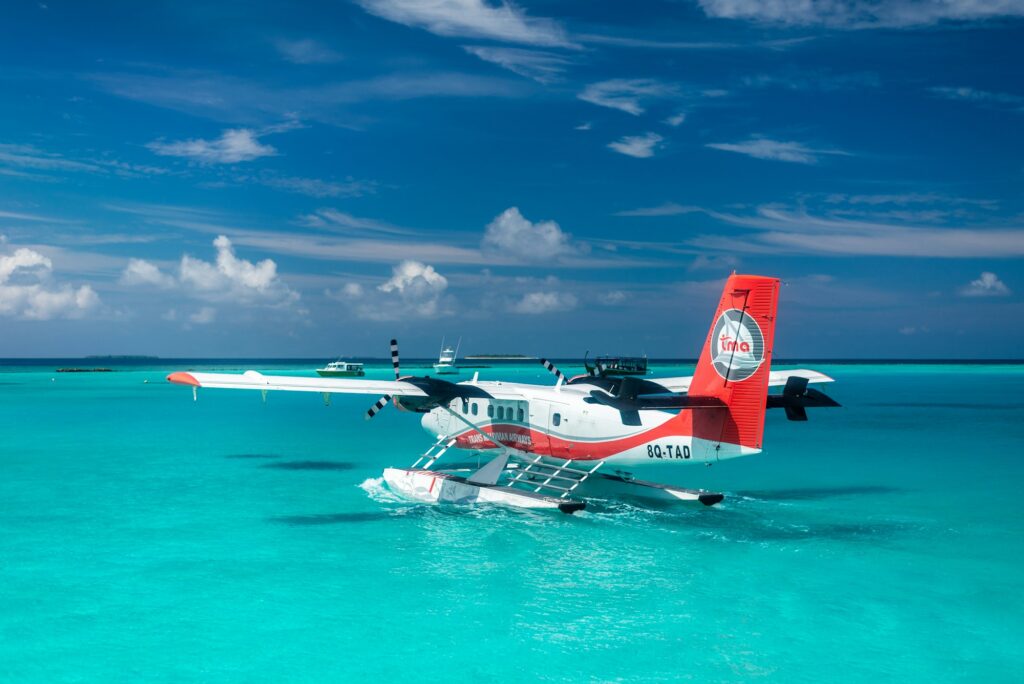
The upside is value and wildlife. Resort rates drop, the sea is still warm, and the plankton blooms that cloud the water also bring manta rays and whale sharks to feed. Seaplanes only fly in daylight and can be delayed by storms, so in this season avoid booking the tightest connections at Malé.
North vs south atolls: which part when
Here is where a single Maldives weather by month chart can mislead. Long term rainfall averages show three different patterns along the chain of atolls.
| Region | Example atolls | Driest months | Wettest months | Annual rain (approx) |
|---|---|---|---|---|
| North | Haa Alifu, Lhaviyani, Raa, Baa | January to April (30 to 65 mm a month) | May to October (up to 260 mm in July) | 1,765 mm |
| Centre | North and South Malé, Ari, Vaavu | February and March | May, and September to December | 1,900 mm |
| South | Huvadhu, Fuvahmulah, Addu (Gan) | No true dry season; February is the least wet | October, December and January | 2,310 mm |
The practical takeaway: from January to April, the northern and central atolls have the most dependable sunshine. In the northern summer, roughly June to August, the southern atolls are less exposed to the southwest monsoon and are only marginally affected by the occasional tropical cyclone, so they can be calmer and sunnier. The south is also home to Fuvahmulah, known for big shark dives.
Most visitors stay in North Malé, South Malé, Ari or Baa, all within a speedboat ride, a seaplane flight or a short domestic flight from Velana International Airport. If your dates fall between June and September, a resort in the far south can be the smarter choice, as it is reached by domestic flight to Gan or Kaadedhdhoo and does not depend on seaplane weather.
Best month to visit the Maldives by traveller type
What is the best month to visit the Maldives overall?
The best month to visit the Maldives for most people is February. It is usually the driest month, the sea is at its calmest and clearest, and the Christmas peak has passed. March is a close second. Book early, because February half term and Chinese New Year still push prices up, and resort rooms stay expensive until after Easter.
If February is booked up or too expensive, look at late January or April. April is the hottest month and the last of the dry season, and prices start to fall once the Easter holidays end.
Best months by traveller type
- Honeymoon: late January to March for the best chance of dry weather and calm seas, or April for the same conditions at lower prices. For a budget honeymoon, June or September give the cheapest overwater villas, with the risk of some stormy days.
- Diving and snorkelling: January to April for the clearest water and calm crossings, especially for reef dives and channel dives. Choose June to November if mantas and whale sharks matter more than visibility.
- Budget: May, June, September and October, when resort rates are lowest, or a local island guesthouse at any time of year.
- Families: the Easter holidays and February half term offer dry weather but peak prices. In the UK and US summer holidays, July and August, a resort in the southern atolls or a resort with a sheltered lagoon makes the most sense.
- Surfers: March to October, with the biggest swells around June and July in the central atolls.
- First time visitors who want the brochure view: February to April.
Manta ray season and whale shark season
Marine life is the main reason to choose the wet season, and it is the part most competing guides cover in one line. Mantas live in the Maldives all year, but they follow the plankton, which moves with the monsoon winds.
Manta ray season in the Maldives
According to the official tourism board, mantas gather on the western side of the atolls during the northeast monsoon (December to April) and on the eastern side during the southwest monsoon (May to November). The board’s guide to manta ray encounters lists the main sites for each season.
| Site | Atoll | Best season | Notes |
|---|---|---|---|
| Hanifaru Bay | Baa | Roughly May to November, peak in the southwest monsoon | Snorkelling only, no scuba diving; protected bay with rangers |
| Sola Corner and Maamunagau Falhu | Raa (west) | December to April | Northeast monsoon sites |
| Kottefaru, Vandhoo and Neyo | Raa (east) | May to November | Southwest monsoon sites |
| Rangali Madivaru Manta Point | South Ari (west) | January to May | Cleaning station for divers |
| Mahibadhoo Manta Point | South Ari (east) | June to November | Cleaning station for divers |
| Lankan Manta Point | North Malé | May to November | Close to the airport |
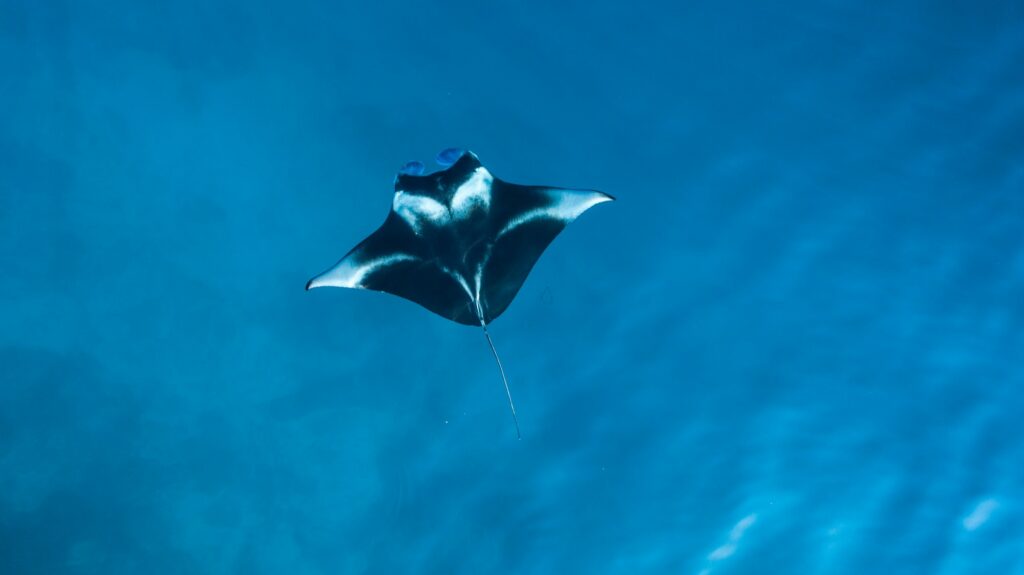
Hanifaru Bay is the headline site. Its shape traps plankton when strong tides combine with the southwest monsoon, and on good days dozens or even hundreds of mantas feed together. Access is controlled: the protected area limits the number of boats and snorkellers in the bay at once, groups must go with a certified guide, and visitors pay an entry fee that funds the rangers. Sightings are never guaranteed, so allow several days in Baa Atoll if this is the main reason for your trip.
Whale shark season in the Maldives
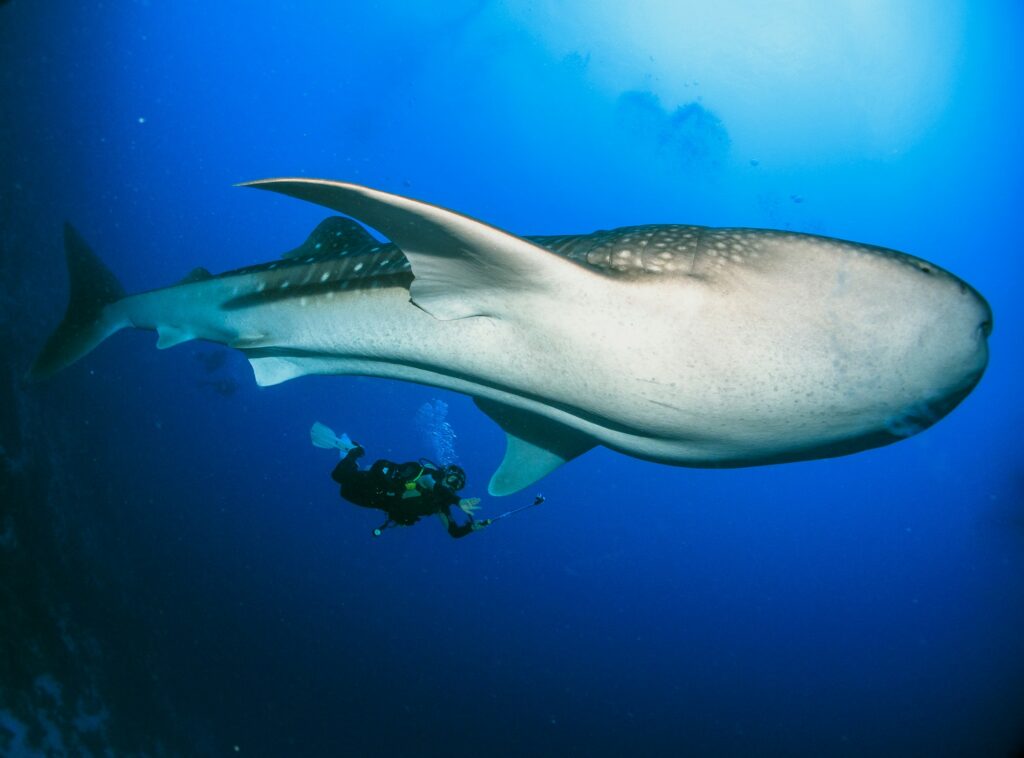
Whale sharks can be seen all year in the South Ari Marine Protected Area, where many of the same sharks are seen again and again. The tourism board says the highest numbers are usually seen between August and November. Most trips run from resorts and guesthouses in South Ari, especially around Dhigurah and Maamigili, and you snorkel at the surface while the shark cruises below.
Further south, Fuvahmulah is known for whale sharks from about December to March, alongside its tiger shark dives. Keep your distance, never touch a whale shark and choose an operator that limits swimmers in the water.
Events and holidays in 2027, including Ramadan
Public holidays and school breaks affect prices and availability as much as the weather does. Islamic dates follow the moon, so the 2027 dates below are the expected ones based on astronomical calculation and can move by a day.
| When | Event | What it means for visitors |
|---|---|---|
| 1 January | New Year’s Day | End of the most expensive fortnight of the year |
| 6 February | Chinese New Year | Strong demand from Chinese travellers; book early |
| Mid February | UK half term | Family peak for UK travellers |
| About 8 February to 9 March | Ramadan | Resorts run as normal; on local islands cafés may close by day |
| About 9 or 10 March | Eid al Fitr (Kuda Eid) | National holiday; local and regional travel peak |
| 28 March | Easter Sunday | Easter school holidays push resort prices up |
| About 16 or 17 May | Eid al Adha (Bodu Eid) | National holiday; ferries and Malé offices may be busy |
| About 5 to 7 June | Islamic New Year | Public holiday |
| 26 July | Independence Day | Celebrations in Malé and special events at many resorts |
| 3 November | Victory Day | Public holiday |
| 11 November | Republic Day | Public holiday |
| 24 December to 6 January | Christmas and New Year | Highest prices and minimum stays at many resorts |
During Ramadan, Muslims fast from dawn to sunset. Resort islands are largely unaffected, but if you are staying on a local island, avoid eating, drinking or smoking in public during daylight, dress modestly and expect some cafés to open only after sunset.
Cheapest time to visit the Maldives
The cheapest time to visit the Maldives is the southwest monsoon, especially May, June, September and October. Resort rates drop and special offers are common, but you trade this for more showers and choppier seas. July and August cost a little more because of UK, European and US school holidays.
Whatever the month, your transfer can cost as much as a night’s stay. Seaplane transfers to distant atolls are the most expensive option. Resorts in North and South Malé Atoll are reached by speedboat, which is usually cheaper, and a domestic flight plus a speedboat can be good value for South Ari or the southern atolls.
The other big saving is a local island guesthouse, on islands such as Maafushi, Dhigurah or Thoddoo. Rooms are a fraction of resort prices, public ferries and speedboats link them with Malé, and you can book snorkelling trips locally. Local islands follow Maldivian law, so there is no alcohol (that is only served on resort islands and liveaboard boats) and swimwear is only worn on designated tourist beaches, often called bikini beaches.
Taxes to plan for (last checked November 2026; resort prices are quoted in US dollars, and the rufiyaa trades at roughly 15.4 to the dollar):
| Item | Cost | Notes |
|---|---|---|
| Green tax, resorts and larger hotels | US$12 (about MVR 185 / £9) per person per night | Raised from US$6 in January 2025 |
| Green tax, guesthouses under 50 rooms | US$6 (about MVR 92 / £4.50) per person per night | Raised from US$3 in January 2025 |
| Tourism goods and services tax (TGST) | 17% | Added to rooms, food and activities since 1 July 2025 |
| Service charge | 10% | Added to most resort bills |
| Departure tax, economy | US$50 (about £38) | Collected by the airline with your ticket |
| Airport development fee, economy | US$50 (about £38) | Also collected with your ticket; higher in business and first class |
Always check whether a quoted price includes the green tax, TGST and service charge. Together they can add more than a quarter to the headline room rate.
UK and US travel essentials for the Maldives
Whatever the best time to visit Maldives islands is for you, these rules apply all year.
Entry rules for UK and US passport holders
British and American tourists do not need to apply for a visa in advance. The Maldives gives all nationalities a free 30 day tourist visa on arrival. According to the UK government’s Maldives entry requirements, your passport must be valid for at least one month after the date you arrive, and you must complete the IMUGA traveller declaration online within 96 hours before your flight lands.
The Maldives High Commission in London adds that you need a return or onward ticket leaving within 30 days, and either a confirmed resort or hotel booking or proof of enough money for your stay. The immigration officer decides the final length of stay. The same rules apply to US citizens. The US State Department currently advises travellers to exercise increased caution in the Maldives because of the risk of terrorism.
Customs rules are strict. It is illegal to bring in alcohol, pork products or items considered contrary to Islam, and duty free alcohol bought on the way will be confiscated or held at the airport until you leave.
The departure tax and airport development fee rose on 1 December 2024 and, as of November 2026, the tax authority lists no further change. Both are collected by airlines when you buy your ticket, so there is nothing to pay at the airport on scheduled flights.
Flights from the UK and US
- London: British Airways flies nonstop from Heathrow to Malé, daily through winter 2026 to 2027, in about 10 hours 45 minutes. Virgin Atlantic runs a seasonal nonstop from Heathrow, daily from 1 December 2026, in about 10 hours 20 minutes. Flights home take around an hour longer.
- Manchester and other UK airports: no nonstop flights. Connect via Dubai (Emirates), Doha (Qatar Airways), Abu Dhabi (Etihad) or Istanbul (Turkish Airlines); the final leg from the Gulf takes about 4 to 4.5 hours.
- New York: no nonstop flights. One stop routes via Dubai, Doha, Abu Dhabi or Istanbul usually take 18 hours or more in total.
- Los Angeles: one stop via the Gulf or Istanbul, usually 22 hours or more in total, or two stops via Asia.
- Other strong routes: SriLankan Airlines flies nonstop from Heathrow to Colombo with a short hop to Malé, and Singapore is a useful hub for travellers combining the Maldives with Southeast Asia.
Time difference, plugs and money
- Time zone: the Maldives is on UTC plus 5 all year with no daylight saving. It is 5 hours ahead of London in winter and 4 hours ahead during British Summer Time; 10 hours ahead of New York in winter and 9 hours ahead in the US summer. Some resorts set their own island time an hour ahead, so check when you arrive.
- Plugs and voltage: 230 volts, with Type G (the UK three pin plug) and Type D sockets. UK plugs usually fit, though a universal adapter is wise. US visitors need an adapter, and devices that are not rated for 100 to 240 volts also need a converter.
- Money: the local currency is the Maldivian rufiyaa (MVR), but resorts price and bill in US dollars and take cards. Carry some small US dollar notes or rufiyaa for local islands.
- Tipping: resort bills already include a 10% service charge, which is closer to UK habits than to the 18% to 20% Americans expect at home. Extra tips are optional, though many guests leave something for a butler, room attendant or dive guide at the end of the stay.
- Driving: traffic drives on the left in Malé, but visitors do not need a car. Travel between islands is by speedboat, seaplane, domestic flight or public ferry.
Staying connected
Resorts have wifi, but it can be slow in overwater villas. Phone coverage is good on inhabited islands and around most resorts. An eSIM installed before you fly lets you message your resort and check transfer times as soon as you land.
Our verdict on when to go
For sunshine, calm seas and the classic turquoise view, the best time to visit Maldives atolls is February or March, in the northern or central atolls. For value, go in May, June, September or October and choose a resort with a sheltered lagoon. For manta rays, head to Baa Atoll between June and November; for whale sharks, South Ari from August to November. If you must travel in the northern summer, consider the southern atolls.
FAQ: best time to visit the Maldives
When should I visit the Maldives?
Visit between January and April for the driest weather, calmest seas and clearest water, with February and March the most reliable. Choose May to November for lower prices and the best manta ray and whale shark encounters, accepting more frequent showers. Avoid Christmas and New Year if you want to keep costs down.
How do I get to Maldives from Australia?
Most travellers from Australia fly with one stop, via Singapore, Kuala Lumpur, Colombo or a Gulf hub. From Perth the fastest connections take around 11 to 12 hours. Since May 2026 there has also been a seasonal weekly nonstop from Melbourne on the national airline, sold only as part of Luxury Escapes holiday packages.
Is 2 weeks too long for Maldives?
Not if you plan it well. Most visitors stay 7 to 10 nights, as resort days can feel similar. For two weeks, split the trip between two islands, for example a local island guesthouse for diving and a resort for the second week, or combine the Maldives with Sri Lanka or a Dubai stopover.
What is the weather like in the Maldives in December?
Warm and increasingly dry. Highs are around 30°C (86°F), nights around 26°C (79°F) and the sea about 28°C to 29°C. The first half of December can still be showery as the monsoon changes, while the second half is usually more settled. Prices peak from Christmas, so book early for the Maldives in December.
When’s the worst time to go to the Maldives?
For weather, May is usually the worst month, as the southwest monsoon arrives with stormy spells and choppy seas. Rainfall in the central atolls is also high from September to November. For price, the worst time is Christmas and New Year, when rates and minimum stays peak.
What is the hottest month in Maldives?
April is the hottest month, with average highs of about 32°C (90°F) in Malé and the sea at around 30°C (86°F). March and May are almost as hot. Because the islands sit near the equator, the difference between the hottest and coolest months is only about one or two degrees.
How long is the flight from the UK to Maldives?
A nonstop flight from London Heathrow to Malé takes about 10 hours 20 minutes to 10 hours 45 minutes with British Airways or Virgin Atlantic, and around 11 to 12 hours on the way home. From Manchester and other UK airports, one stop routes via the Gulf or Istanbul usually take 13 to 16 hours.
Is it worth going to Maldives in August?
Yes, if you accept some rain. August brings warm seas, prices below the winter peak and excellent marine life, with whale shark numbers rising in South Ari and mantas feeding in Baa Atoll. Expect showers and choppy crossings, and consider the southern atolls, which feel the monsoon less.
Which months not to visit Maldives?
If guaranteed sunshine is your priority, avoid May and the stormier stretch from September to November. If budget matters most, avoid the weeks around Christmas, New Year, Chinese New Year and Easter. Every month has good days, so a flexible plan and a sheltered lagoon help in the wet season.
What is the cheapest time to visit the Maldives?
The cheapest months are usually May, June, September and October, during the southwest monsoon. Rates fall, offers are common and resorts are quieter. Staying on a local island guesthouse and choosing a speedboat transfer rather than a seaplane saves even more, whatever the month.
Plan the rest of your trip
Many travellers break the long journey with a stopover. Our guide to things to do in Dubai covers a few days in the city on the way, and things to do in Singapore suits travellers flying from Australia or Asia.
For another island escape with a monsoon calendar, compare the best time to visit Bali and the best time to visit Thailand, where the east and west coasts also run on different seasons.