
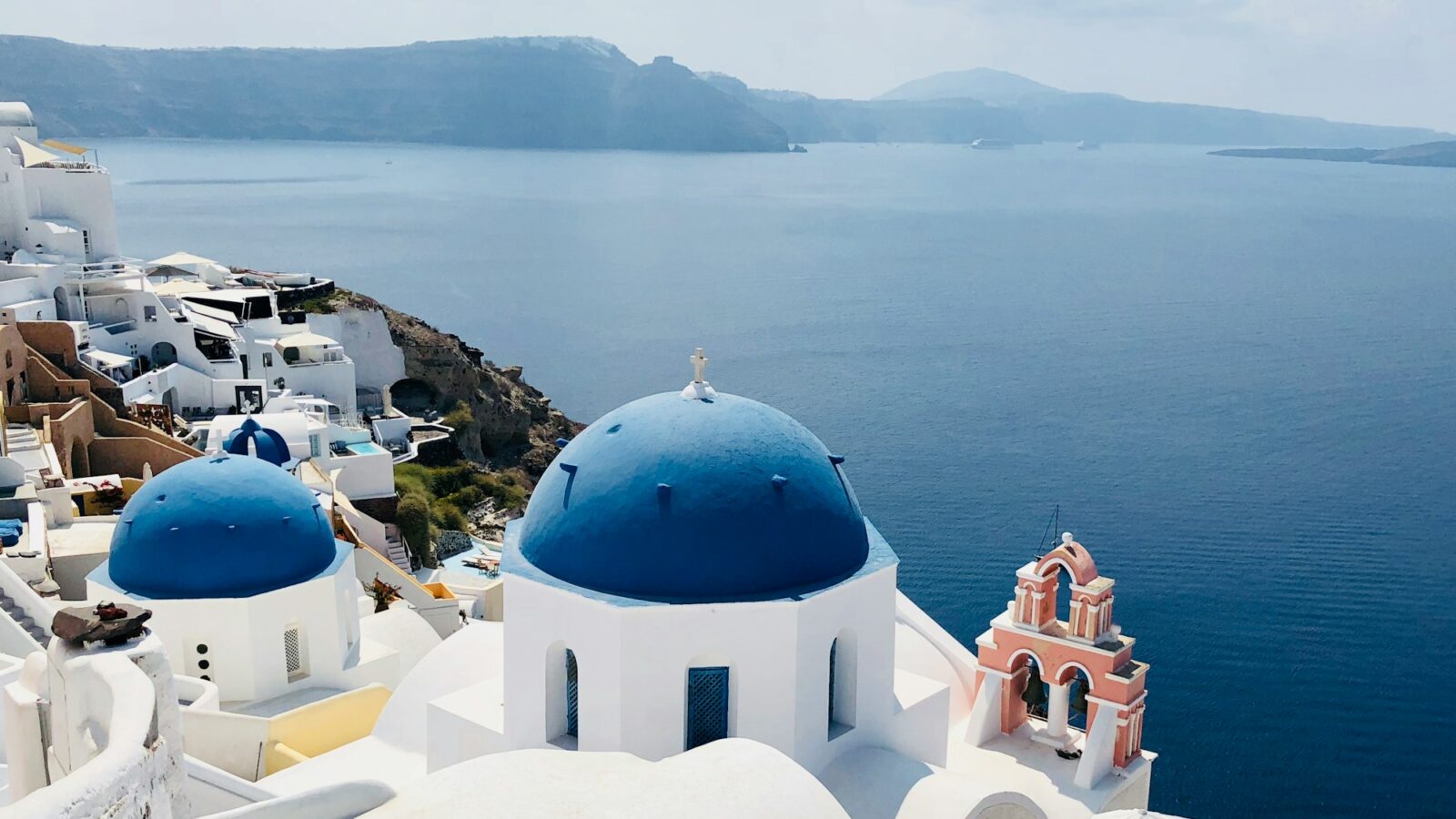
The best time to visit Greece is late May to June or September to mid October, when the sea is warm enough to swim, ferries run full timetables, and you avoid the heat, prices and crowds of July and August. For Athens and the ancient sites alone, April, May and October are even better.
Some links in this guide are affiliate links: if you book through them we may earn a commission at no extra cost to you. It never changes what we recommend. How we make money.
That is the short answer. The right month still depends on what you want: beach time in the Cyclades, hiking on Crete, the Acropolis without queues, Greek Easter in a village, or the cheapest flights of the year. This guide covers Greece weather by month for Athens and the islands, sea temperatures, how the islands differ, the ferry season, the 2027 events calendar with confirmed dates, heatwave and wildfire advice, and the new cruise and accommodation fees. Prices and rules were last checked in November 2026.
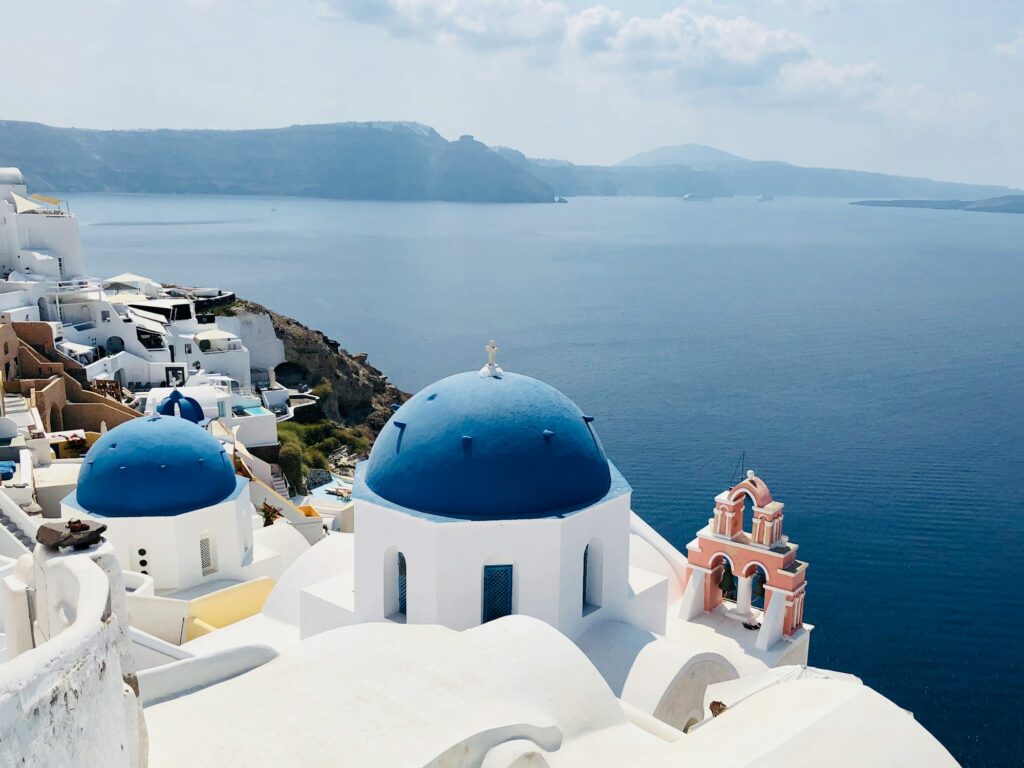
Best time to visit Greece at a glance
Here is the quick verdict for the main types of trip. Temperatures are typical daily highs, rounded long term averages; individual years vary, and heatwaves now push Athens past 40°C on some July and August days.
| If you want | Best months | Why |
|---|---|---|
| Beaches and warm sea, fewer crowds | Late May to June, September to early October | Sea at 21°C to 25°C, full ferry timetables, lower prices than August |
| Athens and ancient sites | April, May, October | 20°C to 26°C, comfortable for walking, long opening hours |
| Island hopping in the Cyclades | Late May to June, September | All routes running, less meltemi wind than July and August |
| Hiking on Crete or the mainland | April to May, October | Wild flowers in spring, cooler air, green gorges |
| Lowest prices | November to March (outside Christmas) | Cheapest flights and hotels, but many island resorts close |
| Greek Easter | Holy Week 2027: 25 April to 2 May | Candlelit processions and the biggest feast of the year |
| Nightlife and party islands | July and August | Every bar, club and beach club is open |
In this guide
- Month by month table: weather, sea, crowds, prices, events.
- The seasons explained.
- Best time to visit the Greek islands, group by group.
- Ferry season and the meltemi wind.
- Best month by traveller type.
- Greece events calendar 2027.
- Heatwave and wildfire advice.
- Fees to know: cruise passenger fee and climate resilience fee.
- UK and US travellers: entry, flights, plugs, tipping, time difference.
- FAQ.
Greece weather by month: the full table
This table shows typical conditions for each month. Island highs are for the central Aegean (the Cyclades); Crete and Rhodes run a degree or two warmer, and Corfu is a little cooler and wetter in spring and autumn. Sea temperatures are typical surface readings around the islands.
| Month | Athens high | Islands high | Sea | Crowds | Prices | Key events |
|---|---|---|---|---|---|---|
| January | 13°C | 14°C | 16°C | Very low | Lowest | Epiphany, 6 January |
| February | 14°C | 15°C | 15°C | Very low | Lowest | Carnival build up |
| March | 17°C | 16°C | 15°C | Low | Low | Patras Carnival, Clean Monday, 25 March parades |
| April | 20°C | 19°C | 16°C | Low to medium | Low to mid | Holy Week starts 25 April 2027 |
| May | 25°C | 22°C | 19°C | Medium | Mid | Orthodox Easter Sunday 2 May 2027 |
| June | 30°C | 26°C | 22°C | Medium to high | High | Athens Epidaurus Festival opens, Pentecost Monday 21 June |
| July | 33°C | 28°C | 24°C | Very high | Peak | Epidaurus theatre nights, festivals everywhere |
| August | 33°C | 28°C | 25°C | Highest | Peak | Feast of the Assumption, 15 August |
| September | 29°C | 26°C | 24°C | High, easing | High to mid | Wine harvest, quieter beaches |
| October | 24°C | 22°C | 22°C | Medium | Mid to low | Ohi Day, 28 October |
| November | 19°C | 19°C | 19°C | Low | Low | Athens Marathon, Thessaloniki film festival |
| December | 15°C | 16°C | 17°C | Low (busy in Athens at Christmas) | Low | Christmas and New Year |
How to read it: if you plan to swim, look for a sea temperature of 21°C or more, which means June to October. If you plan to walk around ruins all day, look for highs under 27°C, which means April, May and October.
The seasons explained
To pick the best time to visit Greece, it helps to know that the country has hot, dry summers and mild, wetter winters. The experience changes more than the weather suggests, because most island tourism switches on around Easter and off at the end of October.
Spring (March to May)
Spring is the best time to visit Athens and the mainland. The hills are green, wild flowers cover Crete and the Peloponnese, and the big sites are pleasant to walk around. March can still be cool and showery, and the sea stays cold (15°C to 16°C) until May. Many island hotels and tavernas open between Easter and early May, so small islands can feel half asleep in April. By late May the sea is around 19°C, which is fine for a quick swim and lovely for a boat trip.
Summer (June to August)
June is the sweet spot of summer: long days, warm sea, full ferry timetables, and crowds that are building but not yet at their peak. July and August are the hottest, busiest and most expensive months. Highs average 33°C in Athens, heatwaves can push temperatures above 40°C, and the Greek school holidays plus European holidays fill ferries and hotels. The meltemi wind also blows hardest in July and August, which cools the Cyclades but can cancel small boats and make some beaches unpleasant.
Autumn (September to November)
September is many travellers’ favourite month in Greece. The sea is at its warmest of the year (around 24°C), the heat eases, families head home and prices start to fall from mid month. Greece in October is excellent for a mix of sightseeing and swimming, especially in Crete, Rhodes and the southern islands, where the sea is still around 22°C. The catch is that island businesses start closing from mid October, and ferry timetables shrink after the end of the month. November is quiet, cheap and good for Athens, but rain becomes more frequent.
Winter (December to February)
Winter is the cheapest time to go to Greece and the best time for Athens without queues. Expect highs of 13°C to 15°C in Athens, chilly nights, some heavy rain, and snow in the mountains (there are ski resorts on Mount Parnassos). Most beach hotels on the smaller islands close, and ferry links drop to a winter timetable. Crete, Rhodes, Corfu and the big islands stay lived in all year, so they work for a winter break if you want walking, food and villages rather than beaches.
Best time to visit Athens
The best time to visit Athens is April to early June and late September to early November. Highs of 20°C to 27°C make it comfortable to climb the Acropolis, walk Plaka and Anafiotika, and eat outside in the evening. July and August are hot, and Athens is often the hottest place on a Greek itinerary.
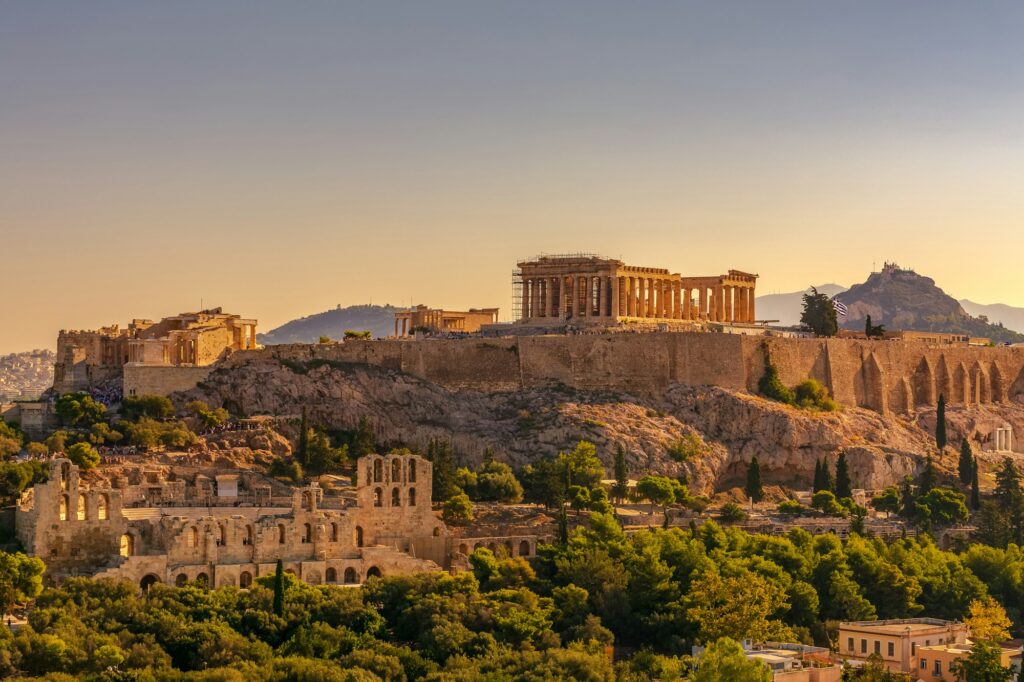
In summer, go to the Acropolis at opening time (8am) or in the last hours before closing. In recent heatwaves the Ministry of Culture has closed the site during the hottest part of the day, so check the official ticket site the evening before. Entry is €30 (about £26 / $35) all year, since Greece dropped its cheaper winter rate in 2025; state sites also have some free entry days, including selected Sundays from November to March.
Athens is also the one part of Greece that is fully alive in winter. Museums, restaurants, theatres and bars run normally, and Christmas lights go up across Syntagma Square in December.
Best time to visit the Greek islands, group by group
The best time to visit the Greek islands is June and September, with late May and early October close behind. The exact sweet spot depends on the island group, because wind, rain and the length of the season differ between the Cyclades, the Ionian, Crete and the Dodecanese.
| Island group | Main islands | Best months | Watch out for |
|---|---|---|---|
| Cyclades | Santorini, Mykonos, Naxos, Paros, Milos | Late May to June, September | Meltemi wind in July and August, peak prices, cruise crowds |
| Ionian | Corfu, Zakynthos, Kefalonia, Lefkada | June, September | More rain in spring and autumn, crowded resorts in August |
| Crete | Heraklion, Chania, Rethymno, the south coast | May to June, September to October | Very hot inland in July and August |
| Dodecanese | Rhodes, Kos, Symi, Karpathos | May to June, September to October | Strong winds on Karpathos, busy Rhodes Old Town in August |
| Saronic and Sporades | Hydra, Aegina, Skiathos, Skopelos | June, September | Weekend crowds from Athens in summer |
Cyclades and the meltemi wind
The Cyclades are the classic white and blue islands. They are dry, bright and windy. The meltemi is a strong northerly wind that blows across the Aegean in summer, most often from mid June to early September and strongest in July and August, often at force 6 or 7. It keeps temperatures bearable, but it can whip up sand on north facing beaches, make small boat trips rough and cancel some ferries and fast catamarans. If you get seasick or plan a lot of island hopping, choose June or September.
Best time to visit Santorini
The best time to visit Santorini is May, June, September and early October. The weather is warm, the sea is swimmable from June, and sunsets in Oia are a little less packed. Santorini is the busiest cruise port in Greece, so check the daily cruise calendar and plan Fira and Oia for early morning or days with fewer ships. In winter many caldera hotels and restaurants close, though the island is still inhabited and connected by ferry and plane.
Mykonos follows the same pattern, but its season is even shorter: most beach clubs open in late May and close in early October.
Ionian Islands
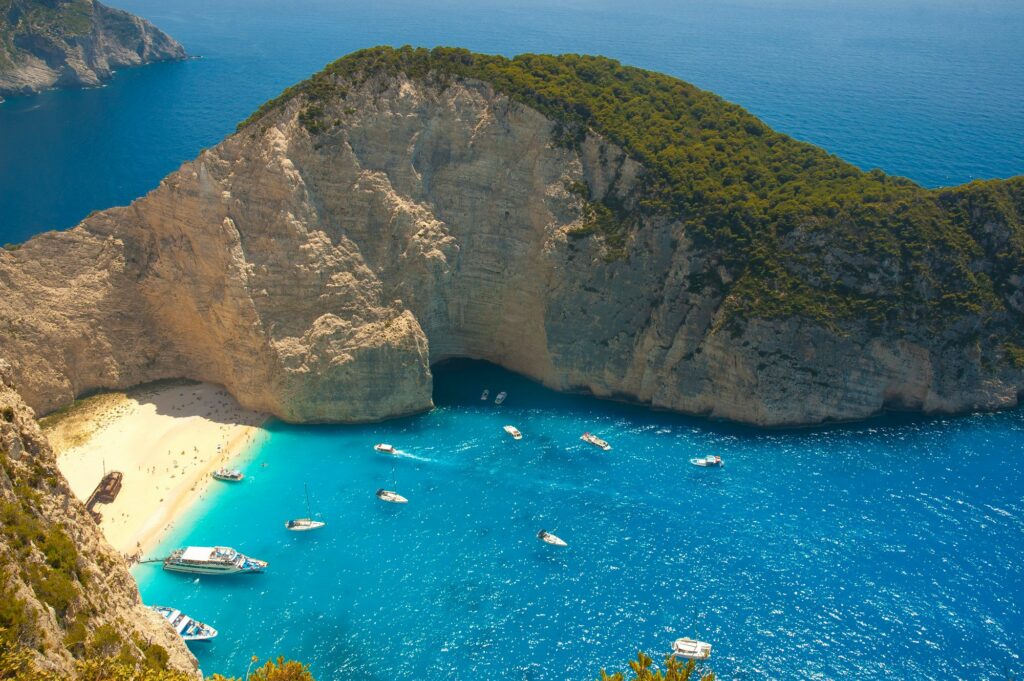
Corfu, Zakynthos, Kefalonia and Lefkada are greener than the Aegean islands because they get more rain, mostly from October to April. In return they have calmer, less windy summers and very clear water. June and September are ideal. Corfu in particular can be wet in October, with roughly twice the rain days of the Cyclades.
Crete
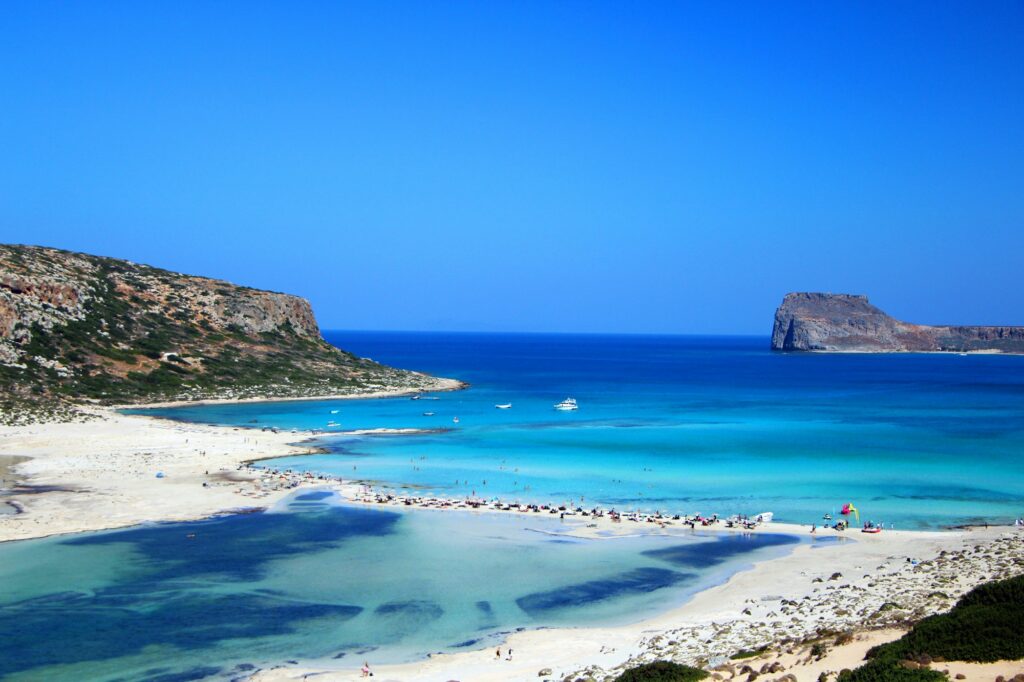
Crete is big enough to have its own climate zones. The north coast (Heraklion, Chania, Rethymno) gets the most visitors, the south coast is hotter and calmer, and the White Mountains stay cool. Crete has the longest season of any Greek island: swimming is fine from May to late October, and the Samaria Gorge usually opens from May to October, depending on weather. Spring hiking is superb.
Dodecanese
Rhodes and Kos sit close to Turkey and have one of the longest, sunniest seasons in Greece. October is often still warm enough for the beach. Rhodes Old Town is a year round city, so a winter visit works for sightseeing. Smaller islands like Symi and Tilos are quieter all year and excellent in June and September.
Ferry season: when the islands are connected
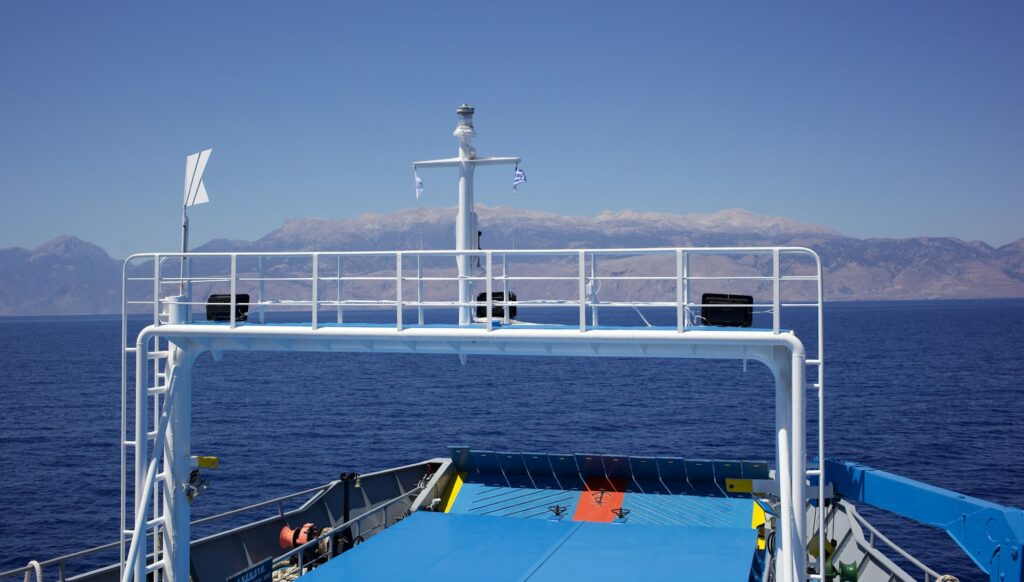
Greek ferries run all year, but the number of routes changes a lot by season. The coastal shipping year starts on 1 November, and winter timetables are much thinner. Summer schedules, with fast catamarans and direct links between smaller islands, usually build up from Easter and run at full strength from June to September.
- Winter (November to March): main islands such as Crete, Rhodes, Santorini, Mykonos, Naxos, Paros and Corfu stay connected, mostly from Piraeus. Small islands may have only a few sailings a week, and bad weather can cancel them.
- Spring (April to May): more routes start, but some fast boats and island to island links only begin in late May or June.
- Summer (June to September): the full network runs. Book August ferries, especially cars and cabins, several weeks ahead.
- October: still good, but some routes stop at the end of the month.
Ferries are one reason June and September are the best time to visit Greece for island hopping. If your plan depends on a tight ferry connection, leave a spare day before your flight home, especially in July and August when the meltemi blows.
Best month to visit Greece by traveller type
There is no single best time to visit Greece for everyone. Use this table to match the month to your trip.
| Traveller | Best month | Why |
|---|---|---|
| First time visitors | September | Warm sea, settled weather, everything open, fewer crowds than August |
| Couples and honeymooners | June or September | Long warm evenings, sunsets, quieter romantic islands |
| Families with school age children | Late June or late August | Warm sea, school holiday dates; book early |
| Budget travellers | October or April | Shoulder prices, open hotels, cheaper flights |
| Hikers | April to May, October | Cooler air, spring flowers, open gorges |
| History lovers | April, May, October | Comfortable temperatures at Delphi, Olympia, Mycenae and Knossos |
| Over 50s and slower travel | May, June, September | Gentle heat, quieter beaches, easy ferries |
| Party and nightlife | July to August | Mykonos, Ios and Zakynthos at full volume |
| Food and culture | Easter, October | Easter feasts, harvest season, local festivals |
Greek Easter 2027 and the events calendar
Greek Easter 2027 falls on Sunday 2 May, five weeks after Western Easter (28 March). It is the biggest holiday of the year: candlelit processions on Good Friday (30 April), the midnight Resurrection service on Saturday night, then lamb roasts and red eggs on Sunday. Ferries and flights fill with Greeks heading home, so book early.
Here are the main 2027 dates. Fixed holidays and Easter based dates are confirmed; festival programmes are usually announced in spring, so check before you book.
| Date (2027) | Event | Where |
|---|---|---|
| 6 January | Epiphany, blessing of the waters | Harbours across Greece |
| 14 March | Patras Carnival grand parade (last Sunday of Carnival) | Patras, Peloponnese |
| 15 March | Clean Monday: kites, picnics, start of Lent | Everywhere |
| 25 March | Independence Day parades | Athens and towns nationwide |
| 30 April | Good Friday processions | Everywhere |
| 1 May | Labour Day (falls on Holy Saturday in 2027) | Everywhere |
| 2 May | Orthodox Easter Sunday | Everywhere |
| 3 May | Easter Monday (public holiday) | Everywhere |
| 21 June | Pentecost Monday (Holy Spirit Day, public holiday) | Everywhere |
| June to August | Athens Epidaurus Festival: theatre, music and dance, with ancient drama at Epidaurus on summer weekends | Athens and Epidaurus |
| 15 August | Feast of the Assumption, the peak of the summer season | Tinos, Paros and island villages |
| 28 October | Ohi Day parades | Everywhere, biggest in Thessaloniki |
| 14 November | Athens Marathon, usually the second Sunday of November | Marathon to Athens |
| November | Thessaloniki International Film Festival | Thessaloniki |
The ancient theatre at Epidaurus seats more than 12,000 people, and a summer evening performance there is one of the best reasons to visit the Peloponnese in July.
Heatwave and wildfire advice
Greek summers are getting hotter, and heatwaves and wildfires are the main summer risk for visitors. Both are manageable with a little planning.
Heat
- Plan outdoor sightseeing for early morning and evening, and rest between noon and 5pm like Greeks do.
- Carry water, wear a hat and use high factor sun cream; the sun is strong even in May and October.
- Check whether the Acropolis and other sites have changed hours during a heatwave.
- Book air conditioning, and on islands ask whether rooms have shade or a fan as backup.
Wildfires
Wildfire season runs from roughly June to September, with the highest risk in July and August on dry, windy days. Greece’s Civil Protection publishes a daily fire risk map, and on very high risk days access to some forests and nature areas can be closed.
- Make sure your phone can receive 112 emergency alerts; they come in Greek and English.
- Never light fires or barbecues outdoors, and throw cigarette ends away safely; fines are heavy.
- If you are told to leave an area, do it at once and follow local instructions.
- Official advice: check the UK Foreign Office advice for Greece or the US State Department page before and during your trip.
Most visitors never see a fire, and resorts carry on as normal, but wildfires can close roads and cause evacuations. Travel insurance that covers disruption is worth having.
Fees to know before you go
Two Greek charges are worth knowing about when you weigh up the best time to visit Greece, because both are higher in summer.
Cruise passenger fee for Santorini and Mykonos
Greece charges a fee for every cruise passenger who comes ashore. For 2026 the rates for Santorini and Mykonos are €20 (about £17 / $23) per passenger from June to September, €12 (about £10 / $14) in April, May and October, and €4 (about £3.50 / $4.60) from November to March. Other Greek ports charge €5, €3 and €1 for the same periods. Cruise lines usually add it to your onboard account or fare.
Climate resilience fee on accommodation
Every hotel night in Greece carries a climate resilience fee, paid per room per night, usually at check in or checkout. The rates below were unchanged for 2026.
| Accommodation | April to October | November to March |
|---|---|---|
| 1 and 2 star hotels, rented rooms | €2 (about £1.75 / $2.30) | €0.50 |
| 3 star hotels | €5 (about £4.35 / $5.80) | €1.50 |
| 4 star hotels | €10 (about £8.70 / $11.60) | €3 |
| 5 star hotels | €15 (about £13 / $17) | €4 |
| Short term rental apartments | €8 (about £7 / $9.30) | €2 |
| Detached holiday homes | €15 (about £13 / $17) | €4 |
For a week in a 4 star hotel in August, that adds €70 (about £61 / $81) to the bill; in winter the same week costs €21. Conversions use about £0.87 and $1.16 to the euro, checked in November 2026.
Cheapest time to fly to Greece
The cheapest time to fly to Greece is November to March, avoiding Christmas, New Year and the February half term in the UK. January and February are usually the lowest months of all. Shoulder season flights in April, May and October cost more but are still well below July and August fares.
From the UK, low cost airlines fly to Athens all year, and in summer there are direct flights from many UK airports to Corfu, Crete, Rhodes, Kos, Zakynthos, Kefalonia, Santorini and Mykonos. In winter most island trips mean flying to Athens and connecting by plane or ferry. From the US, nonstop fares drop sharply once the summer seasonal routes end in October.
UK and US travellers: what to know
Entry rules
Whatever the best time to visit Greece is for you, the entry rules are the same all year. Greece is in the Schengen area. UK and US passport holders can visit without a visa for up to 90 days in any 180 day period. Your passport must have been issued less than 10 years before you arrive and be valid for at least three months after the day you plan to leave.
The EU Entry/Exit System (EES) has been fully running since 10 April 2026. On your first entry you register your fingerprints and a photo at the border, so allow extra time at busy airports. ETIAS, the EU travel authorisation, is not yet operating; when it launches it will cost €20 and you will apply online before travel. Do not pay any site that claims to sell it now. Our EES and ETIAS guide explains both systems, and the UK government entry requirements page has the official rules.
Flights from the UK and US
- From London: about 3 hours 30 minutes to 3 hours 45 minutes to Athens, with British Airways, Aegean, easyJet and Ryanair among the options. Many summer routes go straight to the islands.
- From Manchester: about 4 hours to Athens, with extra summer routes to the islands.
- From New York: about 9 hours 30 minutes to 10 hours nonstop from JFK or Newark. Nonstops from New York run all year, while seasonal summer nonstops link Athens with cities including Atlanta, Boston, Chicago, Philadelphia and Washington Dulles.
- New for 2027: Delta plans a new Detroit to Athens nonstop from 8 June 2027, three times a week until late October.
- From Los Angeles and the West Coast: usually one stop, via New York or a European hub.
Health and insurance
UK travellers can use a GHIC card in Greek state hospitals, but it does not cover everything, so take travel insurance too. US travellers should buy travel medical insurance, as US health plans rarely cover care abroad.
Money, plugs, time and tipping
- Currency: euro. Cards are widely accepted, but carry some cash for small tavernas, kiosks and island buses.
- Plugs: Type C and F, 230 volts. UK visitors need a European adapter; US visitors need an adapter and should check that devices accept 230 volts.
- Time difference: Greece is 2 hours ahead of London all year and usually 7 hours ahead of New York (6 hours for a few weeks in March and November when clocks change on different dates).
- Tipping: service is rarely added to the bill. Leave 5 to 10 percent in restaurants for good service, round up taxi fares, and leave a euro or two for hotel cleaners. That is less than US habits and similar to the UK.
- Driving: Greeks drive on the right. UK photocard licences are accepted; US drivers should carry an International Driving Permit with their state licence.
Frequently asked questions
What is the best time of year to visit Greece?
The best time to visit Greece is late May to June and September to mid October. You get warm sea, sunny weather, full ferry timetables and lower prices than July and August. For Athens and ancient sites alone, April, May and October are ideal.
What is the cheapest time to go to Greece?
The cheapest time to go to Greece is November to March, outside Christmas, New Year and school holidays. Flights and Athens hotels are at their lowest in January and February. Many island hotels close in winter, so for a cheap beach trip, aim for late April, early May or late October.
What is the temperature in Greece by month?
In Athens, typical highs are 13°C in January, 20°C in April, 30°C in June, 33°C in July and August, 24°C in October and 15°C in December. The islands are slightly milder in summer, and the sea ranges from about 15°C in late winter to 25°C in August.
Which is the nicest Greek island to go to?
It depends on your trip. Santorini has the most famous views, Naxos and Paros suit families and island hoppers, Crete has the most variety, Corfu is green and calm, and Milos has some of the best beaches. For a first visit, many people combine Santorini with a quieter Cycladic island such as Naxos.
Are there any Greek islands to avoid?
No island is unsafe, but some are best avoided at certain times. Santorini and Mykonos in August are crowded and expensive, and party resorts like Laganas on Zakynthos or Ios in summer will not suit travellers looking for quiet. Very small islands can be hard to reach in winter.
Which Greek island is best for over 50s?
Crete, Naxos, Corfu and Rhodes are popular choices for travellers over 50, thanks to good hotels, easy flights, varied food and history beyond the beach. Visit in May, June or September for gentler heat and calmer ferries.
Is 7 days enough for Greece?
Seven days is enough for Athens plus one or two islands, such as two nights in Athens, then Santorini and Naxos, or Athens and Crete. Do not try to see more than three bases in a week, because ferries and transfers take time. Ten to fourteen days lets you add more islands or the Peloponnese.
How long is a flight to Greece from the US?
A nonstop flight from New York to Athens takes about 9 hours 30 minutes to 10 hours. From other East Coast and Midwest cities, nonstop summer flights take roughly 10 to 11 hours. From the West Coast, expect 14 hours or more including one connection.
Is it risky to travel to Greece right now?
Greece is generally a safe country to visit. The main risks are summer heatwaves and wildfires, pickpockets on the Athens metro and in busy areas, and occasional earthquakes, which are common in the region. Check official UK or US travel advice before you go and sign up for local alerts.
What to beware of in Greece?
Beware of the midday sun in summer, pickpockets in crowded places, unlicensed taxis, and unclear prices at some tourist restaurants (ask for a menu with prices). Do not flush toilet paper in older buildings, respect dress codes in monasteries, and check ferry times the day before you sail.
What are the best historical sites in Greece?
The best historical sites in Greece include the Acropolis in Athens, Delphi, Olympia, Mycenae, the theatre at Epidaurus, Knossos on Crete, the island of Delos near Mykonos, and the monasteries of Meteora. Visit in spring or autumn, when it is cool enough to explore them comfortably.
Is Greece in October a good idea?
Yes. Greece in October usually has highs of 22°C to 24°C, a sea of about 22°C and far fewer visitors than summer. Crete, Rhodes and the southern islands are best. Expect some island businesses to close from mid October and a little more rain by the end of the month.
Our verdict
The best time to visit Greece for most people is September, followed closely by June. Both give you warm sea, open islands and long evenings without the extreme heat and crowds of July and August. Choose April, May or October for Athens and history, November to March for the lowest prices, and Holy Week (25 April to 2 May 2027) if you want to see Greek Easter.
For official ideas on regions and events, the Visit Greece tourism site is a good place to start.
Plan the rest of your trip
- More Greece: browse all our Greece travel guides.
- Another shoulder season favourite: see our guide to things to do in Lisbon.
- Island sunshine in winter: our things to do in Madeira guide covers an island that stays mild all year.
- Planning by season elsewhere: read our best time to visit Iceland guide.