Where to stay in Tokyo comes down to one choice: a base close to a busy train station on the JR Yamanote Line. For most first timers that means Shinjuku, Shibuya or the Ginza and Tokyo Station area; Asakusa and Ueno suit travellers who want old Tokyo and lower prices.
Some links in this guide are affiliate links: if you book through them we may earn a commission at no extra cost to you. It never changes what we recommend. How we make money.
Tokyo is vast, but its trains are so fast and frequent that the wrong base costs you time rather than ruins a trip. This guide compares ten areas by vibe, transport, safety and price, names real hotels at budget, mid and luxury level, and explains Tokyo’s accommodation tax, which changes in April 2027. Prices and rules were last checked in November 2026.
Where to stay in Tokyo at a glance
| Area | Best for | Price level | Pros | Cons |
|---|---|---|---|---|
| Shinjuku | First timers, nightlife, day trips | Mid | Huge transport hub, food at all hours | Station is a maze; Kabukicho touts |
| Shibuya | Young travellers, shopping, nightlife | Mid to high | Lively, central, direct airport trains | Crowded; hotels near the station book early |
| Ginza | Couples, shopping, food | High | Polished, quiet at night, walkable | Few cheap rooms |
| Tokyo Station and Marunouchi | Bullet trains, short stays, families | High | Best for day trips by shinkansen | Business district feel at weekends |
| Asakusa | Old Tokyo, ryokan stays, value | Low to mid | Sensoji on the doorstep, calm evenings | Not on the Yamanote Line |
| Ueno | Budget, museums, Narita airport | Low to mid | Skyliner to Narita, parks and museums | Less polished around the station |
| Roppongi | Art, nightlife, luxury hotels | High | Big name hotels and galleries | Nightlife strip has bar scams |
| Ikebukuro | Budget, families, anime shops | Low to mid | Cheaper rooms, big station | Far from Ginza and Asakusa |
| Shinagawa | Haneda airport, bullet trains | Mid | Fast to Haneda, quiet | Little character after dark |
| Odaiba | Families, bay views | Mid to high | Space, sea air, malls | Slow to reach the main sights |
In this guide:
- Quick answer: the best area to stay in Tokyo
- How to choose: the JR Yamanote Line rule
- Ten neighbourhoods with hotel picks
- Tokyo hotel prices and the accommodation tax
- Shinjuku vs Shibuya
- Where to stay in Tokyo for families
- Areas to avoid
- UK and US travel essentials
- FAQs
What is the best area to stay in Tokyo?
Shinjuku is the best area to stay in Tokyo for most first time visitors because it has the most train lines, the widest range of hotels and food late into the night. Choose Shibuya for a younger buzz, Ginza or Tokyo Station for calm and polish, and Asakusa or Ueno to spend less.
If you are only in Tokyo for two or three nights, stay where you will start most days. Travellers heading to Mount Fuji or Hakone do well in Shinjuku, because the Odakyu Romancecar to Hakone and JR trains towards Kawaguchiko leave from there. Anyone taking the bullet train on to Kyoto should look at Tokyo Station or Shinagawa. For a longer stay of a week or more, many visitors split the trip: a few nights in Shinjuku or Shibuya, then a few in Asakusa or Ginza for a change of pace.
Tokyo hotels near station: why the JR Yamanote Line matters
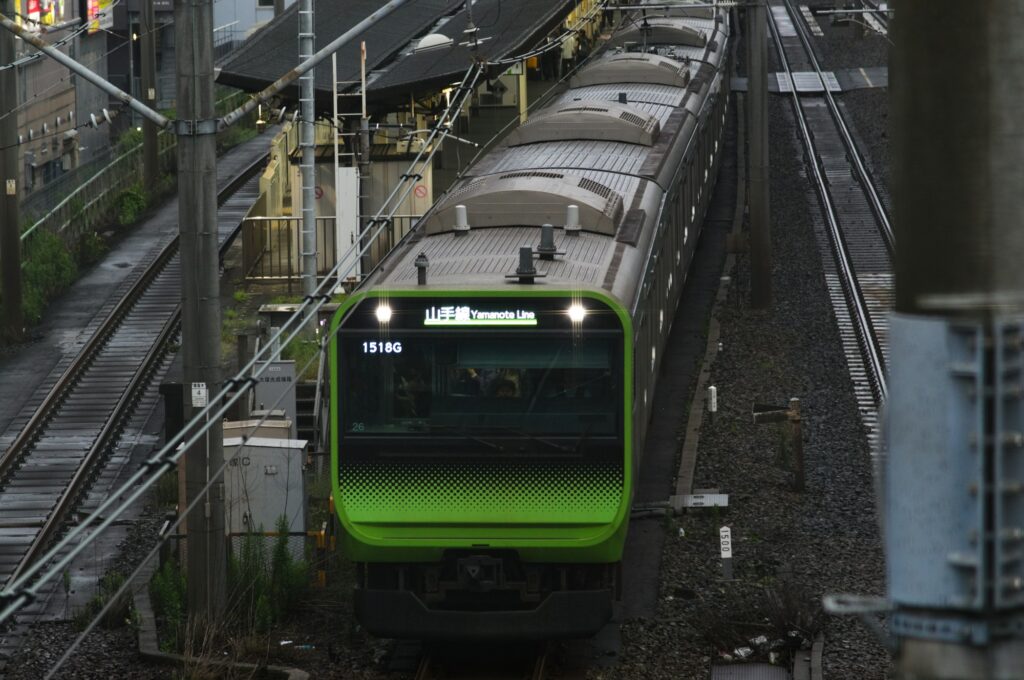
The JR Yamanote Line is a loop of 30 stations around central Tokyo, and a full circuit takes about an hour. Stay within a five to ten minute walk of a Yamanote station, or a station on the Ginza subway line, and you can reach almost every major sight in under 30 minutes.
Shinjuku, Shibuya, Ebisu, Shinagawa, Tokyo, Akihabara, Ueno and Ikebukuro are all on the loop. Yurakucho, one stop from Tokyo Station, is a short walk from Ginza. Asakusa and Roppongi are not on the Yamanote Line, but both have good subway links. Trains are frequent during the day and the last trains leave around midnight, so a hotel close to the station also saves an expensive taxi after a late dinner.
Check the walking time to the station, not just the station name. Shinjuku Station has dozens of exits, and a hotel listed as “near Shinjuku” can be a 15 minute walk from your platform. Look at which exit the hotel uses and plan your first trip from the airport around it.
Shinjuku: best for first timers
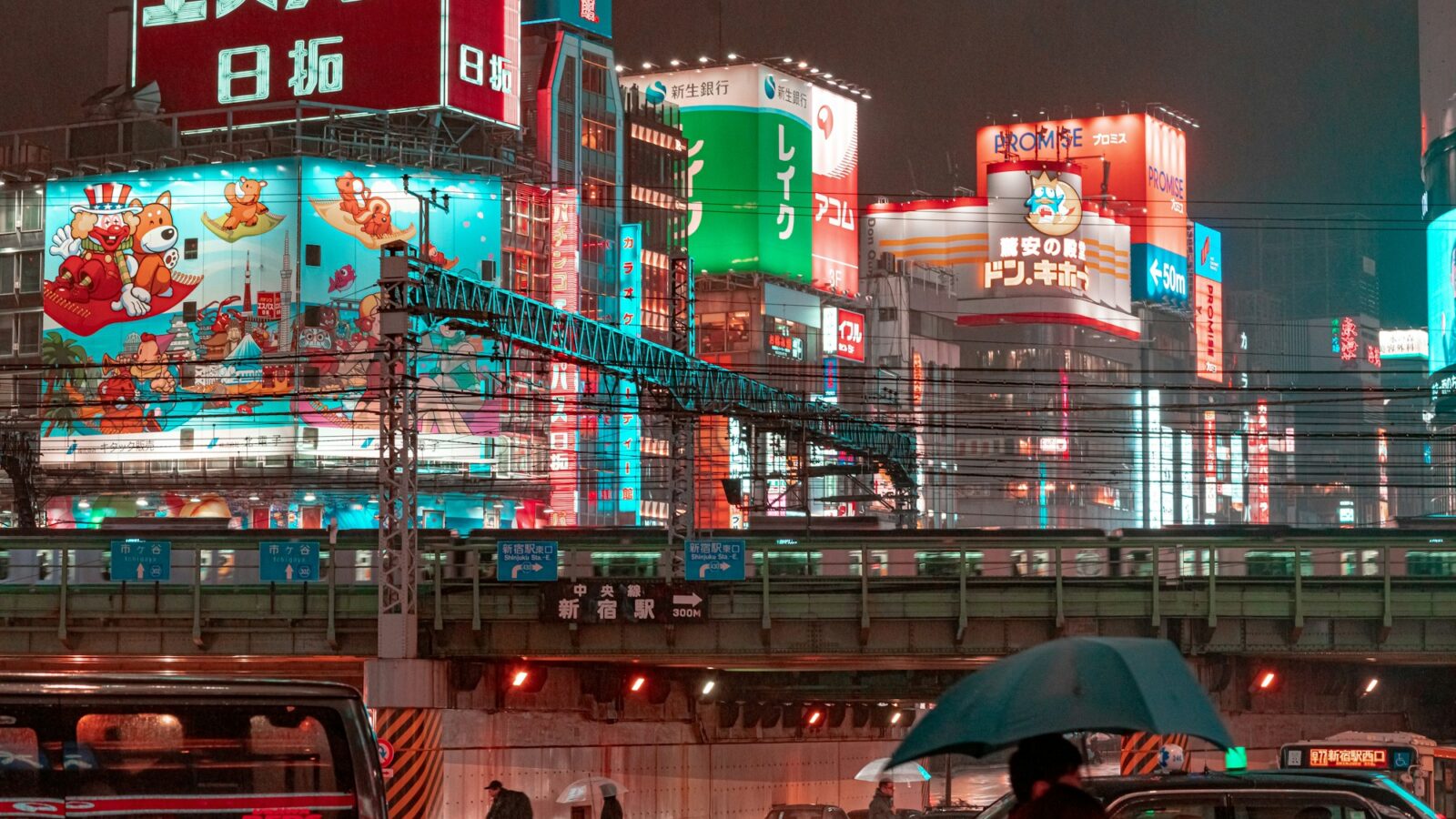
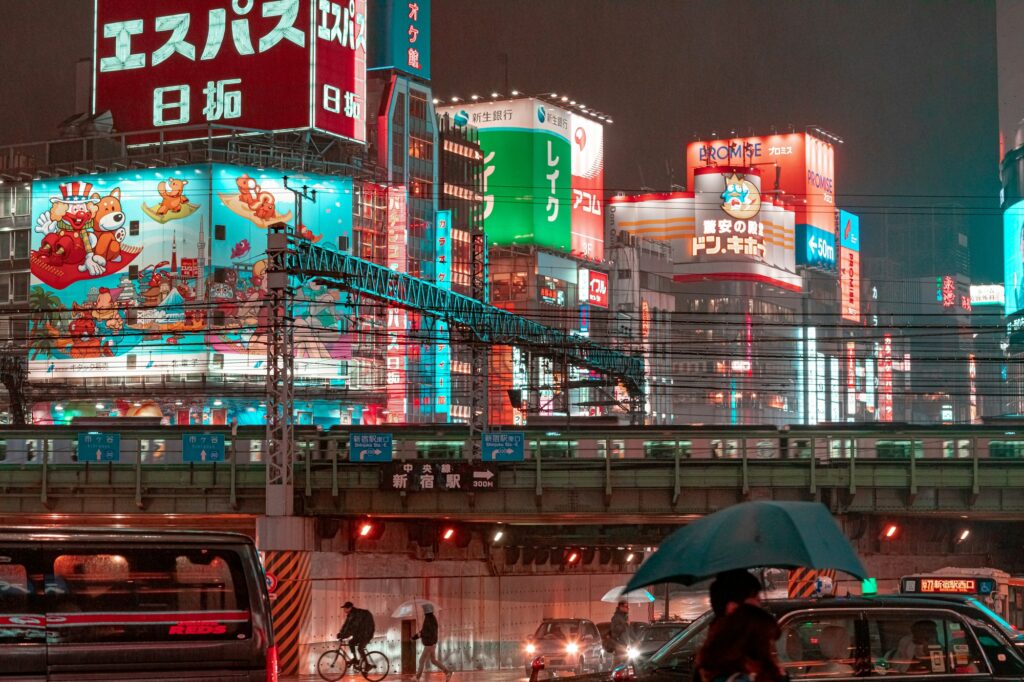
Shinjuku is the classic first base: skyscrapers to the west, department stores and food halls in the middle, and the neon of Kabukicho, Omoide Yokocho and Golden Gai to the east. It suits first timers, solo travellers, groups and anyone planning day trips to Hakone or the Fuji Five Lakes.
Transport: Shinjuku Station is served by the JR Yamanote, Chuo and Saikyo lines, the Narita Express, three subway lines and the Odakyu and Keio railways. Shibuya is about seven minutes away on the Yamanote Line and Tokyo Station about 15 minutes on the Chuo Line rapid service.
Safety: Shinjuku is safe for a big city, but the UK Foreign Office says most British victims of drink spiking and overcharging reported being targeted in Kabukicho. Ignore street touts and you avoid nearly all of the trouble. West Shinjuku and the streets near Shinjuku Gyoen garden are much quieter at night.
Hotel picks:
- Budget: Tokyu Stay Shinjuku. A practical business hotel near Shinjuku Sanchome; the Tokyu Stay chain is known for rooms with a washer dryer, so check the room type when booking.
- Mid: Hotel Gracery Shinjuku. A large, busy hotel on the edge of Kabukicho, a few minutes on foot from the east side of the station.
- Luxury: Park Hyatt Tokyo. The hotel reopened on 9 December 2025 after a 19 month renovation and sits in the top floors of Shinjuku Park Tower in West Shinjuku.
Kimpton Shinjuku Tokyo and Keio Plaza Hotel Tokyo are good alternatives on the quieter west side.
Shibuya: best for nightlife and shopping
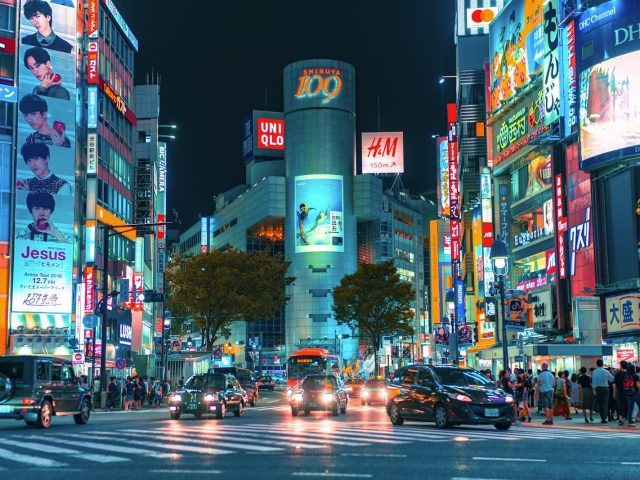
Shibuya is younger and more fashion focused than Shinjuku. The Scramble crossing, the Shibuya Sky observation deck, Harajuku and Omotesando are all a short walk apart, and the bars of Ebisu and Daikanyama are one or two stops away.
Transport: Shibuya Station is on the JR Yamanote and Saikyo lines, three subway lines including the Ginza line, and the Tokyu and Keio Inokashira railways. The Narita Express also stops here, and Ginza is about 16 minutes away on the Ginza line.
Safety: very low street crime, but the station area is packed late on Friday and Saturday nights and around Halloween, when the ward restricts street drinking.
Hotel picks:
- Budget: The Millennials Shibuya. Pod style rooms in a social hotel with a shared lounge, popular with solo travellers.
- Mid: Shibuya Stream Excel Hotel Tokyu. Rooms above the Shibuya Stream complex, linked to the station.
- Luxury: Cerulean Tower Tokyu Hotel. A tall tower hotel a few minutes from the station, with city views from upper floors.
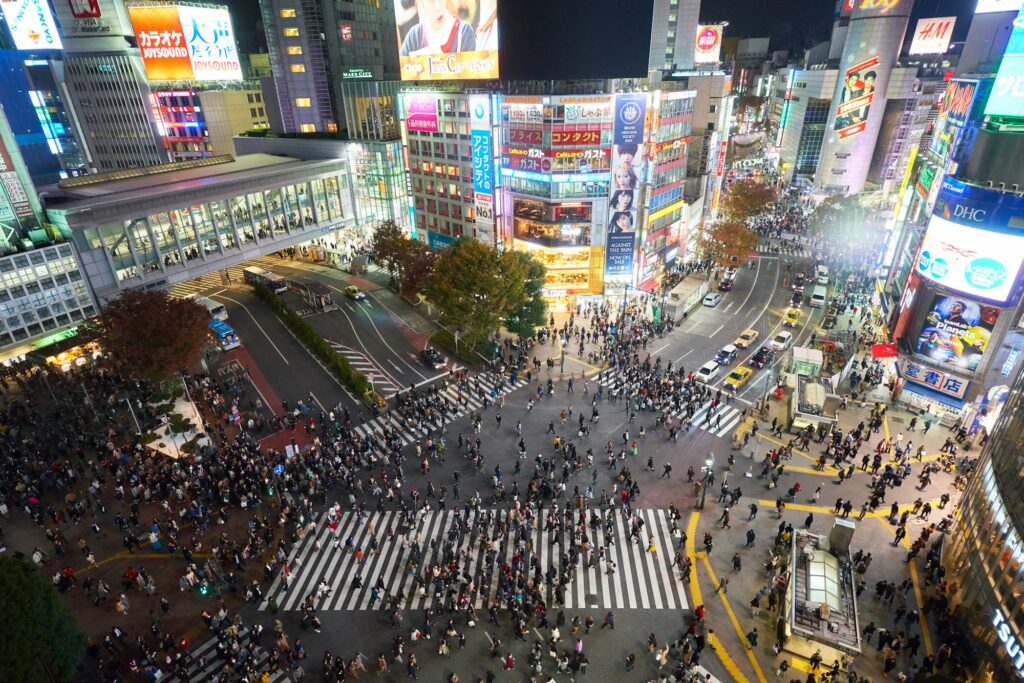
Shibuya had the highest area average in the KAYAK price data we checked (see the price table below), so book early or look one stop away in Ebisu.
Ginza: best for couples and food lovers
Ginza is Tokyo at its most polished: flagship stores, department store food halls, old coffee houses and some of the best restaurants in the country. It is very quiet at night by Tokyo standards, which suits couples and light sleepers. The Ginza hotels below are also an easy walk from Tsukiji Outer Market and Hibiya Park.
Transport: Ginza Station is on the Ginza, Hibiya and Marunouchi subway lines. Yurakucho Station on the JR Yamanote Line is a few minutes on foot, and Tokyo Station is about 15 minutes’ walk.
Safety: one of the safest and best lit areas in the city at any hour.
Hotel picks:
- Budget: Hotel Musse Ginza Meitetsu. A compact, modern hotel close to Ginza Itchome Station.
- Mid: MUJI Hotel Ginza. Simple, calm rooms above the MUJI flagship store, in the brand’s minimal style.
- Luxury: The Peninsula Tokyo. Facing the Imperial Palace grounds and Hibiya Park, with direct subway access at Hibiya.
Tokyo Station and Marunouchi: best for bullet trains
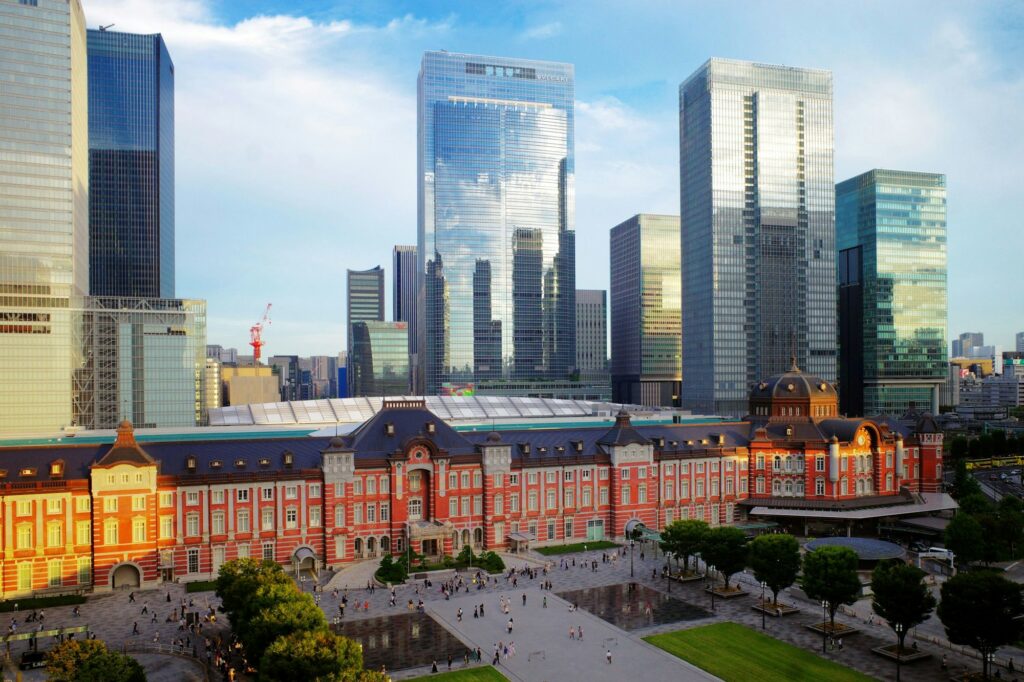
Marunouchi sits between Tokyo Station and the Imperial Palace. It is a smart business district with wide pavements and good restaurants in the station buildings, and it is the easiest base if you will use the shinkansen (bullet train) for day trips or move on to Kyoto and Osaka.
Transport: Tokyo Station has the JR Yamanote, Chuo and Keihin Tohoku lines, the Narita Express, the Marunouchi subway line and every shinkansen route out of the capital. It is the most convenient of all the Tokyo hotels near station hubs for anyone arriving at Narita by train.
Safety: very safe, though some streets are quiet at weekends when offices close.
Hotel picks:
- Mid: Hotel Ryumeikan Tokyo. A long running hotel a short walk from the Yaesu side of the station.
- Luxury: The Tokyo Station Hotel. Rooms inside the restored red brick station building of 1914.
- Luxury: Four Seasons Hotel Tokyo at Marunouchi. A small, quiet hotel next to the station.
Asakusa: best for old Tokyo and value
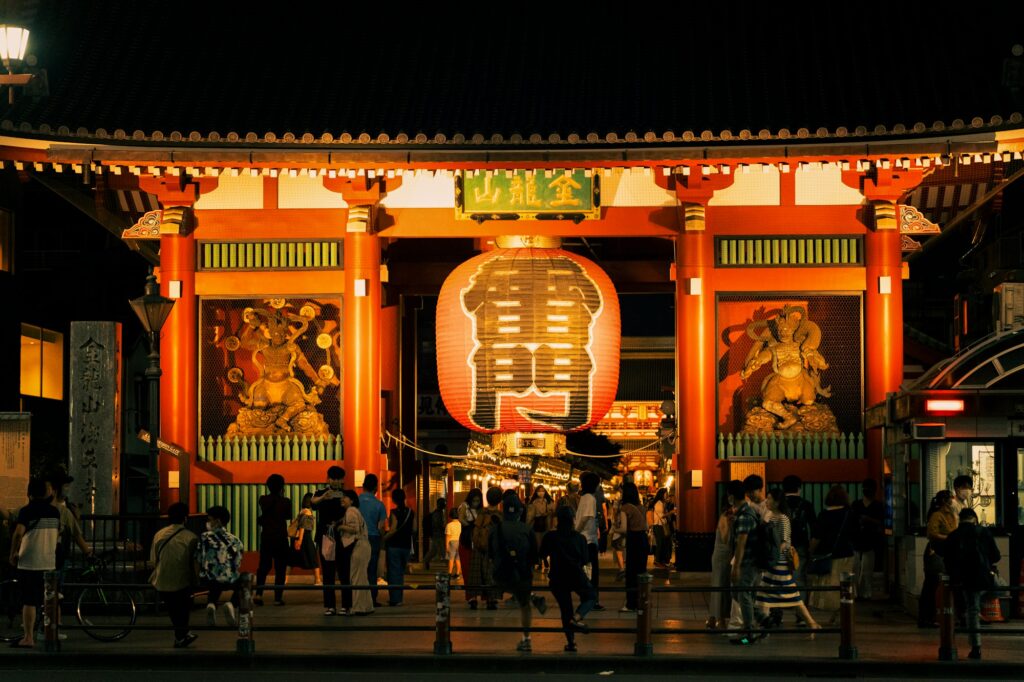
Asakusa is the place to feel the older side of the city. Sensoji, the oldest temple in Tokyo, Nakamise shopping street and the Sumida River are all here, and the Skytree is across the river. The streets empty out once the main hall closes for the day, which makes evenings calm. It is a good choice for second visits, ryokan stays and budget travellers.
Transport: Asakusa is not on the JR Yamanote Line. The Ginza subway line runs to Ueno in about five minutes and to Ginza and Shibuya, while the Toei Asakusa line has through trains to both Haneda and Narita airports. Tobu trains to Nikko also leave from Asakusa.
Safety: very safe; the main issue is daytime crowds around Kaminarimon gate.
Hotel picks:
- Budget: Ryokan Asakusa Shigetsu. A traditional inn close to Nakamise street with Japanese style rooms.
- Mid: Richmond Hotel Premier Asakusa. Reopened on 8 November 2026 after a full renovation inspired by traditional Japanese design.
- Upper mid: The Gate Hotel Kaminarimon by Hulic. Modern rooms and a rooftop terrace a short walk from Kaminarimon.
Asakusa View Hotel, a large tower hotel with Skytree views, is a good bigger option. Asakusa hotels can cost as much as Shinjuku in peak months, so compare both before deciding Asakusa is the cheap choice.
Ueno: best for budget and museums
Ueno has Ueno Park, Ueno Zoo, the Tokyo National Museum and the National Museum of Nature and Science, plus the busy Ameyoko market street. It is less glamorous than Shinjuku or Ginza but usually cheaper, and it is the best base for Narita airport.
Transport: Ueno is on the JR Yamanote Line, the Ginza and Hibiya subway lines and the shinkansen routes to the north. Keisei Ueno station has the Skyliner to Narita, which takes about 41 minutes at its fastest. Akihabara is one stop south and Asakusa is one stop on the Ginza line.
Safety: safe overall. The streets behind the station have a lot of bars, so expect some noise near Ueno Okachimachi.
Hotel picks:
- Budget: Grids Tokyo Ueno. A hostel and hotel with dorm beds and private rooms.
- Mid: Mitsui Garden Hotel Ueno. A reliable chain hotel right by Ueno Station.
- Upper mid: Nohga Hotel Ueno Tokyo. A design hotel in Higashi Ueno with a focus on local craft.
Roppongi: best for art and luxury
Roppongi has two faces. By day it is a polished area of museums and design: Mori Art Museum, The National Art Center and Tokyo Midtown. At night, the main crossing turns into a nightlife strip known for aggressive touts.
Transport: Roppongi Station is on the Hibiya and Toei Oedo subway lines, but there is no JR station, so trips to Shinjuku or Asakusa usually need a change.
Safety: the UK Foreign Office says Japanese police list Roppongi among the city’s high risk zones for drink spiking and overcharging. The hotels themselves are excellent; just avoid bars with street touts.
Hotel picks:
- Mid: remm Roppongi. Compact rooms close to Roppongi Station.
- Luxury: Grand Hyatt Tokyo. Part of the Roppongi Hills complex.
- Luxury: The Ritz Carlton Tokyo. On the top floors of the Tokyo Midtown tower.
Ikebukuro: best for budget and families
Ikebukuro is a busy commercial hub in the north west of central Tokyo, with big department stores, anime shops and the Sunshine City complex, home to an aquarium. Rooms here are often cheaper than in Shinjuku and Shibuya.
Transport: Ikebukuro Station is on the JR Yamanote and Saikyo lines, three subway lines and the Seibu and Tobu railways. Shinjuku is about five minutes away on the Saikyo line.
Safety: safe, though the west exit nightlife streets are lively late at night.
Hotel picks:
- Mid: Sunshine City Prince Hotel. A large hotel inside the Sunshine City complex.
- Upper mid: Hotel Metropolitan Tokyo Ikebukuro. A full service hotel by the west exit of the station.
Shinagawa: best for Haneda airport
Shinagawa has little to see, but it is one of the best transport bases in Tokyo. Keikyu trains reach Haneda airport in about 15 minutes, the Tokaido shinkansen to Kyoto and Osaka stops here, and the Yamanote Line runs north to Tokyo Station and Shibuya.
Safety: quiet, business focused and very safe.
Hotel picks:
- Mid: Shinagawa Prince Hotel. A huge hotel by the Takanawa exit, with an aquarium in the same complex.
- Luxury: Strings by InterContinental Tokyo. Rooms in the upper floors of a tower beside the station.
Odaiba: best for space and bay views
Odaiba is an island of reclaimed land in Tokyo Bay with beaches you can walk on (not swim at), big shopping malls and wide promenades. Families like the space, but every trip into the city takes longer, so it works best as a short stay or a final night.
Transport: the Yurikamome automated line runs to Shimbashi and the Rinkai line connects to Osaki and Shinjuku. Allow 30 to 45 minutes to most central sights.
Hotel picks:
- Upper mid: Hilton Tokyo Odaiba. Bay facing rooms near Daiba station.
- Upper mid: Grand Nikko Tokyo Daiba. A large hotel connected to Daiba station with views across the bay.
Tokyo hotel prices and the accommodation tax
Tokyo hotels have become much pricier in recent years. Thirteen major hotel chains in Japan averaged ¥17,818 (about £85 / $114) a night in the year to March 2026, up 8.6 percent, according to Tokyo Shoko Research. Expect higher in central Tokyo and in cherry blossom season.
The table below uses KAYAK UK search data for the two weeks before we checked in November 2026. Treat it as a rough guide: averages move a lot from week to week and between seasons.
| Area or type | Average per night | Approx in yen and USD |
|---|---|---|
| Shinjuku, Sunday to Thursday | £131 | ¥27,500 / $176 |
| Shinjuku, Friday and Saturday | £162 | ¥34,000 / $217 |
| Asakusa, Sunday to Thursday | £159 | ¥33,400 / $213 |
| Taito ward (Ueno and Asakusa), Sunday to Thursday | £110 | ¥23,100 / $148 |
| Shibuya, area average | £281 | ¥59,000 / $377 |
| Tokyo, 3 star hotels (range) | £36 to £137 | ¥7,600 to ¥28,800 / $48 to $184 |
| Tokyo, 4 star average | £194 | ¥40,700 / $260 |
| Tokyo, 5 star average | £342 | ¥71,800 / $459 |
Conversions use about ¥210 to the pound and ¥156.5 to the dollar, the rates in mid November 2026. KAYAK’s monthly data shows January as the cheapest month for Tokyo hotels and August as the most expensive; read our guide to the best time to visit Japan to balance prices against weather and crowds.
Tokyo accommodation tax
Tokyo charges an accommodation tax per person per night, collected by the hotel. Until 31 March 2027 the rates are:
- Under ¥10,000 per person per night: no tax.
- ¥10,000 to ¥14,999: ¥100.
- ¥15,000 or more: ¥200.
From 1 April 2027 the flat rates are replaced by 3 percent of the room rate for stays of ¥13,000 or more per person per night, and rooms below that are exempt. The new rules also cover private rentals (minpaku) and simple lodgings. The rate is based on the room charge before meals and consumption tax, and it applies to every night stayed from 1 April 2027, whenever you booked. Two people sharing a ¥30,000 room pay ¥400 a night now and ¥900 a night under the new system. Check the details on the Tokyo Metropolitan Government accommodation tax page.
Many booking sites show the tax as “to be paid at the property”, so do not be surprised by a small extra charge at check in.
Shinjuku vs Shibuya
Choose Shinjuku if you want the most transport options, day trips to Hakone or Fuji and food at every price. Choose Shibuya if you care more about shopping, cafes and a younger nightlife scene, and prefer an area where everything is walkable from your hotel.
| Factor | Shinjuku | Shibuya |
|---|---|---|
| Train lines | More lines, including Odakyu and Keio | Fewer, but direct to Ginza and Yokohama |
| Day trips | Best for Hakone and Fuji | Good for Yokohama and Kamakura |
| Nightlife | Golden Gai bars, Kabukicho | Clubs, bars around Center Gai and Dogenzaka |
| Quiet streets | West Shinjuku, near Shinjuku Gyoen | Around Ebisu and Daikanyama |
| Hotel choice | Very wide, many business hotels | Smaller, more design hotels |
Both are a seven minute ride apart on the Yamanote Line, so choosing one does not cut you off from the other.
Where to stay in Tokyo for families
The best areas for families are Tokyo Station and Marunouchi, Shinagawa, Ueno and Odaiba. All are calmer than Shinjuku and Shibuya at night, and each has stations with lifts and good airport links. Ueno has the zoo and science museum, Shinagawa and Ikebukuro have hotel aquariums, and Odaiba has space to run around.
Room size is the main challenge. Standard Japanese hotel rooms are small, and many cheaper hotels only take two guests per room. Look for “family room”, “quad” or apartment style hotels, and check the hotel’s policy on children sharing beds. Big chain hotels such as Shinagawa Prince Hotel, Hilton Tokyo Odaiba and Keio Plaza Hotel Tokyo usually have more triple and quad rooms than boutique hotels. Avoid Kabukicho and the Roppongi crossing for family stays.
Where to avoid staying in Tokyo
Avoid the heart of Kabukicho and the Roppongi nightlife strip if you are a light sleeper or travelling with children, and avoid hotels far from a station. Suburban and airport hotels look cheap but cost time and money on trains.
- Kabukicho: fun to walk through, but noisy, full of touts and named by the UK Foreign Office as where most British victims of drink spiking report being targeted.
- Roppongi crossing: listed by Japanese police as a high risk area for nightlife crime.
- Narita town and airport hotels: fine for a very early flight, but Narita is more than an hour from central Tokyo.
- Anywhere more than ten minutes’ walk from a station: the savings disappear after a few days of extra walking and taxi fares.
Read the official UK Foreign Office safety advice for Japan before a night out.
Getting to your hotel from the airport
Tokyo has two airports. Haneda is closest, and flights from London and many from the US land there. Narita is further out to the east.
- Haneda to Shinagawa: Keikyu trains, about 15 minutes. Through trains continue to Asakusa.
- Haneda to Hamamatsucho: Tokyo Monorail, about 15 to 20 minutes, then the Yamanote Line.
- Narita to Ueno: Keisei Skyliner, about 41 minutes at its fastest.
- Narita to Tokyo, Shibuya, Shinjuku and Ikebukuro: JR Narita Express, about an hour to Tokyo Station.
- Airport limousine buses: stop at many big hotels; slower in traffic but easy with luggage.
UK and US travel essentials
Entry rules: UK and US passport holders can visit Japan without a visa for tourism for up to 90 days. Your passport must be valid for your whole stay. You can fill in immigration and customs forms in advance on Visit Japan Web to get QR codes for arrival. Japan plans a travel authorisation system (JESTA) later in the decade, but it is not in force yet.
Departure tax: Japan’s international tourist tax rose from ¥1,000 to ¥3,000 (about £14 / $19) from 1 July 2026, according to Japan National Tourism Organization. It is normally added to your air fare.
Flights from the UK: British Airways, Japan Airlines and ANA fly nonstop from London Heathrow to Haneda in about 14 hours. There is no direct flight from Manchester; connect through London, Helsinki, Istanbul or a Gulf hub.
Flights from the US: nonstop flights from New York to Tokyo take about 14 hours and from Los Angeles about 12 hours, with Japan Airlines, ANA and US carriers. There are also direct routes from San Francisco, Seattle, Chicago, Dallas and Honolulu.
Plugs and voltage: Japan uses Type A and B sockets at 100 volts. UK visitors need an adapter; US plugs usually fit. Most phone and laptop chargers work at 100 volts, but check hair dryers and straighteners.
Time difference: Japan is nine hours ahead of London in the UK winter and eight hours ahead in British Summer Time. It is 14 hours ahead of New York in winter and 13 hours ahead in summer. Japan does not change its clocks.
Money: Japan uses the yen. In mid November 2026, £1 bought about ¥210 and $1 about ¥156.5. Cards are widely accepted in hotels, but carry some cash for small restaurants and shrines.
Tipping: there is no tipping culture in Japan, unlike the US, and staff may chase you to return money left on the table. Upscale hotels often add a service charge to the bill instead.
Driving: Japan drives on the left, like the UK. UK and US drivers need an International Driving Permit under the 1949 convention, but you will not need a car in Tokyo.
FAQs
What is the culture like in Tokyo?
Tokyo culture is polite, orderly and quiet in public. People queue for trains, keep phone calls off public transport and rarely eat while walking. Shoes come off in ryokan and some restaurants. It mixes old shrines and festivals with cutting edge design, and visitors are treated with great courtesy.
What are the best parts of Tokyo to stay in?
The best parts of Tokyo to stay in are Shinjuku, Shibuya, Ginza, Tokyo Station and Marunouchi, Asakusa and Ueno. Shinjuku is best for first timers, Ginza for couples, Asakusa for old Tokyo and Ueno for value and Narita airport.
How far in advance to book Tokyo hotels?
Book Tokyo hotels about two to three months ahead in normal periods, and three to six months ahead for cherry blossom season, Golden Week and November autumn colours. Free cancellation rates let you lock in a room early and switch if prices fall.
Is it better to stay in Shinjuku or Ginza?
Shinjuku is better for first timers, nightlife, budget choice and day trips to Hakone or Fuji. Ginza is better for couples, food lovers and travellers who want quiet evenings and polished streets. Ginza hotels usually cost more, while Shinjuku has a far wider range of business hotels.
Where to avoid staying in Tokyo?
Avoid staying in the middle of Kabukicho or on the Roppongi nightlife strip if you want quiet nights or are travelling with children. Also avoid hotels more than ten minutes’ walk from a station and airport hotels in Narita, unless you have a very early flight.
Is Shibuya or Shinjuku safer?
Both Shibuya and Shinjuku are safe, with low street crime. Shinjuku has slightly more risk at night because of Kabukicho, where the UK Foreign Office says most British victims of drink spiking and bar overcharging were targeted. In either area, ignore street touts and check bar prices before ordering.
Is $2000 enough for 1 week in Japan?
$2,000 (about ¥313,000) can cover a week in Japan excluding flights, but only on a careful budget. Seven nights at the Shinjuku weekday average in our table would use about $1,230, leaving around $110 a day for food, trains and sights. A cheaper business hotel or Ueno base gives more room.
Is $10,000 enough for a week in Japan?
Yes. $10,000 (about ¥1.56 million) is more than enough for a week in Japan for one or two people, even with flights, a luxury hotel in Tokyo, bullet train trips and fine dining. Only the very top suites and long multi city trips in peak season would push past it.
What’s the cheapest month to visit Japan?
January, after the New Year holiday, is usually the cheapest month for Tokyo hotels on KAYAK’s data, and February is also quiet. Avoid late March to early April, Golden Week and mid August if price matters, as these are Japan’s busiest travel periods.
How far does $100 USD go in Japan?
$100 is about ¥15,650 in November 2026. In Tokyo that covers a day of meals at casual restaurants and convenience stores plus city trains, or one night in a capsule hotel or hostel. It will not cover a central hotel room, which typically costs more than that on its own.
Plan the rest of your trip
Once you have chosen your base, use our guide to the best things to do in Tokyo to plan your days by area, and check the best time to visit Japan before you book. Browse all our Tokyo travel guides and the wider Japan travel guides for more ideas.
Where to stay in Tokyo is easier than it looks: pick a hotel a few minutes from a Yamanote Line or Ginza line station, match the area to your style, and the city’s trains will do the rest.