
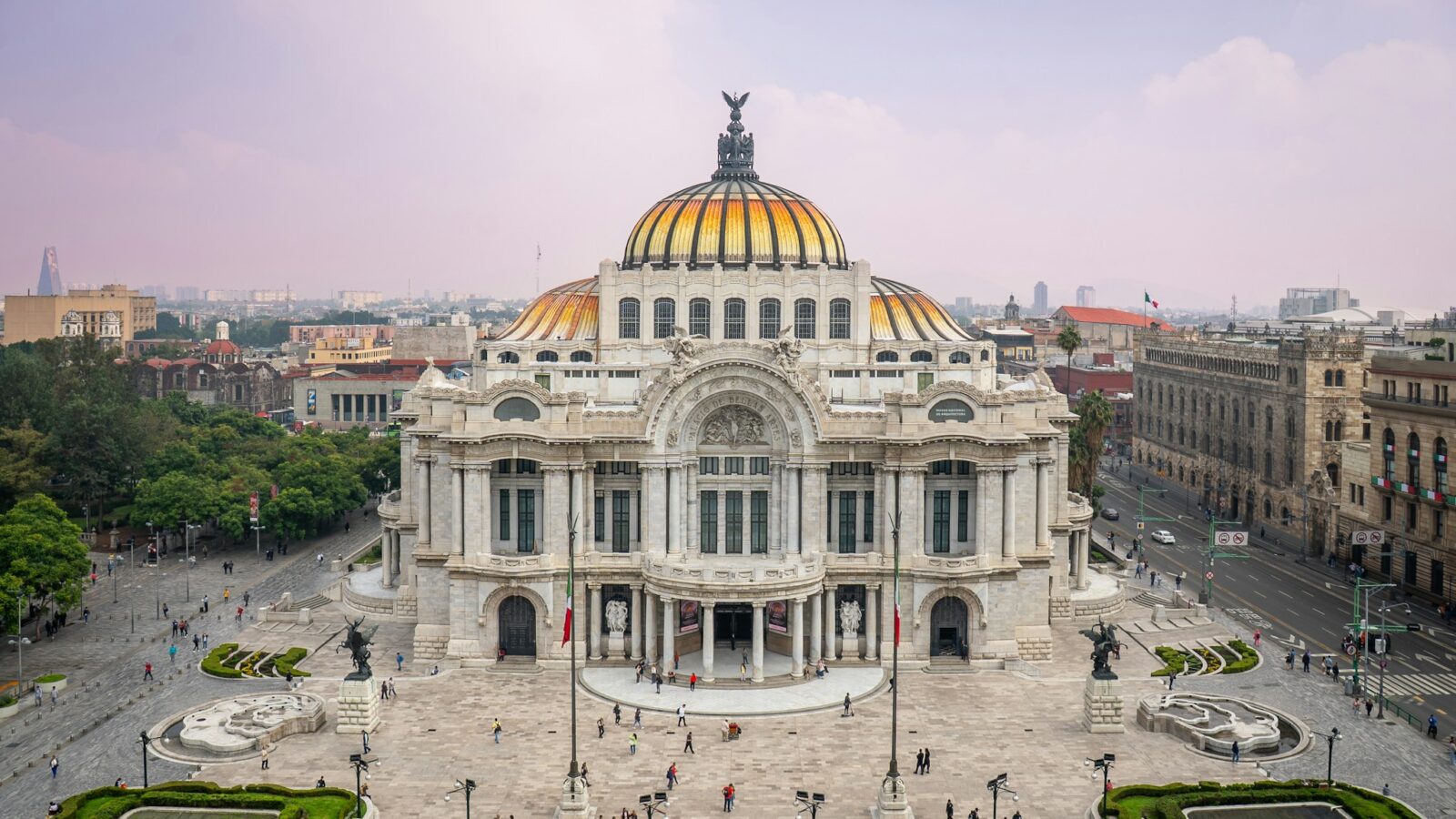
Things to do in Mexico City start with Aztec temples under the main square, murals by Diego Rivera, Frida Kahlo’s blue house and painted boats on the canals of Xochimilco. Add the pyramids of Teotihuacan an hour away, some of the best street food in the Americas and leafy neighbourhoods made for walking, and few cities give you more for less money.
Some links in this guide are affiliate links: if you book through them we may earn a commission at no extra cost to you. It never changes what we recommend. How we make money.
This guide covers the 20 best picks with current 2026 prices in Mexican pesos (with approximate pounds and dollars), opening days, how to reach each one with or without a tour, free things to do, an honest look at safety using UK and US government advice, a three day plan and the travel essentials UK and US visitors need. Prices and rules were last checked in November 2026, using rates of about MXN 25 to £1 and MXN 18.5 to $1.
Things to do in Mexico City at a glance
| Pick | Area | Time needed | Cost from (Nov 2026) |
|---|---|---|---|
| Zócalo, cathedral and Palacio Nacional | Centro Histórico | Half a day | Free |
| Templo Mayor | Centro Histórico | 2 hours | INAH ticket |
| Palacio de Bellas Artes | Centro Histórico | 1 to 2 hours | Small fee for the museum |
| Torre Latinoamericana viewpoint | Centro Histórico | 1 hour | Paid ticket |
| National Museum of Anthropology | Chapultepec | 3 to 4 hours | MXN 210 (about £8.40 / $11.40) |
| Chapultepec Castle | Chapultepec | 2 hours | MXN 210 (about £8.40 / $11.40) |
| Frida Kahlo Museum | Coyoacán | 1 hour plus queue | MXN 320 (about £12.80 / $17.30) |
| Coyoacán and San Ángel | South of the centre | Half a day | Free to wander |
| Xochimilco boat ride | Far south | 2 to 4 hours | MXN 700 to 800 per boat per hour (about £28 to £32 / $38 to $43) |
| Teotihuacan day trip | 50 km north east | A full day | MXN 210 entry (about £8.40 / $11.40) |
| Lucha libre | Doctores | An evening | Tickets at the box office |
| Roma and Condesa | West of the centre | Half a day | Free to wander |
In this guide:
- The historic centre: the Zócalo, Templo Mayor, Bellas Artes and the best view in the city.
- Chapultepec and Polanco: the Anthropology Museum, the castle and Museo Soumaya.
- The south: Frida Kahlo’s Casa Azul, Coyoacán, San Ángel and Xochimilco.
- Beyond the centre: the Teotihuacan day trip and the Basilica of Guadalupe.
- Nights and food: lucha libre, markets, street food and mezcal.
- Planning: free things to do, whether Mexico City is safe for tourists, costs, a three day plan, UK and US travel essentials and the FAQ.
How to choose what to do in Mexico City
Mexico City is huge, so plan the main Mexico City attractions by area rather than by list. The Centro Histórico holds the Zócalo, Templo Mayor and Bellas Artes within a short walk of each other. Chapultepec Park and Polanco sit about 5 km west, and Coyoacán, San Ángel and Xochimilco lie to the south. Teotihuacan needs a separate day.
Check opening days before you plan. Most national museums, including the Anthropology Museum, Chapultepec Castle, Templo Mayor and the Frida Kahlo Museum, close on Mondays, so save Monday for Teotihuacan, Xochimilco or the markets. Book the Frida Kahlo Museum as soon as your dates are fixed, because timed tickets sell out.
Give yourself an easy first day too. The city sits at about 2,240 metres (7,350 feet), and the altitude catches many visitors out.
1. Stand in the Zócalo and see the Rivera murals
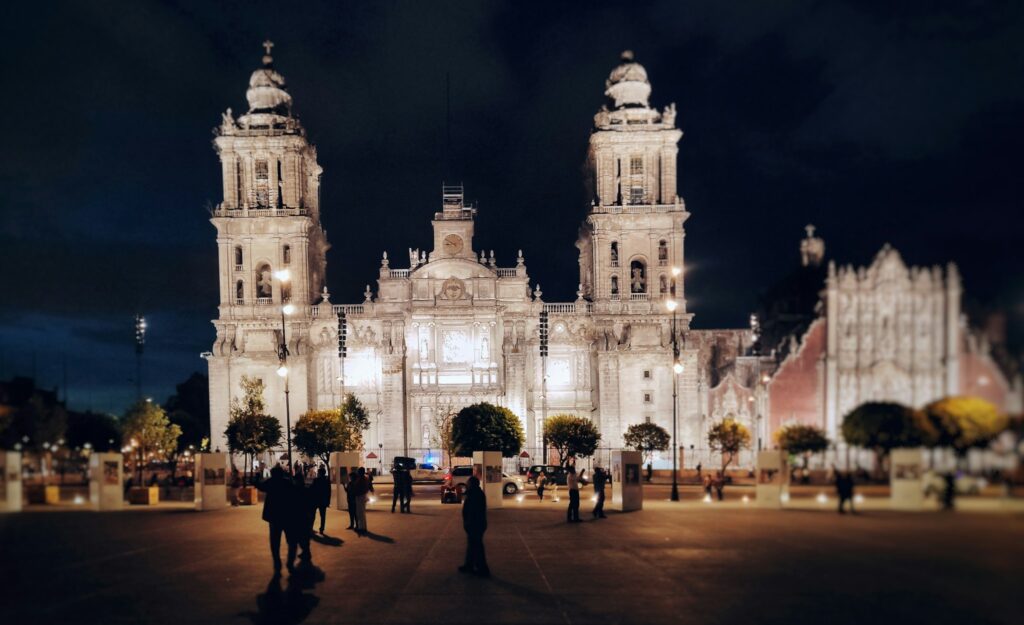
The Zócalo, officially the Plaza de la Constitución, is one of the largest public squares in the world and the heart of the old Aztec city of Tenochtitlan. The Metropolitan Cathedral fills its north side. It is free to enter, and if you look closely you can see that parts of the floor slope, because the city is slowly sinking into the old lake bed beneath it.
On the east side, the Palacio Nacional holds Diego Rivera’s murals of Mexican history around the main staircase and upper corridors. Entry is free, but bring photo ID such as your passport, and expect security checks. The building can close at short notice for official events or protests, which are common on the square.
How to do it: on your own, walk in from Metro Zócalo (Line 2). Free walking tours start nearby most mornings and work on tips. Time needed: half a day with the cathedral and murals.
2. Go underground at Templo Mayor
Templo Mayor was the great twin temple of the Aztec capital, buried after the Spanish conquest and uncovered in the late 1970s when electricity workers found a huge carved stone disc. Walkways take you over the excavated layers right beside the cathedral, and the museum on site holds the finds, including the vast stone of the moon goddess Coyolxauhqui.
It is open Tuesday to Sunday from 9am to 5pm and closed on Mondays, according to INAH, the national heritage institute that runs it. Buy the ticket at the entrance. Allow about two hours, and go at opening time to beat school groups.
3. See the murals and dance at the Palacio de Bellas Artes
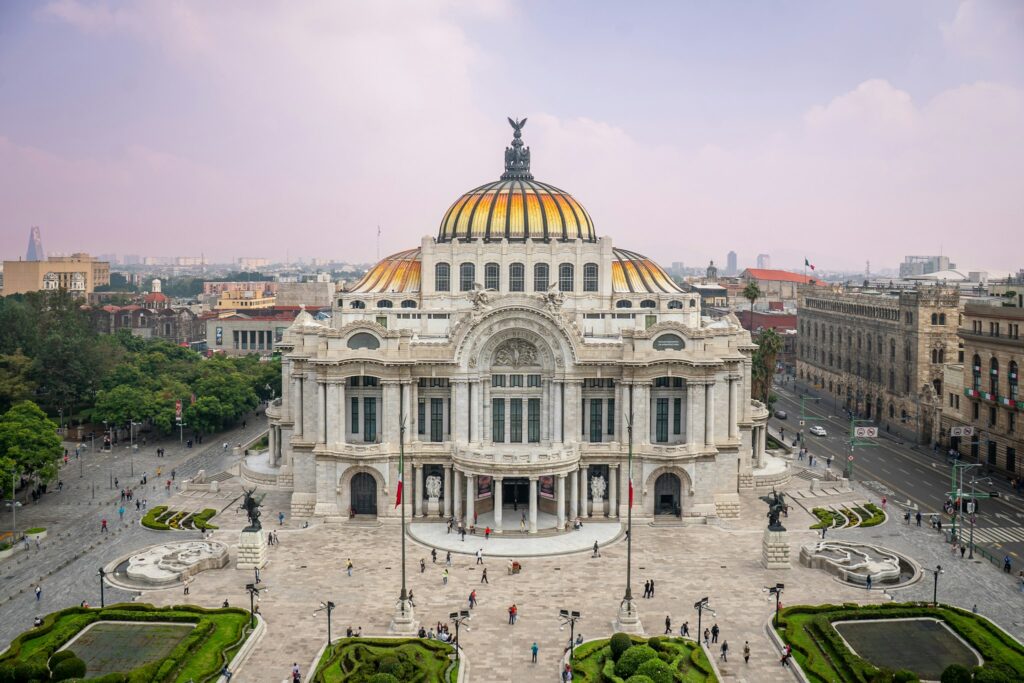
The white marble Palacio de Bellas Artes, finished in 1934, mixes Art Nouveau outside with Art Deco inside. Upstairs are murals by Rivera, Siqueiros and Orozco. The museum charges a small fee and closes on Mondays.
The building is also the home of the Ballet Folklórico de México de Amalia Hernández, a colourful show of regional dances with regular weekly performances. Check dates and buy tickets through Ticketmaster; and prices in mid 2026 ranged from about MXN 385 to MXN 1,708 (about £15 to £68 / $21 to $92).
Tip: for a free photo of the domes from above, walk across to the café terrace on the upper floor of the Sears store opposite. You are expected to buy a drink.
4. Get the best view from the Torre Latinoamericana
Completed in 1956, the Torre Latinoamericana was for years the tallest building in Latin America and survived the earthquakes of 1957 and 1985. Its observation deck on the 44th floor gives a 360 degree view over the centre, Bellas Artes and, on clear days, the volcanoes. A small museum about the city and the tower sits on the 38th floor.
The deck opens daily from 9am to 9pm, with last entry at 8pm. Go just before sunset to see the city by day and lit up at night. Check the current ticket price on the official site before you go. Time needed: about an hour.
5. Walk Madero Street to the House of Tiles and the Palacio Postal
Avenida Francisco I. Madero is a pedestrian street that links the Zócalo with Bellas Artes, lined with colonial palaces, churches and shops. Halfway along, the Casa de los Azulejos (House of Tiles) is a 16th century mansion covered in blue and white Puebla tiles, now a Sanborns restaurant where you can eat in the covered courtyard.
A block north of Bellas Artes, the Palacio Postal is still a working post office, with gilded ironwork and marble staircases. Entry is free. Be discreet with photos, since people are working there. Together these make an easy free walk of an hour or two.
6. Spend a morning at the National Museum of Anthropology
If you see one museum, make it this one. The Museo Nacional de Antropología in Chapultepec Park holds the finest collection of ancient Mexican art anywhere, including the Aztec Sun Stone, Olmec heads and a recreation of the Maya king Pakal’s tomb. The central courtyard, with its giant umbrella fountain, is a landmark of modern architecture.
It opens Tuesday to Sunday and closes on Mondays. Since January 2026, the INAH ticket for foreign visitors is MXN 210 (about £8.40 / $11.40). Free Sunday entry applies only to Mexican nationals and foreign residents, so tourists pay every day. Allow three to four hours and start with the Mexica (Aztec) and Maya halls if time is short.
How to get there: Metro Auditorio or Chapultepec, a walk through the park, or a short ride from Roma or Polanco.
7. Climb to Chapultepec Castle
Bosque de Chapultepec is one of the largest city parks in the Americas, with a lake, a zoo, museums and miles of paths. On its hilltop, Chapultepec Castle was home to Emperor Maximilian and later to Mexican presidents, and it now houses the National Museum of History. The terraces have one of the best views down Paseo de la Reforma.
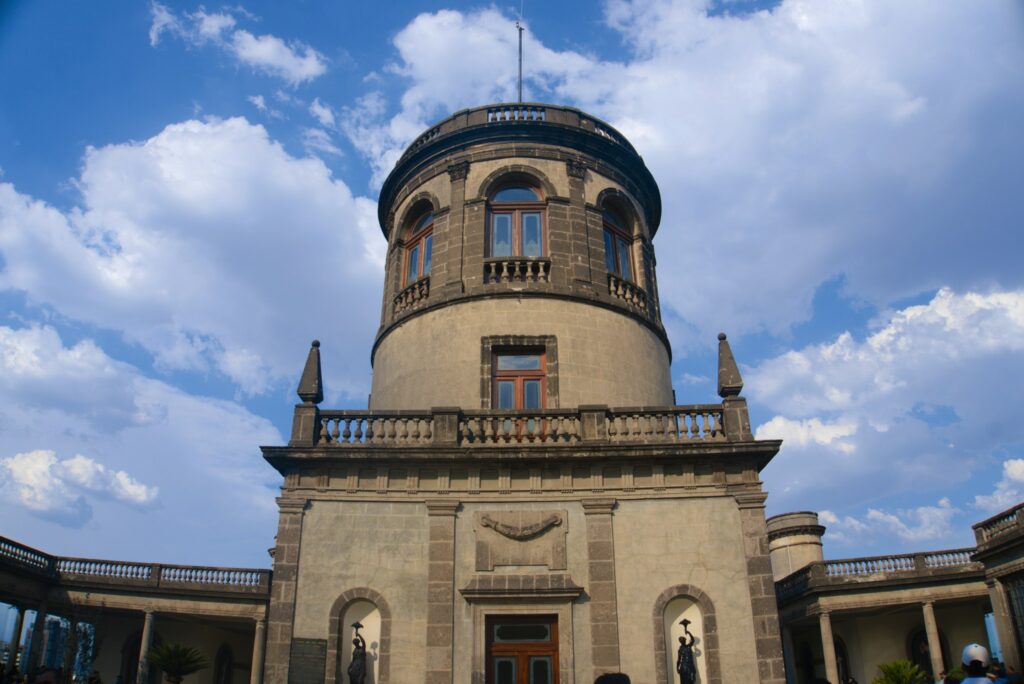
Entry uses the same INAH rate as the Anthropology Museum, MXN 210 (about £8.40 / $11.40), and it closes on Mondays. Walk up the ramp from the park entrance, or take the small road train. Allow two hours, and combine it with the Anthropology Museum on the same day.
8. Visit Museo Soumaya and stroll Polanco
The silver Museo Soumaya in Polanco is hard to miss: a curved building covered in thousands of hexagonal aluminium tiles. Inside, the private collection of Carlos Slim covers European old masters, Mexican art and one of the largest groups of Rodin sculptures outside France. Entry is free, and it is one of the few big museums open every day, so it makes a good Monday option.
Polanco around it is the city’s smartest district, with designer shops on Avenida Presidente Masaryk, Parque Lincoln and many of Mexico City’s best known restaurants.
9. Book ahead for the Frida Kahlo Museum
The Casa Azul (Blue House) in Coyoacán is where Frida Kahlo was born, lived with Diego Rivera and died. It keeps her studio, her kitchen, her garden and a collection of the corsets and Tehuana dresses she wore, as well as works by both artists.
Frida Kahlo museum tickets are sold by time slot on the official Museo Frida Kahlo ticket page. The general adult ticket is MXN 320 (about £12.80 / $17.30). Phone photos without flash are included in the ticket. The museum opens Tuesday and Thursday to Sunday from 10am to 6pm and Wednesday from 11am to 6pm, with late evening openings on Thursdays. It is closed on Mondays.
Tip: tickets have traditionally included entry to the Museo Anahuacalli, the volcanic stone pyramid Rivera built for his collection of ancient art, a short taxi ride away. Check this when you book. The visit itself takes about an hour.
10. Wander Coyoacán
Coyoacán was a separate colonial town before the city swallowed it, and it still feels like one: cobbled streets, two leafy plazas, the coyote fountain and the Parroquia de San Juan Bautista. Weekends bring families, musicians and street food.
Eat at the Mercado de Coyoacán, famous for its tostadas, then walk along Avenida Francisco Sosa, one of the oldest streets in the Americas. Leon Trotsky’s house, where he was murdered in 1940, is now a museum a few blocks from the Casa Azul.
How to get there: Metro Coyoacán or Viveros, then a walk of about 20 minutes, or a rideshare. Time needed: half a day including the Frida Kahlo Museum.
11. Go to San Ángel for the Saturday bazaar
Next door to Coyoacán, San Ángel is a quieter colonial district of stone walls and bougainvillea. On Saturdays, the Bazar del Sábado fills Plaza San Jacinto with painters, crafts and a covered market of higher end design. The Museo Casa Estudio Diego Rivera y Frida Kahlo, the pair of studios joined by a bridge that the couple used in the 1930s, is a short walk away.
Combine San Ángel with Coyoacán on a Saturday for a full day in the south.
12. Float through Xochimilco
Xochimilco is what remains of the lake and canal system that once surrounded the Aztec capital. The canals and their chinampas (floating gardens still farmed today) are part of a UNESCO World Heritage Site with the historic centre. You hire a trajinera, a flat boat painted in bright colours, and drift past mariachi boats, food boats and flower sellers.
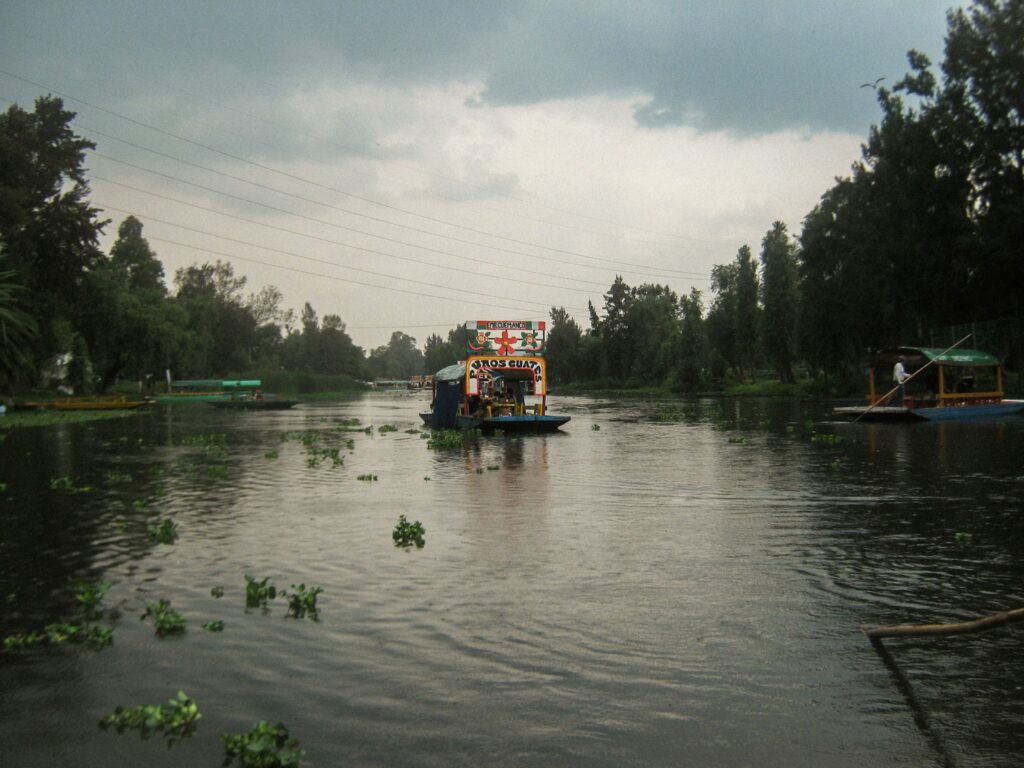
Boats are priced per hour, not per person. Mexican press reported a rate of roughly MXN 700 to 800 per boat per hour in May 2026 (about £28 to £32 / $38 to $43), so it is cheap if you share with a group. Buy at the official ticket office at landings such as Nativitas or Cuemanco, ignore touts on bikes offering discounts, and agree the time and total price before you board. Bring cash for food and music on the water.
How to do it without a tour: take Metro Line 2 to Tasqueña, then the light rail (Tren Ligero) to its last stop, Xochimilco, and walk or take a short taxi to the landing. A rideshare from Roma takes about 45 minutes without heavy traffic. With a tour, transport and a shared boat are arranged for you, and some combine Xochimilco with Coyoacán.
Time needed: two hours on the water is enough for most people, plus travel time.
13. Take a Teotihuacan day trip
Teotihuacan, about 50 km north east of the city, was one of the largest cities in the world around 1,500 years ago. Walk the Avenue of the Dead between the Pyramid of the Sun, the third largest pyramid on Earth, and the Pyramid of the Moon, then see the carved serpent heads of the Temple of Quetzalcoatl.
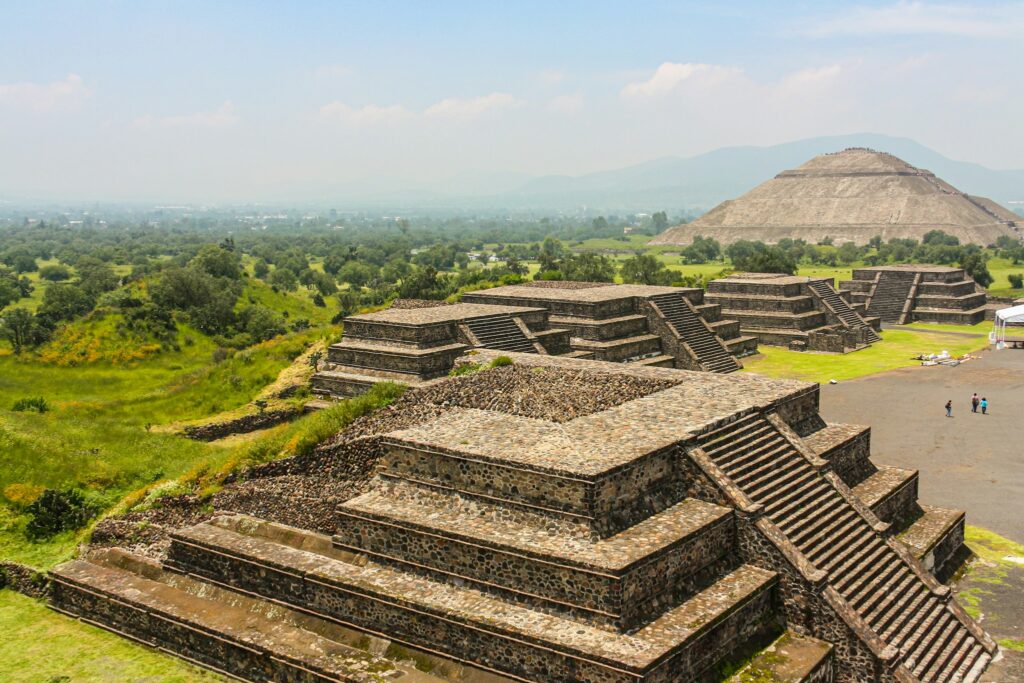
The site is open every day, including Mondays, with last entry around 4:30pm. The 2026 INAH entry fee for foreign visitors is MXN 210 (about £8.40 / $11.40). Climbing rules on the pyramids have changed several times in recent years, so check at the ticket office on the day rather than relying on old blog posts.
How to do it on your own: buses for the pyramids leave from the Terminal Autobuses del Norte (Metro Autobuses del Norte, Line 5). The trip takes roughly an hour or more depending on traffic. Ask for the bus to “las pirámides” and check which gate it stops at, so you can plan your return. With a tour, you get transport and a guide, and many tours add the Basilica of Guadalupe on the way.
Tips: arrive at opening time, because there is very little shade. Bring water, a hat and sun cream, and wear shoes with grip. A sunrise balloon flight is a popular extra, booked through licensed operators.
14. Visit the Basilica of Our Lady of Guadalupe
The Basilica of Guadalupe in the north of the city is the most visited Catholic shrine in the Americas. The modern circular basilica, built in the 1970s, holds the cloak said to show the image of the Virgin, which you view from a moving walkway below the altar. Beside it stands the older basilica, visibly tilting on the soft ground, and a hillside chapel with city views.
Entry is free and it is open every day. Dress modestly and remember that services are always running. On 12 December, the feast of the Virgin of Guadalupe, millions of pilgrims arrive, so avoid it unless you want to see the event itself.
15. Cheer at lucha libre
Lucha libre, Mexican masked wrestling, is pure theatre: good guys (técnicos) against bad guys (rudos), high flying moves and a crowd that shouts along. The main venue is Arena México in the Doctores district, run by CMLL, which usually holds shows on Tuesday, Friday and Sunday.
Buy tickets only at the arena box office (taquilla) or official channels, not from resellers outside. Large cameras usually have to be checked. Doctores is not a place to wander at night, so arrive and leave by rideshare, or join a lucha libre tour that includes tickets and transport, often with a mask and drinks.
16. Explore Roma and Condesa
Roma Norte and Condesa are the leafy neighbourhoods where many visitors stay. Condesa is known for Art Deco buildings around Parque México and Parque España, and Roma for grand early 20th century mansions, galleries, coffee shops and bars along Calle Álvaro Obregón and Calle Colima.
There is no single sight here. The pleasure is walking under the jacaranda trees (they flower purple in March), stopping for coffee and tacos, and ending at a mezcal bar. Mercado Roma is a modern food hall if you want lots of choice under one roof.
17. Shop and eat at the markets
Mexico City’s markets are some of the best free entertainment in the city:
- Mercado de San Juan: the chefs’ market near the centre, with exotic meats, cheeses and fruit stalls offering tastings.
- La Merced: the largest traditional market, a maze of fruit, chillies and street food just east of the Zócalo. Keep valuables out of sight.
- Mercado de Artesanías La Ciudadela: the best single place for crafts, from textiles and pottery to alebrijes (painted wooden creatures).
- Mercado de Jamaica: the flower market, at its most colourful around Day of the Dead.
18. Eat your way through the street food
Tacos al pastor (spit roasted pork with pineapple), tlacoyos, quesadillas, tamales, elote (corn) and churros with hot chocolate are the dishes to look for. Choose busy stands with a queue of locals and a fast turnover, and eat where you can see the food cooked in front of you.
If you are nervous about where to start, a food tour is the easiest way in. Guides take you to tested stalls in the Centro, Roma or Coyoacán and explain what you are eating. For a classic sit down treat, El Moro has served churros since 1935.
19. Taste mezcal and hear the mariachis at Plaza Garibaldi
Mezcal, the smoky agave spirit from Oaxaca and other states, is served in small glasses with orange slices and worm salt. Mezcal bars in Roma and Condesa offer tasting flights, which are a good way to learn the differences between agave types.
Plaza Garibaldi, north of Bellas Artes, is where mariachi bands wait to be hired for a song. Visit early in the evening, agree the price for a song before the band plays, and leave by taxi or rideshare rather than walking the surrounding streets late at night.
20. Cycle Paseo de la Reforma on a Sunday
Every Sunday morning, a long stretch of Paseo de la Reforma closes to cars and fills with cyclists, runners and skaters. Rent a bike or use the city’s Ecobici share scheme, then ride past the Angel of Independence and other monuments towards Chapultepec.
It is the best way to see the city’s grand avenue without traffic. Pair it with a slow Sunday in Roma, Condesa or Coyoacán, which are at their liveliest on weekends.
Free things to do in Mexico City
Many of the best things to do in Mexico City cost nothing:
- The Zócalo and Metropolitan Cathedral: free, open daily.
- Palacio Nacional: free entry to the Rivera murals with photo ID.
- Museo Soumaya: free and open every day.
- Biblioteca Vasconcelos: a striking library of floating bookshelves at Buenavista station, free.
- Palacio Postal: free to walk in and admire.
- Chapultepec Park, Coyoacán, San Ángel, Roma and Condesa: free to wander.
- Sunday on Reforma: free, car free cycling and walking.
- Free walking tours: in the Centro, Coyoacán and Roma, paid by tips.
One correction to common advice: free Sunday entry at INAH museums and archaeological sites applies to Mexican nationals and foreign residents with proof of residence, not to tourists.
What to skip or save for another trip
Grutas Tolantongo, the hot spring canyon that appears on many lists, is about three to four hours each way by road, which makes it a long day. Save it for an overnight trip. Puebla, about two hours away, is better as a stay of one night or more than as a rushed day trip.
Skip street taxis hailed at random, especially at night. Use an app or an authorised taxi stand. And do not try to fit Teotihuacan and Xochimilco into the same day: they are at opposite ends of the city.
Is Mexico City safe for tourists?
Yes, for most visitors who take normal big city precautions. The UK Foreign Office (FCDO) does not advise against travel to Mexico City, and the US State Department rates it Level 2, which means exercise increased caution, the same level as most of Mexico. Petty crime is the main risk, so stay in busy areas, use app rides and watch your belongings.
The details matter, so here is what each government says.
The FCDO safety advice for Mexico (updated November 2026) warns that crime is a risk “particularly in major cities and tourist resort areas”. It advises using authorised taxis from ranks or ordered by your hotel, and only authorised prepaid taxis at airports. It also warns about express kidnapping, where victims are forced to withdraw cash, so use ATMs inside shops or malls in daylight. Do not leave drinks unattended, and avoid protests, which are common in Mexico City.
The US State Department Mexico travel advisory, issued on 29 May 2026, rates Mexico City Level 2 and says to “Exercise increased caution due to terrorism and crime.” It notes that petty crime happens in tourist and non tourist areas and advises extra care at night outside the main tourist areas, where police patrol more often.
Practical rules that follow from this advice:
- Getting around: use Uber, DiDi or a sitio (authorised rank) taxi, especially at night. From the airport, use the authorised taxi kiosks inside the terminal.
- Money: carry one card and a little cash, keep a backup card at your hotel and use ATMs inside banks or malls.
- Phones: keep your phone in a front pocket in crowds and on the Metro, which can be very busy at rush hour. The first carriages are reserved for women and children.
- Nights: Roma, Condesa, Polanco and central Coyoacán are lively and well used in the evening. Be more careful in the Centro after dark and in districts such as Doctores and Tepito.
- Earthquakes: the city has a seismic alarm system. The FCDO notes that the 911 CDMX app can give some warning, but only with a Mexican phone number.
Mexico City costs table
| Item | Price (Nov 2026) | Approx GBP | Approx USD |
|---|---|---|---|
| Metro ride, any distance | MXN 5 | 20p | $0.27 |
| Metrobús ride | MXN 6 | 24p | $0.33 |
| Metrobús Line 4 to the airport | MXN 30 | £1.20 | $1.60 |
| Anthropology Museum, Chapultepec Castle or Teotihuacan | MXN 210 | £8.40 | $11.40 |
| Frida Kahlo Museum | MXN 320 | £12.80 | $17.30 |
| Xochimilco boat, per hour (whole boat) | MXN 700 to 800 | £28 to £32 | $38 to $43 |
| Ballet Folklórico ticket | MXN 385 to 1,708 | £15 to £68 | $21 to $92 |
Prices are from official sites and Mexican press in 2026 and can change. Transport fares are the 2026 tariffs as reported by Mexican media.
Three days in Mexico City
This plan fits the main things to do in Mexico City into a long weekend.
Day one: the Zócalo, cathedral and Rivera murals in the Palacio Nacional, then Templo Mayor. After lunch, walk Madero Street to Bellas Artes and finish with sunset from the Torre Latinoamericana.
Day two: the Anthropology Museum when it opens, then Chapultepec Castle. Spend the evening in Roma or Condesa for dinner and mezcal.
Day three: the Frida Kahlo Museum on a morning slot, lunch at the Coyoacán market, then Xochimilco in the afternoon. If your third day is a Monday, swap in Teotihuacan instead, since the museums are closed.
UK and US travel essentials
Entry rules for UK passport holders
British tourists do not need a visa. According to the FCDO entry requirements for Mexico, your passport must be valid for the length of your stay, and the number of days you may stay is set on arrival, up to a maximum of 180. Officers may ask for a return or onward ticket, proof of accommodation and proof of funds. Adults can use the automatic passport gates at some major airports, but keep the printed ticket they issue, as you need it to leave.
Entry rules for US passport holders
US citizens visiting as tourists also do not need a visa for stays of up to 180 days, with the exact number of days decided by the immigration officer. You need a valid passport book to fly in; a passport card only works by land or sea. Have your return ticket and hotel details ready.
Flights from the UK and US
| From | Direct flights | Typical time |
|---|---|---|
| London Heathrow | British Airways and Aeroméxico | About 12 hours |
| Manchester | No nonstop flights; connect in London, Madrid or a US hub | 15 hours or more |
| New York (JFK and Newark) | Several airlines, many daily | About 5 hours |
| Los Angeles | Several airlines, many daily | About 4 hours |
| Chicago, Houston, Dallas, Miami | Many daily | About 3 to 4.5 hours |
Most international flights use Benito Juárez International Airport (MEX), about 5 km east of the centre. Some airlines use the newer Felipe Ángeles airport (NLU), about 45 km north, so check which one is on your ticket before you plan transfers.
Time, plugs and money
- Time difference: Mexico City stays on UTC minus 6 all year with no daylight saving. It is 6 hours behind London in winter and 7 hours behind in British summer time. It is 1 hour behind New York in winter and 2 hours behind in summer, and 2 hours ahead of Los Angeles in winter, 1 hour in summer.
- Plugs and voltage: Type A and B sockets at 127 volts, the same as the US. UK visitors need an adapter and should check that chargers work on 110 to 240 volts. Many sockets only take two flat pins, so US visitors with three pin plugs may want an adapter too.
- Money: the currency is the Mexican peso (MXN). Cards work in most restaurants and shops, but markets, street stands and boat rides need cash.
- Water: do not drink the tap water. Use bottled or filtered water.
Tipping compared with UK and US habits
Tipping is expected in Mexico City and sits between UK and US habits. Leave 10% to 15% in sit down restaurants (check the bill for “servicio incluido” first), a few pesos to people who pack your shopping or help with bags, and tip tour guides and drivers. Free walking tours run on tips. You do not need to tip app ride drivers, though rounding up is welcome.
Driving
Mexicans drive on the right. There is little reason to drive in the city: traffic is heavy, parking is hard, and the Hoy No Circula scheme stops cars from driving on certain days based on their number plates, with extra limits when air pollution is high. UK and US visitors can usually rent a car with their home licence for a tourist trip, but check with the rental company and buy full local insurance.
Our picks
- Best first day: the Zócalo, the Rivera murals and Templo Mayor.
- Best museum: the National Museum of Anthropology.
- Best for Frida fans: the Casa Azul, booked weeks ahead, plus Anahuacalli.
- Best day out: a Teotihuacan day trip at opening time.
- Best value: the MXN 5 Metro and the free Museo Soumaya.
- Best Sunday: cycling Reforma, then an afternoon in Coyoacán.
Mexico City FAQ
What are some good things to do in Mexico City on a Monday?
Many big museums close on Mondays, so head out of the centre. Teotihuacan, Xochimilco, Museo Soumaya, the Torre Latinoamericana, the Basilica of Guadalupe and the markets all stay open. Monday is also a good day to walk Roma, Condesa and Coyoacán.
Why do I feel dizzy in Mexico City?
Mexico City sits at about 2,240 metres (7,350 feet), and the thinner air makes many visitors feel dizzy, breathless or tired at first. Dry air and pollution can add to it. Take the first day slowly, drink plenty of water, limit alcohol and get medical help if symptoms are severe.
Where do the wealthiest Mexicans live?
In Mexico City, the wealthiest areas include Lomas de Chapultepec, Bosques de las Lomas, Polanco and parts of Santa Fe in the west of the city. Nationally, San Pedro Garza García in the Monterrey area is often described as the richest municipality in Mexico.
Is 3 days enough time in Mexico City?
Three days is enough for the highlights: the historic centre, the Anthropology Museum and Chapultepec, and Coyoacán with the Frida Kahlo Museum or Xochimilco. Add a fourth day for Teotihuacan, and five or more if you want time for food, markets and neighbourhoods at a slower pace.
Is Mexico City friendly to Americans?
Yes. Mexico City welcomes millions of US visitors, and many Americans live and work there. Staff in tourist areas often speak some English, though learning a few Spanish phrases helps. Locals are generally warm and helpful, and polite greetings such as “buenos días” go a long way.
Is $500 enough for a week in Mexico?
Not including flights, $500 (about MXN 9,200) can cover a budget week in Mexico City if you stay in hostels or simple guesthouses, eat street food and use the MXN 5 Metro. Midrange hotels, restaurants and tours will need more, and beach resorts such as Cancun usually cost more than the capital.
What should I do in Mexico?
In Mexico, combine a city with a beach. Spend a few days in Mexico City for history, museums and food, then add the Caribbean coast for beaches and Maya ruins, or Oaxaca for food and crafts. Teotihuacan, Chichén Itzá and the cenotes of the Yucatán are the classic sights.
What is the best month to go to Mexico City?
March and April are often the best months, with warm dry days and jacaranda trees in flower. October and November are also excellent, with fewer rains and Day of the Dead on 1 and 2 November. The rainy season runs from about June to September, with afternoon storms, and air pollution peaks from February to June.
What should I not miss in Mexico City?
Do not miss the National Museum of Anthropology, the Zócalo with Templo Mayor and the Rivera murals, the Frida Kahlo Museum in Coyoacán, a Teotihuacan day trip and tacos al pastor from a busy street stand. If you have time, add Xochimilco and a lucha libre night.
Plan the rest of your trip
Mexico City pairs well with a beach finish on the Caribbean coast, so read our guide to things to do in Cancun before you book the internal flight. If you are flying via the US, add a stopover with our guides to things to do in New York or things to do in Miami. To keep exploring Latin America, see our picks of things to do in Cartagena. You can also browse all our Mexico travel guides.
Whatever you choose from this list of things to do in Mexico City, leave space for the unplanned: a brass band in a Coyoacán plaza, a taco stand you will think about for years, or one more afternoon in a museum you did not finish.