
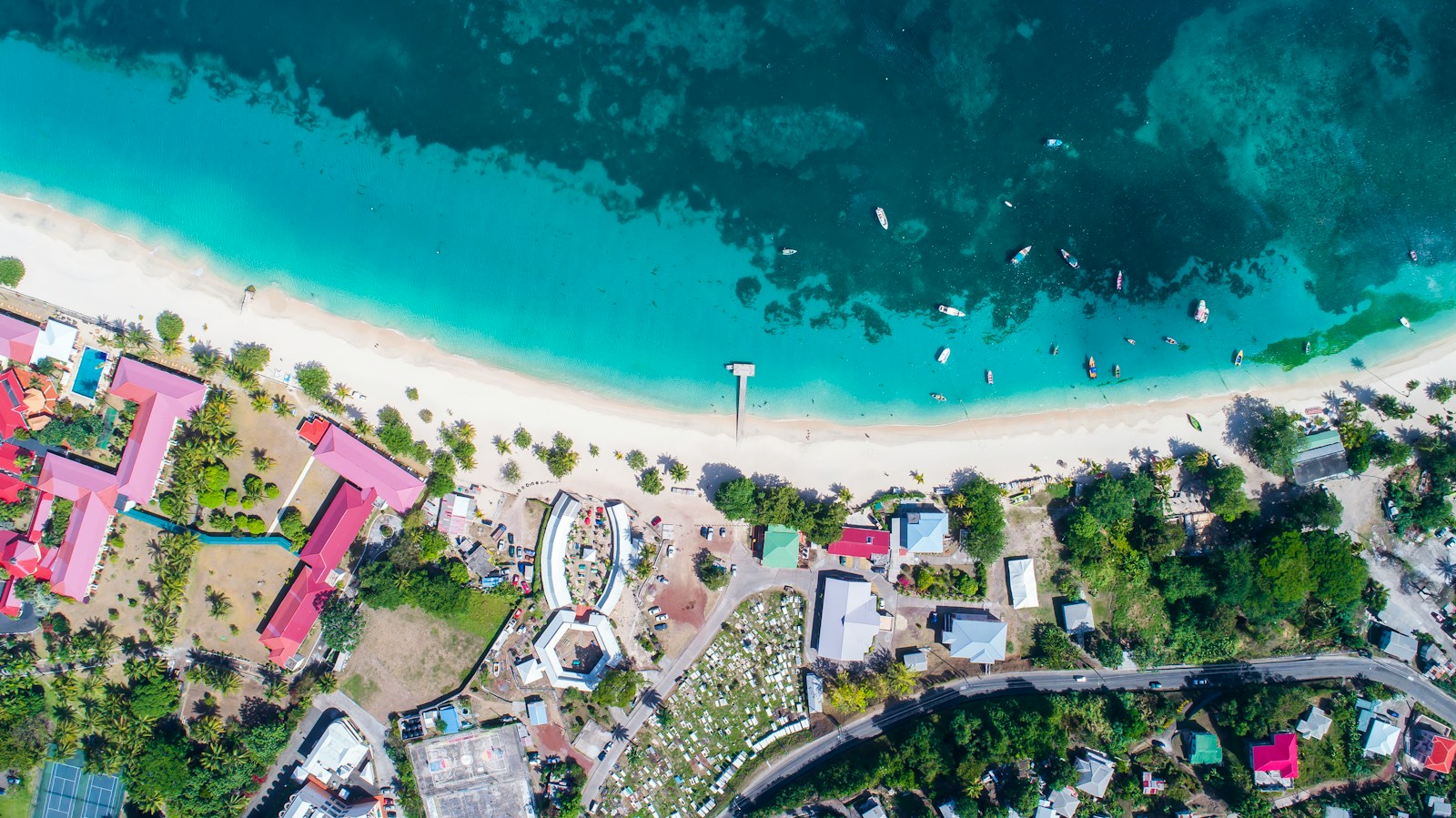
Things to do in Grenada start with Grand Anse Beach, snorkelling over the Underwater Sculpture Park and hiking to rainforest waterfalls, then move on to chocolate estates, a water powered rum distillery and the quiet sister islands of Carriacou and Petite Martinique. This guide is about Grenada in the Caribbean, the “Spice Isle” about 100 miles north of Venezuela, not Granada in southern Spain with its Alhambra palace. The two names sound alike, but they are an ocean apart.
Some links in this guide are affiliate links: if you book through them we may earn a commission at no extra cost to you. It never changes what we recommend. How we make money.
We have picked the 15 best things to do in Grenada across all three islands, with fees, ferry times and transport checked in November 2026, plus current safety advice from the UK and US governments, a costs table, getting around (you drive on the left here) and a full practical block for UK and US travellers. Prices are in Eastern Caribbean dollars (EC$), with approximate pounds and US dollars. The EC dollar is fixed at EC$2.70 to US$1, and £1 was worth about EC$3.54 when we checked.
Things to do in Grenada at a glance
| Pick | Island and area | Time needed | Cost (checked Nov 2026) |
|---|---|---|---|
| Grand Anse Beach | Grenada, southwest | Half a day | Free |
| Underwater Sculpture Park | Grenada, Molinere Bay | Half day boat trip | Tour price plus US$7 marine park fee |
| Diving the Bianca C and reefs | Grenada, south and west coast | Half a day | Dive shop prices |
| St George’s, the Carenage and Fort George | Grenada, capital | Half a day | Free to walk |
| Fort Frederick and the National Museum | St George’s | 2 to 3 hours | Small fees |
| Grand Etang National Park | Grenada, interior | 2 to 4 hours | EC$5.34 (about £1.50 / $2) |
| Grenada waterfalls | Grenada, interior and west | 1 to 3 hours each | EC$2.50 to EC$5 at most falls |
| Belmont Estate chocolate tour | Grenada, St Patrick | 2 to 3 hours | Book on the estate website |
| River Antoine Rum Distillery | Grenada, northeast | 1 hour | About EC$15 to EC$40 (£4 to £11 / $5.50 to $15) |
| Spice tour and Gouyave | Grenada, west coast | Half a day | Garden fees or tour price |
| Levera, Bathway Beach and the north | Grenada, northeast | Half a day | Free |
| Sailing and sunset cruises | From the south coast | Half or full day | Tour price |
| Carriacou: Paradise Beach and Sandy Island | Carriacou | 1 to 3 days | Ferry EC$80 one way (about £23 / $30) |
| Petite Martinique and the Piton | Petite Martinique | Day trip or overnight | Water taxi about EC$20 (about £6 / $7.40) |
| Spicemas carnival | Mainly St George’s | August | Free to watch |
What our Grenada video covers
From Grand Anse Beach and the Underwater Sculpture Park to rainforest waterfalls, spice markets and the Bianca C wreck, these are 20 of the best things to do in Grenada, the Spice Isle.
Jump to a chapter (21)
- 0:00 Welcome to Grenada
- 1:42 Grand Anse Beach
- 2:16 Underwater Sculpture Park
- 2:53 Concord Falls
- 3:27 St. George's
- 3:55 Spice market
- 4:22 Belmont Estate
- 4:52 River Antoine Rum Distillery
- 5:21 Seven Sisters Falls
- 5:52 Tree-to-bar chocolate factory
- 6:13 Friday Fish Fry
- 6:45 Waterfall stop
- 7:10 La Sagesse
- 7:33 Fort George
- 7:59 Grenada National Museum
- 8:22 Carriacou
- 8:47 Diving the Bianca C
- 9:16 Mangrove lagoons
- 9:38 Levera Beach
- 10:02 Dodgy Dock
- 10:23 Grenadian food and oil down
How to choose what to do in Grenada
Grenada is small. The main island is about 133 square miles, and you can drive from St George’s in the southwest to the far northeast in well under two hours, although the roads are steep and winding. Most visitors stay on the southwest coast around Grand Anse, Morne Rouge, True Blue and Lance aux Epines, which puts the beaches, the Sculpture Park boats and the airport within 20 minutes.
With three or four days, combine a beach day, a snorkel trip to the Sculpture Park, an afternoon in St George’s and one island tour that takes in Grand Etang, a waterfall, Belmont Estate and River Antoine. With a week, which Lonely Planet’s Grenada based writer recommends as a minimum, add two or three nights on Carriacou. Petite Martinique works as a day trip from Carriacou or a quiet overnight stop.
The best places to visit in Grenada split into two styles. The calm Caribbean west and south coasts have the swimming beaches, dive sites and nightlife. The wilder Atlantic east and north have the estates, the rum distillery, turtle beaches and rougher surf. Plan one full day on each side.
Is it safe to visit Grenada?
Yes, for most visitors, if you take normal precautions. When we checked in November 2026, the UK Foreign, Commonwealth and Development Office (FCDO) did not advise against travel to any part of Grenada, Carriacou or Petite Martinique. The US State Department rates Grenada Level 2, “exercise increased caution”, because of crime. Neither government names specific areas to avoid.
The FCDO travel advice for Grenada (last updated 10 December 2025 and marked still current on 26 November 2026) says most crime is opportunistic: theft from unattended bags, cars and villas. It adds that violent crimes, including armed robbery and sexual assault, happen occasionally. Its advice is to secure your accommodation, avoid isolated areas and beaches after dark, use only licensed taxis and keep cash, jewellery and documents in a hotel safe.
The US State Department advisory for Grenada was issued on 5 January 2026 at Level 2. It says violent crime can occur anywhere in Grenada and that police response times are slower than in the US. The warning covers the whole country rather than particular districts.
Two other points from the FCDO are worth knowing. Hurricane Beryl hit Carriacou and Petite Martinique in July 2024 and tourist infrastructure there is still reduced while rebuilding continues, so confirm your accommodation and boat transfers before you go. And Kick ’em Jenny, an active underwater volcano about 5 miles off the north coast, has an alert level and maritime exclusion zone that sailing trips must respect.
1. Grand Anse Beach
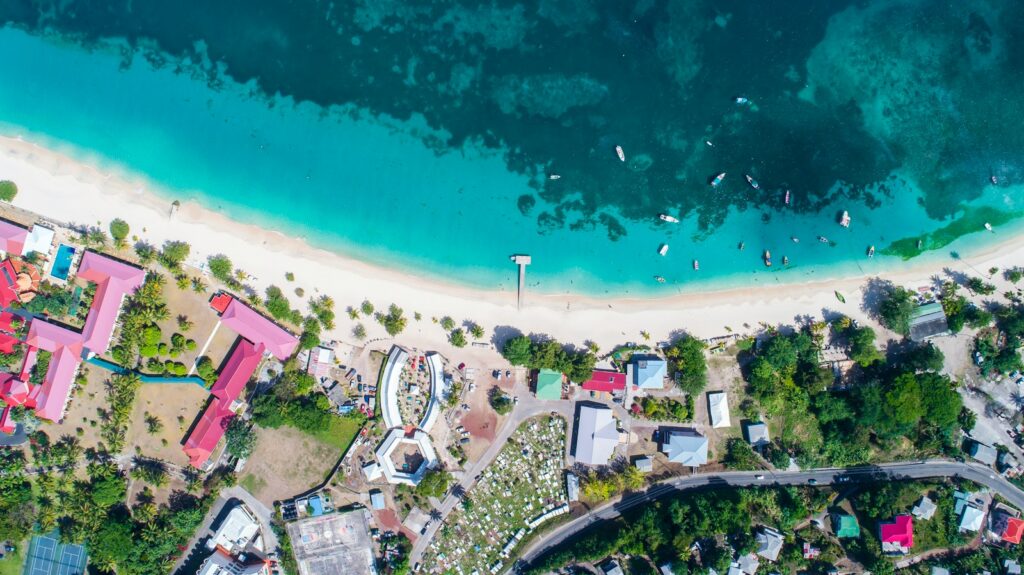
Grand Anse Beach is the reason many people book Grenada. It is a long, gently curving strip of pale sand on a sheltered bay south of St George’s, with calm, clear water, views across to the capital and a string of hotels, beach bars and craft stalls set back under the trees. It is public, free and rarely feels crowded outside cruise ship days.
Walk to the northern end for the quietest sand, or go round the headland to Morne Rouge Beach (often called BBC Beach), a smaller, calmer cove that is a favourite for swimming at sunset. Both beaches are on the Caribbean side, so the sea is usually flat enough for children and weak swimmers.
- Getting there without a tour: minibus Route 1 runs between the St George’s bus terminal and Grand Anse for a few EC dollars. A taxi from the airport costs about EC$40 (about £11 / $15) under the airport taxi zone fares.
- With a tour: many island tours finish with an hour on Grand Anse, and boat trips to the Sculpture Park leave from here.
- Time needed: half a day, or a whole lazy day.
- Cost: free. Loungers and umbrellas are usually rented by hotels and beach bars.
2. Snorkel the Underwater Sculpture Park in Grenada
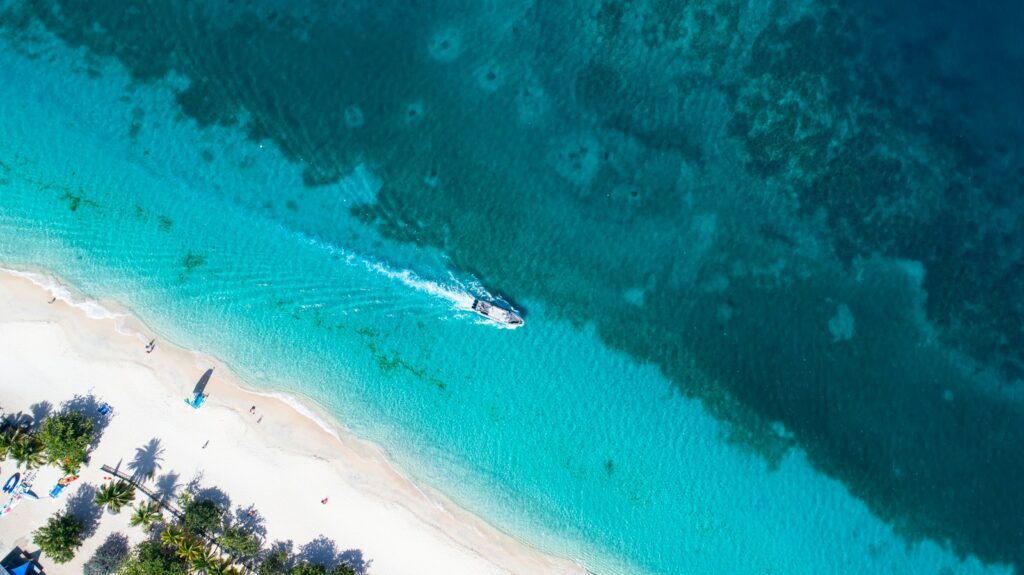
The Underwater Sculpture Park in Grenada lies in Molinere Bay, a short boat ride north of St George’s. The first works were placed in 2006 by the British sculptor Jason deCaires Taylor, and the park now holds nearly 100 pieces by him and local artists, slowly turning into an artificial reef as coral and sponges grow over them. The best known piece is a ring of figures holding hands on the seabed.
Many sculptures sit in shallow water, so you can see them clearly with a mask and snorkel and no diving experience. Divers get closer to the deeper pieces. Go on a calm morning for the clearest water.
Grenada now charges a conservation fee for the Molinere and Beausejour Marine Protected Area. According to the Grenada Tourism Authority fee notice, it rose from US$3.50 to US$7 (about EC$18.90 / £5.30) per person per visit on 1 October 2026 and is due to rise to US$10 on 1 October 2027. The same notice lists separate snorkel and dive fees of US$10 (EC$27) per person per day. Tour operators often include these, so ask what your price covers.
- With a tour: snorkel trips and dive boats leave from Grand Anse and the south coast marinas, usually as a half day.
- Without a tour: you cannot reach the sculptures on foot. A water taxi skipper can take you, but a licensed operator is safer and knows where each piece is.
- Time needed: two to three hours including the boat ride.
- Tips: wear reef safe sun cream and never stand on or touch the sculptures.
3. Dive the Bianca C and Grenada’s reefs
Grenada is one of the better diving islands in the southern Caribbean, and most sites are within about 15 minutes by boat of Grand Anse. Reefs and walls line the south and west coasts, with drift dives where the currents sweep along the shore.
The headline dive is the Bianca C, a cruise liner that caught fire and sank off St George’s in 1961. Audley Travel calls it “the largest shipwreck in the Caribbean”. It lies deep, so it is for experienced, advanced certified divers on a guided dive. Newer divers can start at the Sculpture Park and shallow reefs nearby.
- How to go: book with a PADI dive centre on the southwest coast. Lonely Planet’s guide names Eco Dive, Aquanauts Grenada and Dive Grenada.
- Cost: prices vary by shop. VAT on dive operations is 10% and must be included in the price you are quoted, under Grenada’s VAT rules, but the marine park fees above may be added on top.
- Time needed: a half day for a two tank dive.
4. St George’s, the Carenage and Fort George
St George’s is one of the prettiest small capitals in the Caribbean: red roofed houses climbing steep hills around a deep horseshoe harbour called the Carenage, where fishing boats and water taxis tie up along the waterfront. Walk the Carenage, then climb the streets to the churches and lanes above.
Fort George, built by the French in the early 18th century on the headland at the harbour mouth, gives the classic view over the Carenage and the town. Market Square, in the centre, is busiest on Saturday mornings, when stalls sell nutmeg, cinnamon, cocoa, vanilla essence and fresh fruit. It is the easiest place to buy spices to take home.
- Getting there: minibuses from Grand Anse run into the St George’s bus terminal. A taxi from the airport is about EC$50 (about £14 / $18.50) under the airport taxi zone fares.
- With a tour: walking tours and island tours usually include Fort George and the market.
- Time needed: half a day.
- Cost: free to walk around. Bring small EC notes for the market.
5. Fort Frederick and the Grenada National Museum
For Grenada’s history, head to Fort Frederick on Richmond Hill above St George’s. It was built by the French after they took the island back from Britain in 1779, facing inland rather than out to sea, and its walls give a sweeping view over the town, the harbour and the south coast. It also overlooks Fort Matthew, another ruined fort on the same ridge.
Down in town, the Grenada National Museum on Young Street covers the first Kalinago inhabitants, European colonisation, slavery and the plantation economy, independence in 1974, the 1979 revolution and the killing of Prime Minister Maurice Bishop in 1983. It is small, but it explains a lot about the island you are visiting. The Grenada Tourism Authority describes the entry fee as a token one.
- Getting there: Fort Frederick is a steep walk or short taxi ride from the centre. The museum is a short walk from the Carenage.
- Time needed: two to three hours for both.
- Cost: small entry fees at each, payable in cash.
6. Grand Etang National Park and Lake
Grand Etang National Park covers the rainforest in the mountains in the middle of the island. The road from St George’s to Grenville climbs through it, past the visitor centre and Grand Etang Lake, a crater lake of about 36 acres surrounded by forest. Mona monkeys often wait near the visitor centre, and the forest is full of birds, frogs and lizards.
Trails range from a 15 minute loop to a full day. The popular Mount Qua Qua trail is about 3 km (1.9 miles) each way with around 250 m (820 ft) of climbing, and takes two to three hours there and back. It is muddy after rain, so wear shoes with grip. Serious hikers can tackle Mount St Catherine, the island’s highest point at about 840 m (2,756 ft), with a local guide.
- Getting there without a tour: the minibus between St George’s and Grenville passes the visitor centre. Driving takes about 30 minutes from St George’s.
- With a tour: most island tours stop here, often with Annandale Falls on the way.
- Time needed: one hour for the lake and viewpoint, three to four for a proper hike.
- Cost: EC$5.34 (about £1.50 / $2), paid at the visitor centre, which covers the trails.
7. Grenada waterfalls: Seven Sisters, Annandale, Concord and Mount Carmel
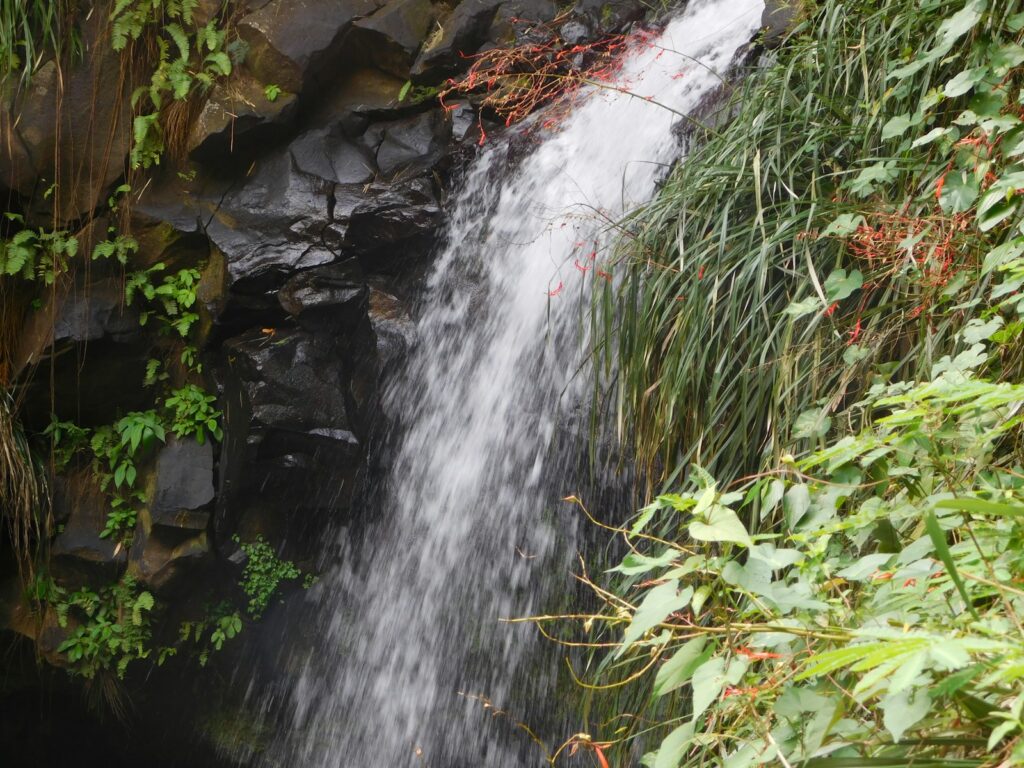
Grenada waterfalls are one of the island’s best free or cheap pleasures, and each has a different character. Most have small entry fees collected by the landowner or a local group, so carry EC coins and small notes.
- Seven Sisters: a series of falls deep in the rainforest near Grand Etang. The walk to the first fall takes about 40 minutes on a muddy, steep path. Entry was EC$5 (about £1.40 / $1.85) at the Grenada Highwire booth, and local guides wait at the gate.
- Annandale Falls: the easiest to reach, just off the road between St George’s and Grand Etang, with a pool at the bottom and a short paved path. It is on most tour routes, so it can be busy when cruise ships are in.
- Concord Falls: on the west coast inland from the village of Concord, with a road almost to the first fall. Entry was EC$2.50 (about £0.70 / $0.90). A trail of about 45 minutes continues to a second fall, Au Coin.
- Mount Carmel Falls: near Grenville on the east side, often called the highest falls on the island. The walk takes under 30 minutes and you pay the landowning family in cash.
The trails are slippery and rivers rise quickly after heavy rain, so skip the gorge walks in a downpour. Fees are as reported in a June 2026 hiking guide, so check at the gate.
8. Belmont Estate: the best Grenada chocolate tour
Belmont Estate in St Patrick, in the northeast, is a working estate of about 300 years that now runs as an organic farm and agritourism centre. It is the best place for a Grenada chocolate tour, because you see cacao growing, the beans fermenting and drying in the sun, and how they become chocolate. The estate also tells the history of enslavement and indentured labour on the plantation, which many estate tours elsewhere skip.
The estate offers several guided experiences, including a classic estate tour of about an hour, a tree to bar chocolate experience, an organic farm tour and a goat dairy tour. Its restaurant serves a Grenadian lunch made with estate and local produce, which makes this a natural lunch stop on a northern island tour. Prices are not published by the tourism board, so check and book on the estate’s own website.
If you want to make your own bar, Lonely Planet lists a chocolate making session at Tri Island from EC$124.50 (about £35 / $46). The island also hosts the Grenada Chocolate Festival each May, centred on True Blue Bay Resort.
- Getting there without a tour: by hire car, about an hour from St George’s. By bus it means changing in Grenville.
- With a tour: northern island tours combine Belmont, River Antoine and Grand Etang in one day.
- Time needed: two to three hours with lunch.
9. River Antoine Rum Distillery
River Antoine Rum Distillery near La Poterie in the northeast has been making rum since 1785, and a water wheel still drives the machinery that crushes the sugar cane. It is often described as the oldest water powered distillery in the Caribbean, and it feels like a working museum: cane is crushed, the juice is boiled in open coppers over fires and the rum is bottled by hand.
The tour is short and the tasting is strong. A June 2026 guide reported tours of 30 to 45 minutes, Monday to Friday from 9am to 5pm, with the machinery stopping for lunch from noon to 1.30pm, so arrive in the morning or mid afternoon to see it working. Fees were about EC$15 to EC$40 (about £4 to £11 / $5.50 to $15) depending on the tasting, in cash.
The standard rum is around 75% alcohol, and rum above 70% is not allowed in checked or cabin luggage on flights. Buy the lower strength bottle (about 69%) if you want to take one home, and pack it in your hold bag.
For a more modern distillery, Clarke’s Court near the south coast and Westerhall Estate in St David both offer tastings closer to the resorts.
10. A spice tour of the Spice Isle
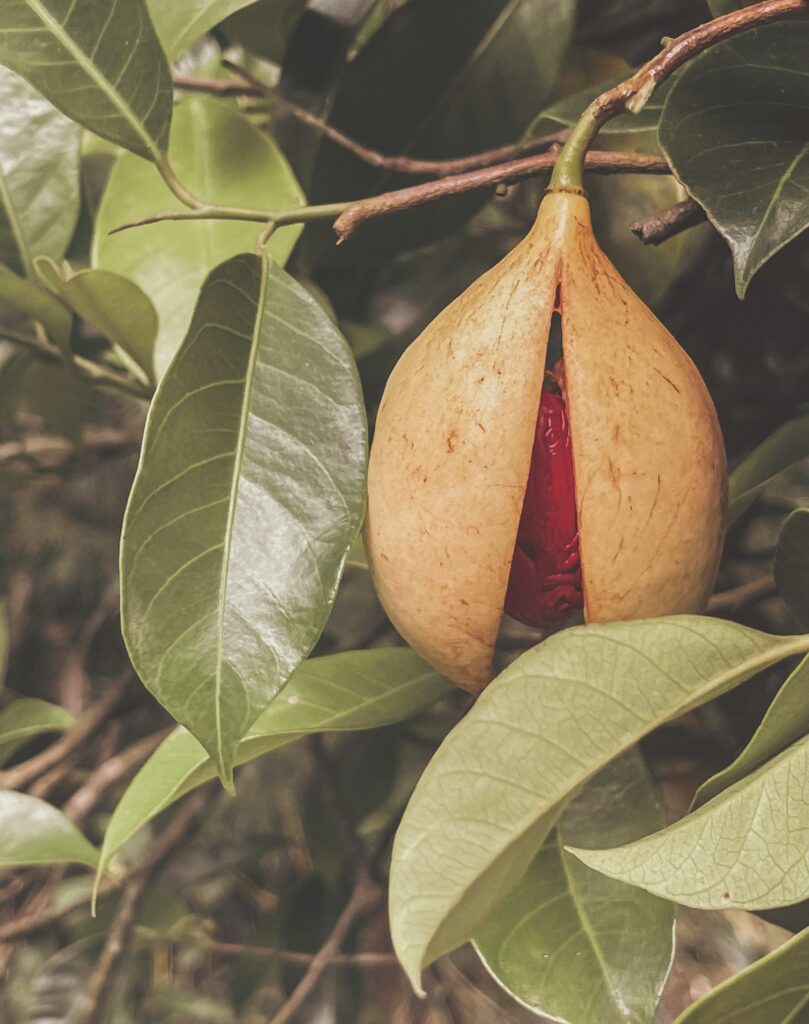
Grenada’s nickname comes from its spices: nutmeg and mace above all, plus cinnamon, cloves, bay leaf, ginger and turmeric. Nutmeg is even on the national flag. A spice tour shows you how they grow and how they are processed, and it is one of the most distinctive things to do in Grenada.
Good stops include the nutmeg processing station in Gouyave on the west coast, where nutmegs are sorted and dried, Dougaldston Estate near Gouyave, and the Laura Herb and Spice Garden in the south, where guides show you the plants up close. Many island tours add a stop at a roadside spice stall, and Market Square in St George’s is the best place to buy.
If you are on the west coast on a Friday, Gouyave’s weekly fish fry turns the main street into an open air seafood market in the evening. Check with your hotel that it is running before you make the drive.
- Getting there: Gouyave is about 30 minutes north of St George’s by car or by minibus along the west coast road.
- Time needed: half a day.
- Cost: small fees at gardens and processing stations, or included in a tour.
11. Levera National Park, Bathway Beach and the far north
The northeast tip of Grenada feels a world away from Grand Anse. Levera National Park protects mangrove lagoons, a long Atlantic beach and offshore islets, and from March to July endangered leatherback turtles come ashore to nest. Nesting beaches are protected, so join an organised turtle watch rather than walking the beach at night on your own.
Bathway Beach, next to Levera, has a reef just offshore that creates a calmer pool for paddling, while the open Atlantic beyond it is rough. Nearby, the abandoned Pearls Airport, closed in 1984, still has old aircraft rusting by the runway. On the north coast at Sauteurs, Leapers Hill marks the place where the Kalinago people are said to have leapt from the cliff in 1651 rather than surrender to the French.
- Getting there: about 90 minutes from St George’s by car. Combine with Belmont Estate and River Antoine for a full day.
- Time needed: half a day.
- Cost: free. Turtle watches charge a fee.
12. Sail, take a catamaran day or a sunset cruise
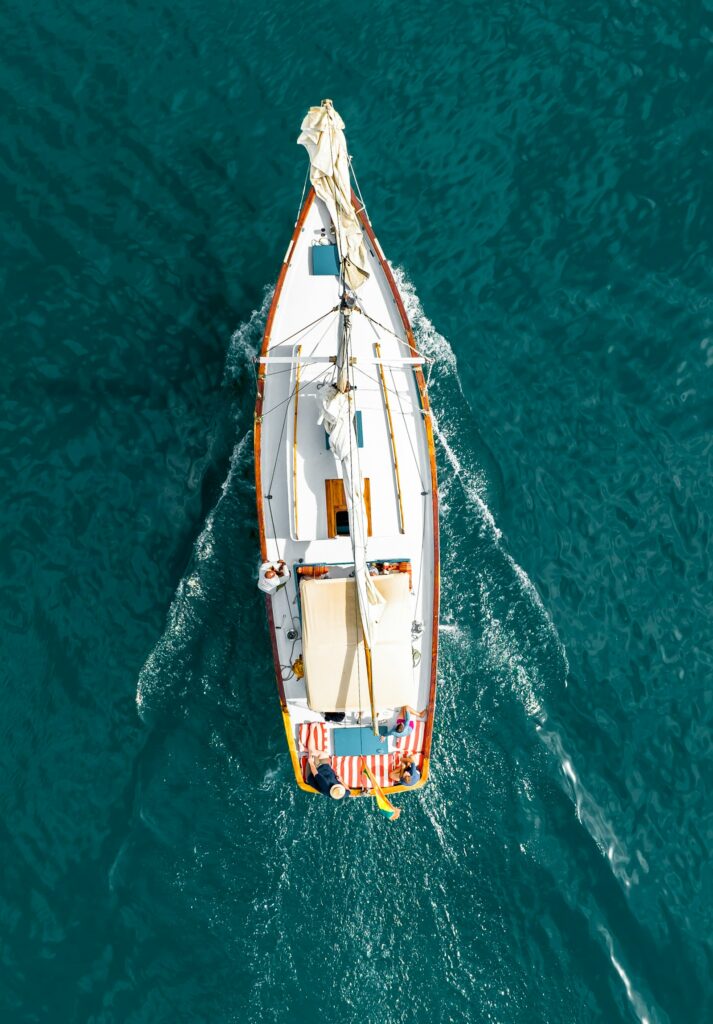
Grenada is a yachting island, and sailing is the easiest way to see the coast. Catamaran days usually include the Sculpture Park, a beach stop and lunch, while shorter sunset cruises leave from the south coast marinas. The peak sailing season is broadly the dry months, and Pure Grenada Sailing Week fills the harbours in January.
Families and people who get seasick should pick a calm west coast route. Experienced sailors can charter a yacht and island hop north through the Grenadines via Carriacou.
13. Carriacou: Paradise Beach, Sandy Island and island life
Carriacou, about 13 square miles with just over 9,000 people, is Grenada as it was before big hotels: no resorts, small guesthouses, a sleepy main town at Hillsborough and some of the best beaches in the region. It is the best choice in this guide for a slower few days.
Paradise Beach and Anse La Roche were cleared of storm debris after Hurricane Beryl and are good for swimming and snorkelling again, according to a June 2026 travel guide. Sandy Island, a tiny sandbar with a few palms off Hillsborough, is reached by water taxi from Hillsborough or Paradise Beach for snorkelling and a barefoot afternoon. On the east coast at Windward, families still build wooden sloops by hand on the beach. This boatbuilding tradition on Carriacou and Petite Martinique was added to UNESCO’s list of intangible cultural heritage in 2023.
Beryl hit Carriacou hard on 1 July 2024. Most visitor services had reopened by early 2025, but some guesthouses and resorts were still rebuilding, so check that your accommodation is open before you book. The FCDO notes that tourist infrastructure on Carriacou is still reduced.
How to get to Carriacou:
- By ferry: Osprey Lines sails from St George’s to Tyrell Bay, Carriacou, in about 90 minutes. Reported times were 9am and 5pm Monday to Friday and 9am on Saturday from St George’s, and 6am and 5pm Monday to Friday and 5pm on Saturday from Carriacou, with no Sunday sailings. The adult fare was EC$80 (about £23 / $30) one way, paid in cash at the dock. Boats often leave 20 to 40 minutes late.
- Other boats: the Dolly C and the Tyrell Bay Express also sail on some days; check locally for times.
- By air: SVG Air flies from Maurice Bishop International Airport to Lauriston Airport, Carriacou, in about 20 minutes, in small planes of 8 to 10 seats. A June 2026 guide put fares at about US$100 (about EC$270 / £76) one way.
14. Petite Martinique and the Piton
Petite Martinique, under one square mile, is the smallest of Grenada’s three inhabited islands and the least visited. Life revolves around fishing and boatbuilding, and on launch days the whole island turns out to see a new boat go into the water. There is little to do but walk, swim and talk, which is exactly the appeal.
The main walk is up the Piton, the island’s volcanic peak at about 230 m (756 ft). The lower path is gentle and the last stretch is steep and rocky, so wear proper shoes and take water. The calm northwest shore is good for snorkelling, but there is nowhere to rent gear, so bring your own mask and fins.
- Getting there: water taxis run from Windward on Carriacou in about 20 minutes for about EC$20 (about £6 / $7.40) one way, and Osprey Lines runs an onward service from Hillsborough. Agree the fare and return pickup time with the skipper first.
- Time needed: a day trip from Carriacou, or one night.
- Note: Beryl damaged the island in 2024, so confirm where you will stay before travelling.
15. Spicemas 2027: Grenada’s carnival
Spicemas is Grenada’s carnival and the island’s biggest party, building up through July and peaking in the second week of August with calypso and soca competitions, steel pan and street parades. Its most famous tradition is J’ouvert, when “jab jab” revellers cover themselves in black oil or paint before dawn and dance through St George’s.
The official Spicemas Grenada website lists these dates for 2027:
| Event | Date in 2027 |
|---|---|
| National Carnival Queen Pageant | Thursday 5 August |
| Soca Monarch | Friday 6 August |
| Panorama (steel pan) | Saturday 7 August |
| Dimanche Gras | Sunday 8 August |
| J’ouvert and Monday Night Mas | Monday 9 August |
| Fancy Mas parade (Tuesday Mas) | Tuesday 10 August |
Carnival Monday and Tuesday are public holidays, so banks and many shops close. Hotels around St George’s and Grand Anse fill up months ahead, so book early if you want to go. Wear old clothes you can throw away for J’ouvert.
Carriacou holds its own carnival in the five days before Lent, with Shakespeare Mas, where costumed men compete by reciting Shakespeare at crossroads, and an annual regatta of wooden sloops.
What to skip or treat with care
- Walking the Grand Anse road at night: the roads are dark in places and have little pavement. Take a taxi back after dinner.
- Waterfalls after heavy rain: the gorge trails at Seven Sisters and the upper Concord trail become dangerous when rivers rise.
- Swimming off the Atlantic coast: beaches in the east and north can have strong surf and currents. Swim where locals swim, or stay in Bathway’s sheltered pool.
- Carrying the strongest rum home: bottles above 70% alcohol will be taken off you at the airport.
- Overpacking a day trip to Carriacou: a same day return by ferry gives you only a few hours. Stay at least one night.
Grenada costs: what things cost in November 2026
All prices are as reported in November 2026 unless noted, in EC dollars with approximate pounds and US dollars. US dollars are widely accepted in tourist areas, but change comes in EC dollars.
| Item | EC$ | Approx £ | Approx $ |
|---|---|---|---|
| Minibus fare | EC$2.50 to EC$6.50 | £0.70 to £1.85 | $0.90 to $2.40 |
| Taxi, airport to Grand Anse | About EC$40 | £11 | $15 |
| Taxi, airport to St George’s | About EC$50 | £14 | $18.50 |
| Temporary driving permit | EC$60 | £17 | $22 |
| Car hire per day | EC$135 to EC$200 | £38 to £57 | $50 to $75 |
| Grand Etang National Park | EC$5.34 | £1.50 | $2 |
| Seven Sisters falls | EC$5 | £1.40 | $1.85 |
| Concord Falls | EC$2.50 | £0.70 | $0.90 |
| Marine park fee (from 1 Oct 2026) | EC$18.90 | £5.30 | $7 |
| Snorkel or dive fee, per day | EC$27 | £7.60 | $10 |
| River Antoine tour and tasting | EC$15 to EC$40 | £4 to £11 | $5.50 to $15 |
| Ferry to Carriacou, one way | EC$80 | £23 | $30 |
| Flight to Carriacou, one way | About EC$270 | £76 | $100 |
| Water taxi Carriacou to Petite Martinique | About EC$20 | £6 | $7.40 |
| Rum punch | EC$13.50 to EC$19 | £3.80 to £5.40 | $5 to $7 |
| Restaurant meal | EC$45 to EC$135 | £13 to £38 | $17 to $50 |
Sources: airport taxi zone fares from the Grenada Tourism Authority, MPA fees from the Grenada Tourism Authority, park and trail fees and ferry fares from 2026 travel guides, and food and drink prices from Lonely Planet (October 2025). Fees change, so check on arrival.
Getting around Grenada
Grenada’s minibuses are cheap, frequent and an experience in themselves. Taxis are fine for short trips and the airport. A hire car gives the most freedom for the north and east, as long as you are happy driving on the left on steep, narrow roads.
- Minibuses: privately run vans on nine numbered routes from the St George’s bus terminal, running roughly 6am to 9pm, Monday to Saturday, with limited service on Sundays. Fares are EC$2.50 to EC$6.50, paid in cash to the conductor. Route 1 links St George’s with Grand Anse. Shout or knock when you want to get off.
- Taxis: licensed taxis have plates starting with H. They do not use meters, so agree the fare and the currency (EC or US dollars) before you get in. Airport fares are set by zone.
- Water taxis: small boats run between the St George’s waterfront and Grand Anse, and on Carriacou to Sandy Island and Petite Martinique. Agree the price first.
- Hire cars: about US$50 to US$75 a day, with lower rates for longer rentals. Most agencies need drivers aged 25 or over, and in July and August some insist on a three day minimum.
Driving in Grenada: left side and the local permit
Traffic in Grenada drives on the left, as in the UK. Visitors must hold a temporary Grenadian driving permit, which costs EC$60 (about £17 / $22) and is valid for three months. Most hire desks issue it when you collect the car. Otherwise get it at the Central Police Station on the Carenage in St George’s, showing your UK or US licence. You do not normally need an International Driving Permit, although a hire company can set its own rules.
The US State Department warns that driving without the local permit can mean a fine after an accident even if it was not your fault, and that seat belts are compulsory, with fines of up to EC$1,000 (about £280 / $370). Expect potholes, speed bumps, blind bends, pedestrians on the road and minibuses overtaking fast. American drivers should take the first day slowly, especially at roundabouts.
Best time to visit Grenada and hurricane season
The best time to visit Grenada is the dry season, roughly January to May, when days are sunny, humidity is lower and the sea is at its clearest. December to April is peak season, with the highest hotel prices. May and June usually bring the lowest prices and thinnest crowds before the rains. Temperatures stay around 24C to 30C (75F to 85F) all year.
The wetter season runs from about June to December, with short, heavy tropical downpours rather than all day rain. The Atlantic hurricane season runs from 1 June to 30 November, with the highest risk from August to October. Grenada sits at the southern edge of the hurricane belt and is hit less often than islands further north, but it is not immune: Hurricane Ivan devastated the main island in 2004, and Beryl struck Carriacou and Petite Martinique in July 2024.
If you travel between June and November, buy insurance that covers hurricane disruption, book flexible rates and follow the US National Hurricane Center and local news, as the FCDO advises. The main events to plan around are Pure Grenada Sailing Week in January, the Grenada Chocolate Festival in May, leatherback nesting from March to July, and Spicemas in August.
Practical tips for UK and US visitors
Entry rules for UK passport holders
British citizens do not need a visa to visit Grenada and can stay up to three months on entry. Your passport must be valid for at least six months after the date you arrive. Make sure the officer stamps your passport, because without a stamp you can be treated as an illegal visitor. A yellow fever certificate is needed only if you arrive from a country with a risk of yellow fever. There is no ETA style online form to complete, but check the FCDO entry requirements page before you fly, as rules can change.
Entry rules for US passport holders
US citizens do not need a visa for tourism and are normally admitted for three months. Your passport must be valid for six months beyond your date of entry, with at least one blank page, and you need proof of a return or onward ticket. Check the State Department’s Grenada country page before you travel.
Flights from the UK
There are no truly nonstop flights from the UK to Grenada; both airlines make a stop in Barbados on the way, and you stay on the plane.
- British Airways flies from London Gatwick. For winter 2026/27, the route runs through Barbados on the same aircraft. Published schedules show three flights a week (Wednesday, Saturday and Sunday), leaving Gatwick at 10.05 and landing in Grenada at 17.05 local time, about 11 hours in total.
- Virgin Atlantic flies from London Heathrow, not Gatwick. From 30 November 2026 to 27 March 2027 it flies on Mondays, Tuesdays and Saturdays, about 11 hours including a one hour touchdown in Barbados.
- From Manchester and other UK airports, connect through London, or fly to Barbados and take a short regional flight on to Grenada.
Flights from the US
- Miami: American Airlines flies nonstop daily, in about 4 hours.
- New York JFK: JetBlue flies nonstop daily, in about 5 hours.
- Charlotte: American Airlines runs a weekly nonstop in season, in roughly 4.5 to 5 hours.
- Atlanta: Delta runs a weekly nonstop, mainly from December to April, in roughly 4.5 to 5 hours.
- From the West Coast, Chicago and elsewhere, connect in Miami, New York, Charlotte or Atlanta.
Flights land at Maurice Bishop International Airport (GND) at Point Salines, about 15 to 20 minutes by taxi from Grand Anse. Schedules change every season, so check with the airline.
Plugs, time, money and tipping
- Plugs: Grenada uses the UK style three pin Type G socket at 230 volts. UK plugs fit directly. US visitors need an adapter, and anything that is not dual voltage also needs a converter.
- Time: Grenada is on Atlantic Standard Time (GMT minus 4) all year with no daylight saving. It is 4 hours behind London in the UK winter and 5 hours behind in summer. It is 1 hour ahead of New York in winter and the same time in summer.
- Money: the Eastern Caribbean dollar is pegged at EC$2.70 to US$1. Cards work in hotels and larger restaurants, but buses, taxis, markets, waterfalls and the Carriacou ferry are cash only.
- VAT: prices must include VAT by law. The standard rate is 15%, and hotels and dive operators charge 10%.
- Tipping: many restaurants and hotels add a service charge of 10% or more, so check the bill. If there is none, about 10% is normal, which is close to UK habits and lower than in the US. Round up taxi fares or add about 10% for a long trip, and tip tour guides and boat crews for good service.
- Emergencies: dial 911.
Our picks: the best things to do in Grenada by traveller
- First timers: Grand Anse, the Sculpture Park and a full island tour with Grand Etang, a waterfall, Belmont Estate and River Antoine.
- Couples: sunset at Morne Rouge, a catamaran day and two nights on Carriacou.
- Families: Grand Anse and Morne Rouge for calm water, Annandale Falls, the monkeys at Grand Etang and a chocolate making session.
- Divers and snorkellers: the Sculpture Park, the Bianca C for advanced divers and Sandy Island on Carriacou.
- Hikers: Mount Qua Qua, Seven Sisters and the Piton on Petite Martinique.
- Food lovers: Market Square, a spice tour, the Gouyave fish fry and lunch at Belmont Estate.
- Party lovers: Spicemas, 5 to 10 August 2027.
What our Grenada video covers
From Grand Anse and Morne Rouge beaches to Grand Etang's crater lake, the Underwater Sculpture Park and St. George's harbour, these are 40 of the best places to visit in Grenada.
Jump to a chapter (22)
- 0:00 Welcome to Grenada
- 1:12 Grand Anse Beach
- 2:05 Morne Rouge (BBC) Beach
- 2:22 La Sagesse Beach
- 2:40 More beaches, including Bathway Beach
- 2:56 Grand Etang National Park and lake
- 3:49 Annandale Falls
- 4:05 Seven Sisters Falls
- 4:25 More trails and Mount Qua Qua
- 4:41 Underwater Sculpture Park
- 5:33 Diving and the Bianca C wreck
- 6:30 Fort George
- 7:02 St. George's
- 7:36 The Carenage
- 7:53 Grenadian culture and music
- 8:09 Spice estates
- 8:44 Grenadian food and oil down
- 9:34 Rum tasting
- 9:53 Hidden gems: an uninhabited island
- 10:20 Turtle-nesting beach
- 10:58 Fishing village Friday festival
- 11:10 Historic northern village
FAQ about things to do in Grenada
What do tourists do in Grenada?
Most tourists split their time between the beach and the island’s interior. They swim at Grand Anse, snorkel or dive the Underwater Sculpture Park, hike to waterfalls in Grand Etang National Park, tour chocolate and spice estates, taste rum at River Antoine and spend a few days on Carriacou.
Is Grenada good for tourists?
Yes. Grenada is easy for English speakers, has calm swimming beaches, good diving and a lot to see inland, and it feels less built up than many Caribbean islands. National Geographic named it in its Best of the World list for 2027. It is less suited to travellers who want huge all inclusive resorts or nonstop nightlife.
When to avoid Grenada?
Avoid August to October if you want to minimise hurricane risk; these are the peak months of the season that runs from June to November. The rainy season also brings heavy showers from about June to December. If you dislike crowds and high prices, avoid Spicemas week in August and the Christmas and Easter holidays.
What is Grenada famous for?
Grenada is famous for spices, especially nutmeg, which appears on its flag and gives it the name Spice Isle. It is also known for the world’s first underwater sculpture park, Grand Anse Beach, cocoa and chocolate, the Spicemas carnival and the 1983 US led intervention after the revolution.
Is Grenada safe to visit right now?
Yes, with normal precautions. In November 2026 the UK FCDO did not advise against travel to any part of Grenada, and the US State Department rated it Level 2, exercise increased caution, because of crime. Use licensed taxis, avoid isolated beaches after dark and keep valuables in your hotel safe.
Can you swim in the ocean in Grenada?
Yes. The Caribbean beaches on the west and south coasts, such as Grand Anse and Morne Rouge, are usually calm and good for swimming. The Atlantic beaches on the east and north coasts can have strong surf and currents, so swim only in sheltered spots such as the reef protected pool at Bathway Beach.
Can you walk to a beach from Grenada cruise port?
Not easily. The cruise terminal is in St George’s, and Grand Anse Beach is a few kilometres south along a busy road. The simplest options are minibus Route 1 from the bus terminal for a few EC dollars, a short taxi ride or a water taxi from the waterfront. Agree taxi and water taxi fares first.
Is Grenada a rich or poor country?
Grenada is a small developing country rather than a rich one. The World Bank classes it as upper middle income, and its economy depends mainly on tourism, education (St George’s University brings thousands of international students) and agriculture such as nutmeg and cocoa. Visitors will see comfortable resort areas and simpler rural villages.
What’s the history of Grenada?
Grenada was home to the Kalinago (Island Caribs) when Columbus sighted it in 1498. The French settled it in the 1650s, Britain took control in 1763, France retook it in 1779 and it returned to Britain in 1783. It became independent on 7 February 1974. A revolution in 1979 brought Maurice Bishop to power; his killing in 1983 was followed by a US led military intervention.
What are 10 interesting facts about Grenada?
1. The country is three inhabited islands: Grenada, Carriacou and Petite Martinique.
2. A nutmeg appears on the national flag.
3. The Underwater Sculpture Park, started in 2006, was the first of its kind.
4. River Antoine has used water power to make rum since 1785.
5. Grand Etang Lake fills an old volcanic crater.
6. Mona monkeys in the rainforest descend from monkeys brought from West Africa centuries ago.
7. Kick ’em Jenny, off the north coast, is an active underwater volcano.
8. Wooden boatbuilding on Carriacou and Petite Martinique is on UNESCO’s intangible heritage list.
9. The old Pearls Airport, closed in 1984, still has aircraft by the runway.
10. Spicemas jab jab revellers cover themselves in black oil at J’ouvert.
What to bring back from Grenada?
The best souvenirs are spices: whole nutmeg with mace, cinnamon, cloves and cocoa sticks for cocoa tea, plus nutmeg jam and local hot sauce. Local chocolate from Belmont Estate and Grenada’s small chocolate makers is excellent. If you buy rum, choose a bottle under 70% alcohol and pack it in checked luggage, and check your home country’s customs allowances.
How do you say “hi” in Grenada?
English is the official language, so “hi” and “hello” work everywhere. Grenadians also use a friendly local Creole English in everyday speech. It is polite to greet people with “good morning”, “good afternoon” or “good night” (used as a greeting in the evening) before asking a question or buying something.
Is Grenada the same as Granada in Spain?
No. Grenada is an independent island nation in the southeastern Caribbean, north of Trinidad and Venezuela. Granada is a city in Andalusia, southern Spain, famous for the Alhambra. The spelling differs by one letter, so check which one you are booking.
How many days do you need in Grenada?
Three or four days covers the highlights of the main island: Grand Anse, the Sculpture Park, St George’s and one island tour. A week lets you add two or three nights on Carriacou and a day trip to Petite Martinique at an easy pace.
Plan the rest of your trip
Grenada pairs well with a few days in a US gateway city on the way. If you fly with American Airlines, spend some time with our guide to things to do in Miami, or if you fly with JetBlue, add a stopover using things to do in New York. For more Caribbean sun, compare Grenada’s quiet beaches with the resorts and cenotes in things to do in Cancun, or the colourful walled city covered in things to do in Cartagena. You can also browse all our Grenada travel guides.
Whichever of these things to do in Grenada you choose, leave time to do very little on Grand Anse or Paradise Beach. That slow pace is the island’s best feature.