
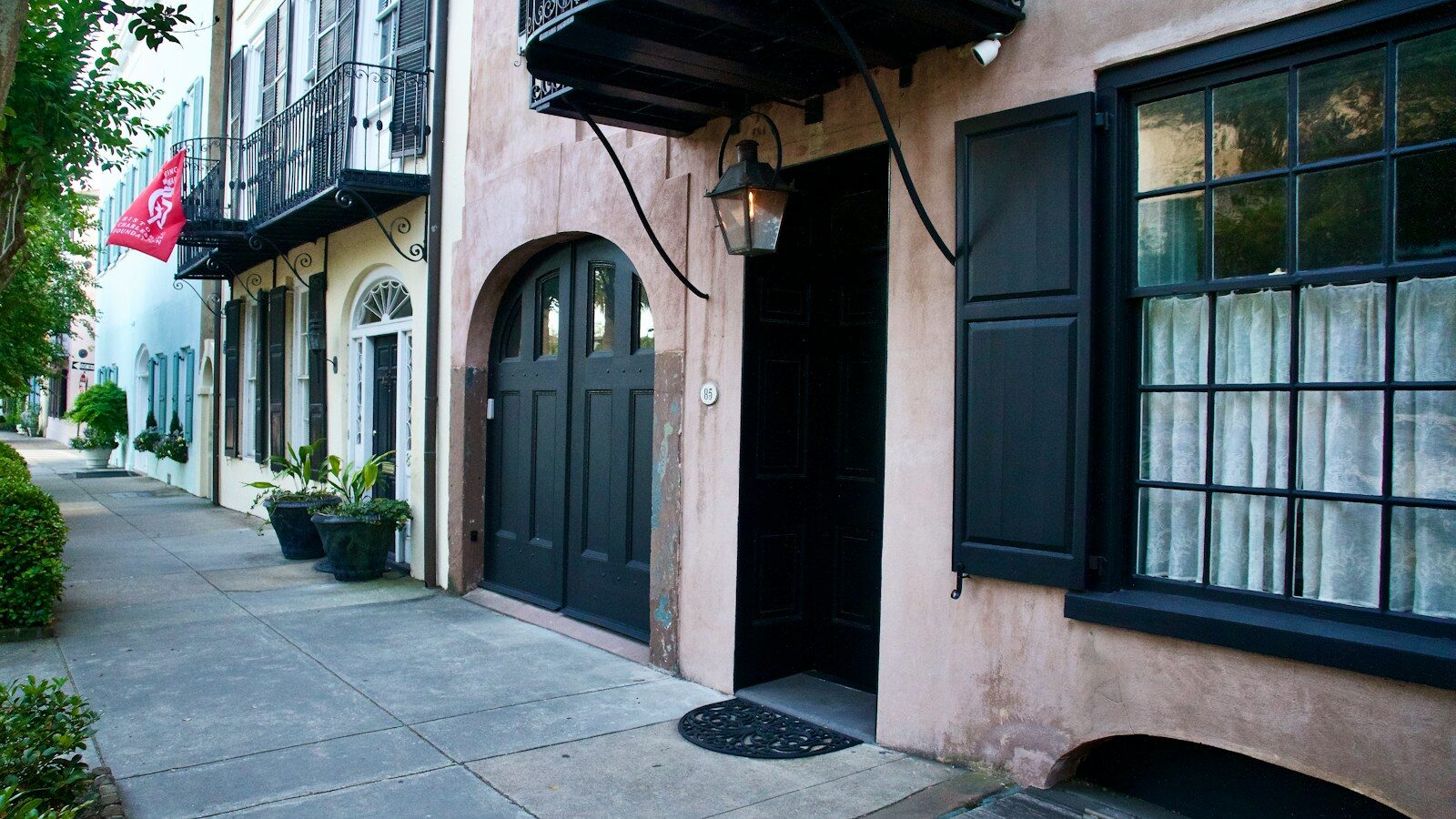
Things to do in Charleston, South Carolina, begin with simply walking: pastel Rainbow Row, the mansions along the Battery, church steeples and hidden gardens fill a historic district small enough to cross on foot in half an hour. This guide is about Charleston in South Carolina, the port city on the Atlantic coast of the American South, not Charleston in West Virginia or the small town of the same name in New Zealand. Add Fort Sumter, where the American Civil War began, a world class museum of African American history, Lowcountry food, plantation sites that now tell the story of the people enslaved there, and beaches 20 minutes from downtown, and three to four days goes quickly.
Some links in this guide are affiliate links: if you book through them we may earn a commission at no extra cost to you. It never changes what we recommend. How we make money.
We have picked the 20 best things to do in Charleston, with prices and opening days checked in November 2026, how to reach each one with or without a tour, free things to do, ideas for nights and winter, day trips, the best beaches near Charleston and a practical block for UK and US visitors. Prices are in US dollars with approximate pounds sterling at about £0.76 to the dollar.
Things to do in Charleston at a glance
| Attraction | Area | Time needed | Price (checked Nov 2026) |
|---|---|---|---|
| Historic district, Rainbow Row and the Battery | Downtown peninsula | Half a day | Free |
| Waterfront Park and Pineapple Fountain | Downtown | 30 to 60 minutes | Free |
| Fort Sumter by ferry | Harbour (from Liberty Square) | About 2.5 hours | $43 adult (about £33) |
| International African American Museum | Downtown (Gadsden’s Wharf) | 2 to 3 hours | About $20 adult (about £15), timed entry |
| Old Slave Mart Museum | Downtown (Chalmers Street) | 45 to 60 minutes | $8 (about £6) |
| McLeod Plantation Historic Site | James Island | 2 hours | $20 (about £15) |
| Magnolia Plantation and Gardens | Ashley River Road | Half a day | About $35 (about £27) |
| Middleton Place | Ashley River Road | Half a day | $29 online (about £22) |
| Drayton Hall | Ashley River Road | 2 hours | $30 online (about £23) |
| Boone Hall Plantation | Mount Pleasant | 3 hours | $30 (about £23) |
| Old Exchange and Provost Dungeon | Downtown (East Bay Street) | 1 hour | $16 (about £12) |
| Patriots Point | Mount Pleasant | 3 hours | $28 online (about £21) |
| South Carolina Aquarium | Downtown | 1.5 to 2 hours | About $29 to $35 (about £22 to £27) |
| Charles Towne Landing | West Ashley | 2 to 3 hours | $12 (about £9) |
| Angel Oak | Johns Island | 30 to 45 minutes | Free |
How to choose what to do in Charleston
If you only have one or two days, stay on the peninsula: walk the historic district, take the ferry to Fort Sumter and give the International African American Museum a full morning. With three days, add one plantation site on Ashley River Road or McLeod Plantation on James Island, plus an evening on King Street. With four or more, add a beach, the Angel Oak and a day trip to Savannah or Beaufort.
Charleston is very compact. Most sights in the first section of this list are within a 25 minute walk of each other, and CARTA runs a free DASH shuttle around the downtown peninsula. The plantations, beaches and the Angel Oak are 20 to 45 minutes away by car, so a hire car for one or two days, or a tour with transport, makes sense for those.
Check opening days before you plan. Several of the best sites close one day a week: McLeod Plantation and the International African American Museum close on Mondays, Drayton Hall closes on Tuesdays and the Old Slave Mart Museum closes on Sundays. Many attractions also close on Thanksgiving and Christmas Day.
1. Walk the historic district, Rainbow Row and the Battery
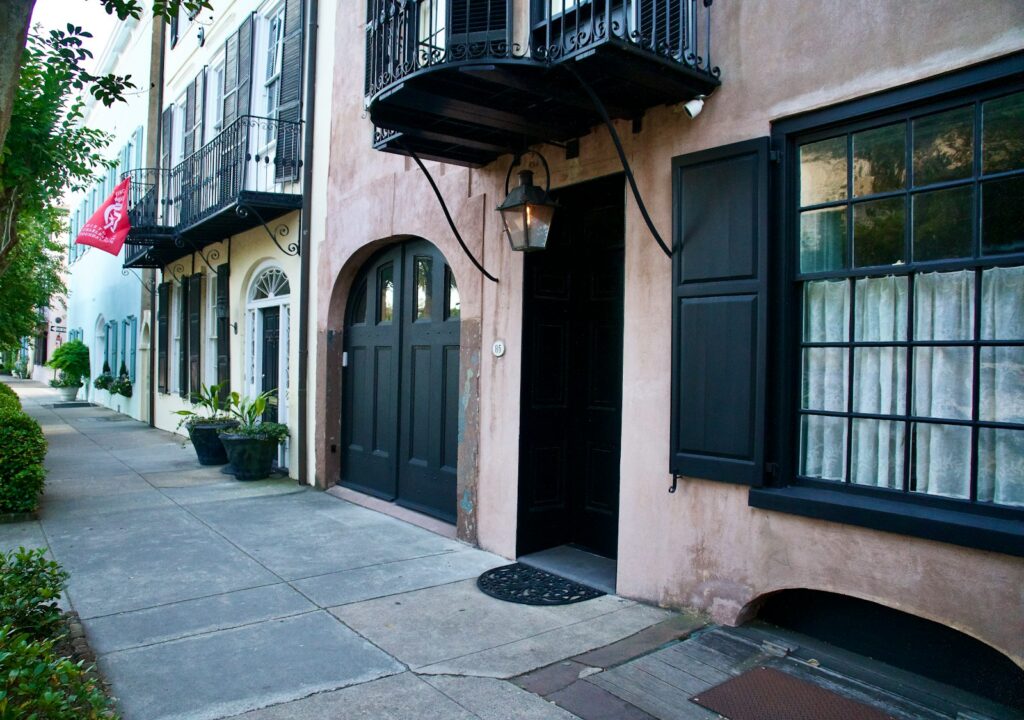
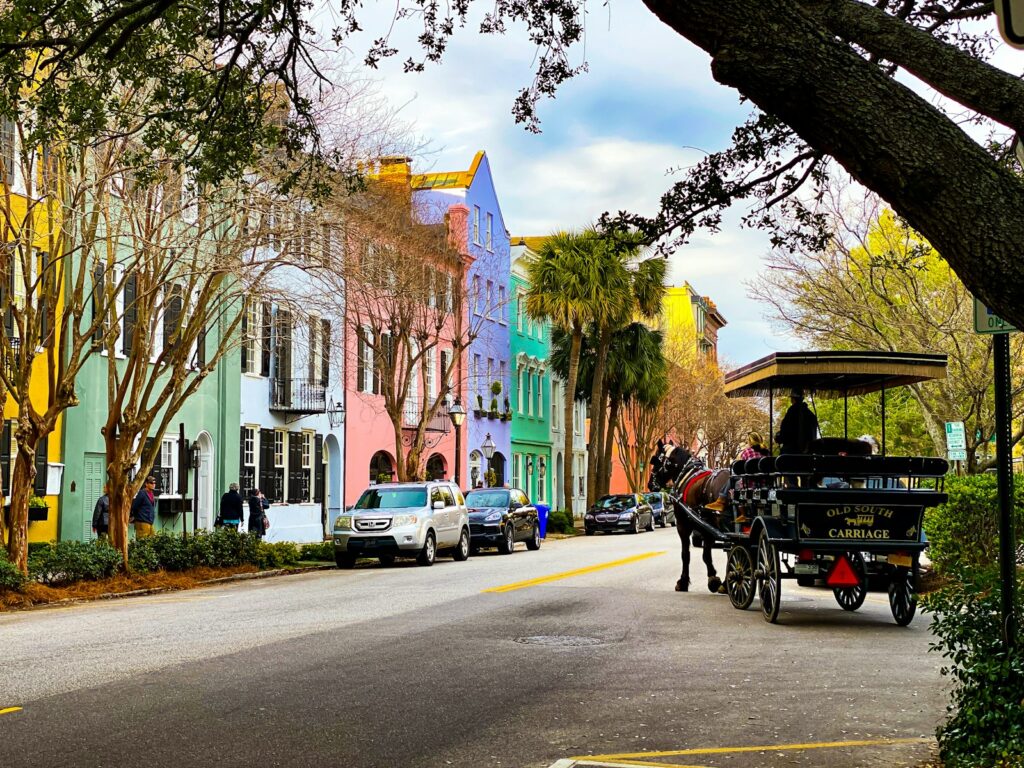
The single best thing to do in Charleston is free: a slow walk through the streets south of Broad Street. Start at Rainbow Row, a run of 13 pastel painted houses on East Bay Street, then walk south to the Battery, the seawall promenade lined with grand antebellum mansions, and White Point Garden at the tip of the peninsula, shaded by live oaks and dotted with cannons and monuments.
From there, wander the side streets: Church Street and its cobbles, Tradd Street, Legare Street and the narrow passages known as Philadelphia Alley and Longitude Lane. Look for the single houses, a Charleston style that turns its narrow end to the street with long side porches (piazzas, in local speech) facing the breeze. St Michael’s Church on Meeting Street and St Philip’s Church on Church Street give the city its nickname, the Holy City.
- Getting there: everything is walkable from the King Street and Market area hotels. The free DASH shuttle covers the peninsula.
- With a tour: a guided walking tour of about two hours adds the stories behind the houses, from the colonial walled city to the earthquake of 1886.
- Time needed: half a day at an easy pace.
- Cost: free.
2. Waterfront Park and the Pineapple Fountain
Waterfront Park runs along the Cooper River from the end of Vendue Range. Its Pineapple Fountain, the pineapple being a Southern symbol of hospitality, is the city’s favourite meeting point, and the long pier has swing benches looking out at the harbour, Fort Sumter in the distance and the white cables of the Arthur Ravenel Jr. Bridge.
It is a perfect stop between Rainbow Row and the City Market, and one of the best free things to do in Charleston at sunset. On a hot day, local children paddle in the fountain. The park is free and open from early morning until late evening.
3. Take the ferry to Fort Sumter
Fort Sumter, on an island at the mouth of Charleston Harbour, is where the first shots of the American Civil War were fired in April 1861. Today it is part of Fort Sumter and Fort Moultrie National Historical Park, run by the National Park Service. There is no entry fee for the fort itself, but the only way to get there is the official ferry run by Fort Sumter Tours, which is the sole operator authorised by the park.
The trip takes about two hours and 15 minutes in total: roughly 30 minutes each way on the water, passing the Battery and the harbour, and about an hour on the island, with a ranger talk and a small museum. In November 2026, tickets cost $43 for adults (about £33), $39 for seniors and active military, and $26 for children aged 4 to 11. Children 3 and under go free.
- Getting there: ferries leave from Liberty Square at 340 Concord Street downtown (next to the aquarium and the International African American Museum) and from Patriots Point in Mount Pleasant. Published departures were 9:30am, 12pm and 2:45pm from Liberty Square, and 10:45am and 1:30pm from Patriots Point; times change by season, so check the day before.
- Tip: arrive 30 minutes before departure. Annual park passes do not cover the ferry.
- Fort Moultrie: across the harbour on Sullivan’s Island, this second fort charges $10 per adult (cards only) and covers the harbour’s defences from the Revolution to the Second World War. Edgar Allan Poe was stationed here as a young soldier.
Check current times and fees on the official Fort Sumter and Fort Moultrie National Park Service page.
4. International African American Museum
The International African American Museum (IAAM), opened in 2023, stands on the site of Gadsden’s Wharf, where a very large share of the enslaved Africans brought to North America first landed. Historians estimate that close to half of all enslaved Africans brought into what became the United States arrived through Charleston. The museum tells that story, and the far longer story of African American life, resistance and culture that followed, with galleries on the Atlantic slave trade, the Gullah Geechee people of the Sea Islands and the African diaspora worldwide.
Outside, the African Ancestors Memorial Garden is free and open to everyone. Inside, the Center for Family History helps visitors trace African American ancestry, with free introductory genealogy sessions included with admission on weekdays.
- Opening hours: 10am to 5pm, Tuesday to Sunday (last entry 4pm). Closed Mondays.
- Cost: timed tickets are required; general admission has been about $20 for adults (about £15), with reduced rates for youth, seniors and military. Popular slots sell out, so book online.
- Time needed: two to three hours.
Book ahead on the International African American Museum website.
5. Old Slave Mart Museum
A short walk from the City Market, the Old Slave Mart on cobbled Chalmers Street is the last known building in South Carolina that was used as a slave auction gallery. After a city ordinance of 1856 ended public sales on the street, auctions moved indoors to sites like this one. The museum is small, plain and powerful, with panels, documents and objects telling how people were sold here and what that meant for families.
- Opening hours: Monday to Saturday, 9am to 5pm. Closed Sundays.
- Cost: $8 for adults (about £6), $7 for children aged 7 to 12, seniors, students and military; under 7s free.
- Time needed: 45 minutes to an hour. Pair it with the IAAM on the same day for context.
Charleston plantations: how to visit honestly
Plantation tours are among the most searched things to do in Charleston, and the sites have changed a great deal in the last 15 years. The grand houses and gardens were built and worked by enslaved people, who made up the majority of the Lowcountry’s population for much of the 18th and 19th centuries. The best sites now put those people at the centre of the visit, with restored cabins, named individuals and tours led by historians and descendants.
Choose by what you want from the day. McLeod is the most focused on the lives of the enslaved and the years after emancipation. Middleton Place and Drayton Hall are the strongest on architecture and landscape history, with serious interpretation of slavery. Magnolia is the best for gardens. Boone Hall is the most photographed, thanks to its avenue of oaks, and mixes history with farm activities. Most visitors pick one or two, not all five.
6. McLeod Plantation Historic Site
McLeod Plantation on James Island, run by Charleston County Parks, is the place to start if you want the full history. Guided tours focus on the people enslaved here growing sea island cotton, the role of the site in the Civil War, the Massachusetts 55th Volunteer Infantry and emancipation, the Freedmen’s Bureau, and the development of Gullah culture. You can compare the McLeod family house with the row of cabins built for enslaved families,.
- Opening hours: Tuesday to Sunday, 9am to 4pm. Closed Mondays, Thanksgiving, Christmas Eve, Christmas Day and New Year’s Day.
- Cost: $20 for ages 13 and up (about £15), $15 for ages 60 and over, $6 for ages 3 to 12.
- Tours: guided tours are included and run on the half hour from 9:30am to 2:30pm, first come, first served.
- Getting there: about 10 to 15 minutes’ drive from downtown. There is no direct public transport, so take a taxi or rideshare.
7. Magnolia Plantation and Gardens
Magnolia, on Ashley River Road, is famous for its romantic, informal gardens, the Audubon Swamp Garden boardwalk and its peacocks. General admission covers the gardens, the restored cabins and three guided tours: the Magnolia House tour, a Discovery tour and From Slavery to Freedom, a 45 minute tour of cabins that were lived in by enslaved people and, after emancipation, by Black workers and their families.
- Opening hours: grounds and tours 9am to 4pm daily, last ticket one hour before closing. Closed Thanksgiving and Christmas Day.
- Cost: general admission was $35 for adults and $21 for children in the 2025 price list (about £27 and £16). The Nature Train and Wildlife Boat tours cost extra. Check the official ticket page before you go.
- Time needed: half a day.
- Getting there: about 25 minutes by car from downtown. Many half day tours bundle transport and admission.
8. Middleton Place
Middleton Place, a few minutes further up Ashley River Road, has what it describes as America’s oldest landscaped gardens, laid out in terraces and butterfly shaped lakes from the 1740s. General admission covers 65 acres of formal gardens, the stableyards with craftspeople and heritage breed animals, and daily guided tours including Beyond the Fields: Enslavement at Middleton Place, which follows the lives of the people enslaved on the Middleton family’s rice plantations.
- Opening hours: daily, 9am to 5pm (1pm on Christmas Eve, closed Christmas Day).
- Cost: $29 online or $32 at the gate for adults (about £22 or £24), $15 for students, $10 for children aged 6 to 13. The house museum tour costs extra.
- Time needed: half a day, with lunch at the restaurant on site.
9. Drayton Hall
Drayton Hall, finished around 1750, is one of the oldest plantation houses in the country open to the public, and it has been preserved unrestored rather than redecorated. The one hour, interpreter led house tour covers the cellar and both main floors. The grounds include an exhibit on the African American community that stayed and worked here for a century after the Civil War, and the African American cemetery, in use from at least 1790 and left natural at the wish of a descendant of people enslaved here.
- Opening hours: Wednesday to Monday, 9am to 4:30pm (gate closes at 3pm). Closed Tuesdays and several holidays.
- Cost: $30 online or $35 on site for adults (about £23 or £27), $15 online for ages 7 to 15. No cash at the gate.
- Time needed: about two hours.
10. Boone Hall Plantation
Boone Hall in Mount Pleasant, about 25 minutes north east of downtown, is known for its Avenue of Oaks, a long drive lined with live oaks that appears in countless photos. Admission includes a tour of the ground floor of the house, a covered wagon ride when weather allows, the Black History in America exhibit inside nine original brick cabins that housed enslaved people, and live presentations on Gullah culture.
- Opening hours: Monday to Saturday 9am to 5pm, Sunday 12pm to 5pm.
- Cost: $30 for adults (about £23), $27 for seniors, military and AAA members, $12 for children aged 6 to 12.
- Events: Boone Hall hosts the Lowcountry Oyster Festival each winter (see the winter section).
11. Old Exchange and Provost Dungeon
The Old Exchange at the end of Broad Street, completed in 1771, was a customs house, a prison for patriots during the British occupation in the American Revolution, and the place where South Carolina ratified the US Constitution. George Washington was entertained here in 1791. Admission covers two floors of exhibits and a 25 minute guided tour of the vaulted Provost Dungeon in the cellar.
- Opening hours: Monday to Saturday 9am to 5pm, Sunday 11am to 5pm.
- Cost: $16 for adults (about £12), $12 for children aged 7 to 12.
- Time needed: 45 minutes to an hour.
12. Historic house museums: Aiken Rhett and Nathaniel Russell
Two house museums run by Historic Charleston Foundation show two sides of the city’s past. The Nathaniel Russell House (1808) on Meeting Street is famous for its free flying spiral staircase and restored rooms. The Aiken Rhett House on Elizabeth Street is preserved as found, with original paint and finishes, and its kitchen, laundry and quarters for enslaved workers survive almost untouched, which makes urban slavery unusually visible.
Tickets can be bought on arrival or online, and a combination ticket saves money on both houses. The Aiken Rhett House opens 10am to 5pm Tuesday to Sunday and 1pm to 5pm on Mondays, and closes from 25 to 29 January 2027 for maintenance. The Heyward Washington House and Joseph Manigault House, run by the Charleston Museum, are good alternatives; the Charleston Museum itself, founded in 1773, calls itself America’s first museum.
13. Charleston City Market and the Night Market
The long, low sheds of the Charleston City Market stretch four blocks from Meeting Street towards the river. Inside are around 300 stalls selling local crafts, food and, above all, sweetgrass baskets woven by Gullah artisans, a skill passed down from West Africa. Good baskets take days to make and cost from tens to hundreds of dollars; buying from the weaver is the best way to support the craft.
- Day market: daily, 9:30am to 5:30pm, free entry.
- Night Market: Fridays and Saturdays, 6:30pm to 10:30pm, from March to December, with local makers and food.
14. King Street, food and Lowcountry cooking
King Street is Charleston’s main shopping street, with antiques in the south, big brands and boutiques in the middle, and restaurants and bars at the upper end. Food is a big reason to visit. Lowcountry cooking means shrimp and grits, she crab soup, red rice, hoppin’ John and oysters roasted over fire in the cooler months, with deep Gullah and West African roots.
A guided food tour of two to three hours is a good first day introduction. Book dinner reservations a few days ahead for popular restaurants, especially on Friday and Saturday. Remember that menu prices exclude sales tax and tip.
15. Carriage, walking and ghost tours
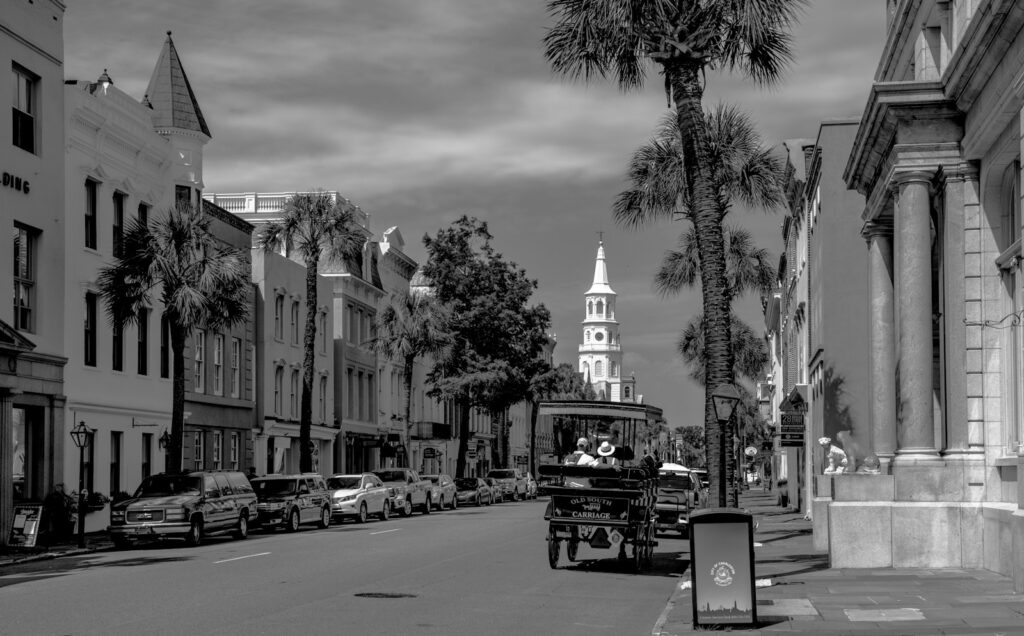
Horse drawn carriage tours are a Charleston tradition. Routes are assigned by the city to spread traffic, so each company covers a different part of the historic district; tours usually last about an hour and cover around 30 blocks. Walking tours go deeper into topics such as architecture, Gullah history, the Civil War or the city’s pirates.
After dark, ghost tours through old graveyards and alleys are one of the most popular things to do in Charleston at night. Choose a tour that is clear about its history, and expect lanterns, stories and some gentle theatre rather than real scares.
16. Patriots Point Naval and Maritime Museum
Across the Cooper River in Mount Pleasant, Patriots Point is home to the aircraft carrier USS Yorktown, a Second World War destroyer and a Vietnam era support base exhibit, with a large collection of aircraft on the Yorktown’s decks. It is a big hit with families and anyone who likes military history.
- Opening hours: daily, 10am to 5pm (ticket window closes at 4pm).
- Cost: $28 for adults online (about £21), $25 for seniors, $23 for children aged 6 to 12. Parking costs extra.
- Tip: combine it with the Fort Sumter ferry, which also leaves from Patriots Point.
17. South Carolina Aquarium
The South Carolina Aquarium on the harbour follows the state’s water from mountain streams to the open ocean, with a 385,000 gallon Great Ocean Tank, river otters and an alligator exhibit. The Sea Turtle Care Center, a working hospital for injured turtles, is the highlight for many visitors.
- Opening hours: daily, 9am to 5pm, last entry 3:30pm. Closed Thanksgiving and Christmas Day, and 9am to 1pm on Christmas Eve.
- Cost: dynamic pricing by date; adult tickets have ranged from about $29 to $35 (about £22 to £27).
- Time needed: about 90 minutes to two hours.
18. Gibbes Museum of Art
The Gibbes, on Meeting Street since 1905, is the best place to see how Charleston has been painted, from colonial portrait miniatures to the Charleston Renaissance of the early 20th century and contemporary Southern artists. It is a calm, manageable museum for a rainy afternoon, with a good shop and café. Adult admission is about $12 (about £9); check opening days before you go.
19. Charles Towne Landing State Historic Site
Charles Towne Landing in West Ashley marks the place where English colonists first settled in 1670, before the town moved to the peninsula. Trails lead through marsh and woods to reconstructed earthworks, gardens and the Animal Forest, a small natural habitat zoo with otters, black bears and bison.
- Opening hours: park grounds 9am to 5pm daily; Animal Forest 10am to 4pm.
- Cost: $12 for adults (about £9), $7 for ages 6 to 15.
- Winter note: the Adventure, a replica 17th century trading ship you can usually board, left on 16 November 2026 for winter maintenance and is expected back in April.
20. The Angel Oak and the Charleston Tea Garden
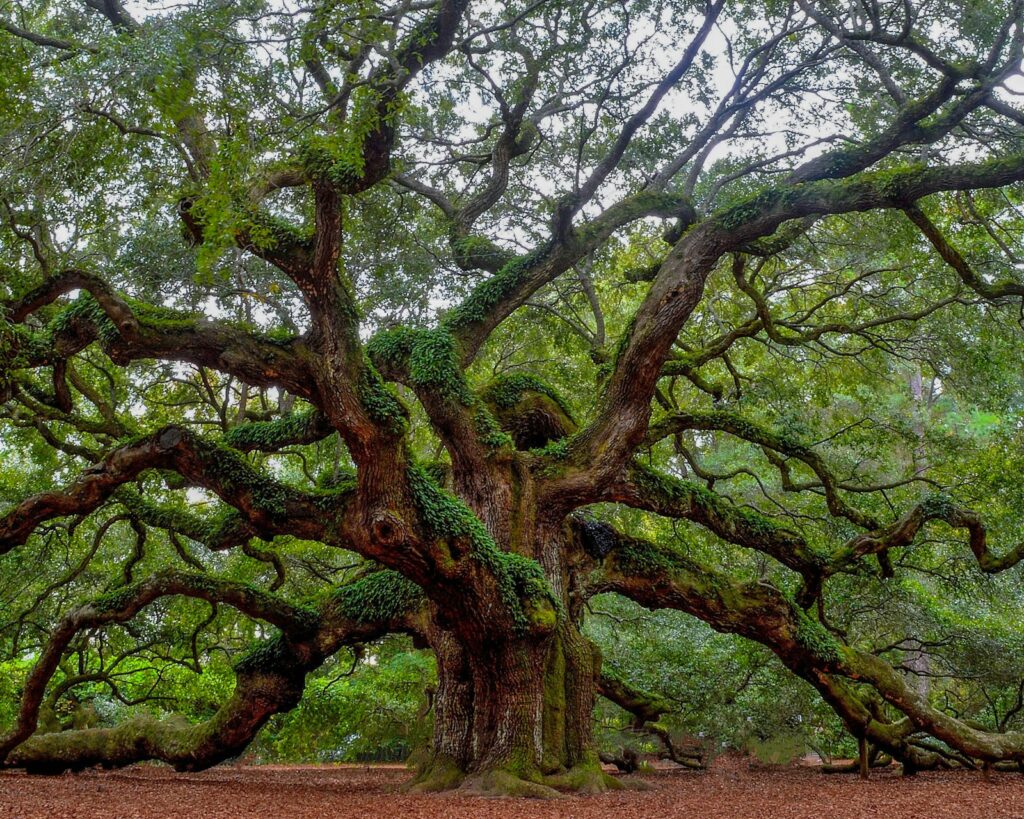
The Angel Oak on Johns Island, about 30 minutes from downtown, is a vast live oak estimated at 300 to 400 years old, with limbs that rest on the ground and spread to shade a huge circle. Entry to Angel Oak Park is free (donations welcome), and it is open daily except holidays. Food, drinks, blankets and tripods are not allowed near the tree.
Drive on to Wadmalaw Island for the Charleston Tea Garden, a working tea plantation. Its trolley tour of the fields takes about 35 to 40 minutes and costs $16 for ages 12 and up when booked at least 24 hours ahead (about £12), $18 on the day.
Free things to do in Charleston
You can fill a full day in Charleston without buying a single ticket:
- Walk the Battery and White Point Garden: the classic view of the harbour and the mansions.
- Rainbow Row and the streets south of Broad: free open air architecture.
- Waterfront Park and the Pineapple Fountain: best at sunset.
- African Ancestors Memorial Garden at the IAAM: open to all, no ticket needed.
- Charleston City Market: browse the stalls and watch sweetgrass baskets being made.
- Angel Oak Park: free entry on Johns Island.
- Hampton Park and Colonial Lake: green spaces popular with locals for walks and runs.
- Walk the Arthur Ravenel Jr. Bridge: a pedestrian and cycle lane crosses to Mount Pleasant with wide views of the harbour.
- Beaches: access to Folly Beach, Sullivan’s Island and Isle of Palms is free, though parking usually costs.
- The DASH shuttle: free rides around the downtown peninsula.
Things to do in Charleston at night
Charleston at night is relaxed rather than wild. Start with sunset drinks on one of the rooftop bars around King Street and the Market, then dinner. Upper King Street has the liveliest bar scene. A ghost tour or a harbour sunset cruise (in warmer months) are the classic organised options, and the Night Market runs on Friday and Saturday evenings from March to December.
For culture, check the programme at the Dock Street Theatre, one of the oldest theatre sites in the United States, and the Charleston Music Hall. The historic district is generally calm and safe in the evening, but use normal city sense and take a taxi or rideshare back to hotels outside the peninsula.
Things to do in Charleston in winter: events for 2026 and 2027
Winter is a good time to visit if you like cool, sunny days, lower hotel prices and fewer crowds. January highs are typically around 15°C (59°F), nights can be near freezing, and the sea is too cold for most swimmers. These are the main events confirmed so far:
| Date | Event | Where | Notes |
|---|---|---|---|
| Until 31 December 2026 | Holiday Festival of Lights | James Island County Park | More than 750 light displays on a 3 mile drive, nightly 5:30pm to 10pm; buying online saves up to $15 per car |
| Friday 4 December 2026 | Light the Lake | Colonial Lake | 5pm to 8pm, tree lighting at 6pm |
| Sunday 6 December 2026 | Holy City Holiday Festival and Holiday Parade | Colonial Lake, Broad Street, Meeting Street, Marion Square | Parade at 3pm, Chanukah in the Square at 4pm, tree lighting at 6pm, light shows at 6:30pm and 7pm |
| 10 to 13 December 2026 | Holiday Light Shows | Marion Square | 6pm and 7pm each evening |
| 1 January 2027 | Emancipation Day | Downtown | The city held an Emancipation Day parade on 1 January 2026; check for the 2027 route |
| Late January or early February 2027 | Lowcountry Oyster Festival | Boone Hall Plantation | The 2026 festival was on 1 February; 2027 date to be announced |
| Mid February 2027 | Southeastern Wildlife Exposition (SEWE) | Downtown venues | Held 13 to 15 February in 2026; check 2027 dates |
| 3 to 7 March 2027 | Charleston Wine + Food | Downtown | Tickets went on sale on 8 October 2026 |
Book the Holiday Festival of Lights through the Charleston County Parks festival page; green rated nights are cheaper and quieter.
Best beaches near Charleston
The best beaches near Charleston are on the barrier islands either side of the harbour, 20 to 45 minutes by car. None are reachable easily by public transport, so drive, cycle or take a rideshare.
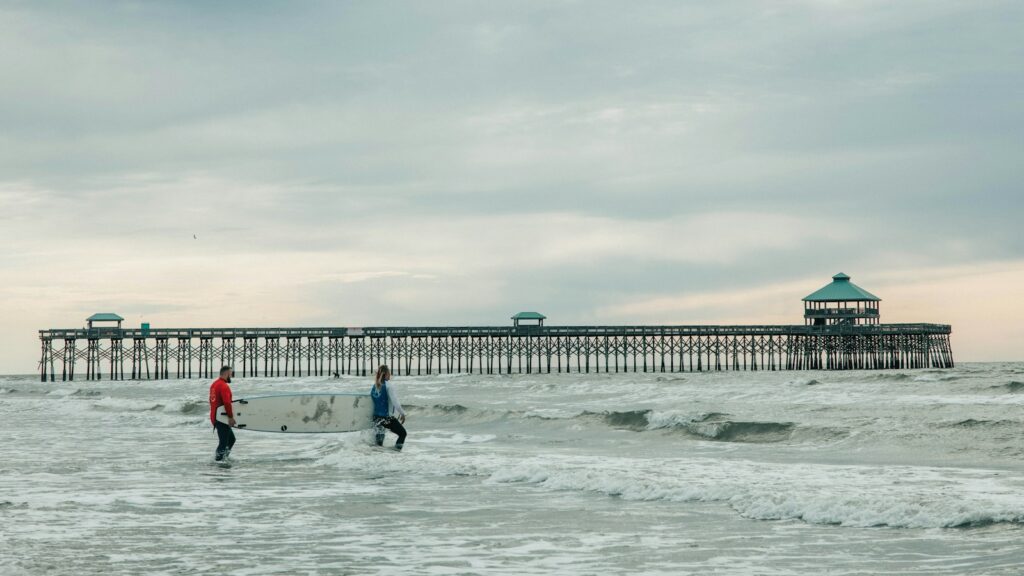
- Folly Beach: about 25 minutes south. Surfers, a long fishing pier, beach bars and a laid back, slightly scruffy charm. Paid parking in town.
- Sullivan’s Island: about 20 minutes east via Mount Pleasant. Quiet, residential, with Fort Moultrie at its southern end and some good restaurants on Middle Street.
- Isle of Palms: next to Sullivan’s Island, with a county park, more hotels and the Wild Dunes resort.
- Kiawah Island: about 45 minutes south west. Most of the island is a private resort, but Beachwalker County Park gives public access to one of the finest beaches in the state.
- Edisto Beach: about an hour and 15 minutes away, with a state park, shell strewn sands and a very low key feel.
Swimming is best from May to October. Watch for rip currents, especially near piers and inlets, and swim near a lifeguard where possible.
Day trips from Charleston
- Savannah, Georgia: about 110 miles (two hours) south. Leafy squares, River Street and its own Southern history make it the most popular day trip, though it deserves a night.
- Beaufort and Hunting Island: Beaufort is about 70 miles (1.5 hours) away, a pretty waterfront town on the Sea Islands. Hunting Island State Park, beyond it, has a historic lighthouse and wild beaches.
- Kiawah and Seabrook islands: beach, bikes and golf about 45 minutes away.
- Edisto Island: farm stands, the Edisto Island Museum and a quiet beach.
- Francis Marion National Forest and the Cape Romain coast: hiking, kayaking and birdwatching north of Mount Pleasant.
- Columbia: the state capital, about two hours inland.
What to skip or treat with care
- Plantation weddings and photo sets that treat the sites as pure scenery: choose visits that include the history of the enslaved community.
- Driving and parking downtown on busy weekends: use a garage once and walk.
- Visiting the plantations on the wrong day: check closures, particularly Tuesday at Drayton Hall and Monday at McLeod.
- Cramming every plantation into one trip: one or two, done properly, is better.
- Booking Fort Sumter for the afternoon in winter: the last sailing can be early, so check the timetable.
Charleston costs: what things cost in November 2026
| Item | Price in USD | Approx. GBP |
|---|---|---|
| Fort Sumter ferry, adult | $43 | £33 |
| International African American Museum, adult | About $20 | £15 |
| McLeod Plantation, adult | $20 | £15 |
| Middleton Place, adult (online) | $29 | £22 |
| Drayton Hall, adult (online) | $30 | £23 |
| Boone Hall, adult | $30 | £23 |
| Old Exchange and Provost Dungeon | $16 | £12 |
| Old Slave Mart Museum | $8 | £6 |
| Patriots Point, adult (online) | $28 | £21 |
| Charles Towne Landing, adult | $12 | £9 |
| Fort Moultrie, adult | $10 | £8 |
| Bus from the airport (CARTA) | About $2 | £1.50 |
| Taxi from the airport to downtown | About $30 to $40 | £23 to £30 |
| Rideshare from the airport | About $20 to $25 | £15 to £19 |
| DASH shuttle downtown | Free | Free |
| ESTA (UK visitors) | $40.62 | £31 |
Sales tax is added at the till, so shelf and menu prices are before tax. Hotels in the historic district are the biggest cost, especially on spring weekends; North Charleston near the airport and Mount Pleasant are usually cheaper.
Practical tips for UK and US visitors
Entry rules
UK passport holders visiting the United States for tourism under the Visa Waiver Program need an approved ESTA before travelling. The fee rose to $40.62 (about £31) on 16 October 2026; apply only on the official US government ESTA website at least 72 hours before you fly. Our ESTA application guide walks through the form. Your passport must be valid for your whole stay.
US citizens need no passport to visit Charleston. For domestic flights you need a REAL ID compliant driving licence or another accepted ID such as a passport.
Flights from the UK
There are no nonstop flights from the UK to Charleston (CHS). British Airways flew Heathrow to Charleston seasonally in 2019, but the route is not running. The best connections are through US hubs with daily flights to Charleston:
- Via Charlotte with American Airlines: about 9.5 hours from Heathrow, then about an hour to Charleston.
- Via Atlanta with Delta or Virgin Atlantic: about 10 hours from Heathrow, then about 1 hour 15 minutes.
- Via New York, Washington, Philadelphia, Boston or Chicago: plenty of choice on American, Delta, United and JetBlue.
Allow 13 to 16 hours door to door. You clear US immigration at your first US airport, so leave at least two hours for the connection.
Flights and driving from the US
Charleston International Airport has nonstop flights to most big US hubs, including New York (JFK, LaGuardia and Newark, about two hours), Atlanta, Charlotte, Washington, Philadelphia, Boston, Chicago, Dallas, Denver, Seattle and Miami. From Los Angeles, Breeze flies nonstop seasonally; otherwise connect through a hub.
Driving, Charleston is about 300 miles (4.5 to 5 hours) from Atlanta and about 110 miles (two hours) from Savannah. From Atlanta, take I-16 to I-95 or I-20 to I-26; from Savannah, I-95 and US 17.
Getting from the airport
The airport is about 12 miles from downtown, 15 to 25 minutes by car. CARTA bus Route 11 runs from the airport to downtown for a low fare but takes about an hour; a taxi costs about $30 to $40 and a rideshare about $20 to $25. Several downtown hotels run free airport shuttles, so ask when you book.
Getting around
The peninsula is best on foot, with the free DASH shuttle for longer hops. Bikes are popular, but traffic is busy on the main streets. For plantations, beaches and the Angel Oak you need a car, a tour or rideshares. Americans drive on the right. UK visitors can usually rent a car with a UK photocard licence, but some companies ask for an International Driving Permit, so check when you book.
Time, money, plugs and phones
- Time: Charleston is on Eastern Time, five hours behind London and the same as New York.
- Money: US dollars; cards and contactless are accepted almost everywhere, though some sites like Fort Moultrie and Drayton Hall take cards only.
- Tipping: 18 to 20 percent in sit down restaurants, $1 to $2 per drink in bars, and a tip for tour guides and carriage drivers. This is much higher than UK habits.
- Plugs: Type A and B, 120 volts. UK visitors need an adapter; most phone and laptop chargers work at the lower voltage.
- Phones: an eSIM is usually cheaper than UK roaming for a week or more.
When to visit
Spring (March to May) is the most popular season, with azaleas, warm days and the big festivals, but also the highest hotel prices. Summer is hot and humid with afternoon storms. The Atlantic hurricane season runs from 1 June to 30 November, with the highest risk from August to October. Autumn and winter bring cooler, often sunny weather and better value.
Our picks: the best things to do in Charleston by traveller
- First visit, one day: historic district walk, Waterfront Park, Fort Sumter, dinner on King Street.
- History lovers: IAAM, Old Slave Mart, McLeod Plantation, Old Exchange and Fort Sumter.
- Gardens and photography: Middleton Place, Magnolia, the Angel Oak and Rainbow Row at sunset.
- Families: South Carolina Aquarium, Patriots Point, Charles Towne Landing and the beach.
- Winter trip: Holiday Festival of Lights, the 6 December parade and tree lighting, and oysters at a roast.
- On a budget: the free list above, plus the Old Slave Mart and McLeod.
FAQ about things to do in Charleston
What is Charleston, SC known for?
Charleston is known for its preserved historic district, pastel Rainbow Row, antebellum mansions on the Battery, church steeples, Lowcountry food and Southern hospitality. It is also known for Fort Sumter, where the Civil War began, and for its central place in the history of slavery and Gullah culture.
What bar does Bill Murray own in Charleston?
None that is open now, as far as we can find. Bill Murray was a co owner of Harold’s Cabin, a bar and restaurant on Congress Street, which closed in 2024, and Rutledge Cab Co., which closed later the same year after 12 years. He remains a part owner of the Charleston RiverDogs minor league baseball team, where his title is “Director of Fun”.
Is the Charleston Aquarium worth visiting?
Yes, especially with children or on a rainy day. It is not huge, so most people need about 90 minutes to two hours, but the Great Ocean Tank and the Sea Turtle Care Center are excellent, and your ticket helps fund turtle rescue. Adult tickets have been about $29 to $35, depending on the date.
What to do in Charleston in 3 days?
Day one: walk the historic district, Rainbow Row and the Battery, then take the ferry to Fort Sumter. Day two: spend the morning at the International African American Museum and the Old Slave Mart, then visit McLeod Plantation or the City Market. Day three: drive Ashley River Road for Middleton Place or Magnolia, and finish on the beach at Folly or Sullivan’s Island.
When to avoid Charleston, SC?
Avoid the peak of hurricane season, August to October, if you cannot be flexible, and July and August if you dislike heat and humidity. Spring weekends and big festivals, such as Charleston Wine + Food in early March, bring the highest hotel prices. Also check for closures on Thanksgiving and Christmas Day.
What should I not miss in Charleston, SC?
Do not miss a walk along the Battery and Rainbow Row, the ferry to Fort Sumter, the International African American Museum, at least one plantation site that tells the full history of slavery, a Lowcountry meal of shrimp and grits or oysters, and sunset at Waterfront Park.
Plan the rest of your trip
Charleston works well as part of a longer trip through the American South and the East Coast. Head west for live music with our guide to things to do in Nashville, or compare it with another Southern city of food and history in things to do in New Orleans. For winter sun further south, see things to do in Miami, and if your flight connects through New York, add a few days with things to do in New York. You can also browse all our Charleston travel guides.
Whatever you choose from these things to do in Charleston, leave time to wander without a plan: the side streets, gardens glimpsed through iron gates and long Lowcountry evenings are what most visitors remember.