
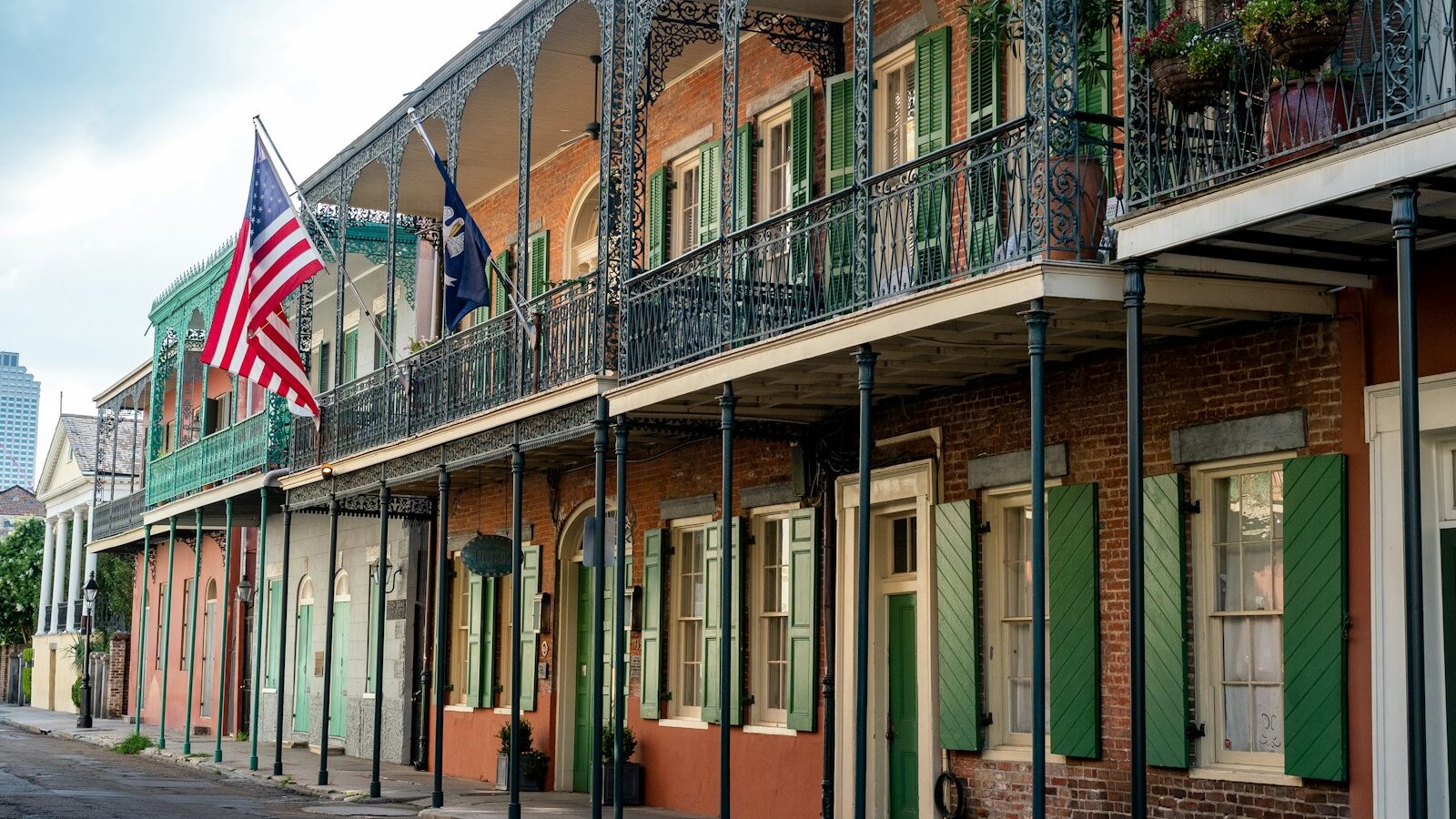
Things to do in New Orleans start in the French Quarter, with jazz spilling out of doorways, beignets under the arches of the French Market and iron balconies above every street. Beyond it you have world class museums, streetcar rides past Garden District mansions, cypress swamps 40 minutes away and a festival calendar that peaks with Mardi Gras on Tuesday 9 February 2027.
Some links in this guide are affiliate links: if you book through them we may earn a commission at no extra cost to you. It never changes what we recommend. How we make money.
This guide covers the 18 best picks with current prices in US dollars (with approximate pounds), how to reach each one with or without a tour, what to skip, free options, New Orleans at night, a three day plan and everything UK and US travellers need to sort out before they fly. Prices and rules were last checked in November 2026.
Things to do in New Orleans at a glance
| Pick | Area | Time needed | Cost from |
|---|---|---|---|
| French Quarter and Jackson Square | French Quarter | Half a day | Free |
| Beignets at the French Market | French Quarter | 30 minutes | A few dollars |
| Live music on Frenchmen Street | Marigny | An evening | Free to a small cover |
| Preservation Hall | French Quarter | 45 minutes | Around $25 standing (about £19) |
| National WWII Museum | Warehouse District | 4 hours or more | $27 (about £21) |
| St. Charles streetcar and Garden District | Uptown | Half a day | $1.25 (about £1) |
| St. Louis Cemetery No. 1 tour | Tremé edge | 45 minutes | Variable, book ahead |
| Steamboat Natchez jazz cruise | Riverfront | 2 hours | $43.50 (about £33) |
| Algiers ferry | Riverfront | 1 hour | $2 (about £1.50) |
| Swamp tour | Outside the city | Half a day | Tour price |
| Whitney Plantation | River Road | Most of a day | $25 (about £19) |
| City Park and NOMA | Mid City | Half a day | Free garden, $23 museum (about £17.50) |
| Mardi Gras World | Riverfront | 1 to 2 hours | Check online |
| Sazerac House | Canal Street | 90 minutes | Book online |
In this guide:
- The French Quarter: Jackson Square, the cathedral, the French Market and the riverfront.
- Music: Frenchmen Street, Preservation Hall and a jazz cruise.
- History: the WWII Museum, the cemeteries and Whitney Plantation.
- Further out: the streetcar, Garden District, City Park and the swamps.
- Planning: costs, free things to do, New Orleans at night, three days, festivals, UK and US travel essentials and the FAQ.
How to choose what to do in New Orleans
New Orleans rewards slow days. The French Quarter and the Marigny next door hold most first time highlights, and you can cover them on foot. Museums and the Garden District sit a short streetcar ride away, while swamps and plantations need a car or a tour.
If you have one or two days, stay in the French Quarter, Frenchmen Street and the WWII Museum. With three or more, add the streetcar, City Park and a half day out of town. Match your dates to the calendar too: a February trip during Mardi Gras is a very different city from a quiet week in November.
1. Walk the French Quarter and Jackson Square
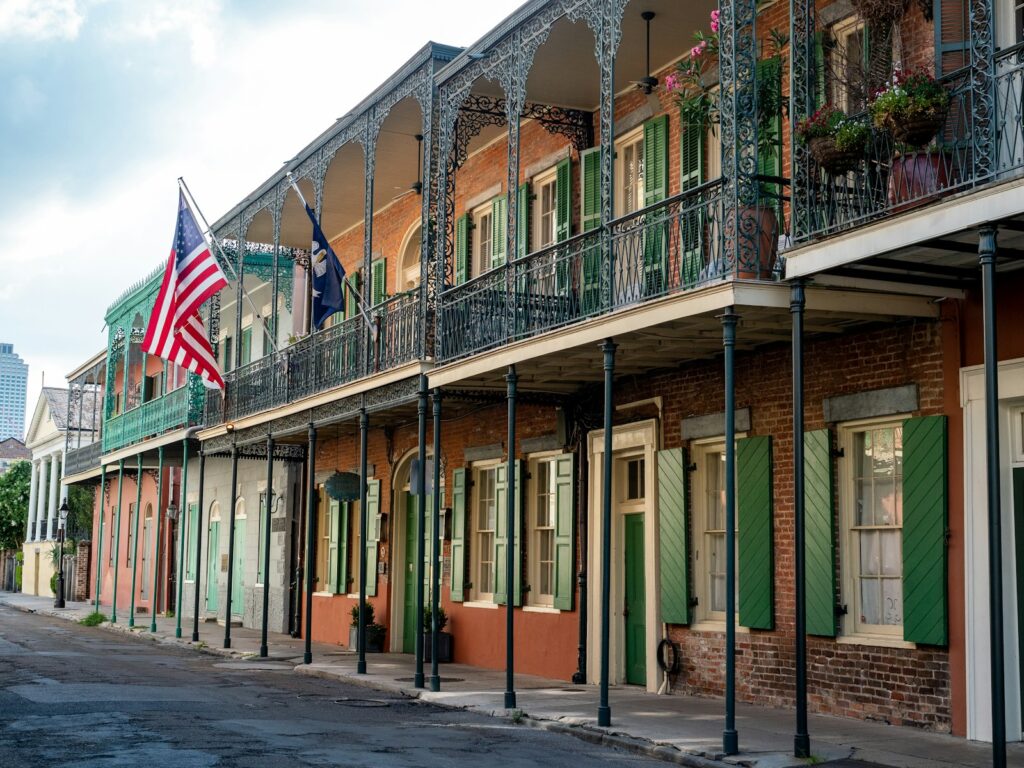
The French Quarter is the oldest part of the city, a grid of roughly 13 blocks by 7 between Canal Street, Esplanade Avenue, North Rampart Street and the Mississippi. Most of what people picture when they think of New Orleans is here: Creole townhouses, courtyards, gas lamps and those cast iron balconies.
Start at Jackson Square, the old parade ground facing the river. Artists hang their work on the fence, street performers set up on the flagstones and St. Louis Cathedral rises behind the statue of Andrew Jackson. The cathedral is free to enter outside services. Next to it, the Cabildo and Presbytère are Louisiana State Museum buildings with paid entry.
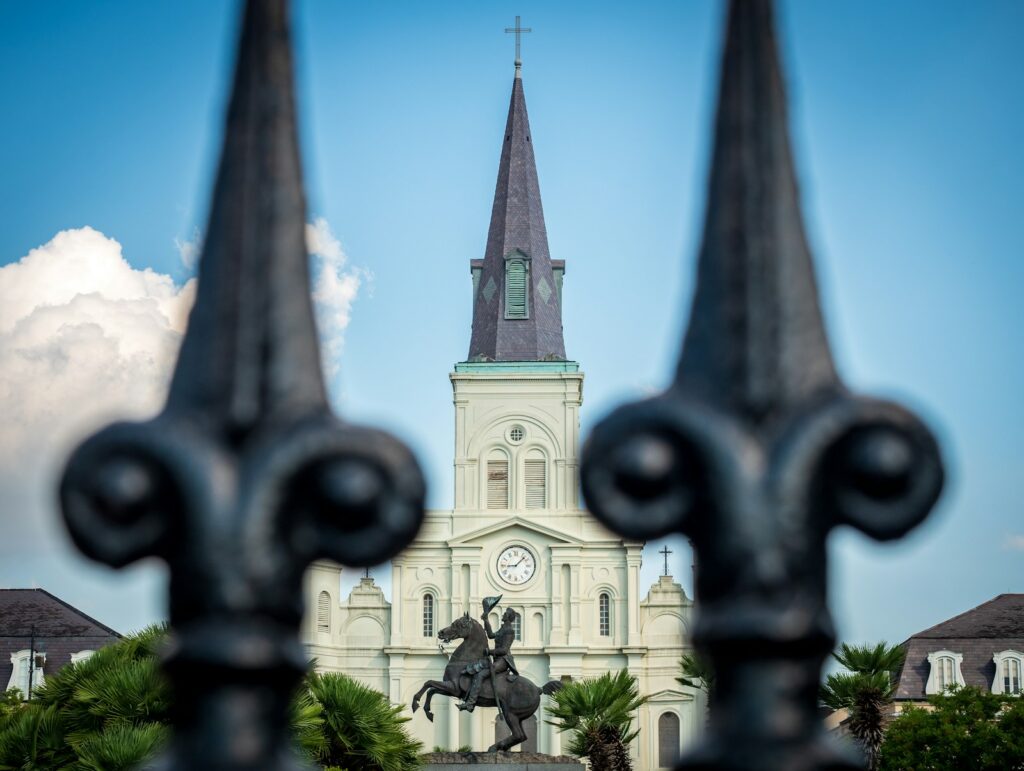
From the square, wander Royal Street for antiques and galleries, Chartres Street for quieter corners and Decatur Street towards the French Market. Walk up the steps to the Moonwalk, the riverside promenade, for views of ships on the Mississippi.
How to do it: on your own it costs nothing. A guided walking tour adds the history behind the buildings, and several companies run tip based tours where you pay what you think it was worth. Time needed: half a day at an easy pace.
2. Eat beignets at the French Market
Beignets are square doughnuts buried in powdered sugar, served in threes with café au lait made with chicory. Café du Monde, at the French Market end of Jackson Square, has served them since 1862 and is the classic stop. Queues build through the day, so go early or late, or use the takeaway window at the back. Bring some cash and check current opening hours before you go.
The French Market itself runs for several blocks along Decatur Street with food stalls and a flea market. It is a good place for a cheap lunch of gumbo, jambalaya or a po’boy, the city’s crusty French bread sandwich filled with fried shrimp, oysters or roast beef.
3. Hear live music on Frenchmen Street
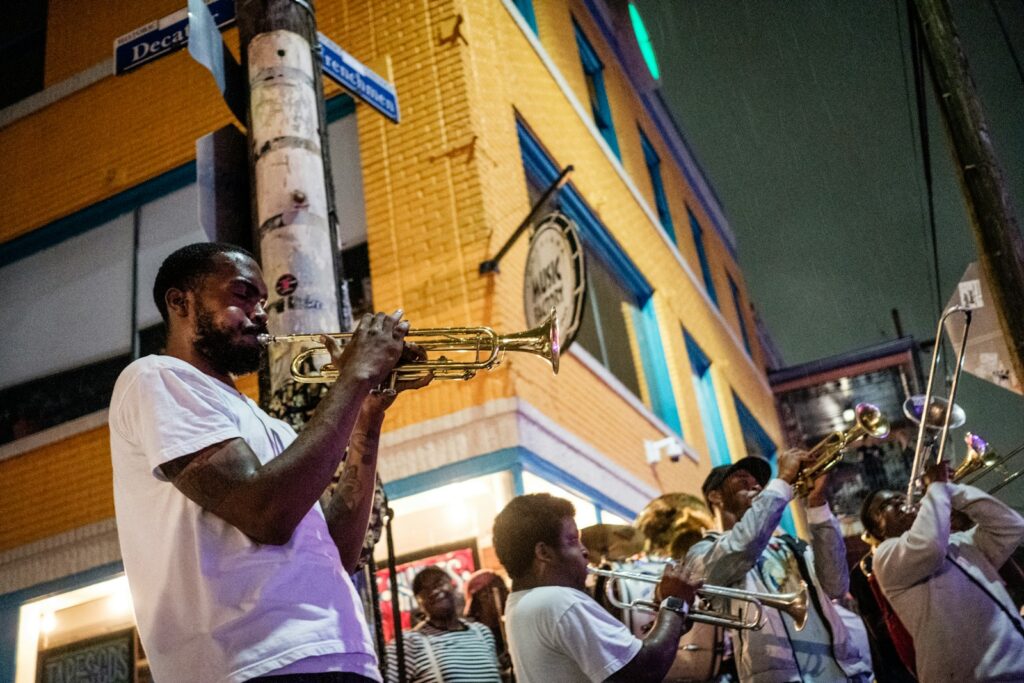
Frenchmen Street, in the Marigny just east of the French Quarter, is where many locals go for live music. In a few short blocks you find small clubs with jazz, brass bands, blues and funk, often with no cover charge or a small one, plus a buy one drink rule at some venues. Brass bands also play on the street corners.
The Spotted Cat Music Club is the best known small venue. Snug Harbor is a proper jazz club with seated shows that you can book. The Frenchmen Art Market, a night market of local makers, opens on many evenings a few doors along.
Why go: it is the easiest way to hear the music New Orleans is famous for without the Bourbon Street scrum. Time needed: an evening. Tip the band if a jar goes round.
4. See a show at Preservation Hall
Preservation Hall on St. Peter Street is a small, plain room built for one thing: traditional New Orleans jazz played by working musicians. Sets last around 45 minutes and run several times each evening, with extra afternoon sets at weekends. Standing tickets have cost around $25 (about £19) and seats more, but check the official site for current prices.
Tickets are sold online and sets sell out, so book ahead in busy months. The hall holds about 100 people, has no bar, no toilets and no air conditioning, and you leave after one set. It is all ages, which makes it one of the best music options for families.
5. Spend a morning at the National WWII Museum
The National WWII Museum in the Warehouse District is one of the most visited attractions in New Orleans and one of the best museums of its kind anywhere. Its galleries cover the war in Europe and the Pacific through personal stories, aircraft hanging in a pavilion and a submarine experience.
Adult general admission runs from $27 to $42 (about £21 to £32) depending on the date, as peak pricing applies on busy days. It opens daily from 9am to 5pm and closes on Thanksgiving. Allow at least four hours. Buy timed tickets online and arrive at opening.
How to get there: it is a 15 to 20 minute walk from Jackson Square, or ride the St. Charles streetcar to Harmony Circle (formerly Lee Circle) and walk two blocks.
6. Ride the St. Charles streetcar to the Garden District
The green St. Charles streetcar has run along St. Charles Avenue since the 1800s and is the cheapest sightseeing ride in town. A single fare is $1.25 (about £1) and a one day pass is $3 (about £2.30), from the RTA’s Le Pass app or with change on board.
Ride from Canal Street under the oaks to the Garden District, then walk the streets between Washington Avenue and Jackson Avenue to see Greek Revival and Italianate mansions in big gardens. Magazine Street, a few blocks towards the river, has six miles of independent shops, cafés and restaurants.
Lafayette Cemetery No. 1, in the middle of the Garden District, reopened for guided tours on 1 October 2026 after years of closure. Tours are run by the Preservation Resource Center, last 75 to 90 minutes and take a maximum of 16 people. Walk up visits are not allowed, so book online first.
Time needed: half a day. Several companies run guided Garden District walks if you want the history of the houses.
7. Tour St. Louis Cemetery No. 1
New Orleans buries its dead above ground in whitewashed tombs, and St. Louis Cemetery No. 1, founded in 1789 on Basin Street, is the oldest surviving example. Voodoo priestess Marie Laveau is believed to be buried here.
You can only enter with the official tour run on behalf of the Catholic Archdiocese’s cemeteries. Tours last about 45 minutes and run daily from 9am to 3:45pm, except Mardi Gras Day. Prices vary day by day, so book online and check in at the tour desk on Basin Street 15 minutes before your slot. Do not join anyone who offers to take you in for less; only the official tour has access.
8. Cruise the Mississippi on the Steamboat Natchez
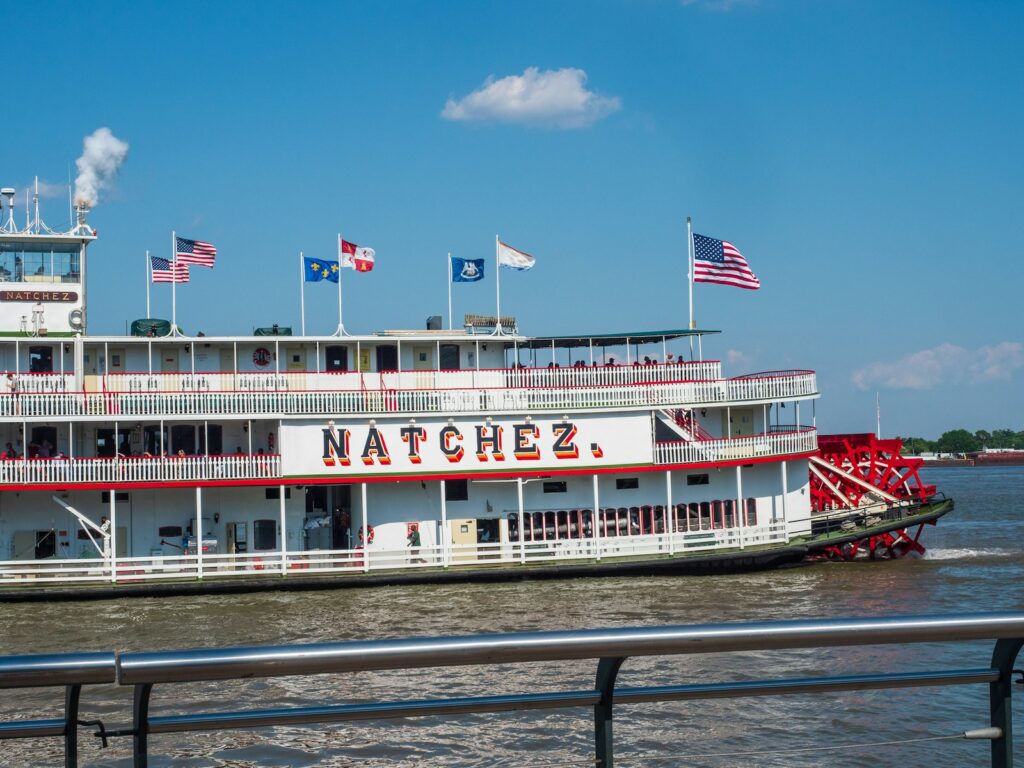
The Steamboat Natchez is a real steam powered paddlewheeler that leaves from the Toulouse Street wharf behind Jackson Brewery. Cruises last about two hours with live jazz on board and commentary on the river and port.
Current prices on the official site: daytime jazz cruise $43.50 (about £33) or $65 (about £49) with lunch; evening jazz cruise $58 (about £44) or $107.50 (about £82) with dinner; and a weekend brunch cruise from $43.50 without food. Book online for evening sailings.
The budget version: the Algiers ferry from the foot of Canal Street to Algiers Point costs $2 (about £1.50) each way. The crossing is short, the skyline views are excellent and Algiers Point is a quiet riverside neighbourhood with a levee path for a walk.
9. Take a swamp tour
The wetlands around New Orleans hold alligators, herons, turtles and moss draped cypress trees, and a swamp tour is the most popular half day trip from the city. You choose between a slower flat boat tour, which is better for spotting wildlife and quieter, and an airboat, which is fast and loud. Most tours include hotel pick up and take about four hours in total.
If you prefer to go on your own, the Barataria Preserve of Jean Lafitte National Historical Park, about 30 minutes south of the city, is free. Be aware that the National Park Service closed its visitor centre and most trails from February 2026 for around two years of repairs after Hurricane Ida. The Twin Canals area and canoe launch stay open for day use, and rangers lead walks from the Louisiana Wetlands Education Center. Check the National Park Service page for the Barataria Preserve before you drive out.

10. Visit Whitney Plantation
Whitney Plantation, about an hour west of the city on the River Road, is the plantation museum that tells the story from the point of view of the enslaved people who lived and worked there. Memorials list thousands of names, and original buildings include slave cabins and a church.
Adult entry is $25 (about £19) for the self guided audio tour, which takes about 70 minutes, or $32 (about £24) for a guided tour that includes the upstairs of the Big House. It opens 9:30am to 4:30pm with last entry at 3pm and closes on Tuesdays and several holidays, including Mardi Gras Day.
How to get there: drive west on I-10 and follow the River Road (LA 18), or join a tour with transport from New Orleans. Many tours pair Whitney with a swamp trip or with Oak Alley, a grander plantation house a short drive further west.
11. Explore City Park and the New Orleans Museum of Art
City Park in Mid City is one of the largest urban parks in the United States, with ancient live oaks, lagoons, the Botanical Garden and a children’s amusement area. The Besthoff Sculpture Garden next to the museum is free and open every day, from 10am to 5pm between October and March and to 6pm from April to September.
The New Orleans Museum of Art (NOMA) charges $23 (about £17.50) for adult visitors from outside Louisiana. It opens Tuesday to Sunday from 10am to 5pm, except Wednesday when it opens noon to 7pm, and closes on Mondays and during the main Mardi Gras days.
How to get there: the Canal streetcar (the City Park/Museum branch) runs from Canal Street to the park gates in around 30 minutes for $1.25.
12. Go behind the scenes at Mardi Gras World
Mardi Gras World is the working warehouse where many of the giant parade floats are designed and built. Tours last about an hour, include a short film on Carnival history and let you walk among floats and props in progress.
It opens daily from 9am to 5:30pm, with tours every 30 minutes from 9:30am to 4:30pm, and closes on Thanksgiving, Christmas, Easter and Mardi Gras Day. Prices appear at online checkout. A free shuttle picks up from about ten downtown stops; call when you reach one. If you cannot visit during Carnival, this is the best way to understand it.
13. Learn about cocktails at the Sazerac House
New Orleans claims the Sazerac as its own cocktail, and the Sazerac House at the corner of Canal and Magazine Streets tells the story over three floors of exhibits with small samples. Tours take around 90 minutes, run from 11am with the last start at 4:45pm, and you need to be 21 or over to taste. Book online, as entry is by timed reservation.
14. Eat your way through the city
Food is one of the main reasons to visit, and you can eat well at every budget. Try gumbo, red beans and rice (traditionally a Monday dish), jambalaya, crawfish étouffée, a muffuletta from a Decatur Street deli, chargrilled oysters and bananas Foster, which was created at Brennan’s.
For classic Creole dining, the old French Quarter institutions and Commander’s Palace in the Garden District are the big names, and jacket rules apply at some of them. For something more relaxed, the Marigny and Bywater have neighbourhood bars and cafés. A guided food tour of the French Quarter, usually around three hours, is a good first day option if you want to try several dishes and learn what is what.
15. See New Orleans at night
New Orleans at night is the city at its best. Start with music on Frenchmen Street, catch a set at Preservation Hall, take the evening jazz cruise or join one of the ghost and history walking tours that leave from the French Quarter after dark. Rooftop bars along Canal Street and in the Central Business District have city and river views.
Bourbon Street is loud, crowded and best seen briefly. Stay in busy, well lit areas, use licensed taxis or rideshare apps late at night and avoid walking alone through empty streets on the edges of the French Quarter.
16. Time your trip for a festival
The city has a festival on most weekends. These are the big dates for the next season, checked against official sources:
- Mardi Gras 2027: Fat Tuesday falls on Tuesday 9 February 2027. Carnival season starts on 6 January and the big parades build over the final two weekends before Mardi Gras Day. The official tourism board lists future dates on its Mardi Gras dates page.
- French Quarter Festival 2027: 8 to 11 April 2027, mostly free stages across the French Quarter and riverfront.
- Jazz Fest 2027: New Orleans Jazz and Heritage Festival runs over two weekends, 22 to 25 April and 29 April to 2 May 2027, at the Fair Grounds.
- Super Sunday: Mardi Gras Indian (Black Masking Indian) groups parade in handmade suits on Sundays around St. Joseph’s Day (19 March). In 2026 Uptown Super Sunday was on 15 March and Downtown on 29 March; 2027 dates are usually confirmed close to the day.
Book accommodation early for Mardi Gras and Jazz Fest, as prices rise sharply and minimum stays are common.
17. Shop and stroll Magazine Street and the Marigny
If you want a slower afternoon, Magazine Street runs from the Central Business District to Audubon Park with vintage shops, galleries, coffee houses and local boutiques. In the Marigny and Bywater, colourful shotgun houses, murals and the riverside Crescent Park make for an easy walk away from the crowds.
18. Visit Audubon Park and the Audubon Zoo
At the far end of the St. Charles streetcar line, Audubon Park has a path around a lagoon under oak trees, and the Audubon Zoo sits at its river end. It pairs well with a streetcar ride and a Garden District walk for families.
What to skip or leave for another trip
New Orleans has a lot of filler, and some of it costs time you could spend better.
- Bourbon Street bar crawls: fine for a look, but drinks are expensive and the street is more party than culture. Frenchmen Street gives a better night.
- Unofficial cemetery tours: only the official tour enters St. Louis Cemetery No. 1.
- Long day trips to the Gulf Coast or Baton Rouge: each takes most of a day by car, which few short trips can spare.
- Chain restaurants on Canal Street: you are in one of the best food cities in the US, so eat local instead.
Free things to do in New Orleans
Free things to do in New Orleans include walking the French Quarter, visiting St. Louis Cathedral, people watching in Jackson Square, live music on Frenchmen Street, the Besthoff Sculpture Garden in City Park, the Moonwalk and Crescent Park by the river, and Garden District streets.
A few more ideas cost almost nothing. A streetcar day pass is $3 (about £2.30), the Algiers ferry is $2 each way, and many Frenchmen Street clubs have no cover if you buy a drink. Second line parades, where brass bands lead neighbourhood social clubs through the streets, take place on many Sunday afternoons, mainly from autumn to spring, and are free to watch. Tip based walking tours of the French Quarter run daily.
What to do in New Orleans this weekend
For things to do in New Orleans this weekend, check WWOZ, the local community radio station, which publishes a daily live music calendar, and the official tourism site’s events listings. Weekend highlights usually include Sunday second lines, jazz brunches, the Frenchmen Art Market and the Steamboat Natchez brunch cruise.
Three days in New Orleans
Three days is enough to see the highlights without rushing. Here is a simple plan that keeps travel time low.
- Day 1, French Quarter: Jackson Square and the cathedral early, beignets, Royal Street and the riverfront. Afternoon at the French Market or a food tour. Evening on Frenchmen Street.
- Day 2, history and streetcar: the WWII Museum from opening until early afternoon. Ride the St. Charles streetcar to the Garden District and walk Magazine Street. Preservation Hall or a ghost tour after dinner.
- Day 3, out of town: a morning swamp tour or Whitney Plantation, back by mid afternoon for City Park and NOMA or the Algiers ferry at sunset.
New Orleans attractions: what they cost
New Orleans is cheaper than New York but not a budget city, and prices exclude tax. Sales tax in the city is 10% on most purchases, and hotel bills carry around 15% to 17% in taxes plus a small nightly fee, according to the city of New Orleans.
| Item | Price in USD | Approx GBP |
|---|---|---|
| Streetcar or bus single | $1.25 | £1 |
| RTA one day pass | $3 | £2.30 |
| RTA three day pass | $8 | £6 |
| Algiers ferry | $2 | £1.50 |
| National WWII Museum | $27 to $42 | £21 to £32 |
| NOMA (non Louisiana resident) | $23 | £17.50 |
| Whitney Plantation | $25 to $32 | £19 to £24 |
| Steamboat Natchez daytime cruise | $43.50 | £33 |
| Airport taxi to the city (1 or 2 people) | $36 | £27 |
Prices checked November 2026; pound figures use an exchange rate of about £0.76 to the dollar.
Getting around New Orleans
The French Quarter, Marigny and Central Business District are best on foot. The RTA’s streetcars and buses cover the Garden District, City Park and Uptown, and fares and passes are listed on the RTA fares page. Rideshare apps work well at night.
From Louis Armstrong New Orleans International Airport (MSY), the cheapest option is the RTA 202 Airport Express bus to downtown for $1.25. Taxis charge a flat $36 (about £27) for one or two people to the city, or $14 each for three or more, plus $1 per bag. The Airport Shuttle costs $30 one way per person. Rideshare trips to Orleans Parish have a $36 minimum.
You do not need a car in the city, and parking in the French Quarter is expensive and limited. Hire one only for the River Road or a self drive swamp day.
UK and US travel essentials
Entry rules for UK and US travellers
UK passport holders usually visit under the Visa Waiver Program and need an approved ESTA before flying. The fee is $40.62 (about £31) since 16 October 2026. Apply only on the official ESTA website at least 72 hours before departure, and see our ESTA application guide for the step by step. You need a biometric passport, and stays are limited to 90 days.
US travellers need no passport for a domestic flight, but you must show a REAL ID compliant driving licence or another accepted ID, such as a passport, at airport security.
Flights from the UK and US
From London, British Airways flies nonstop from Heathrow to New Orleans, with four flights a week in winter 2026 to 2027 and a flight time of around 10 hours westbound. From Manchester there is no direct flight, so connect through a US hub such as Atlanta, Charlotte or Chicago, usually 13 hours or more in total.
From New York, nonstop flights leave JFK, LaGuardia and Newark, taking about 3 hours. From Los Angeles, nonstops take about 3.5 to 4 hours. Many other US cities, including Atlanta, Chicago, Dallas and Miami, have frequent direct services.
Time, plugs and money
- Time difference: New Orleans is on Central Time, 6 hours behind London for most of the year (5 hours for a few weeks in March and around late October and early November when the clocks change on different dates), 1 hour behind New York and 2 hours ahead of Los Angeles.
- Plugs and voltage: Type A and B sockets at 120 volts. UK visitors need an adapter and should check that chargers are dual voltage. US visitors need nothing.
- Money: cards are accepted almost everywhere, though a few small cafés and stalls prefer cash.
Tipping compared with UK and US habits
Tipping in New Orleans follows normal US rules, which will feel generous to UK visitors. Leave 18% to 20% at sit down restaurants, $1 to $2 per drink at bars, 15% to 20% to tour guides and drivers, and a few dollars for street musicians and hotel housekeeping. Service charges are rarely added to the bill, so tip on top unless the bill says otherwise. Tip based walking tours expect you to pay what the tour was worth.
Driving
Americans drive on the right. UK licence holders can usually hire a car with their full licence, but check with the rental company whether an International Driving Permit is required, and note that drivers under 25 often pay a surcharge. US drivers simply use their home licence.
Our picks
- Best first day: Jackson Square early, beignets, Royal Street and Frenchmen Street at night.
- Best museum: the National WWII Museum.
- Best music: Preservation Hall for tradition, Frenchmen Street for variety.
- Best value: the St. Charles streetcar day pass and the Algiers ferry.
- Best half day trip: a flat boat swamp tour or Whitney Plantation.
New Orleans FAQ
What to do in New Orleans for the first time?
Walk the French Quarter and Jackson Square, eat beignets, hear live music on Frenchmen Street or at Preservation Hall, visit the National WWII Museum and ride the St. Charles streetcar to the Garden District. Add a swamp tour if you have a third day.
What’s super Sunday in New Orleans?
Super Sunday is the biggest day of the year for the Mardi Gras Indians, also called Black Masking Indians, after Mardi Gras itself. Groups parade in elaborate handmade beaded suits on Sundays around St. Joseph’s Day in March, with separate Uptown and Downtown events.
Is New Orleans walkable?
Yes, the core is very walkable. The French Quarter, Marigny and Central Business District are flat and compact, so most first trip sights are within a 20 minute walk. Use the streetcar for the Garden District and City Park, and a taxi or rideshare late at night.
Do and don’ts in New Orleans?
Do book Preservation Hall, the WWII Museum and cemetery tours ahead, tip musicians and staff, carry water in summer and drink responsibly. Don’t take open glass containers onto the streets, enter cemeteries with unofficial guides, walk alone down empty streets late at night, or spend your whole evening on Bourbon Street.
Why avoid Bourbon Street?
Many visitors find Bourbon Street disappointing at night: it is crowded, loud, focused on cheap drinks and strip clubs, and a target for pickpockets. Walk it once in the early evening to say you have seen it, then head to Frenchmen Street for better live music.
What is the #1 attraction in New Orleans?
The French Quarter is the number one attraction, with Jackson Square and St. Louis Cathedral at its centre. As a single paid attraction, the National WWII Museum is the most highly rated and is one of the most visited museums in the country.
What to do for 3 days in New Orleans?
Spend day one in the French Quarter and on Frenchmen Street, day two at the WWII Museum and on the streetcar to the Garden District, and day three on a swamp or plantation trip followed by City Park or a sunset ferry ride.
What is the best month to visit New Orleans?
March, April and May are the best months for warm, mostly dry weather and the big spring festivals. October and November are the next best, with cooler air and lower hotel prices. Summer is hot and humid, and the Atlantic hurricane season runs from June to November.
Plan the rest of your trip
New Orleans pairs well with other US cities. Fly on to the Big Apple with our guide to things to do in New York, or head south east to Florida with things to do in Miami and things to do in Orlando. For a beach finish across the Gulf, see our list of things to do in Cancun. You can also browse all our New Orleans travel guides.
Whatever you pick from this list of things to do in New Orleans, leave room for the unplanned: a brass band turning the corner, a courtyard bar you had not noticed, or one more plate of beignets before the flight home.