Nestled between France, Belgium, and Germany, Luxembourg might be one of Europe’s smallest countries, but it packs an incredible punch when it comes to stunning attractions. From fairy-tale castles and historic fortresses to picturesque villages and lush nature reserves, this tiny nation offers a surprising diversity of experiences for travelers. Whether you’re planning a weekend getaway or a longer exploration, this comprehensive guide to the 50 best places to visit in Luxembourg will help you discover the country’s hidden gems and must-see landmarks.
Planning Your Trip to Luxembourg
Before diving into our list of the best places to visit in Luxembourg, let’s cover some essential planning tips to make your journey smooth and enjoyable. Luxembourg is compact—you can drive from north to south in under 90 minutes—making it perfect for travelers who want to see a lot in a short time.
Find the Best Travel Deals
Start your Luxembourg adventure right by securing the best prices on flights and accommodations. With the country’s central European location, finding good connections is easy with the right tools.
Best Time to Visit Luxembourg
The best time to visit Luxembourg is during the summer months (June to August) when temperatures are pleasant, averaging around 21°C (70°F), and outdoor activities are in full swing. Fall (September to November) offers beautiful foliage and fewer tourists, while spring (March to May) brings blooming landscapes and mild weather. Winter visitors can enjoy festive markets, particularly the Winterlights festival in Luxembourg City during December.
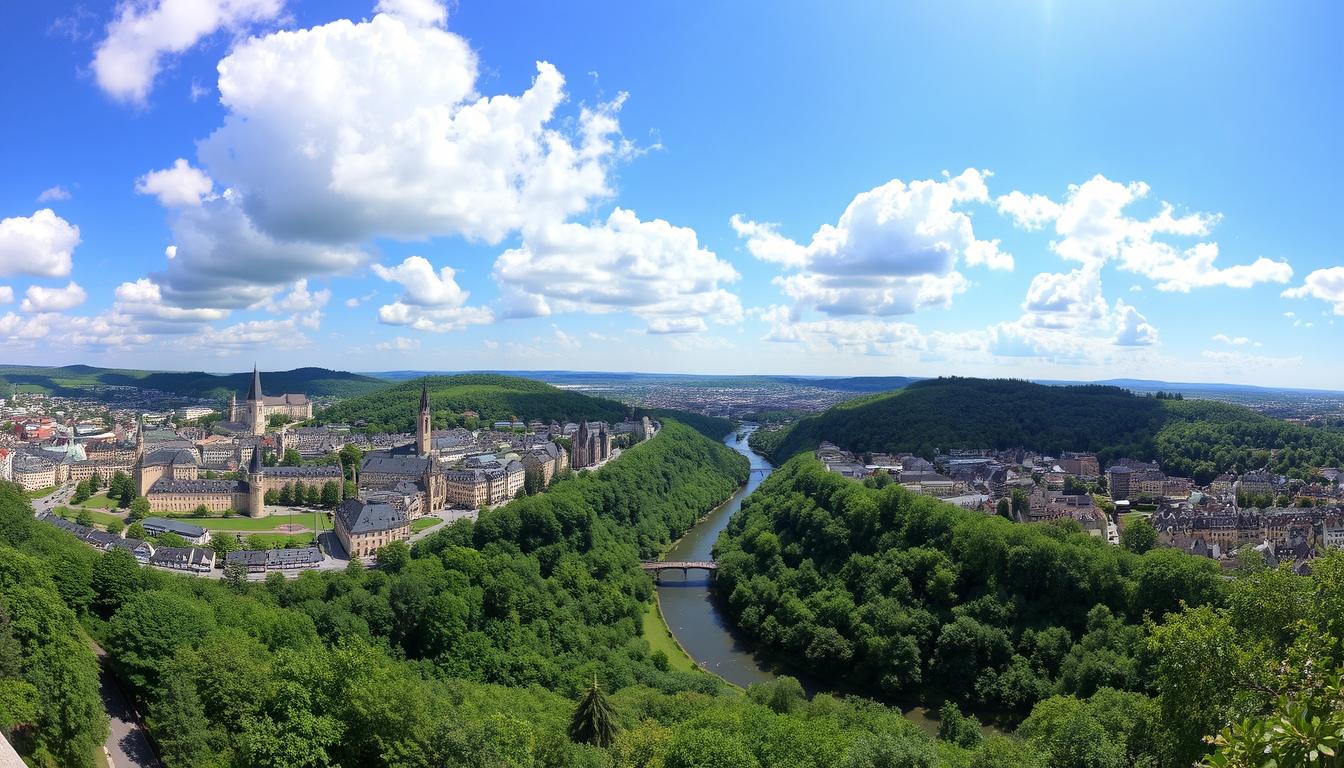
Luxembourg City’s stunning panorama is best enjoyed during the summer months
Luxembourg City and Surroundings
1. Luxembourg City Old Quarter
The UNESCO-listed Old Quarter is the historic heart of Luxembourg City and one of the most beautiful places to visit in Luxembourg. Wander through medieval streets lined with elegant buildings, discover hidden corners, and admire the impressive fortifications that once made this city one of Europe’s greatest strongholds. Don’t miss the Grand Ducal Palace, the official residence of the Grand Duke of Luxembourg.
2. Casemates du Bock
These remarkable underground tunnels form part of Luxembourg City’s ancient fortifications. Dating back to 1644, the Casemates du Bock stretch for 17 kilometers beneath the city and once housed everything from bakeries to slaughterhouses. Today, visitors can explore sections of this underground network and gain insight into Luxembourg’s strategic military importance throughout history.

The historic Casemates du Bock offer a fascinating glimpse into Luxembourg’s defensive past
3. Chemin de la Corniche
Often called “Europe’s most beautiful balcony,” this pedestrian promenade offers breathtaking panoramic views of the Alzette Valley, the lower town of Grund, and the impressive fortifications. Walking along this scenic path provides perfect photo opportunities and a deeper appreciation for Luxembourg City’s unique topography.
4. Grund District
This charming lower district of Luxembourg City sits along the banks of the Alzette River. With its well-preserved medieval buildings, picturesque bridges, and peaceful atmosphere, Grund offers a delightful contrast to the bustling upper town. Visit the Neumünster Abbey cultural center or simply enjoy a riverside stroll in this photogenic neighborhood.
5. National Museum of History and Art
Located in the Fish Market area of Luxembourg City, this impressive museum houses collections spanning from prehistory to the present day. Highlights include Roman artifacts, medieval treasures, and fine art collections featuring works by both Luxembourgish artists and international masters. The modern architecture of the museum itself is also worth admiring.
Mullerthal Region – Luxembourg’s Little Switzerland
6. Echternach
Luxembourg’s oldest town charms visitors with its historic center, beautiful basilica, and vibrant cultural scene. Founded in 698 around the Abbey of Saint Willibrord, Echternach is famous for its unique Dancing Procession, a UNESCO-recognized cultural tradition held annually on Whit Tuesday. The town serves as an excellent base for exploring the surrounding Mullerthal region.

Echternach combines rich history with natural beauty as the gateway to Luxembourg’s Little Switzerland
7. Mullerthal Trail
This 112-kilometer hiking trail is divided into three routes that wind through spectacular rock formations, dense forests, and picturesque valleys. Known as Luxembourg’s Little Switzerland due to its resemblance to Swiss landscapes, the region offers some of the country’s most impressive natural scenery. The trail is well-marked and suitable for hikers of various experience levels.
8. Schiessentümpel Waterfall
This postcard-perfect cascade in the heart of the Mullerthal region is one of Luxembourg’s most photographed natural attractions. The small but charming waterfall flows over mossy rocks beneath a stone bridge, creating an enchanting forest scene. It’s easily accessible via a short walk from the nearest parking area.
9. Beaufort Castle
This impressive medieval fortress dates back to the 11th century and offers visitors a glimpse into Luxembourg’s feudal past. The site actually comprises two castles—a medieval ruin and a Renaissance château—both open for exploration. Don’t leave without trying the locally produced blackcurrant liqueur, a specialty of Beaufort for centuries.
10. Larochette
This picturesque village is dominated by the ruins of a 12th-century castle perched dramatically on a sandstone promontory. The castle offers spectacular views over the White Ernz Valley and the surrounding countryside. The village itself is charming, with traditional houses and a relaxed atmosphere that invites leisurely exploration.
Moselle Valley Wine Region
11. Remich
This delightful riverside town is the unofficial capital of Luxembourg’s wine region. Stroll along the beautiful Moselle promenade, take a pleasure boat cruise on the river, or visit one of the many wineries to sample Luxembourg’s renowned Crémant sparkling wines. Remich is particularly lively during the wine harvest season in autumn.

The stunning vineyards of the Moselle Valley produce Luxembourg’s finest wines
12. Schengen
This small village gained international fame as the place where the Schengen Agreement was signed in 1985, establishing open borders within much of Europe. Visit the European Museum to learn about this historic treaty and see the monument celebrating European unity. The village itself is charming, situated at the point where Luxembourg, France, and Germany meet.
13. Grevenmacher
The administrative center of Luxembourg’s wine region offers visitors a butterfly garden, a fascinating printing museum, and several excellent wineries. The annual grape and wine festival in September is a highlight, featuring parades, music, and plenty of opportunities to sample local vintages.
14. Butterfly Garden in Grevenmacher
This tropical paradise houses hundreds of exotic butterflies from around the world in a climate-controlled environment. Walking among these colorful creatures as they flutter freely around you is a magical experience, especially for families with children. The garden also features beautiful tropical plants and educational exhibits.
15. Bernard-Massard Winery
Founded in 1921, this prestigious winery in Grevenmacher offers guided tours and tastings of its acclaimed sparkling wines. Learn about the traditional method of producing Crémant de Luxembourg, see the impressive cellars, and enjoy sampling several varieties of this celebrated bubbly in an elegant setting.
The Ardennes Region
16. Vianden
Dominated by one of Europe’s most impressive medieval castles, Vianden is a picture-perfect town that seems straight out of a fairy tale. The magnificently restored castle sits atop a hill overlooking the Our River and the charming town below. Take the chairlift for spectacular views or visit the Victor Hugo House, where the famous French writer once stayed.

The magnificent Vianden Castle is one of Luxembourg’s most iconic landmarks
17. Clervaux
This northern town is home to a stunning white castle that houses the famous “Family of Man” photography exhibition curated by Edward Steichen. The permanent UNESCO-listed collection features over 500 photographs from 68 countries. Clervaux also boasts a Benedictine abbey and a museum dedicated to the Battle of the Bulge.
18. Esch-sur-Sûre
One of Luxembourg’s most picturesque villages, Esch-sur-Sûre is built on a promontory nearly encircled by the Sûre River. The ruins of a 10th-century castle crown the village, offering spectacular views of the surrounding landscape. With fewer than 300 inhabitants, this tiny settlement exudes tranquility and old-world charm.
19. Upper Sûre Lake
Luxembourg’s largest body of water serves as both a recreational paradise and the country’s main drinking water reservoir. The lake offers swimming, sailing, windsurfing, and fishing opportunities during summer. Hiking and cycling paths around the shoreline provide access to beautiful viewpoints and peaceful natural settings.
20. Bourscheid Castle
Perched on a rocky outcrop 150 meters above the Sûre River, this impressive medieval fortress is one of Luxembourg’s largest and most dramatically situated castles. Dating from the 10th century, the castle features a triangular layout with four round towers and offers spectacular panoramic views of the surrounding Ardennes landscape.

Bourscheid Castle is particularly magical when illuminated at night
Southern Luxembourg
21. Minett Park Fond-de-Gras
This open-air museum preserves Luxembourg’s industrial heritage in the former mining region. Ride on historic steam trains, explore old mining facilities, and learn about the country’s once-booming iron and steel industry. The park brings to life an important chapter in Luxembourg’s economic development through engaging exhibits and authentic historical settings.
22. Belval
Once home to Luxembourg’s largest steelworks, Belval has been transformed into a modern urban area combining education, research, and culture. The highlight is the preserved blast furnaces, now integrated into the contemporary architecture. Climb to the viewing platform for impressive views and a unique perspective on industrial heritage.
23. National Mining Museum in Rumelange
Descend into former iron ore mines on a small train and experience the challenging conditions miners once faced. Guided tours explain the evolution of mining techniques and their impact on Luxembourg’s development. The museum houses an extensive collection of tools, equipment, and minerals that tell the story of this vital industry.
24. Mondorf-les-Bains
Luxembourg’s only spa town offers thermal baths, wellness facilities, and beautiful parks. The Mondorf Domaine Thermal complex uses mineral-rich waters discovered in the 19th century to provide therapeutic treatments and relaxation opportunities. The town also features a casino and hosts cultural events throughout the year.
25. Biodiversum Nature Center
Located on the Haff Réimech nature reserve, this striking wooden building houses interactive exhibits on local ecosystems and wildlife. The surrounding wetlands are a paradise for birdwatchers, with over 250 species recorded. Walking trails and observation points allow visitors to explore this important biodiversity hotspot.
Central Luxembourg
26. Mersch
The geographical center of Luxembourg offers several interesting attractions, including the Valley of the Seven Castles. The town itself features the restored Mersch Castle, now housing local government offices, and serves as a gateway to beautiful hiking trails in the surrounding forests.
27. Valley of the Seven Castles
This scenic route stretches for about 24 kilometers through the picturesque Eisch Valley and showcases seven magnificent castles: Mersch, Schoenfels, Hollenfels, Ansembourg (two castles), Septfontaines, and Koerich. Each castle has its own character and history, making this valley a must-visit for architecture and history enthusiasts.

The New Castle of Ansembourg features beautiful baroque architecture and formal gardens
28. Useldange Castle
This partially restored medieval castle features an innovative cultural trail designed to be accessible to visitors with visual impairments. Tactile models, audio guides, and Braille information make the history of this 12th-century fortress available to all. Climb the preserved tower for excellent views of the surrounding countryside.
29. Redange
This charming market town in western Luxembourg offers a peaceful atmosphere and serves as a center for the surrounding agricultural region. The town hosts a popular weekly market and annual agricultural fair. Nearby, the Attert Valley provides beautiful landscapes for hiking and cycling.
30. Beckerich Mill
This restored water mill now serves as an environmental center promoting sustainable development. Learn about renewable energy, traditional crafts, and ecological building techniques through interactive exhibits. The surrounding area features well-marked hiking trails highlighting the region’s natural and cultural heritage.
Northern Luxembourg
31. Diekirch
Known for its excellent National Museum of Military History focusing on the Battle of the Bulge, Diekirch offers insights into one of World War II’s pivotal campaigns. The town is also famous for its brewery and features a fascinating museum dedicated to the history of brewing in Luxembourg.
32. Ettelbruck
Often called the “Gateway to the Ardennes,” Ettelbruck honors General Patton with a museum and memorial dedicated to the American forces who liberated Luxembourg in 1944. The town hosts a lively agricultural fair each spring and serves as a transportation hub for exploring northern Luxembourg.
33. Wiltz
Dominated by its impressive castle, Wiltz is known as the “Festival City” for its annual music and theater events. The castle houses several museums, including one dedicated to the art of brewing and another commemorating the town’s suffering during World War II. Wiltz is also famous for its annual “Gënzefest” celebrating the broom flower.

Wiltz Castle hosts numerous cultural events and museums throughout the year
34. Troisvierges
This northernmost town in Luxembourg has an interesting history as the site where the first shots of World War I were fired on Luxembourg soil. Today, it’s a peaceful place known for its beautiful church and as a starting point for hikes in the Our Nature Park. The town’s name (“Three Virgins”) refers to three early Christian martyrs.
35. Our Nature Park
Covering 306 square kilometers along Luxembourg’s northern border with Belgium and Germany, this nature park preserves traditional rural landscapes and promotes sustainable tourism. Visitors can explore charming villages, hike through varied terrain, and learn about local farming traditions at the park’s visitor centers.
Eastern Luxembourg
36. Berdorf
Famous for its spectacular rock formations, Berdorf is a paradise for hikers and rock climbers. The “Hohllay” or “hollow stone” is particularly impressive—a man-made cave where millstones were once quarried. The acoustic properties of this space are so remarkable that small concerts are occasionally held here.
37. Rosport
This charming village on the German border is known for its mineral water and the Tudor Museum, dedicated to Henri Tudor, a pioneer in electrical engineering and battery technology. The beautiful Tudor Castle and surrounding park provide a peaceful setting for relaxation after exploring the museum.
38. Wasserbillig
Located at the confluence of the Sûre and Moselle rivers, Wasserbillig is Luxembourg’s lowest point at 130 meters above sea level. The town features an interesting aquarium showcasing the fish species of Luxembourg’s rivers and is a popular shopping destination due to lower fuel prices compared to neighboring countries.
39. German-Luxembourg Nature Park
This cross-border nature park covers areas in both Luxembourg and Germany, focusing on preserving the unique landscapes along the Our, Sûre, and Moselle rivers. Hiking trails connect picturesque villages on both sides of the border, and visitor centers provide information about the region’s natural and cultural heritage.
40. Echternacherbrück
Although technically in Germany, this town is just across the bridge from Echternach and offers a unique perspective on cross-border life. Walk across the Sûre River on the historic bridge connecting the two countries and enjoy the blend of cultures that characterizes this border region.

Seasonal Attractions
46. Schueberfouer (August-September)
Luxembourg City’s annual funfair dates back to 1340 and remains the country’s largest public festival. For three weeks, the Glacis Square transforms into a vibrant entertainment zone with rides, games, food stalls, and cultural performances. Don’t miss trying traditional Luxembourgish fair foods like Gromperekichelcher (potato pancakes).
47. Christmas Markets (December)
Luxembourg City’s Winterlights festival transforms the capital into a magical Christmas wonderland with markets in several squares. Smaller towns like Vianden, Echternach, and Wiltz also host charming Christmas markets featuring local crafts, seasonal foods, and festive entertainment against the backdrop of historic architecture.

Luxembourg City’s Christmas Market creates a magical winter atmosphere
48. Echternach Dancing Procession (Whit Tuesday)
This UNESCO-recognized cultural tradition takes place annually in Echternach. Thousands of dancers, linked by white handkerchiefs, perform a unique hopping dance through the streets to honor St. Willibrord. Dating back to medieval times, this fascinating procession draws visitors from around the world.
49. Wine Festivals (September-October)
The Moselle Valley comes alive during harvest season with wine festivals in towns like Grevenmacher, Remich, and Wormeldange. These lively celebrations feature wine tastings, food stalls, music, parades, and the crowning of wine queens. It’s the perfect time to experience Luxembourg’s wine culture at its most vibrant.
50. National Day (June 23)
Luxembourg’s official national holiday celebrates the Grand Duke’s birthday with parades, fireworks, concerts, and public festivities throughout the country. Luxembourg City hosts the largest celebrations, including a torchlight procession, a military parade, and an impressive fireworks display over the Adolphe Bridge and Pétrusse Valley.
Practical Travel Tips for Luxembourg
Getting Around
Luxembourg offers free public transportation nationwide, including buses, trains, and trams. This makes exploring the country incredibly convenient and affordable. For reaching remote areas, consider renting a car or using the extensive network of cycling paths that connect many attractions.
Language
Luxembourg has three official languages: Luxembourgish, French, and German. English is widely spoken in tourist areas, especially in Luxembourg City. Learning a few basic phrases in French or German can enhance your experience when visiting rural areas.

Luxembourg’s modern and free public transportation system makes exploring the country easy
Staying Connected
Having reliable internet access is essential for navigating Luxembourg, checking opening hours, and finding the best places to eat and visit. While Luxembourg has good mobile coverage, international roaming can be expensive.
Stay Connected While Traveling
Don’t worry about staying connected during your Luxembourg adventure. Get an affordable eSIM that works across Europe and beyond, ensuring you have reliable internet access for navigation, translations, and sharing your experiences.
Currency and Payments
Luxembourg uses the Euro (€) and is largely a cashless society. Credit and debit cards are accepted almost everywhere, even for small purchases. However, it’s always good to carry some cash for small vendors, especially in rural areas or at local markets.
Conclusion: Exploring Luxembourg’s Hidden Treasures
Despite its small size, Luxembourg offers an incredible diversity of experiences for travelers. From the historic streets of Luxembourg City to the vine-covered slopes of the Moselle Valley, from medieval castles to modern cultural centers, this tiny nation rewards those who take the time to explore its many treasures.
Whether you’re planning a dedicated trip to Luxembourg or including it as part of a larger European itinerary, these 50 destinations provide a comprehensive overview of what this charming country has to offer. With excellent infrastructure, free public transportation, and relatively few tourists compared to neighboring countries, Luxembourg provides an authentic European experience that shouldn’t be missed.

Luxembourg’s diverse landscapes and rich heritage make it a perfect destination for travelers seeking authentic European experiences